This article was automatically translated from the original Turkish version.
+2 More
Location | Bosnia and Herzegovina Višegrad | ||||||||
|---|---|---|---|---|---|---|---|---|---|
Significant Event | Bikavac (27 June 1992) Pionirska Sokağı (14 June 1992) | ||||||||
Primary Responsible | Milan Lukić | ||||||||
Estimated Loss | ~3,000 civilians | ||||||||
Perpetrator | Serb military Paramilitary forces | ||||||||
Objective | Bosniak civilian population | ||||||||
Legal Status | Genocide and Crimes Against Humanity (ICTY records) | ||||||||
History | June 1992 - 1995 | ||||||||
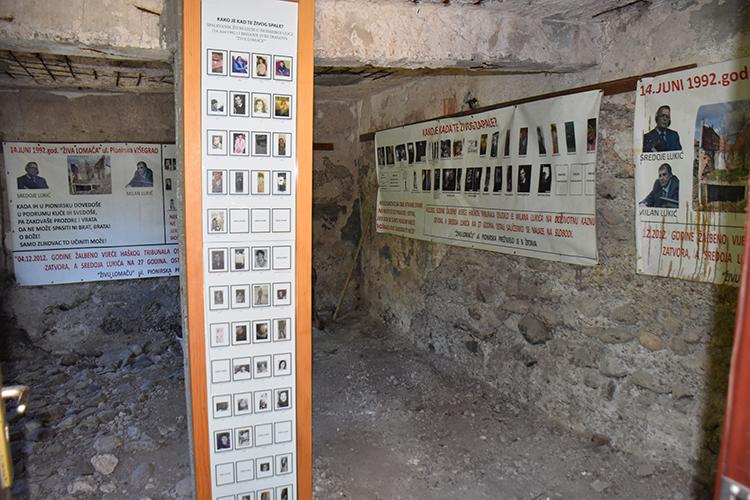
Višegrad Massacre is a systematic ethnic cleansing operation carried out by Serbian military and paramilitary forces against the Bosniak civilian population in and around the town of Višegrad in eastern Bosnia and Herzegovina during the Bosnian War of 1992–1995. Among the most notorious examples of this operation were the mass killings on 14 June 1992 in Pionirska Street and on 27 June 1992 in Bikavac, where groups of over 70 civilians—including women, children, and the elderly—were locked inside homes and burned alive.【1】
The events that unfolded in Višegrad in June 1992 formed part of a deliberate campaign targeting the civilian population. During operations conducted by Serbian forces, methods of execution included burning civilians alive, as documented in official records. These acts have been formally recorded in history as part of planned attacks and violations of human rights recognized by the International Criminal Tribunal.
One of the key incidents occurred on 14 June 1992 at Pionirska Street. On that day, over 70 defenseless civilians—including women, children, and the elderly—were forcibly gathered by Serbian soldiers into a single house. After being locked inside, the doors were barred from the outside, eliminating any possibility of escape, and the building was set on fire. Those trapped inside were burned alive, while those attempting to flee were shot with automatic weapons or targeted directly by artillery shells.
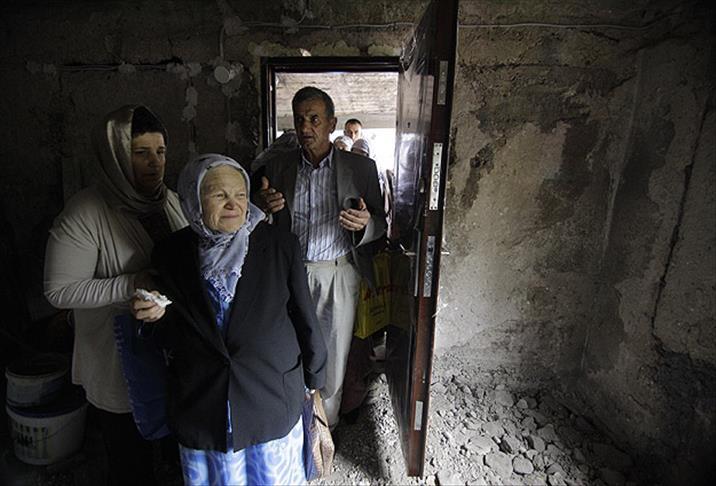
Emina Vila, who lost her 21-year-old daughter Yasmina in the massacre (Anadolu Ajansı)
A similar atrocity occurred shortly afterward on 27 June 1992 in the village of Bikavac, at the home of Meho Aljic. The same method used in Pionirska Street was applied: more than 70 civilians were locked inside the house and burned alive.
The International Criminal Tribunal described the attacks carried out in Višegrad as the largest crime against humanity committed during the Bosnian War.【2】
The attacks and systematic ethnic cleansing operations in Višegrad transformed the region’s sociocultural and demographic structure, leading to the near-total elimination of the Muslim Bosniak population. Those who survived were driven into forced displacement by sustained pressure, threats, and cycles of violence, abandoning their homes, communities, and entire histories.
It is estimated that approximately 3,000 Bosniak civilians were killed during the Višegrad massacre.【3】 Even after decades have passed, the fate of some of the victims remains unclarified.
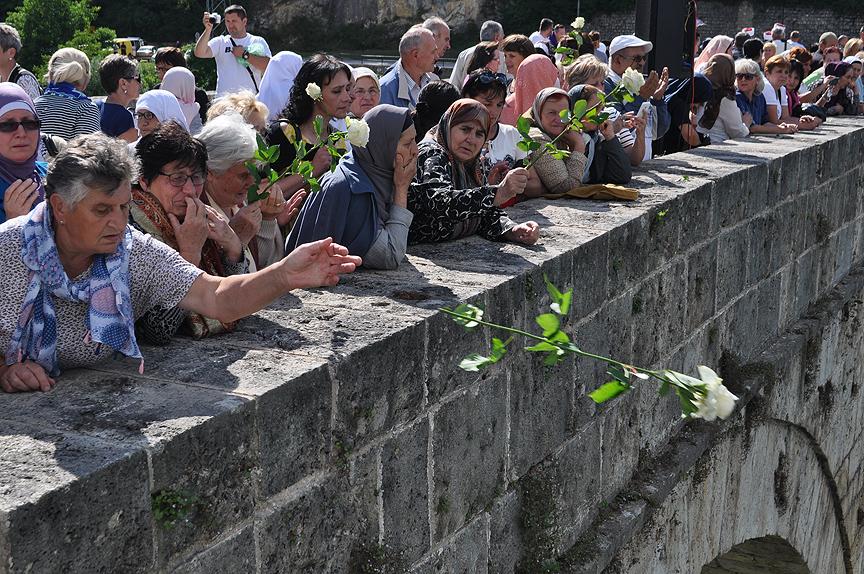
Roses dropped from the bridge in memory of the victims (Anadolu Ajansı)
As an expression of grief and the pursuit of justice, the families of victims hold annual commemorative ceremonies. The Sokollu Mehmed Pasha Bridge is the focal point of these events. Gathering under the theme of “3,000 roses for 3,000 lives,” relatives of the dead release roses from the bridge into the waters of the Drina River to honor their lost loved ones. These floating roses have become both a symbol of the immense loss suffered and a testament to the enduring quest for justice.【4】
The legal processes addressing the massacres in Višegrad and crimes against humanity have been pursued both by the International Criminal Tribunal for the former Yugoslavia (ICTY) and by local courts in Bosnia and Herzegovina.
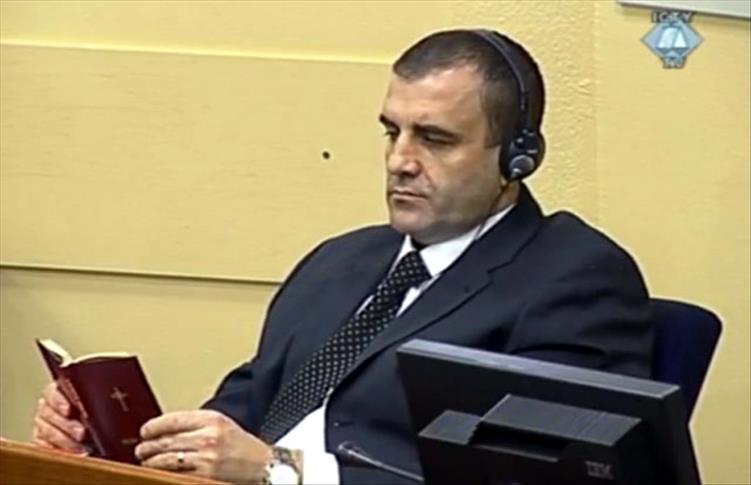
Milan Lukić, one of the planners and principal perpetrators of the massacre (Anadolu Ajansı)
As a result of the trials, Milan Lukić, one of the principal planners and perpetrators of the massacre, was sentenced to life imprisonment for his grave crimes and acts committed against humanity. This verdict stands as one of the landmark rulings that established the Višegrad massacre as falling under the international legal categories of genocide and crimes against humanity.
In addition to Lukić, a total of 18 Serbian soldiers who directly participated in the attacks and criminal activities in the region were tried on various war crime charges and collectively sentenced to 246 years in prison.【5】 Despite these judicial outcomes, criticism persists regarding the effectiveness of the justice mechanism.【6】 A significant number of those responsible for the massacre have yet to face trial, a fact that victims’ families regard as a fundamental failure of justice.
Anadolu Ajansı. "Bosna Hersek'te savaşta yakılarak katledilen 70 sivil törenle anıldı." Accessed June 6, 2026. https://www.aa.com.tr/tr/dunya/bosna-hersekte-savasta-yakilarak-katledilen-70-sivil-torenle-anildi/3251003.
Anadolu Ajansı. "Bosna Savaşı'nda öldürülenler için Drina Nehri'ne 3 bin gül." Accessed June 6, 2026. https://www.aa.com.tr/tr/dunya/bosna-savasinda-oldurulenler-icin-drina-nehrine-3-bin-gul-/1184339.
Anadolu Ajansı. "Bosna'da yakılarak öldürülen 70 kurban unutulmadı." Accessed June 6, 2026. https://www.aa.com.tr/tr/dunya/bosnada-yakilarak-oldurulen-70-kurban-unutulmadi/151097.
Anadolu Ajansı. "Milan Lukić na izricanju presude listao Bibliju." Accessed June 6, 2026. https://www.aa.com.tr/ba/svijet/milan-luki%C4%87-na-izricanju-presude-listao-bibliju/302115
Anadolu Ajansı. "Visegrad'da diri diri yakılan Boşnaklar anıldı." Accessed June 6, 2026. https://www.aa.com.tr/tr/dunya/visegradda-diri-diri-yakilan-bosnaklar-anildi/849830
Balkan News. "Bosna Savaşı’nın en korkunç suçunun kurbanları anılıyor." Accessed June 6, 2026. https://www.balkannews.com.tr/bosna-hersek/bosna-savasinin-en-korkunc-sucunun-kurbanlari-aniliyor-h7056.html
Emgili, Fahriye. “BOSNA-HERSEK TRAJEDİSİNDE (1992-1995) TÜRK BİRLİĞİ”. *Güneydoğu Avrupa Araştırmaları Dergisi*, no. 21: 57–87. Accessed June 6, 2026. https://dergipark.org.tr/tr/pub/iugaad/article/377250
Koç, Şevket. "Višegrad Katliamı" Boşnak Haber. Accessed June 6, 2026. https://bosnakhaber.com/visegrad-katliami/.
TRT Avaz. "Bosna Hersek'teki savaşta öldürülen 8 Boşnak, 31 yıl sonra defnedildi." Accessed June 6, 2026. https://www.trtavaz.com.tr/haber/tur/turkistandan/bosna-hersekteki-savasta-oldurulen-8-bosnak-31-yil-sonra-defnedildi/647b465e01a30a020cf0c224.
[1]
Balkan News, "Victims of the worst crime of the Bosnian War are remembered" Balkan News, accessed 6 June 2026, https://www.balkannews.com.tr/bosna-hersek/bosna-savasinin-en-korkunc-sucunun-kurbanlari-aniliyor-h7056.html.
[2]
TRT Avaz, "8 Bosniaks killed in the war in Bosnia and Herzegovina buried 31 years later" TRT Avaz, accessed 6 June 2026, https://www.trtavaz.com.tr/haber/tur/turkistandan/bosna-hersekteki-savasta-oldurulen-8-bosnak-31-yil-sonra-defnedildi/647b465e01a30a020cf0c224.
[3]
TRT Avaz, "8 Bosniaks killed in the war in Bosnia and Herzegovina buried 31 years later."
[4]
Anadolu Ajansı, "70 victims burned alive in Bosnia not forgotten" Anadolu Ajansı, entered 6 June 2026, https://www.aa.com.tr/tr/dunya/bosnada-yakilarak-oldurulen-70-kurban-unutulmadi/151097.
[5]
TRT Avaz, "8 Bosniaks killed in the war in Bosnia and Herzegovina buried 31 years later."
[6]
Anadolu Ajansı, "70 victims burned alive in Bosnia not forgotten."

Location | Bosnia and Herzegovina Višegrad | ||||||||
|---|---|---|---|---|---|---|---|---|---|
Significant Event | Bikavac (27 June 1992) Pionirska Sokağı (14 June 1992) | ||||||||
Primary Responsible | Milan Lukić | ||||||||
Estimated Loss | ~3,000 civilians | ||||||||
Perpetrator | Serb military Paramilitary forces | ||||||||
Objective | Bosniak civilian population | ||||||||
Legal Status | Genocide and Crimes Against Humanity (ICTY records) | ||||||||
History | June 1992 - 1995 | ||||||||
Development and Methods of the Massacre
Human Dimension and Losses
Legal Proceedings