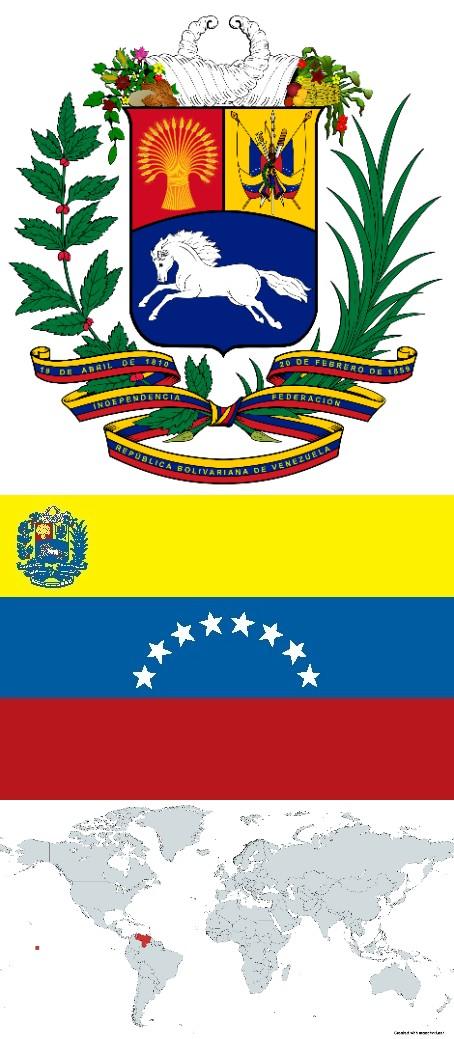
This article was automatically translated from the original Turkish version.
Official Name | Bolivarian Republic of Venezuela | ||||||||
|---|---|---|---|---|---|---|---|---|---|
Form of Government | Presidential federal republic | ||||||||
Date of Independence | 5 Temmuz 1811 (İspanya’dan) | ||||||||
Capital | Caracas | ||||||||
Head of State | Nicolás Maduro Moros | ||||||||
Official Language | Spanish | ||||||||
Common Languages | Indigenous languages | ||||||||
National Day | July 5, although not official | ||||||||
Area | 912,050 km² | ||||||||
Total Population | ~28.5 million | ||||||||
Climate | Varies according to altitude Between tropical and temperate | ||||||||
GDP (Nominal) | 110 billion US dollars | ||||||||
GDP per Capita | 4,900 US dollars | ||||||||
Ethnic Groups | 2% Indigenous people 67% Mixed (European-African-Indigenous) 21% White 10% African descent | ||||||||
Religious Composition | Other groups 48.1% Catholic 31.6% Protestant 13.6% Non-religious | ||||||||
Telephone Code | +58 | ||||||||
Internet Domain Code | .ve | ||||||||
Venezuela is one of the geopolitical weight centers of the region due to its location on the northern coast of South America, opening onto the Caribbean Basin, and its rich natural resources. Its topography is defined by three main structures: the elevated ranges of the Andes in the north, the vast lowlands known as the Llanos in the center, and the plateau of the Guiana Shield in the south. This diversity has shaped both historical settlement patterns and economic activities. The country’s political center, Caracas, forms the core of the national system due to its proximity to the northern coast, high population density, and institutional structure.
Venezuela’s national anthem, Gloria al Bravo Pueblo (Glory to the Brave People), is a historical symbol deeply embedded in the political and cultural memory of the independence struggle. Attributed to lyrics by Juan José Landaeta, the anthem reflects the collective spirit of resistance born from the 1810 Revolution. Its melodic structure combines military march style with local musical traditions. It is the official cornerstone of all state ceremonies.
Venezuela National Anthem (Youtube)
The earliest human settlements in Venezuelan territory date back thousands of years. Along the Orinoco Basin and the northern coastal strip, Arawak and Carib communities developed a rich cultural diversity based on agriculture, fishing, and regional trade networks. This period produced a social structure adapted to the region’s tropical geography, characterized by prominent tribal organization.
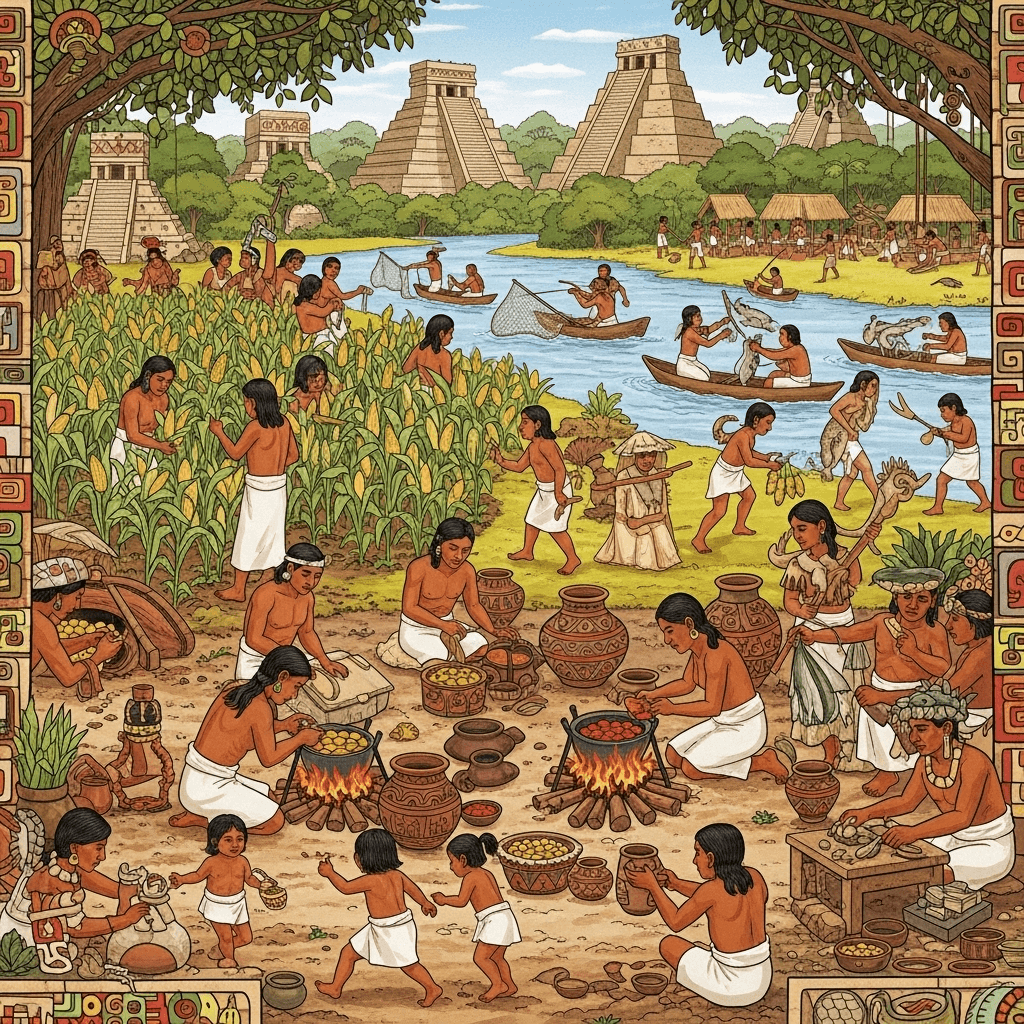
Visual Representing Pre-Colonial Civilizations (Easy-Peasy AI)
The foundations of the Spanish colonial era were laid in 1498 when Christopher Columbus reached the region’s coasts. Throughout the 16th and 17th centuries, settlements such as Cumaná, Coro, and Maracaibo were established; the colonial economy took shape around cocoa and coffee production. The rapid decline of the indigenous population and the widespread use of African slave labor became the defining dynamics of the social hierarchy.
In the late 18th century, commercial restrictions and the economic pressures of colonial administration generated a powerful impetus for independence. In 1811, Venezuela became one of the first regions to declare independence from Spain. The wars of independence lasted for years; the Battle of Carabobo in 1821 marked a decisive turning point. The country then became part of Gran Colombia, led by Simón Bolívar; however, due to political and administrative disagreements, it reorganized as an independent state in 1830 after seceding from the federation.
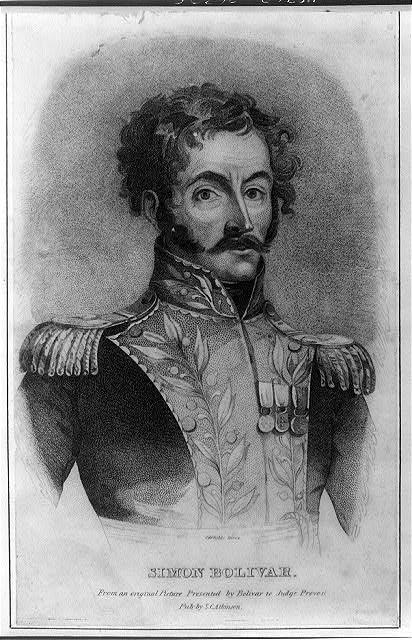
Simón Bolívar Leading the Independence Struggle in South America (Library of Congress)
The 20th century was marked by political fragmentation dominated by regional military leaders. Central authority was weak, and the country frequently faced conflicts, economic fluctuations, and caudillo rule. In the first half of the 20th century, the discovery of oil and rapidly expanding production capacity transformed Venezuela into a major actor in the global energy economy.
The fall of the Marcos Pérez Jiménez regime in 1958 established a democratic political order. This period enjoyed relative stability under the Punto Fijo Pact, which ensured alternating power between two major parties. Years of rising oil prices supported economic growth; however, the single-sector structure increased vulnerability.
From the 1980s onward, economic decline, social unrest, and institutional erosion became prominent. The Caracazo events of 1989 became a symbol of mass protest against state violence and structural adjustment policies. Hugo Chávez’s failed coup attempt in 1992 was one of the pivotal events in the political system; Chávez came to power after winning the 1998 elections and introduced a new constitution, a centralized state structure, and extensive social programs under the banner of the “Bolivarian Revolution.” 【1】
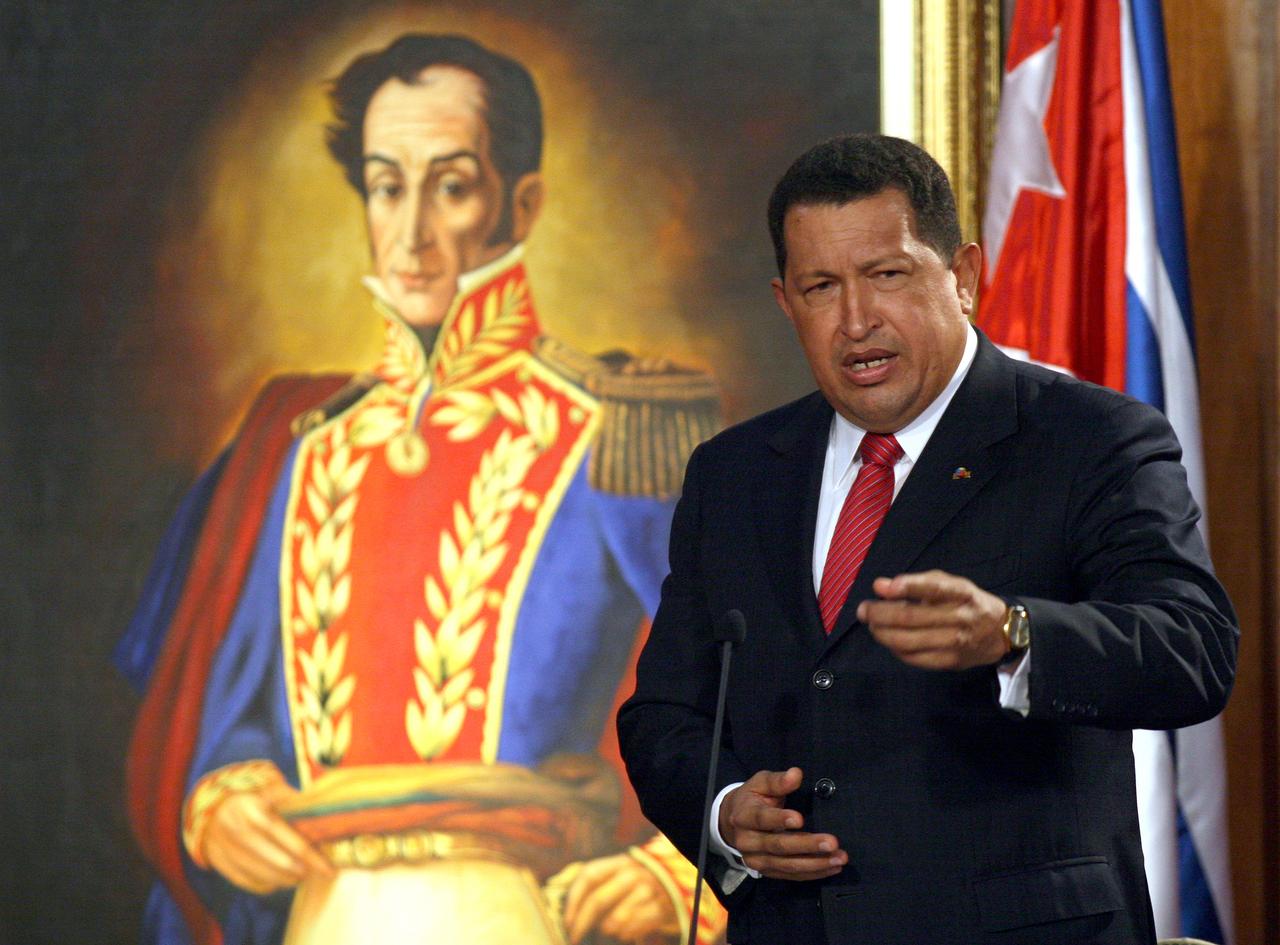
Former Leader Chávez in Front of a Portrait of Simón Bolívar (Flickr)
Following Chávez’s death in 2013, Nicolás Maduro assumed office. The Maduro era has become synonymous with severe economic collapse, hyperinflation, and large-scale migration. In 2019, National Assembly President Juan Guaidó declared himself interim president based on a constitutional interpretation, placing the country at the center of international recognition debates. During the same period, millions of Venezuelans left the country, and the economy experienced one of its longest and deepest contractions in history.
Today, Venezuela is regarded as a state facing significant political and economic fragility despite its vast natural resource reserves. The country’s historical development reveals a multilayered transformation spanning from indigenous ways of life through the colonial period, the independence process, and the formation of the modern state 【2】 .
Venezuela is located along the northern edge of the South American continent and opens onto the Caribbean Sea. The country covers approximately 916,000 square kilometers; its topography sharply divides into three distinct zones: a mountainous belt in the north, vast plains in the center, and a plateau system formed by ancient geological masses in the south. This tripartite structure is the fundamental determinant of both climatic diversity and settlement patterns.
Venezuela is bordered by the Caribbean Sea to the north, Colombia to the west, Brazil to the south, and Guyana to the east. The eastern border region of Guayana, specifically the Essequibo area, is the subject of a territorial claim by Venezuela. The country’s maritime jurisdiction areas, including island groups and continental shelf features, hold strategic value. Aruba, Bonaire, Curaçao, and Trinidad and Tobago are regional actors located near Venezuela’s coasts.
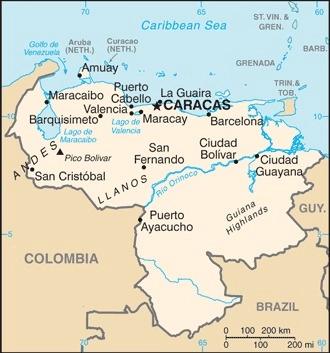
Venezuela’s Geographic Location and Neighbors (CIA World Factbook)
The eastern extensions of the Andes dominate the northern belt. Pico Bolívar, located in the Mérida Range, is the country’s highest point. The capital, Caracas, is situated on the northern slopes of this mountainous massif.
The central region consists of vast tropical plains known as the Llanos. These areas, shaped by seasonal flooding, form the backbone of both agricultural activity and large-scale livestock farming.
The Orinoco River is Venezuela’s largest river and its geographic spine. Hundreds of tributaries originating in the Guiana Plateau in the southeast feed into the Orinoco. Lake Maracaibo in the west holds significant importance in the national economy due to its vast oil reserves.
Venezuela lies within the tropical climate zone. Due to variations in elevation, the coastal areas are hot and humid, while mountainous regions are cooler and more temperate. The Llanos region has a pronounced dry and rainy season. The forest belt in the south continues the Amazon rainforest; flora and fauna diversity is exceptionally high.
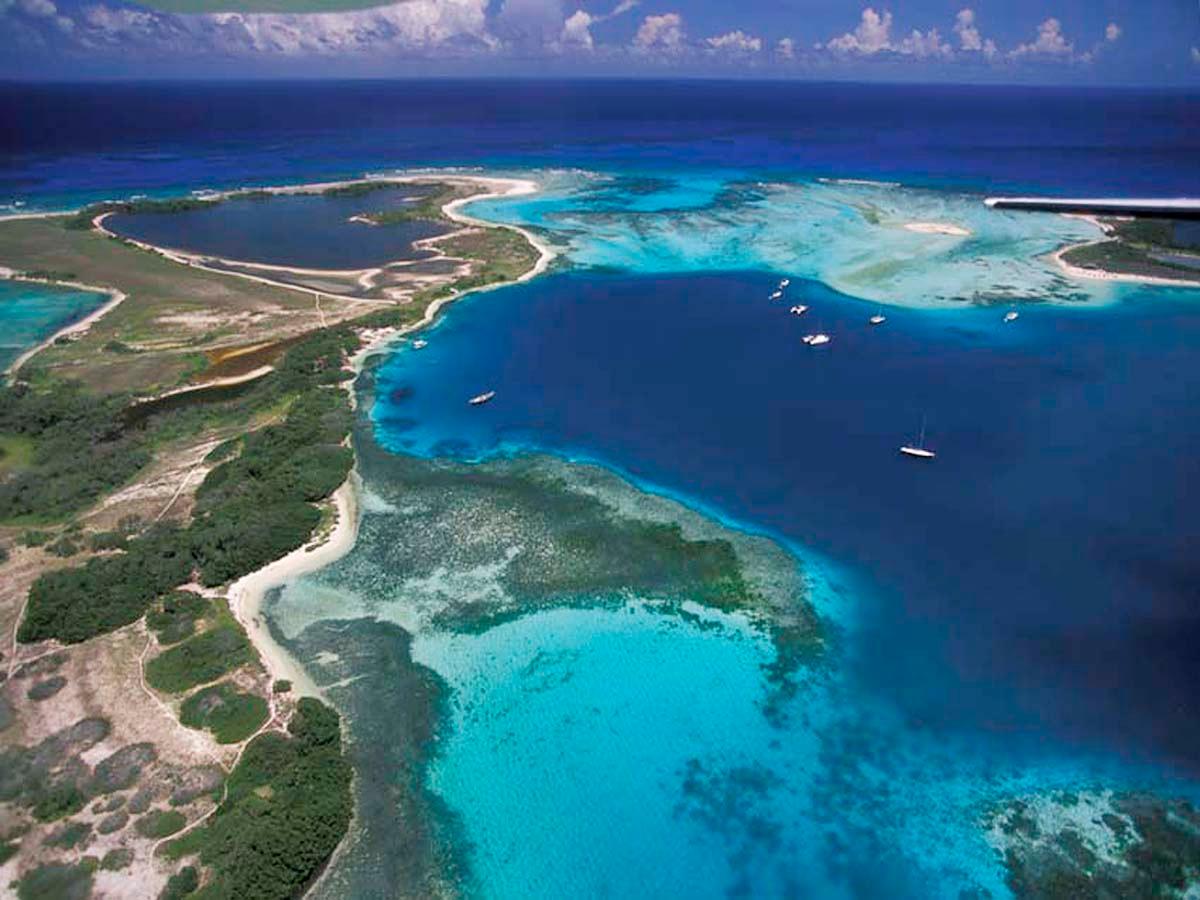
Venezuelan Coasts with Turquoise Waters (Flickr)
Venezuela possesses one of the world’s largest proven oil reserves. In addition, it contains rich mineral resources including natural gas, gold, bauxite, iron ore, and diamonds.
It has high hydropower potential, and the Guri Dam is one of the largest energy facilities in South America.
The energy infrastructure is largely based on hydropower and oil. Most electricity generation comes from power plants around the Guri Dam. The transportation network is dominated by the northern coastal corridor; Caracas, Valencia, and Maracaibo have dense road and air transport systems. Transportation in the interior regions is more limited and dependent on geographic conditions.
Venezuela’s economy has historically been shaped by the overwhelming dominance of the hydrocarbon sector, making this single-axis structure the fundamental determinant of the country’s economic cycles. Oil has been at the center of public revenues, export earnings, and foreign exchange flows since the early 20th century; periods of economic growth have closely paralleled fluctuations in global oil prices. This dependency has shaped both institutional structures and the financial system around oil revenues, leaving other economic sectors weak and vulnerable over the long term.
By the 21st century, increased state intervention, price and currency controls, expanding public spending, and the erosion of production capacity had disrupted the economic balance. The sharp decline in oil prices after 2014, combined with deteriorating production infrastructure, triggered a collapse. The country entered a multidimensional crisis characterized by hyperinflation, supply shortages, dollarization trends, and capital flight.
Macroeconomic indicators point to a situation marked by prolonged economic contraction and rapid socio-economic degradation. During this period, real wages have declined, supply chains have been disrupted, and public services have suffered capacity losses. These developments have created a need for structural changes in economic policy. On the other hand, recent partial dollarization, limited private sector recovery efforts, and flexible economic practices at the local level have produced modest economic revitalization in some areas.【3】
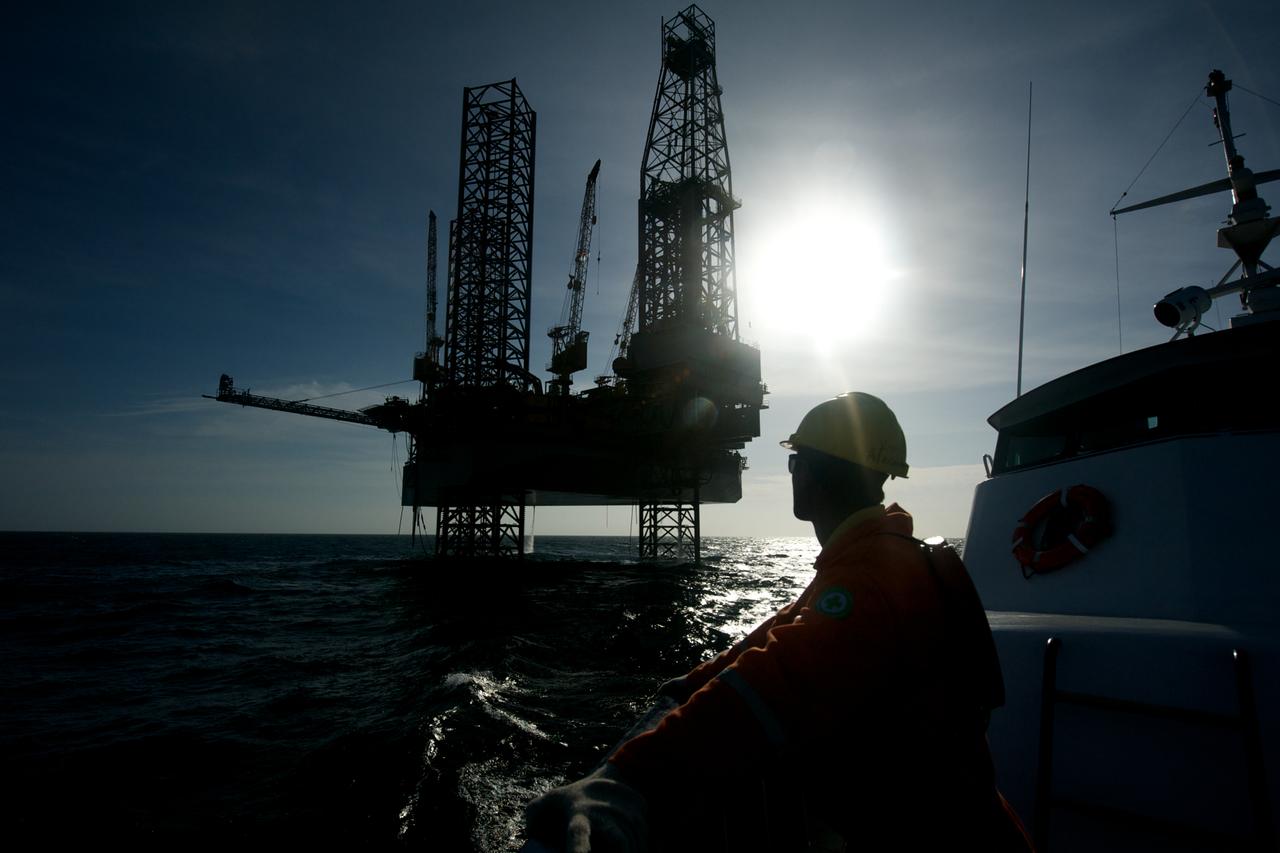
La Perla Offshore Oil Platform (Flickr)
Venezuela’s economy exhibits a structure approaching that of a low-income country in international comparisons.
These indicators reveal persistent pressure on government revenue and an expansionary spending trend.
Despite the country’s vast land area, the agricultural sector holds a limited share in the economic structure. The Llanos region is the historical center of large-scale livestock farming. Agricultural production is dominated by cocoa (especially from the Chuao region), coffee, maize, rice, cassava, bananas, and sugarcane. However, production levels remain below those of the early 2000s due to infrastructure deficiencies, limited fertilizer and machinery supply, security concerns, and market imbalances. As a result, the country exhibits high dependence on imports for basic foodstuffs.
The industrial sector is heavily dependent on the oil industry. The refinery network under PDVSA’s control (Amuay, Cardón, El Palito) has transformed the northern coast into an industrial corridor. However, refinery capacity has declined significantly in recent years. The Guayana region in the south hosts clusters of iron and steel, aluminum, hydropower, and heavy industry. Nevertheless, many facilities operate below nominal capacity due to energy outages and lack of investment.
The contraction of the services sector is one of the most visible effects of the economic crisis. The banking system has largely lost its effectiveness due to prolonged currency controls and regulatory uncertainty.
A significant portion of financial transactions are conducted in U.S. dollars. Tourism, despite high potential, generates limited revenue due to security issues and infrastructure deficiencies.
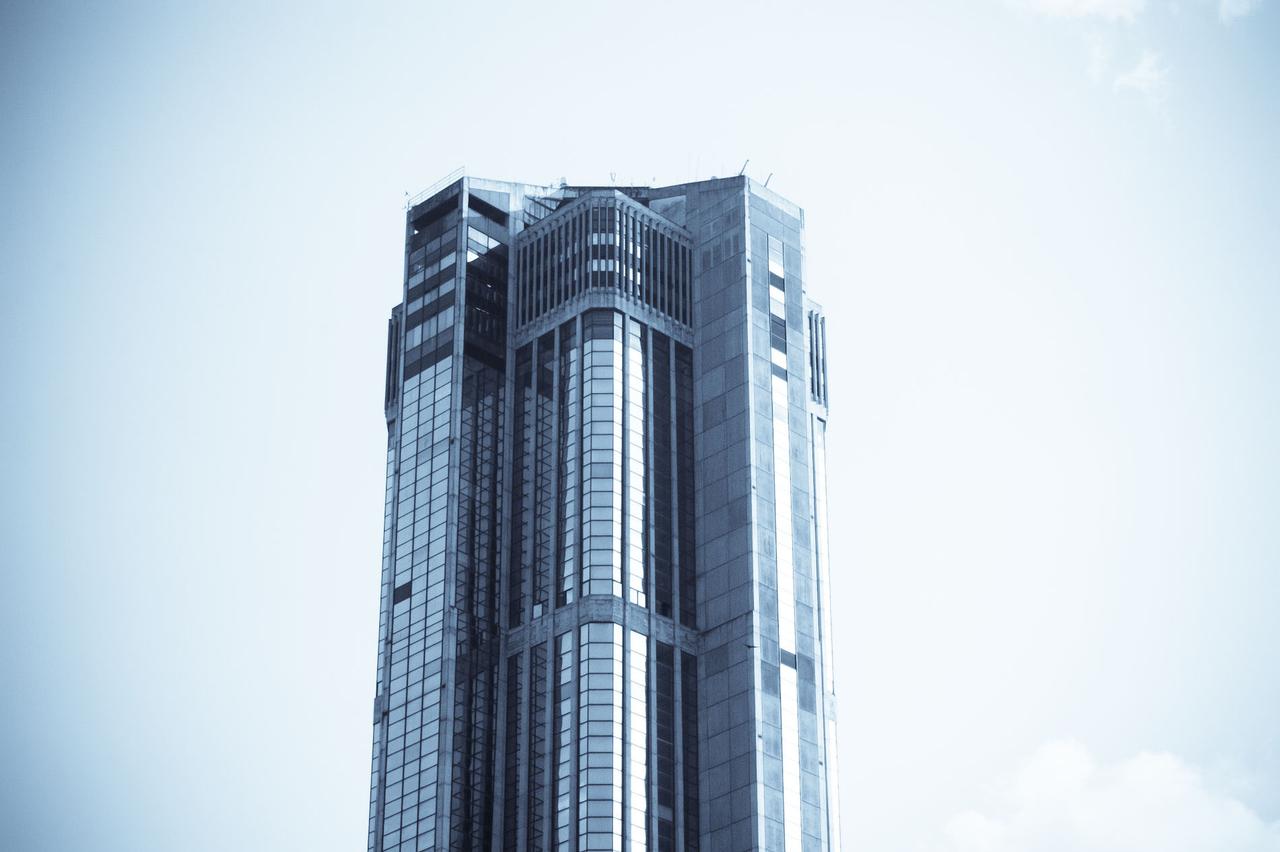
Torre Oeste, Until 2003 the Tallest Tower in South America, Caracas (Flickr)
Venezuela’s foreign trade is almost entirely dependent on oil revenues. Crude oil, petroleum products, and petcoke are the main export items. Non-energy exports are minimal. Major markets include the United States, China, Spain, Brazil, and Türkiye.
Imports are dominated by machinery and equipment, food products, refined petroleum products, chemicals, and agricultural inputs. Long-standing import restrictions, foreign exchange shortages, and logistical problems have severely restricted access to goods.
Venezuela is among the Latin American countries with the lowest capacity to attract foreign investment due to high political and economic risks. International sanctions, the closed structure of state-controlled sectors, and uncertainty regarding property rights limit foreign capital. In this context, foreign investment is largely confined to energy and infrastructure agreements with China, Russia, and certain regional actors.
In recent times, some easing of local regulations, limited private sector activity, and modest liberalization efforts have created a slight improvement in the investment climate; however, macro-level risk indicators remain above critical thresholds.
Venezuela’s demographic structure presents a multilayered composition shaped by historical migration flows, the geographic distribution of indigenous communities, and accelerating population movements in recent years. The country’s population is estimated at approximately 26 to 28 million as of 2024, though uncertainty exists in statistics due to intense emigration over the past decade.
The majority of the population is concentrated in northern urban areas near the Caribbean coast. Urbanization levels are high around Caracas, Valencia, Maracaibo, and Barquisimeto. The southern regions near the Llanos and Amazon basin are sparsely populated, with settlements clustered around small communities and mining centers.
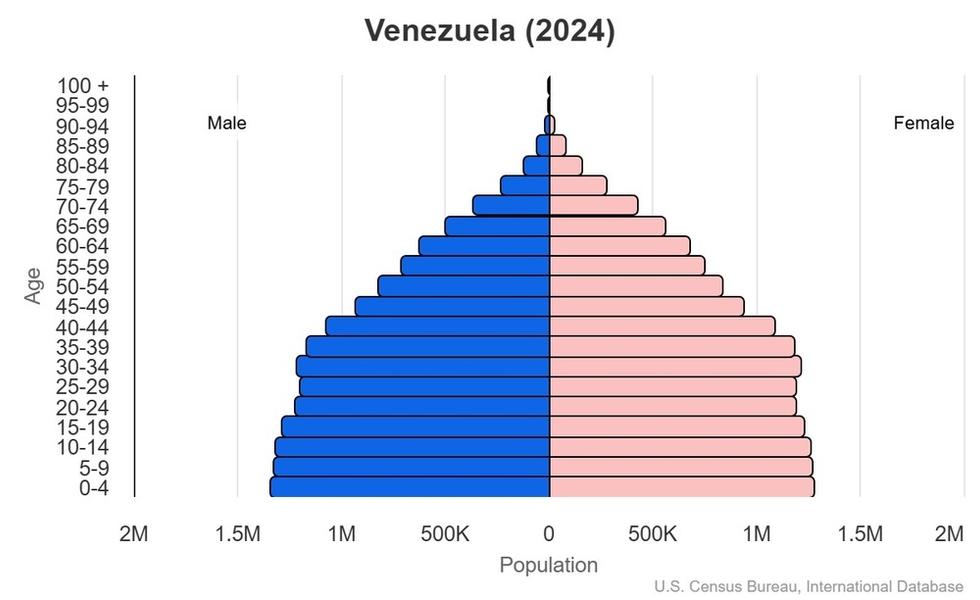
Venezuela Population Distribution (CIA World Factbook)
Venezuela’s social fabric is a complex mixture of diverse origin groups. The majority of the population identifies as mestizo. In addition, Spanish, Italian, and Portuguese immigrant communities, African-descended populations, and indigenous groups (such as Arawak, Carib, Warao, and Yanomami) are significant components. Indigenous communities, particularly in the south and east, maintain their own social organization and continue their traditional ways of life.
Catholicism has historically been dominant, but evangelical communities have experienced rapid growth in recent years. Judaism, Islam, and Afro-Caribbean belief systems are represented on a smaller scale. Religious diversity is more pronounced in urban centers.
In recent years, Venezuela has witnessed one of the largest emigration movements in Latin American history. Millions of Venezuelans have migrated to Colombia, Peru, Chile, the United States, and European countries due to economic collapse, security issues, and political instability. Internal migration has also become prominent; movement toward northern cities is driven by needs for food, energy, and employment.
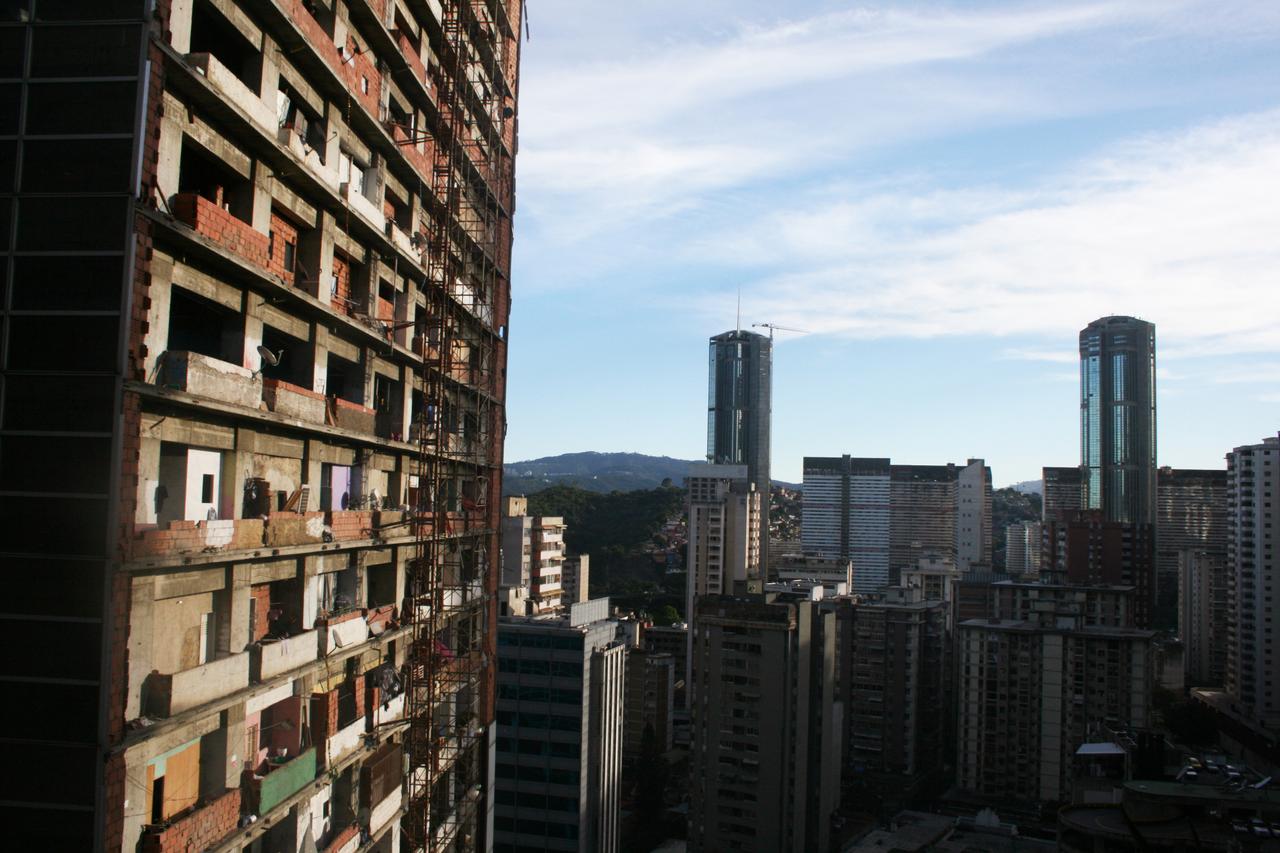
Informal Settlements in the Unfinished Torre de David After Rising Migration and Hyperinflation (Flickr)
Venezuela’s education system has historically been built on a public foundation. Literacy rates long remained above the regional average. University enrollment rates rose rapidly from the 1970s onward, driven by oil revenues.
Although the literacy rate remains high, the recent economic crisis has caused serious deterioration in the education infrastructure. Teacher migration, inadequate school maintenance, and resource shortages have led to a clear decline in educational quality. Nevertheless, established universities in the Central and Andes regions still maintain scientific production capacity at a regional level.
Venezuela’s cultural fabric is a multilayered structure formed by the interweaving of ancient traditions inherited from indigenous communities, European influences brought by Spanish colonization, ritual practices of African-descended populations, and intense migration movements in the modern era. This diversity is most evident in music, dance, gastronomy, and literature. Cultural life, spanning from traditional rituals to modern art in urban centers, is one of the fundamental elements sustaining the country’s social dynamism.
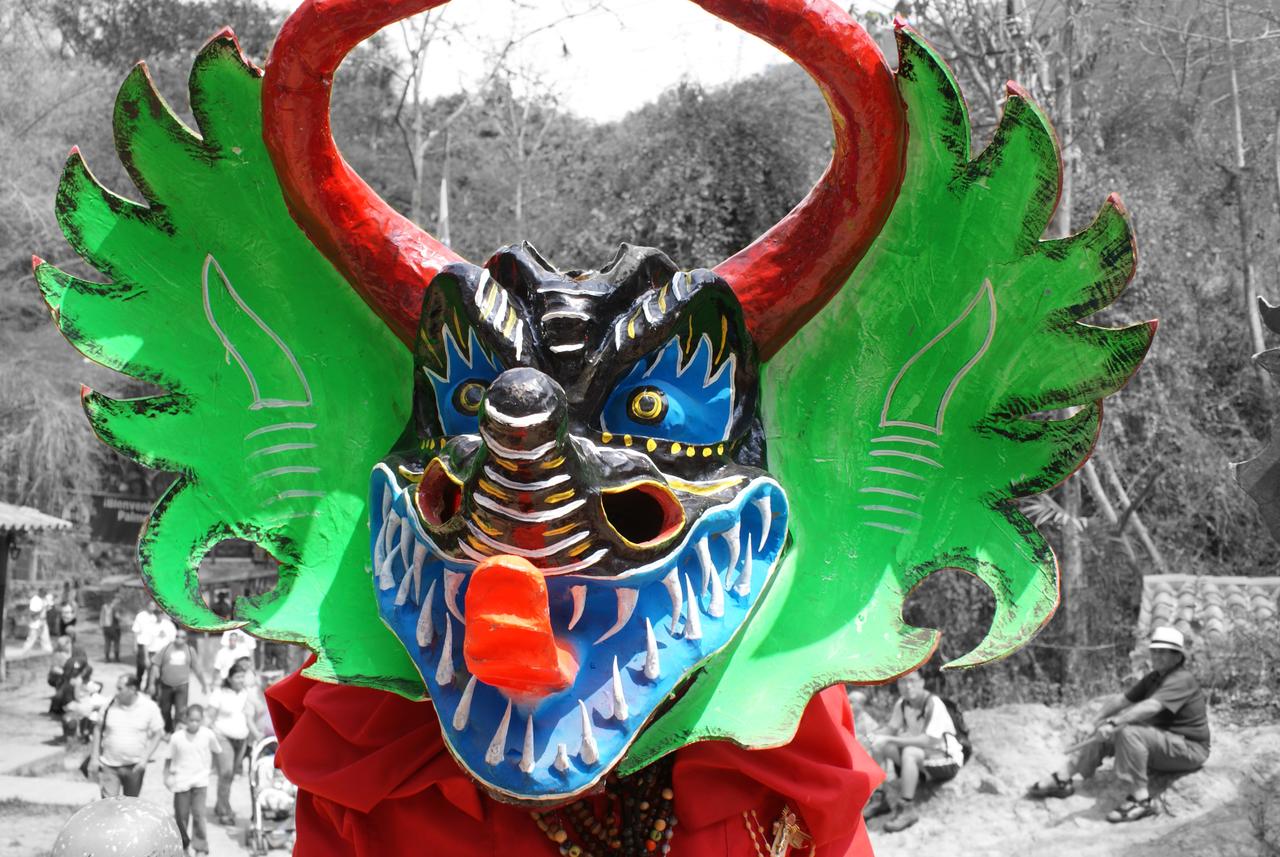
Religious Festival of Diablos Danzantes de Yare Celebrated in Venezuela (Flickr)
In Venezuelan society, family ties are central to social life, and rituals and local festivals organized by communities serve as the strongest instruments of social cohesion.
The country’s musical tradition has become one of the symbols of national identity through the joropo genre, developed especially in the Llanos region and characterized by the combination of harp, cuatro, and maracas. Along the Caribbean coast, a strong Afro-Venezuelan heritage is evident; this cultural strand, rooted in drum rhythms and ceremonial music, holds a significant place in the region’s identity.
In literature and the arts, modernist explorations, the rise of the muralist movement, and an artistic approach emphasizing political themes dominated throughout the 20th century.
The national cuisine is another important domain reflecting cultural diversity. Dishes such as arepa, pabellón criollo, and cachapa form the foundation of the national cuisine, while the long coastline enriches regional culinary differences with a wide variety of fish and seafood.
Clear cultural distinctions exist between geographic regions; the more conservative social structure of the Andes mountains contrasts sharply with the dynamic and outward-looking cultural atmosphere of the Caribbean coast.
Venezuela possesses several cultural and natural heritage sites recognized by UNESCO. Canaima National Park, with its Angel Falls and the ancient rock formations known as tepuis, is a unique geological region of global significance. Coro and its Port, with their original colonial architecture preserved to this day, constitute an important cultural heritage center. The Orinoco Delta and the ritual practices of indigenous communities in the area are considered part of intangible cultural heritage.
Historical structures and archaeological sites offer a broad panorama of the country’s past. The historic center of Caracas, colonial-era buildings in Maracaibo, and traces of indigenous communities in the Guayana region are key points reflecting Venezuela’s historical diversity.
Among the country’s museums and cultural institutions, the National Art Gallery, the National Pantheon, and the Museum of Modern Art in Caracas stand out as the most prominent; these buildings hold significance both for national history and contemporary cultural production.
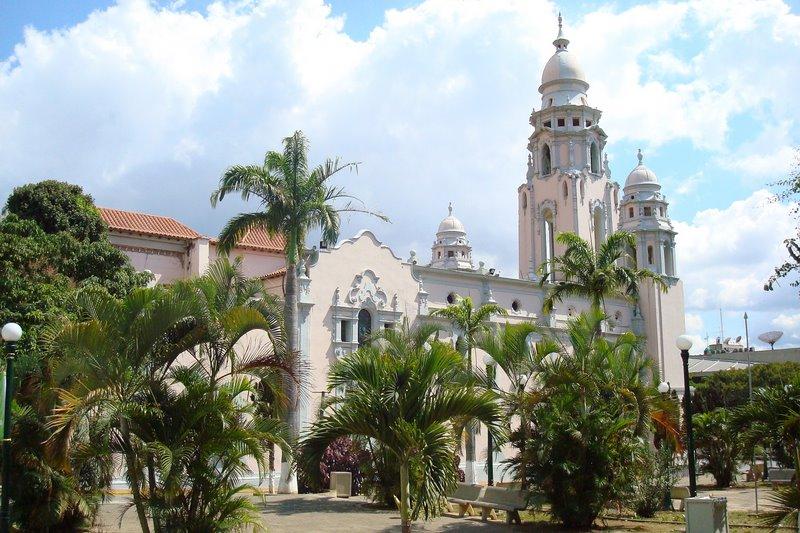
National Pantheon in Caracas (Flickr)
Despite its diverse natural resources, Venezuela has not fully realized its tourism potential. Security concerns, infrastructure deficiencies, and political instability have constrained sectoral growth. Most visitors to the country come from Latin American and European nations. The majority of tourists seek vacation opportunities integrated with the natural environment; Caribbean beaches, adventure tourism opportunities, and the country’s ecosystems are the most attractive areas.
The tourism sector’s contribution to the economy has long remained limited. Although the economic crisis directly affected this sector’s development, local and regional initiatives focused on international promotion of natural areas have increased in recent years. Although the government aims to revitalize tourism through new programs covering the Orinoco Basin, Gran Sabana, and the Caribbean coast, investments have not yet reached the desired scale.
Among the cities prominent for tourism are Caracas, Maracaibo, Mérida, and Valencia. These cities serve as centers where cultural heritage, historical structures, and regional traditions are presented together.
The country’s natural beauty, national parks, and protected areas are the strongest components of tourism. Geographic formations such as Canaima National Park, Angel Falls, and Roraima Tepui are internationally renowned. Morrocoy National Park, Los Roques Archipelago, and the Mérida Cable Car are major attractions combining coastal and mountain tourism.
The country is highly diverse in terms of tourism types. Ecotourism is concentrated particularly in the Orinoco Delta, the Amazon basin, and the tepui region; the Caribbean coast and Los Roques islands form the center of coastal tourism. Mountain climbing, trekking, and river crossings are widespread activities enabled by Venezuela’s natural landscape. In terms of cultural tourism, the colonial architecture of Coro and the historic center of Caracas are standout areas. This diversity highlights the country’s multifaceted potential.
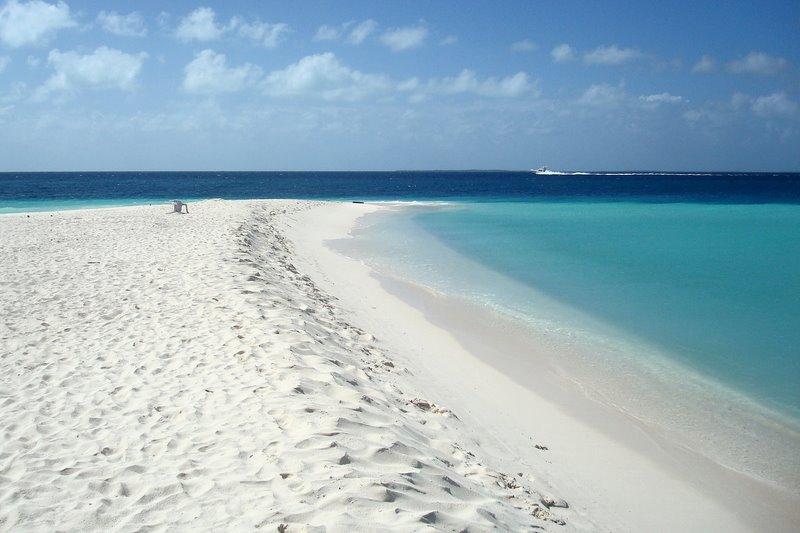
Los Roques Beaches (Flickr)
Venezuela’s foreign policy has been shaped since independence by an emphasis on national sovereignty, vast natural resource reserves, and fluctuations in the global oil market. Historically, the country has prioritized Latin American integration, but it has experienced sharp shifts in foreign policy depending on ideological orientations, leadership personalities, and international power balances. The economic capacity provided by oil revenues was used throughout the 20th century both as a tool of regional influence and as a bargaining chip in relations with major powers. The Bolivarian transformation at the beginning of the 21st century added an anti-hegemonic tone to foreign policy, facilitating new bloc formations.
After separating from Gran Colombia in 1830, Venezuela’s diplomatic priorities were state-building and border demarcation. Disputes with Colombia over the northwestern border and with Guyana over the Essequibo region formed the basis of prolonged tensions. This period is defined by boundary negotiations conducted under international law and efforts to strengthen national identity.
The discovery and rising export of oil fundamentally transformed Venezuela’s foreign policy. Energy revenues made the country both a strategic partner of the United States and a practitioner of economic diplomacy. From the 1940s onward, energy security-based relations with the United States created mutual dependency.
Becoming a founding member of OPEC in 1960 granted Venezuela institutional weight in the global energy market.
Participation in the Contadora process in the 1980s demonstrated that Venezuela could rise to prominence not only through energy but also through diplomatic mediation. This initiative to resolve civil wars in Central America positioned Venezuela as an actor committed to regional stability.
With Hugo Chávez, ideological orientation became prominent in foreign policy. The “Bolivarian” discourse merged with a focus on independence from the United States and multipolarity. The close alliance with Cuba deepened not only in energy and health sectors but also through security and intelligence structures.
Agreements with Russia and China aimed to modernize military capabilities and diversify the economy. In blocs such as ALBA, Petrocaribe, and UNASUR, Venezuela positioned itself as a key actor in political coordination. Oil diplomacy became the main pillar of relations with Caribbean nations.
Economic collapse, hyperinflation, and mass migration pushed foreign policy toward a defensive stance. Debates over the official recognition of the state intensified as some countries recognized opposition leader Guaidó as the legitimate leader. U.S. and European sanctions narrowed the government’s international economic space, but support from Russia and China provided a strategic balancing factor.
The massive wave of emigration from Venezuela has become one of the leading issues on Latin America’s security and humanitarian coordination agenda.
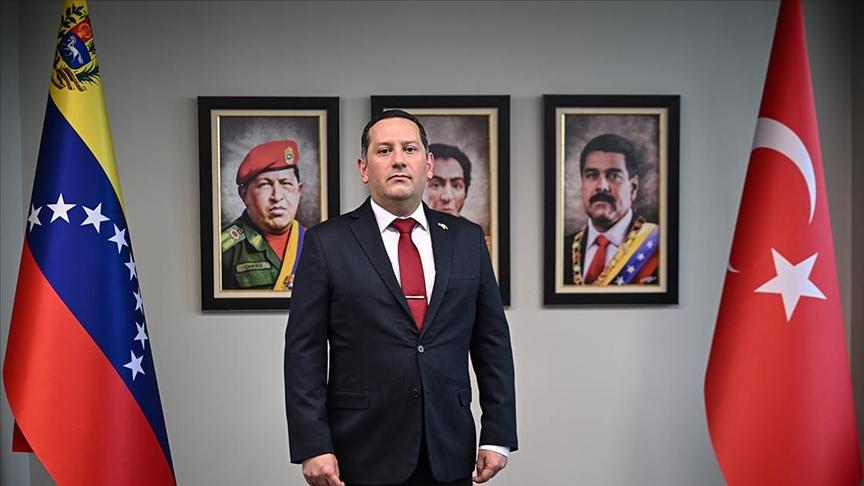
Venezuela’s Ambassador to Ankara, Freddy Eduardo Molina Gutierrez (Anadolu Ajansı)
Relations between the two countries have long followed a tense trajectory. Although Washington occasionally established pragmatic ties with Caracas for energy security reasons, mutual distrust has been defining since the Chávez era. The U.S. refusal to recognize Maduro in 2019 and the intensification of sanctions severely limited Venezuela’s external economic connections. Caracas has labeled U.S. sanctions as an “economic war,” generating a nationalist narrative in domestic politics.
Beijing is one of Venezuela’s largest creditors. Energy-for-debt agreements, infrastructure investments, and technology cooperation form the core dynamics of the relationship. China positions Venezuela as a potential partner in multilateral projects in Latin America (e.g., Belt and Road Initiative) and employs a diplomatic language that supports Venezuela’s sovereignty narrative during political crises.
Russia is one of Venezuela’s most important partners in defense. Modern weapons systems, military training programs, and intelligence coordination have strengthened the two sides’ closeness. The presence of Russian energy companies in Venezuela has reinforced the economic dimension. Moscow stands out as one of the few major powers defending the legitimacy of the Maduro government on international platforms.
The EU’s criticisms focus on human rights and problems in electoral processes. This has led to limited and cautious diplomatic progress. Nevertheless, Venezuela’s diaspora in Europe maintains strong cultural and social ties; Spain, Italy, and Portugal maintain more community-oriented relations with Caracas due to their migrant populations.
Türkiye–Venezuela relations have experienced remarkable momentum over the past decade. The two countries have intensified political dialogue through mutual visits. Gold trade, mining investments, energy cooperation, and logistics corridors form the economic foundation of the relationship. Despite economic crises, the continued growth of trade volume is linked to both countries’ strategic diversification efforts.
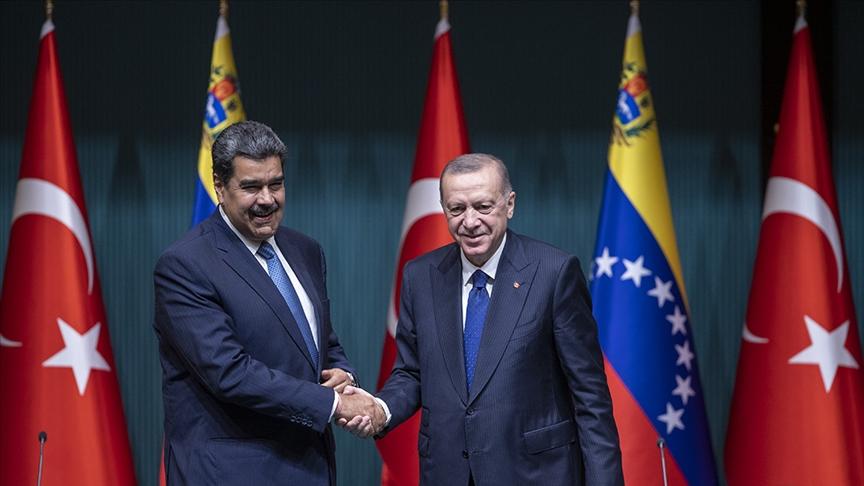
Venezuelan President Maduro with President Erdoğan (Anadolu Ajansı)
Venezuela has historically played an active role in multilateral platforms. Its membership as a founding member of OPEC has ensured continuous influence in global energy policy. Organizations such as the UN, CELAC, ALBA, Petrocaribe, and previously UNASUR have been used both for ideological alignment and regional solidarity.
The process of withdrawal from the OAS in 2019 signals a shift in Venezuela’s relations with U.S.-centered regional institutions. Membership in these organizations is crucial for understanding the functioning of Venezuela’s energy diplomacy and its ideological positioning in Latin America. Multilateralism constitutes one element of Venezuela’s effort to create additional diplomatic space in the face of international pressure.
The Venezuelan Armed Forces (FANB) have historically been a powerful institutional actor at the center of politics. The state’s ideological transformations have directly affected military structure; particularly from the 2000s onward, the military’s political role has expanded.
The largest component of the armed forces, comprising mechanized units, airborne battalions, border guard units, and special operations forces. Key operational areas include combating smuggling, guerrilla movements, and organized crime along the Colombian border.
Equipped with Russian-made Su-30MK2 aircraft, a helicopter fleet, and radar systems, it possesses deterrent capacity at a regional level. However, spare parts procurement and maintenance processes are difficult due to economic conditions.
Patrol and coastal defense along the Caribbean coast are the primary missions. The structure consists of corvettes, patrol vessels, and amphibious units. Protecting offshore oil fields is strategically vital for the navy.
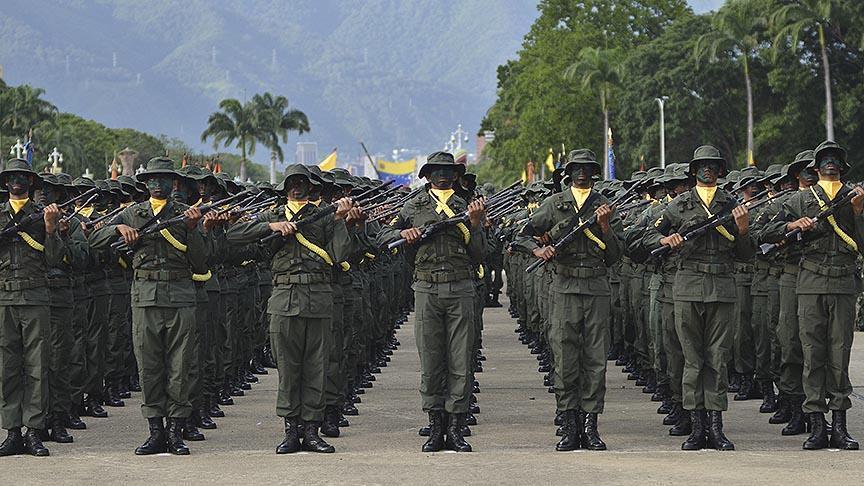
Venezuelan Armed Forces (Anadolu Ajansı)
The FANB employs approximately 100,000 active personnel. In addition, Bolivarian Militia forces are auxiliary structures organized for political and social mobilization purposes.
Although economic collapse has constrained defense spending, the government has maintained the military budget more protected than other sectors, viewing the armed forces as the regime’s security pillar. However, technological and modernization capacity remains limited. In 2023, total defense expenditures reached $3.9 billion, a sharp decline from $6.2 billion ten years earlier.
The military’s logistical network presents an asymmetric structure due to geographic diversity. Bases in the north are more developed, while infrastructure in southern regions is more limited.
Historically, Venezuela has not participated in large-scale external wars. Military activities have focused primarily on border security and internal stability. Throughout the 20th century, it conducted operations against guerrilla incursions along the Colombian border. In the 2000s, operations targeting drug trafficking and organized crime increased. The military has also emerged as a key support force for the regime during internal political crises.
Anadolu Ajansı. "Venezuela Devlet Başkanı Maduro, Cumhurbaşkanı Erdoğan’ı Kutladı." Anadolu Ajansı, June 4, 2023. Accessed November 18, 2025.https://www.aa.com.tr/tr/gundem/venezuela-devlet-baskani-maduro-cumhurbaskani-erdogani-kutladi/2913897
Anadolu Ajansı. "Venezuela’nın Ankara Büyükelçisi Gutierrez’den ABD Başkanı Trump’ın Gazze Önerisine Tepki." Anadolu Ajansı, February 20, 2025. Accessed November 18, 2025.http://www.aa.com.tr/tr/dunya/venezuelanin-ankara-buyukelcisi-gutierrezden-abd-baskani-trumpin-gazze-onerisine-tepki/3487608
Anadolu Ajansı. “Venezuela Ordusundan Maduro’ya Destek.” Anadolu Ajansı, January 24, 2019. Accessed November 18, 2025.https://www.aa.com.tr/tr/dunya/venezuela-ordusundan-maduro-ya-destek/1374181
Central Intelligence Agency. “Venezuela - The World Factbook.” CIA, October 1, 2025. Accessed November 18, 2025.http://www.cia.gov/the-world-factbook/countries/venezuela/map/.
Daniel. “Palmeros de Chacao 2010. Diablo Danzante.” Flickr, April 2, 2010. Accessed November 18, 2025.http://www.flickr.com/photos/danielito311/4484298199/in/photostream/
Dış Ekonomik İlişkiler Kurulu (DEİK). *Venezuela Ülke Bilgi Notu.* DEİK, June 2024. Accessed November 18, 2025.https://www.deik.org.tr/uploads/venezuela-bilgi-notu-haziran-2024.pdf.
Easy-Peasy AI. "Diverse Daily Life in Pre-Columbian Times." Easy-Peasy.AI, March 17, 2024. Accessed November 18, 2025.http://easy-peasy.ai/ai-image-generator/images/diverse-daily-life-pre-columbian-times
France24. "In Face of US Threat, How Does Venezuela’s Military Stack Up?" Accessed November 18, 2025.
Freedom House. “The Role of Diplomacy in Venezuela: Challenges in the Face of Authoritarianism.” Freedom House, September 19, 2025. Accessed November 18, 2025.https://freedomhouse.org/event/role-diplomacy-venezuela-challenges-face-authoritarianism
Government of Canada. “Venezuela - Travel Advice and Advisories.” Government of Canada. November 15, 2025. Accessed November 20, 2025.https://travel.gc.ca/destinations/venezuela.
Houser, Aimee. Venezuela. ABDO, 2011.
Hugo Londoño. “Torre Oeste.” Flickr, September 29, 2011. Accessed November 18, 2025.https://www.flickr.com/photos/sinlentes/6194044500/in/photostream/
International Monetary Fund (IMF). “Venezuela: Selected Economic Indicators.” IMF Country Information. Accessed November 18, 2025.https://www.imf.org/en/countries/ven#ataglance.
Karel Fuentes. “HUGO CHAVEZ.” Flickr, August 25, 2016. Accessed November 18, 2025.https://www.flickr.com/photos/96781889@N04/29193017806
Library of Congress. "Simon Bolivar from an original picture presented by Bolivar to Judge Prevost". Library of Congress Prints & Photographs Online Catalog. Accessed November 18, 2025.https://www.loc.gov/pictures/item/2018661107/
MapChart. "Venezuela." MapChart. Accessed November 18, 2025.https://www.mapchart.net/americas.html.
Ministry of Foreign Affairs of the Republic of Turkey. "Venezuela Ülke Profile." Accessed November 18, 2025.https://www.mfa.gov.tr/venezuela-kunyesi.tr.mfa.
Márcio Cabral de Moura. “Lateral Do Panteão Dos Grandes Homens Da Venezuela / Sideview of Pantheon to the Great Men of Venezuela.” Flickr, March 8, 2025. Accessed November 18, 2025.https://www.flickr.com/photos/mcdemoura/2317567574
Márcio Cabral de Moura. “Lateral Do Panteão Dos Grandes Homens Da Venezuela / Sideview of Pantheon to the Great Men of Venezuela.” Flickr, March 8, 2025. Accessed November 18, 2025.https://www.flickr.com/photos/mcdemoura/2317567574
Organization of the Petroleum Exporting Countries (OPEC). *Annual Statistical Bulletin – Venezuela Section.* OPEC. 2024. Accessed November 18, 2025.https://www.opec.org/opec_web/en/publications/202.htm.
Repsol. “La Perla”, en Venezuela/ “the Pearl”, in Venezuela.” Flickr, August 14, 2014. Accessed November 18, 2025.https://www.flickr.com/photos/repsol/albums/72157674265862850/
Rodríguez, Francisco. The Collapse of Venezuela: Scorched Earth Politics and Economic Decline, 2012–2020. University of Notre Dame Press, 2025.
Roy, Diana, and Cheathem, Amelia. "Venezuela: The Rise and Fall of a Petrostate." Council on Foreign Relations. July 31, 2024. Accessed November 20, 2025.https://www.cfr.org/backgrounder/venezuela-crisis.
Saúl Briceño. “Tríada.” Flickr, 17 December 2013. Accessed November 18, 2025.https://www.flickr.com/photos/saulb/11412229755/in/photostream/
Tarver, H. Micheal. The history of Venezuela. Bloomsbury Publishing USA, 2018.
Trinkunas, Harold. *Venezuela’s Bolivarian Armed Force: Fear and Interest in the Face of Political Change.* Washington, D.C.: Wilson Center, July 2021. Accessed November 18, 2025.https://www.wilsoncenter.org/sites/default/files/media/uploads/documents/Venezuela%E2%80%99s%20Bolivarian%20Armed%20Force_Fear%20and%20Interest%20in%20the%20Face%20of%20Political%20Change.pdf
UNESCO World Heritage Centre. "Venezuela (Bolivarian Republic of)." UNESCO World Heritage List. Accessed November 18, 2025.https://whc.unesco.org/en/statesparties/ve/.
United Nations Development Programme (UNDP). “Human Development Report: Venezuela Country Profile.” UNDP Human Development Reports. Accessed November 18, 2025.https://hdr.undp.org/data-center/specific-country-data#/countries/VEN.
World Bank. “Venezuela – World Development Indicators.” World Bank Data. Accessed November 18, 2025.https://data.worldbank.org/country/venezuela.
[1]
Tarver, H. Micheal. The history of Venezuela. Bloomsbury Publishing USA, 2018.
[2]
Diana, Roy, ve Amelia, Cheatham. “Venezuela: The Rise and Fall of a Petrostate,” Council on Foreign Relations, 31 Temmuz 2024, https://www.cfr.org/backgrounder/venezuela-crisis.
[3]
Rodríguez, Francisco. The Collapse of Venezuela: Scorched Earth Politics and Economic Decline, 2012–2020. University of Notre Dame Press, 2025.
[4]
Government of Canada. Travel Advice and Advisories: Venezuela. Government of Canada. 15 Kasım 2025. Erişim Tarihi 20 Kasım 2025. https://travel.gc.ca/destinations/venezuela.

Official Name | Bolivarian Republic of Venezuela | ||||||||
|---|---|---|---|---|---|---|---|---|---|
Form of Government | Presidential federal republic | ||||||||
Date of Independence | 5 Temmuz 1811 (İspanya’dan) | ||||||||
Capital | Caracas | ||||||||
Head of State | Nicolás Maduro Moros | ||||||||
Official Language | Spanish | ||||||||
Common Languages | Indigenous languages | ||||||||
National Day | July 5, although not official | ||||||||
Area | 912,050 km² | ||||||||
Total Population | ~28.5 million | ||||||||
Climate | Varies according to altitude Between tropical and temperate | ||||||||
GDP (Nominal) | 110 billion US dollars | ||||||||
GDP per Capita | 4,900 US dollars | ||||||||
Ethnic Groups | 2% Indigenous people 67% Mixed (European-African-Indigenous) 21% White 10% African descent | ||||||||
Religious Composition | Other groups 48.1% Catholic 31.6% Protestant 13.6% Non-religious | ||||||||
Telephone Code | +58 | ||||||||
Internet Domain Code | .ve | ||||||||
National Anthem
History
Ancient Period
Spanish Colonial Period and Simón Bolívar
Post-Independence
Maduro Administration After Chávez
Geography
Location
Landforms
Mountains
Plains and Valleys
Rivers and Lakes
Climate and Vegetation
Natural Resources
Energy and Transportation Infrastructure
Economy
Key Economic Indicators (2023)
Sectoral Distribution
Agriculture and Livestock
Industry
Services Sector and Financial System
Foreign Trade
Foreign Investment and Business Environment
Demography and Education
Key Demographic Indicators (2024)
Population Distribution and Urbanization
Ethnic Composition
Religious Distribution
Migration and Population Mobility
Education
Literacy Rate
Culture and Tourism
Cultural Structure
Cultural Heritage and Preservation
Tourism Sector【4】
Tourist Regions and Attractions
Foreign Policy and Security
From Foundation to Present
19th Century
20th Century
1999–Present (Chávez Era)
2013–Present (Maduro Era)
Bilateral Relations
Relations with the United States
Relations with China
Relations with Russia
Relations with European States
Relations with Türkiye
International Organizations
Military and Defense Capacity
Land, Air, and Naval Components
Land Forces
Air Force
Navy
Defense Industry
Personnel Status
Defense Budget
Logistical Infrastructure
Operational History