badge icon

This article was automatically translated from the original Turkish version.

Article

A valve is a control device used in fluid systems to initiate, stop, direct, or regulate the flow of gases, liquids, or vapors. Valves, as one of the fundamental components of energy systems, piping networks, and industrial automation, are designed in many forms to suit different conditions and application requirements.

Basic Structural Features

A typical valve consists of the following components:


  • Body: The main structure of the valve through which the fluid passes. It is commonly manufactured from cast iron, brass, bronze, stainless steel, or plastic.
  • Bonnet: The part that provides access to the internal components of the valve and maintains seal integrity.
  • Disk/Ball: The movable component that controls or redirects the flow. For example, in ball valves it is a sphere, and in butterfly valves it is a disc.
  • Seals and Sealing Elements: Components that prevent leakage within the valve.
  • Actuation Mechanism: Systems that provide motion such as manual levers, electric motors, pneumatic or hydraulic actuators.

Valve Types

1. Valves by Construction

  • Ball Valve: Controls fluid flow using a spherical ball. It can be opened or closed with a 90-degree rotation and offers rapid on-off operation.
  • Butterfly Valve: Regulates flow using a circular disc. Its simple design and low weight make it preferred for large-diameter pipelines.
  • Gate Valve: Opens or closes flow by moving a gate-shaped disc up or down. It is not suitable for flow rate regulation.
  • Needle Valve: Allows fine adjustments and is used in applications requiring precise flow control.
  • Check Valve: Permits fluid flow in only one direction and is used to prevent backflow.
  • Diaphragm Valve: Controls fluid flow through a flexible diaphragm. It is preferred in chemical and hygienic systems.

2. Valves by Operating Principle

  • Manual Valves: Operated by hand. Simple and low-cost.
  • Solenoid Valves: Electromagnetic valves operated by electrical energy. Widely used in automation systems.
  • Pneumatic Valves: Controlled by compressed air. They offer fast response times and low cost advantages.
  • Hydraulic Valves: Operated using pressurized liquid. Preferred in high-power applications.

Pneumatic Valves

Pneumatic valves are used in industrial automation systems to direct air pressure. Based on their function, they are divided into three main categories:


  1. Directional Control Valves: Determine the direction of fluid flow. Types include 2/2, 3/2, 4/2, 5/2, and 5/3. For example:
    1. 3/2 valve: Has three ports (inlet, outlet, exhaust) and two positions.
    2. 5/2 valve: Used to control double-acting cylinders; has five ports and two positions.
    3. 5/3 valve: Has three positions and allows the system to return to a neutral state.
  2. Pressure Control Valves: Prevent excessive pressure in pneumatic systems. Safety valves belong to this category.
  3. Flow Control Valves: Regulate the speed and volume of fluid flow. They control the operating speed of actuators.


These valves may be spring-return or dual-coil operated. Additionally, sensor-equipped versions provide more precise functions in automation control.
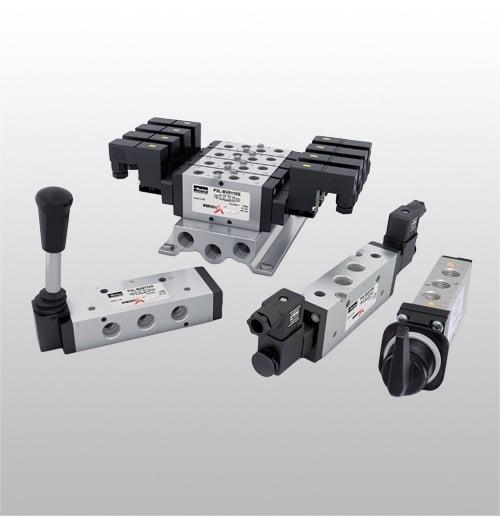

Pnömatik Valf (hidropaks)

Hydraulic Valves

Hydraulic valves control the direction, pressure, and volume of pressurized liquids such as oil. They are commonly found in heavy machinery, presses, and mobile hydraulic systems that require higher pressure and force.


  1. Directional Control Valves: Control the direction of fluid flow. They can be manually operated, electrically operated, or hydraulically pilot-operated.
  2. Pressure Control Valves:
    1. Relief Valve: Releases excess pressure when system pressure exceeds a set limit.
    2. Pressure Reducing Valve: Enables certain parts of the system to operate at lower pressure.
    3. Sequence Valve: Ensures operations occur in a specific sequence.
  3. Flow Control Valves: Regulate volumetric flow. These valves allow control over the speed of hydraulic cylinders.


Hydraulic valves also feature specialized designs such as cartridge valves and modular valves. Cartridge valves are suitable for compact systems, while modular

valves provide flexibility during system installation.
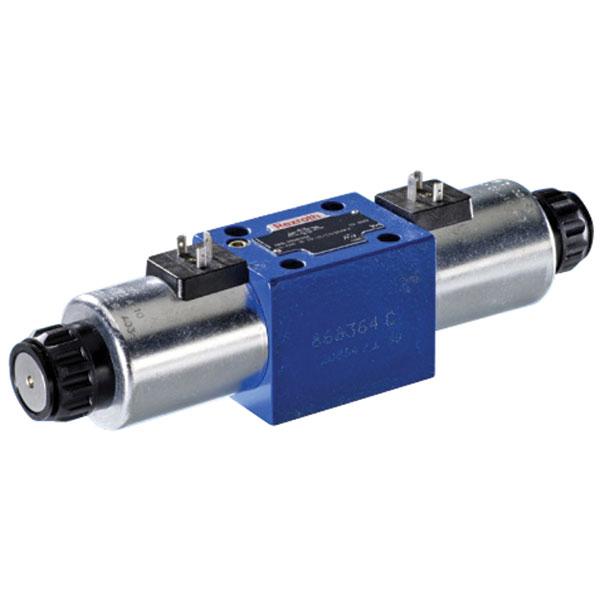

Hidrolik Valf (tekopa)

Application Areas

Valves are frequently used in the following industries and systems:


  • Industrial automation (pneumatic and hydraulic systems)
  • Heating, ventilation, and air conditioning systems (HVAC)
  • Water and natural gas distribution systems
  • Chemical and petrochemical plants
  • Food and pharmaceutical industries
  • Agricultural machinery
  • Automotive and aircraft hydraulic systems


Valves are fundamental system components that control fluid flow and have a broad range of applications in modern industry. Designed in various types according to their structure, operating principles, and application areas, valves enable the construction of safe, efficient, and automation-compatible systems. Pneumatic and hydraulic valves specifically allow precise management of production processes by controlling direction, flow, and pressure in industrial automation systems. Valve selection, in terms of energy efficiency, system safety, and operational convenience, is a critical factor in system design. Therefore, each valve type and its characteristics must be carefully evaluated based on the specific application.

Bibliographies

Author Information

Avatar
AuthorSamet ŞahinJuly 14, 2026 at 4:47 PM

Discussions

No Discussion Added Yet

Start discussion for "Valve" article

View Discussions

Contents

  • Basic Structural Features

  • Valve Types

    • 1. Valves by Construction

    • 2. Valves by Operating Principle

  • Pneumatic Valves

  • Hydraulic Valves

  • Application Areas
