

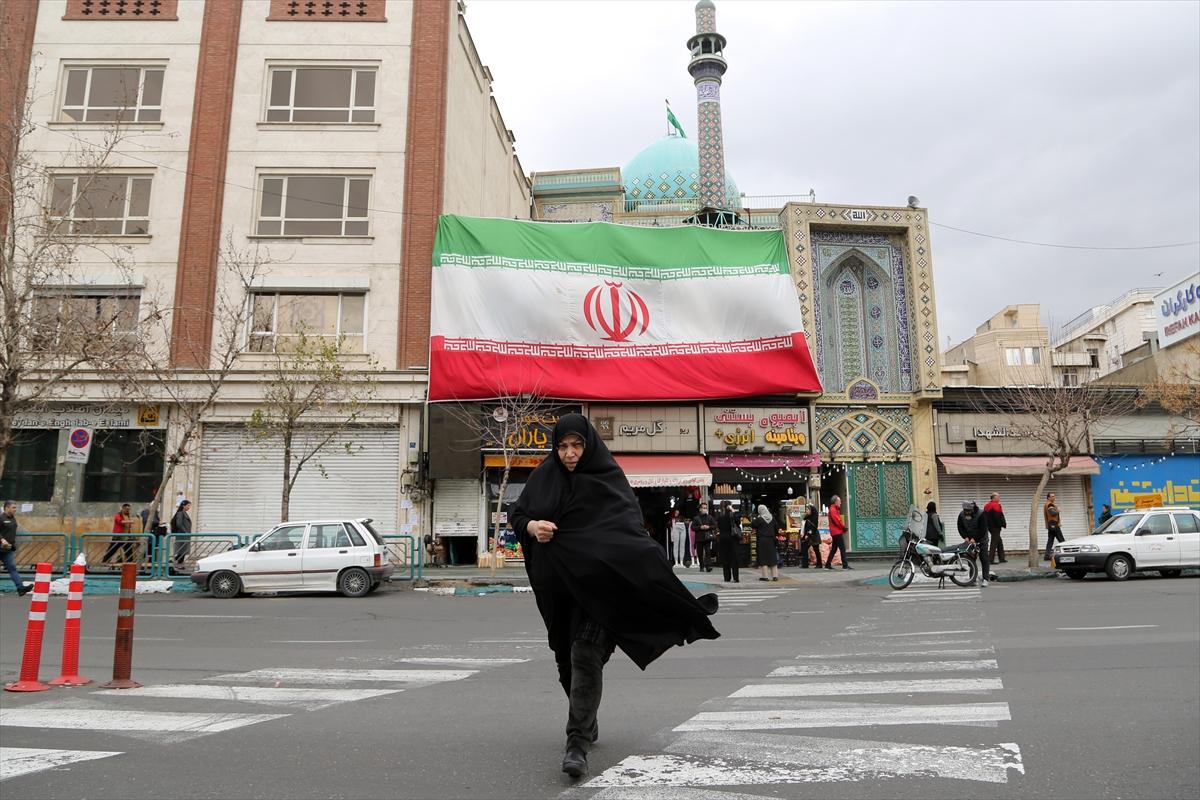
 Recently Added:
This article was automatically translated from the original Turkish version.
U.S.-Iran Tensions (2025–2026) are a crisis process that began in June 2025 with Israel’s attack on Iran, unfolding within the broader context of relations dating back to the 1979 Iranian Islamic Revolution, and entered a new phase with direct U.S. military intervention against Iran’s nuclear facilities. The process subsequently evolved through the reimposition of United Nations sanctions, economic protests in Iran, regional military buildups, and the resumption of indirect nuclear negotiations.
U.S. sanctions against Iran began after 1979 and increasingly focused from the 2000s onward on Iran’s nuclear and ballistic missile programs. The U.S. asserts that Iran’s nuclear program aims to develop weapons, while Iran maintains that its program is solely for civilian energy purposes.
In 2015, under the Joint Comprehensive Plan of Action (JCPOA) signed during the presidency of Barack Obama, Iran limited its uranium enrichment to 3.67 percent and capped its enriched uranium stockpile at 300 kilograms. In return, the U.S. lifted the majority of its previous sanctions.
U.S. President Donald Trump withdrew the U.S. from the JCPOA in May 2018 and reinstated sanctions against Iran. Iran continued to comply with its obligations under the agreement for some time, while European countries, Russia, and China remained parties to the deal. During the Joe Biden administration, most of the sanctions imposed under Trump were maintained.
In May 2025, the International Atomic Energy Agency (IAEA) reported that Iran had accumulated over 400 kilograms of uranium enriched to 60 percent. Enrichment at 90 percent is considered weapons-grade, while 60 percent is regarded as close to weapons-grade. The U.S. and Israel cited this warning as one of the justifications for their attack on Iran in June 2025.
The 12-day Iran-Israel conflict in June 2025 ended with direct U.S. military intervention. This development escalated tensions between the two countries to a new level.
On 9 September 2025 the Cairo Agreement was signed between Iran and the International Atomic Energy Agency to restart nuclear inspections. On 28 September 2025, under United Nations Security Council Resolution 2231, the snapback mechanism was activated and UN sanctions against Iran were reimposed. The European Union also adopted measures to comply with the sanctions.
In November 2025, the International Atomic Energy Agency reported that Iran’s stockpiles of highly enriched uranium could not be verified. On 20 November 2025, Iran announced it had terminated the Cairo Agreement.
On 28 December 2025, following the rial’s record depreciation due to severe sanctions, economic protests erupted in Iran. Demonstrations spread nationwide throughout January 2026, resulting in casualties and arrests. The U.S. administration issued statements regarding the protests, which Iran’s government condemned.
In January 2026, the U.S. increased its military presence in the Middle East. Aircraft carriers, fighter jets, and air defense systems were deployed to the region. Iran announced it had strengthened its defensive preparations and would respond to any potential attack.
On 3 February 2026, the U.S. announced it had shot down an unmanned aerial vehicle it identified as Iranian over the Sea of Oman. On 6 February 2026, indirect nuclear talks between Iran and the U.S. were held in Muscat. A second round of talks was held in Geneva on 17 February 2026. The discussions focused on uranium enrichment, stockpiles of highly enriched uranium, and the lifting of sanctions. A third round of talks was held in Geneva on 26 February. Two days after the third round, on 28 February, Israel and the U.S. launched a military operation against Iran.
U.S. President Donald Trump, after unilaterally withdrawing the U.S. from the nuclear deal in 2018, sent a letter directly to Iranian Supreme Leader Ayatollah Ali Khamenei at the beginning of 2025, calling for direct nuclear negotiations. Iran responded via Oman, stating it would not engage in direct talks under threat or pressure, but was ready for indirect negotiations.
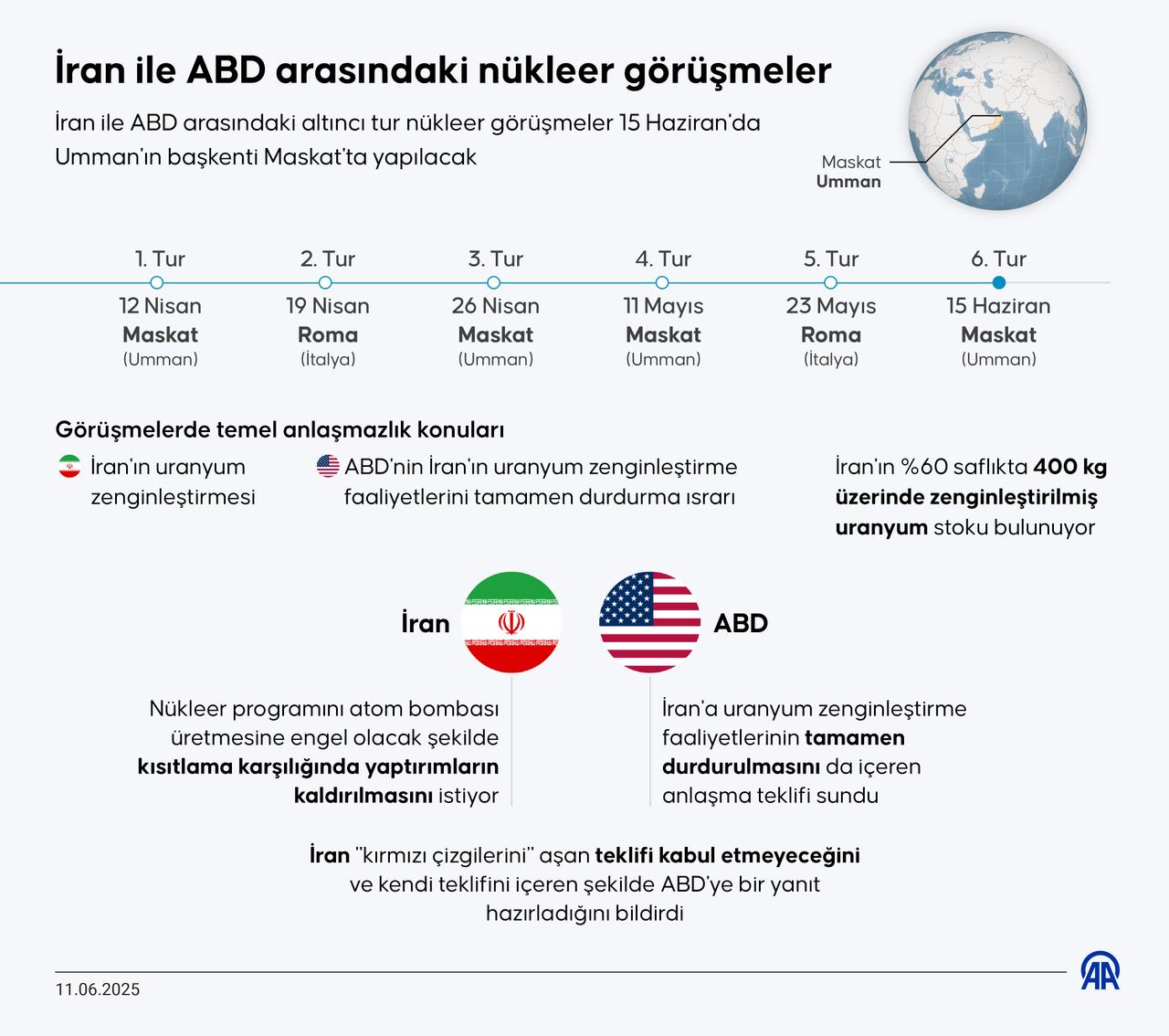
Infographic showing nuclear talks between Iran and the U.S. in 2025. - (Anadolu Ajansı)
On 7 April, during a meeting with Israeli Prime Minister Benjamin Netanyahu at the White House, Trump announced that direct talks between the U.S. and Iran would take place and stated, “If no agreement is reached, Iran will face grave danger.” Following this announcement, diplomatic contacts between the parties led to the decision that negotiations would be conducted under Omani mediation.
During negotiations, Iran indicated it was prepared to limit its nuclear program to prevent nuclear weapons production in exchange for the lifting of sanctions. Tehran also demanded recognition of its right to uranium enrichment and guarantees that the U.S. would not withdraw from any future agreement. The U.S. side offered conflicting statements regarding whether uranium enrichment should be limited or completely halted, leaving the scope of demands unclear.
Indirect negotiations began on 12 April 2025 in Muscat, the capital of Oman. The talks were facilitated by Oman’s Minister of Foreign Affairs, Badr bin Hamad Al Busaidi. The Iranian delegation was led by Foreign Minister Abbas Araghchi, while the U.S. delegation was headed by President Trump’s Special Envoy for the Middle East, Steve Witkoff. Delegations met in separate rooms, with messages exchanged through Oman.
The second round of talks was held at the Omani Embassy in Rome, Italy’s capital. Foreign Minister Abbas Araghchi led the Iranian delegation, while Steve Witkoff represented the U.S.
Iran’s Ministry of Foreign Affairs Spokesperson Ismail Bekayi described the talks as “constructive” and announced that both sides had agreed to continue technical-level discussions within a few days. Foreign Minister Araghchi stated after the second round, “Today’s talks enabled us to achieve a better understanding on a series of principles and objectives.”
The third round of talks took place in Muscat, Oman’s capital. This round included both technical-level expert negotiations and high-level diplomatic discussions. Iran’s Foreign Ministry Spokesperson Bekayi stated that Iran’s defense and missile capabilities were not and would not be subject to negotiation.
Oman’s Foreign Minister Busaidi stated, “The U.S.-Iran talks today established a common goal based on mutual respect and enduring commitments.” Araghchi noted, “There are still disagreements on general issues and details. Some are serious, others less so.”
A senior U.S. official described the Muscat meeting as “positive and productive,” adding, “There is much more to do, but progress was made today.”
The fourth round of talks was held in Muscat on 11 May 2025. The discussions were conducted as high-level indirect diplomatic contacts under Omani mediation. Neither side made public statements regarding the outcome.
Iran’s Foreign Ministry Spokesperson Bekayi assessed the negotiations as “challenging but beneficial,” aimed at better understanding each other’s positions and finding reasonable and realistic ways to resolve contentious issues.
The fifth round of talks was held in Rome, Italy, under Omani mediation. The talks lasted approximately 3.5 hours. Bekayi noted that after political discussions, technical talks followed, and described the atmosphere as “calm and professional.”
Oman’s Foreign Minister Busaidi stated, “The fifth round of Iran-U.S. talks ended today in Rome with some progress, but no definitive breakthrough.”
It was announced that the sixth round of nuclear talks between Iran and the U.S. would take place in Muscat on 15 June. However, the sixth round was suspended on 13 June 2025 following Israel’s attack on Iran, effectively ending the nuclear negotiations. On 14 June 2025, Oman’s Foreign Minister Busaidi announced that the planned talks in Muscat would not proceed.
The 12-day Iran-Israel conflict in June 2025 began with Israel’s large-scale air campaign against Iran on 13 June 2025, followed by Iran’s retaliatory missile and drone strikes, and culminated in direct U.S. strikes on Iran’s nuclear facilities, marking a new phase in the military confrontation between the two countries.
On 13 June 2025, the Israeli Defense Forces launched a comprehensive air attack on Iran under the name “Operation Rising Lion.” The operation targeted numerous sites across Iran’s nuclear and military infrastructure.
More than 200 fighter jets and various unmanned aerial systems were deployed. Targeted regions included Tehran, Natanz, Tabriz, Kermanshah, Isfahan, Arak, Hamedan, Qom, Shiraz, Lorestan, and Khuzestan.
Struck facilities included the Natanz Nuclear Facility, the Parchin Military Complex, the Khatam al-Anbiya Headquarters, and top-level military command centers in Tehran.
Among the senior military figures killed in the Israeli air strikes were the Chief of Staff of the Iranian Armed Forces, Mohammad Bagheri, the Commander of the Islamic Revolutionary Guard Corps, Hossein Salami, the Commander of the Air and Space Force, Amir Ali Hajizadeh, and the head of Iran’s central military headquarters, Gholam Ali Rashid.
In addition, according to numerous reports, Israeli intelligence units carried out sabotage and drone operations inside Iran, targeting air defense systems, missile launchers, and military infrastructure.
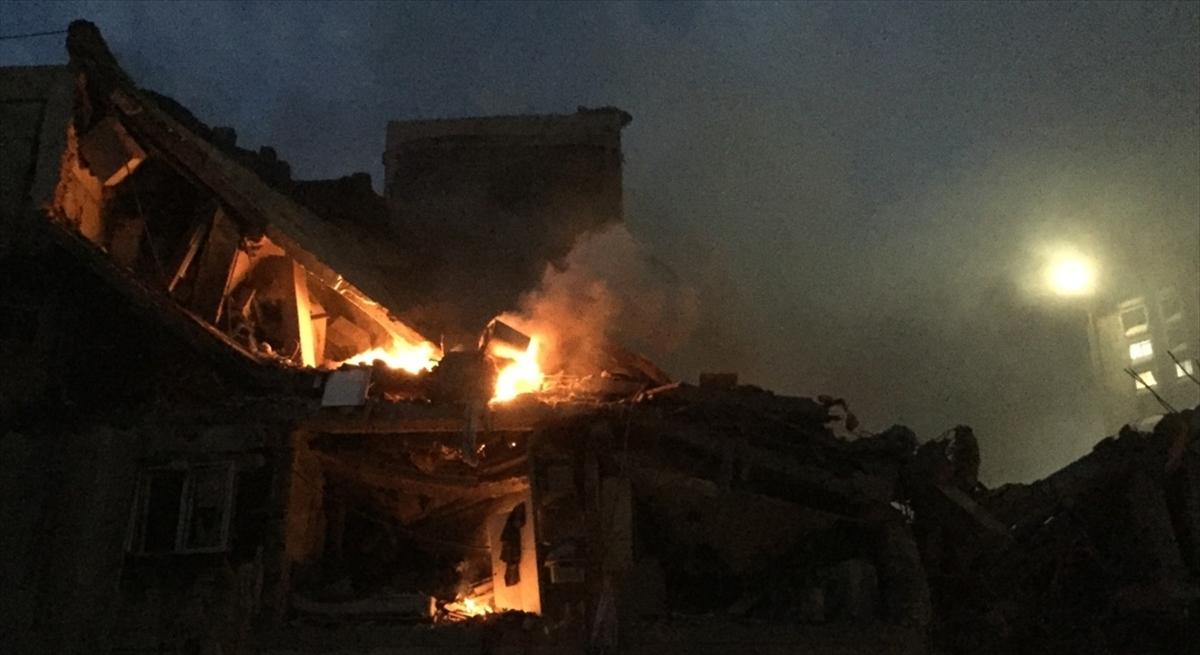
A building on fire in the capital Tehran following the attack on 13 June 2025 - (Anadolu Ajansı)
On 15 June 2025, Iran responded to Israel with a large-scale ballistic missile attack under the name “Sadeq Vat 3.” Iran launched approximately 80 ballistic missiles and over 100 Shahed-136 kamikaze drones at Israel.
Some missiles were intercepted by Israel’s Iron Dome and David’s Sling air defense systems, but others struck civilian areas. Damage occurred in the cities of Bat Yam, Rehovot, Haifa, Tamra, and Petah Tikva.
The Weizmann Institute of Science in Rehovot was directly targeted; at least one laboratory building suffered heavy damage and caught fire.
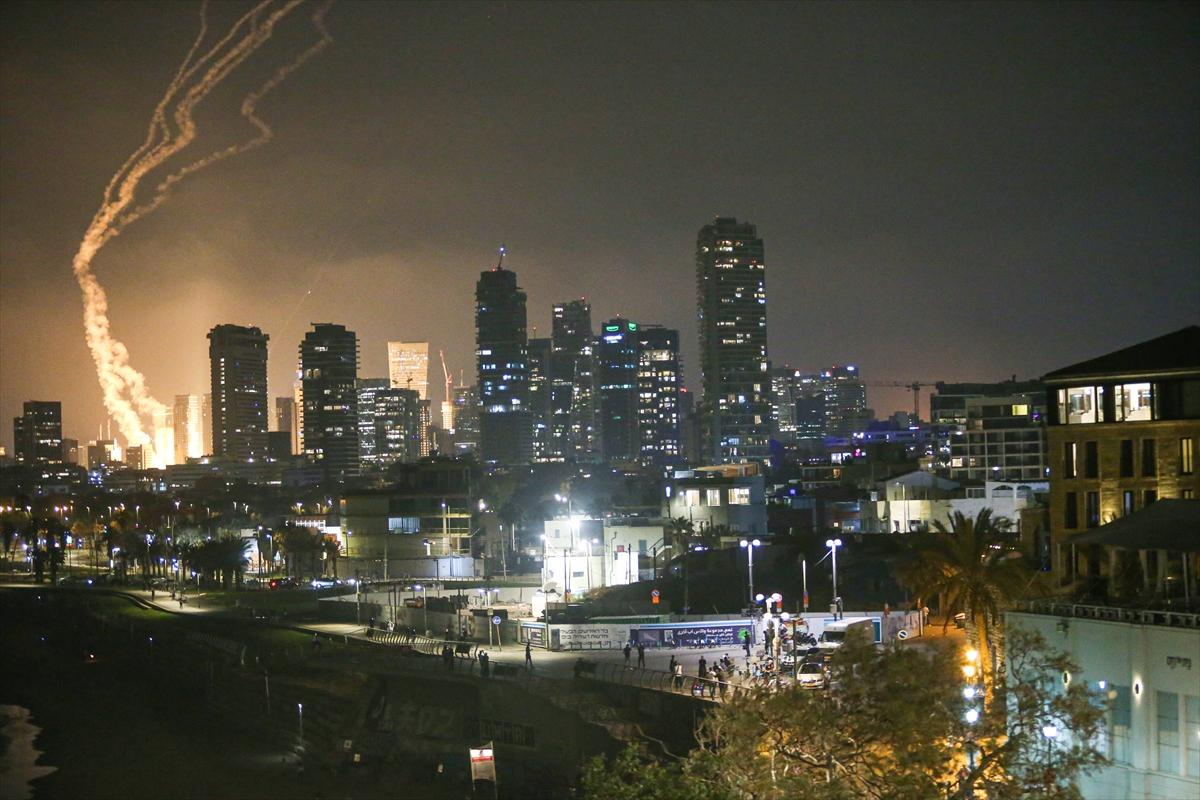
Iran’s retaliatory missile strikes against Israel, 13 June 2025 - (Anadolu Ajansı)
Following Iran’s missile and drone attacks on Israeli military and intelligence facilities, the U.S. launched a direct military operation against Iran’s nuclear facilities on 21 June 2025.
B-2 Spirit stealth bombers targeted underground facilities at Fordow and Natanz using GBU-57 Massive Ordnance Penetrator (MOP) bunker-busting bombs.
The U.S. Navy conducted additional strikes on nuclear infrastructure in Isfahan using Tomahawk missiles launched from the Persian Gulf. This attack prompted Iran to launch missiles at the U.S. Al Udeid Air Base in Qatar.
On the evening of 23 June 2025, Donald Trump announced via Truth Social that Iran and Israel had agreed to a “Complete and Total Ceasefire.” According to the agreement, effective from 24 June, Iran halted all attacks within the first 12 hours, and Israel ended its operations in the following 12 hours. Trump labeled the conflict the “12-Day War.”
Israel’s “Operation Rising Lion” and the subsequent direct U.S. strikes on nuclear facilities led to the complete collapse of ongoing nuclear negotiations (post-JCPOA). After the ceasefire, Iran announced it would reassess its cooperation with the International Atomic Energy Agency (IAEA).
Following the June 2025 ceasefire, the period of July and August 2025 saw direct military clashes replaced by mutual economic sanctions and strategic rhetoric. During this time, nuclear negotiations were suspended and diplomatic channels were put on hold indefinitely.
On 2 July 2025, the U.S. Department of Defense (Pentagon) announced that the June operations had set back Iran’s nuclear program by at least two years.
On 9 September 2025, an agreement was signed between Iran and the International Atomic Energy Agency (IAEA) to restart nuclear inspections suspended after the June 2025 Israeli and U.S. attacks on Iran. The agreement was signed in Cairo by Iran’s Foreign Minister Abbas Araghchi and IAEA Director General Rafael Mariano Grossi following talks.
Iran’s Foreign Ministry Spokesperson Ismail Bekayi stated that the parties had reached an understanding on how to interact in the new context following the “illegal attacks by the U.S. and Zionist regime on Iran’s peaceful nuclear facilities.” IAEA Director Grossi confirmed that practical methods had been agreed upon to resume inspections in Iran.
On 28 September 2025, under United Nations Security Council Resolution 2231, the snapback mechanism was activated and previously lifted United Nations sanctions against Iran were reimposed.
After official notifications from the United Kingdom, France, and Germany on 28 August 2025, a 30-day period elapsed without a new Security Council resolution to lift sanctions. As a result, the snapback mechanism automatically activated at midnight on 28 September 2025.
The following UN Security Council resolutions adopted between 2006 and 2010 were reinstated.
Representative image showing the UN and Iranian flags (Image generated by artificial intelligence)
With the completion of the snapback process, the conventional arms embargo on Iran, which had expired in 2020, was reinstated. The sale, supply, and transfer of arms to Iran were prohibited.
With the return of sanctions:
Under the reinstated resolutions:
Under Resolution 1929, member states were again granted the authority to inspect and, if necessary, seize shipments to or from Iran. Iranian-linked vessels and suspicious cargo became subject to international inspection.
Following the reimposition of UN sanctions, the European Union Council on 29 September 2025 reinstated its own sanctions regime in alignment with the UN decisions.
Under this framework:
The Tehran government rejected the legal legitimacy of the snapback mechanism, asserting that parties that withdrew from or violated the nuclear deal had no right to activate the mechanism. It warned that the decision would further weaken diplomatic efforts.
Iran asserted that as of 18 October 2025, UN Security Council Resolution 2231 had expired and that no UN restrictions on its nuclear activities remained valid. Iran also called for its nuclear file to be removed from the Security Council’s agenda.
On 12 November 2025, in a report shared with member states, the International Atomic Energy Agency (IAEA) stated that since Israel’s attack on 13 June 2025, Iran’s stockpiles of highly enriched uranium near weapons-grade levels could not be verified.
The IAEA report urged Iran to provide information regarding its nuclear stockpiles and emphasized that these stockpiles “require urgent attention.”
The report stated, “The submission of such a report is indispensable for the Agency to guarantee that nuclear materials under safeguards are used for peaceful nuclear activities and that safeguarded facilities are not misused.”
The IAEA’s September 2025 report had previously indicated that Iran had increased its stockpile of highly enriched uranium before the 13 June Israeli attack.
According to the report, as of 13 June 2025, Iran possessed 440.9 kilograms of uranium enriched up to 60 percent. This amount was 32.3 kilograms more than the quantity reported by the Agency in its May 2025 report.
On 20 November 2025, the International Atomic Energy Agency (IAEA) Board of Governors approved a resolution proposal submitted by the United Kingdom, France, and Germany (E3) and the United States of America, demanding information and access regarding Iran’s nuclear facilities and enriched uranium stockpiles.
The resolution noted that enriched uranium stockpiles in Iran that had not been verified by the IAEA for over five months remained a serious concern.
The resolution text emphasized that Iran must fulfill its obligations under UN Security Council resolutions.
Accordingly, Iran was called upon to:
On 20 November 2025, Iran officially announced it had terminated the Cairo Agreement signed with the International Atomic Energy Agency (IAEA) in September 2025, which had aimed to restart cooperation.
Iran’s Foreign Minister Abbas Araghchi made a statement following the adoption of the resolution proposal by the IAEA Board of Governors, submitted by the United Kingdom, France, Germany, and the United States, and approved against Iran’s interests. Araghchi accused the countries submitting the proposal of “disregarding Iran’s good faith, damaging the credibility and independence of the IAEA, and undermining the process of interaction and cooperation between the Agency and Iran.”
Araghchi also stated that the cooperation agreement signed with the IAEA in September was no longer valid following the E3’s initiation of the snapback process in August 2025. Araghchi added, “Today, in an official letter sent to IAEA Director General Rafael Mariano Grossi, we announced that this agreement is no longer valid and has been terminated.”
In December 2025, Iran’s inflation rate was reported at 42.2 percent. During the same period, food prices rose 72 percent and medical and pharmaceutical prices rose 50 percent compared to the same period the previous year.
The Iranian rial depreciated against the U.S. dollar to a range of 1,390,000–1,420,000 in the final week of December 2025. The exchange rate approaching 1,500,000 rials per dollar in the market, amid growing economic uncertainty and accelerating price increases, triggered widespread public outrage.
Protests began on 28 December 2025 with shopkeepers in Tehran’s Grand Bazaar closing their shops. Rising prices and the rial’s depreciation were the primary causes.
Protests that began in Tehran on 28 December 2025 quickly spread nationwide. Demonstrations occurred in all 31 provinces and hundreds of cities. In addition to Tehran, protests took place in Mashhad, Isfahan, Tabriz, Shiraz, Kermanshah, Rasht, Abadan, Borujerd, Kerman, and Sistan-Baluchestan. According to HRANA data, protests occurred at 348 different locations.
Iran protests, 9 January 2026 - (Associated Press)
Within the first 12 days, 34 protesters and 8 security personnel were killed, totaling 42 fatalities. During the same period, 2,277 people were arrested. According to HRANA’s report dated 26 January 2026, since the end of December, 5,848 people had been killed and 41,283 had been arrested.
Iranian official institutions released different figures. The Iranian Foundation of Martyrs and Veterans’ Forensic Medicine Institute, in a statement on 21 January 2026, reported that 3,117 people had been killed in the events, including security forces and civilians. The statement noted that 2,427 of them were security personnel and civilians killed by armed groups, while 690 others had no details provided.
During the protests, damage occurred to public buildings, bank branches, buses, mosques, and hospitals. Ibrahim Azizi, Chairman of the Iranian Parliament’s National Security and Foreign Policy Committee, reported that over 3,700 police officers were injured during the events.
Internet access was cut nationwide, and social media and communication networks were restricted. On 19 January 2026, internet access was gradually restored.
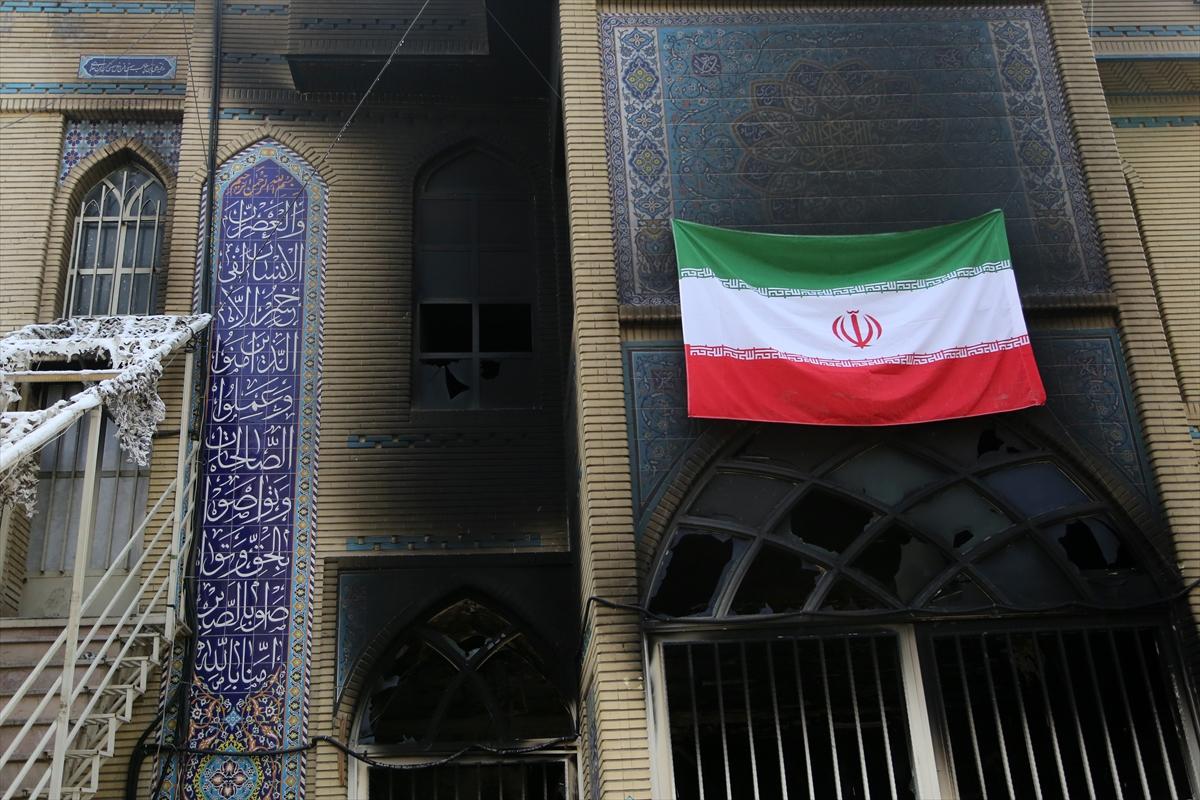
Damaged buildings in Tehran during the protests, 21 January 2026 - (Anadolu Ajansı)
U.S. President Donald Trump said in a post on 2 January that if Tehran used lethal force against protesters, Washington would “come to the aid of the protesters.” Trump’s statement drew a response from Iran’s government. Iran’s Ministry of Foreign Affairs stated in a written statement: “Trump’s latest remarks constitute a clear violation of the United Nations Charter’s principle of respect for national sovereignty and fundamental rules of international law; they also amount to incitement to violence and terrorist acts against Iranian citizens.” The statement affirmed that Iran would respond with a “rapid, decisive, and comprehensive” countermeasure to any potential foreign attack.
On 4 January, U.S. President Donald Trump said, “We are closely monitoring the situation. If they start killing people as they did in the past, I believe they will be hit very hard by the United States.”
Trump stated on 8 January 2026 that if people were killed during the protests, the Washington administration would “hit Iran very hard.” He noted that “large crowds have formed and chaos has erupted.”
Trump said on the program: “They are in a very bad situation. I also told them: If they start killing people—as they tend to do during uprisings, which they frequently instigate—if they do, we will hit them very hard.”
On the same day, U.S. President Donald Trump shared a video on the social media platform Truth Social regarding the protests in Iran. The video was produced by the Israeli television channel Channel 13. Trump used the following caption when sharing the video: “More than a million people protested: Iran’s second-largest city is under the control of protesters, and regime forces have abandoned the city.”
U.S. Vice President JD Vance addressed the protests in Iran during a press briefing at the White House on 8 January 2026. Vance stated that they were closely following the ongoing demonstrations in Iran. He said: “We support everyone peacefully protesting and exercising their right to organize and make their voices heard.”
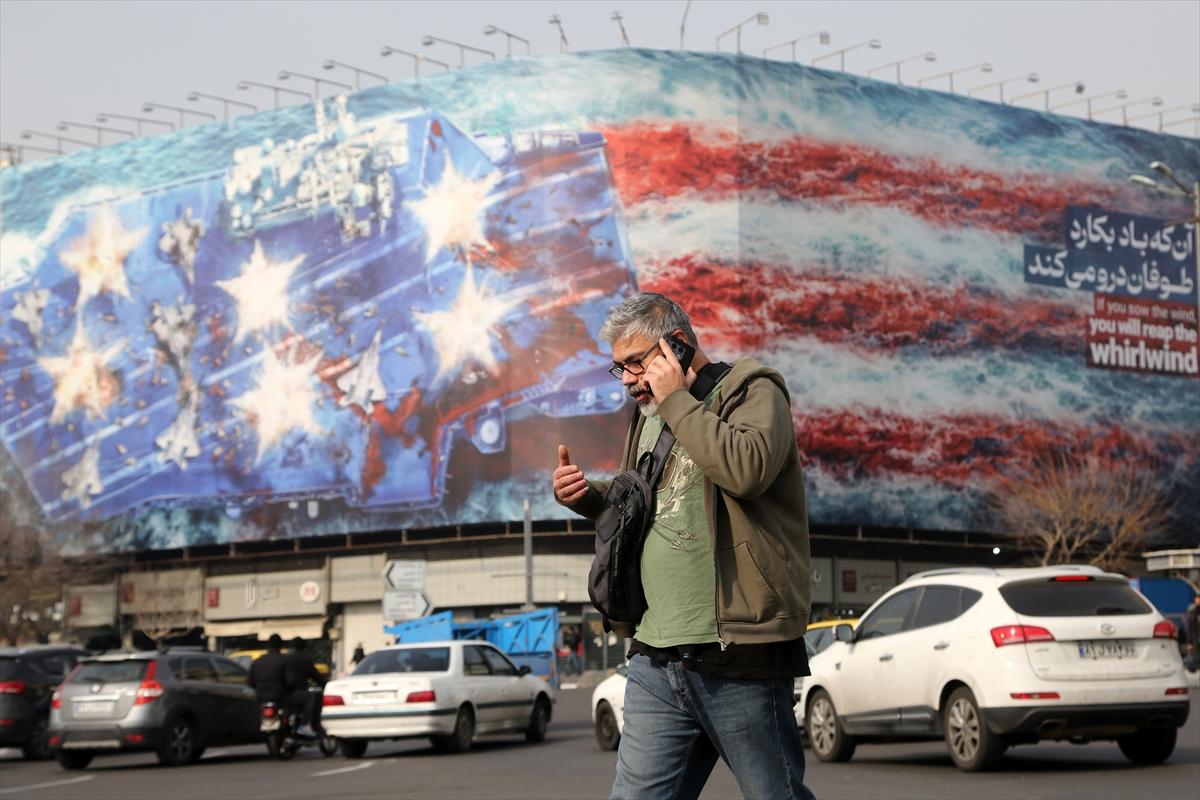
Anti-U.S. poster hung in Iran’s Revolution Square, 25 January 2026 - (Anadolu Ajansı)
During the briefing, Vance said Iran’s government had “many problems,” and advised Tehran to sit down with the U.S. on its nuclear program. He added that any steps the U.S. might take against Iran were “in President Donald Trump’s hands.” Vance also stated, “We stand with everyone defending their rights around the world, including the Iranian people.”
Iran’s Supreme Leader Khamenei, in a statement on 9 January, accused U.S. President Trump of threatening Iran’s government through the protests, saying, “Last night in Tehran, a group of vandals destroyed public property to please the U.S. president. If he can, let him manage his own country.”
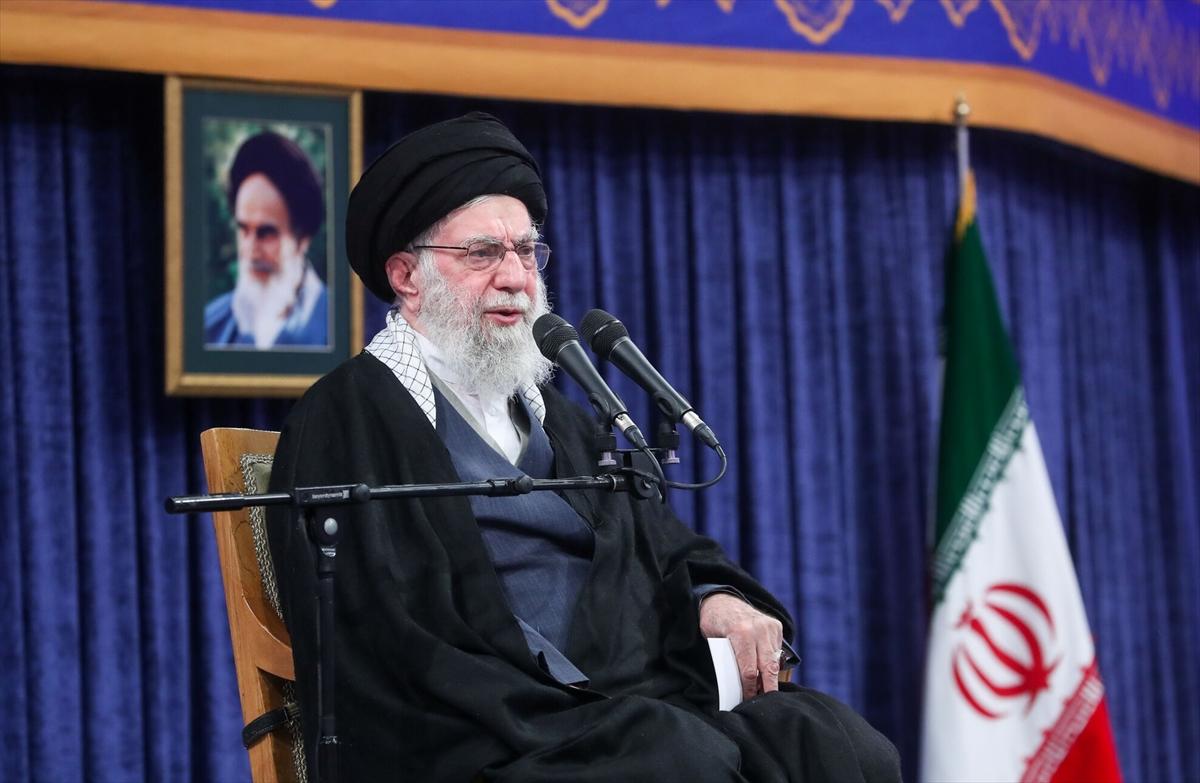
Iran’s religious leader Ayatollah Ali Khamenei, 3 January 2025 - (Anadolu Ajansı)
Reminding that over 1,000 people had been killed in the June 2025 Israeli and U.S. attacks on Iran, Khamenei said, “This man said, ‘I gave the order; I commanded during the war.’ So he admitted his hands are stained with Iranian blood. Then he says, ‘I support Iran.’ A handful of inexperienced and thoughtless people believe him and act according to his wishes.” Khamenei stated that Iran would not show leniency to agents supported by foreign powers, adding, “My people do not tolerate mercenaries working for foreigners. Whoever works for a foreign power, for a foreign cause, that country will consider you rejected.”
That man (Trump), who arrogantly judges the entire world, must know that history’s tyrants and arrogant powers—Pharaoh, Nimrod, Reza Khan, Mohammad Reza, and others—fell precisely at the peak of their pride. This one will fall too. Khamenei added, “Everyone must know that the Islamic Republic came to power with the blood of hundreds of thousands of honorable people and will not retreat in the face of saboteurs.”
On 12 January, while returning from Florida to Washington, U.S. President Donald Trump told reporters on his plane that Iran’s government had contacted the U.S. seeking talks. Trump said, “They called yesterday... Iran called yesterday to negotiate. I think they are tired of being crushed by the United States. Iran wants to negotiate.”
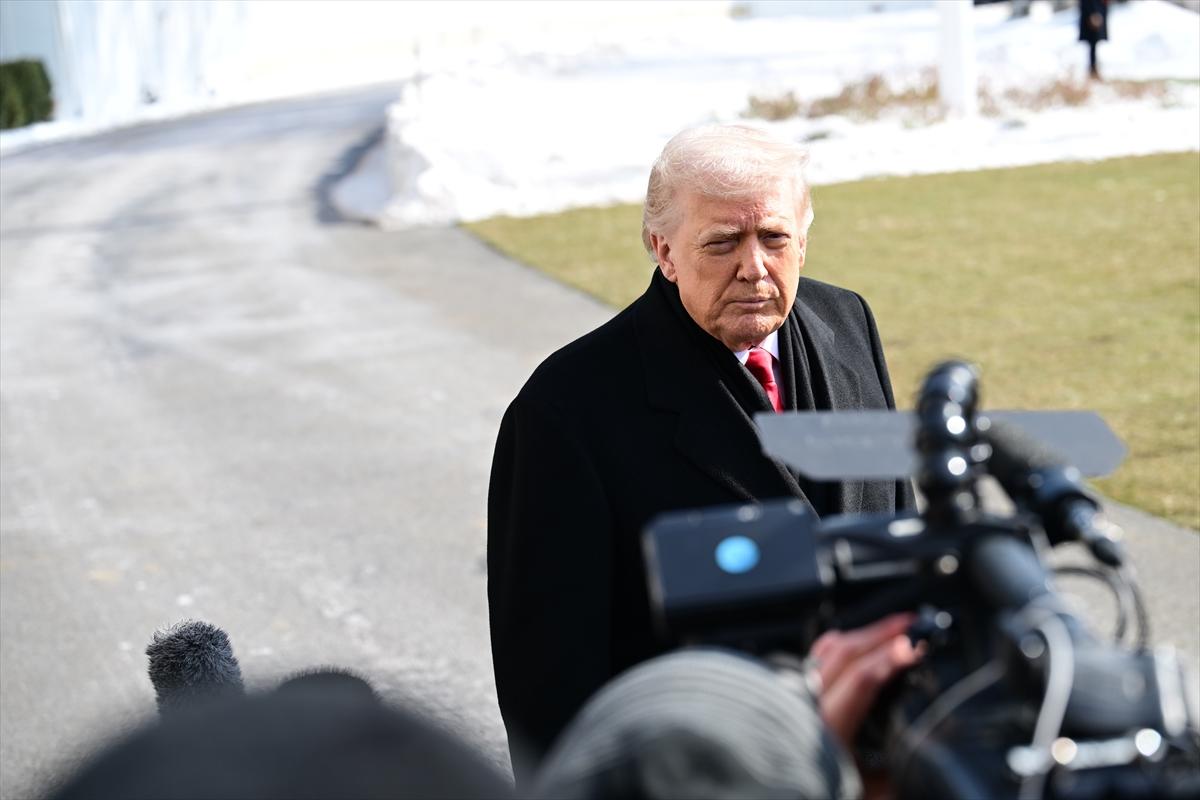
U.S. President Donald Trump, 27 January 2026 - (Anadolu Ajansı)
In the same remarks, Trump said preparations for talks were underway, but due to developments on the ground, the military option remained on the table, adding, “Events before the meeting may require us to act. But a meeting is being arranged. Iran called. They want to negotiate.”
Trump also said the U.S. was closely monitoring the situation in Iran and evaluating “very strong options,” stating, “The military is reviewing this and we are evaluating very strong options. We will make a decision.”
Foreign Minister Araghchi characterized U.S. President Donald Trump’s statements as “interference in Iran’s internal affairs.” “Trump’s statements on the protests are interference in our internal affairs,” he said.
After Trump’s threat of intervention, Araghchi said the protests had turned violent, stating, “After Trump’s threat of intervention, the protests turned into bloody actions to legitimize foreign interference.” In response to Trump’s claim that he was evaluating “very strong measures” against Iran, Araghchi said, “Tehran is ready for both war and dialogue.”
Trump, in a social media post on 13 January 2026, said, “Iranian patriots, continue your protests, seize your institutions. Record the names of the killers and exploiters. They will pay a heavy price. Until the meaningless killing of protesters stops, I have canceled all meetings with Iranian officials. Help is on the way.” At the end of the message, Trump added the phrase “MIGA” (Make Iran Great Again). On 13 January 2026, the United States issued a call to its citizens to “immediately leave Iran” due to the security situation.
In the same interview with CBS News, Trump responded to reports that Iran planned to execute protesters: “I have no information about executions. If they hang them, you will see something… If they do this, we will respond very strongly.” When asked about his “ultimate goal” on Iran, Trump replied, “The ultimate goal is to win. I like to win.”
On 14 January 2026, Trump said, “We were told executions in Iran have been halted. Currently, there is no execution plan or death penalty. If such a thing happens, we will all be saddened. But according to information I received, executions have stopped.”
On 13 January 2026, U.S. President Donald Trump announced the initiation of a new trade policy targeting countries maintaining economic relations with Iran. In a post on the U.S.-based Truth Social platform, Trump stated, “Countries doing business with Iran will pay a 25 percent customs tariff on trade with the United States. The decision is effective immediately.”
On 13 January, Israel raised its preparedness level in response to the potential for a U.S. military strike against Iran. Israeli officials stated that a U.S. attack was no longer a possibility but a matter of timing.
Israeli military correspondent Dorron Kadosh of Army Radio said, “Israel’s assessment is that if the U.S. attacks Iran, Iranian Supreme Leader Ali Khamenei will order attacks against both U.S. targets in the Middle East and Israel.”
On 22 January 2026, U.S. President Donald Trump told reporters aboard Air Force One that the U.S. had sent a naval fleet toward Iran. Trump said, “I don’t want anything to happen, but we are watching them very closely.”
Trump said he was keeping the military option open if protesters in Iran were killed, but had temporarily softened his hardline stance after learning that “hundreds of planned executions had been canceled.”
Trump said regarding the claims: “I said: ‘If you hang those people, you will receive the harshest blow you have ever received. What we have done to your nuclear program will seem insignificant in comparison.’”
On another occasion after returning from the World Economic Forum in Davos, Trump said, “We have a huge force moving toward Iran.” In an interview with CNBC, Trump stated that if Iran resumed nuclear activities, military action would follow: “They cannot continue nuclear activities. If they do, the same thing will happen again.”
U.S. officials announced that the USS Abraham Lincoln aircraft carrier, along with guided-missile destroyers, had been directed toward the Middle East. A U.S. naval official confirmed that the “Lincoln strike group” was in the Indian Ocean. Additional air defense systems could also be deployed to U.S. bases in the Middle East.
U.S. officials speaking to the New York Times confirmed that President Donald Trump’s administration had increased military preparations in response to the potential for a strike against Iran.
Officials reported that the USS Abraham Lincoln aircraft carrier, accompanied by three Tomahawk-equipped destroyers, entered the U.S. Central Command’s (CENTCOM) Western Indian Ocean area of responsibility on 26 January. The White House indicated that if an attack order were issued, the carrier could be ready for combat “within one or two days.”
On 28 January 2026, U.S. President Donald Trump said on social media, “A massive armada is advancing toward Iran.” Trump stated that the USS Abraham Lincoln was at the head of the fleet and that it was larger than the fleet sent to Venezuela. He added, “(The fleet) is ready, willing, and capable of carrying out its mission quickly and forcefully if necessary, just like in Venezuela.”
U.S. President Trump called for Iran to quickly sit at the negotiating table for an “fair, equal, and good for all” agreement, emphasizing that such an agreement must exclude nuclear weapons. “Time is running out. This is truly important. As I told Iran before, make an agreement.” He warned that if Iran refused, “The next attack will be worse. Do not allow it.”
As of 29 January, the USS Abraham Lincoln (CVN 72) aircraft carrier entered the area of responsibility of U.S. Central Command (CENTCOM). The carrier carries Carrier Air Wing (CVW) 9, which includes VMFA-314’s F-35C Lightning II fighter jets, numerous F/A-18E/F Super Hornets, and electronic attack aircraft EA-18G Growlers. The carrier is escorted by destroyers USS Frank E. Petersen Jr. (DDG-121), USS Michael Murphy (DDG-112), and USS Spruance (DDG-111) under Destroyer Squadron 21.
These ships are equipped with the Aegis Combat System and MK 41 Vertical Launching System, capable of firing various munitions including the “BGM-109 Tomahawk” cruise missiles. It was also reported that nuclear-powered attack submarines were part of the naval force in the region, adding “stealth cruise missile capability” to the armada.
The U.S. Air Force also provided land-based air support to the region. F-15E Strike Eagle fighter jets were deployed from the British base at Lakenheath to Jordan’s Muwaffaq al Salti Air Base. These platforms are designed for deep strike missions and carry precision-guided munitions and bunker-busting bombs. KC-135 Stratotanker refueling aircraft provided aerial refueling, while RC-135W Rivet Joint intelligence aircraft collected targeting data by monitoring Iran’s radar and communication networks.
At the Al Udeid Air Base in Qatar, a new “Middle East Air Defense and Combined Operations Unit” (MEAD-CDOC) was established with participation from CENTCOM and allied partners. The unit’s purpose was to strengthen the integrated missile defense network.
During the same period, Patriot and THAAD systems were deployed to Israel, the UAE, and Jordan. Additional Patriot batteries were added to defense lines at bases in Qatar, Kuwait, and Jordan. It was reported that the U.S. had deployed 5,700 additional troops to the region, bringing the total force to approximately 50,000.
Iran announced it had taken steps to enhance its defense capabilities in response to U.S. actions. Iranian Armed Forces Chief of Staff Major General Amir Hatami reported that 1,000 new unmanned aerial vehicles (UAVs) had been integrated into the military inventory. These systems were designed for attack, reconnaissance, and electronic warfare missions and could target land, air, and sea targets. Hatami stated these systems were developed “in line with new security threats and operational lessons from the past 12-day war.”
The Tehran government declared it would respond with a “rapid and comprehensive” response to any potential military attack from the U.S. Iranian Deputy Foreign Minister Kazem Garibabadi said, “We will target every base or point from which an attack is launched against us.” Garibabadi emphasized that Iran’s priority was defense preparedness, not negotiation.
Iran’s Permanent Mission to the United Nations, in a post on the social media platform X, stated, “Iran is ready for dialogue based on mutual respect and shared interests, but if pressured, it will defend itself and respond as never before.” Iranian Supreme Leader Ali Khamenei’s advisor Ali Shamkhani said, “Any military action will be considered the start of war and will be met immediately, comprehensively, and without precedent.”
Iran’s Foreign Minister Abbas Araghchi stated that any potential nuclear agreement must be based on equality and free from pressure or threats. Iranian Parliament Speaker Mohammad Bagher Ghalibaf emphasized that diplomacy must be conducted on the basis of mutual respect and trust.
On 1 February 2026, Iranian Supreme Leader Ali Khamenei addressed the nation from his residence in Tehran on the 47th anniversary of the revolution. Khamenei said, “The Americans must know that if they start a war, this time it will be regional.”
Khamenei noted that Washington had repeatedly spoken of war and mentioned aircraft and warships, recalling that U.S. officials had previously used the phrase “all options are on the table.”
Khamenei stated that Iran did not wish to be the party initiating war and said, “If anyone attacks Iran and causes harm, Iran will respond with great force.”
On 3 February 2026, U.S. President Donald Trump, during a signing ceremony in the Oval Office, said he had “very large” ships heading toward Iran and confirmed that talks with Iranian officials were ongoing.
Trump said, “I want to reach an agreement with Iran. We are currently talking with Iran. If we can reach an agreement, it will be very good; if we cannot, bad things will likely happen.”
When asked what would happen if the situation with Iran deteriorated, Trump replied, “I wouldn’t be foolish enough to tell you.”
On 3 February 2026, U.S. Central Command (CENTCOM) announced that an unmanned aerial vehicle identified as Iranian had been shot down over the Sea of Oman near the USS Abraham Lincoln aircraft carrier.
CENTCOM officials claimed the UAV, identified as an Iranian Shahed-139, was shot down by an F-35C fighter jet under the principle of “legitimate self-defense.” CENTCOM Spokesperson Tim Hawkins stated, “While the USS Abraham Lincoln was operating approximately 500 miles (800 km) off Iran’s southern coast in the Arabian Sea, an Iranian unmanned aerial vehicle maneuvered unnecessarily toward the carrier. An F-35C from the Abraham Lincoln shot down the Iranian UAV to defend itself and protect the carrier and its personnel.”
The U.S. spokesperson emphasized that the carrier was operating in international waters and that necessary measures had been taken to prevent escalation with Iran.
On 6 February 2026, indirect talks between Iran and the U.S. were held in Muscat, Oman’s capital.
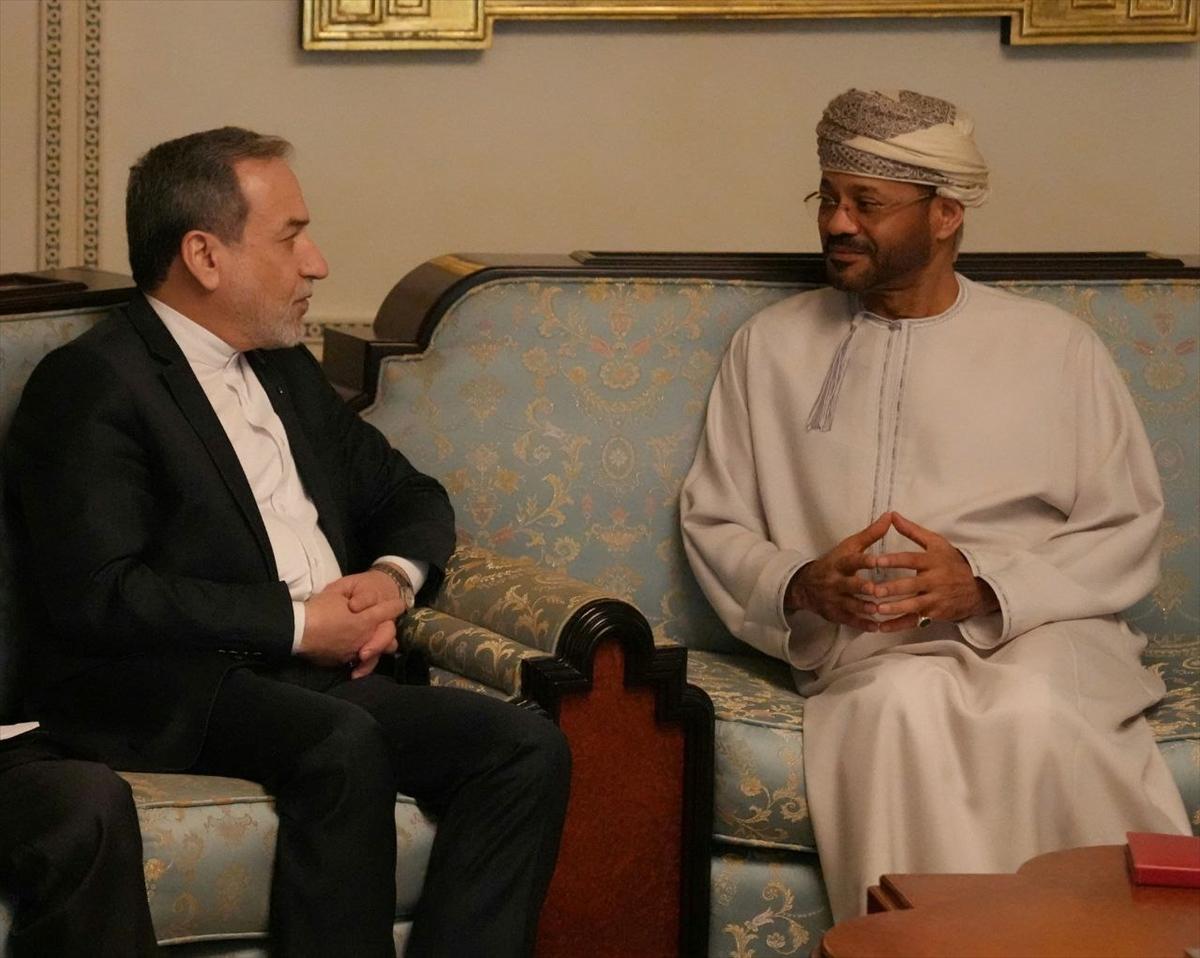
Oman’s Minister of Foreign Affairs Badr bin Hamad Al Busaidi with Iran’s Foreign Minister Araghchi before the meeting, 6 February 2026 - (Anadolu Ajansı)
At the beginning of February, it was announced that the first phase of renewed diplomatic contacts between Iran and the United States would take place in Istanbul, Turkey.
Iran later insisted that talks be held in Oman and conducted in a bilateral format without third-party involvement. Iran cited the fact that previous nuclear negotiations had been held in Oman.
Iran stated that negotiations must be limited exclusively to the nuclear issue. It declared that its ballistic missile program and defense capabilities would not be subject to negotiation and were considered matters of national security.
The U.S. administration opposed Iran’s demand to limit talks solely to the nuclear program. U.S. Secretary of State Marco Rubio stated that talks must also cover ballistic missile ranges, Iran’s support for regional armed groups, and developments within the country. Rubio noted that the U.S. initially planned for talks to be held in Turkey, but Iran had rejected this option.
Following disagreements over venue and format, it was announced that both sides had agreed on Muscat as the location. The meeting date was set for 6 February 2026. Iran reiterated its demand that talks be conducted bilaterally and emphasized that third countries must not be directly present at the table.
Oman’s Minister of Foreign Affairs, Badr bin Hamed Al Busaidi, hosted the talks and acted as mediator between the parties. On 6 February 2026, indirect talks were held in Muscat between Iran and the U.S. The talks were conducted in an indirect format, with Oman’s Foreign Minister Al Busaidi facilitating message exchanges.
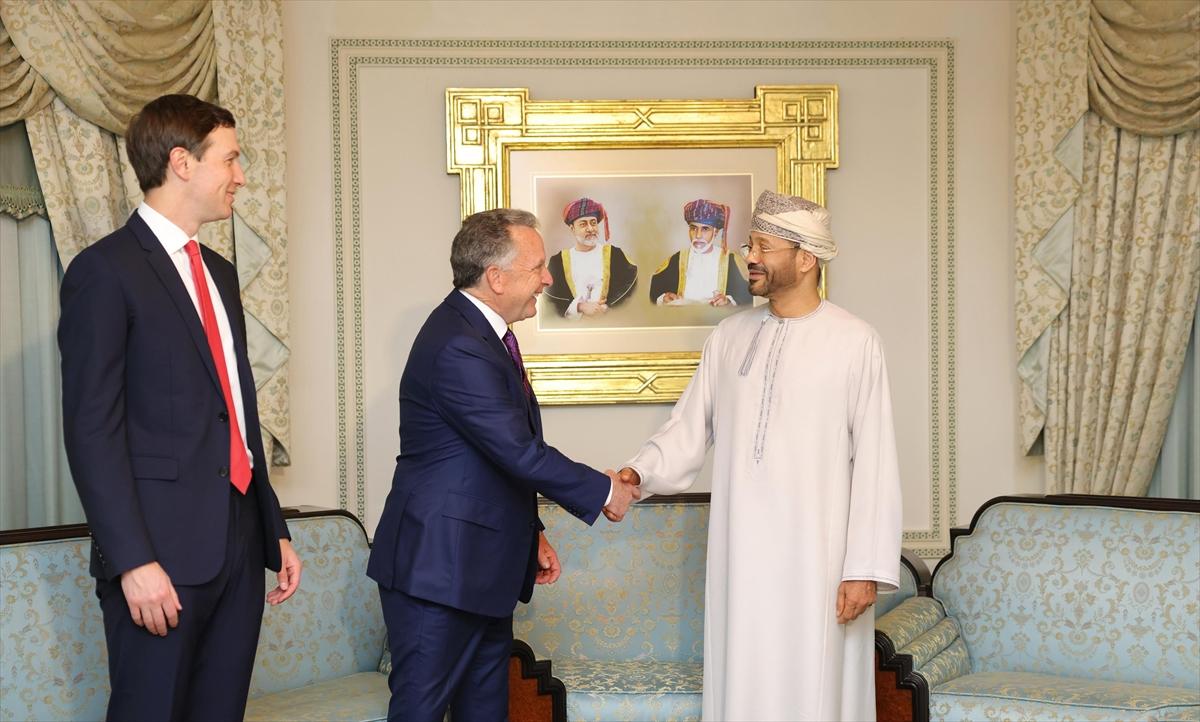
Oman’s Minister of Foreign Affairs Badr bin Hamed Al Busaidi with U.S. President Donald Trump’s Special Envoy for the Middle East Steve Witkoff and Trump’s son-in-law and advisor Jared Kushner before the meeting, 6 February 2026 - (Anadolu Ajansı)
This meeting marked the first official contact since the nuclear negotiations were suspended in June 2025. The Iranian delegation was led by Foreign Minister Abbas Araghchi. The delegation included Mecid Taht Revanchi, Hamid Kanbari, and Kazem Garibabadi.
The U.S. delegation was led by President Donald Trump’s Special Envoy for the Middle East, Steve Witkoff. The U.S. delegation also included Jared Kushner and CENTCOM Commander Brad Cooper.
The main agenda item of the talks was Iran’s nuclear program. The U.S. side demanded the complete cessation of uranium enrichment activities and the removal of Iran’s stockpile of highly enriched uranium from the country. Iran stated it was prepared to limit its nuclear program to prevent nuclear weapons production, but insisted this must occur simultaneously with the lifting of sanctions.
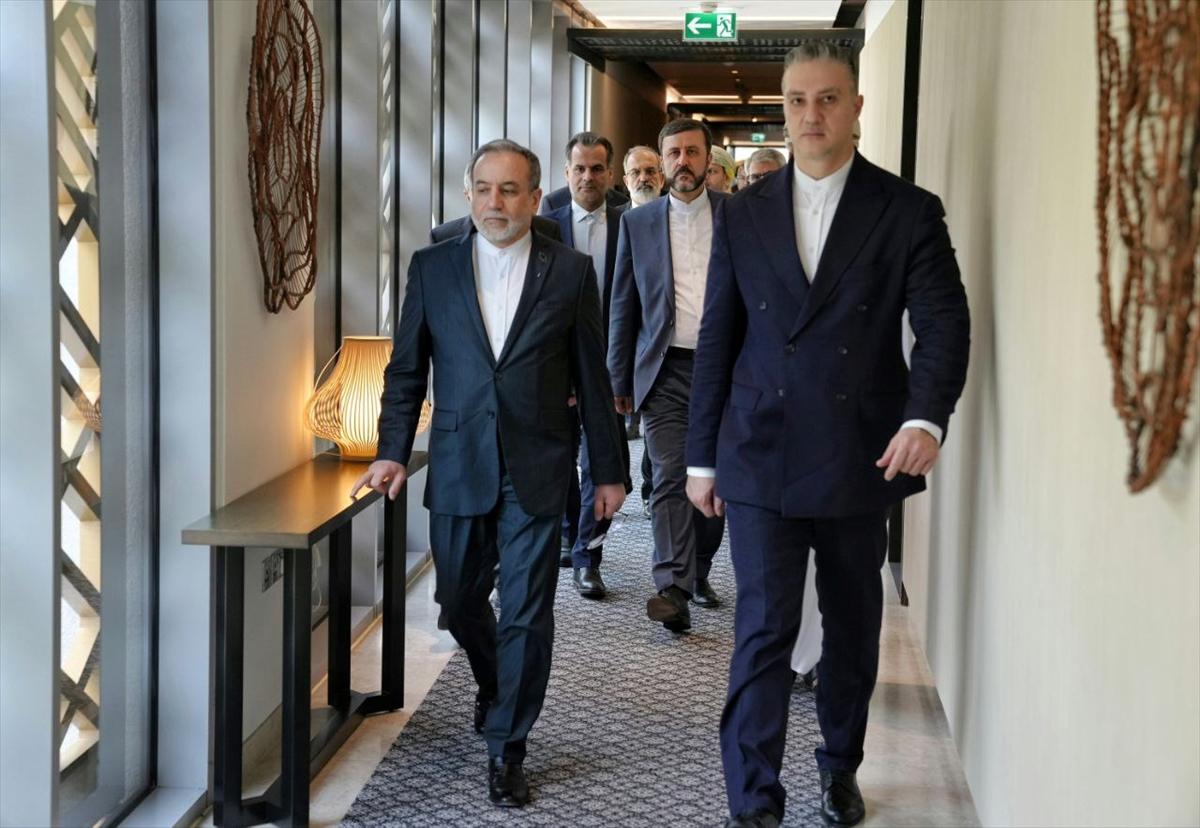
Iran’s Foreign Minister Araghchi in Oman, 6 February 2026 - (Anadolu Ajansı)
Iran’s Foreign Ministry Spokesperson Ismail Bekayi stated that the Muscat talks concluded with both parties agreeing to continue the process. Iran’s Foreign Minister Abbas Araghchi described the talks as introductory and indicated that further discussions would determine how the process would proceed.
On the same day the Muscat talks ended, the U.S. administration announced new sanctions against Iran. The executive order stated that Iran’s actions posed an “unusual and extraordinary threat” to U.S. national security, foreign policy, and economy. It authorized the imposition of additional customs tariffs of up to 25 percent on goods imported by countries directly or indirectly purchasing from Iran. The order took effect on 7 February 2026.
On 12 February 2026, U.S. President Donald Trump made an assessment of the nuclear negotiations with Iran during a press briefing at the White House.
Trump said he wanted to reach an agreement with Iran and that negotiations were ongoing. He emphasized that any potential agreement must be “fair and good” from the U.S. perspective. Trump stated that if no agreement was reached, the U.S. would move to a “second phase,” which he described as “very difficult” for Iran.
In response to a question about how long the process would continue, Trump said he could meet with the Iranians as long as he wished and that the final decision rested with him. On 13 February 2026, when asked whether the U.S. would send a second aircraft carrier to the Middle East, Trump replied, “If we don’t reach an agreement with Iran, we will need it.”
Trump, noting that no agreement had yet been reached with Iran, said, “(The carrier) will depart very soon. There is already a new one stationed there. If we need it, we are keeping it ready. A large, very large force.” He added in response to whether negotiations would succeed, “I believe they will succeed, and if they don’t, it will be bad for Iran.”
When asked by a journalist, “Do you want regime change in Iran?”, Trump replied, “I think that would be the best possible outcome.” In response to the question of what Iran must do to avoid a U.S. attack, Trump said, “They should have reached the right agreement earlier. Then we wouldn’t do this, but you know, historically they have not done so.”
Trump accused Iran of “talking too much and doing nothing,” saying, “For 47 years they have talked nonstop. Meanwhile, while they talk, we have lost many lives. Legs were severed, arms were severed, faces were destroyed.”
Speaking of the “immense force” deployed to the region, Trump said, “You know additional forces are going and more aircraft carriers will soon depart, so we will see if we can finally put things on the right track.”
On 13 February, Iran’s Security Council Secretary and Supreme Leader Ali Khamenei’s advisor, Ali Shamkhani, commented on the Iran-U.S. talks in Oman, stating that negotiations could progress positively if they remained realistic and free from excessive demands. He emphasized that diplomatic efforts aimed to reduce tensions.
Shamkhani, asserting Iran’s readiness for any potential war, said, “We will respond decisively to any adventurism. The cost of miscalculations will be high.”
On 14 February 2026, Iranian President Masoud Pezeshkian said, “No country benefits from war, and no goal can be achieved through bloodshed. The initiatives of Turkey, Azerbaijan, Iraq, Saudi Arabia, Egypt, Oman, Qatar, Pakistan, and other country presidents are commendable. We can resolve regional problems peacefully among ourselves. We need no protector.”
As of 14 February 2026, the United States significantly increased its military presence in the Middle East while continuing diplomatic talks with Iran. The U.S. Department of Defense deployed aircraft carrier strike groups, advanced fighter jet fleets, and air and missile defense systems to the region.
The center of the regional naval buildup was the USS Abraham Lincoln aircraft carrier and its strike group. Additionally, it was reported that the USS Gerald R. Ford aircraft carrier had also been deployed to the Middle East.
The USS Gerald R. Ford, previously stationed in the Caribbean, was reported to be en route to the Middle East, where it would operate alongside the USS Abraham Lincoln. Thus, the U.S. Navy deployed two simultaneous aircraft carrier strike groups in the CENTCOM area of responsibility. These carriers were escorted by guided-missile destroyers including USS Frank E. Petersen Jr., USS Michael Murphy, USS Spruance, USS McFaul, and USS Mitscher.
These ships were equipped with the Aegis defense system and MK-41 vertical launch systems, capable of firing long-range cruise missiles and air defense munitions.
The U.S. Air Force redeployed additional fighter squadrons from European bases to the Middle East. F-15E Strike Eagle fighter jets were deployed from the British base at Lakenheath to Jordan’s Muvaffak Salti Air Base. These aircraft were reported to carry precision-guided munitions and bunker-busting bombs.
It was reported that reconnaissance aircraft and MQ-9 Reaper unmanned aerial vehicles were operating from the Al Dhafra Air Base in the United Arab Emirates. U.S. forces enhanced their electronic intelligence-gathering capacity by deploying specialized aircraft to Qatar to monitor radar and communication emissions.
At the Al Udeid Air Base, Patriot air defense systems were moved from semi-static ramps onto mobile truck platforms. Mounting the Patriot systems on M983 Heavy Expanded Mobility Tactical Trucks (HEMTT) enabled rapid relocation of missile batteries to alternative locations and quick repositioning in case of an attack. Satellite imagery analysis indicated these changes had been implemented since January.
The overall air and missile defense network across the region was also strengthened. THAAD and Patriot batteries were deployed to Israel, Jordan, and the United Arab Emirates; existing defense systems in Qatar, Kuwait, and Jordan were reinforced. U.S. forces established a layered defense against ballistic missile threats.
According to data from the satellite imagery company Planet Labs, military activity was detected not only at the Al Udeid Air Base in Qatar but also in Jordan, Saudi Arabia, Oman, and Diego Garcia Island in the Indian Ocean.
Images from 1 February showed at the Qatari air base one RC-135 reconnaissance aircraft, three C-130 Hercules, 18 KC-135 Stratotanker, and seven C-17 transport aircraft. Images from 2 February showed at Jordan’s Muvaffak Salti Base 17 F-15E attack aircraft, eight A-10 Thunderbolts, four C-130s, and four helicopters. In another section of the base, one C-17, one C-130, and four EA-18G Growler electronic warfare aircraft were identified.
The second round of indirect nuclear negotiations between the U.S. and Iran was held on 17 February 2026 in Geneva, Switzerland. The talks were held at the Omani Embassy residence and the Omani mission building in Geneva.
Iran’s Foreign Minister Abbas Araghchi met with the Director General of the International Atomic Energy Agency (IAEA) on 16 February 2026, one day before the second round. U.S. President Donald Trump stated before the talks that the second round was “very important” and indicated he would be indirectly involved in the process.
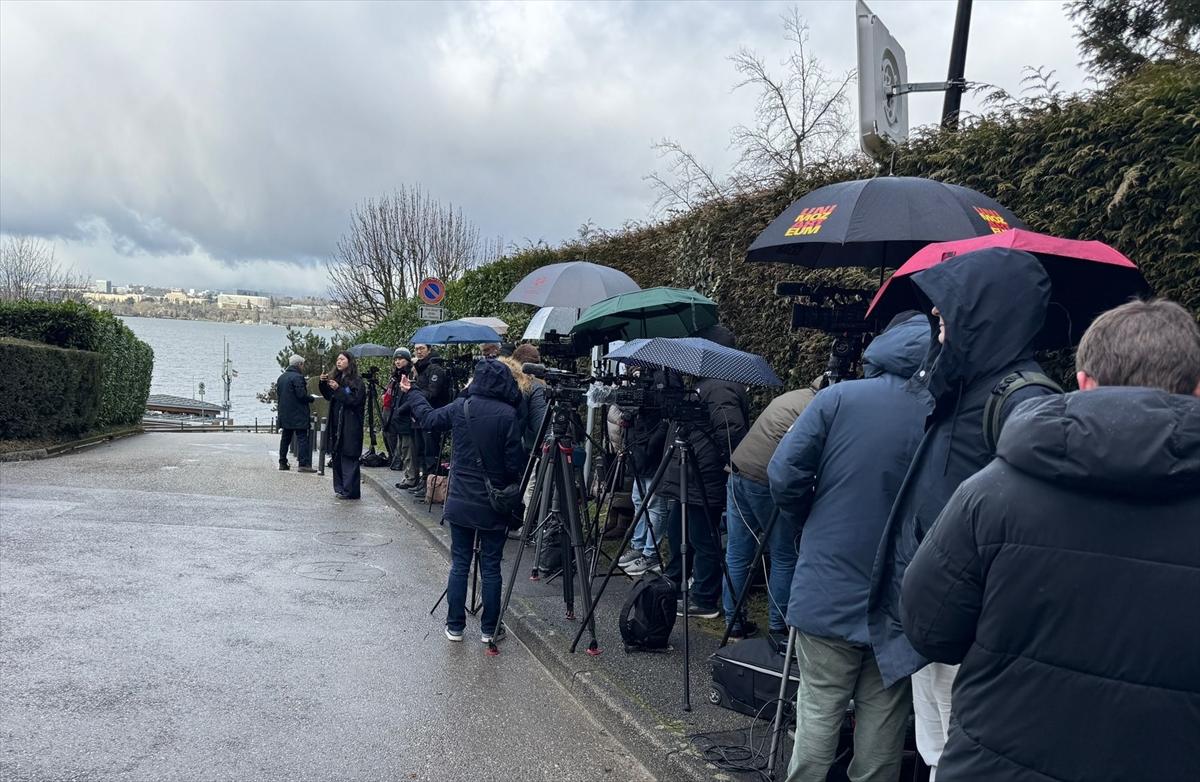
The Omani Embassy in Geneva, 17 February 2026 - (Anadolu Ajansı)
The main agenda item in the second round was Iran’s nuclear program. The U.S. side demanded the complete cessation of enrichment and the removal of Iran’s stockpile of highly enriched uranium. Iran insisted that sanctions be lifted in exchange for limiting its nuclear activities.
The lifting of sanctions and the release of Iran’s blocked funds were also among the negotiation topics.
Following the Geneva talks, White House Press Secretary Karoline Leavitt stated that President Donald Trump’s first preference on Iran was “diplomacy,” adding, “It would be very wise for Iran to reach an agreement with President Trump and this administration.”
Leavitt said the President remained in constant contact with the National Security Council and other relevant officials regarding potential military strikes against Iran, but the U.S. would not disclose any timeline regarding its actions on Iran.
Referring to the negotiations in Geneva, Leavitt said, “Some progress was made, but we are still far from an agreement.” She added that she expected Iran to provide more detailed responses in the coming weeks. When asked how long Trump would wait for Iran’s reply, Leavitt said, “That decision rests with the President; he will make the decision.”
Responding to a question about coordination with Israel regarding a potential Iranian strike, Leavitt confirmed that the U.S. was in close cooperation with Israel but declined to provide details.
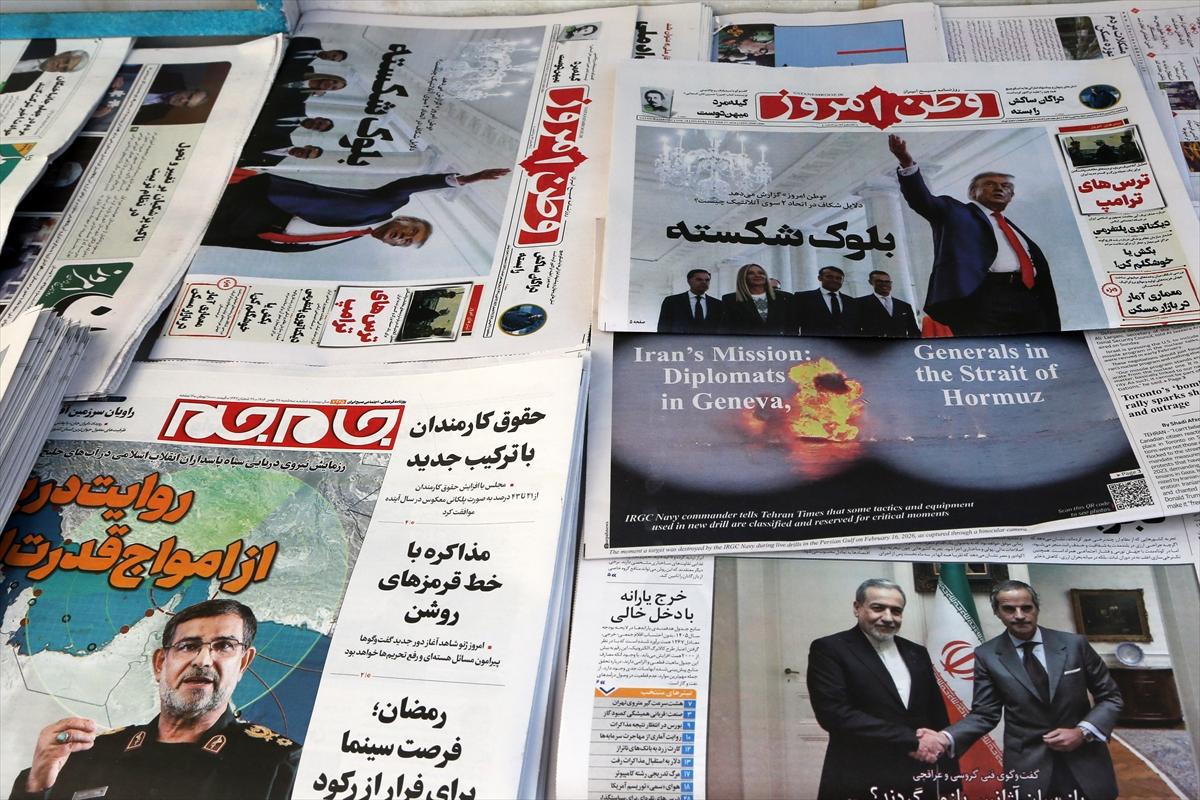
Iranian newspapers in Tehran, 17 February 2026 - (Anadolu Ajansı)
On 18 February, it was reported that the U.S. had deployed numerous fighter jets and related assets to bases in Europe and the Middle East. Following the Geneva talks, the U.S. continued its shipments of munitions and air assets to the region.
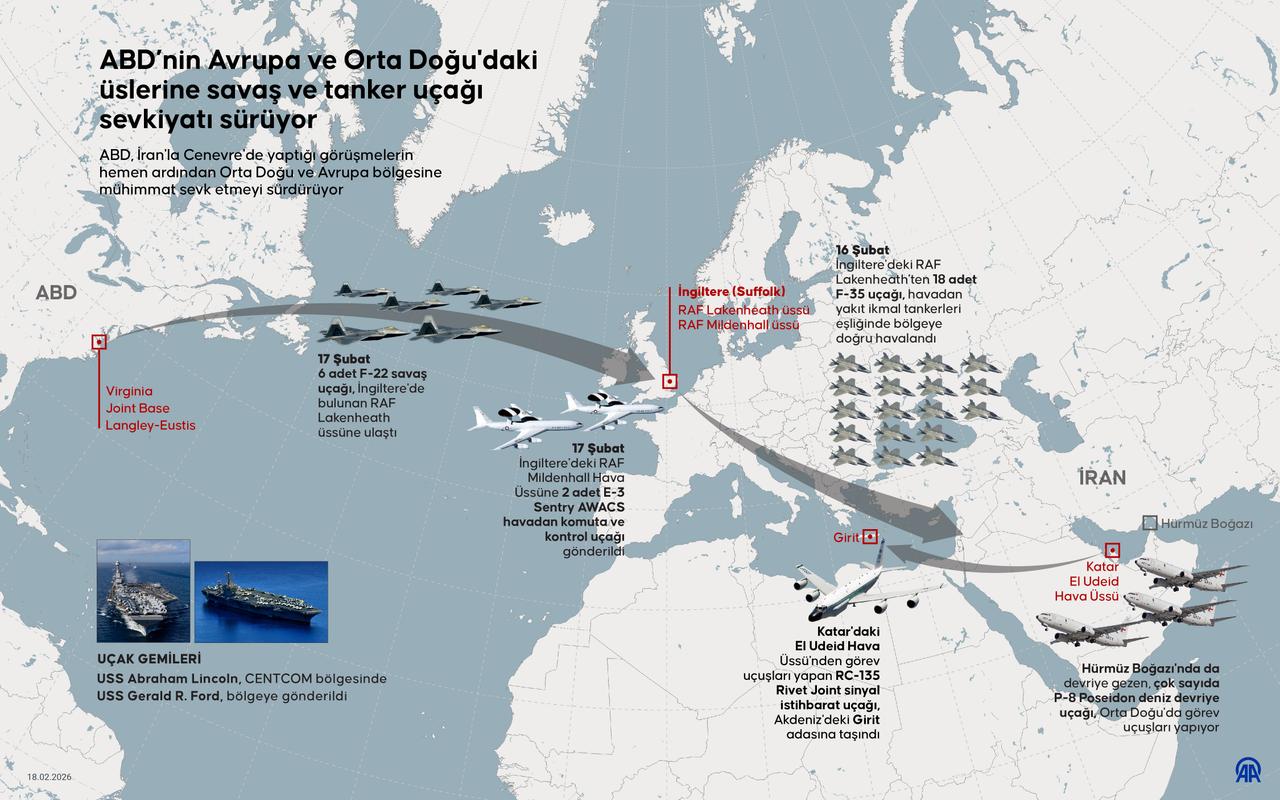
Infographic showing U.S. fighter and tanker aircraft deployments to Europe and the Middle East, 18 February 2026 - (Anadolu Ajansı)
According to publicly available flight data, six F-22 fighter jets departed from Joint Base Langley-Eustis in Virginia and arrived at the RAF Lakenheath base in the United Kingdom.
It was reported that an RC-135 Rivet Joint signals intelligence aircraft operating from the Al Udeid Air Base in Qatar had been relocated to the Greek island of Crete in the Mediterranean. Multiple P-8 Poseidon maritime patrol aircraft, including one patrolling the Strait of Hormuz, were reported to be conducting missions in the Middle East.
On 16 February, 18 F-35 aircraft were observed flying from RAF Lakenheath in the United Kingdom toward the region, escorted by aerial refueling tankers. The U.S. also sent two E-3 Sentry AWACS airborne command and control aircraft to RAF Mildenhall in the United Kingdom.
According to a report by the American media platform Axios, citing unnamed sources, the U.S. was “closer to a major war with Iran than most Americans realize, and it could begin very soon.”
The report stated that the U.S. military operation against Iran could be “large, lasting weeks, and fully equipped,” and likely would be a joint U.S.-Israel operation. It also claimed that over 150 U.S. military cargo flights had delivered weapons systems and munitions to the Middle East, and that in the last 24 hours alone, 50 additional F-35, F-22, and F-16 fighter jets had departed for the region.
Citing two Israeli officials, the report alleged that the Israeli government advocated regime change in Iran and the targeting of its nuclear and missile programs, and that it was “preparing for a war scenario within days.” The report also cited an unnamed Trump advisor who claimed there was a “90 percent probability of an attack within the coming weeks.”
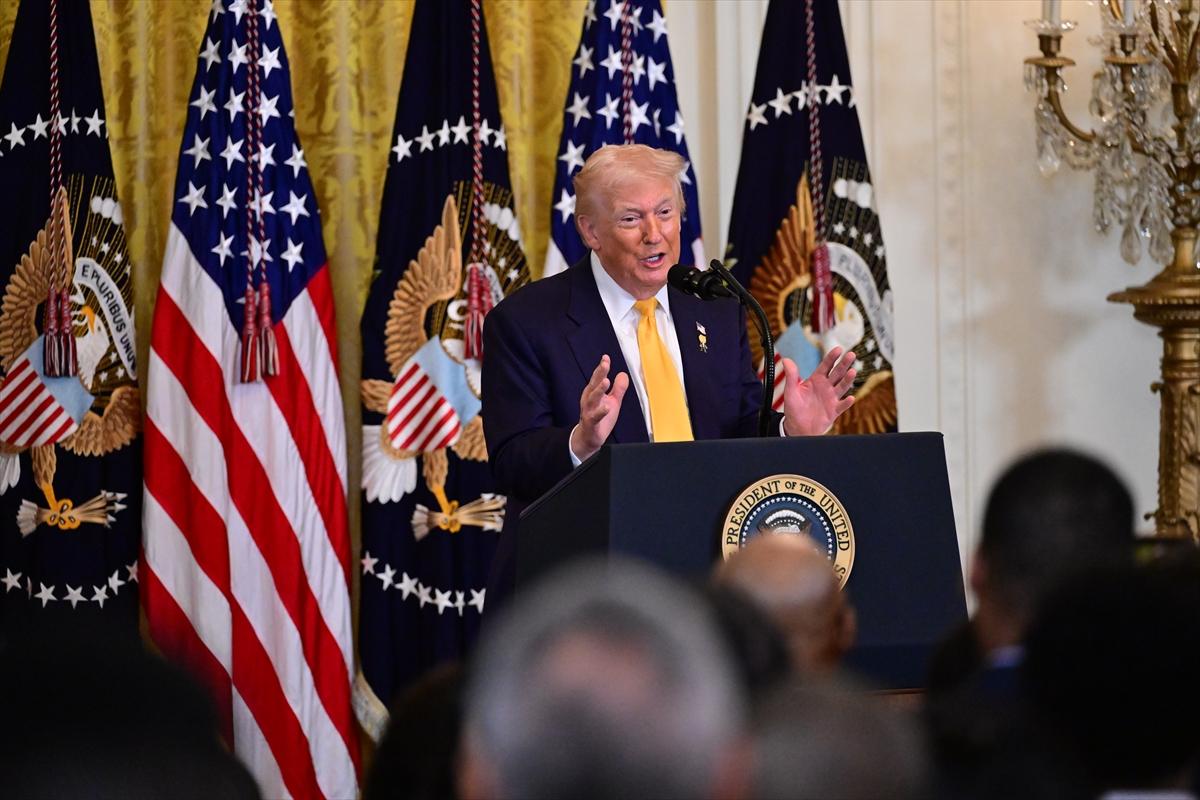
U.S. President Donald Trump, 18 February 2026 - (Anadolu Ajansı)
According to Israeli state television KAN, the Israeli Knesset’s Foreign Affairs and Security Committee met to discuss potential military action against Iran. Committee members reportedly received a security assessment from Shai Clapper, Secretary of the Israeli Defense Forces’ Home Front Command.
Committee Chairman Likud MK Boaz Bismuth stated after the meeting, “There is no Israeli citizen who does not ask themselves several times a day when an attack on Iran will begin.” Bismuth said Israelis were preparing for all possible scenarios.
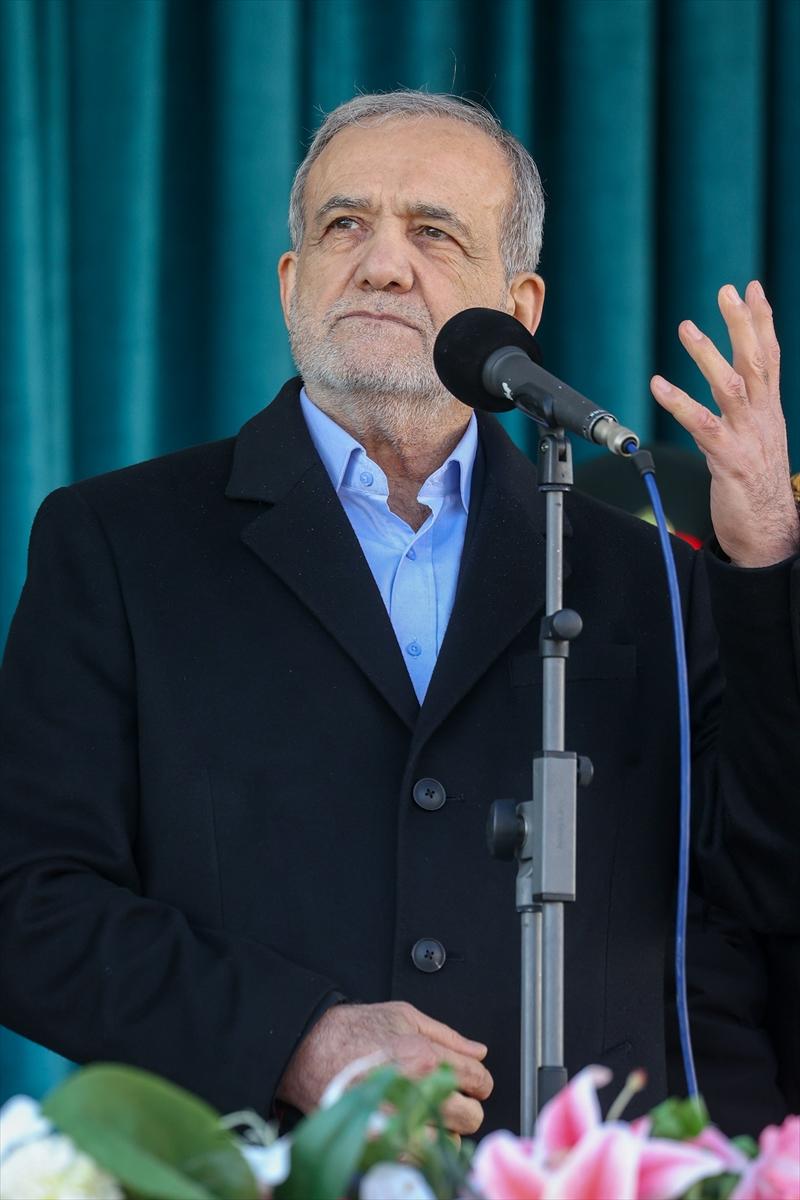
Iranian President Masoud Pezeshkian, 17 February 2026 - (Anadolu Ajansı)
According to Iran’s official news agency IRNA, Iranian President Masoud Pezeshkian met with civil society representatives in Lorestan province. In his remarks, Pezeshkian emphasized that U.S. concern over democracy in Iran was a deception, saying, “The U.S. openly said it wanted to seize Venezuela’s oil. It has adopted a similar stance toward Canada and other countries. We do not want war. I believe we must set aside war. But if forced into imposition, we will not bow.”
Trump said, “We must reach a meaningful agreement with Iran, otherwise bad things will happen.” He praised his Special Envoy Steve Witkoff and former advisor Jared Kushner for their successful negotiations with Iranian officials.
The U.S. President said, “We can take another step forward in the Middle East, or we cannot. Perhaps we will reach an agreement—you will likely know within the next 10 days.”
On 20 February, when asked by a reporter, “Are you considering a limited military strike against Iran?”, Trump replied, “I think I can say I am considering it.”
On 20 January, Iran’s Foreign Minister Abbas Araghchi responded to questions about the status of nuclear negotiations with the U.S. on the MSNBC program Morning Joe.
Araghchi noted that speculation in media linked to the U.S. and Israel was inaccurate, stating that the U.S. had not demanded Iran eliminate uranium enrichment.
When asked, “The U.S. does not want permanent suspension of enrichment, correct?”, Araghchi replied, “Yes.” He added, “What we are discussing now is how to ensure Iran’s nuclear program, including enrichment, remains peaceful and remains peaceful forever.”
Araghchi said Iran would submit a draft nuclear agreement to Washington within a few days, adding, “My next step is to present the draft agreement to my counterparts in Washington. I believe it will be ready in the next two or three days and, after receiving final approval from my superiors, will be delivered to Steve Witkoff.”
Araghchi emphasized that any potential agreement must be fair and equitable, asserting that such an agreement could be reached quickly. Evaluating U.S. military threats, Araghchi said, “There is no military solution for Iran’s nuclear program. This was tried last year. They launched massive attacks on our facilities and killed our scientists, but they could not destroy our nuclear program because it is our own developed technology. The only solution is diplomacy. That is why the U.S. returned to the negotiating table and seeks an agreement. We are ready. We are ready for both war and peace.”
On 20 February, Iran’s Permanent Representative to the UN, Amir Said Iravani, issued a letter addressed to UN Secretary-General Antonio Guterres and the UN Security Council presidency. Iravani called on all members of the Security Council and Secretary-General Guterres to immediately halt U.S. threats of unlawful use of force, fulfill their obligations under the UN Charter, and avoid any action that could escalate tensions and lead to military conflict with serious regional and international consequences.
Iravani stated, “The Security Council must not allow the normalization and legitimization of threats to use force. If such unlawful behavior is not addressed, another permanent member will soon face the same situation.”
Iravani added, “If subjected to a military attack, Iran will exercise its legitimate right to self-defense under Article 51 of the UN Charter with a determined and proportional response.”
On 21 February, President Masoud Pezeshkian, during a ceremony honoring Paralympic medalists in Tehran, emphasized “national unity, solidarity, and resistance against hardship.” Addressing the athletes, Pezeshkian noted that Iran faced various pressures and difficulties, saying, “The world is trying to force us to bow through cowardice and bullying, but know that just as you did not bow to hardship, we will not bow to these problems.” He added, “Despite all the hardships and wounds they have inflicted on our society, we must heal these wounds.”
On 22 February, President Pezeshkian posted a new statement on X. He said concrete proposals had been exchanged in the latest negotiations and encouraging signals had been received, adding, “Iran is committed to peace and stability in the region. We are closely monitoring U.S. actions and have prepared all necessary measures for any possible scenario.”
On the same day, Iran’s Foreign Minister Abbas Araghchi told CBS that they were still working on the proposal to be submitted to the U.S., aiming to make it “address the concerns of both sides.”
In response to a question about whether Trump was preparing for a military strike, Araghchi said, “If they want to find a solution for a peaceful nuclear program, the only path is diplomacy, and we have proven this in the past. I still believe there is a high chance of finding a diplomatic solution based on mutual gain.” He added, “There is no need for any military buildup.” He stated that military deployments in the region would not help the process and could not pressure Iran.
Araghchi said, “We are only negotiating on the nuclear issue, and no other topic is on the table.” He emphasized Iran’s right under international agreements to benefit from peaceful nuclear energy, including enrichment. Iran’s Foreign Minister stated, “If the U.S. attacks us, we have the right to defend ourselves. If the U.S. attacks us, it is an act of aggression. Our response is self-defense. Therefore, it is legitimate and lawful.”
U.S. Defense Secretary Pete Hegseth, during a visit to Colorado, made statements to reporters regarding ongoing negotiations with Iran and the possibility of military intervention. Hegseth said Iran must reach an agreement and that President Donald Trump preferred this outcome. He noted that options were available for Trump if no agreement was reached.
When asked whether a military strike was on the table, Hegseth replied, “Everything is on the table. It is the President’s decision. We are here to ensure an agreement is reached. I believe it would be wise for Iran to reach a good agreement.”
It was announced that the third round of nuclear negotiations between Iran and the U.S., mediated by Oman, would be held on 26 February 2026 in Geneva, Switzerland.
On 22 February, Oman’s Foreign Minister Badr bin Hamed Al Busaidi stated, “I am pleased to confirm that the U.S.-Iran negotiations will take place this Thursday in Geneva and that positive momentum has been achieved toward concluding an agreement.”
Iran’s Deputy Foreign Minister Kazem Garibabadi spoke at the UN Disarmament Conference in Geneva on 23 February before the third round. Garibabadi stated that allegations Iran was advancing its nuclear program for military purposes were false, and that Iran did not seek nuclear weapons and rejected weapons of mass destruction on both religious and cultural grounds.
Following the escalation with Iran, the U.S. increased its military presence along the route from the Mediterranean to the Sea of Oman, raising the number of warships to 23. According to open-source intelligence data, the U.S. has 10 warships in the Mediterranean, 1 in the Gulf of Aden, 10 in the Sea of Oman, and 2 in the Persian Gulf.
In the Mediterranean, the fleet includes one aircraft carrier, eight destroyers, and one fuel tanker. In the Gulf of Aden, the USS Delbert D. Black, an Arleigh Burke-class destroyer, was reported to be stationed.
In the Persian Gulf, two warships were reported: one destroyer and one littoral combat ship. The USS Tulsa, an Independence-class littoral combat ship, was confirmed to be operating in the region. In the Sea of Oman, 10 military assets were deployed: one aircraft carrier, five destroyers, two fuel tankers, and two littoral combat ships. The USS Abraham Lincoln was confirmed to be operating in the Sea of Oman. The USS Gerald R. Ford was reported to be in the Mediterranean.
On 24 February, it was reported that the U.S. USS Gerald R. Ford aircraft carrier had arrived at the Souda Bay Naval Base on the Greek island of Crete. The Greek news site “in.gr” reported, “The arrival of the second aircraft carrier near Iran indicates that the time is approaching for the U.S. to decide how it will act against Tehran.”
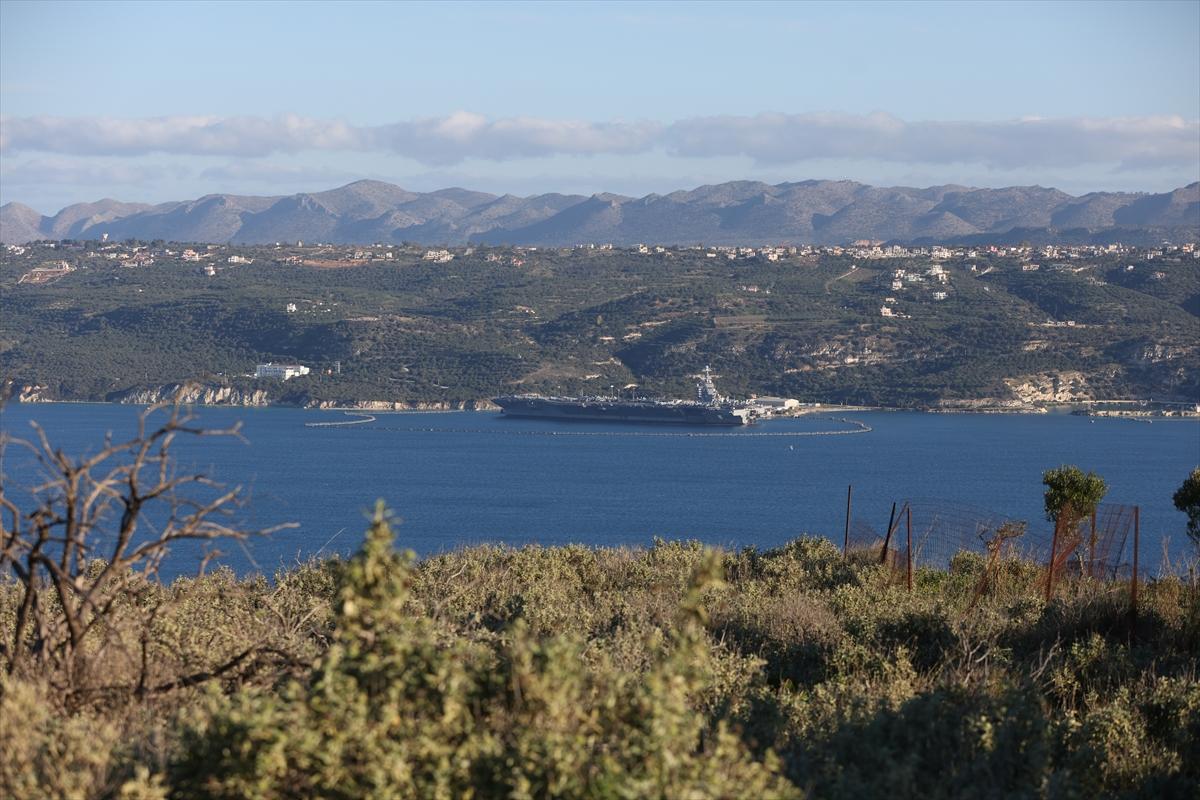
The U.S. aircraft carrier USS Gerald R. Ford at Souda Bay Naval Base in Crete, 24 February 2026 - (Anadolu Ajansı)
The Hellenic Committee for Peace issued a written statement saying: “The dense presence of F-35 and A-10 fighter jets, aerial refueling and transport aircraft, and the arrival of the USS Gerald R. Ford confirm that Souda has become a vital link in the tightening military circle around Iran and the broader region, indicating the imminent threat of general military conflict.”
The statement added, “The people have nothing to gain from the escalation of war plans.”
On 24 February 2026, two U.S. Air Force aerial refueling aircraft landed at Tel Aviv’s Ben Gurion Airport.
Israel’s Channel 12 television broadcast images of the U.S. Air Force refueling aircraft landing at Ben Gurion Airport. The images confirmed the aircraft had landed at the airport.
On 24 February, it was reported that 12 U.S. Air Force F-22 fighter jets had landed at a military base in southern Israel.
Israel’s state television KAN reported that the F-22s had been brought to Israel as part of the U.S. military buildup in the Middle East. The report claimed the aircraft would be tasked with “neutralizing enemy air defense systems and radar upon entering hostile territory.” The report suggested the U.S. decision to deploy the aircraft to Israel was based on Israel’s preparedness for missile attacks and lessons learned from the 12-day war.
As of 25 February 2026, the U.S. administration had deployed more than 300 jets and military aircraft to U.S. Central Command (CENTCOM) bases. Open-source flight data showed these aircraft were primarily distributed among Al Udeid Air Base in Qatar, Muwaffaq al Salti Air Base in Jordan, and Prince Sultan Air Base in Saudi Arabia.
In addition to these deployments, as of 25 February, the air wings of the USS Abraham Lincoln and USS Gerald R. Ford aircraft carriers were also operating in the region.
In his “State of the Union” address to Congress on 25 February 2026, U.S. President Donald Trump addressed the U.S.-Iran tensions, saying, “My preference is to resolve this issue through diplomacy. But one thing is certain: I will never allow this country, the world’s number one state sponsor of terrorism, to acquire nuclear weapons. We cannot allow it.”
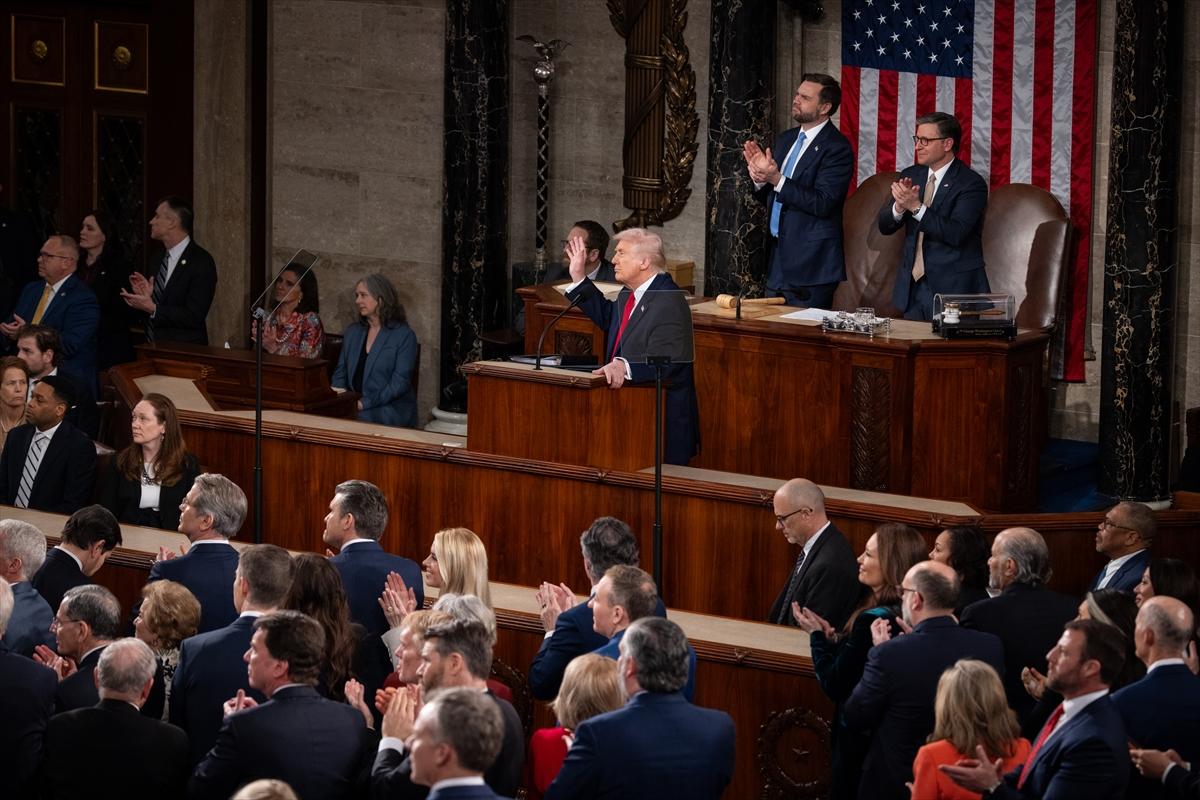
U.S. President Trump delivering his ‘State of the Union’ address to Congress, 25 February 2026 - (Anadolu Ajansı)
Trump, labeling Iran a “terrorist-sponsoring country” in the region, said he was always prepared to evaluate all options, including military ones, when threats were directed at the U.S.
Trump claimed Iran was developing missiles capable of reaching the U.S. He said, “They have developed missiles capable of threatening Europe and our overseas bases, and are working to produce missiles that can reach the United States. They were warned not to rebuild their weapons programs, especially nuclear weapons. Yet they are starting over again.”
The U.S. President said, “For decades, the fundamental U.S. policy has been to prevent Iran from acquiring nuclear weapons.” He added, “Our negotiations with Iran continue. They want to reach an agreement, but we have not yet heard the secret phrase: We will never acquire nuclear weapons.” He claimed 32,000 people had been killed in Iran’s protests and repeated his assertion that his intervention had halted hundreds of planned executions.
Before Trump’s “State of the Union” address, U.S. Secretary of State Marco Rubio provided a classified briefing to congressional leadership and senior members of both the House and Senate Intelligence Committees on Iran. Senate Minority Leader Chuck Schumer said after the briefing, “Look, this is a serious situation and the administration must explain its justification to the American people.”
Iran’s Foreign Ministry Spokesperson Ismail Bekayi responded on social media to U.S. President Donald Trump’s statements during his “State of the Union” address regarding Iran.
In his social media post, Bekayi criticized Trump’s statements on Iran, saying, “Professional liars have a special expertise in creating false realities.”
Bekayi recalled the words of Nazi Germany’s Propaganda Minister and Adolf Hitler’s advisor Joseph Goebbels: “Repeat a lie often enough and it becomes truth,” asserting this method was still being used today.
His statement read:
“This rule is systematically used today by the U.S. government and its surrounding war advocates, particularly by Israel’s genocidal regime, to conduct a diabolical disinformation campaign against the Iranian people. Claims about Iran’s nuclear program, intercontinental ballistic missiles, and the number of deaths in January are nothing but repeated lies. No one should be
Al Jazeera. "Iran-US Tensions Soar: What Do Both Sides Want?" Accessed February 22, 2026. https://www.aljazeera.com/news/2026/1/29/iran-us-tensions-soar-what-do-both-sides-want
Al Jazeera. "State of the Union Live." Accessed February 25, 2026. https://www.aljazeera.com/news/liveblog/2026/2/24/state-of-the-union-live-trump-to-address-nation-amid-tariff-iran-tensions
Anadolu Ajansı. "ABD Başkanı Trump, İran’la Anlaşmaya Varamazlarsa İkinci Aşamaya Geçeceklerini Söyledi." Accessed February 22, 2026. https://www.aa.com.tr/tr/dunya/abd-baskani-trump-iranla-anlasmaya-varamazlarsa-ikinci-asamaya-gececeklerini-soyledi/3828538/
Anadolu Ajansı. "ABD Başkanı Trump’tan İran’a ‘Anlaşamazsak Kötü Şeyler Olacak’ Mesajı." Accessed February 22, 2026. https://www.aa.com.tr/tr/dunya/abd-baskani-trumptan-irana-anlasamazsak-kotu-seyler-olacak-mesaji/3818341/
Anadolu Ajansı. "ABD Ordusuna Ait Yakıt İkmal Uçakları İsrail’in Ben Gurion Havalimanına İndi." Accessed February 24, 2026. https://www.aa.com.tr/tr/dunya/abd-ordusuna-ait-yakit-ikmal-ucaklari-israilin-ben-gurion-havalimanina-indi/3838105/
Anadolu Ajansı. "ABD Savunma Bakanı Hegseth: İran Konusunda Tüm Seçenekler Masada." Accessed February 24, 2026. https://www.aa.com.tr/tr/dunya/abd-savunma-bakani-hegseth-iran-konusunda-tum-secenekler-masada/3838285/
Anadolu Ajansı. "ABD, Müzakere Sürecine Rağmen İran’a Karşı Bölgedeki Askeri Varlığını Artırıyor." Accessed February 22, 2026. https://www.aa.com.tr/tr/dunya/abd-muzakere-surecine-ragmen-irana-karsi-bolgedeki-askeri-varligini-artiriyor/3829925/
Anadolu Ajansı. "ABD, Son 48 Saatte Orta Doğu’daki Üslerine Onlarca Savaş ve Tanker Uçağı Sevk Etti." Accessed February 19, 2026. https://www.aa.com.tr/tr/dunya/abd-son-48-saatte-orta-dogudaki-uslerine-onlarca-savas-ve-tanker-ucagi-sevk-etti/3833676/
Anadolu Ajansı. "ABD’nin Akdeniz-Umman Hattındaki Savaş Gemisi Sayısı 23’e Ulaştı." Accessed February 24, 2026. https://www.aa.com.tr/tr/dunya/abdnin-akdeniz-umman-hattindaki-savas-gemisi-sayisi-23e-ulasti/3837495/
Anadolu Ajansı. "ABD’nin USS Gerald R. Ford İsimli Uçak Gemisi Girit’teki Suda Deniz Üssünde." Accessed February 24, 2026. https://www.aa.com.tr/tr/dunya/abdnin-uss-gerald-r-ford-isimli-ucak-gemisi-giritteki-suda-deniz-ussunde/3838622/
Anadolu Ajansı. "ABD’ye Ait 12 Adet F-22 Tipi Savaş Uçağının İsrail’de Bir Askeri Üsse İniş Yaptığı Bildirildi." Accessed February 25, 2026. https://www.aa.com.tr/tr/dunya/abdye-ait-12-adet-f-22-tipi-savas-ucaginin-israilde-bir-askeri-usse-inis-yaptigi-bildirildi/3839212/
Anadolu Ajansı. "Beyaz Saray: İran’ın Başkan Trump’la Bir Anlaşma Yapması Çok Akıllıca Olur." Accessed February 19, 2026. https://www.aa.com.tr/tr/dunya/beyaz-saray-iranin-baskan-trumpla-bir-anlasma-yapmasi-cok-akillica-olur/3834122/
Anadolu Ajansı. "CENTCOM, Umman Denizi’nde İran’a Ait Bir İHA’yı Düşürdüklerini Açıkladı." Accessed February 22, 2026. https://www.aa.com.tr/tr/dunya/centcom-umman-denizinde-irana-ait-bir-ihayi-dusurduklerini-acikladi/3819323/
Anadolu Ajansı. "CENTCOM’un Orta Doğu’daki Üslerine 300’den Fazla Jet ve Askeri Uçak Konuşlandırıldı." Accessed February 25, 2026. https://www.aa.com.tr/tr/dunya/centcomun-orta-dogudaki-uslerine-300den-fazla-jet-ve-askeri-ucak-konuslandirildi/3839407/
Anadolu Ajansı. "Timeline: US-Iran Tensions from 12-Day War to Current Standoff." Accessed February 22, 2026. https://www.aa.com.tr/en/middle-east/timeline-us-iran-tensions-from-12-day-war-to-current-standoff/3821761/
Anadolu Ajansı. "Trump, İran ile Müzakereler Başarısız Olursa Orta Doğu’ya İkinci Uçak Gemisini Göndereceğini Söyledi." Accessed February 22, 2026. https://www.aa.com.tr/tr/dunya/trump-iran-ile-muzakereler-basarisiz-olursa-orta-doguya-ikinci-ucak-gemisini-gonderecegini-soyledi/3829527/
Anadolu Ajansı. "Trump: (İran’a Sınırlı Askeri Saldırı) Sanırım Bunu Düşündüğümü Söyleyebilirim." Accessed February 22, 2026. https://www.aa.com.tr/tr/dunya/trump-irana-sinirli-askeri-saldiri-sanirim-bunu-dusundugumu-soyleyebilirim/3835984/
Anadolu Ajansı. "Trump’tan İran’a Yeni Uyarı: Anlamlı Bir Anlaşma Yapmalıyız, Aksi Takdirde Kötü Şeyler Olur." Accessed February 22, 2026. https://www.aa.com.tr/tr/dunya/trumptan-irana-yeni-uyari-anlamli-bir-anlasma-yapmaliyiz-aksi-takdirde-kotu-seyler-olur/3834983/
Anadolu Ajansı. "Trump’tan İran’da Rejim Değişikliği İçin ‘Olabilecek En İyi Şey’ Yorumu." Accessed February 22, 2026. https://www.aa.com.tr/tr/dunya/trumptan-iranda-rejim-degisikligi-icin-olabilecek-en-iyi-sey-yorumu/3829690/
Anadolu Ajansı. "Trump’ın İran’a Karşı Haftalarca Sürebilecek Büyük Bir Saldırıya Yakınlaştığı İddiası." Accessed February 19, 2026. https://www.aa.com.tr/tr/dunya/trumpin-irana-karsi-haftalarca-surebilecek-buyuk-bir-saldiriya-yakinlastigi-iddiasi/3833686
Anadolu Ajansı. "UAEA Yönetim Kurulu, İran’dan Zenginleştirilmiş Uranyum Stokları Hakkında Bilgi Talep Eden Tasarıyı Onayladı." Accessed February 22, 2026. https://www.aa.com.tr/tr/dunya/uaea-yonetim-kurulu-irandan-zenginlestirilmis-uranyum-stoklari-hakkinda-bilgi-talep-eden-tasariyi-onayladi/3749186
Anadolu Ajansı. "UAEA’nın Raporuna Göre İran’ın Zenginleştirilmiş Uranyum Stoklarının Durumu Doğrulanamıyor." Accessed February 22, 2026. https://www.aa.com.tr/tr/dunya/uaeanin-raporuna-gore-iranin-zenginlestirilmis-uranyum-stoklarinin-durumu-dogrulanamiyor/3742095
Anadolu Ajansı. "İnfografik: İran-ABD Nükleer Görüşmeleri." Accessed February 23, 2026. https://www.aa.com.tr/tr/info/infografik/46401
Anadolu Ajansı. "İran Cumhurbaşkanı Pezeşkiyan: Barışa Bağlıyız, Her Türlü Senaryoya Karşı Tüm Hazırlıkları Yaptık." Accessed February 24, 2026. https://www.aa.com.tr/tr/dunya/iran-cumhurbaskani-pezeskiyan-barisa-bagliyiz-her-turlu-senaryoya-karsi-tum-hazirliklari-yaptik/3837302/
Anadolu Ajansı. "İran Cumhurbaşkanı Pezeşkiyan: Hiçbir Ülke Savaştan Hayır Görmez ve Kan Dökerek Bir Yere Varılamaz." Accessed February 22, 2026. https://www.aa.com.tr/tr/dunya/iran-cumhurbaskani-pezeskiyan-hicbir-ulke-savastan-hayir-gormez-ve-kan-dokerek-bir-yere-varilamaz/3829931/
Anadolu Ajansı. "İran Cumhurbaşkanı Pezeşkiyan: Savaşmak İstemiyoruz." Accessed February 19, 2026. https://www.aa.com.tr/tr/dunya/iran-cumhurbaskani-pezeskiyan-savasmak-istemiyoruz/3834049/
Anadolu Ajansı. "İran Cumhurbaşkanı Pezeşkiyan: Toplumun Kutuplaştırılması Ülkeyi Ciddi Zorluklarla Karşı Karşıya Bırakır." Accessed February 24, 2026. https://www.aa.com.tr/tr/dunya/iran-cumhurbaskani-pezeskiyan-toplumun-kutuplastirilmasi-ulkeyi-ciddi-zorluklarla-karsi-karsiya-birakir/3838873/
Anadolu Ajansı. "İran Cumhurbaşkanı: Baskı ve Zorluklara Boyun Eğmeyeceklerini Söyledi." Accessed February 22, 2026. https://www.aa.com.tr/tr/dunya/iran-cumhurbaskani-baski-ve-zorluklara-boyun-egmeyeceklerini-soyledi-/3836681/
Anadolu Ajansı. "İran Dışişleri Bakanlığı Sözcüsü Trump’ı Yalancılıkla Suçladı." Accessed February 25, 2026. https://www.aa.com.tr/tr/dunya/iran-disisleri-bakanligi-sozcusu-trumpi-yalancilikla-sucladi/3839476/
Anadolu Ajansı. "İran Lideri Hamaney: ABD Savaş Başlatırsa Savaş Bu Kez Bölgesel Olacaktır." Accessed February 22, 2026. https://www.aa.com.tr/tr/dunya/iran-lideri-hamaney-abd-savas-baslatirsa-savas-bu-kez-bolgesel-olacaktir/3816931
Anadolu Ajansı. "İran ile ABD Arasında Roma’da Yapılan İkinci Tur Görüşmeler Bitti." Accessed February 23, 2026. https://www.aa.com.tr/tr/dunya/iran-ile-abd-arasinda-romada-yapilan-ikinci-tur-gorusmeler-bitti/3542900/
Anadolu Ajansı. "İran ile ABD Arasında Umman Aracılığında Yapılan 5. Tur Nükleer Görüşmeler Sona Erdi." Accessed February 23, 2026. https://www.aa.com.tr/tr/dunya/iran-ile-abd-arasinda-umman-araciliginda-yapilan-5-tur-nukleer-gorusmeler-sona-erdi/3577722/
Anadolu Ajansı. "İran ile ABD Arasında Umman’da Yapılan Dördüncü Tur Görüşmeler Sona Erdi." Accessed February 23, 2026. https://www.aa.com.tr/tr/dunya/iran-ile-abd-arasinda-ummanda-yapilan-dorduncu-tur-gorusmeler-sona-erdi/3563943/
Anadolu Ajansı. "İran ile ABD Arasında Umman’da Yapılan Üçüncü Tur Görüşmeler Sona Erdi." Accessed February 23, 2026. https://www.aa.com.tr/tr/dunya/iran-ile-abd-arasinda-ummanda-yapilan-ucuncu-tur-gorusmeler-sona-erdi/3549163/
Anadolu Ajansı. "İran ile ABD Arasındaki Dolaylı Müzakereler Umman’da Başladı." Accessed February 23, 2026. https://www.aa.com.tr/tr/dunya/iran-ile-abd-arasindaki-dolayli-muzakereler-ummanda-basladi/3536280/
Anadolu Ajansı. "İran ile ABD Nükleer Görüşmeleri 26 Şubat’ta Cenevre’de Devam Edecek." Accessed February 24, 2026. https://www.aa.com.tr/tr/dunya/iran-ile-abd-nukleer-gorusmeleri-26-subatta-cenevrede-devam-edecek-/3837279/
Anadolu Ajansı. "İran, Cenevre’deki Üçüncü Tur Görüşmeler Öncesi Nükleer Silah Peşinde Olmadığını Yineledi." Accessed February 24, 2026. https://www.aa.com.tr/tr/dunya/iran-cenevre-deki-ucuncu-tur-gorusmeler-oncesi-nukleer-silah-pesinde-olmadigini-yineledi/3838030/
Anadolu Ajansı. "İran, UAEA ile İmzalanan Kahire Anlaşması’nı Feshettiğini Resmen Bildirdi." Accessed February 22, 2026. https://www.aa.com.tr/tr/dunya/iran-uaea-ile-imzalanan-kahire-anlasmasini-feshettigini-resmen-bildirdi/3749311
Anadolu Ajansı. "İran: ABD Uranyum Zenginleştirmesini Sıfırlama Talebinde Bulunmadı." Accessed February 22, 2026. https://www.aa.com.tr/tr/dunya/iran-abd-uranyum-zenginlestirmesini-sifirlama-talebinde-bulunmadi/3835999/
Anadolu Ajansı. "İran: Müzakereler Gerçekçi ve Aşırı Taleplerden Uzak Olursa Olumlu Yönde İlerleyebilir." Accessed February 22, 2026. https://www.aa.com.tr/tr/dunya/iran-muzakereler-gercekci-ve-asiri-taleplerden-uzak-olursa-olumlu-yonde-ilerleyebilir/3828946/
Anadolu Ajansı. "İran’la Gerilimin Ardından Trump’ın Bölgeye Gönderdiği ABD Uçak Gemisi Ford Cebelitarık Boğazı’nı Geçti." Accessed February 22, 2026. https://www.aa.com.tr/tr/dunya/iranla-gerilimin-ardindan-trumpin-bolgeye-gonderdigi-abd-ucak-gemisi-ford-cebelitarik-bogazini-gecti/3835861/
Anadolu Ajansı. "İran’ın BM Temsilcisi: Saldırı Durumunda İran Meşru Müdafaa Hakkını Kullanarak Karşılık Verecek." Accessed February 22, 2026. https://www.aa.com.tr/tr/dunya/iranin-bm-temsilcisi-saldiri-durumunda-iran-mesru-mudafaa-hakkini-kullanarak-karsilik-verecek/3835278/
Anadolu Ajansı. "İsrail Basını, ABD’nin İran’a Olası Saldırısı Nedeniyle Tel Aviv Yönetiminin Yüksek Alarma Geçtiğini Yazdı." Accessed February 19, 2026. https://www.aa.com.tr/tr/dunya/israil-basini-abdnin-irana-olasi-saldirisi-nedeniyle-tel-aviv-yonetiminin-yuksek-alarma-gectigini-yazdi/3834137/
Anadolu Ajansı. "İsrail Meclisinde İran’a Karşı Muhtemel Savaş Hazırlıklarının Görüşüldüğü Bildirildi." Accessed February 19, 2026. https://www.aa.com.tr/tr/dunya/israil-meclisinde-irana-karsi-muhtemel-savas-hazirliklarinin-gorusuldugu-bildirildi/3833811/
Associated Press. "Iran TV Shows Video of Street Fires in Tehran During Protests." YouTube video. Accessed January 10, 2026. https://www.youtube.com/watch?v=TCNa9WKbBWU
Axios. "Trump Says He Prefers Diplomacy, But Lays The Sase For War With Iran." Accessed February 25, 2026. https://www.axios.com/2026/02/25/trump-iran-us-war-diplomacy-state-of-the-union
Axios. "Trump moves closer to a major war with Iran." Accessed February 19, 2026. https://www.axios.com/2026/02/18/iran-war-trump-military-strikes-nuclear-talks
BBC News. "White House presses Iran to make deal, while ramping up military presence." Accessed February 19, 2026. https://www.bbc.com/news/articles/c204zpz0lyro
Karakoç, Edanur. "İran Protestoları ve ABD-İran Gerilimi." Accessed February 22, 2026. https://kureansiklopedi.com/tr/detay/iran-protestolari-ve-abd-iran-gerilimi-20-0094e95c
Karakoç, Edanur. "İran-ABD Görüşmeleri (2026)." Accessed February 22, 2026. https://kureansiklopedi.com/tr/detay/iran-abd-gorusmeleri-2026-6c310
Karakoç, Edanur. "İran-ABD Görüşmeleri (2026)." Accessed February 28, 2026. https://kureansiklopedi.com/tr/detay/iran-abd-gorusmeleri-2026-6c310
Karakoç, Edanur. "İran’a Yönelik Snapback Yaptırımları (2025)." Accessed February 22, 2026. https://kureansiklopedi.com/tr/detay/irana-yonelik-snapback-yaptirimlari-2025-38cd7
Karakoç, Edanur. "İsrail-İran Çatışması (2025)." Accessed February 22, 2026. https://kureansiklopedi.com/tr/detay/israil-iran-catismasi-2025-7f4c8
LiveMint. "US-Iran Tensions: Timeline of Key Events Since December 2025 Protests." Accessed February 22, 2026. https://www.livemint.com/news/us-news/usiran-tensions-timeline-of-key-events-since-december-2025-protests-11771481451100.html
Politico. "Ahead of SOTU, Democrats Demand Trump Make Iran Plans Public." Accessed February 25, 2026. https://www.politico.com/live-updates/2026/02/24/congress/ahead-sotu-dems-demand-trump-iran-plans-public-00796594
Reuters. "White House Says Trump’s First Option on Iran Is Diplomacy." Accessed February 25, 2026. https://www.reuters.com/world/middle-east/white-house-says-trumps-first-option-iran-is-diplomacy-2026-02-24/

The process that began with Israel’s attack on Iran in June 2025 expanded with direct U.S. intervention against Iran’s nuclear facilities. A ceasefire was declared on 23 June but diplomatic and military tensions continued afterward. In September 2025, UN sanctions against Iran were reinstated under the snapback mechanism. In November, the IAEA reported that Iran’s stocks of highly enriched uranium could not be verified and announced that Iran had withdrawn from the Cairo Agreement. Protests erupted in Iran in late December 2025 due to economic crisis and spread across the country throughout January 2026. In January and February 2026, the United States increased its military presence in the region and threatened Iran with an attack. Indirect nuclear talks were held in Muscat on 6 February and in Geneva on 17 February, with an agreement to continue negotiations.
No Discussion Added Yet
Start discussion for "U.S.-Iran Tensions (2025–2026)" article
February 22, 2026
The 2025 Nuclear Negotiation Process
February 22, 2026
June 2025: 12-Day Iran-Israel War and U.S. Intervention
February 22, 2026
July–August 2025: Mutual Statements and Diplomatic Tensions
February 22, 2026
9 September 2025: The Cairo Agreement
February 22, 2026
September 2025: Reimposition of “Snapback” Sanctions
February 22, 2026
November 2025: Nuclear Verification Dispute
February 22, 2026
December 2025: Economic Protests in Iran
February 22, 2026
January 2026: Escalation of U.S.-Iran Tensions
February 22, 2026
February 2026: Iran-U.S. Talks and U.S. Regional Military Deployment
February 22, 2026
Diplomatic and Military Developments After Geneva Talks (18–24 February)
February 22, 2026
Current Status of U.S. Military Buildup (24–25 February 2026)