


This article was automatically translated from the original Turkish version.
+1 More
Tülütabaklar stand out as both a traditional village spectacle and one of the original symbols of resistance during the National Struggle, forming an integral part of Balıkesir’s historical and cultural fabric. This tradition emerged from the deep-rooted craft of leatherworking and over time developed into an identity reflecting social solidarity and the spirit of the Kuva-yı Milliye. During the occupation years in Balıkesir, Tülütabaklar provided a psychological advantage against Greek forces and remain a living heritage that transmits the cultural memory of the people from generation to generation.
class=\
The origins of Tülütabaklar are tied to the history of leatherworking in Anatolia. Debbağlık or dabaklık was a widely practiced trade in Balıkesir in the past. During the Anatolian Seljuk period, Ahi Evran Nasirüddin Mahmud’s (1172–1262) transformation of leatherworking into an institutionalized art marked a pivotal turning point in its development. In Balıkesir, tabakhaneler were located in the “Deve Yoncası” region, where camel leather processing took place; this area served as a center uniting the city’s two major guilds: camel breeders and leatherworkers.
The Tülü Kabak game is a village spectacle inspired by the leather materials worked by the debbağ guild. The name derives from the Balıkesir dialect term “tülü,” meaning unshorn wool from a sheep or a strong camel, while “kabak” evolved from “debbağ” through colloquial simplification. Originally performed by guilds during weddings, ceremonies, and significant occasions as a traditional performance, the game acquired a new dimension during the National Struggle.
class=\
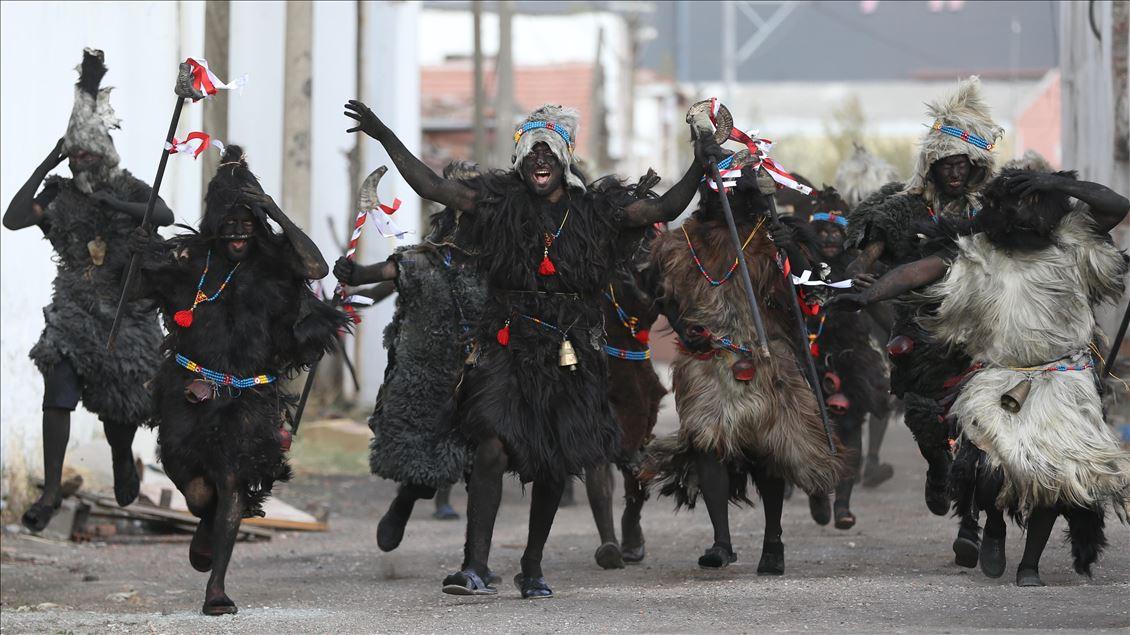
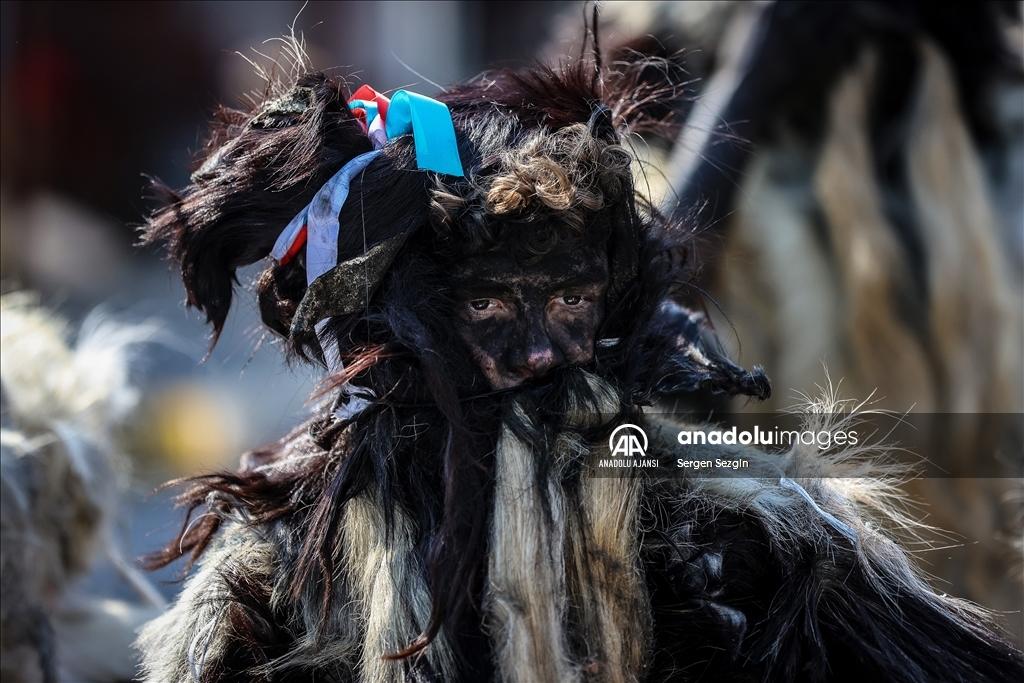
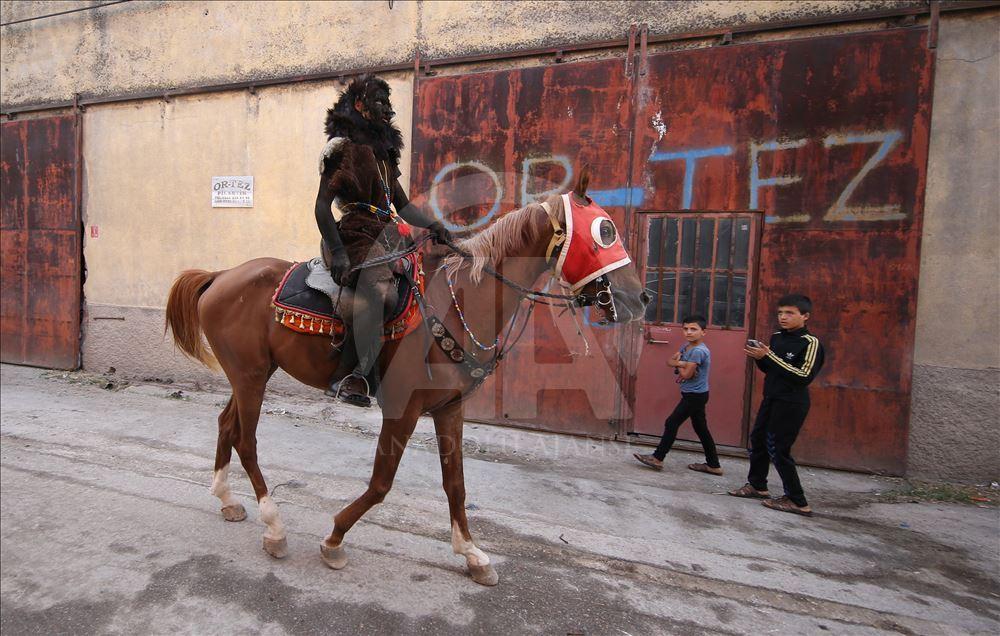
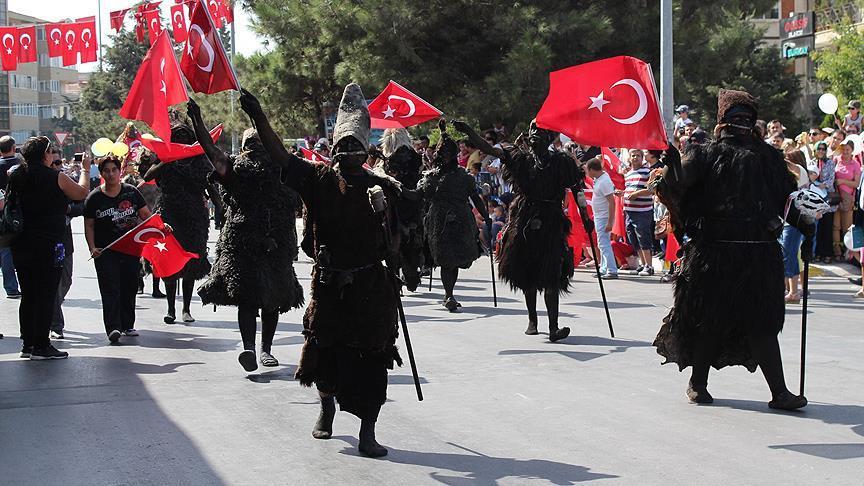
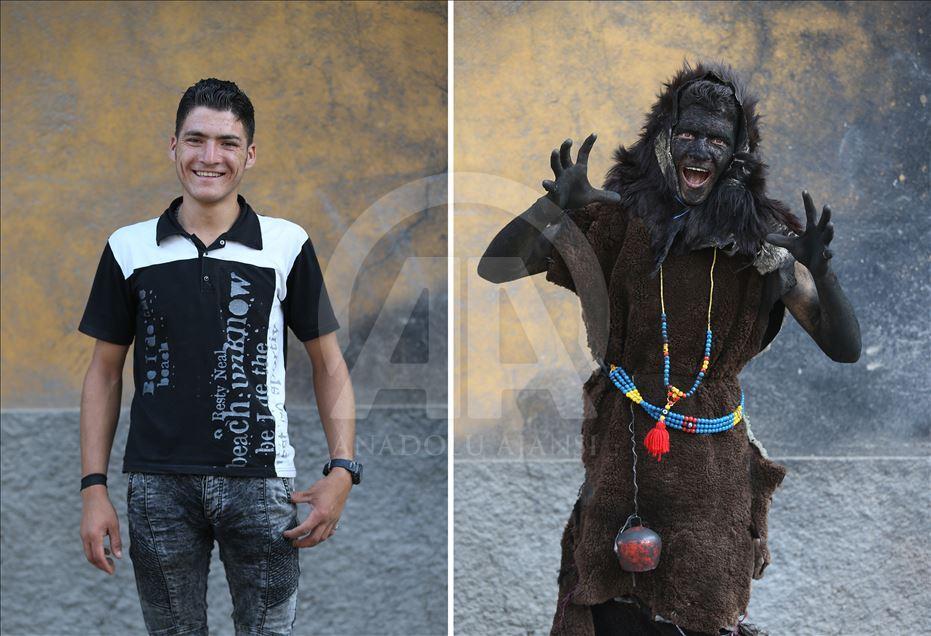
Tülütabaklar are meticulously prepared to present a frightening and striking appearance. Costumes are crafted with great care in the tabakhane one month before the 6 September Liberation Ceremony. The performers, who are volunteer leatherworkers, paint every exposed part of their bodies—including their faces—with soot from beneath the tabakhane cauldrons. They wear white robes or trousers folded up to the knees, which are also dyed black to ensure uniformity. Upper bodies are covered with furry leather pieces, black furry headgear is placed on their heads, and strange mustaches made of leather are added. In their hands they carry long sticks or brooms; in some cases, bells are also part of the costume. The group consists of eight to ten members, one of whom is designated as the “kadı.” The kadı rides on horseback, smoking from a long pipe, while accompanied by his seyis who directs the ceremony. The seyis carries a fan to cool the kadı.
class=\
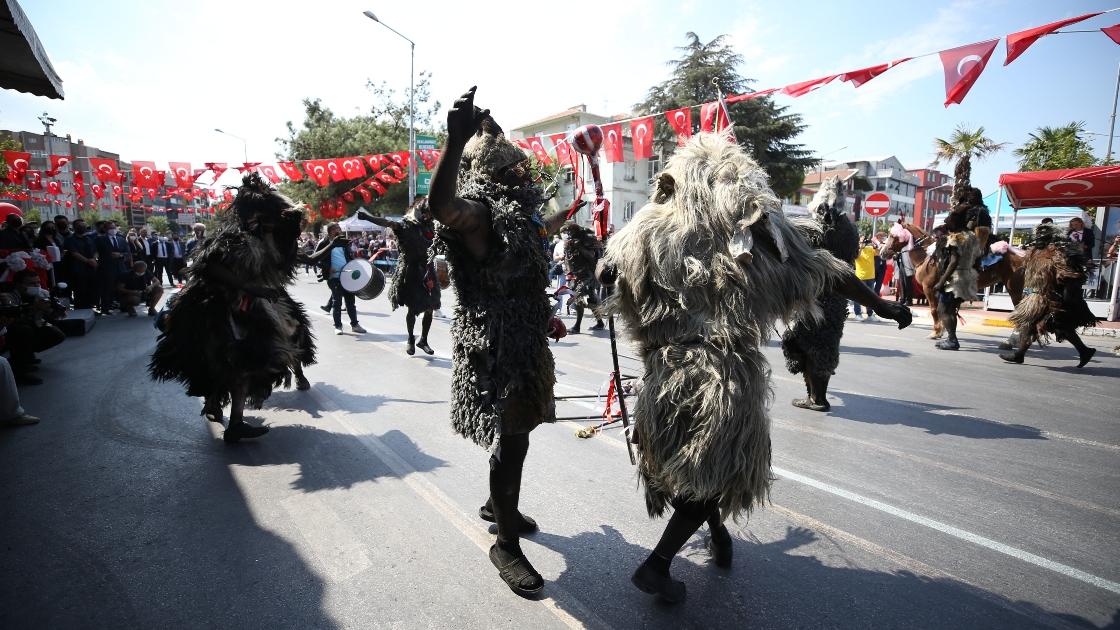
The performance begins on the morning of 6 September in the tabakhane and proceeds through the streets among the crowds. During the parade, Tülütabaklar suddenly blend into the crowd, covering people’s faces with soot and evoking both fear and joy. The public strives to get to the front of the crowd to witness this moment; some even wait in line to be sooted or to have their photographs taken. In the past, people participated in this ceremony by saying they were “going to the tülü kabak,” and the performance overshadowed all other elements of the day’s festivities. During one segment of the show, when Tülütabaklar reach the official protocol area, they form a circle, throw their sticks into the air, and greet the crowd by performing a zeybek dance; this ritual continues until the end of the ceremony.
class=\
During the National Struggle, Tülütabaklar emerged as a unique form of resistance in response to Balıkesir’s occupation. Beginning on 30 June 1920 with the Greek occupation, the Ottoman army’s weapons had been collected and its military strength weakened. The people of Balıkesir responded with intelligence and conviction beyond physical resistance, and Tülütabaklar became part of this strategy.
The “Deve Yoncası” region, where the tabakhaneler were located, attracted attention due to its proximity to Greek headquarters. According to tradition, Greek soldiers were deeply unsettled by the intimidating appearance of the leatherworkers. This situation was reportedly exploited by German intelligence to ensure the secrecy of meetings. Tülütabaklar staged performances in the opposite direction of sites where national meetings were held, thereby distracting the enemy and creating favorable conditions for the organization of the Kuva-yı Milliye.
class=\
Tülütabaklar assumed a symbolic role in Balıkesir’s liberation and have become a heritage that sustains the spirit of the Kuva-yı Milliye. Although rooted in village spectacle traditions, their role during the National Struggle made them an embodiment of social solidarity. The tradition performed during the 6 September Liberation Ceremony represents the unified stance of the people against the occupiers.
Culturally, Tülütabaklar carry elements of village theatre such as animal mimicry and disguise. However, changes in the dances in the modern era demonstrate the dynamic nature of the tradition. This adaptation has been instrumental in keeping the performance alive. Tülütabaklar are not merely entertainment; they are regarded as an essential element reflecting Balıkesir’s historical identity and spirit of resistance.
class=\
Today, Tülütabaklar continue to exist as a traditional element of the 6 September Liberation Ceremony. The restoration and preparation of costumes still take place in the tabakhane, as in the past, contributing to the preservation of this professional heritage.
Tülütabaklar are a multifaceted phenomenon reflecting Balıkesir’s courage during the National Struggle and its cultural richness. Originating from leatherworking, this tradition became a strategic tool of resistance during the occupation years and strengthened social cohesion. The performances presented during the 6 September ceremonies serve as a bridge connecting past heroism to the present. Their transmission from generation to generation is vital for preserving Balıkesir’s identity and inspiring younger generations.
class=\
Anadolu Ajansı. "Balıkesir’in kurtuluş törenlerinde işgalde düşmanın korkulu rüyası ‘Tülütabaklar’ canlandırıldı." Anadolu Ajansı, September 6, 2021.https://www.aa.com.tr/tr/kultur-sanat/balikesirin-kurtulus-torenlerinde-isgalde-dusmanin-korkulu-ruyasi-tulutabaklar-canlandirildi/2356925
Anadolu Ajansı. "Balıkesir’in kurtuluş yıl dönümü geleneksel ‘Tülütabaklar’ gösterisiyle renklendi." Anadolu Ajansı, September 6, 2023.https://www.aa.com.tr/tr/yasam/balikesirin-kurtulus-yil-donumu-geleneksel-tulutabaklar-gosterisiyle-renklendi/2984715
Anadolu Ajansı. “Savaşta düşmana korku salan ‘Tülütabaklar’.” Anadolu Ajansı, September 6, 2019.https://www.aa.com.tr/tr/pg/foto-galeri/savasta-dusmana-korku-salan-tulutabaklar
Anadolu Ajansı. “İşgalde düşmanın korkulu rüyası ‘Tülütabaklar’.” Anadolu Ajansı, September 6, 2016.https://www.aa.com.tr/tr/turkiye/isgalde-dusmanin-korkulu-ruyasi-tulutabaklar/641772
Antalya Film Ekibi. *Tülütabaklar “Ölümsüz Kahramanlar” Belgesel Film, Cumhuriyet’in 100. yılı adına*. September 20, 2022. Accessed October 1, 2025.https://www.youtube.com/watch?v=0sAMkoNc8TU
Aydın, Demet Şafak. “Balıkesir’de Bir Köy Seyirlik Oyunu: ‘Tülükabak’.” Çukurova Üniversitesi Türkoloji Araştırmaları Merkezi. Accessed October 1, 2025.https://turkoloji.cu.edu.tr/HALKBILIM/demet_safak_aydin_balikesir_koy_seyirlik_oyunlari.pdf
Karaçelik, Volkan, and Yasemin Tekin. “Somut Olmayan Kültürel Miras Unsuru Olarak Efsaneler: Balıkesir İçin Yenilikçi Bir Festival Önerisi.” *Journal of New Tourism Trends* 5, no. 1 (2024): 34–47. Accessed October 1, 2025.https://dergipark.org.tr/tr/pub/joinntt/article/1479814
Tuncay, Veli. “Milli Mücadele Yıllarında Tülütabakların Önemi ve Yeri Üzerine Nitel Bir Araştırma.” Academia.edu. Accessed October 1, 2025.

History and Origins
Appearance and Performance
Role in the National Struggle
Cultural and Social Significance
Current Status and Heritage