


This article was automatically translated from the original Turkish version.
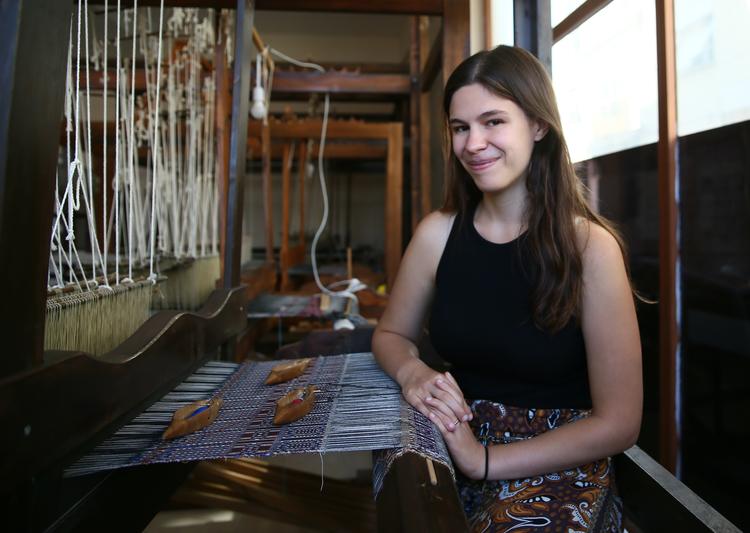
Tire Municipal Weaving
Material(s) | Cotton and silk blend yarn | ||||||||
|---|---|---|---|---|---|---|---|---|---|
Protection Status | Maintained as a traditional craft | ||||||||
Transfer Format | Through master-apprentice relationships and local workshops | ||||||||
Place of Production | Tire, İzmir, Türkiye | ||||||||
Registration Date | 17.12.2020 | ||||||||
Applicant/Registrant(s) | Tire Chamber of Commerce | ||||||||
Tire Beledi Weaving is a traditional textile type unique to the Tire district of İzmir Province in Türkiye. Produced using yarns made from a blend of cotton and silk, these textiles have gained historical significance both for their practical use and their cultural heritage value. Today, Tire Beledi weaving is recognized as a craft that sustains its cultural continuity.
The history of Tire Beledi weaving dates back to the Ottoman period. Produced on handlooms using traditional methods, this textile form has remained in use for centuries. It was especially preferred for various everyday items, primarily undergarments. Historically, Beledi textiles were worn by men as undergarments and by women as entari and peştamal, becoming established as local productions embedded in cultural memory.
Beledi textiles are woven using cotton warp threads and weft threads of silk or viscose. Produced using the bezayağı technique, these fabrics stand out for their fine texture and durability. Thanks to the balanced use of warp and weft systems on the loom, the textiles possess a flexible yet strong structure. Their softness and comfort during use have ensured their widespread preference throughout history. In traditional production, the dyeing of yarns was carried out using natural methods.
Historically, Beledi weaving was used in various garments and household items such as undergarments, entari, peştamal, shirts, and handkerchiefs. Today, producers are transforming this traditional textile into modern products such as bags, tablecloths, shawls, scarves, and decorative items, thereby preserving its traditional function while adapting it to contemporary forms.
Tire Beledi weaving continues to be kept alive today as an essential part of the handicraft culture. Production, sustained by local artisans, is passed on to new generations through the master-apprentice relationship. Particularly through the contributions of female producers, this weaving tradition maintains its economic and cultural relevance. Some workshops in Tire conduct training programs, and international participation from visitors abroad has enabled the cultural transmission of this craft to acquire an international dimension.
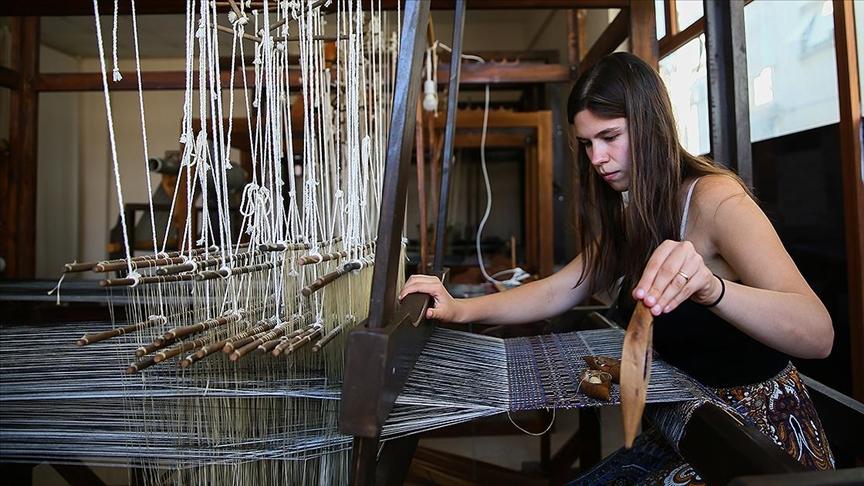
Tire Beledi Weaving in Progress (Anadolu Agency)
Beledi weaving is a craft that attracts attention not only locally but also internationally. Foreign visitors to Tire actively participate in the production process on traditional looms to learn the weaving techniques. This demonstrates that Beledi weaving is not merely a craft but a tradition open to intercultural exchange.
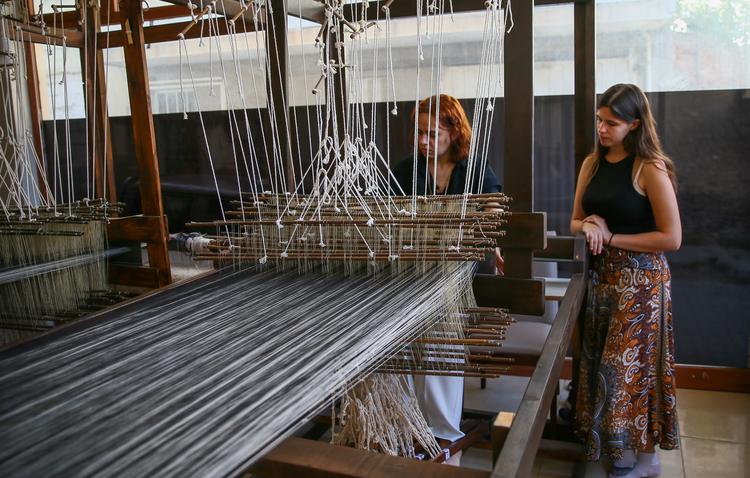
Kyra Zapf, a Visitor from Abroad, Learning Tire Beledi Weaving (Anadolu Agency)
Beledi weaving is more than a cultural heritage; it is a production activity that contributes to women’s employment and local development. Sustained through traditional methods, this weaving practice adds economic value to Tire’s livelihood through product diversity. It is also promoted at tourist events and local festivals, playing a role in regional promotion.
In 2020, Tire Beledi weaving was officially registered with a geographical indication certificate due to its traditional characteristics and local production methods. This registration provides a crucial legal foundation for preserving the authentic production process, distinguishing it from imitations, and ensuring its sustainable continuation. The geographical indication also formally recognizes the cultural identity embodied by the textile and confirms its association with Tire. The registration process was completed through an application by local institutions within the framework of relevant legislation.
Tire Beledi weaving features a traditional repertoire of approximately forty to fifty motifs. These include göğüslü, kol, sık yıldız, seyrek yıldız, and düz patterns. The most commonly used motif today is the star pattern found in Süleyman embroidery.
The preferred colors in weaving include blue, navy, white, black, yellow, green, and red. These colors play a defining role in both the surface and lining structure of the textile.
A distinguishing structural feature of Tire Beledi weaving is its double-layered construction. Black yarns are used in the upper warp, while white yarns are used in the lower warp. By pressing different pedals, the warps are separated: during pattern formation on the upper layer, the corresponding yarns pass through, while the lower layer forms the lining surface with white weft yarns. This double-layered structure enhances the textile’s durability and provides distinct visual qualities on both surfaces.
Anadolu Ajansı. “Dedesinden Öğrendiği Beledi Dokumayı Gelecek Nesillere Aktarıyor.” Accessed June 19, 2025. https://www.aa.com.tr/tr/kultur-sanat/dedesinden-ogrendigi-beledi-dokumayi-gelecek-nesillere-aktariyor/2451545.
Anadolu Ajansı. “Tire’nin Beledi Dokumasını Öğrenmek İçin ABD’den İzmir’e Gelip Tezgâh Başına Geçti.” Accessed June 19, 2025. https://www.aa.com.tr/tr/yasam/tirenin-beledi-dokumasini-ogrenmek-icin-abdden-izmire-gelip-tezgah-basina-gecti/2709225.
T.C.İzmir İl Directorate of Culture and Tourism. "Tire Beledi Dokuması." izmir.ktb.gov.tr. Accessed June 19, 2025. https://izmir.ktb.gov.tr/TR-294212/tire-beledi-dokumasi.html.

Tire Municipal Weaving
Material(s) | Cotton and silk blend yarn | ||||||||
|---|---|---|---|---|---|---|---|---|---|
Protection Status | Maintained as a traditional craft | ||||||||
Transfer Format | Through master-apprentice relationships and local workshops | ||||||||
Place of Production | Tire, İzmir, Türkiye | ||||||||
Registration Date | 17.12.2020 | ||||||||
Applicant/Registrant(s) | Tire Chamber of Commerce | ||||||||
No Discussion Added Yet
Start discussion for "Tire Municipal Weaving" article
Historical Background
Technical Features
Applications
Contemporary Practice and Intergenerational Transmission
Cultural Interest and International Engagement
Cultural and Economic Contribution
Geographical Indication Registration
Patterns, Colors, and Structural Characteristics