


This article was automatically translated from the original Turkish version.
Turgut Uyar, as one of the most important representatives of Turk poetry, has not only introduced linguistic innovations in his poems but also given space to profound thematic layers. Particularly as a major figure of the Second New movement, Uyar explores themes such as the inner contradictions of the individual, alienation brought by modernity, and the unrest caused by urbanization, while simultaneously developing diverse narrative forms around these themes.
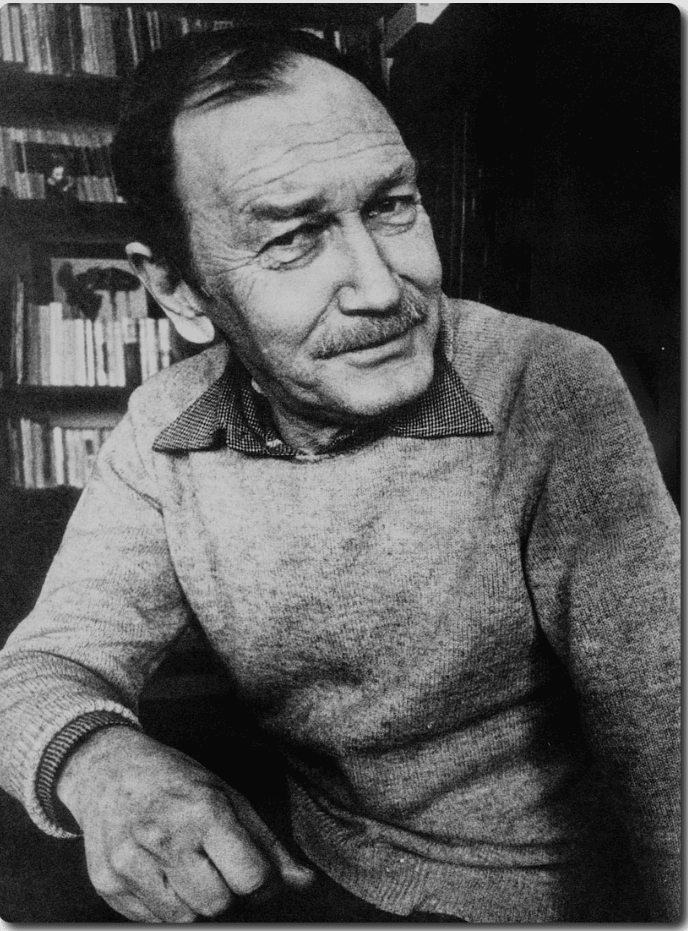
Turgut Uyar (GZT)
One of the most prominent themes in Uyar’s poetry is the negative impact of modernity on the individual. In his work The Most Beautiful Arabia in the World, the poet deeply examines the alienation and spiritual crisis created by the modern world. The transformation of modern life into a system that isolates the individual and forces them into a struggle for existence is one of the central axes of Uyar’s poetry. The poet’s sense of alienation from urban life, particularly the loneliness and personal tragedy found in large cities, are recurring themes in his poems. While addressing this theme, Uyar criticizes not only the individual but also society, emphasizing how modern life consumes the human soul and weakens the bonds between people and themselves.
In Uyar’s poetry, meaning is never fixed. The ambiguity of meaning is a defining feature of the Second New movement and is clearly evident in Uyar’s poems. Through images constructed with words, he presents multiple meanings simultaneously. He places special emphasis on the transient and fluid nature of meaning and on the rhythmic structures created by the repetition of similar words. This gives his poems a layered structure that reveals new interpretations with every reading.
The relationship between social decay and reality holds an important place in Uyar’s poetry. While drawing attention to the social problems and existential crises of his time, the poet also enriches language with imagery. In poems such as We Are Stuck in a Mold, the decay of social structures is presented intertwined with individual suffering in a manner that evokes the past. The parallel treatment of the city’s decaying structure and the individual’s inner corruption enables the poet to integrate his social critique into the thematic fabric of his poetry.
Uyar does not limit himself to traditional poetic techniques; he also prefers to employ drama and narrative within a poetic language. In works such as The Most Beautiful Arabia in the World, his poems are structured like stories, sometimes concealing the narrator and at other times directly involving the reader in the events to create a dramatic atmosphere. This structure strengthens the reader’s connection to the poem and presents poetry as a form of narrative. While often deferring meaning, the poet also experiments with structural innovations in his poetry.
Turgut Uyar offers a sharp critique of urban life. In his poetry, the city is not merely a physical space but also a reflection of the individual’s inner unrest. Urbanization, as an extension of modernity, is portrayed as a force that distorts the individual both externally and internally. In the poem We Are Stuck in a Mold, he presents a sequence of images questioning the city and urban life: “We are stuck in a mold, like a mold, and torture / like a plastic air mold.” In these lines, the city’s cramped, restrictive structure and its mechanism of suffocating the individual are rendered concrete.
Another recurring theme in Uyar’s poetry is despair and inner contradictions. The poet intensely explores the conflicts within the individual, social unrest, and existential searches for meaning. These themes, combined with linguistic complexity in his poems, achieve a deep layer of meaning. In the poem For Distant Destinies, the lines “On one side my loves, on the other my pain / Neon lights blacken our entire night” present the individual’s inner and outer unrest as a contradiction shaped by the lights and loneliness of the modern world. Uyar expresses the individual’s despair in the face of life’s hardships by revealing the existential tension within that despair.
One of the most deeply explored themes in Uyar’s poetry is the tension between the individual and society. The poet presents his social critique by intertwining it with the individual’s inner conflicts. In modern society, existential problems and inner unrest in the individual are shaped in his poems through feelings of loneliness and loss. At the same time, societal decay and corruption appear in his poetry in parallel with the individual’s inner world. The extent to which urbanizing society isolates and corrupts individuals is a constant emphasis in Uyar’s poetry.
In conclusion, Turgut Uyar’s poetic language encompasses far more than linguistic innovation—it contains a profound thematic inquiry. Themes such as modernity, urbanization, individual loneliness, inner turmoil, and social decay form the building blocks of his poetry. By rendering meaning ambiguous, the poet embeds both individual and societal contradictions into his verse. Uyar’s poems continually invite the reader into a process of searching and reinterpretation, establishing him as one of the most original and profound poets in Turkish poetry.
Arslan, Fatih. “Yitik Kentin Kapalı Huzursuz Şairi: Turgut Uyar.” *Adıyaman Üniversitesi Sosyal Bilimler Enstitüsü Dergisi* 5, no. 10 (December 2012): 1–13. ISSN: 1308–9196. Accessed April 21, 2025.https://dergipark.org.tr/tr/download/article-file/15194
Caner, Fırat. Turgut Uyar’ın Huzursuzluğu. PhD thesis, Bilkent Üniversitesi, Department of Turkish Literature, Ankara, 2006. Accessed April 21, 2025.https://www.proquest.com/openview/89d4fced0a8e31d53c7119b0f36a84ac/1?cbl=2026366&diss=y&pq-origsite=gscholar
Caner, Fırat. “Turgut Uyar’ın Esrarengiz ‘Üçyüzbin’i.” Uluslararası Türkçe Edebiyat Kültür Eğitim Dergisi 2, no. 3 (2013): 133–138. Accessed April 21, 2025.https://dergipark.org.tr/en/download/article-file/136851
Sümer, Mehmet. *Turgut Uyar Şiirinde Anlatımcı Teknik*. Master's thesis,Marmara Üniversitesi, Institute of Turkic Studies, Department of Turkish Language and Literature, Department of Modern Turkish Literature, Istanbul, 2010. Accessed April 21, 2025.https://www.proquest.com/openview/025875e7899c548af2900bd097972899/1?cbl=2026366&diss=y&pq-origsite=gscholar
Şenderin, Zübeyde. “Turgut Uyar: Sanat Hayatı ve Eserleri.” Accessed April 21, 2025.https://dergipark.org.tr/en/download/article-file/181037.
Modernity and the Alienation of the Individual
The Uncertainty of Meaning and Imagistic Richness
Reflecting the Spirit of the City and the Decay of Society
The Blurring of Boundaries Between Poetry and Drama
Critique of the City and Urbanization
Despair and Inner Contradictions
Individual and Social Contradictions
