


This article was automatically translated from the original Turkish version.

Birds are beings endowed by their very creation with the ability to fly, distinguishing them from all other vertebrates through this unique capacity. This ability is not solely dependent on their physical structure; it also relies on their capacity to utilize aerodynamic principles to regulate their movements in the air. When flapping their wings and directing their bodies, birds harness the four fundamental forces that form the basis of aircraft design: thrust, lift, drag, and weight. The delicate balance among these forces enables birds to glide through the air and cover vast distances by controlling their direction. The flight of birds is regarded as a miracle that reveals both the subtle order of nature and the power of the Almighty Creator in His act of creation. Every wingbeat is not merely a physical motion but a tangible manifestation of divine wisdom; this ability of birds serves as a reminder of the perfection inherent in the plan of creation.
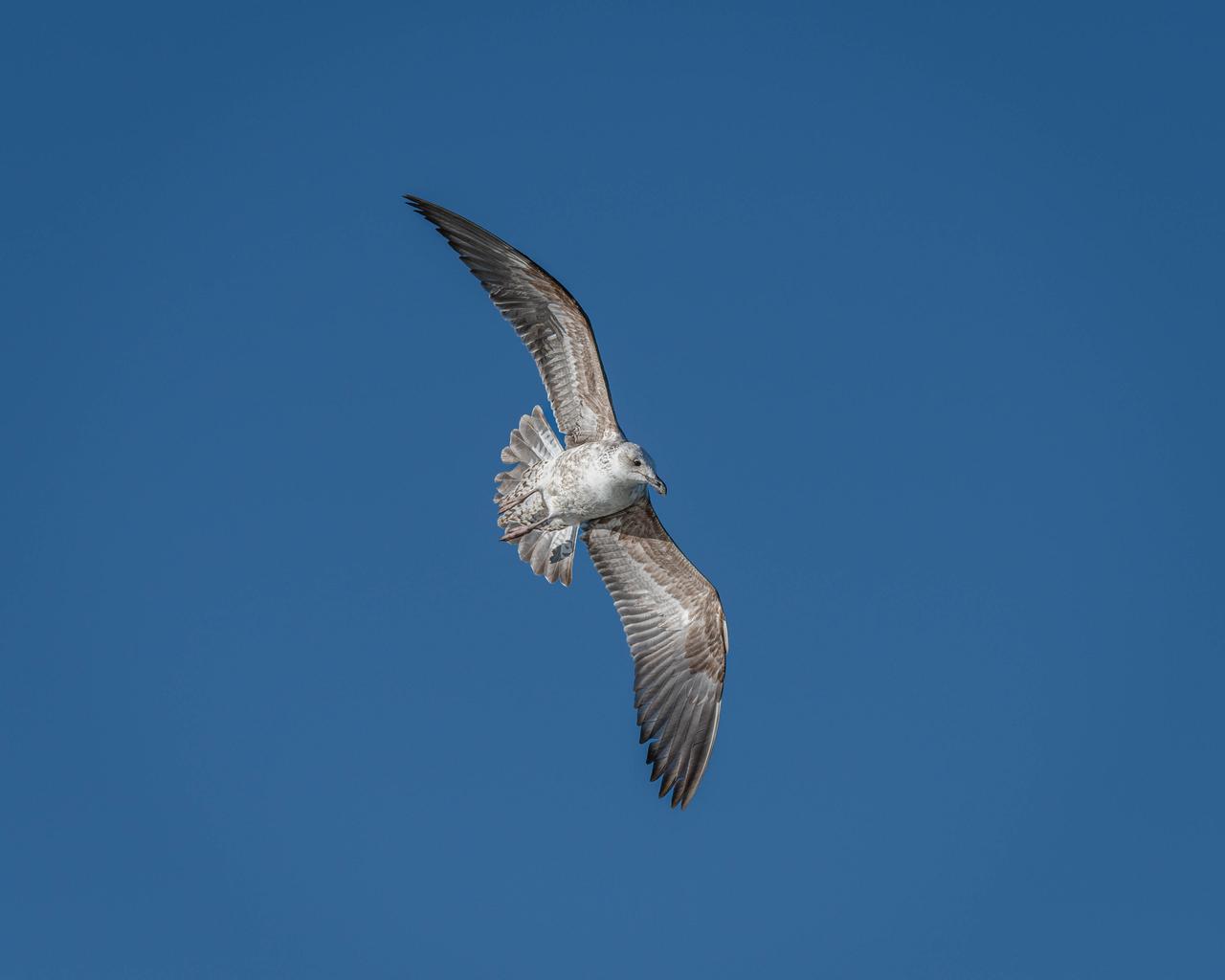
Eastern Asian Silver Gull (pixabay)
The body structure of birds has been finely crafted to minimize the resistance caused by air during flight. Light, dense, and backward-facing feathers covering the body reduce friction, allowing birds to glide more easily through the air. Their wings are composed of long feathers arranged in a tail-like fan shape, which helps maintain balance and enhances maneuverability. The breastbone, or sternum, of birds is significantly broader than that of non-flying vertebrates; this expanded structure provides a strong anchor for powerful flight muscles. These muscles generate an effective thrust force through wingbeats, enabling the bird to remain airborne.
To enable flight, birds have evolved to maintain an extremely low body weight—a fundamental adaptation that allows them to glide and travel long distances. Bird bones are thin and hollow, providing both lightness and necessary strength. In place of heavy teeth, birds possess lightweight beaks, which further reduce overall weight. These features help maintain an optimal center of gravity and enhance energy efficiency during flight. While gliding, birds balance drag forces with the thrust generated by wingbeats; simultaneously, the force of gravity is counteracted by lift, produced by the pressure difference between the upper and lower surfaces of the wings. This magnificent and flawless equilibrium is not merely a physical structure but also a sign of the Creator’s precise calculation and wisdom; every wingbeat is a miracle that reveals the power of the Creator and the order within nature.
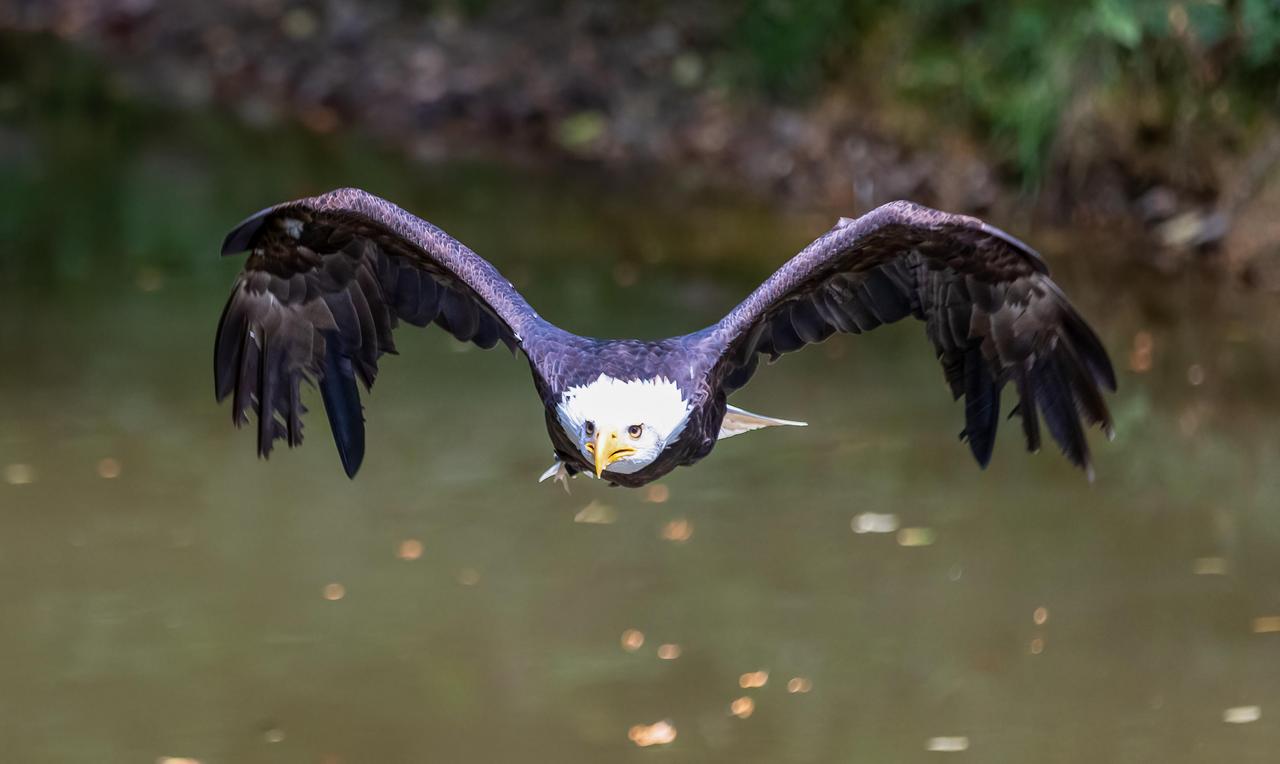
A Flying Eagle (pixabay)
One of the most fundamental forces enabling birds to glide in the air is lift. This force arises because air moving over the upper surface of the wing travels faster than air moving beneath it. According to the Bernoulli principle, this difference in speed creates a pressure differential: pressure is lower above the wing and higher below it. This pressure difference generates an upward force that lifts the bird’s body and keeps it aloft.

Penguins Jumping into Cold Waters Near Antarctica or Polar Regions (Pixabay)
Not all bird species possess the ability to fly. For example, species such as the ostrich and penguin cannot generate sufficient lift and thrust because their wings are too short relative to their body size. Moreover, the structures attached to the sternum that support flight muscles are either greatly reduced or entirely absent in these species. As a result, they are unable to balance their weight through powerful wingbeats. Similarly, species such as the kakapo (night parrot), kiwi, and rhea also exhibit comparable anatomical limitations and are flightless. The wings of penguins, however, have evolved entirely into flipper-like structures adapted for swimming underwater.
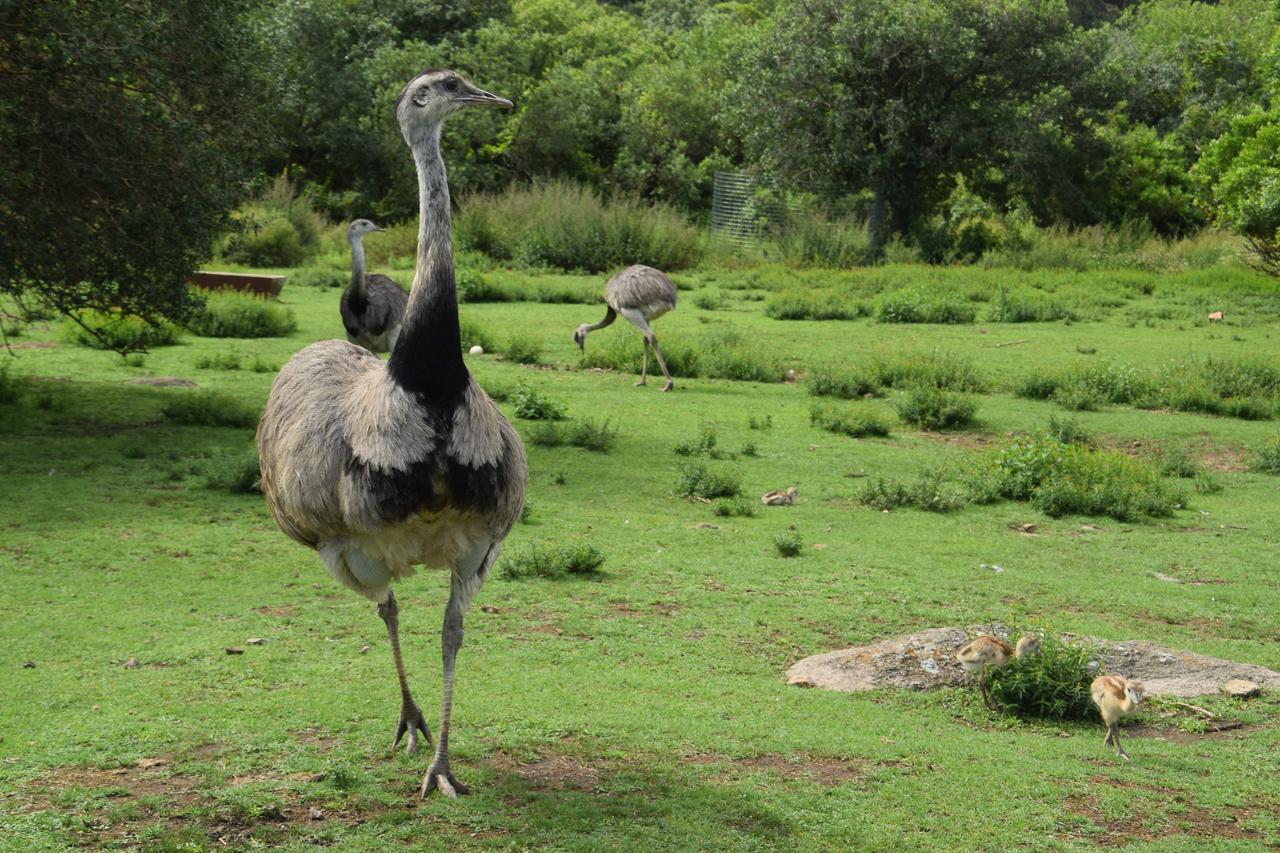
A Rhea with Its Chick (pixabay)
The primary reasons lie in their anatomical and physiological traits. Flightless birds generally cannot generate the necessary lift and thrust due to their excessive body weight, short or underdeveloped wings, and weak or absent flight muscles attached to the sternum. In some species, feather structure and aerodynamic compatibility are also insufficient for flight. In summary, these birds lack the physical and muscular structure required for takeoff and sustained flight.

A Gentle Kakapo (Night Parrot) (pixabay)
The ability of birds to fly depends not only on an understanding of aerodynamic principles but also on the perfect integration of specialized anatomical adaptations. A lightweight skeletal structure, the arrangement of feathers, powerful musculature and bone design, and the balance of aerodynamic forces together enable birds to glide freely through the sky. Flightless birds serve as examples of the diversity in creation and the divine wisdom behind it; each species is a unique part of a design reflecting the power of the Creator. Thus, just as the miracle of birds gliding through the sky reveals the artistry of the Creator, so too do the distinct abilities of flightless birds demonstrate the variety and wisdom of His craftsmanship.

A Cute Kiwi Bird (pixabay)
When you look up at the sky, you can perceive how every bird reflects the artistry and wisdom of Allah. From small, agile birds to those that migrate over vast distances; from predatory birds that dive at high speeds to coastal species—each one demonstrates the power of the Creator in His act of creation.
The Qur’an also refers to birds as signs of Allah’s power and the order He has established. As you observe their flight, reflect not only on their biology but also on the harmony brought into existence by Allah’s mercy and wisdom. Every wingbeat in the open sky is a miracle that reminds us of the existence and greatness of the Creator.
I conclude this article with the following verse:
In the name of Allah, the Most Gracious, the Most Merciful
"Do they not see the birds suspended in the airspace, held aloft by none other than Allah? Indeed, in this are signs for a people who believe." Surah An-Nahl - Verse 79【1】
The Almighty Allah (swt) has spoken the truth.
Bilim Genç. "Kuşlar Nasıl Uçar?" TÜBİTAK Bilim Genç, February 9, 2021. Accessed August 16, 2025.
Diyanet İşleri Başkanlığı. "Nahl Suresi 79-81. Ayet Tefsiri." Diyanet İşleri Başkanlığı. Accessed August 16, 2025.
Pixabay. "AI Oluşturuldu Kakapo Baykuş Papağan." Pixabay, January 7, 2025. Accessed August 16, 2025.
Pixabay. "Kartal, Kuş, Yırtıcı Kuşlar." Pixabay, August 28, 2020. Accessed August 16, 2025.
Pixabay. "Kivi Kuşu Şirin Sevimli." Pixabay, May 6, 2024. Accessed August 16, 2025.
Pixabay. "Martı Uçan Kuş Yaban." Pixabay, June 16, 2023. Accessed August 16, 2025.
Pixabay. "Penguenler Kuşlar Buzdağı." Pixabay, September 11, 2020. Accessed August 16, 2025.
Pixabay. "Rhea Bird Animal Ostrich Wildlife." Pixabay, December 7, 2021. Accessed August 16, 2025.
Science Learning Hub. "How birds fly." Science Learning Hub. Accessed August 16, 2025.
Aerodynamic Adaptations
Lightness and Skeletal Structure
Generation of Lift Force
Are There Flightless Birds?
Why Can’t Flightless Birds Fly?
The Art and Power of the Almighty