This article was automatically translated from the original Turkish version.
+2 More
History | 14-15 August 1974 | ||||||||
|---|---|---|---|---|---|---|---|---|---|
Location | Tashkent Scale Tatlısu villages | ||||||||
Loss of Life | 89 people | ||||||||
Ages of the Victims | From children to elderly individuals | ||||||||
Perpetrators | EOKA-B Members of the Greek Cypriot National Guard Local Greek Cypriot militias | ||||||||
Sole Survivor | Suat Kafadar (Fuat Hüseyin) | ||||||||
Age at Survival | 19 | ||||||||
Legal Status | No trial was concluded regarding the perpetrators | ||||||||
The Taskent (Dohni) Massacre is a mass killing carried out on 14–15 August 1974 by Greek Cypriot armed groups against Turkish Cypriot civilians. Turkish men gathered from the villages of Taskent, Terazi and Tatlısu were transported by bus to isolated areas under the pretense that they would be taken to a prisoner camp, where they were lined up and shot. Among the victims, including children, only Suat Kafadar survived; the perpetrators have never been prosecuted.
The island of Cyprus came under the administration of the Ottoman Empire in 1571 and maintained this status until 1878. In 1878 the island was leased to Britain and remained under British rule until 1960.【1】 During British administration, the ideology of Enosis, which sought union of the island with Greece, emerged among Greek Cypriots, and the first uprisings in this direction began in 1931. In 1955, the terrorist organization EOKA was established to achieve political goals through armed actions against the British and Turkish Cypriots. Following the London and Zurich Agreements signed in 1959, on 16 August 1960 the independent Republic of Cyprus was proclaimed, with Turkish Cypriots and Greek Cypriots as joint founders under the guarantee of Türkiye, Greece and Britain.【2】
Taşkent Şehitliği (Anadolu Ajansı)
The establishment of the joint state did not end political tensions on the island. The Greek Cypriot leadership implemented its secret Akritas Plan on 21 December 1963 to achieve the goal of Enosis.【3】 This systematic campaign of attacks, known as Bloody Christmas, effectively dismantled the joint republic established in 1960, and Turkish Cypriots were entirely excluded from state institutions. From this date onward, Greek Cypriot armed elements launched organized attacks against Turkish Cypriot settlements.
During the eleven-year period between 1963 and 1974, Turkish Cypriots were subjected to severe administrative and physical pressures. As a result of these events, a total of 103 Turkish villages were abandoned, and more than 30,000 Turkish Cypriots were displaced and forced to seek shelter in tents, cinema halls and safe zones. The Turkish community was isolated from communication, transportation and economic activity, and placed under a strict economic blockade. Armed operations targeting Turkish civilians were carried out in areas such as Kumsal, Ayvasıl, Arpalık and Geçitkale during this period.
The political situation in Cyprus entered a new phase on 15 July 1974 with a coup carried out by EOKA-B elements backed by the military junta in Greece. As a result of the coup, the then leader Makarios was overthrown and the “Hellenic Republic of Cyprus” was declared with the aim of annexing the island to Greece. This development completely eliminated the physical security of Turkish Cypriots on the island.【4】
In response to the life-threatening situation faced by Turkish Cypriots, the Republic of Türkiye invoked its rights under the 1960 Guarantee Treaty and launched the Cyprus Peace Operation on 20 July 1974. With the commencement of the operation, Greek military forces and EOKA-B armed groups intensified their armed actions against defenseless civilian areas inhabited by Turkish Cypriots.
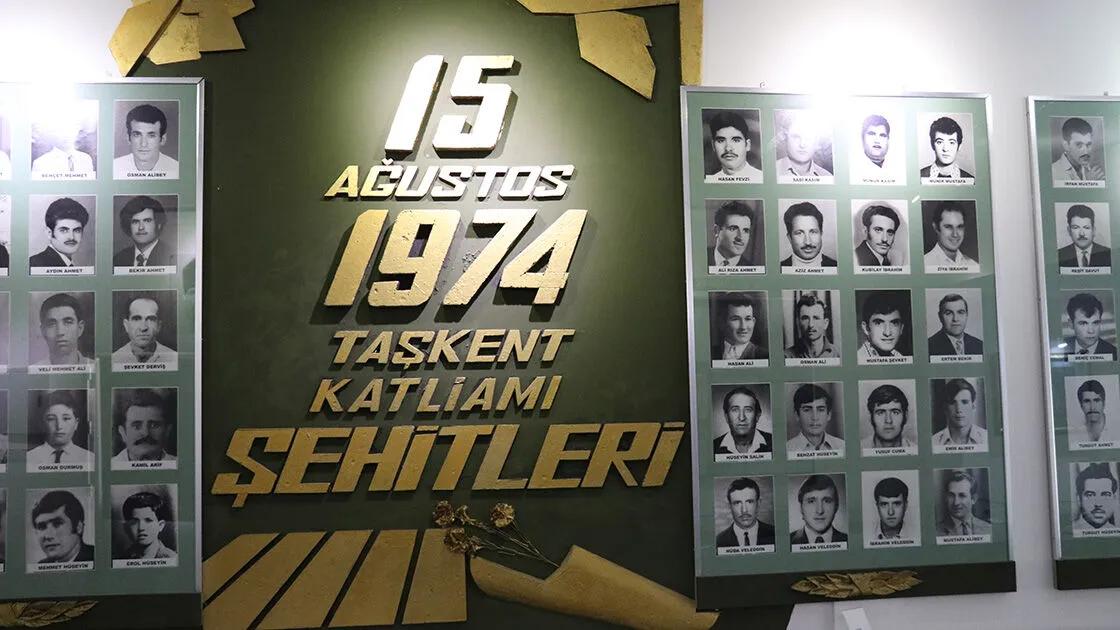
On 14 August 1974, the day the second phase of the Cyprus Peace Operation began, EOKA-B and Greek Cypriot National Guard elements conducted armed operations in mixed settlements within the Larnaca district. Civilians, specifically men, were rounded up in the villages of Taskent (Dohni), Terazi (Zigi) and Tatlısu (Mari). Armed individuals conducted house-to-house raids to forcibly detain civilians.
Age criteria during the roundup were broadly interpreted, targeting males between nine and fifty years old. During the operation, children aged eleven, thirteen and fourteen, as well as individuals over sixty and seventy years of age, were also removed from their homes. According to sources, the total number of detainees from the three villages was recorded as eighty-nine.
Taşkent Şehitliği (Anadolu Ajansı)
The detained civilian men were taken to the courtyard and café of the local primary school. Under strict surveillance by armed Greek Cypriot guards, the detainees were prevented from communicating with their families throughout the night. During this period of captivity from 14 August to the morning of 15 August, civilians were held inside the school building. Some detainees’ children came to the detention site to deliver food or cigarettes to their fathers; apart from these brief contacts, no communication with the outside world was permitted. The armed presence surrounding the detainees created a climate of pressure on the civilian population.
During the period preceding the massacre, United Nations Peacekeeping Force soldiers arrived in Taskent village and made contact with the Turkish Cypriot civilian population. UN officials informed Turkish Cypriots that as a minority they were vulnerable, that resistance would lead to their deaths, and that if they surrendered their weapons they would be protected. On the basis of these assurances, the civilian population handed over their hunting rifles and a small number of light defensive weapons to UN Peacekeeping Force soldiers.
Taşkent Şehitliği (Güvenlik Kuvvetleri Komutanlığı)
The weapons collected by UN personnel were transported to the Greek Cypriot section of the village and directly handed over to local police and armed elements. After the transfer of weapons, UN Peacekeeping Force personnel abandoned their protection commitment, leaving the civilian population defenseless and withdrawing from the area.
During the period when civilian men were detained in the school building, UN Peacekeeping Force vehicles patrolled the region. During these patrols, Greek Cypriot guards ordered the detainees to sit on the ground to conceal them from view. UN personnel did not intervene in the detention and returned to their military units in Terazi village, acting as spectators to the events.
On the morning of 15 August around 10:00, the detained civilians were told they would be transported to a prisoner camp in Limassol and that an official prisoner exchange would take place. The transfer was carried out using two separate buses, one in the morning and one at noon, owned by a Turkish Cypriot named Kemal Küçük and brought from Limassol. Five fully armed guards were stationed at the front and window seats of each bus to physically prevent the civilians from moving.
Instead of following the designated route to the Limassol prisoner camp, the buses were diverted through police checkpoints toward mountainous and isolated areas. The transport vehicles were stopped on narrow paths near Ayafila-Palodia (Agia Fila-Palodia), Yerasa and Periklişa, just outside Limassol. The detainees were forced out of the buses, made to walk approximately one hundred meters, and lined up beside pits previously dug by excavation machinery.
Before the execution, documents such as identification cards and passports were collected from the victims. Armed individuals then opened fire on the civilian group with automatic weapons. The execution lasted approximately ten minutes, and magazines were replaced as ammunition ran out. After completing the killings, the armed perpetrators announced they would bring an excavator to the site to bury the bodies.
The only survivor of the massacre was nineteen-year-old soldier Suat Kafadar (Fuat Hüseyin). Stationed in the villages of Yüz Bir Evler and St. Hilarion, Kafadar had returned to his village on 19 July 1974 for a 48-hour leave. Due to road closures following the coup, he was unable to return to his unit and was detained along with the civilian group. During the execution, Kafadar was struck by four bullets; he feigned death after a relative who was shot fell on top of him.
Seizing the opportunity when the perpetrators left the execution site to bring a machine to cover the mass grave, Kafadar crawled away from the scene. After an eight-day walk through mountainous terrain, he reached the village of Mutluyaka (Mutayaka), from where he was transported by a UN ambulance to the British base at Agrotur (Akrotiri) for medical treatment.
After seeking refuge at the British base, Kafadar contacted the women of the village and confirmed that the victims, including his father and his fourteen-year-old brother, had been shot. However, the women, unwilling to believe their husbands had been killed, continued to believe the victims were being held in a prisoner camp in Southern Cyprus.
The detention and execution of Turkish Cypriot civilians was carried out through the coordination of local militias, EOKA-B members and soldiers of the Greek Cypriot National Guard. The roundup operation was commanded by an individual known by the code name Andriko, with local militiamen named Magi and Stasi participating. The uniformed soldiers who carried out the execution were identified as residents of the village of Agirdaki (Alemdağ), whose headquarters were located in the Chirokitia (Khirokitia) region.
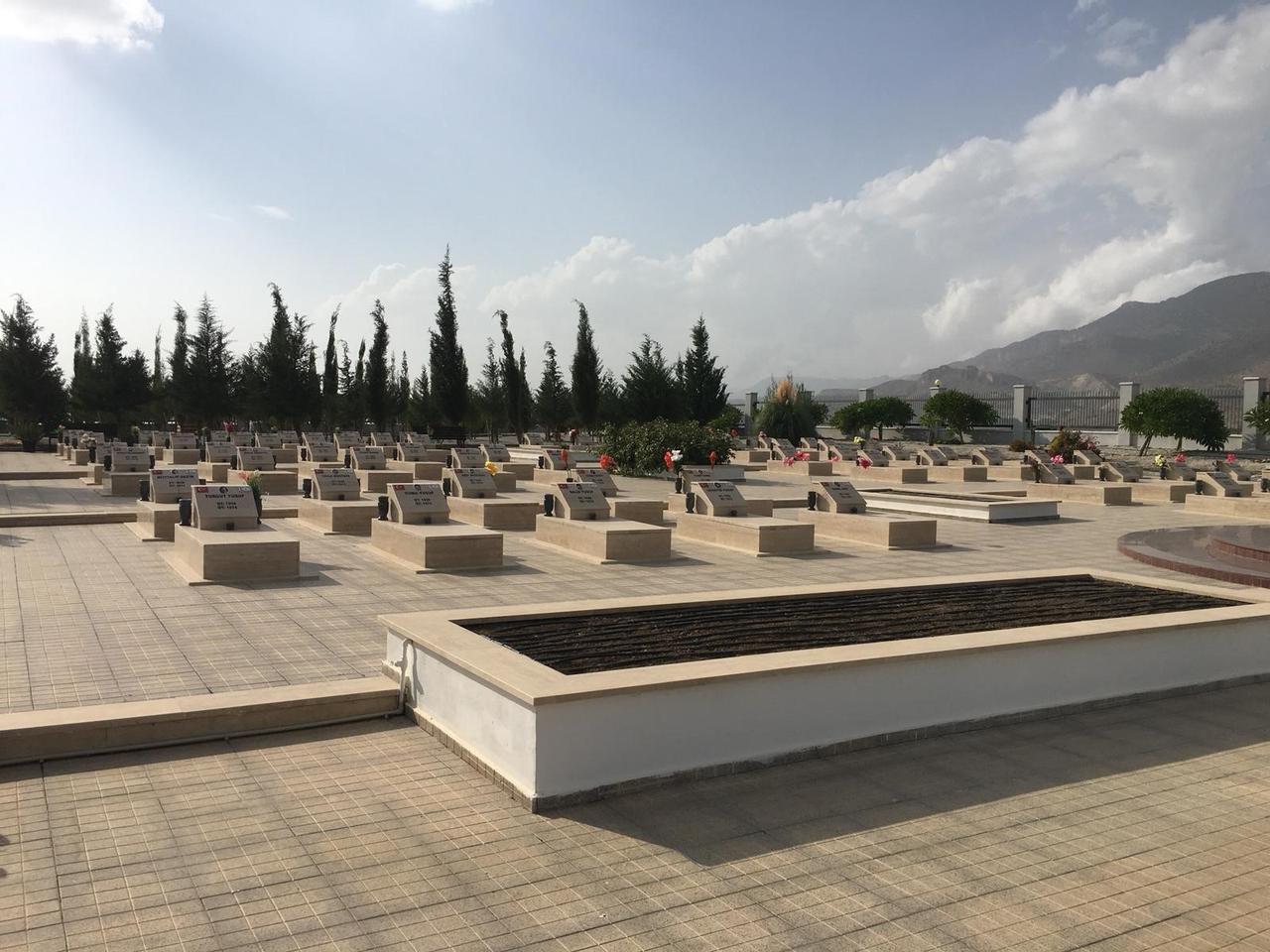
Taşkent Şehitliği (Güvenlik Kuvvetleri Komutanlığı)
Andreas Dimitriu, a 67-year-old former EOKA-B militant and one of the ringleaders of the massacre, was identified by a victim’s relative and made official confessions to the newspaper Alithia in 2004. Dimitriu confirmed his direct involvement in the roundup phase but claimed he believed the civilians would be used in a prisoner exchange. His confession stated that the execution was carried out by soldiers arriving from Chirokitia.
Dimitriu’s judicially recorded statements documented additional crimes within the command chain of the operation. It was confessed that soldiers arriving at the execution site had committed sexual assaults against young Turkish Cypriot women in retaliation prior to the killings. The most critical information regarding the hierarchical structure of the massacre was Dimitriu’s explicit assertion that all actions were carried out jointly with the knowledge and approval of the legal authorities of the Republic of Cyprus. These confessions proved that the massacre was not an uncontrolled militia operation but a state-supported and planned operation. The use of pre-dug pits at the execution site confirms the operation was premeditated.
After the execution, the perpetrators sought to destroy evidence by moving the bodies into different pits dug by machinery, then covering them with lime. The Committee on Missing Persons, established under United Nations supervision to locate the disappeared, focused its efforts on physical excavation and identification.
As a result of systematic excavation efforts, forty years after the massacre, in 2014, human remains were discovered in a disused mine within the boundaries of Southern Cyprus. Although the first mass grave, containing victims transported by the first bus, was identified and opened, the second mass grave, where the group transported by the second bus was buried, has not yet been located. The perpetrators’ tactics of relocation continue to obstruct the forensic identification of the second site.
Bone fragments recovered from the mine by the Committee on Missing Persons underwent DNA testing in a laboratory environment, and identification procedures were completed. Of the thirty-five individuals whose remains had been unrecoverable for decades, the identities of thirty-three were confirmed through forensic medical data. The physical construction of the martyrs’ memorial was completed on 15 August 2014.
Funerals held 40 years later. (TRT News)
On 15 August 2016, the 42nd anniversary of the massacre, an official military ceremony was held for the identified victims. The President of the Turkish Republic of Northern Cyprus, the Speaker of the Assembly, the Prime Minister and senior military officials attended the ceremony, and the remains were buried with full state protocol.
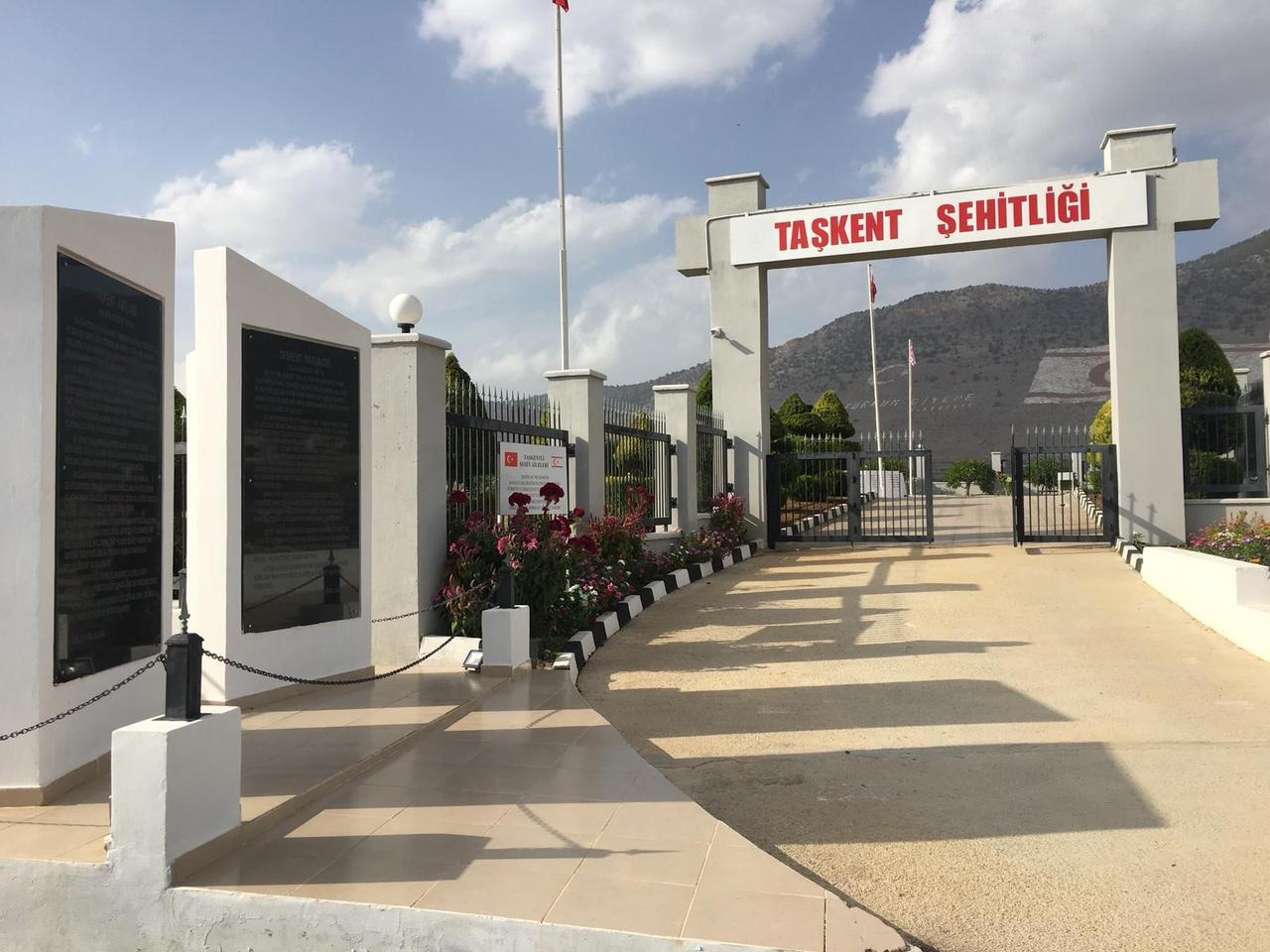
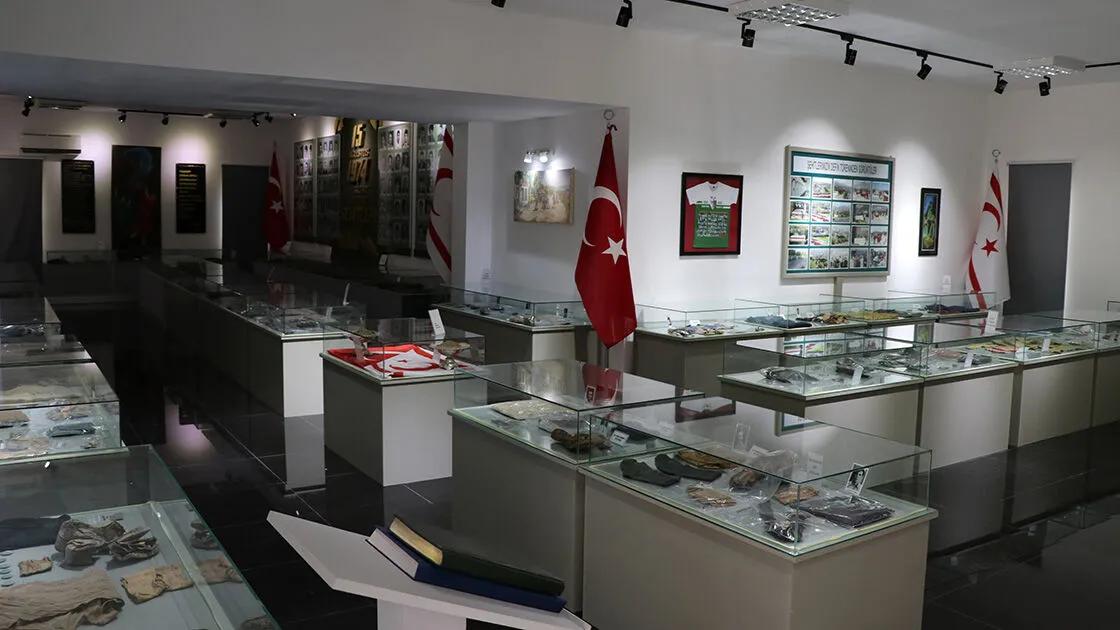
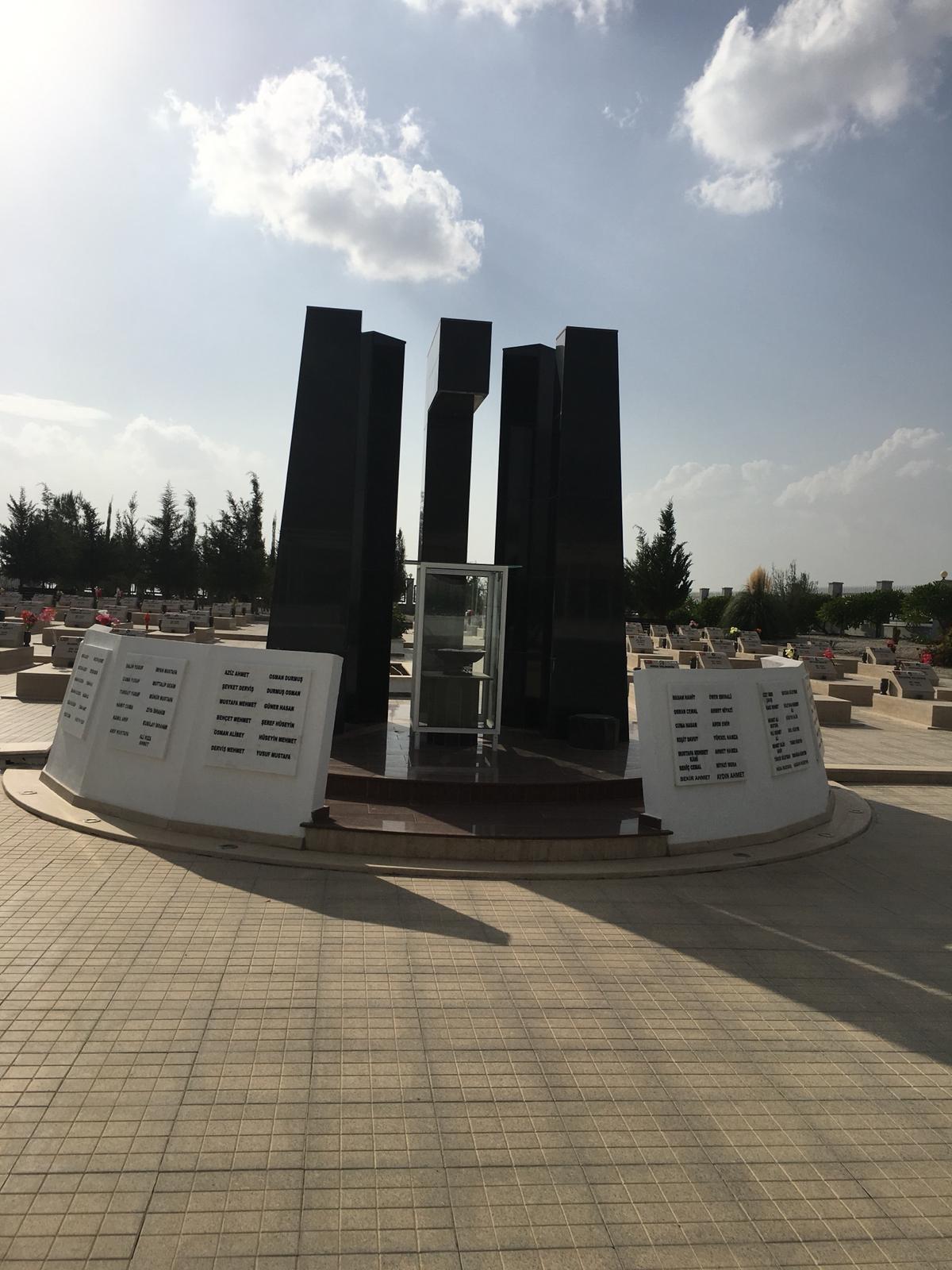
A total of sixty-eight sets of human remains recovered during excavation efforts were interred at the Taskent Martyrs’ Cemetery. The remains of eleven of the identified martyrs were buried at the Canbulat Martyrs’ Cemetery in Gazimağusa. For four martyrs whose remains were never recovered, symbolic empty graves were constructed at the Taskent Martyrs’ Cemetery.
Relatives of the Taskent victims formally petitioned the Office of the Attorney General of the Republic of Cyprus on 1 July 2005 to prosecute the perpetrators. Despite knowing the identities of those responsible and their continued existence, Cypriot authorities have issued no arrests or legal sanctions. This deliberate and systematic act constitutes a war crime against humanity, directly violating the United Nations Convention on the Prevention and Punishment of the Crime of Genocide of 9 December 1948. Nevertheless, no case has been brought before the International Criminal Court, no Red Notice has been issued by Interpol, and no international judicial avenues have been pursued.
Anadolu Ajansı. “Rumların şehit ettiği Kıbrıs Türklerinin hatıraları, şehitlik ve müzelerde yaşatılıyor.” Accessed July 16, 2026.https://www.aa.com.tr/tr/gundem/rumlarin-sehit-ettigi-kibris-turklerinin-hatiralari-sehitlik-ve-muzelerde-yasatiliyor/2639997
Diyalog Gazetesi. "Katiller yaşıyor." Accessed July 16, 2026.https://www.diyaloggazetesi.com/guney/katiller-yasiyor-h64106.html
Diyalog Gazetesi. “Taşkent’in acı hikâyesi.” Accessed July 16, 2026.https://www.diyaloggazetesi.com/kibris/taskentin-aci-hikyesi-h81100.html
Emek, Faruk Akın. “1958-1974 Yılları Arasında Kıbrıs’ta Yerel Basında Rum Mezalimi.” Master's thesis, Adnan Menderes Üniversitesi Sosyal Bilimler Enstitüsü, 2014. Accessed July 16, 2026.http://adudspace.adu.edu.tr:8080/xmlui/bitstream/handle/11607/1768/10044032.pdf?sequence=3&isAllowed=y
Gzt. "Devletle Ortak Katliam." Accessed July 16, 2026.https://www.gzt.com/hayat/devletle-ortak-katliam-3789238
Göktürk, Turgay Bülent. 2017. “Kıbrıs’ta Rumların Gerçekleştirdiği 1974 Katliamları”. Türk Dünyası Araştırmaları 116, no. 228: 159–170. Accessed July 16, 2026.
Havadis. “Dohni katliamı nasıl olmuştu?” Accessed July 16, 2026.https://www.havadiskibris.com/dohni-katliami-nasil-olmustu/
Hürriyet. “42 yıl sonra huzur buldular.” Accessed July 16, 2026.https://www.hurriyet.com.tr/dunya/42-yil-sonra-huzur-buldular-40196903
Hürriyet. “Türklere tecavüz ettik, öldürdük.” Accessed July 16, 2026.https://www.hurriyet.com.tr/gundem/turklere-tecavuz-ettik-oldurduk-38669109
KKTC Başbakanlık. “Başbakan Ünal Üstel, 15 Ağustos Taşkent Şehitleri’ni Anma Günü Dolayısıyla Mesaj Yayımladı…” Accessed July 16, 2026.https://basbakanlik.gov.ct.tr/BASIN-VE-HALKLA-%C4%B0L%C4%B0%C5%9EK%C4%B0LER/BASIN-A%C3%87IKLAMALARI/taskent
Keser, Ulvi. *Kızılay Belgeleri Işığında Kıbrıs 1963-1974*. Kızılay. Accessed July 16, 2026.https://www.kizilay.org.tr/Upload/Dokuman/Dosya/92007586_kizilay-belgeleri-isiginda-kibris-1963-1974-profdrulvi-keser.pdf
Kıbrıs Gazetesi. “Taşkent katliamı ve şehitlerimize sahip çıkmak!” Accessed July 16, 2026.https://kibrisgazetesi.com/yazar/sabahattinismail/konu/takent-katliam-ve-ehitlerimize-sahip-kmak/
Kıbrıs Postası. “Taşkent şehitleri anıldı.” Accessed July 16, 2026.https://www.kibrispostasi.com/c35-KIBRIS_HABERLERI/n228068-taskent-sehitleri-anildi
Oberling, Pierre. “Kıbrıs Faciası.” Belleten 54, no. 210 (August 1990): 825-862. Accessed July 16, 2026.
Security Forces Command. "Taşkent Şehitliği." Accessed July 16, 2026.https://www.mucahit.gov.ct.tr/Sayfa/Sehitlik?SEHITLIK_KOD=4
Star Kıbrıs. "Taşkent Katliamı Anlatıldı." Accessed July 16, 2026.https://www.starkibris.net/index.asp?haberID=150146
Star Kıbrıs. “Yıllardır Dinmeyen Acı.” Accessed July 16, 2026.https://www.starkibris.net/index.asp?haberID=62804
TRT Haber. “Cenazeleri 40 yıl sonra defnedildi.” YouTube. Accessed July 16, 2026.
Yucel, Oğuz. “1963-1974 Yılları Arasında Kıbrıs’ta Rumların Türklere Karşı Saldırıları Soykırım Olarak Değerlendirilebilir mi?” Harp Tarihi Dergisi, no. 4 (December 2021): 103-130. Accessed July 16, 2026.
[1]
Oğuz Yucel, “1963-1974 Yılları Arasında Kıbrıs’ta Rumların Türklere Karşı Saldırıları Soykırım Olarak Değerlendirilebilir mi?,” Harp Tarihi Dergisi, no. 4 (Aralık 2021): 104, https://htd.msu.edu.tr/Content/sayilar/dokuman/sayi-4/O%C4%9Fuz%20YUCEL,%201963-1974%20Y%C4%B1llar%C4%B1%20Aras%C4%B1nda%20K%C4%B1br%C4%B1s%E2%80%99ta%20Rumlar%C4%B1n%20T%C3%BCrklere%20Kar%C5%9F%C4%B1%20Sald%C4%B1r%C4%B1lar%C4%B1%20Soyk%C4%B1r%C4%B1m%20Olarak%20De%C4%9Ferlendirilebilir%20Mi.pdf
[2]
Faruk Akın Emek, “1958-1974 Yılları Arasında Kıbrıs’ta Yerel Basında Rum Mezalimi” (yüksek lisans tezi, Adnan Menderes Üniversitesi Sosyal Bilimler Enstitüsü, 2014), s.151. son erişim: 16 Temmuz 2026, http://adudspace.adu.edu.tr:8080/xmlui/bitstream/handle/11607/1768/10044032.pdf?sequence=3&isAllowed=y
[3]
Oğuz. “1963-1974 Yılları Arasında Kıbrıs’ta Rumların Türklere Karşı Saldırıları Soykırım Olarak Değerlendirilebilir mi?” s.111.
[4]
Turgay Bülent Göktürk, “Kıbrıs’ta Rumların Gerçekleştirdiği 1974 Katliamları,” Türk Dünyası Araştırmaları 116, no. 228 (2017): 161, son erişim: 16 Temmuz 2026, https://dergipark.org.tr/tr/pub/tda/article/870912

History | 14-15 August 1974 | ||||||||
|---|---|---|---|---|---|---|---|---|---|
Location | Tashkent Scale Tatlısu villages | ||||||||
Loss of Life | 89 people | ||||||||
Ages of the Victims | From children to elderly individuals | ||||||||
Perpetrators | EOKA-B Members of the Greek Cypriot National Guard Local Greek Cypriot militias | ||||||||
Sole Survivor | Suat Kafadar (Fuat Hüseyin) | ||||||||
Age at Survival | 19 | ||||||||
Legal Status | No trial was concluded regarding the perpetrators | ||||||||
The Situation in the Region and Historical Background Before the Massacre
Events in the Villages of Taskent, Terazi and Tatlısu on 14–15 August 1974
United Nations Peacekeeping Force Activities in Taskent Village and the Surrender of Weapons
Detention of Turkish Cypriots, Transportation by Bus and the Massacre
Testimony of Suat Kafadar (Fuat Hüseyin), the Sole Survivor of the Massacre
Perpetrators of the Massacre, Related Groups and the Confession of Andreas Dimitriu
Exhumation Efforts by the Committee on Missing Persons and the Discovery of Mass Graves
Identification Through DNA Testing and Burial at the Taskent Martyrs’ Cemetery