


This article was automatically translated from the original Turkish version.
+1 More
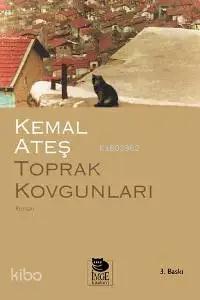
Book Title | Soil Crushers | ||||||||
|---|---|---|---|---|---|---|---|---|---|
Author(s) | Kemal Ateş | ||||||||
Type(s) | Novel | ||||||||
First Publication Year | 1980 | ||||||||
Publisher(s) | İmge Yayınevi | ||||||||
ISBN | 978-605-4169-43-4 | ||||||||
Number of Pages | 272 | ||||||||
Language(s) | Turkish | ||||||||
Kemal Ateş’s novelToprak Kovgunları is a literary work that examines the rapid internal migration process in Türkiye during the second half of the 20th century through the social and cultural consequences of population movements from rural areas to urban centers. The novel takes shape around the identity crises economic hardships and struggles for adaptation experienced by individuals who left village life and began living in informal settlements. Written in a social realist vein the work narrates the effects of migration and urbanization on individual-society relations through representative characters. The narrative centered on the clash between rural values and urban life belongs to the body of texts that shed light on Türkiye’s sociological transformation period.
Kemal Ateş’s novel Toprak Kovgunları is an example of social realism that places at its core the social economic and cultural dislocations experienced by individuals migrating from rural regions to cities. The central theme of the novel is the fragmentation of identity loss of belonging and spatial alienation caused by migration. Displaced from the land and alienated in the city individuals struggle to reconcile their past with the complexities of modern urban life. Informal settlements become the stage for the existential struggles of characters caught between these two worlds.
The author adopts a realistic narrative technique conveying events in a simple direct manner sometimes incorporating regional expressions. The narrative language is shaped to reflect the socio-economic structure and regional characteristics of the characters. Descriptions render visible the hardships of urban living and the inner conflicts faced by migrant individuals. The novel presents events within the context of individuals’ everyday life practices through an explanatory and observation-based narrative.
The novel’s cast consists of diverse individuals who have migrated from villages to cities. Through these characters the individual impacts of migration are reflected. The main characters are people who have lost their origins traditions and social environments and are striving to integrate into urban life. Each of the female male young and elderly characters represents a different social segment. The social exclusion economic hardship family disintegration and cultural conflicts experienced by the characters are explored in layered fashion throughout the novel.
The novel reflects the social consequences of Türkiye’s intense internal migration during the 1960s and 1970s. Individuals migrating from villages to cities must contend not only with economic hardship but also with alienation from the value systems of urban life. Those who have severed their ties to the land fail to find footing in the city and thus become in a sense “expelled from both places.” This social reality forms the fundamental structure of the novel.
Toprak Kovgunları has secured an important place within Turkish literature in the genre known as “gecekondu literature” or “migration literature.” It successfully captures the social upheavals of urbanization and their reflections at the individual level. Particularly within the tradition of social realist novels it stands out as a significant example for its treatment of the cultural conflicts and class inequalities triggered by internal migration. The polyphonic character structure in the novel allows for the representation of different social groups within the same narrative framework.
The novel encompasses themes such as migration poverty identity search social exclusion the place of women in urban life intergenerational conflict and urbanization. These themes are explored through the lens of individual-society relations. The phenomenon of the gecekondu is not merely a physical shelter but also a social space of existence. The tension between traditional ways of life and modernization is woven through the behaviors and relationships of the characters.
Toprak Kovgunları draws attention as a social realist novel that reveals the impact of urbanization on the lower classes. The transformations brought about by migration are addressed multidimensionally within the triangle of individual-society-environment. The novel holds an important place in Turkish literature both for reflecting the social structure of its time and for enabling an understanding of the psychological disintegration of the migrant individual.
Ateş, Kemal. Toprak Kovgunları. Ankara: İmge Kitabevi Yayınları, 3rd ed., September 2005. ISBN 978-975-533-443-1.
Dervişoğlu, Efnan. “Kemal Ateş’in Yapıtlarında Gecekondulaşma Olgusu.” *Folklor/Edebiyat* 19, no. 74 (2013): 157–172. https://dergipark.org.tr/tr/download/article-file/255453.
Sağlam, Nuri. "Türk Edebiyatında ‘Edebî Röportaj’." 13, no. 11 (2018): 707–720. https://dergipark.org.tr/tr/download/article-file/655083.

Book Title | Soil Crushers | ||||||||
|---|---|---|---|---|---|---|---|---|---|
Author(s) | Kemal Ateş | ||||||||
Type(s) | Novel | ||||||||
First Publication Year | 1980 | ||||||||
Publisher(s) | İmge Yayınevi | ||||||||
ISBN | 978-605-4169-43-4 | ||||||||
Number of Pages | 272 | ||||||||
Language(s) | Turkish | ||||||||
Content and Theme
Narrative and Style
Characters
Intellectual and Social Context
Literary Significance
Thematic Layers