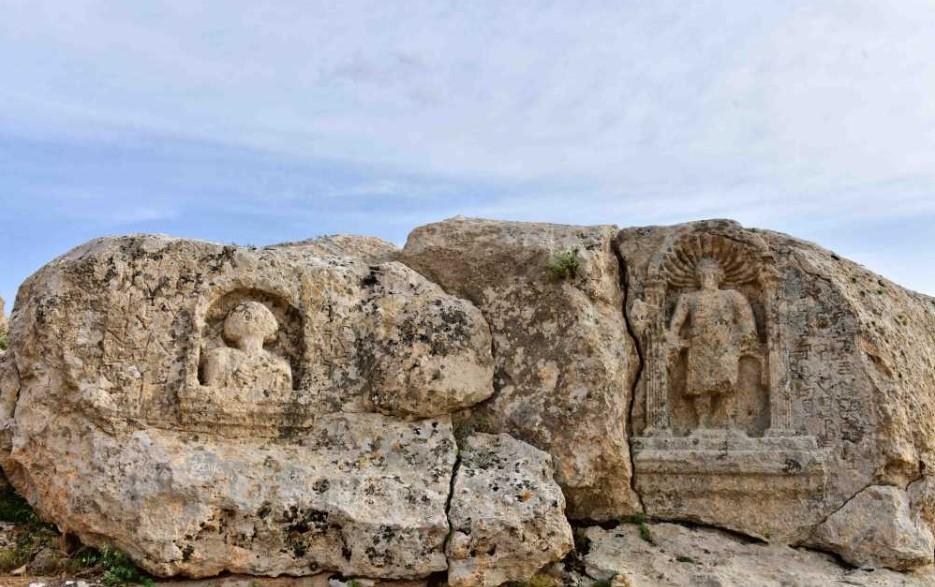
This article was automatically translated from the original Turkish version.
+1 More
Location | Rainy Türkiye Şanlıurfa Eyyübiye | ||||||||
|---|---|---|---|---|---|---|---|---|---|
Period(s) | 2nd century AD Originating in the Chalcolithic Age | ||||||||
Cult | Pagan, Moon God Sin, Planetary Gods | ||||||||
Structure(s) | Sacred Hill Pognon Cave Rock Tombs 7 Temples | ||||||||
Significance | Cult Center, Syriac Inscriptions, Archaeological Finds | ||||||||
Soğmatar Ancient City is an archaeological settlement located within the boundaries of Yağmurlu Village in the Eyyübiye district of Şanlıurfa province, Türkiye, and dated to the 2nd century CE. The city is identified as one of the pagan cult centers of Ancient Mesopotamia and served as a significant cult site during the Abgar Kingdom period, where the Harranians worshipped the gods of the moon and planets. The name Soğmatar derives from the Arabic word “matar,” meaning “rain.”
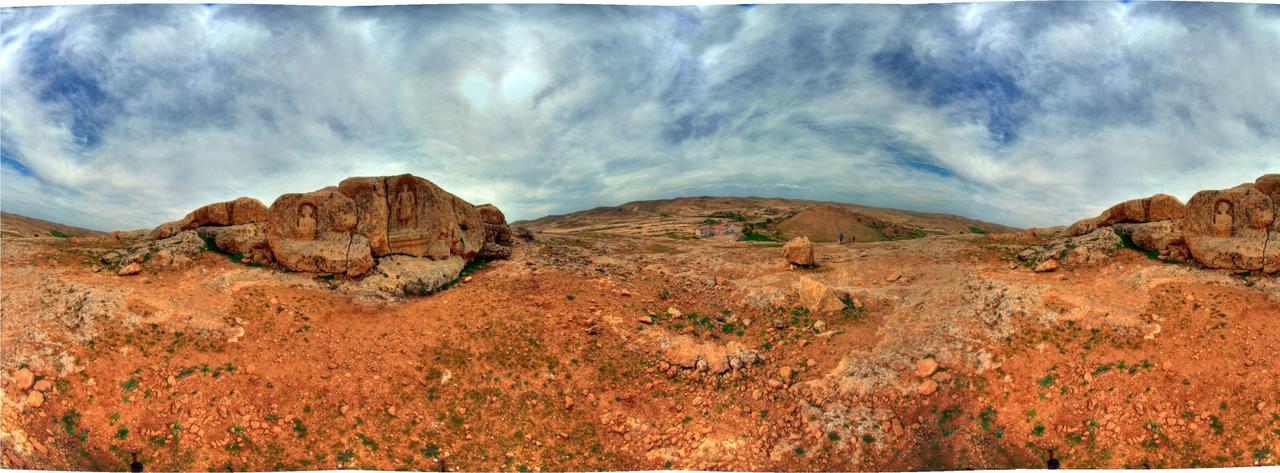
Soğmatar Ancient City (Şanlıurfa Metropolitan Municipality)
The history of Soğmatar Ancient City extends back to the Chalcolithic Age, as evidenced by the mound that contains traces of these early settlements. During the 2nd century CE, under Roman influence, it gained particular importance as the cult center of the Abgar Kingdom. The city’s foundation is attributed to inhabitants fleeing from attacks by the Parthians on the Urfa region around 165 CE. The ancient settlement maintained its religious significance until the spread of Islam in the region.
Soğmatar preserves traces of polytheistic beliefs dating back to the Assyrian and Babylonian periods and includes an open-air temple dedicated to Marelahe, regarded as the lord of the gods. Syriac inscriptions dated to the year 476 of the Seleucid calendar (164–165 CE) document the presence of this cult in the city.
The first modern scholarly records of Soğmatar were made at the end of the 19th century by Sachau and H. Pognon, who read the Syriac inscriptions. Research conducted in 1971 by H.J.W. Drijvers and J.B. Segal extended the city’s history back to the 4th century BCE.
.JPG&w=1280&q=75)
Soğmatar Ancient City (Türkiye Culture Portal)
Soğmatar Ancient City is notable for its monumental structures, temples, and rock-cut tombs clustered around a central mound. The area known as the Sacred Hill functions as an open-air temple dedicated to Marelahe. The rock surfaces of this hill bear Syriac inscriptions and reliefs of deities. These inscriptions document altars and commemorative columns dedicated to the gods by the region’s governors and prominent figures.
Among the city’s most striking structures are temples dedicated to the seven planetary deities: the Sun (Shamash), the Moon (Sin), Saturn, Jupiter, Mars, Venus, and Mercury. All temples face the Sacred Hill, and each contains rock-cut burial chambers beneath them. These structures are either square or cylindrical in plan, with some featuring arcosolia. Notable examples include:
The mound at the center of the village was used as a fortress during the 2nd century CE; remnants of walls and towers have survived. Around 120 rock-cut tombs, water wells, and caves are found in the vicinity of the city. One of these caves, known as Pognon Cave, is dedicated to the Moon God Sin. The region also contains a well believed to have been opened by the staff of Prophet Moses.
Excavations at Soğmatar have uncovered altars, human and animal bones, toys (such as a 5,000-year-old toy chariot), and various ceramics in Early Bronze Age graves. It is believed that the graves were used for ritual purposes, with offerings made before burial and sacrifices dedicated to the gods. Stone beds known as “kline,” upon which bodies were laid, have also been found in the rock-cut tombs.
The inscriptions on the Sacred Hill document altars dedicated to Marelahe and the devotion of political leaders to the gods. Among the names mentioned are Tridates, son of Adona, and Shila, son of Shila. One relief depicts the Sun God Shamash, identifiable by the solar symbol behind his head; another portrays the Moon God Sin.
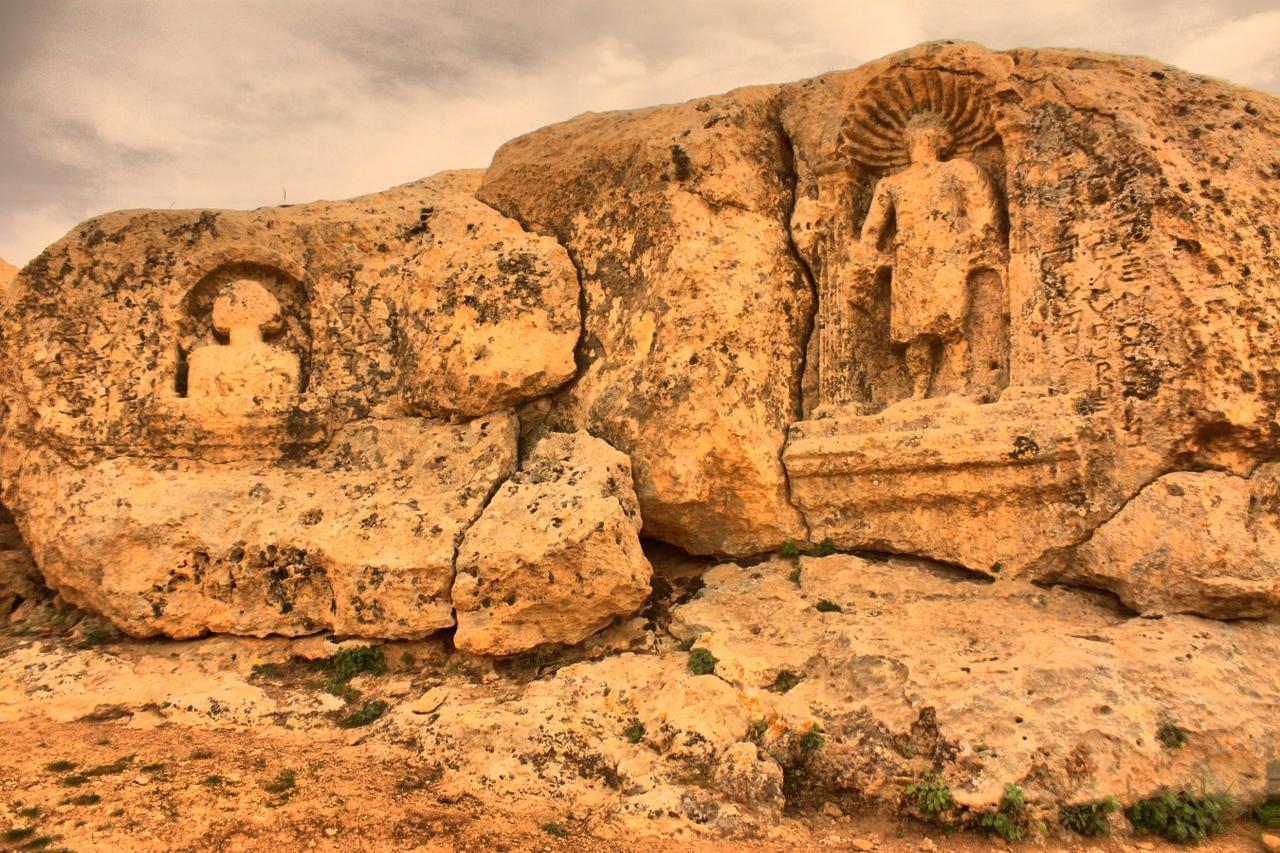
Soğmatar Ancient City (
Archaeological excavations at Soğmatar Ancient City are conducted under the leadership of the Şanlıurfa Museum Directorate and with the advisory support of faculty members from the Archaeology Department of Harran University. Excavations initiated in 2017 in the necropolis area have established that the temple structures were in use since the Early Bronze Age. The eight tunnels identified in the area are thought to have been constructed by Christians fleeing Roman pressure as an underground city.
Significant finds from the excavations are exhibited at the Şanlıurfa Archaeology Museum. The goal is to uncover the ancient city and integrate it into tourism. However, some structures and reliefs in the region have been damaged over time, underscoring the importance of ongoing conservation efforts.
Soğmatar Ancient City is located approximately 80 km from the center of Şanlıurfa, 53 km from Harran, and 15 km from Shuayb Ancient City. The settlement lies within the Tektek Mountains region, in the boundaries of Yağmurlu Village, Eyyübiye district. Sumatar is the name of a separate administrative unit, the Auxiliary Subdistrict, located in the same region.
Acar, Yusuf. “Şanlıurfa'nın Tarihi Köyü Soğmatar.” Anadolu Ajansı. Accessed July 2, 2025. https://www.aa.com.tr/tr/kultur-sanat/sanliurfanin-tarihi-koyu-sogmatar/947045.
Mancı, Ali Rıza. “Soğmatar Antik Kenti.” *Türkiye Turizm Ansiklopedisi*, 2019. Accessed July 2, 2025. https://turkiyeturizmansiklopedisi.com/sogmatar-antik-kenti.
T.C. Kültür ve Turizm Bakanlığı. "Soğmatar Antik Kenti." Kültür Portalı. Accessed July 2, 2025. https://www.kulturportali.gov.tr/turkiye/sanliurfa/gezilecekyer/sogmatar-antik-kenti.
T.C. Ministry of Culture and Tourism. "Soğmatar." *Kültür ve Turizm Bakanlığı e-Kitap Portalı*. Accessed July 2, 2025. https://ekitap.ktb.gov.tr/TR-80702/sogmatar.html.
Şanlıurfa Büyükşehir Municipality. "Soğmatar Antik Şehri." *sanliurfa.bel.tr*. Accessed July 2, 2025. https://www.sanliurfa.bel.tr/icerik/237/625/sogmatar-antik-sehri.

Location | Rainy Türkiye Şanlıurfa Eyyübiye | ||||||||
|---|---|---|---|---|---|---|---|---|---|
Period(s) | 2nd century AD Originating in the Chalcolithic Age | ||||||||
Cult | Pagan, Moon God Sin, Planetary Gods | ||||||||
Structure(s) | Sacred Hill Pognon Cave Rock Tombs 7 Temples | ||||||||
Significance | Cult Center, Syriac Inscriptions, Archaeological Finds | ||||||||
No Discussion Added Yet
Start discussion for "Soğmatar Ancient City" article
History
Architectural Features
Archaeological Finds and Religious Structures
Restoration and Conservation Efforts
Access and Location