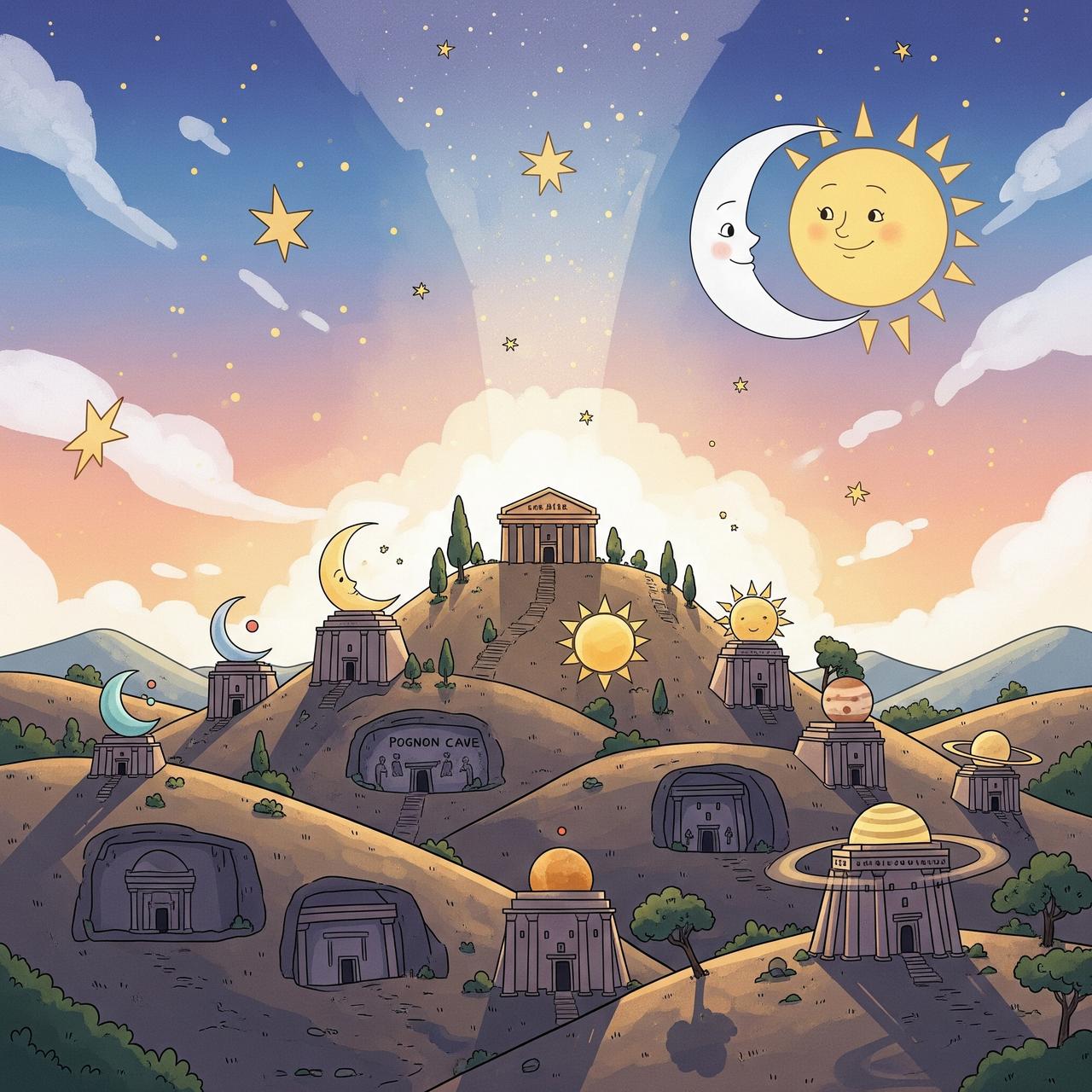


Soğmatar Ancient City
Soğmatar is an ancient city located east of Şanlıurfa Province that has served as an important cultural center throughout history. Particularly known for its beliefs related to celestial bodies, the city was a significant hub for enthusiasts of astronomy and astrology. In the 2nd century CE, it was one of the most important religious centers of the Abgar Kingdom, which ruled the region. However, archaeological excavations have revealed that human settlement in the area dates back to the 3rd millennium BCE, extending into the Bronze Age.
Religious and Architectural Features
The most distinctive feature of Soğmatar is its dedication to the Seven Planetary Gods: the Sun (Shamash), the Moon (Sin), Saturn (Kronos), Jupiter (Zeus), Mars (Ares), Venus (Aphrodite), and Mercury (Hermes). At the center of the city lies a sacred worship area known as the Sacred Hill, which functioned as an open-air temple. Surrounding this hill are the remains of individual temples dedicated to each of the planetary deities. These architectural remnants clearly define the religious identity of the city.
Key Structures
One of the most striking structures in Soğmatar is the Pognon Cave. The cave walls feature reliefs and inscriptions dedicated to the Moon god Sin and other deities. These reliefs are important documents reflecting the belief system and artistic sensibilities of the period. The city also contains numerous rock-cut tombs and monumental tombs, demonstrating that Soğmatar functioned as a significant necropolis. Additionally, the water wells that supplied the city’s water needs are key elements providing insight into the settlement patterns of the era.
Historical and Cultural Significance
Soğmatar is believed to derive its name from the Arabic term "Suk el-Matar", meaning "rain market," suggesting that the region was once highly fertile and a center of intense commercial activity. The site gained wider recognition after being explored by the Roman historian Pognon and began to be studied by archaeologists in the 1960s. These investigations have demonstrated that Soğmatar was not merely a local center but also a major religious hub of Mesopotamia. Today, the site is visited as a tourist destination and continues to preserve its historical richness.