This article was automatically translated from the original Turkish version.
+1 More
Official Name | Sarajevo Umut Tunnel (Tunnel Spasa) | ||||||||
|---|---|---|---|---|---|---|---|---|---|
Location | Under Sarajevo Airport | ||||||||
Construction Date | March 1993 - 30 July 1993 | ||||||||
Construction Duration | 4 months 4 days | ||||||||
Architect / Engineer | Nedzad Brankovic | ||||||||
Purpose of Use | Delivery of food, medicine and munitions to the besieged city Evacuation of the wounded | ||||||||
Estimated Number of People Rescued | Approximately 300,000 people | ||||||||
Operational Support | Wooden blocks, rail system, electrical cables, fuel pipes | ||||||||
Year of Museum Conversion | 1996 | ||||||||
Annual Number of Visitors | Approximately 170,000 people | ||||||||
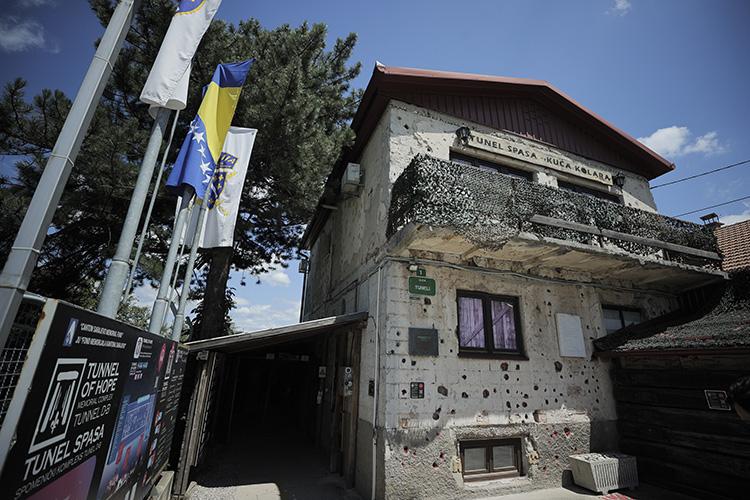
Sarajevo Tunnel of Hope is a strategic underground passage constructed during the 1425-day siege of Sarajevo, known as the longest siege in modern history, to connect the besieged capital with the outside world.【1】 Construction began in 1993 and linked the Dobrinja and Butmir areas under the control of the Army of Bosnia and Herzegovina with the runway of Sarajevo Airport.
Sarajevo Tunnel of Hope's construction was prompted by Bosnia and Herzegovina's declaration of independence through referendum on 1 March 1992 and the subsequent siege launched by Serb forces on 5 April 1992, which refused to recognize this decision. Sarajevo endured the longest siege in modern history, lasting 1425 days, during which all land connections to the outside world were severed. This complete logistical isolation made it impossible to supply basic necessities such as food, medicine and ammunition, plunging the civilian population and defense units into a severe humanitarian crisis.【2】
By 1993, the Sarajevo Airport, under United Nations (UN) control, had become a barrier separating the Bosniak-controlled areas on either side of the city (Dobrinja and Butmir). Civilians attempting to cross the airport runway were killed by sniper fire, leading to the idea of excavating an underground passage to break the siege.【3】 The tunnel project, engineered by Nedzad Brankovic, was implemented following the approval of Bosnia and Herzegovina’s first President Alija Izetbegović and the initiative of a delegation that included his son Bakir Izetbegović.【4】 For strategic reasons, a house belonging to the Kolar family in Butmir was selected as the secret entrance and operational center of the tunnel.
Amid the Bosnian War, which witnessed the largest massacre and most systematic violence in Europe since World War II, the tunnel’s opening on 30 July 1993 became not only a military strategy but also a symbol of the will to survive of 400,000 people. The tunnel served as the only legal channel for delivering weapons necessary for the city’s defense, as well as for supplying food, diesel fuel and electricity to the besieged population.【5】
Video about the Sarajevo Tunnel of Hope (TRT Haber)
The construction of the Tunnel of Hope was a technical endeavor shaped entirely by the impossible conditions of siege, combining military engineering and civilian solidarity. Nedzad Brankovic led the engineering of the project, and construction began in March 1993. The tunnel’s primary objective was to connect the besieged city of Sarajevo with the free area of Butmir by passing beneath the runway of the airport, designated as a “neutral zone” under UN control.
The tunnel is 800 meters long and has a very narrow and low internal structure: one meter wide and approximately 1.60 meters high. These physical constraints forced most soldiers and civilians using the tunnel to move bent over or crouched. The ceiling and side walls were supported by wooden blocks, logs and, in places, steel plates to prevent soil collapse.
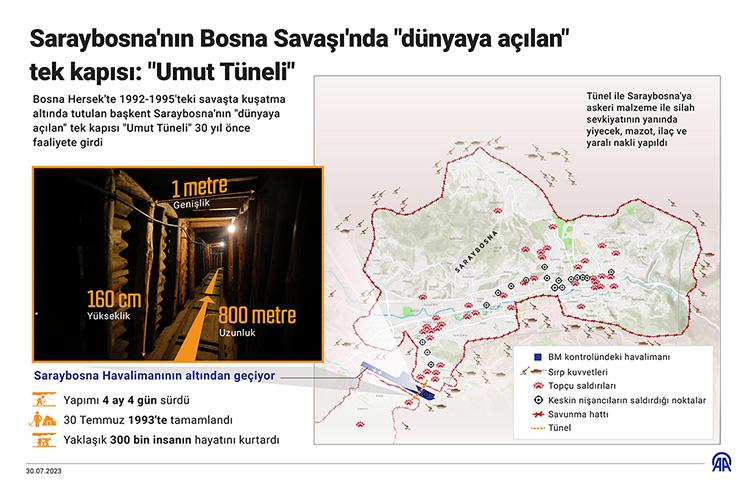
About the Sarajevo Tunnel of Hope (Anadolu Ajansı)
Construction was carried out almost entirely by manual methods due to the lack of technological equipment. A volunteer team of approximately 300 people worked continuously for four months and four days using only shovels and picks.【6】 Excavation was initially planned in two shifts. After reaching the 300–400 meter mark, the removal of excavated sand and soil became one of the greatest technical challenges.【7】 Throughout the construction process, work was frequently halted due to seepage of groundwater and flooding from rainwater; at times, water levels rose as high as the workers’ waists.【8】
After completion, a rail system was laid along the tunnel floor to increase operational capacity and enable the transport of military equipment and heavy loads. Small wagons and hand carts moving along these rails accelerated the delivery of ammunition, food and medicine. In addition, the tunnel functioned not only as a passage but also as an infrastructure corridor; high-voltage power cables, telephone lines and fuel pipelines were installed within it to supply the city.【9】
The entrance on the Butmir side was strategically started beneath the house belonging to the Kolar family to conceal it from Serb snipers and artillery fire. The structure, which became operational on 30 July 1993 when both ends met, remained the logistical heart of the city until the end of the war.
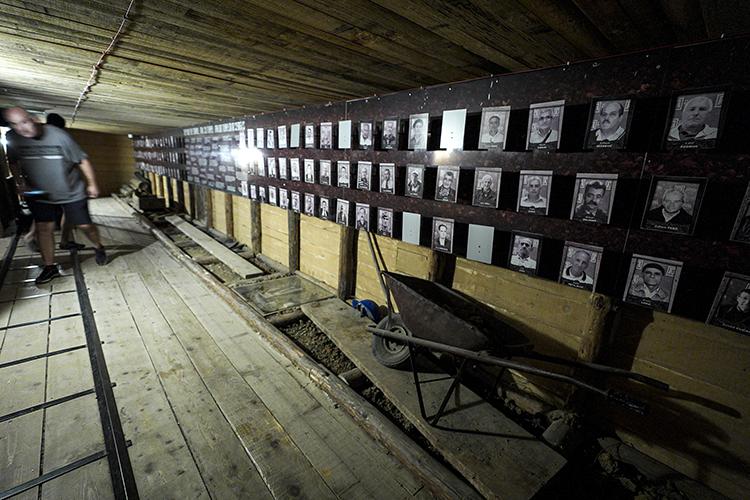
The 300-Person Volunteer Team Involved in the Construction of the Sarajevo Tunnel of Hope (Anadolu Ajansı)
The museumification of the tunnel began in 1996 through the personal efforts of the Kolar family and gradually evolved into an institutional structure. Today, the complex is managed by the Sarajevo Memorial Center (Fond Memorijala), which preserves the two-story house serving as the northern entrance to the tunnel and its surroundings. The museum’s collection includes shovels and hand carts used in the excavation, the rails laid for transport, uniforms worn by soldiers, photographs and video recordings from the period. One of the museum’s key artifacts is the chair used by Alija Izetbegović, Bosnia and Herzegovina’s first president, during his passage through the tunnel.【10】
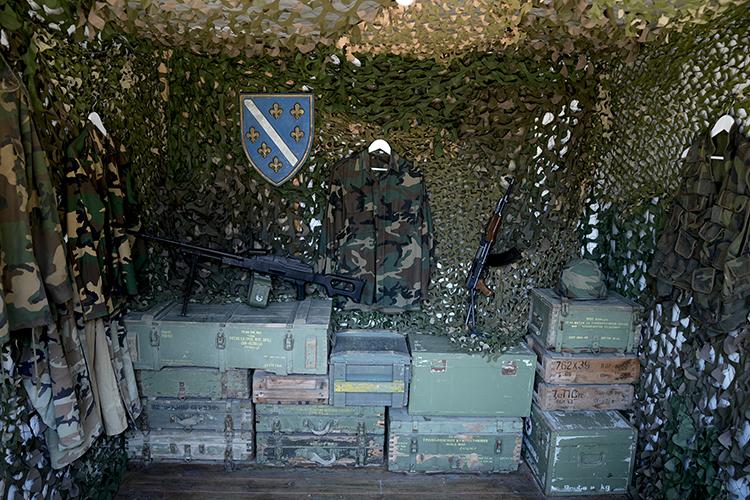
Some Artifacts Exhibited in the Museum (Anadolu Ajansı)
For the approximately 400,000 people under siege, the tunnel was described as the “only gateway to the world.”【11】 Through the tunnel, food, medicine, diesel fuel and military supplies were delivered, and wounded civilians were evacuated and civilians were allowed to pass. It is estimated that approximately 300,000 people had their lives saved by using the tunnel, which was used daily by an average of 1,000 people.【12】 Many political and military leaders, including then-president Alija Izetbegović, used this route.
After the war, the house belonging to the Kolar family at the northern entrance of the tunnel was converted into a museum in 1996 and later nationalized and transferred to the Sarajevo Canton Memorial Fund. Today, a 20-meter section of the original tunnel is open to visitors, and within the museum, photographs, documents and military equipment from the war period are exhibited. Considered within the frameworks of “war tourism” and “dark tourism,” the museum is one of Bosnia and Herzegovina’s most visited sites and plays a vital role in preserving the memory of the tragedy and raising global awareness.
Anadolu Ajansı. "Bosna Hersek'teki savaşın sembollerinden 'Umut Tüneli'nin açılışının 32. yıl dönümünde anma etkinliği." Accessed December 28, 2025.https://www.aa.com.tr/tr/dunya/bosna-hersekteki-savasin-sembollerinden-umut-tunelinin-acilisinin-32-yil-donumunde-anma-etkinligi/3647429
Anadolu Ajansı. "Saraybosna'nın Bosna Savaşı'nda 'dünyaya açılan' tek kapısı 'Umut Tüneli' 30 yaşında." Accessed December 28, 2025.https://www.aa.com.tr/tr/kultur/saraybosnanin-bosna-savasinda-dunyaya-acilan-tek-kapisi-umut-tuneli-30-yasinda/2957163
Anadolu Ajansı. "Saraybosna'nın hayata açılan 'Umut Tüneli' 29 yaşında." Accessed December 28, 2025.https://www.aa.com.tr/tr/dunya/saraybosnanin-hayata-acilan-umut-tuneli-29-yasinda/2648729
Anadolu Ajansı. "Saraybosna'nın, Bosna Savaşı'nda 'dünyaya açılan' tek kapısı 'Umut Tüneli'ne turistlerden ilgi." Accessed December 28, 2025.https://www.aa.com.tr/tr/kultur/saraybosnanin-bosna-savasinda-dunyaya-acilan-tek-kapisi-umut-tuneline-turistlerden-ilgi/3289706
Anadolu Ajansı. "Umut Tüneli" savaş müzesi oluyor." Accessed December 28, 2025.https://www.aa.com.tr/tr/pg/foto-galeri/quot-umut-tuneliquot-savas-muzesi-oluyor
BBC News Türkçe. "Umut Tüneli: Savaş sırasında Saraybosna'yı yaşama bağlayan tek kapı." BBC. Accessed December 28, 2025.https://www.bbc.com/turkce/articles/ckg0q01d2v7o
Bilginoğlu, Elif. "Bir Karanlık Turizm Türü Olarak Savaş Turizmi ve Bosna-Hersek’in Bir Savaş Turizmi Destinasyonu Olarak Yeniden Tanımlanması." *SEFAD*, 2024; (52): 203-234. Accessed December 28, 2025.https://dergipark.org.tr/en/download/article-file/3797310
GZT. "Saraybosna'nın dünyaya açılan tek kapısı: Umut Tüneli." MECRA. Accessed December 28, 2025.https://www.gzt.com/mecra/saraybosnanin-dunyaya-acilan-tek-kapisi-umut-tuneli-3768759
TRT Haber. "Saraybosna kuşatmasına bir nefes: Umut Tüneli." Accessed December 28, 2025.https://www.trthaber.com/haber/dunya/saraybosna-kusatmasina-bir-nefes-umut-tuneli-789286.html
TRT Haber. "Saraybosna kuşatmasına bir nefes: Umut Tüneli." YouTube Video. Date Published: August 19, 2023. Accessed December 28, 2025.https://www.youtube.com/watch?v=Ry8Rz4fSuGg
[1]
"Saraybosna'nın dünyaya açılan tek kapısı: Umut Tüneli," MECRA, erişim 28 Aralık 2025, https://www.gzt.com/mecra/saraybosnanin-dunyaya-acilan-tek-kapisi-umut-tuneli-3768759
[2]
"Saraybosna'nın dünyaya açılan tek kapısı: Umut Tüneli," MECRA, erişim 28 Aralık 2025,
[3]
Elif Bilginoğlu, "Bir Karanlık Turizm Türü Olarak Savaş Turizmi ve Bosna-Hersek’in Bir Savaş Turizmi Destinasyonu Olarak Yeniden Tanımlanması," SEFAD, 2024; (52): 203-234, sayfa:210, erişim 28 Aralık 2025, https://dergipark.org.tr/en/download/article-file/3797310
[4]
"Saraybosna'nın dünyaya açılan tek kapısı: Umut Tüneli," MECRA, erişim 28 Aralık 2025,
[5]
"Saraybosna'nın dünyaya açılan tek kapısı: Umut Tüneli," MECRA, erişim 28 Aralık 2025,
[6]
"Saraybosna kuşatmasına bir nefes: Umut Tüneli," TRT Haber, erişim 28 Aralık 2025, https://www.trthaber.com/haber/dunya/saraybosna-kusatmasina-bir-nefes-umut-tuneli-789286.html
[7]
"Saraybosna'nın dünyaya açılan tek kapısı: Umut Tüneli," MECRA, erişim 28 Aralık 2025,
[8]
"Umut Tüneli: Savaş sırasında Saraybosna'yı yaşama bağlayan tek kapı," BBC, erişim 28 Aralık 2025, https://www.bbc.com/turkce/articles/ckg0q01d2v7o
[9]
"Umut Tüneli: Savaş sırasında Saraybosna'yı yaşama bağlayan tek kapı," BBC, erişim 28 Aralık 2025,
[10]
"Umut Tüneli" savaş müzesi oluyor." Anadolu Ajansı, erişim 28 Aralık 2025, https://www.aa.com.tr/tr/pg/foto-galeri/quot-umut-tuneliquot-savas-muzesi-oluyor
[11]
"Saraybosna'nın dünyaya açılan tek kapısı: Umut Tüneli," MECRA, erişim 28 Aralık 2025,
[12]
"Saraybosna'nın dünyaya açılan tek kapısı: Umut Tüneli," MECRA, erişim 28 Aralık 2025,

Official Name | Sarajevo Umut Tunnel (Tunnel Spasa) | ||||||||
|---|---|---|---|---|---|---|---|---|---|
Location | Under Sarajevo Airport | ||||||||
Construction Date | March 1993 - 30 July 1993 | ||||||||
Construction Duration | 4 months 4 days | ||||||||
Architect / Engineer | Nedzad Brankovic | ||||||||
Purpose of Use | Delivery of food, medicine and munitions to the besieged city Evacuation of the wounded | ||||||||
Estimated Number of People Rescued | Approximately 300,000 people | ||||||||
Operational Support | Wooden blocks, rail system, electrical cables, fuel pipes | ||||||||
Year of Museum Conversion | 1996 | ||||||||
Annual Number of Visitors | Approximately 170,000 people | ||||||||
No Discussion Added Yet
Start discussion for "Sarajevo Umut Tunnel (Tunnel Spasa)" article
Historical Background
Technical Features and Construction Process
Museumification Process and Exhibited Artifacts
Strategic and Humanitarian Significance
Current Status