


This article was automatically translated from the original Turkish version.
+2 More
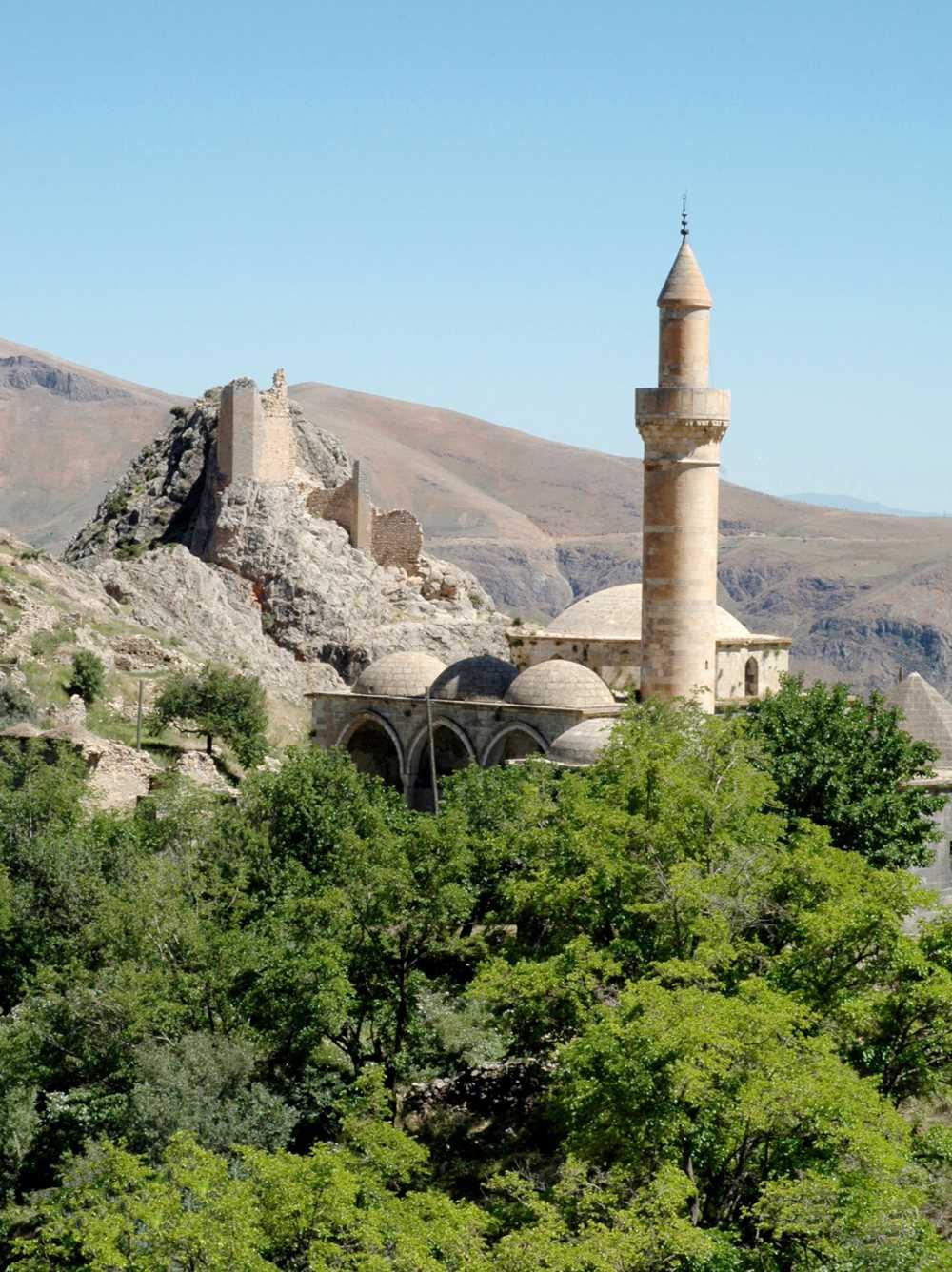
Sağman Camii (Kültürportalı)
Location | Sağman Village Türkiye Tunceli Pertek District | ||||||||
|---|---|---|---|---|---|---|---|---|---|
Construction Date(s) | 16th century (likely 1555) | ||||||||
Architectural Style(s) | Ottoman and local stonemasonry features | ||||||||
Building Material | Cut stone | ||||||||
Prominent Features | prayer hall with rectangular plan Stone minaret with cylindrical body and single balcony | ||||||||
Sağman Camii is an Ottoman-era mosque dating to the 16th century, located in Sağman Village, Pertek District of Tunceli Province in Eastern Anatolia, Türkiye. The structure is situated within a historical külliye complex that also includes remnants of a türbe, sebil, and medrese. The mosque, along with its architectural plan, stonework, and surrounding buildings, represents one of the notable examples of rural Anatolian architecture from its period.
The Sağman Camii was commissioned by Keyhüsrev Bey, a ruler of the Sağman Beylik that governed the region during the Ottoman period. The construction was carried out in the name of Keyhüsrev Bey’s son, Salih Bey, which is why some sources refer to the mosque as "Salih Bey Camii." However, according to documents published in 2022, the structure is officially designated as "Sağman Camii." The mosque functions as a waqf property belonging to the Keyhüsrev Bey Vakfı. The waqfiye documents provide information regarding the mosque’s construction date, founder, and surrounding structures.
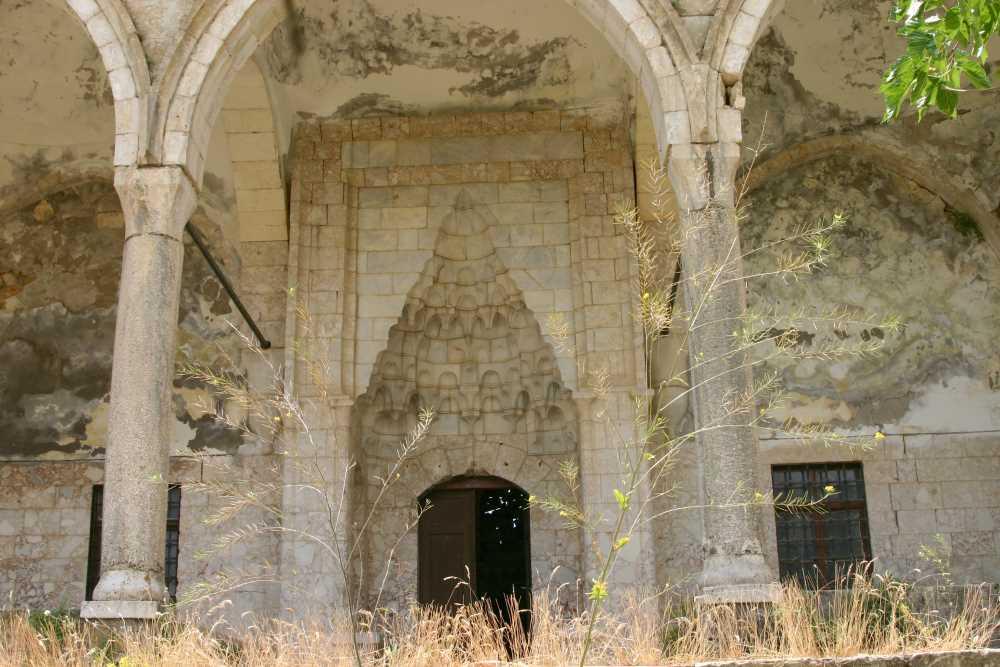
Sağman Camii (Culture Portal)
The mosque is constructed of cut stone and features a rectangular prayer hall. It is covered by a dome resting on an octagonal drum. The entrance façade is notable for its stonework and is defined by an arched portal. The cylindrical minaret, located to the northwest of the mosque, is built using the same stone material as the main structure, ensuring architectural harmony.
The Sağman Camii was built as part of a külliye complex. To the east of the mosque stands a hexagonal stone türbe, believed to have been intended for the founder or family members. Adjacent to the eastern outer wall of the mosque is a sebil, whose upper section features small arched fountain openings, indicating its function as part of the waqf’s charitable services. Additionally, foundation remains estimated to belong to a medrese have been observed in the immediate vicinity of the mosque.
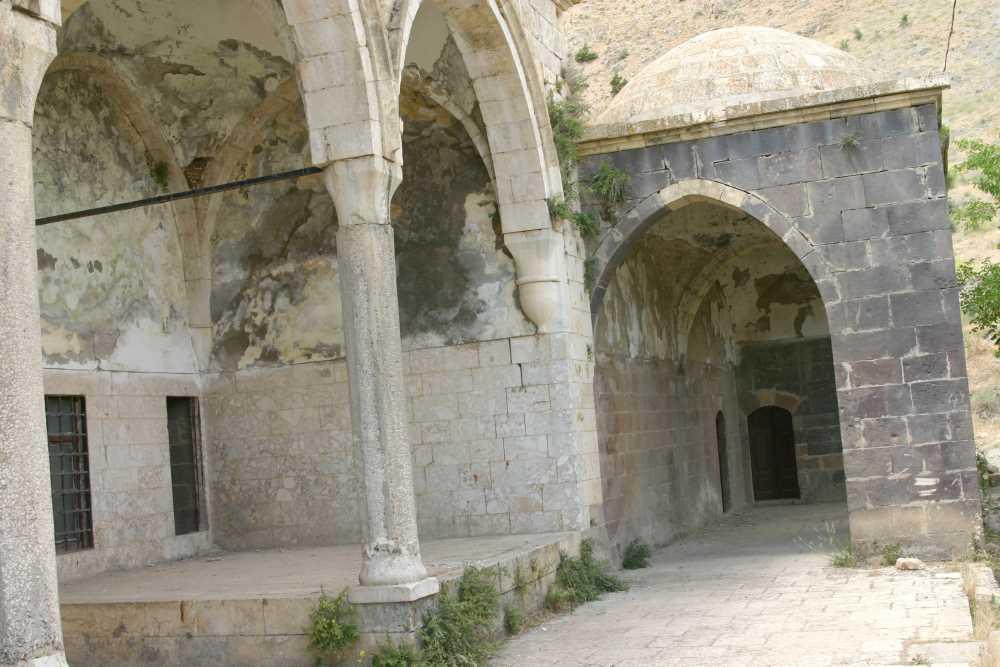
Sağman Camii (Culture Portal)
Extensive stone ornamentation is employed in both the interior and exterior architecture of the mosque. Stone arches, column capitals, and entrance openings are enriched with decorative elements. Historical records indicate that ceramic tile decorations were once present inside the mosque, although none have survived to the present day. The structure lacks an inscriptive tablet, and historical information is primarily derived from waqfiye and archival documents.
The Sağman Camii has undergone various restoration efforts over different periods. Although some architectural elements on the entrance façade have been removed, the structure as a whole retains its original character. The prayer hall and dome remain in good condition. The türbe and sebil, as ancillary structures, are also still standing. Today, the mosque continues to serve both as a place of worship and as a cultural heritage site.
The mosque is located in Sağman Village, approximately 15 kilometers northeast of the Pertek district center. Situated near Sağman Castle, the structure is part of a settlement area that brings together historical and natural elements of the region.
Polat, Turgay. “Yeni Belge ve Bulgular Işığında Sağman Keyhüsrev Bey Camii.” *Art-Sanat*, no. 18 (2022): 341–363. Accessed July 14, 2025. https://dergipark.org.tr/tr/pub/iuarts/issue/71508/1024964
T.C. Ministry of Culture and Tourism. "Fotoğraf Detay 11160." *Kültür Portalı Fotoğraf Galerisi*. Accessed July 14, 2025. https://www.kulturportali.gov.tr/medya/fotograf/fotodetay/11160
T.C. Ministry of Culture and Tourism. "Fotoğraf Detay 43017." *Kültür Portalı Fotoğraf Galerisi*. Accessed July 14, 2025. https://www.kulturportali.gov.tr/medya/fotograf/fotodetay/43017
T.C. Ministry of Culture and Tourism. "Sağman Camii." *Kültür Portalı*. Accessed July 14, 2025. https://www.kulturportali.gov.tr/turkiye/tunceli/gezilecekyer/sagman-camii
T.C.Pertek Kaymakamlığı Governorship. "Pertek Sağman Camii." Pertek District Governorship Official Website. Accessed July 14, 2025. http://pertek.gov.tr/pertek-sagman-camii
Sağman Camii (Kültürportalı)
Location | Sağman Village Türkiye Tunceli Pertek District | ||||||||
|---|---|---|---|---|---|---|---|---|---|
Construction Date(s) | 16th century (likely 1555) | ||||||||
Architectural Style(s) | Ottoman and local stonemasonry features | ||||||||
Building Material | Cut stone | ||||||||
Prominent Features | prayer hall with rectangular plan Stone minaret with cylindrical body and single balcony | ||||||||
History
Architectural Features
Külliye and Ancillary Structures
Art and Decoration
Conservation Status
Geographical Location