This article was automatically translated from the original Turkish version.
Type | Church / Cultural structure | ||||||||
|---|---|---|---|---|---|---|---|---|---|
Culture | Syriac | ||||||||
Location | Şanlıurfa Province Eyyübiye District Türkiye Ellisekiz Square | ||||||||
Construction Date | 1861, (on the remains of a 6th-century church) | ||||||||
Usage Status | Cultural center, (Vali Kemalettin Gazezoğlu Cultural Center) | ||||||||
Historical Functions | Place of worship, tobacco factory, grape storage | ||||||||
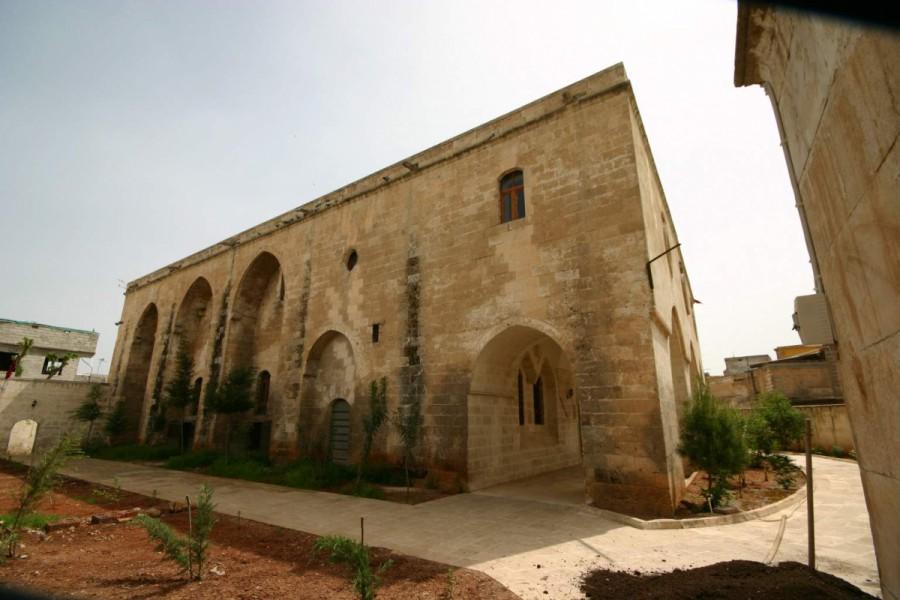
Reji Church, also known as the Church of Saint Peter and Saint Paul, is a historical place of worship located in the Eyyübiye district of Şanlıurfa. Built in 1861 atop the ruins of a church dating back to the 6th century, it stands northeast of Ellisekiz Square. Through its various functions and transformations over different periods, it stands as an important cultural heritage reflecting the city’s layered cultural and religious history.
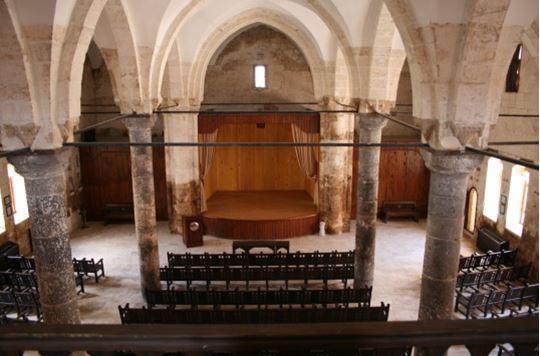
Interior of the Reji Church (Şanlıurfa Valiliği)
The church was constructed in 1861 on the remains of an older church dating to the 6th century. It is dedicated to Saint Peter and Saint Paul, apostles of Jesus Christ, and is therefore also known as the Church of Saint Peter and Saint Paul. It served as an active place of worship until 1924, when the Syriac community of Urfa left the city.
After 1924, the church came under the ownership of the Tekel Administration. During this period it was first used as a tobacco factory and later as a grape storage facility. Among the public, the building began to be referred to as the “Reji Church,” a name derived from the French word Régie, the equivalent of “Tekel.” This naming reflects not only the church’s religious identity but also its place within the social and economic history of the region.
The Church of Saint Peter and Saint Paul draws attention through its use of stone and its simple, monumental structure. Its architecture reflects a synthesis of local building techniques prevalent in Urfa during the late Ottoman period and fundamental elements of Christian religious architecture. The surviving architectural remnants demonstrate that the building was designed to accommodate both religious and public functions.
The inscribed gravestones originally found in the church were transferred to the Urfa Museum after the building changed its function. This underscores that the church was not merely a place of worship but also a vital part of the Syriac community’s cultural memory. Following restoration efforts initiated by the Şanlıurfa Governorate in 1998, the building was reopened on 24 May 2002 as the Vali Kemalettin Gazezoğlu Culture Center. Today, it continues to serve a public function by hosting various cultural and artistic events.
Today, the Reji Church is a publicly accessible cultural structure. Alongside its religious identity, it holds an important place in the collective memory of Şanlıurfa as a historical site representing the city’s multicultural past.
Kültür Envanteri. "Aziz Petrus ve Aziz Paulus Kilisesi." Accessed December 19, 2025.
Urfa.tr. "Reji Kilisesi." Accessed December 19, 2025.
Şanlıurfa Büyükşehir Belediyesi. "Reji Kilisesi (Aziz Petrus ve Aziz Paulus Kilisesi)." Accessed December 19, 2025.
Şanlıurfa Valiliği. "Kültür ve Turizm." Accessed December 19, 2025.

Type | Church / Cultural structure | ||||||||
|---|---|---|---|---|---|---|---|---|---|
Culture | Syriac | ||||||||
Location | Şanlıurfa Province Eyyübiye District Türkiye Ellisekiz Square | ||||||||
Construction Date | 1861, (on the remains of a 6th-century church) | ||||||||
Usage Status | Cultural center, (Vali Kemalettin Gazezoğlu Cultural Center) | ||||||||
Historical Functions | Place of worship, tobacco factory, grape storage | ||||||||
No Discussion Added Yet
Start discussion for "Regie Church (Church of Saint Peter and Saint Paul)" article
History
Architectural Features
Cultural and Social Function