


This article was automatically translated from the original Turkish version.
+1 More
Pyramids are geometric structures with a broad base that narrows toward the top and are typically covered with four triangular faces. Throughout history, many civilizations have constructed them as monuments, tombs, or temples. In ancient Egypt, pyramids were used as pharaohs’ tombs, while in Mesopotamia they were built in the form of ziggurats dedicated to the gods. In Mesoamerica, the Maya, Aztecs, and Olmecs used pyramids for religious ceremonies and sacrificial rituals. These structures not only demonstrated significant advances in architecture and engineering over time but also took on important roles in astronomical observations and social organization.
Ancient Egyptian pyramids are monumental structures built as pharaohs’ tombs and are among the most impressive architectural achievements in human history. According to ancient Egyptian beliefs, these were sacred spaces designed to ensure that pharaohs would continue their divine existence after death. The pyramids, constructed using advanced engineering techniques, reveal the technical and organizational prowess of ancient Egypt. Today, these monumental structures attract attention not only for their historical significance but also for the unsolved mysteries they hold for scientists and researchers.
The construction of pyramids in Egypt evolved from mastabas, rectangular burial structures used during the early dynastic period. Mastabas were simple underground tombs built for pharaohs and high-ranking officials. However, as demand grew for larger and more magnificent tombs, pyramid architecture began to develop.
One of the most important milestones in this evolution was the Step Pyramid, constructed around the 27th century BCE for Pharaoh Djoser by the architect Imhotep. This structure features a stepped design composed of stacked mastabas and is recognized as Egypt’s first large-scale stone building. The Step Pyramid marks the beginning of the transformation of royal tombs into more monumental forms.
Over time, there was a transition from stepped pyramids to structures with smoother surfaces. Pyramids built during the reign of Pharaoh Sneferu represent the most important examples of this transition. Sneferu experimented with different designs such as the Bent Pyramid and the Red Pyramid to lay the foundations of the classic pyramid form. The Red Pyramid is particularly regarded as the first true smooth-sided pyramid and paved the way for the construction of the great pyramids at Giza.
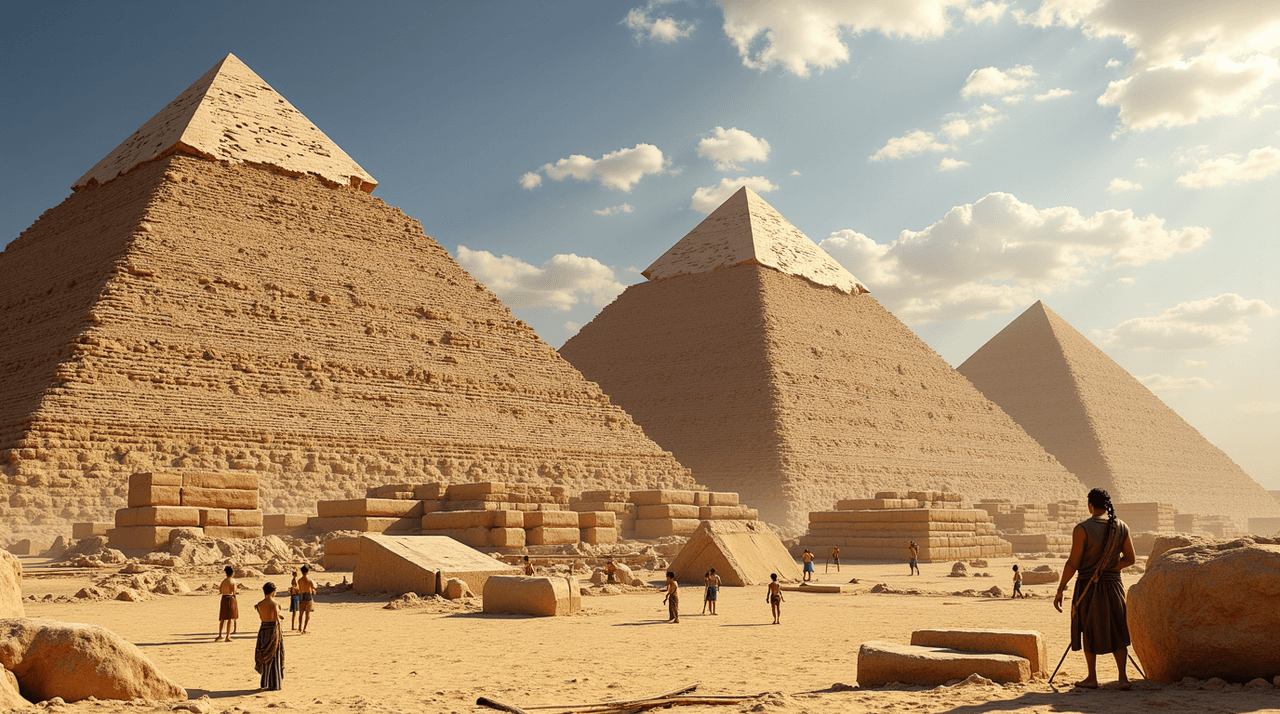
The most famous pyramids in Egypt are the Giza Pyramids located near Cairo. This complex contains the largest burial structures of ancient Egypt’s Old Kingdom and continues to preserve its mysteries to this day.
The Great Pyramid of Giza, commissioned by Pharaoh Khufu between 2580 and 2560 BCE, is the only one of the Seven Wonders of the Ancient World still standing today. When originally constructed, it stood approximately 146.6 meters tall, but due to stone loss and erosion over time, its current height is 138.8 meters. The pyramid is composed of approximately 2.3 million stone blocks, each estimated to weigh an average of 2.5 tons.
Although various theories exist regarding its construction, it is generally believed that the stones were transported along the Nile River and lifted into place using ramps. The internal structure of the Great Pyramid is also highly complex. It contains several chambers including the King’s Chamber, the Queen’s Chamber, and the Grand Gallery. The pharaoh’s sarcophagus is located in the King’s Chamber, while the function of the Queen’s Chamber remains unclear. The Grand Gallery is one of the largest corridors within the structure and provides significant insights into the pyramid’s internal space layout.
The Khafre Pyramid, built around 2570 BCE by Pharaoh Khafre, is slightly shorter than Khufu’s pyramid but appears larger because it was constructed on higher ground. Standing at 143.5 meters, it is the second-largest pyramid at Giza after Khufu’s.
Beside the Khafre Pyramid stands the Great Sphinx. This colossal statue, with the body of a lion and the head of a pharaoh, is believed to represent Khafre. Measuring 20 meters in height and 73 meters in length, the Great Sphinx is the largest single-stone sculpture from ancient Egypt. Although various theories exist regarding its exact purpose and builder, the widely accepted view is that it was constructed during Khafre’s reign.
The third-largest pyramid at Giza, the Menkaure Pyramid, was built around 2510 BCE and stands at 65.5 meters, making it the smallest of the three Giza pyramids. However, it is distinguished by its finer quality stone casing and striking basalt cladding.
Although less imposing than the other great pyramids, the Menkaure Pyramid is highly significant for the royal statues and sarcophagi found within. Its construction may have been incomplete after Menkaure’s death, yet it still upheld the tradition of royal tombs as monumental structures.
Although pyramid construction reached its peak during the Old Kingdom, it gradually declined during the Middle and New Kingdoms. One of the main reasons was the enormous labor and resources required for their construction, as well as the frequent looting of tombs.
As a result, from the 12th Dynasty onward, pharaohs began to favor rock-cut tombs. These tombs, built in regions such as Luxor and the Valley of the Kings, although less conspicuous than pyramids, hold great importance due to their elaborate interior decorations and artistic details.
Especially the tombs of Ramses II and Tutankhamun are among the most important examples of this new tomb style. The tombs in the Valley of the Kings demonstrate that beliefs in the pharaohs’ immortality persisted, but security and secrecy measures were significantly enhanced.
(Figure 1: Designed by artificial intelligence)
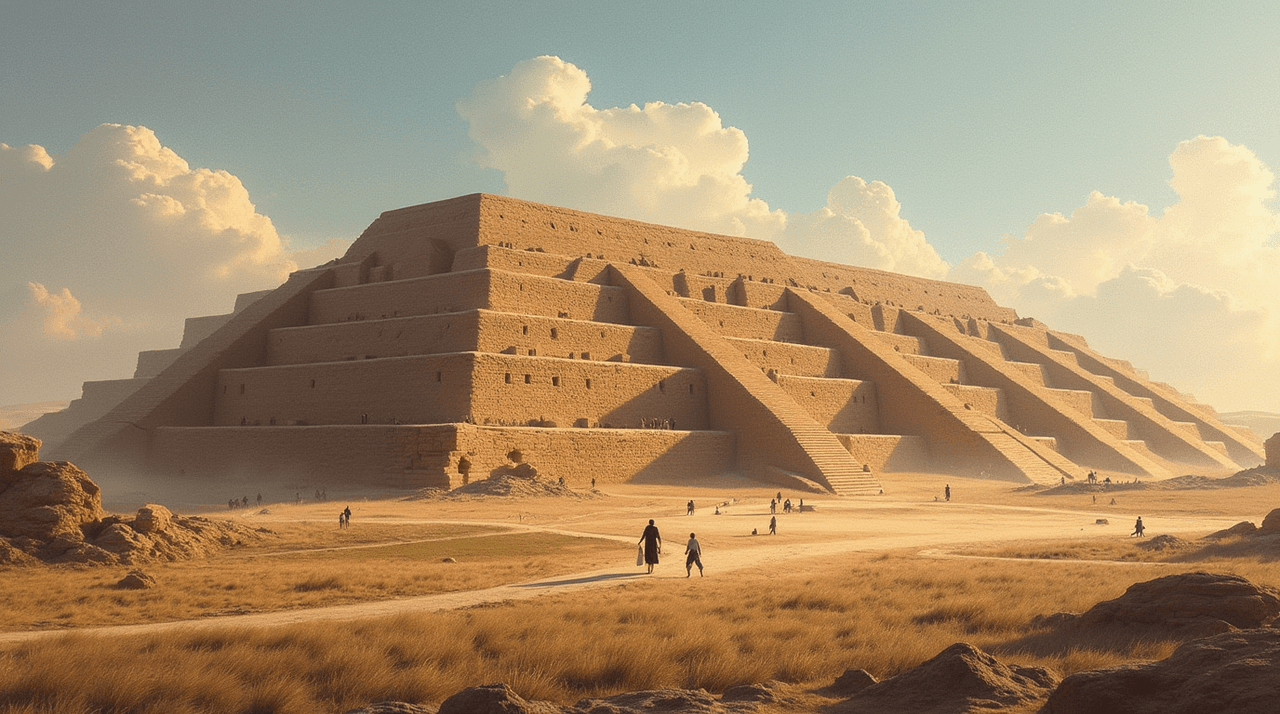
In Mesopotamia, pyramid-like structures are known as ziggurats. These buildings were typically used as temples and featured a terraced, multi-tiered design. Ziggurats were constructed by the Sumerians, Babylonians, and Assyrians and were generally dedicated to specific deities. Due to Mesopotamia’s flat terrain, these structures were elevated to serve as sacred spaces.
One of the most famous ziggurats is the Ziggurat of Ur, built in the 21st century BCE by Ur-Nammu. This three-tiered structure was dedicated to the Sumerian moon god Nanna and constructed from limestone and baked brick. The Ziggurat of Ur is one of the best-preserved ziggurats from ancient Mesopotamia and originally reached a height of 30 meters.
The Etemenanki Ziggurat in Babylon was rebuilt in the 6th century BCE by King Nebuchadnezzar II. Dedicated to the god Marduk, it consisted of seven tiers and is estimated to have been approximately 90 meters high. It is believed to have inspired the legend of the Tower of Babel. Once a magnificent structure in antiquity, this ziggurat was eventually destroyed by natural conditions and warfare. As one of Babylon’s most important religious centers, it also reflects Mesopotamia’s advanced urban planning.
Many ziggurats were also built during the Assyrian Empire. Particularly the ziggurat in Dur-Sharrukin (modern-day Khorsabad), commissioned by King Sargon II in the 8th century BCE, became one of the empire’s key religious centers. Like other ziggurats, it served as a symbolic stairway connecting the gods with humanity.
(Figure 2: Designed by artificial intelligence)
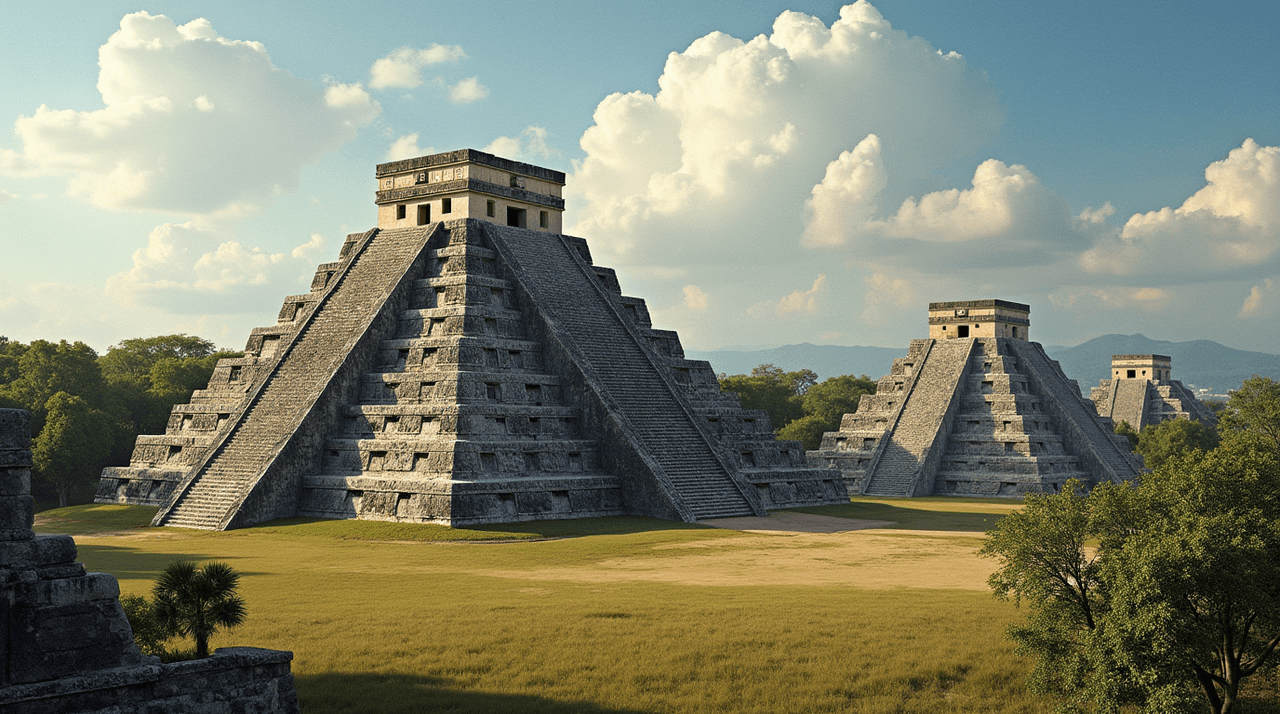
Pyramids constructed in Mesoamerica were used for religious ceremonies, sacrificial rituals, and celestial observations. These structures were typically built in stepped pyramid form, with temples or altars located at their summits.
The Pyramid of Kukulkan in Chichen Itza was constructed in the 10th century CE by the Toltecs and Maya. Its design is linked to astronomical events: during the equinoxes, shadow patterns create the illusion of a serpent descending the staircase. The pyramid’s four sides, each with 91 steps, and the top platform together total 365 steps, symbolizing the days of the year. Additionally, an older structure lies within the pyramid’s interior.
One of the largest pyramids built by the Aztecs is the Great Temple (Templo Mayor) in Tenochtitlan. Constructed between the 14th and 15th centuries by Aztec emperors, it was dedicated to the war god Huitzilopochtli and the rain god Tlaloc. The temple was expanded and renovated multiple times by successive rulers. The ruins of the temple, destroyed during the Spanish conquest, are now located in Mexico City. The Sun Pyramid and Moon Pyramid in Teotihuacan were built by the Teotihuacan civilization in the 2nd century CE.
The Sun Pyramid, standing at approximately 65 meters, is one of the largest pyramids in the region. Believed to be dedicated to the sun god, it was constructed from massive stone blocks and is considered the central structure of Teotihuacan. The Moon Pyramid is located at the northern end of the city’s main avenue, the Avenue of the Dead, and is likely dedicated to the goddess Chalchiuhtlicue. The Teotihuacan pyramids had a profound influence on other Mesoamerican cultures and inspired the design of later Maya and Aztec pyramids.
(Figure 3: Designed by artificial intelligence)
Pyramids were generally constructed from massive stone blocks. Egyptian pyramids were primarily made of limestone and granite, with stones transported from the Nile River and the Aswan region. Some stone blocks used in the Great Pyramid of Giza weighed up to 15 tons. It is believed that ramps, levers, and sled systems were used to transport and position the blocks during construction.
Pyramids in Mesoamerica were mostly built from volcanic stone and mortar. Particularly in Maya and Aztec civilizations, pyramids featured layered, interlocking structures. Ziggurats, in contrast, were constructed from baked bricks, resulting in large and imposing but less durable temples.
Pyramids were constructed using advanced engineering knowledge and mathematical calculations. Theories suggest that the golden ratio was applied in Egyptian pyramids. The ratio between the base length and height of the Great Pyramid of Giza closely approximates the golden ratio. Additionally, some pyramids were precisely aligned with the four cardinal directions: north, south, east, and west. There are also theories that calculations based on the number Pi (π) were used in the design of ancient Egyptian pyramids.
It is believed that the Giza Pyramids were aligned with the Orion Constellation, and that this alignment was determined through astronomical observations. Mesoamerican pyramids were also constructed with astronomical connections. For example, the Pyramid of Kukulkan at Chichen Itza features a design that reflects the annual cycle through shadow patterns during the equinoxes. Such calculations demonstrate that ancient civilizations possessed advanced engineering and astronomical knowledge.
Pyramids were not only used as tombs or temples but also as symbols of political and religious authority. In antiquity, pharaohs, kings, and emperors commissioned these monumental structures to reinforce their divine and absolute power. Pyramids were viewed not merely as feats of engineering but also as indicators of economic strength and social organization.
The completion of these massive projects required the mobilization of thousands of workers, artisans, and engineers, along with the establishment of a sophisticated logistics system. In ancient Egypt, pyramids were regarded as symbols of the transition to the afterlife. Buried within them alongside the pharaohs were the possessions, jewels, and treasures necessary for their existence in the next world, making pyramids central to religious rituals and cult practices. In Mesopotamia, ziggurats served as structures representing the connection between gods and humans, where priests performed worship and divination.
In Mesoamerica, pyramids were associated with astronomical observations and became sacred spaces where religious ceremonies were held at specific times of the year. Today, pyramids are not only remnants of ancient civilizations but also hold major economic importance as tourist attractions. Particularly the Giza Pyramids are visited by millions of tourists each year, and new discoveries continue to emerge through archaeological excavations.
In addition, theories and discoveries regarding how pyramids were built constitute a major field of research for academic circles. Many pyramids protected by UNESCO are recognized as among the most important cultural heritage sites in human history.
Bertman, Stephen. Handbook to Life in Ancient Mesopotamia. Oxford University Press, 2003.
Brier, Bob. The Secret of the Great Pyramid: How One Man’s Obsession Led to the Solution of Ancient Egypt’s Greatest Mystery. HarperCollins, 2009.
Crawford, Harriet. Sumer and the Sumerians. Cambridge University Press, 2004.
Demarest, Arthur. Ancient Maya: The Rise and Fall of a Rainforest Civilization. Cambridge University Press, 2004.
Isler, Martin. Sticks, Stones, and Shadows: Building the Egyptian Pyramids. University of Oklahoma Press, 2001.
Lehner, Mark. The Complete Pyramids: Solving the Ancient Mysteries. Thames & Hudson, 1997.
Scarre, Chris. The Seventy Wonders of the Ancient World: The Great Monuments and How They Were Built. Thames & Hudson, 1999.
Schele, Linda, and David Freidel. A Forest of Kings: The Untold Story of the Ancient Maya. William Morrow, 1990.
Verner, Miroslav. The Pyramids: The Mystery, Culture, and Science of Egypt's Great Monuments. Grove Press, 2003.

History
Origins and Development of Pyramids
Giza Pyramids
Great Pyramid of Giza (Pyramid of Khufu)
Khafre Pyramid and the Great Sphinx
Menkaure Pyramid
Mesopotamia and Ziggurats
Maya, Aztec, and Olmec Pyramids
Architectural Features
Materials and Construction Techniques
Mathematics and Geometry
Cultural and Historical Significance