This article was automatically translated from the original Turkish version.
+1 More
Commercial Title | Postal and Telegraph Organization Anonymous Company | ||||||||
|---|---|---|---|---|---|---|---|---|---|
Registration Number | 360706 | ||||||||
Headquarters | Ankara | ||||||||
Establishment | 1840 | ||||||||
Registration | 23.05.2013 | ||||||||
Chairman of the Board of Directors | Mükremin Kara | ||||||||
General Manager | Hakan Gülten | ||||||||
Postal Services | Cargo General Bank | ||||||||
Bank | HGS Insurance Payment Collection Pttmatik Pttkart Account Wire transfer | ||||||||
PTT Logistics | Intermodal Domestic/international B2B Land Air Sea | ||||||||
Turkish Postal and Telegraph Organization (PTT) is one of Türkiye’s most longstanding institutions and a public entity providing services in postal, courier, logistics, and banking sectors. Established in 1840, it played a critical role in Türkiye’s national independence struggle and has built a communication legacy spanning to the present day. This historical development was shaped by the impacts of the industrial revolution, wars, economic policies, and technological innovations, integrating postal, telegraph, and telephone services to transform Türkiye’s communication infrastructure.

PTT Logo (PTT)
As part of the Tanzimat reform movement, the Ministry of Posts was established on 23 October 1840 to meet the postal needs of all Ottoman citizens and foreigners. The first post office, named Postahane-i Amire, opened in the courtyard of the New Mosque in Istanbul; its first officials were Süleyman Ağa (tax collector) and Sofyalı Ağyazar (translator). Postal transport was carried out using animals and temporary structures, and communication remained under state monopoly. To fulfill this duty, personnel such as sai, ulak, tatar, çapar and berid were employed.
Telegraph technology, invented in 1843, was introduced to the Ottoman Empire in 1855, eleven years later, leading to the establishment of the Directorate of Telegraph. The first employees were of Italian and French origin, and correspondence was conducted in the Latin alphabet and French. To address the need for local personnel, the Fünûn-ı Telgrafiye Mektebi was opened in 1861 but closed after two terms; it was reopened in 1872 and provided nine years of practical training. Galatasaray High School and Darüşşafaka also offered telegraph instruction.
In 1871, the Ministry of Posts and the Directorate of Telegraph were merged to form the Ministry of Posts and Telegraph. An international postal network was established in 1876; parcel and remittance (money transfer) services began in 1901. Telephone services were integrated on 23 May 1909 with the opening of Istanbul’s first manual exchange, and the institution was renamed the Ministry of Posts, Telegraph and Telephone. In 1913, it was restructured as the General Directorate of Posts, Telegraph and Telephone.
During the First World War and the War of Independence, the telegraph assumed strategic importance; foreign post offices were closed in 1914 and communication was nationalized. This period symbolized the emergence of an organization previously managed by Levantine families, following Western developments.
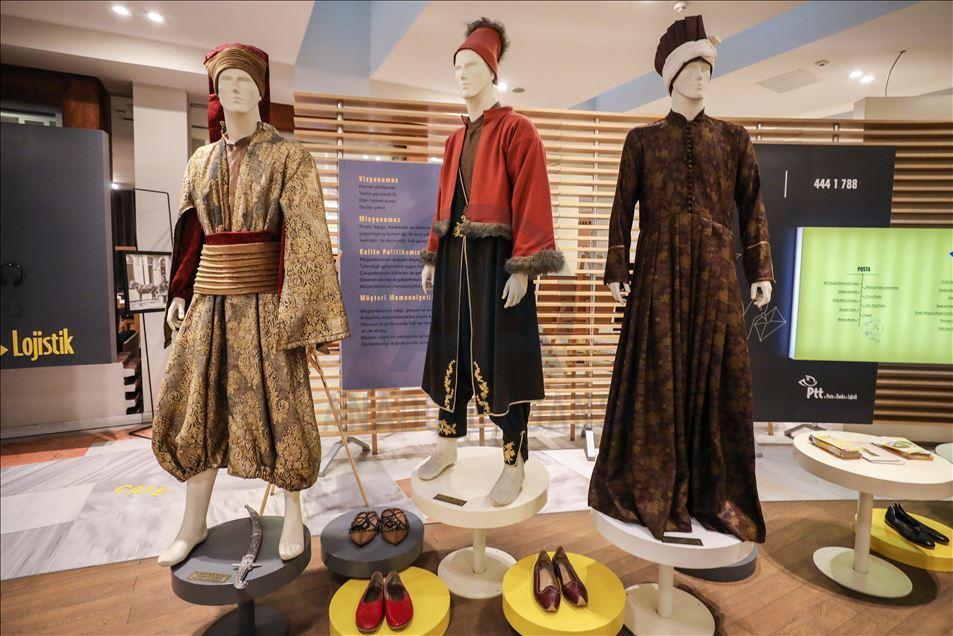
Historical Postal Uniforms (AA)
With the opening of the Grand National Assembly of Türkiye in 1920, the General Directorate of Posts and Telegraph became the communication backbone of the National Struggle. In 1923 parliamentary debates emphasized the renewal of telegraph schools. In 1924, Law No. 406 on Telephones and Telegraphs expanded telephone infrastructure; PTT was divided into 13 regions under the Ministry of the Interior. In 1933, it was transferred to the Ministry of Public Works as a budgetary administration, and in 1939 to the Ministry of Transportation. In 1944, the Postal Vocational School opened as a boarding high school offering education in accounting, telegraph, and postal services, but was closed in 1953 due to cost-saving measures.
The Democrat Party (DP) administration (1950–1960) transformed PTT into a modern organization in line with postwar technologies. Under Law No. 3613, it was attached to the Ministry of Transportation; telex innovations gradually replaced telegraph services, elevating telephony to prominence. The Ankara Training Center opened in 1968, followed by centers in Istanbul, İzmir, Trabzon, Antalya, and Diyarbakır. In 1984, by Emergency Decree No. 233, PTT was converted into a Public Economic Enterprise (KİK). This era brought improvements across all communication sectors compared to the early Republican period; from the National Struggle (1920–1923) to DP investments (1950–1960), PTT became a symbol of national independence.
By Law No. 4000 dated 18 June 1994, PTT was split into the General Directorate of Turkish Postal Services and Türk Telekomünikasyon A.Ş.; the Postal Services Directorate began independent operations on 24 April 1995. The same year, remittance and postal money order operations were automated. In 1999, a collection partnership was established with Garanti Bank (Körfezbank). On 29 January 2000, Law No. 4502 changed its name to the General Directorate of the Turkish Postal and Telegraph Organization. In 2004, PTTBank was officially registered. On 1 November 2011, by Emergency Decree No. 655, the ministry was renamed the Ministry of Transportation, Maritime Affairs and Communications. On 23 May 2013, Law No. 6475 on Postal Services restructured the organization as the Postal and Telegraph Organization Joint Stock Company (PTT A.Ş.), with capital increased to 5 billion TL.
On 5 February 2017, its capital was transferred to the Türkiye Wealth Fund. On 9 July 2018, by Emergency Decree No. 703, the ministry became the Ministry of Transport and Infrastructure. In 2018, the Integrated Management System (ISO 9001, 14001, etc.) and PTT Logistics (B2B domestic/international) were established.
Throughout its journey from Ottoman modernization (1840) to its transformation into a joint stock company (2013), PTT represents the transition from the industrial revolution to the digital age. Postwar investments strengthened infrastructure; training programs (from Fünûn-ı Telgrafiye to associate degrees) produced qualified labor; privatization endowed it with a competitive structure.
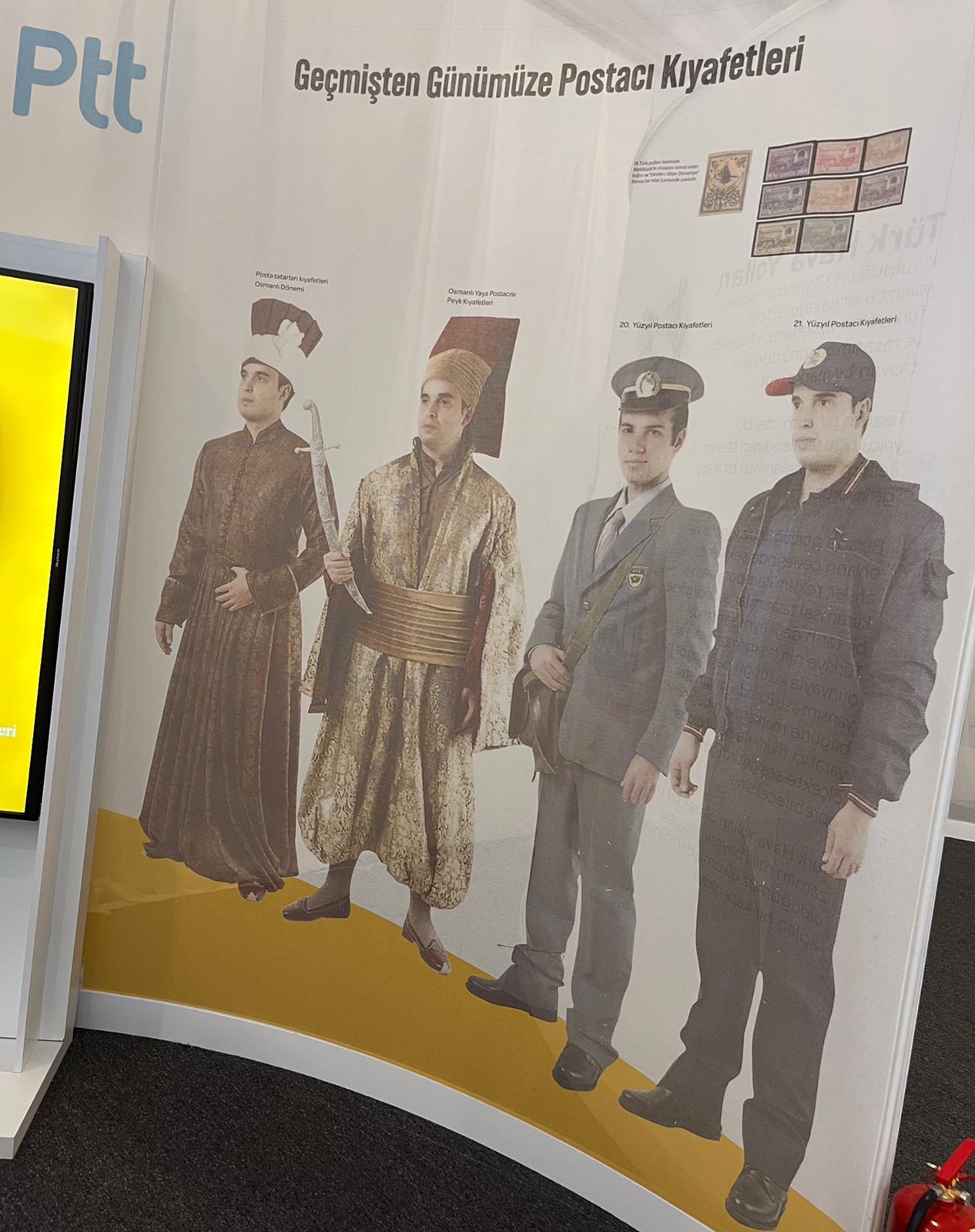
Historical Postal Uniforms (Photo: Elif LAÇİN)
PTT’s educational activities have continued the tradition established in the Ottoman era. Influenced by the Industrial Revolution, economic developments felt in the 1840s brought industrial investments to Istanbul and other regions, leading to the opening of numerous factories and a shortage of skilled labor. To address this gap, technical schools offering vocational training were established. Before the Republic, the labor shortage in the Telegraph Organization was met by the Fünûn-ı Telgrafiye Mektebi, Sultani Mektebi (Galatasaray High School), and Darüşşafaka High School. After the Republic, this need was addressed through the Postal Vocational School and the Postal Services Program.
Postal Vocational School opened in 1944, providing boarding high school education, and closed in 1953. In the 1960s, in-service training centers became widespread; the Ankara Training Center opened in 1968, followed by branches in Istanbul, İzmir, Trabzon, Antalya, and Diyarbakır. In 2009, the Postal Services Program began at the associate degree level, initially in Osmaniye and Erzincan. PTT partnered with universities, provided barcode readers and computer equipment, and assigned instructors.
The program is now offered at 24 different universities. The removal of minimum score thresholds significantly increased student enrollment. The program aims to meet PTT’s workforce needs for postal and courier distribution; graduates may be employed as postal workers or counter staff and can also work for courier companies.
PTT was restructured as the Postal and Telegraph Organization Joint Stock Company (PTT A.Ş.) under Law No. 6475 dated 23 May 2013. The company’s commercial name is Postal and Telegraph Organization Joint Stock Company, with registration number 360706. Its operational headquarters is in Ankara. The tax office is Ankara Corporate Tax Office, with tax identification number 732 006 8060.
By Council of Ministers Decision dated 5 February 2017, its entire capital was transferred from the Treasury to the Türkiye Wealth Fund. It operates under the provisions of Law No. 3346 dated 2 April 1987.
The Chairman of the Board of Directors is Mükremin Kara. The Deputy Chairman of the Board of Directors is Hakan Gülten, who also serves as General Manager. Board members are Mehmet Aktaş, Emrah Yoğurtçu, and Bilal Bedir.
The Chair of the PTT A.Ş. Ethics Committee is Ekrem Acar (Deputy General Manager); members are Gürhan Çal (Director of Guidance and Inspection), Arif Örslü (First Legal Advisor), and Osman İnce (Director of Human Resources).
PTT’s vision is to become a competitive, world-class leader in global logistics services. Its mission is to ensure customer satisfaction by meeting their needs and expectations, efficiently utilizing natural resources, protecting the environment through a zero-waste approach, safeguarding employee health, effectively managing information assets, enhancing energy efficiency, managing risks, complying with legal obligations, and internalizing a management systems culture.
Dr. Hakan Gülten was born in Uşak in 1982. He completed his primary and secondary education in Denizli and graduated from the Department of Industrial Engineering at Yıldız Technical University in 2005. He earned his master’s degree from the same university in 2009 and his doctorate in 2024.
Dr. Gülten began his professional career in 2008 at İSBAK A.Ş., a subsidiary of Istanbul Metropolitan Municipality, where he held positions including international trade expert, ERP manager, strategy development specialist, and quality director. From 2014 to 2016, he served as a faculty member in the Department of Industrial Engineering at Nişantaşı University. From 2016 to 2018, he was Deputy General Manager at İBB BELBİM A.Ş.
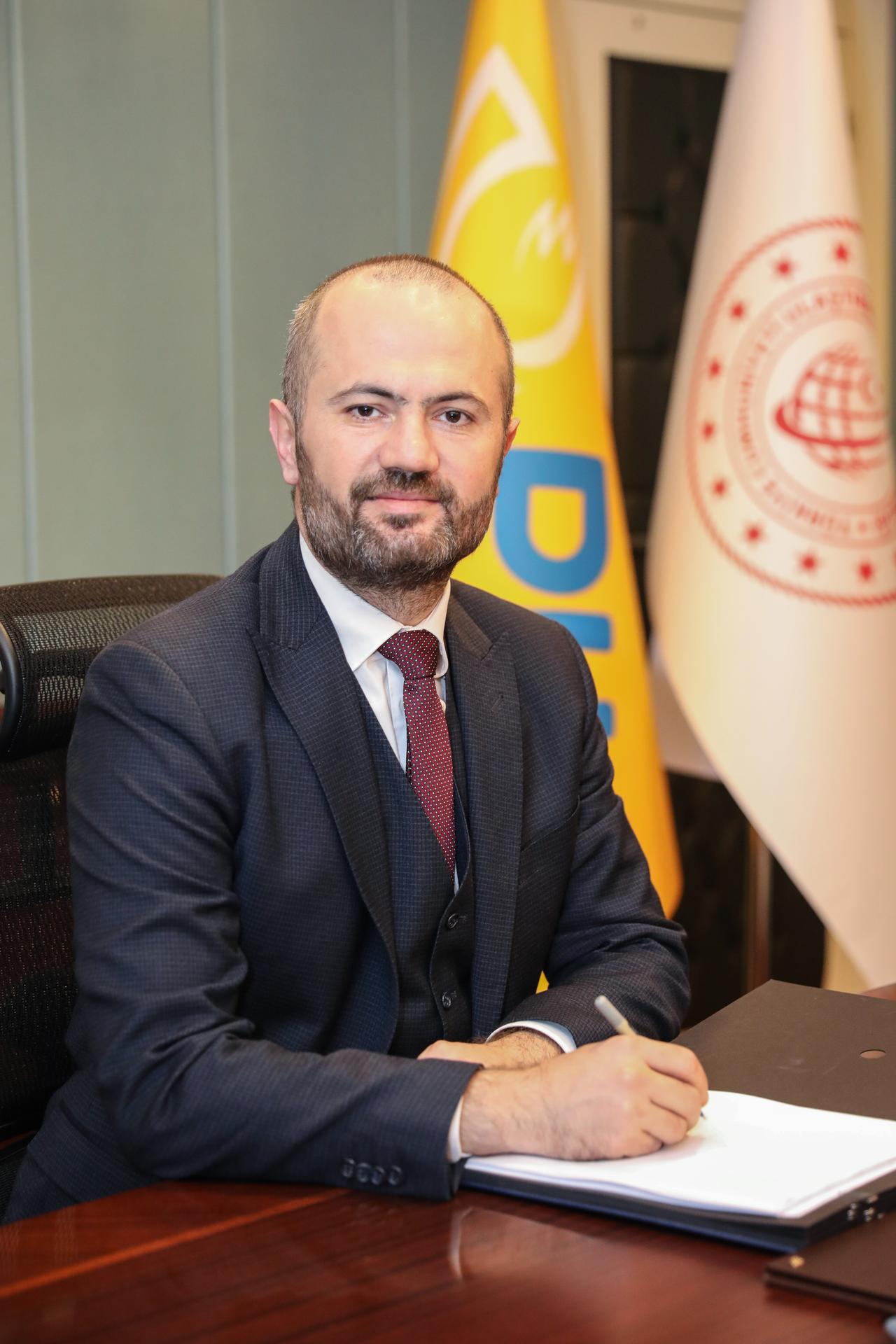
Dr. Hakan Gülten (PTT)
In December 2018, he was appointed as Head of Subsidiaries and Deputy General Manager at PTT A.Ş., and simultaneously assumed a board membership at PTT Para Lojistik ve Özel Güvenlik Hizmetleri A.Ş. On 7 January 2020, he was appointed General Manager of PTT A.Ş., and on 27 March 2020, he joined the Board of Directors. On 28 April 2021, he was appointed Deputy Chairman of the Board of Directors. He also served as Chairman of the Administrative Council of the Universal Postal Union (UPU), representing 192 member countries, until 27 August 2021.
Dr. Hakan Gülten continues to serve as General Manager of PTT A.Ş., contributing strategic and innovative projects that strengthen the institution’s international standing. Fluent in English, he has conducted research in academic leadership, institutional culture, logistics, and supply chain management; published articles on career planning in human resource management; and presented papers at various national and international conferences.
Since 2018, PTT has implemented the Integrated Management System, which unifies quality, customer satisfaction, occupational health and safety, environmental, information security, and energy efficiency management. Its policy commits to customer focus, environmental protection, risk management, and continuous improvement. It complies with ISO 9001, ISO 10002, ISO 14001, ISO 45001, ISO 27001, and ISO 50001 standards, reducing costs and generating synergy and savings.
Services include postal, banking (remittance, accounts, Pttkart, Pttmatik, collection, payment, HGS, insurance), courier, and other commercial operations. Since 2018, PTT Logistics has provided domestic and international B2B logistics services, including transportation, warehouse management, and freight transport.
Among its certifications are L2, TİO, C3, T1/TR guarantee, IATA, FIATA, and YYS status.
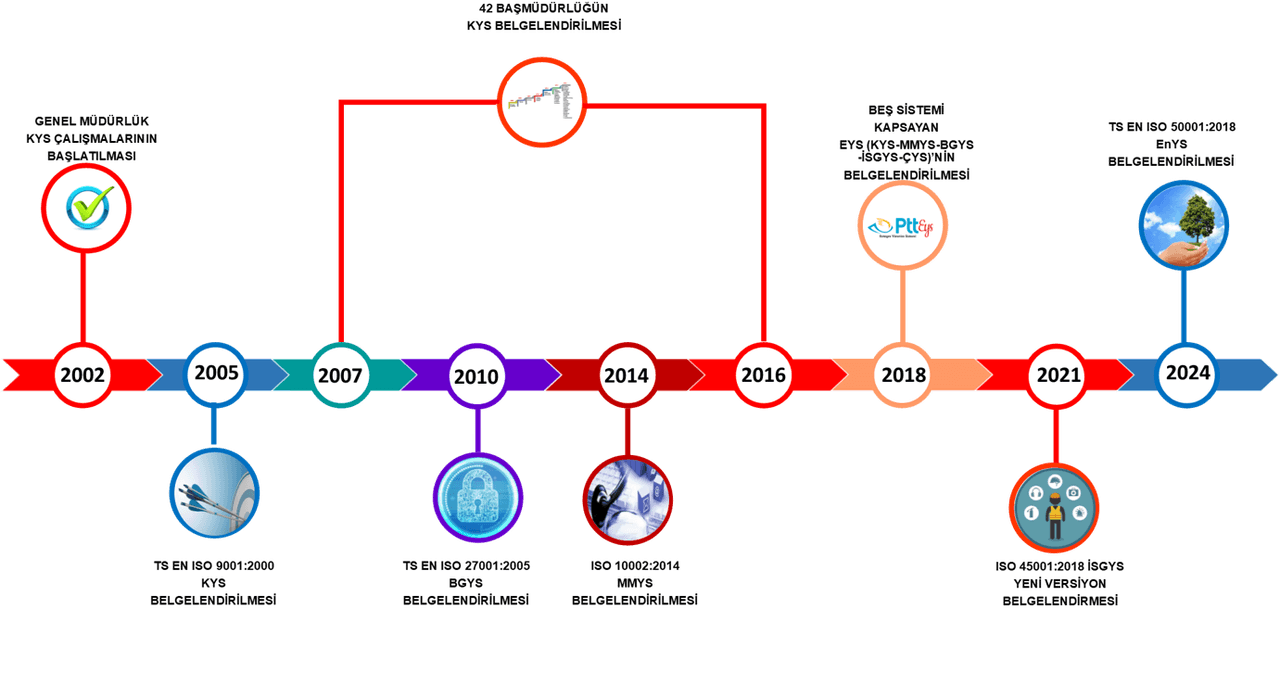
Journey of Management Systems (PTT)
PTT and Turkish Telecom Foundation (short name: PTT Foundation) was established on 31 December 1974 under the Turkish Civil Code as the “PTT Personnel, Widows and Orphans Health, Social and Cultural Services Mutual Aid Foundation,” and began operations upon publication in the Official Gazette No. 15153 dated 18 February 1975. Its name was later changed to “PTT and Turkish Telecom Foundation.”
The foundation’s purpose is to promote mutual aid and solidarity among its members by providing services in health, social, and cultural fields. To achieve this goal, the foundation collects dues from its members.
In line with its founding objectives, the foundation provides monthly interest-free repayable higher education support to children pursuing higher education, marriage assistance based on membership seniority when a member or their child marries, and financial assistance since November 2011. Additionally, unconditional aid is provided for birth, marriage/wedding, natural disaster, death, and retirement, as stipulated in its regulations.
Other objectives of the foundation include educational support for members’ children, circumcision assistance, death benefits for surviving spouses/children/parents, aid in natural disasters (fire, flood, earthquake, avalanche, landslide), establishment of dormitories for higher education, operation of retirement homes for pensioners, birth assistance, aid for workers disabled by industrial accidents, construction of health facilities, insurance, opening of camps, guesthouses, clubs, and nurseries, organization of blood and organ donation, support for sewing, embroidery, knitting, and weaving machines for underprivileged members, publication of magazines, brochures, and lotteries, opening of consumer stores, cash and in-kind assistance, housing financing, driver training courses, insurance brokerage, real estate purchase-sale-construction-operation, corporate partnerships, bond and share acquisition, commercial activities, and similar social, cultural, and educational assistance.
PTT Hayat, PTT Çocuk, PTT Bülten, and PTT Tech are among its publications. These magazines provide content on PTT’s cultural and institutional world for its readers.
The PTT Philately Museum, located in the Ulus district of Ankara, opened to the public in 2013 after the restoration of the historically significant National Property and Orphan Bank building. This transformation is not merely a change in function of a structure but also the public presentation of Türkiye’s accumulated postal and communication history.
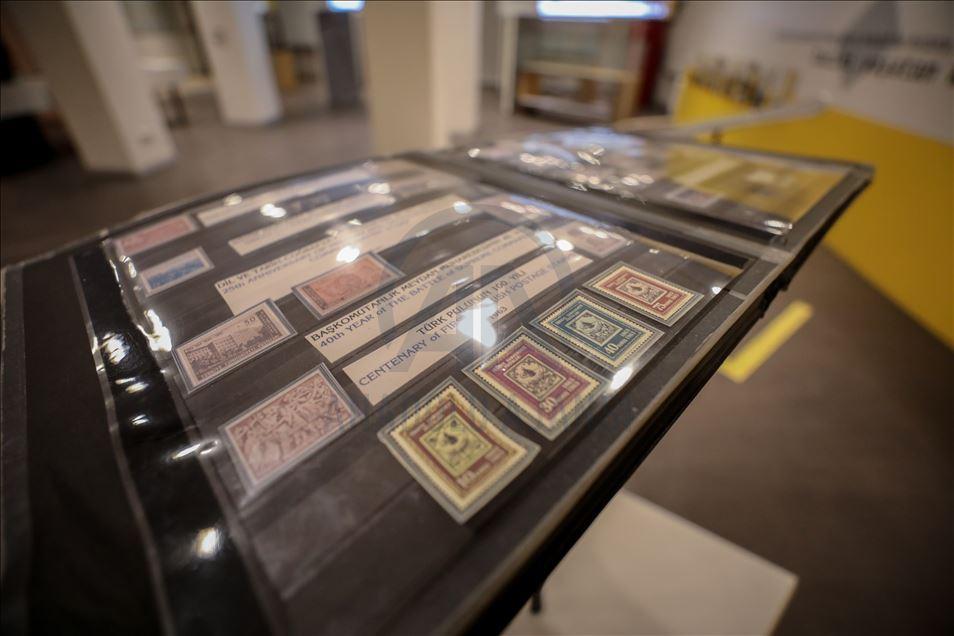
PTT Philately Museum (AA)
The museum’s collection features a diverse range of exhibits illuminating different periods of postal history. Visitors can examine stamps from the Ottoman and Republican eras, as well as thematic stamps focusing on Atatürk, history, tourism, nature, sports, vehicles, and cultural heritage. Additionally, specially designed stamps for children, worldwide stamps from various countries, postcards, and first-day and special occasion envelopes are also displayed.
The museum is not merely an exhibition space but also an interactive, multifunctional cultural venue. Game screens, cinema and multipurpose halls, dedicated workshop areas, and exhibition halls support the building’s dynamic structure. A café for visitors to rest and retail areas offering various philatelic products complete the museum experience.
As a center documenting and sustaining postal culture from the past to the present, the PTT Philately Museum offers rich content to both stamp collectors and visitors interested in history and communication.
The PTT Istanbul Museum is located behind and beneath the New Post Office building. Managed by the Istanbul PTT Regional Directorate under the Ministry of Transport, the museum consists of three main sections: Postal Services, Telegraph and Telephone, and Philately.
The Postal section displays various tools and equipment used since the initiation of postal services on 23 October 1840. These include postal bags, central mailbags, postal boxes, maps showing postal routes, and modern automated stamping machines still in use today.
The Telegraph and Telephone section exhibits devices used since the first telegraph line was established between Edirne and Şumnu on 9 September 1855. Devices such as the mostar and Hük telegraph machines, electro-mechanical and electronic telem primor systems, various telephones, manual and automatic telephone exchanges, and telephones manufactured in PTT factories are displayed here, tracing the history from the first telephone installation in 1881 between Soğukçeşme and the New Mosque post office.
The Philately section features collections of stamps spanning from the Ottoman Empire to the present day. This section serves as a visual archive of Türkiye’s postal history.
Alşan, Reşat. "Cumhuriyetin Kuruluşu ve İlk Onbeş Yılında PTT İşletmesi." *Atatürk Araştırma Merkezi Dergisi* 6, no. 17 (1990): 391-420. Accessed October 22, 2025.https://dergipark.org.tr/tr/pub/aamd/issue/54894/752198#article_cite
Anadolu Ajansı. "Pullarla Dünya Turuna 272 Bin Kişi Katıldı." October 7, 2020. Accessed October 22, 2025.https://www.aa.com.tr/tr/pg/foto-galeri/pullarla-dunya-turuna-272-bin-kisi-katildi
Arı, Kemal. "İkinci Dünya Savaşı Sonrasında Türkiye’nin PTT Alanında Yatırımları." *Çağdaş Türkiye Tarihi Araştırmaları Dergisi* 13, no. 27 (December 2013): 167–84. Accessed October 22, 2025.https://dergipark.org.tr/tr/pub/cttad/issue/25624/270471
Aycil, S. "PTT’nin Eğitim Alanındaki Faaliyetleri ve Posta Hizmetleri Programı Üzerine Bir Değerlendirme." *Türkiye Mesleki ve Sosyal Bilimler Dergisi*, no. 8 (2022): 25–33. Accessed October 22, 2025.https://doi.org/10.46236/jovosst.1072789
Aycil, S. "Posta Hizmetleri Programının Fonksiyonelliği Üzerine Nitel Bir Araştırma." *Mersin Üniversitesi Sosyal Bilimler Enstitüsü Dergisi* 6, no. 2 (2023): 47-59. Accessed October 22, 2025.https://dergipark.org.tr/tr/pub/meusbd/issue/78487/1289533
Fatih Kaymakamlığı. "PTT İstanbul Müzesi." Accessed October 22, 2025.http://www.fatih.gov.tr/ptt-istanbul-muzesi
Higher Education Council. "Posta Hizmetleri Programı Bulunan Tüm Üniversiteler." YÖK Atlas. Accessed October 22, 2025.https://yokatlas.yok.gov.tr/onlisans-program.php?b=34656
Ministry of Culture and Tourism of the Republic of Türkiye. "Ptt Pul Museum - Ankara." Kültür Portalı, updated January 13, 2022. Accessed October 22, 2025.https://www.kulturportali.gov.tr/turkiye/ankara/gezilecekyer/ptt-pul-muzes
PTT A.Ş. "Entegre Yönetim Sistemi." Accessed October 22, 2025.https://www.ptt.gov.tr/hakkimizda-entegre-yonetim-sistemi
PTT A.Ş. "Genel Müdürümüz." Accessed October 22, 2025.https://www.ptt.gov.tr/kurumsal-genel-mudurumuz
PTT A.Ş. "Hukuki Dayanak." Accessed October 22, 2025.https://www.ptt.gov.tr/ptt-kurumsal-hukuki-dayanak
PTT A.Ş. "Kurumsal Etik." Accessed October 22, 2025.https://www.ptt.gov.tr/hakkimizda-kurumsal-etik-
PTT A.Ş. "Logolarımız." Accessed October 22, 2025.https://www.ptt.gov.tr/bilgi-bankasi-logolarimiz
PTT A.Ş. "Misyon, Vizyon ve Değerlerimiz." Accessed October 22, 2025.https://www.ptt.gov.tr/hakkimizda-misyon-vizyon-ve-degerlerimiz
PTT A.Ş. "Tarihçe." Accessed October 22, 2025.https://www.ptt.gov.tr/hakkimizda-tarihce
PTT A.Ş. "Ticari Unvan." Accessed October 22, 2025.https://www.ptt.gov.tr/ptt-kurumsal-ticari-unvan.
PTT A.Ş. "Yayınlarımız." Accessed October 22, 2025.https://www.ptt.gov.tr/yayinlar?page=1&publishType=1
PTT A.Ş. "Yönetim Kurulu." Accessed October 22, 2025.https://www.ptt.gov.tr/hakkimizda-yonetim-kurulu
PTT and Türk Telekom Foundation. "Sosyal ve Kültürel Hizmetler Yönetmeliği." Effective: July 1, 2001. Accessed October 22, 2025.https://pttvakfi.org.tr/index.php/yonetmelikler/sosyal-ve-kulturel-hizmetler/
PTT ve Türk Telekom Vakfı. "Tarihçe." Accessed October 22, 2025.https://pttvakfi.org.tr/index.php/hakkimizda/tarihce/.
PTT ve Türk Telekom Vakfı. "Vakıf Amacı." Accessed October 22, 2025.https://pttvakfi.org.tr/index.php/hakkimizda/vakfin-amaci/.
PTT ve Türk Telekom Vakfı. "Vakıflar Kanunu (Kanun Numarası: 5737)." Date Published February 27, 2008. Accessed October 22, 2025.https://pttvakfi.org.tr/index.php/hakkimizda/vakiflar-kanunu/
Treasury and Finance Ministry. *Posta ve Telgraf Teşkilatı Anonim Şirketi (PTT A.Ş.) Sektör Araştırma Raporu 2020.* Ankara: Treasury and Finance Ministry, 2020. Accessed October 22, 2025.https://ms.hmb.gov.tr/uploads/2020/12/PTT-A.S.-Sektor-arastirma-raporu-2020.pdf
Yurtoğlu, Nadir. "Haberleşme Sektörünün Önemli Bir Teşekkülü: Millî Mücadele Döneminden 1960 Yılına Türkiye’de Posta, Telgraf ve Telefon (PTT) Teşkilatı (1920-1960)." *Atatürk Araştırma Merkezi Dergisi* 32, no. 93 (December 2016): 47–104. Accessed October 22, 2025.https://dergipark.org.tr/tr/pub/aamd/issue/44029/542417

Commercial Title | Postal and Telegraph Organization Anonymous Company | ||||||||
|---|---|---|---|---|---|---|---|---|---|
Registration Number | 360706 | ||||||||
Headquarters | Ankara | ||||||||
Establishment | 1840 | ||||||||
Registration | 23.05.2013 | ||||||||
Chairman of the Board of Directors | Mükremin Kara | ||||||||
General Manager | Hakan Gülten | ||||||||
Postal Services | Cargo General Bank | ||||||||
Bank | HGS Insurance Payment Collection Pttmatik Pttkart Account Wire transfer | ||||||||
PTT Logistics | Intermodal Domestic/international B2B Land Air Sea | ||||||||
Historical Development
Ottoman Period: Modernization and Foundational Infrastructure (1840–1923)
Early Republican Years: Nationalization and Reorganization (1920–1950)
Democrat Party Era: Modernization and Growth (1950–1980)
Privatization and Institutional Transformation (1990–2013)
Current Period
PTT’s Educational Activities and Postal Services Program
Current Corporate Structure and Governance
General Manager
Integrated Management System and Services
PTT and Turkish Telecom Foundation
Purpose and Service Areas of the Foundation
Other Activities and Assistance
Publications
Museums
PTT Philately Museum
PTT Istanbul Museum