


This article was automatically translated from the original Turkish version.
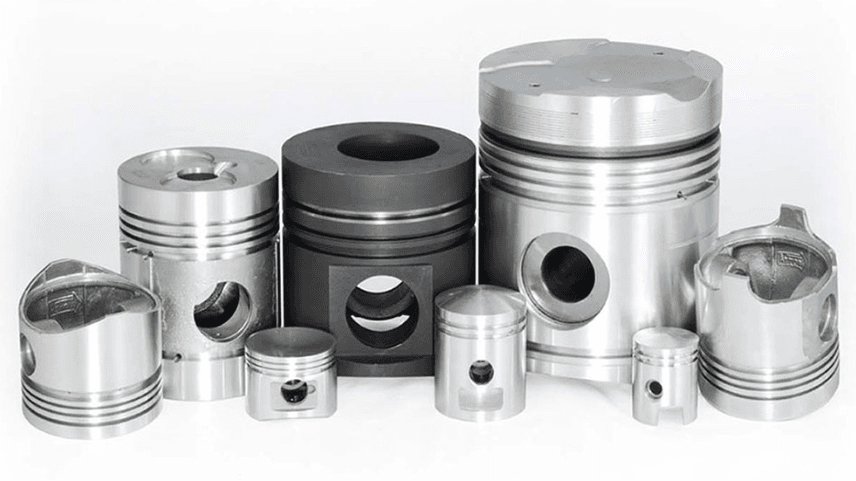
Figure 1 | Piston Samples in Various Sizes | ||||||||
|---|---|---|---|---|---|---|---|---|---|
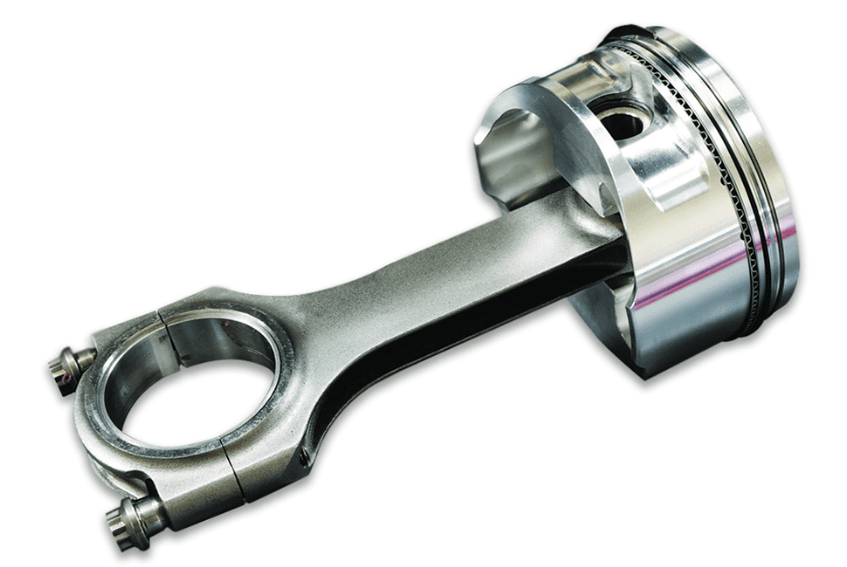
The piston is a metallic component, typically made of aluminum alloy, that moves up and down within the cylinders of internal combustion engines. Pistons play an active role in the fundamental operations of the engine’s motion cycle, including compression of the fuel-air mixture, ignition, and expulsion of combustion gases such as. Connected to the crankshaft via a connecting rod, pistons form the central element of the system that converts linear motion into rotational motion.
【1】
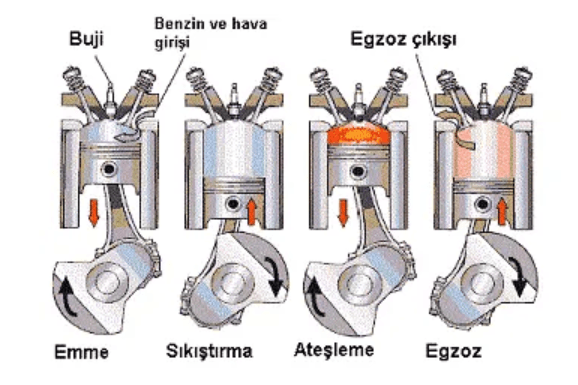
Pistons are among the key components that enable the four-stroke cycle of an engine:
This cycle repeats at high speed as long as the engine is running. The motion transmitted by the pistons to the crankshaft enables the engine to deliver mechanical energy to the wheels.
The piston is one of the fundamental components of thermodynamic systems that convert thermal energy into mechanical energy. This conversion process is widely used in internal combustion engines and occurs primarily through the pressure force exerted on the piston by gases generated during combustion of a fuel-air mixture.
The operation of the system can be explained through the four-stroke cycle: intake, compression, combustion (power), and exhaust. During the intake stroke, the air-fuel mixture drawn into the cylinder is compressed by the piston, reducing its volume. When this mixture is ignited by the spark plug, high temperature and pressure are generated. The gases produced by combustion expand and push the piston downward. This linear motion is converted into rotational motion via the crankshaft, thereby transforming thermal energy into mechanical motion. During the exhaust stroke, combustion byproducts are expelled from the cylinder.
In this process, the conversion of thermal energy into work is evaluated within the framework of the first and second laws of thermodynamics. The portion of energy not converted into work is removed from the system as waste heat. Efficiency varies depending on the type of fuel used, engine design, and operating conditions.
Piston-based systems are widely used in automobiles, generators, and various industrial machines. These systems hold an important position within energy conversion technologies due to their technical maturity and application diversity.
【2】
The piston is a moving machine component that operates under high temperature and pressure in internal combustion engines. Therefore, the mechanical, thermal, and tribological properties of the materials used in its manufacture are critical. The materials commonly selected for pistons are aluminum alloys and cast iron. Aluminum alloys are widely preferred in the automotive industry due to their light weight and high thermal conductivity, while cast iron materials are used in heavy-duty engines because of their high strength and wear resistance.
The choice of piston material depends on factors such as engine operating temperature, pressure levels during the cycle, piston speeds, and lubrication conditions. Aluminum-silicon alloys are widely used in modern engines due to their controllable coefficient of thermal expansion and resistance to thermal fatigue. In some specialized applications, thermal coatings (such as ceramic coatings) or graphite-based friction-reducing surface treatments are applied to enhance piston performance and extend its lifespan.
Pistons are evaluated in terms of fatigue resistance due to continuous cyclic loading. Thermal shock, combustion pressure, and friction-induced wear are key factors directly affecting piston life. Depending on appropriate material selection, manufacturing tolerances, surface finishing techniques, and engine operating conditions, piston service life can range from approximately 150,000 km to 300,000 km. However, this value may be longer or shorter depending on engine maintenance status, lubrication quality, and thermal loading.
Failures in the engine piston may manifest through the following symptoms:
These symptoms may result from wear on the piston surface, ring failure, or damage to the contact surface between the piston and cylinder. Piston failures typically require major engine repairs.
The engine piston is a critical mechanical component in the operation of internal combustion engines, responsible for converting the energy released by fuel combustion into mechanical motion. Smooth piston operation is indispensable for engine performance and efficiency. Therefore, regular maintenance of pistons and rings, along with timely intervention in cases of wear, is of great importance.
Araklı Eğitim Sürücü Kursu. "Motorların Çalışma Prensipleri." Araklı Eğitim Sürücü Kursu. Accessed March 31, 2025.http://www.arakliegitimsurucukursu.com/Yayinlar/motorlarin-calisma-prensipleri-159
Arsan Danışmanlık. "Otomotiv Sektörü Elektrikli Araçlara Neden Geçiyor?" Accessed March 31, 2025.https://arsandanismanlik.com.tr/otomotiv-2/otomotiv-sektoru-elektrikli-araclara-neden-geciyor/
Petram. "Motor Piston." Petram. Accessed March 31, 2025.https://petram.com.tr/urunler/motor-piston/
Willard W. Pulkrabek, İçten Yanmalı Motorlar: Mühendislik Temelleri, trans. Bülent Uluışık, Hakan Serhat Soyhan, and İmdat Taymaz, ed. Halit Yüksel (Ankara: Güven Bilimsel, 2013).
[1]
Petram. “Motor Piston.” Petram. Erişim tarihi 31 Mart 2025. https://petram.com.tr/urunler/motor-piston/
[2]
Araklı Eğitim Sürücü Kursu. “Motorların Çalışma Prensipleri.” Araklı Eğitim Sürücü Kursu. Erişim tarihi 31 Mart 2025. http://www.arakliegitimsurucukursu.com/Yayinlar/motorlarin-calisma-prensipleri-159

Figure 1 | Piston Samples in Various Sizes | ||||||||
|---|---|---|---|---|---|---|---|---|---|
What Is the Purpose of a Piston?
The Process of Converting Thermal Energy into Mechanical Energy by the Piston
Piston Material, Durability, and Service Life
Piston Failure and Symptoms