


This article was automatically translated from the original Turkish version.
Peter Pan Syndrome (PPS) is a psychological concept used to describe individuals who have reached adulthood but are unable to confront the emotional and responsibility expectations associated with adult life. The term derives from Peter Pan, the fictional character created by author James M. Barrie in 1902 who never ages and rejects growing up. The syndrome refers to a mismatch between a person’s chronological age and their level of maturity. Kiley describes this condition as being trapped in a hell between the man one no longer wishes to be and the child one cannot become. While everyone may exhibit some of these behaviors, the syndrome has typically been used to characterize “men who never grow up” and is reported to be more common among men.
Peter Pan Syndrome (PPS) is often associated with the concept of “emerging adulthood,” which refers to the transitional period between adolescence and young adulthood. During this developmental stage, young people may feel they have completed adolescence but do not yet see themselves as fully adult. According to developmental theorist Erikson, this phase is essentially a process of “role experimentation.” However, individuals with PPS, despite undergoing the biological and physiological changes expected in adulthood, struggle to adopt the responsibilities expected of them and indicate they are not ready to assume adult roles.
The psychological profile of individuals with PPS is characterized by a set of social behaviors shaped by a tendency to avoid adult life. Like Peter Pan, these individuals reject growing up or fail to engage meaningfully with life. Their primary behavioral trait is avoidance of responsibility; they consistently evade commitment and the duties expected of adults. This avoidance manifests in an inability to take on responsibilities commonly accepted by most people, such as maintaining employment, performing household tasks, or pursuing a purposeful direction in life.
At the same time, these individuals tend to display an egocentric structure and experience difficulties in social and professional relationships due to their irresponsible behavior and narcissistic tendencies. They struggle to confront their lack of maturity and often blame others for their mistakes.
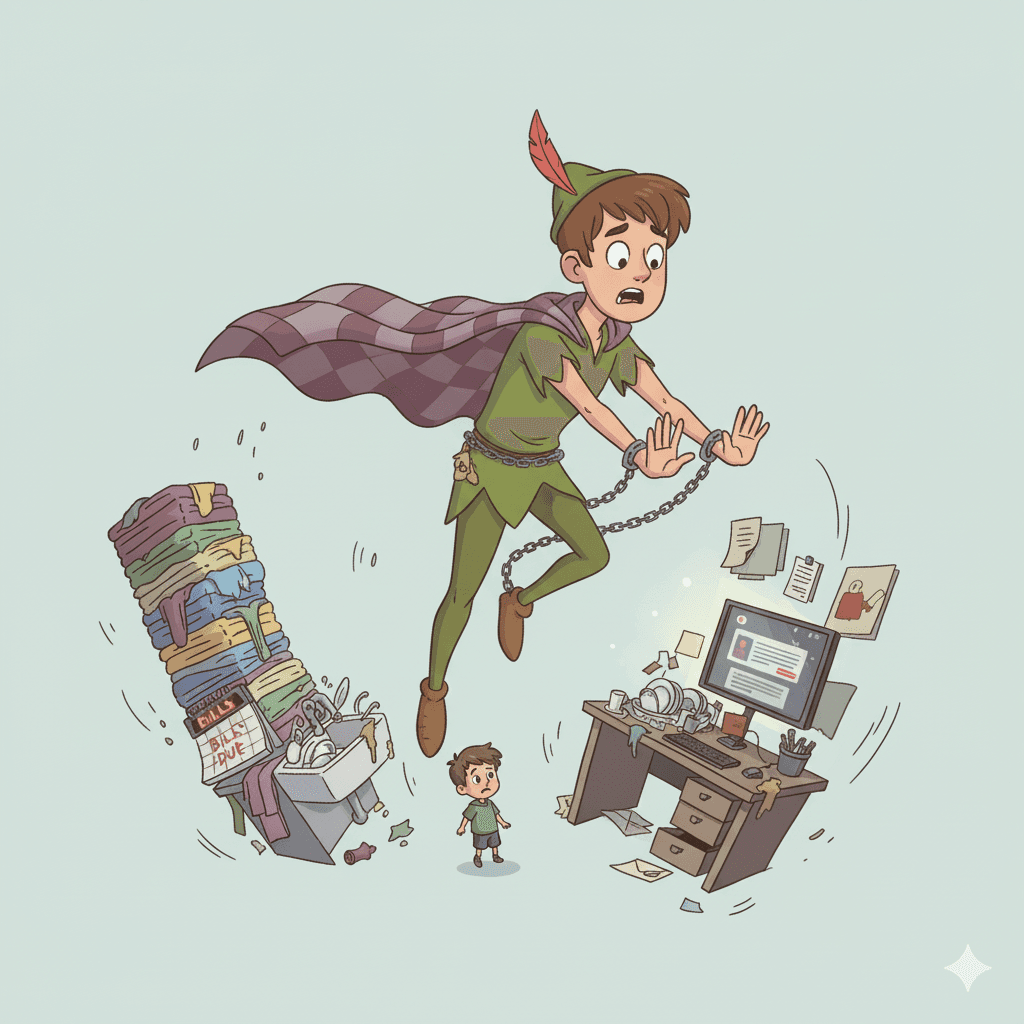
An Image Depicting Peter Pan Syndrome (Generated by Artificial Intelligence.)
Although the roots of Peter Pan Syndrome (PPS) lie in childhood, its symptoms and behavioral patterns typically become noticeable around age twelve and, as described by psychologist Dan Kiley (1997), progressively hinder the individual’s transition into adulthood according to developmental stages.
This process begins with irresponsibility around age 11–12. By ages 13–14, exposure to a troubled home environment combines with high anxiety about entering adolescence, resulting in a tendency toward procrastination (dilatoriness); the individual refuses to take initiative, convinced their efforts will be futile. Around ages 15–16, feelings of loneliness become pronounced; inability to join peer groups or feel a sense of belonging intensifies this isolation. During the 17–18 age range, a phase of sexual involvement begins marked by emotionally detached behavior focused solely on biological gratification. By this stage, the individual has learned to distance themselves from emotions to avoid being hurt and tends to appear cold and indifferent. Between ages 19–22, narcissism and perfectionism dominate as mechanisms to mask feelings of unreliability and worthlessness; in later stages, chauvinism may also emerge as a way to feel grown up.
This pattern of behavior typically persists until after age 30, at which point individuals, despite all their efforts, begin struggling with feelings of loneliness, alienation, and hopelessness due to persistent disappointment.
Individuals with Peter Pan Syndrome tend to experience instability in interpersonal relationships and professional settings. Due to traits such as perfectionism and narcissism, they encounter difficulties in personal relationships and are inclined to shift responsibility onto others or external circumstances, as they refuse to acknowledge their own mistakes. They avoid emotional intimacy because they struggle to express their feelings.
Unable to assume adult responsibilities, individuals with PPS often seek out partners described as having “Wendy Syndrome”—empathetic, compassionate, and self-sacrificing individuals, typically women. These individuals expect such a woman to act as a maternal figure who will protect them from their inner conflicts, be obedient, and show compassion for their emotional weaknesses. However, in these relationships, the person with Wendy Syndrome, as the constant giver, may experience emotional exhaustion and feel exploited.
In the workplace, lack of commitment leads to common employment problems and difficulties handling authority. The individual desires a career but does not wish to work for it. When confronted with conflict, they tend to quit and disappear (ghosting) and avoid taking responsibility for their actions.
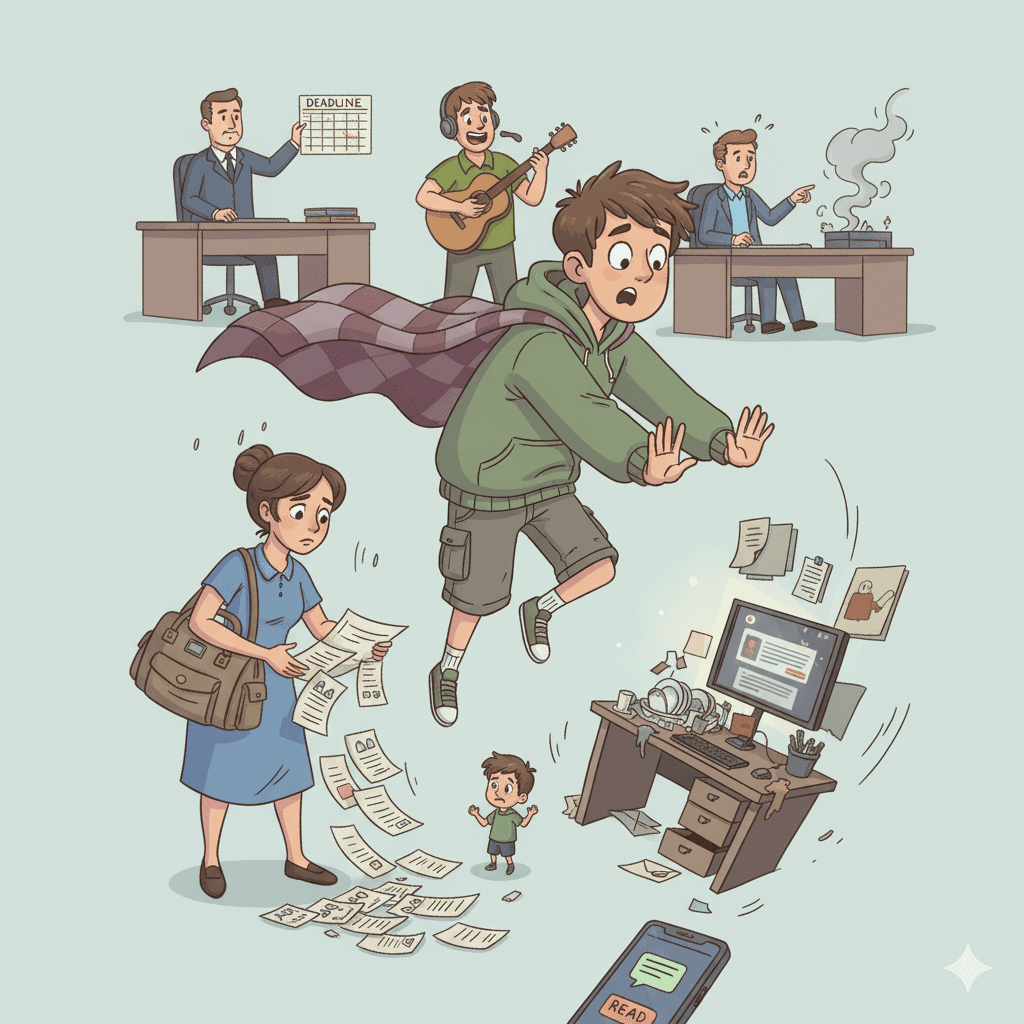
An Image Depicting the Challenges Individuals with Peter Pan Syndrome Face in Relationships and Professional Life (Generated by Artificial Intelligence.)
PPS overlaps with Narcissistic Personality Disorder (NPD); both conditions involve selfishness and narcissistic tendencies. However, individuals with NPD tend to exhibit a heightened sense of self-importance and entitlement, and are often hypersensitive to criticism, experiencing sudden anger outbursts. In contrast, individuals with PPS tend to avoid conflict resolution and frequently resort to unhealthy coping mechanisms.
Among environmental risk factors in the development of the syndrome, parenting styles are paramount. Research indicates that permissive parenting makes it difficult for children to learn the importance of healthy boundaries, while overprotective or helicopter parenting can hinder the development of self-care skills and weaken the ability to become an independent adult. While these parenting styles are not definitive causes, they are significant risk factors.
In addition, childhood trauma and the desire of children raised in difficult conditions to relive their childhood can contribute to the development of the syndrome. Furthermore, contemporary social pressures and the glorification of youth behaviors—such as the online celebration of freedom and adventure—may also play a role in fostering such behaviors.
Underlying all these potential factors is a low “distress tolerance” in individuals with PPS. This low tolerance leads to an inability to endure difficult emotions associated with anxiety, sadness, loneliness, or criticism. The individual avoids emotionally challenging situations; this avoidance tendency creates the foundation for behaviors such as evading responsibility and failing to assume adult duties.
Warning: The content in this article is provided solely for general encyclopedic informational purposes. The information here should not be used for diagnosis, treatment, or medical advice. Before making any decisions regarding health, you must consult a physician or qualified healthcare professional. The author of this article and KÜRE Encyclopedia accept no responsibility for any consequences arising from the use of this information for diagnostic or therapeutic purposes.
Akardaş Karataş, Elif. “Peter Pan Sendromu: Bugünün Gençleri ve Yetişkinlikten Kaçış.” *Medeniyet Eğitim Araştırmaları Dergisi* 3, no. 2 (2019): 117–129. Accessed October 19, 2025.https://dergipark.org.tr/en/download/article-file/920209
Cleveland Clinic. "What Is Peter Pan Syndrome? Signs and Causes." Health Conditions / Mental Health, Cleveland Clinic. Accessed October 19, 2025.https://health.clevelandclinic.org/peter-pan-syndrome
Kalkan, Melek, and Meryem Vural Batik. "Peter Pan Syndrome 'Men Who Don't Grow': Developing a Scale." *Men and Masculinities* 24, no. 2 (2021): 245–257. Accessed October 19, 2025.https://www.researchgate.net/publication/335793065_Peter_Pan_Syndrome_Men_Who_Don't_Grow_Developing_a_Scale

Developmental Context and Characteristics
Development of Symptoms
Impact on Relationships and Professional Life
Potential Causes and Associated Conditions