

`personal-development` Related Article Results

The Power of Habits
The Power of Habit, written by American journalist and Pulitzer Prize winner author Charles Duhigg, was first published in 2012 and within short achieved widespread international readership. Work examines automated patterns linked to human behavior through scientific data, offering a conceptual frame for understanding habit-based actions by individuals organizations and societies. Translated into Turkish as Alışkanlıkların Gücü, it has been published by multiple publishing houses. The book empha
EN
İrem Nur Yeşilyurt Kolağası
Beyhan Budak
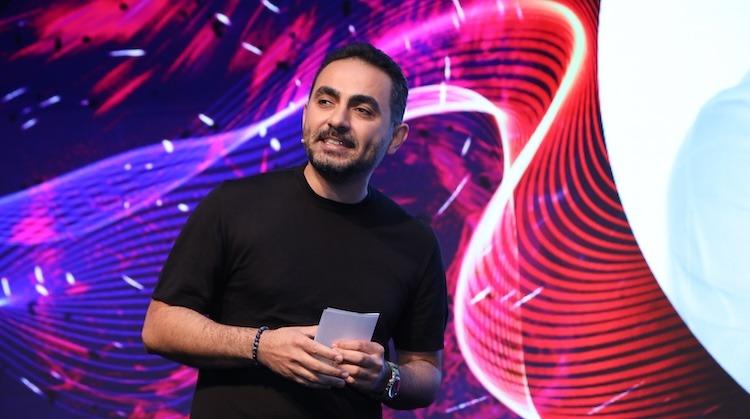
Beyhan Budak was born in 1985 in Ankara. After completing his primary and secondary education in Ankara, he prioritized the field of psychology in his university preferences due to his interest in people and human behavior. He began his academic journey by being admitted to his first choice, the Department of Psychology at Istanbul University. Youth and Education During his four years at Istanbul University, he actively participated in numerous social projects and association activities, and sup
EN
Ayşe İkbal Özsakın
Technological Applications in Psychology
Technological applications in psychology are software programs developed for smartphones and other mobile devices that provide users with various mental health services. With the widespread adoption of the internet and smartphones in the 21st century, interest in these mobile applications has grown as a means to deliver psychological support services more effectively and efficiently. These applications aim to make mental health services more accessible by functioning across a broad spectrum incl
EN
Nursena Şahin

Correct Steps Yield Correct Results
Almost everyone achieves something in order for something else to happen. We can observe that some people attain what they desire, while others do not—even when they act, they still fail to achieve what they want. The failure to obtain desired outcomes, as well as the success in obtaining them, is directly linked to the steps taken. Of course, this assumes that the attainment of desired results depends on the efforts of those seeking them. Those who succeed do so because they take the right step
EN
Hilmi Onur Kaya
To the Mind and the Heart
Mind and soul are the most fundamental terms pertaining to human beings. The most essential aspects that define humanity are those related to reason and spirit. Reason and spirit hold supreme importance in terms of self-awareness and self-preservation. A human being must begin investment with oneself. Starting with oneself means beginning with the mind—that is, with one’s thoughts—and with the heart—that is, with one’s emotions. This investment is the most enduring and redemptive path. Strengthe
ENHilmi Onur Kaya

We Must Interpret the World Correctly
The world, with its mountains, plains, waters, plants, animals, and people, is a vast sphere. In the universe, however, it is but a speck. Despite how chaotic it may seem—from the planet’s rapid rotation on its own axis and around the Sun to the functioning of its living beings and their needs—no one fears that the world might fall. For however terrifying the situation may appear, it is grounded in a cause and accepted as normal. If, despite the terrifying forces beyond our planet, humans can st
ENHilmi Onur Kaya

Problems, difficulties, obstacles, crises, contractions
Difficulties, problems, troubles, obstacles, crises, and constraints are all necessities for human beings living in this world. These realities stem from the very requirements of how the world and humanity function. Their existence is not, in itself, a problem—as long as they are not perceived as such. For neither the world nor humanity promises perfection, or the absence of problems. Moreover, the aforementioned conditions are not flaws. Just as the thorn of a rose is not a defect of the rose,
ENHilmi Onur Kaya

Impostor Syndrome
The Imposter Syndrome (IS) is a psychological pattern characterized by persistent self-doubt and an internal fear of being exposed as a fraud, despite external evidence of success. Individuals affected by this syndrome typically attribute their achievements not to their own abilities or efforts but to luck, external factors, or temporary circumstances. First identified in 1978 by Dr. Pauline Clance and Dr. Suzanne Imes, this syndrome is widely recognized as a significant issue among high-achievi
EN
Esra Can

African Leo (Book)
Lebanese writer Amin Maalouf’s 1986 novel. It narrates the identity quest of African Leo within a historical and cultural context, and the arduous journeys he undertakes between different civilizations. The novel is based on the life of the historical figure Hasan al-Wazzan, and explores the political, religious and cultural transformations of the 16th century. Through the life of Hasan, also known as Leo Africanus, Maalouf deeply examines the relationship, conflicts and impacts of Islamic and W
EN
Ahsen Karakaş

The Art of Freeing Our Minds from Chains: Critical Analytical Thinking
One of the most dangerous conditions spreading through today’s world like a modern epidemic, gnawing at individuals from within, is undoubtedly perfectionism. This ailment, marketed as a standard of success or an admirable discipline, is in essence the heaviest chain we impose on our own minds. Perfectionism is not a motivating force for growth but a serious mental illness that paralyzes individuals with fear of making mistakes and perpetually nourishes the soul with feelings of inadequacy. This
EN
Gözde Cabadak