


This article was automatically translated from the original Turkish version.
+1 More
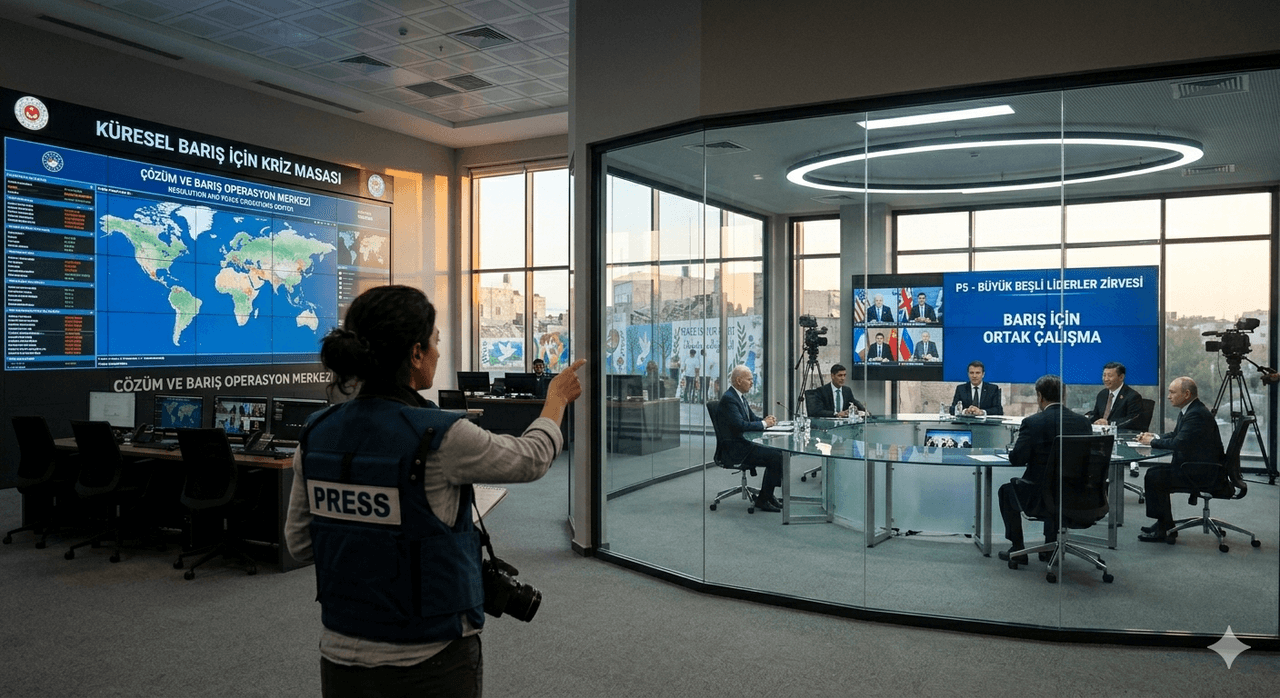
Peace Journalism (Generated by Artificial Intelligence.)
Basic Challenges | Marketability, objectivity debates, resource constraints in conflict zones | ||||||||
|---|---|---|---|---|---|---|---|---|---|
Modern Role | Combating disinformation in the post-truth era | ||||||||
Application Area(s) | Human rights Elections Politics Wars | ||||||||
Basic Principle | Inclusive language use Proactive approach Sense of social responsibility | ||||||||
Basic Challenges | Marketability Objectivity debates Resource constraints in conflict zones | ||||||||
Peace journalism is a constructive journalistic approach that aims to contribute to the building and preservation of peace by reporting on conflicts in a responsible and conscious manner. The process is shaped by the deliberate choices made by editors and reporters during content production and presentation, with the goal of creating a platform that can help resolve points of disagreement without resorting to violence or develop alternative solutions.
Peace journalism has its historical development rooted in critical media studies that gained momentum in the second half of the 20th century, particularly in the theoretical framework systematized from the 1970s onward by academics such as Johan Galtung. Galtung, at the center of this approach, does not limit peace to the mere cessation of armed conflict or direct violence—the concept of “negative peace”—but defines peace as “positive peace,” the establishment of justice and social equality.【1】
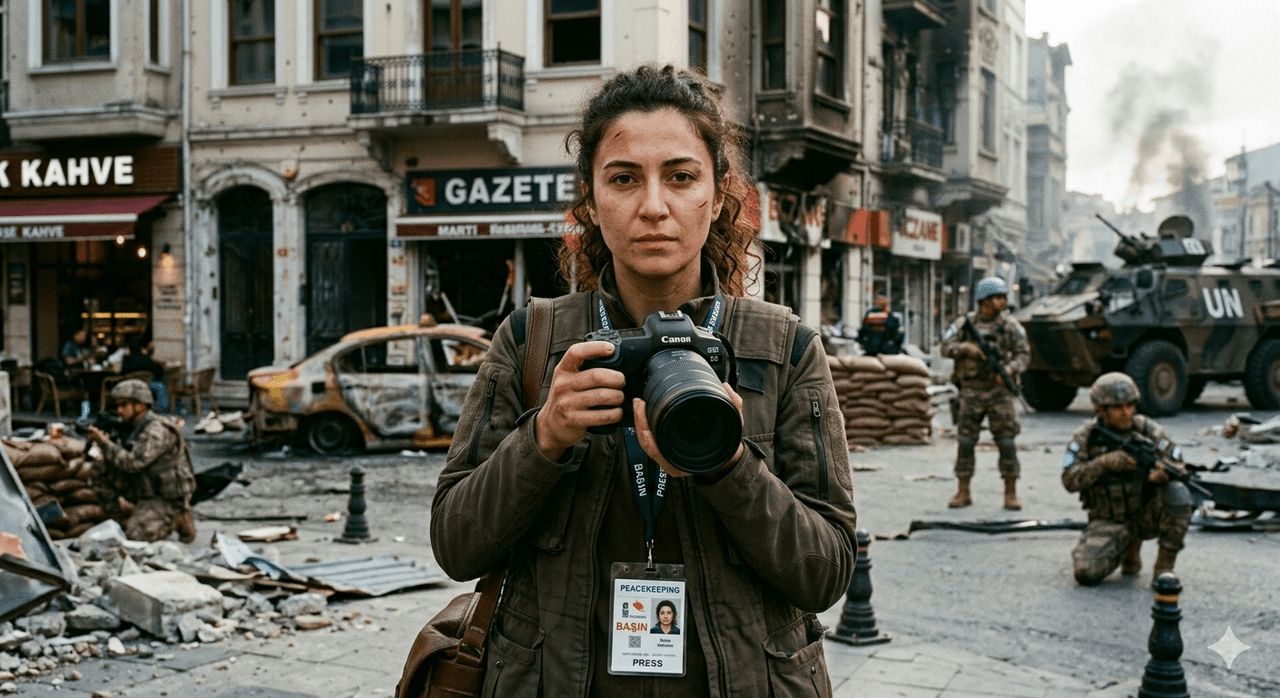
Çatışma Bölgesinde Yer Alan Bir Barış Gazetecisi (Yapay Zeka ile Oluşturulmuştur.)
Rising from this theoretical foundation, peace journalism positions itself as an alternative to “war journalism” practices that reduce conflict processes to simplistic binaries.
Peace journalism identifies as its core advocacy the investigation of the underlying social, economic, and cultural roots of conflicts, the visibility and promotion of nonviolent resolution models, and the amplification of voices typically ignored in mainstream media.
Peace journalism is an approach that operates through specific ethical standards and practical guidelines to address conflicts constructively. The first key element of this journalistic understanding is the proactive approach, which goes beyond merely reporting on active conflict moments to examine the root causes of conflict and lead public discourse on potential solutions. In terms of language use, this model avoids polarizing expressions such as “us” and “them,” adopting an inclusive language that humanizes all parties involved.
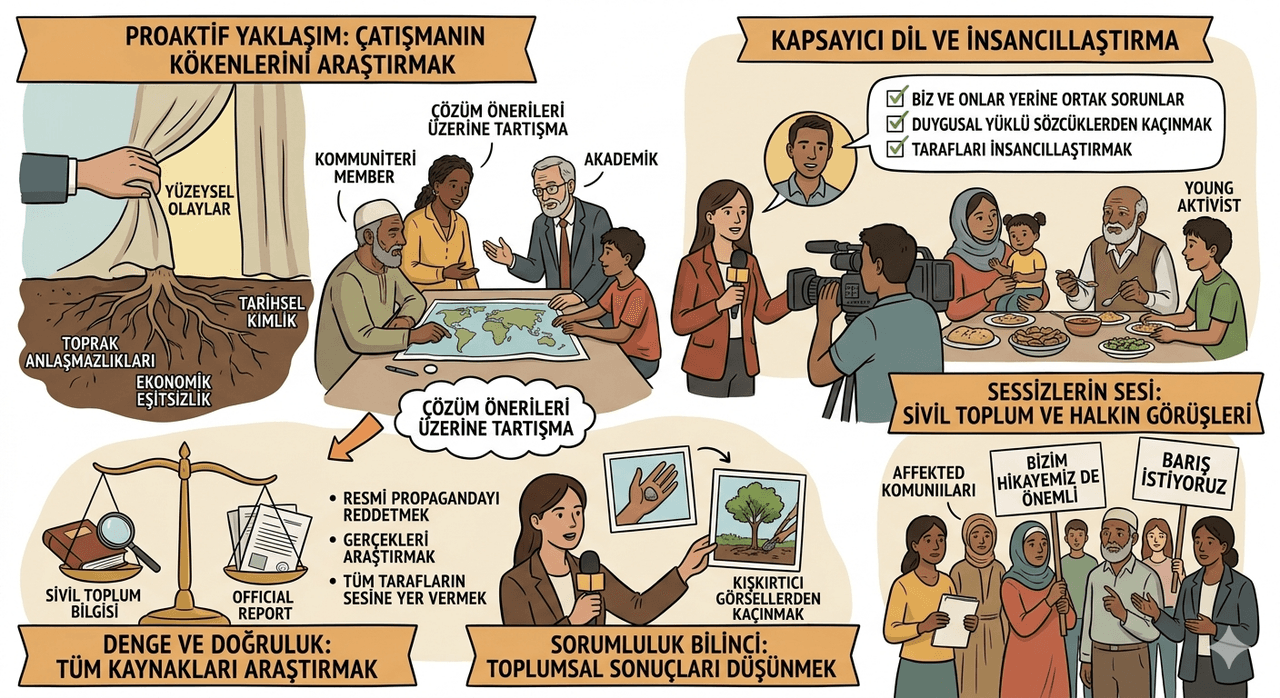
Barış Gazeteciliğinin Temel İlkeleri ve Uygulama Yöntemleri (Yapay Zeka ile Oluşturulmuştur.)
Rather than focusing solely on the statements of political elites or those in power, it acts on the principle of “giving voice to the voiceless,” providing space for the perspectives of ordinary people directly affected by conflict and civil society organizations.
Adhering to the principles of balance and accuracy, peace journalists reject propaganda and investigate facts from all sources, presenting to the public the problems, suffering, and peaceful solutions proposed by all sides of the conflict.
Guided by a sense of responsibility, journalists consciously avoid using sensational visuals and emotionally charged terms such as “tragedy,” “massacre,” or “barbaric,” taking into account the potential social consequences of their reports.
In the global media ecosystem, particularly since 2016, this period is widely regarded as a critical turning point and a defining era for peace journalism.【2】 The Syrian Civil War, the Brexit referendum, and a series of successive global conflicts have exposed the inadequacies of traditional journalistic practices in managing crisis moments and the limits of their ability to counter the power of disinformation.
As a consequence of the “post-truth” era, in which the accuracy of information is relegated to a secondary concern, the proliferation of fake news and propaganda based on populist rhetoric has transformed the principles of peace journalism from a mere preference into a defensive mechanism and a tool for safeguarding democratic values.
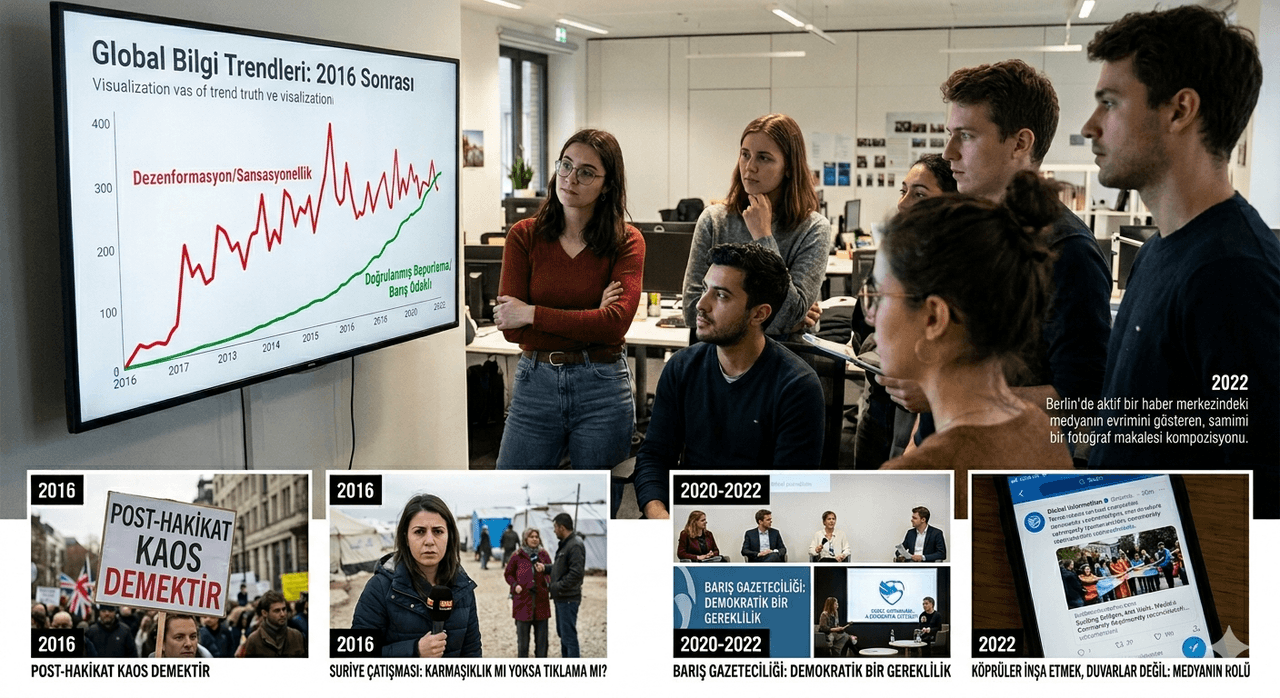
Barış Gazeteciliğinde Tarihsel Dönüm Noktaları (Yapay Zeka ile Oluşturulmuştur.)
In today’s world, social media has increased the speed and reach of information flow, contributing to heightened political polarization.
In this age of information vulnerable to manipulation, peace journalism seeks to contribute to the sustainability of social peace by offering an ethical balance to the speed brought about by digitalization.
Peace journalism has come under various criticisms due to the economic and operational realities of the media sector. The foremost criticism concerns marketability; in the current media ecosystem where violent and sensational content attracts greater attention and achieves higher sales figures, peace-oriented news is often deemed insufficiently marketable, leading to its marginalization.【3】
Another point of criticism is the debate over objectivity; some argue that since the fundamental duty of journalism is to report events as they are, adopting a pro-peace stance may compromise the objectivity of news reporting.【4】
Practical challenges in the field also constitute significant obstacles for peace journalists. Working with limited resources in conflict zones, facing security risks, and encountering difficulties in accessing impartial sources of information add extra burdens to this approach, which aims for in-depth analysis.【5】 Moreover, the lack of concrete and measurable evidence regarding the effectiveness of this method in reducing conflicts or promoting peace has sparked debate over its demonstrable impact.
Saygı, Arda Umut, and Ozan Kocabaş. “Topyekûn Bir Çabanın Ürünü Olarak Barış Gazeteciliği.” The Turkish Online Journal of Design, Art and Communication (TOJDAC) 5, no. 4 (October 2015): 1–12. Accessed May 28, 2026.https://acikders.ankara.edu.tr/pluginfile.php/207016/mod_resource/content/1/Topyek%C3%BBn%20Bir%20%C3%87aban%C4%B1n%20%C3%9Cr%C3%BCn%C3%BC%20Olarak%20Bar%C4%B1%C5%9F%20Gazetecili%C4%9Fi%20_.pdf
Türkkol, Fatma. “HABERCİLİKTE İDEAL ARAYIŞI: BARIŞ GAZETECİLİĞİ”. *Mukaddime*, no. 5: 89–120. Accessed May 28, 2026.https://dergipark.org.tr/tr/pub/mukaddime/article/210089
Youngblood, Steven. "What is Peace Journalism?" mediapeaceproject.smpa.gwu.edu. Accessed May 28, 2026.https://mediapeaceproject.smpa.gwu.edu/2017/12/14/what-is-peace-journalism/
İnceoğlu Giritli, Yasemin. "Etik gazeteciliğin dönüşümü: Barış gazeteciliğinin rolü ve önemi." newslabturkey.org. Accessed May 28, 2026.https://www.newslabturkey.org/2025/01/02/baris-gazeteciligi/
[1]
Steven Youngblood, "What is Peace Journalism?" mediapeaceproject.smpa.gwu.edu, erişim 28 Mayıs 2026, https://mediapeaceproject.smpa.gwu.edu/2017/12/14/what-is-peace-journalism/
[2]
Yasemin İnceoğlu Giritli, "Etik gazeteciliğin dönüşümü: Barış gazeteciliğinin rolü ve önemi," newslabturkey.org, Erişim 28 Mayıs 2026, https://www.newslabturkey.org/2025/01/02/baris-gazeteciligi/
[3]
Yasemin İnceoğlu Giritli, "Etik gazeteciliğin dönüşümü: Barış gazeteciliğinin rolü ve önemi."
[4]
Yasemin İnceoğlu Giritli, "Etik gazeteciliğin dönüşümü: Barış gazeteciliğinin rolü ve önemi."
[5]
Yasemin İnceoğlu Giritli, "Etik gazeteciliğin dönüşümü: Barış gazeteciliğinin rolü ve önemi."

Peace Journalism (Generated by Artificial Intelligence.)
Basic Challenges | Marketability, objectivity debates, resource constraints in conflict zones | ||||||||
|---|---|---|---|---|---|---|---|---|---|
Modern Role | Combating disinformation in the post-truth era | ||||||||
Application Area(s) | Human rights Elections Politics Wars | ||||||||
Basic Principle | Inclusive language use Proactive approach Sense of social responsibility | ||||||||
Basic Challenges | Marketability Objectivity debates Resource constraints in conflict zones | ||||||||
Origins and Theoretical Foundations
Core Principles and Application Methods
Historical Turning Points and Current Challenges
Criticisms of Peace Journalism