This article was automatically translated from the original Turkish version.
+2 More
Location | Kilis / Türkiye | ||||||||
|---|---|---|---|---|---|---|---|---|---|
Period(s) | Late Chalcolithic Period | ||||||||
Excavation Start | 1987 | ||||||||
Key Discoveries | Hittite period findings 500-year-old olive pits 4 Middle Bronze Age palace structure | ||||||||
Geopolitical Importance | at the intersection of ancient trade routes At the northwestern edge of the Fertile Crescent | ||||||||
Conservation Status | GAP-supported environmental arrangement | ||||||||
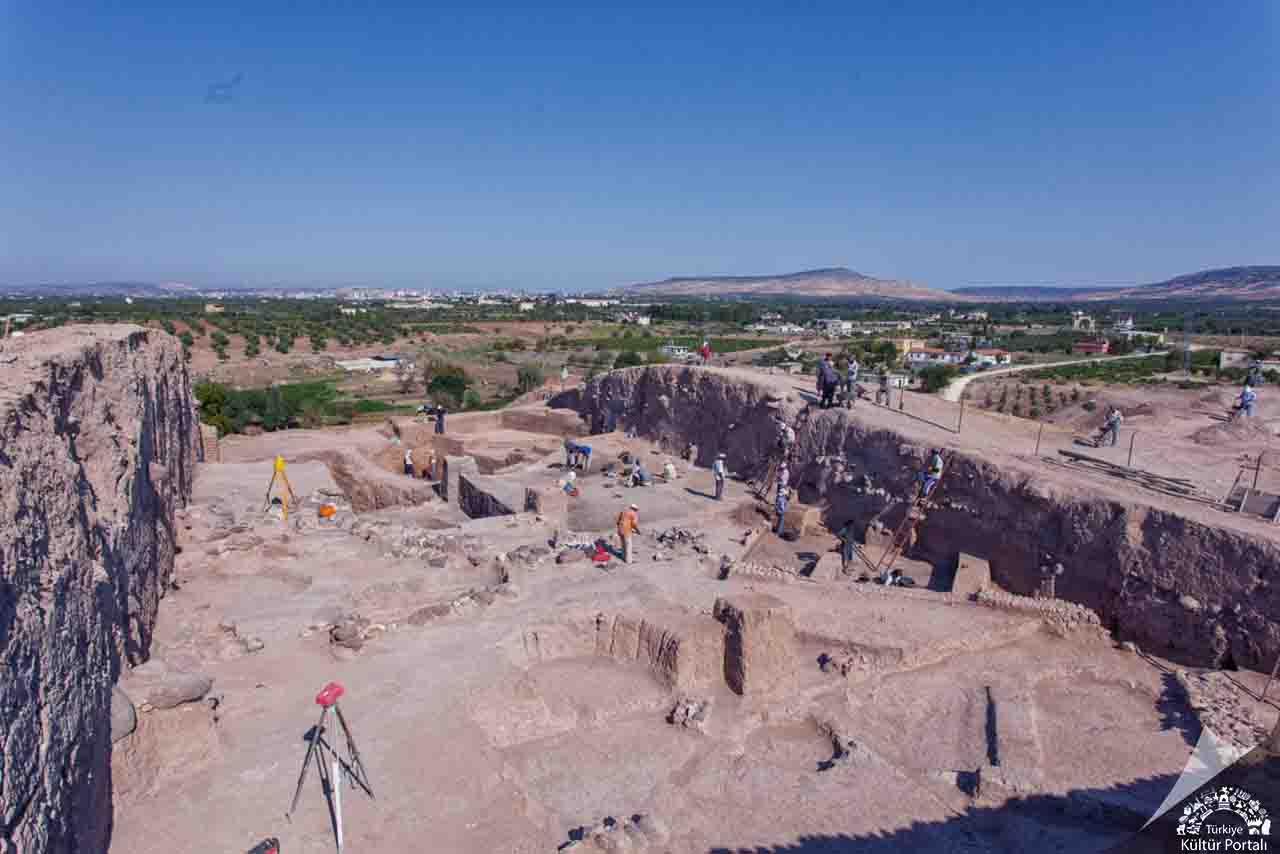
Oylum Höyük is one of the largest tells in Southeastern Anatolia, located within the boundaries of Kilis Province, south of the Gaziantep highway and east of Oylum Village. The tell features a base measuring 460 × 320/370 meters and is connected by a narrow neck to two main elevations, one 22 meters and the other 37 meters high. The Akpınar Stream flows along its western slopes and is part of the natural waterway system linking the Asi River and the Euphrates. The settlement occupies a strategic position at the northwestern edge of the Fertile Crescent, where the axis of the Euphrates Valley–Amik Plain intersects with the Anatolian Plateau–Northern Syria corridor.

Oylum Höyük (
Located in a dominant position over the fertile soils of the Kilis Plain, the tell lies one to four days’ travel from Bronze Age centers such as Carchemish, Aleppo (Halpa), and Ebla. It functions as a crossroads connecting north-south trade routes ending at the Kayseri-Pınarbaşı and Göksun-Kahramanmaraş-Gaziantep corridors with east-west axes.
Surface surveys and excavations have revealed an unbroken sequence of occupation extending from the Late Chalcolithic period (3500–3000 BCE) through the Hellenistic period, followed by the Medieval and Islamic eras. During the Bronze Ages (3000–1200/1000 BCE), the tell served as a regional center and was also associated with Hittite political activity.
Archaeological excavations at Oylum Höyük began in 1987 with preliminary research led by Professor Dr. Engin Özgen. Systematic excavations were carried out by the same team between 1988 and 1994, and in 1995 an international collaboration was established with the German Archaeological Institute. Since 2012, excavations have continued under the leadership of Professor Dr. Atilla Engin (Gaziantep University), with contributions from various academic institutions including Cumhuriyet University and Nevşehir Hacı Bektaş Veli University.
The artifacts uncovered at Oylum Höyük provide diverse archaeological evidence reflecting the site’s historical continuity and cultural richness. Among the most striking remains is a multi-story monumental palace structure dating to the Middle Bronze Age, covering an area of approximately 1,050 square meters. This building, constructed with thick mudbrick walls and featuring functional spaces such as storage rooms, pantries, and kitchens arranged around a central courtyard, exhibits architectural plans comparable to those of palaces in Levantine cities such as Ebla, Qatna, and Tall Bi’a. Numerous cylinder seal impressions found within the structure confirm the tell’s role as an administrative center of its time.
In addition to glyptic and epigraphic materials, paleobotanical evidence such as carbonized olive pits found in palace layers offers early indications of agricultural and dietary practices in the region. Settlement layers have also yielded pottery fragments, stone tools, oven remains, architectural floor traces, and various metal artifacts. The majority of these finds are currently on display at the Kilis Museum.
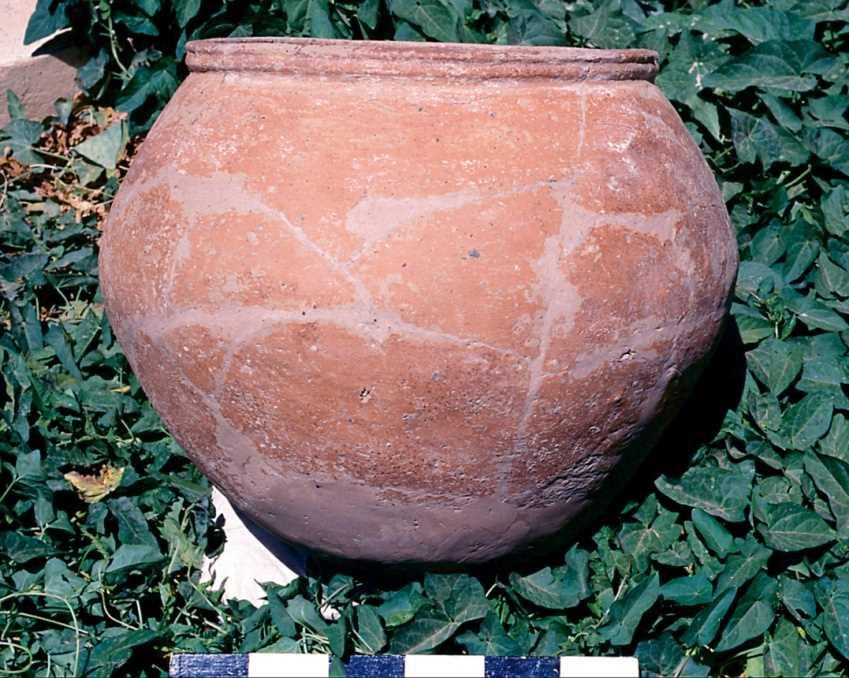
Oylum Höyük Artifact (Türkiye Culture Portal)
Under the “Oylum Höyük Environmental Planning Project” supported by the Southeastern Anatolia Project Regional Development Administration, efforts aim to protect, promote, and open the site to public access. The southern elevation of the tell is home to the traditional visitation site known as Yusuf İzzeddin Yatır; annually, the cultural event “Lebeniye Day” is held in the surrounding area.
GAP Bölge Development Agency. "Kilis Oylum Höyük’te Çevre Düzenlemesi Çalışmaları GAP İdaresi’nin Desteğiyle Başlıyor." Accessed July 10, 2025. https://www.gap.gov.tr/haber/kilis-oylum-hoyukte-cevre-duzenlemesi-calismalari-gap-idaresinin-destegiyle-basliyor-633/
Nevşehir Hacı Bektaş Veli Üniversitesi. “NEVÜ Arkeoloji Bölümü Akademisyenleri Oylum Höyük Kazılarına Katılıyor.” Accessed July 10, 2025. https://www.nevsehir.edu.tr/tr/29745
T.C. Ministry of Culture and Tourism. "Oylum Höyük - Kilis." *Turkey Culture Portal*. Accessed July 10, 2025. https://www.kulturportali.gov.tr/turkiye/kilis/gezilecekyer/oylum-hoyuk
T.C. Presidency of Communication. "KİYÜ Öğretim Staff and Students Participated in the TraditionalLebeniye Günü Event." *iletisim.gov.tr*. Accessed July 10, 2025. https://www.iletisim.gov.tr/turkce/yerel_basin/detay/kiyu-ogretim-elemanlari-ve-ogrencileri-geleneksel-lebeniye-gunu-etkinligine-katildi
Turkish Ministry of Culture and Tourism. "Oylum Höyük." Kültür ve Turizm Bakanlığı Kilis İl Kültür ve Turizm Müdürlüğü. Accessed July 10, 2025. https://kilis.ktb.gov.tr/TR-61725/oylum-hoyuk.html
Location | Kilis / Türkiye | ||||||||
|---|---|---|---|---|---|---|---|---|---|
Period(s) | Late Chalcolithic Period | ||||||||
Excavation Start | 1987 | ||||||||
Key Discoveries | Hittite period findings 500-year-old olive pits 4 Middle Bronze Age palace structure | ||||||||
Geopolitical Importance | at the intersection of ancient trade routes At the northwestern edge of the Fertile Crescent | ||||||||
Conservation Status | GAP-supported environmental arrangement | ||||||||
Continuity of Settlement
Excavation Projects
Findings
Current Conservation and Environmental Planning