


This article was automatically translated from the original Turkish version.
+1 More
Ottoman tombstones are important cultural heritage elements that reflect the aesthetic understanding of Turkish-Islamic art and provide information about the social, cultural, and religious life of their time. These stones contain details regarding individuals’ identities, professions, statuses, and life stories, and constitute artistic objects enriched with calligraphy, stonemasonry, and symbolic motifs. Throughout history, these monuments, which evolved from Central Asian traditions and merged with Ottoman identity, continue to exist as silent witnesses preserving traces of the past and collective memory.
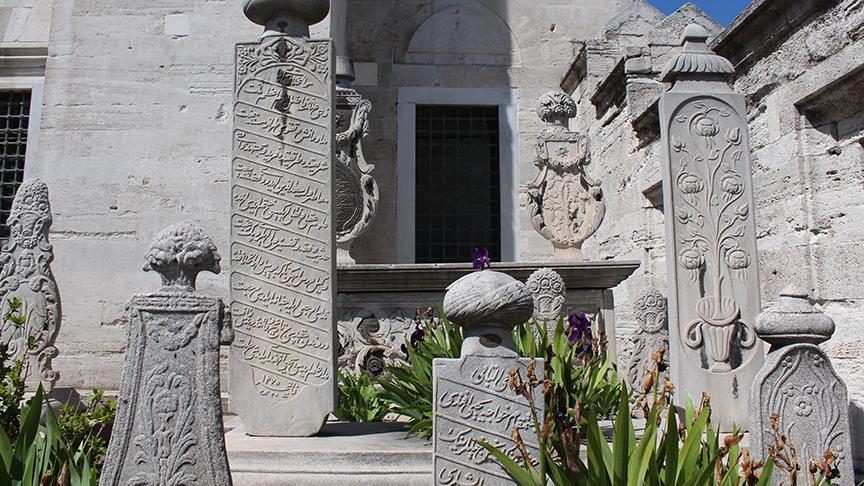
Tombstones (AA)
Tombstones emerged as one of the oldest human burial practices, functioning as tangible documents reflecting societies’ belief systems, artistic sensibilities, and sociocultural structures. Anatolia, having hosted numerous civilizations throughout history, is a region notable for the diversity of its burial customs and tomb types. Ottoman tombstones, embodying the aesthetic principles of Turkish-Islamic art, form an essential part of the cultural and artistic heritage passed down from antiquity to the present.
The tradition of tombstones among the Turks extends back to ancient Turkic communities in Central Asia. During this period, stone sculptures known as balbal were erected to preserve the memory of the deceased. Although simple in form, these balbals carried profound meanings through their symbolic expressions.
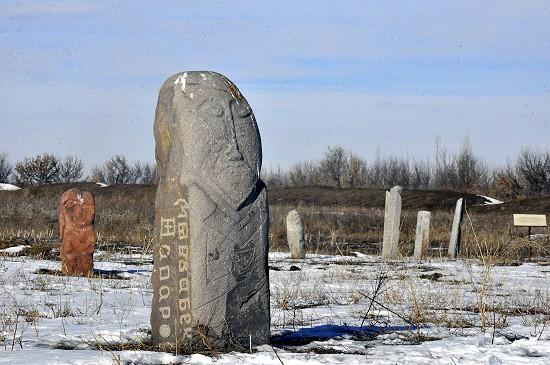
Balbal (AA)
With the adoption of Islam, this tradition became riched with religious motifs and transformed into a reflection of the individual’s faith and social identity. The stone sculpture tradition that became widespread during the Göktürk period acquired symbolic richness under Islamic influence and became an element of cultural continuity.
Figures such as the sun symbol provide information about the lifestyles and traditions of ancient Turkic communities.
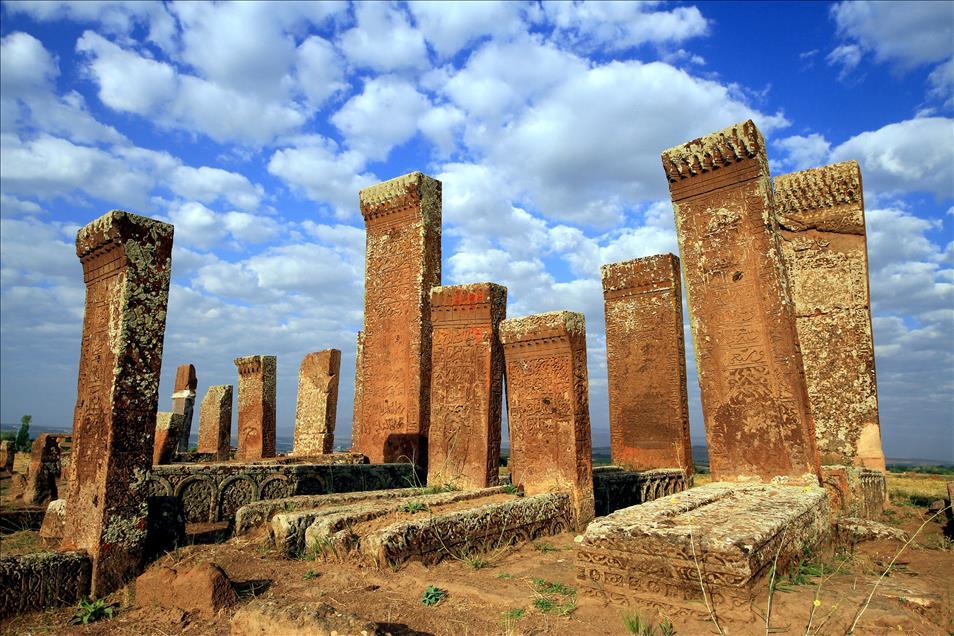
Ahlat Tombstones (AA)
Seljuk period saw significant development in craftsmanship and aesthetics on tombstones. These stones reflect exemplary applications of calligraphy and geometric patterns. Sanduka-shaped tombs and elegant inscriptions serve as precursors to Ottoman tombstone art. In particular, Ahlat tombstones are among the most important representatives of this development in Anatolia, demonstrating how the stone culture brought from Central Asia gained artistic depth through the transition to settled life.
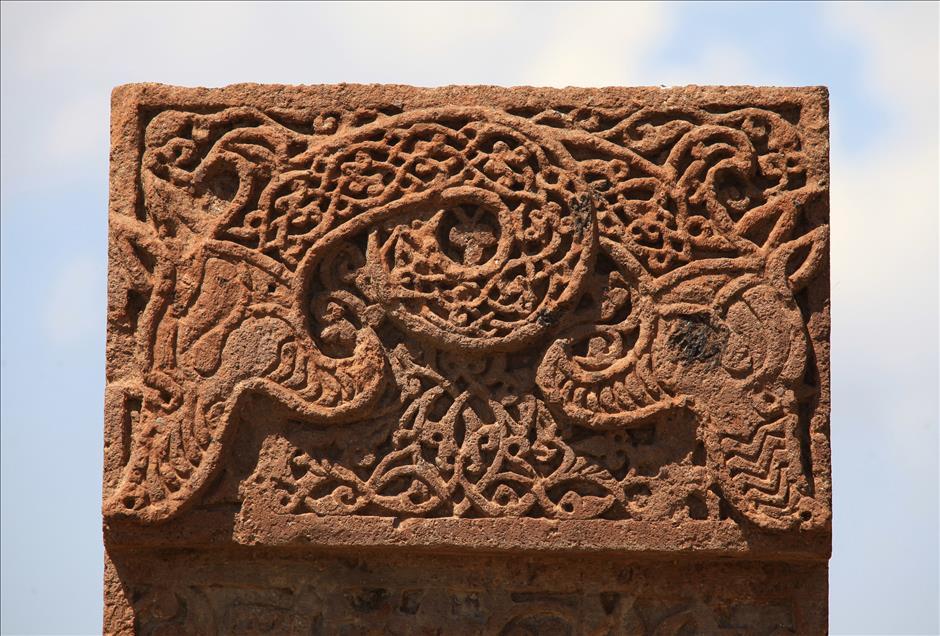
Close-up of Ahlat Tombstone (AA)
The subsequent Beylik Period is characterized by increased regional diversity in the tombstone tradition. Various beyliks that spread across Anatolia developed their own styles, shaping tombstones into forms that carried both artistic and social messages. This tradition reached its peak during the Ottoman period and became a carrier of identity.
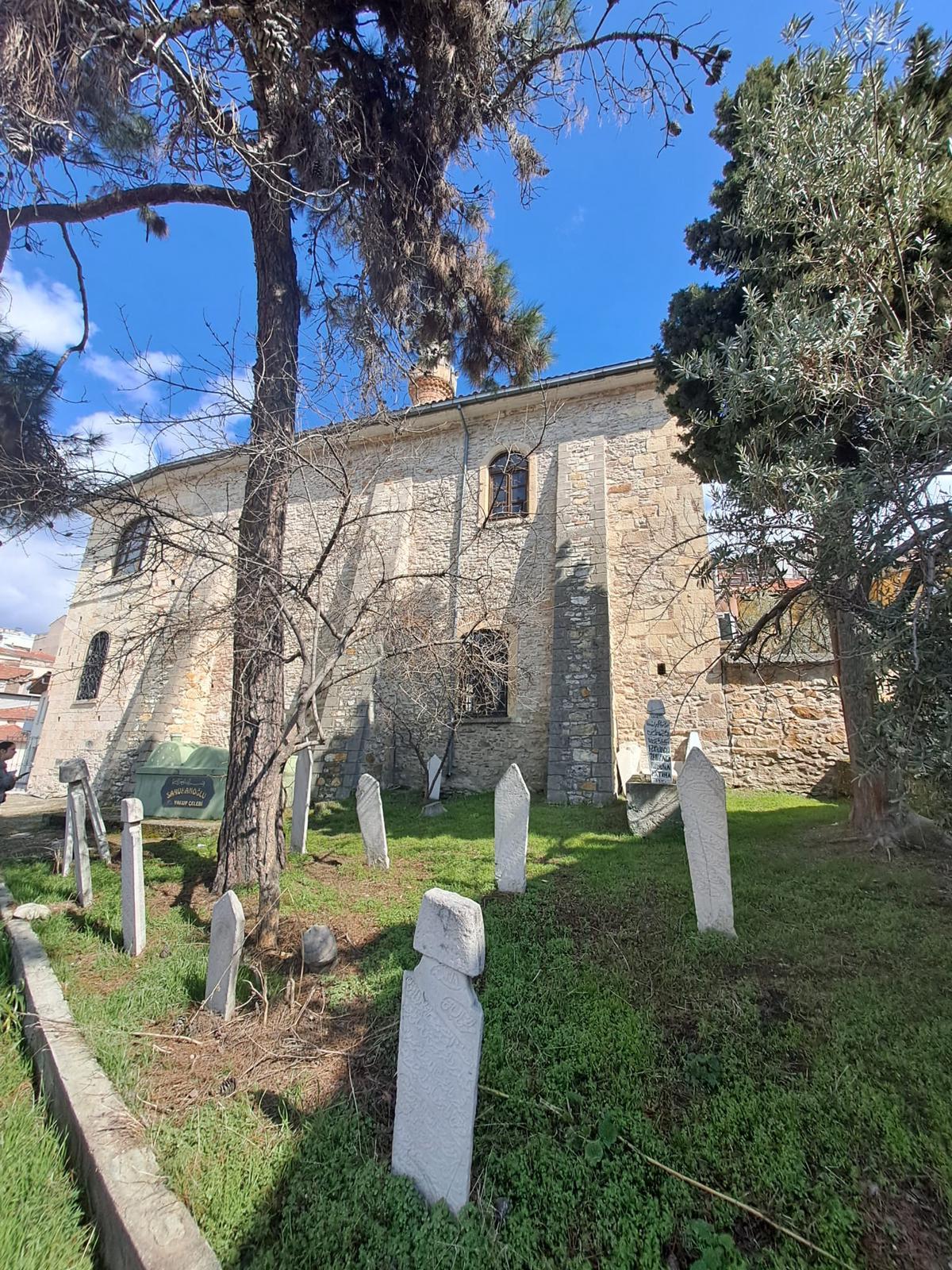
Tombstones from the Saruhanogullari Beylik (Photo: Elif Laçin)
Prominent symbols:
These symbols reflect the Turks’ relationship with nature and their efforts to understand the cosmos.
Ottoman tombstones carry the blended forms of ancient Turkic beliefs with Islam. Prominent symbols include:
Symbols from ancient Turkic beliefs were reinterpreted following the transition to Islam. Motifs such as the sun and moon were stylized to conform to Islamic beliefs; fruits like pomegranate and grape were associated with Qur’anic descriptions of paradise. Burials on elevated sites transformed from mountain cult symbolism into a representation of divine unity. This synthesis endowed Ottoman tombstones with both aesthetic and spiritual richness.
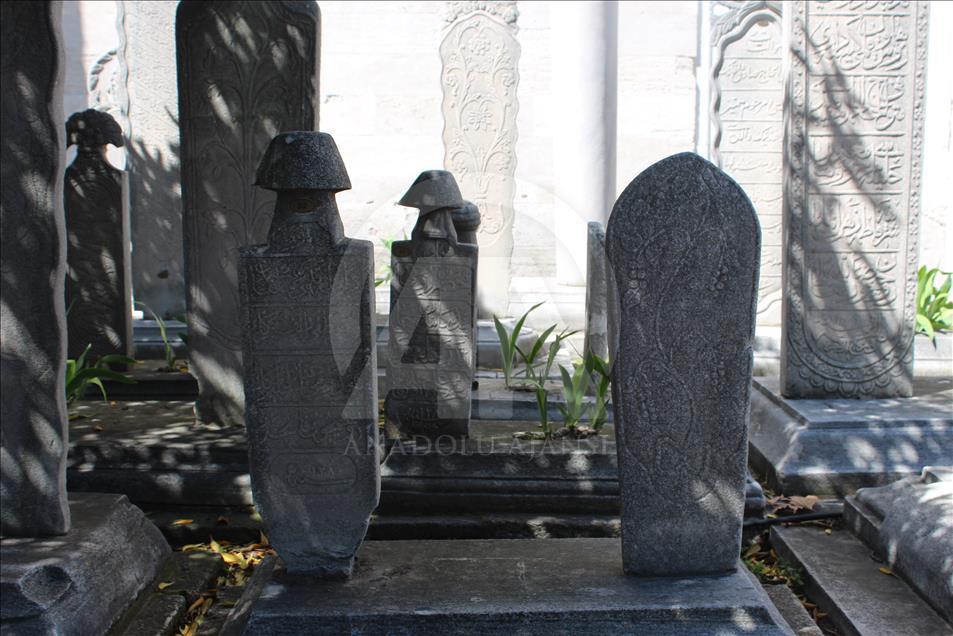
Tombstones (AA)
The formal diversity of tombstones found in Istanbul and its surroundings reflects the detailed and symbolic approach of Ottoman stonemasonry. Stones are broadly divided into two main categories: headless and headed. Headless stones are mostly shaped like arched slabs with inscriptions written in sulus calligraphy. The earliest examples are found in Fatih-era cemeteries.
Prismatic stones typically have hexagonal or octagonal bodies and are distinguished as either with or without a sarcophagus.
Sarcophagus stones feature inscriptions usually carved on the front face, and if space is insufficient, on other surfaces; they are decorated with motifs such as flowers, cypress trees, and the Seal of Solomon.
Headless stones have inscriptions carved on a single broad surface.
Cylindrical stones are notable for their cupped tops, resembling bird troughs for drinking water; their surfaces bear long poetic inscriptions.
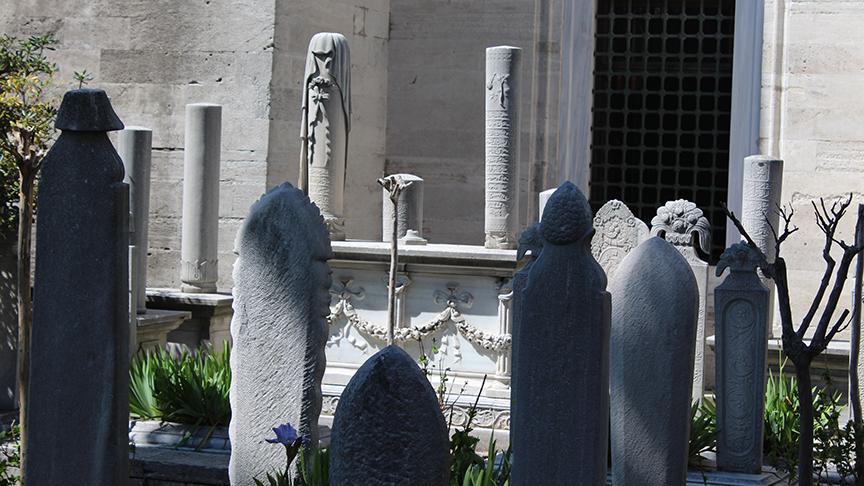
Tombstones (AA)
Ottoman tombstones appear as structures where aesthetic sensibility and functionality converge, materializing various details about an individual’s identity. These stones contain information regarding the deceased’s professions, social positions, and personal identities. The inscriptions and symbols not only reflect the tomb’s occupant but also reveal the social structure and cultural mindset of their society. Despite the gradual modernization of social structures, tombstones continued to present examples that combined calligraphy, stonemasonry, and literary expressions.
As historical documents, Ottoman tombstones also provide information about the intellectual world, social structure, and cultural level of their time. The cemeteries in the Eyüp district of Istanbul contain significant examples reflecting the social structure and cultural values of Ottoman civilization.
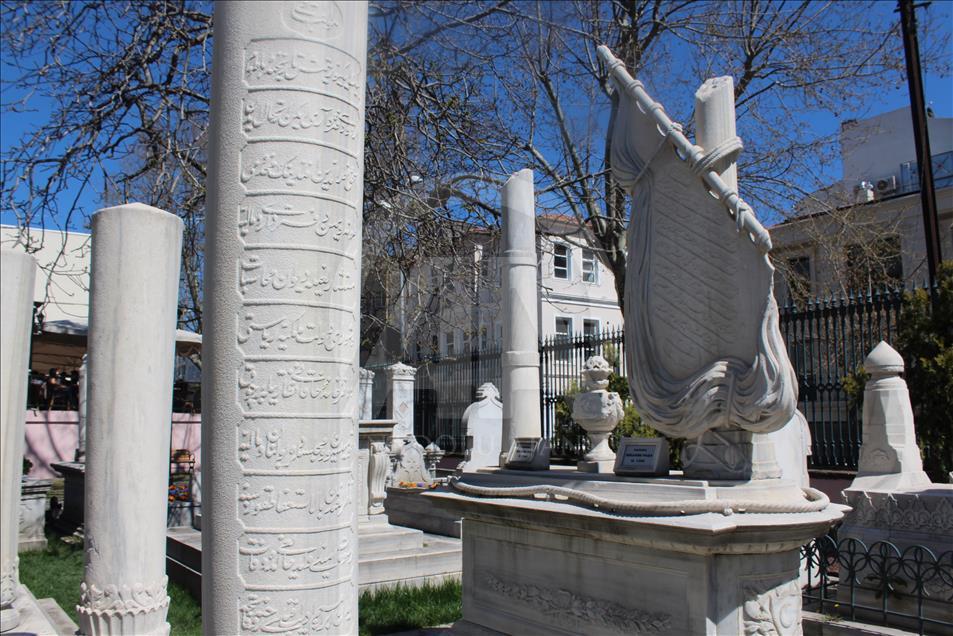
Tombstones (AA)
One of the characteristic features of Ottoman tombstones is their explicit reflection of an individual’s social identity and profession. Each stone is an artistic object representing the aesthetic understanding and societal structure of its era. For instance, a tombstone belonging to a soldier or sailor may feature professional symbols such as a dagger, ship, or sword. These figures emphasize the social standing of the profession and the identity of the deceased.
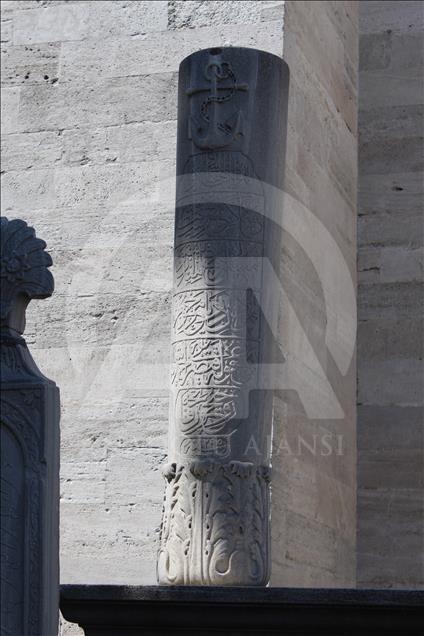
Tombstone with Ship Motif (AA)
Male tombstones often feature headgear such as turban, kavuk, or fez, which vary according to the individual’s profession or religious rank.
Female tombstones generally lack headgear; instead, they favor floral decorations. These figurative elements provide important insights into how Ottoman society classified its individuals and expressed their identities.
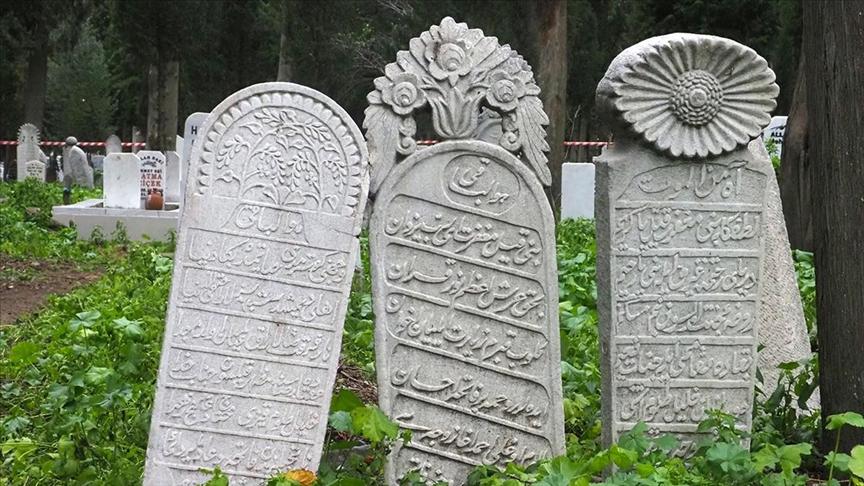
Tombstones (AA)
One of the most distinctive features of Ottoman tombstones is the stone headpieces located at the top. These headpieces are carved stone imitations of the kavuk or tarikat cap worn by the individual during life, serving as a visual code for social status. The following table outlines the types of headpieces and the social classes they represent:
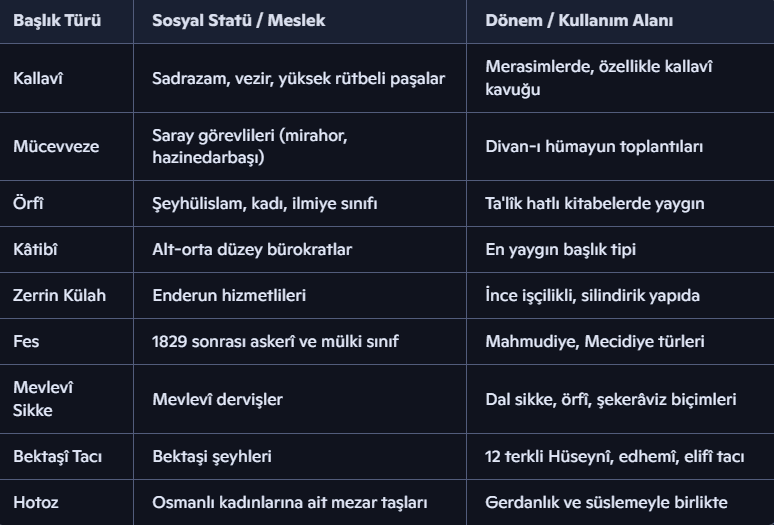
Headpiece Information Table
Each headpiece type clearly reveals the professional and cultural identity of the tomb’s occupant; sometimes, the full meaning can be understood solely by reading the inscription.
Female tombstones in the Ottoman period, while simpler in headpiece design, present a richly elaborate decorative narrative. Aside from hotoz-shaped headpieces, these stones are generally headless and feature prominent depictions of flower baskets, fruit trays, and delicate necklaces. Motifs such as hyacinth, tulip, carnation, and rose were used to represent feminine elegance; palm trees and ivy decorations on footstones contain early examples of still-life influence.
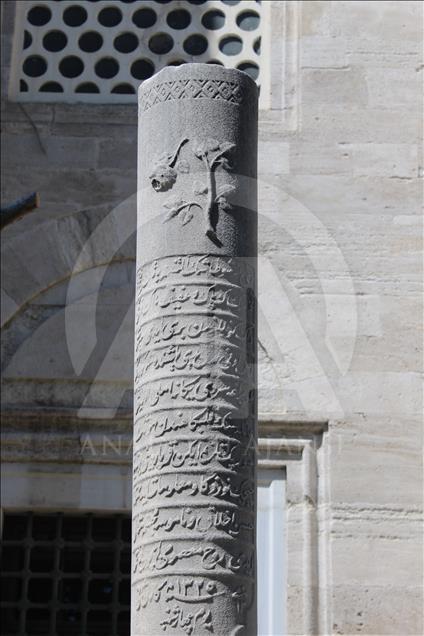
Tombstone with Floral Motifs (AA)
The decorative elements on tombstones do not merely serve visual aesthetics; they also provide clues about the individual’s life, death, and belief system. Common symbols can be classified as follows:
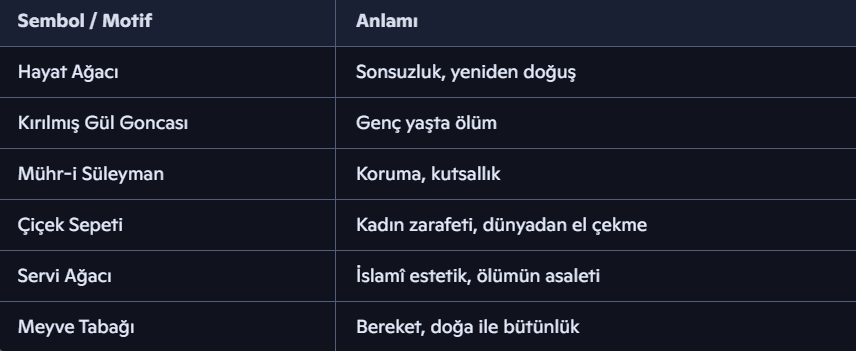
Symbol Information Table
Ottoman tombstones contain outstanding examples of the period’s stonemasonry and calligraphy. Symbols such as the Tree of Life offer rich aesthetic appeal while carrying symbolic meanings. The content of the motifs aids in understanding the belief systems and value structures of the era. Initially limited to short prayers and identity information, inscriptions later became adorned with poetic expressions; details regarding cause of death and social status were elaborately rendered.
In calligraphy, styles such as sülüs, celî sülüs, ta’lîk, and celî ta’lîk were employed. The form of the writing was arranged to harmonize with the stone’s architecture in accordance with the aesthetic sensibilities of the time.
Literary inscriptions on the stones are also noteworthy. Expressions such as “Hüvel Baki” (God is Eternal) or “Today it is me, tomorrow it will be you” reflect the Ottoman understanding of death through references to its inevitability and the transience of worldly life.
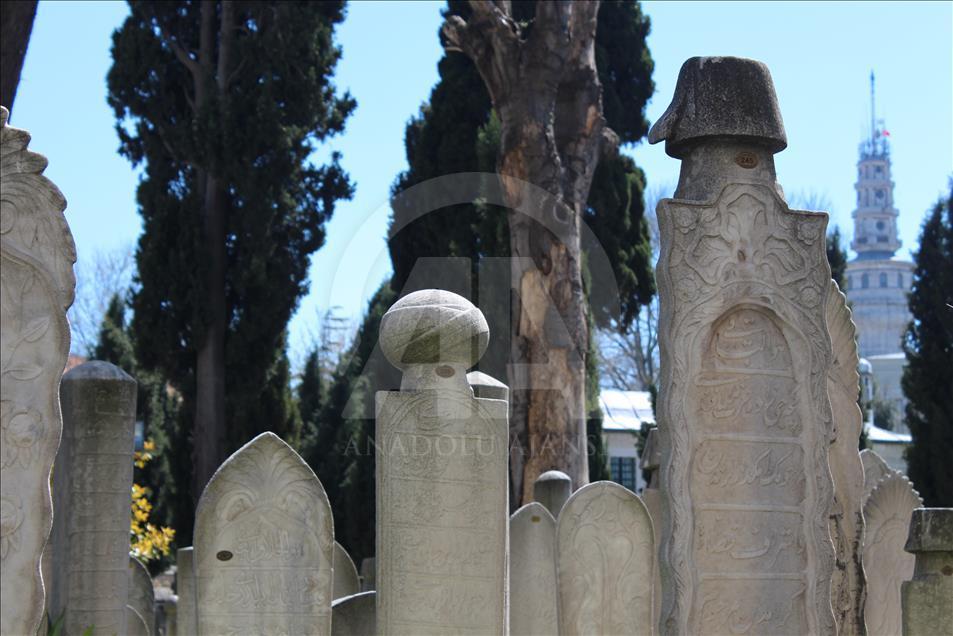
Tombstones (AA)
The inscriptions on the stones are also of great informational value. Written mostly in Ottoman Turkish, these texts often include Arabic and Persian expressions. Information such as the name, birth date, and death date of the deceased appears in the inscriptions; sometimes the cause of death and dates encoded through abjad numerology are also recorded. Dates are typically rendered according to the Hijri and Rumi calendars. This technique also functioned as an aesthetic element within the literary content.
Ottoman tombstones are recognized as historical documents. The dates and inscriptions on them can sometimes refer to events such as epidemics or wars. The expressions on the stones carry clues about the social life of the period. Tombstones provide information regarding geographical names, administrative structures, professions, artisans, scholars, and more. They are also valuable for the study of medical and Sufi history.
Examining the production process of tombstones in Anatolia reveals that alongside custom-made artistic stones, there were also standard examples produced by molds and later inscribed.
Religious and social diversity is also evident in Ottoman tombstones. Stones belonging to members of Bektashi or Mevlevi orders feature symbols specific to those orders. Non-Muslim tombstones employed different alphabets and religious symbols. The coexistence of stones from different religions and cultures within the same cemetery indicates the multi-ethnic character of the Ottoman Empire.
Tombstones in the Ottoman Era (DiyanetTV)
Anadolu Ajansı. "Balıkesir'deki 300 Yıllık Mezar Taşlarında Geçmişin İzini Arıyorlar." January 21, 2023. Accessed July 31, 2025.https://www.aa.com.tr/tr/kultur/balikesirdeki-300-yillik-mezar-taslarinda-gecmisin-izini-ariyorlar/2793518
Anadolu Ajansı. "Dünyanın En Büyük İslam Mezarlığı." August 12, 2012. Accessed July 31, 2025.https://www.aa.com.tr/tr/pg/foto-galeri/dunyanin-en-buyuk-islam-mezarligi/0/133784
Anadolu Ajansı. "Göktürklerin Gizemli Hazinesi Ziyaretçilerini Bekliyor." February 12, 2017. Accessed July 31, 2025.https://www.aa.com.tr/tr/kultur-sanat/gokturklerin-gizemli-hazinesi-ziyaretcilerini-bekliyor/748649
Anadolu Ajansı. "Ölüleriyle Yaşayan Hafızası: Osmanlı Mezar Taşları." Foto Galeri. April 13, 2018. Accessed July 31, 2025.https://www.aa.com.tr/tr/pg/foto-galeri/oluleriyle-yasayan-halkin-hafizasi-osmanli-mezar-taslari-/17
Anadolu Ajansı. "Ölüleriyle Yaşayan Halkın Hafızası: Osmanlı Mezar Taşları." April 13, 2018. Accessed July 31, 2025.https://www.aa.com.tr/tr/kultur-sanat/oluleriyle-yasayan-halkin-hafizasi-osmanli-mezar-taslari/1116935
Aslan, Rumeysa Begüm. "Osmanlı Mezar Taşları." Accessed July 31, 2025.https://www.academia.edu/69762049/OSMANLI_MEZAR_TA%C5%9ELARI.
Açıkgözoğlu, Ahmet Sacit. "Mezar Taşı Çalışmaları." *Türkiye Araştırmaları Literatür Dergisi* 7, no. 14 (2009): 297–314. Accessed July 31, 2025.https://dergipark.org.tr/tr/download/article-file/653619
Bozdemir, Oğuz. "Orta Asya'dan Anadolu'ya Güneş Sembolizmi: Mezar Taşları Üzerine Bir İnceleme." *Dicle Üniversitesi Sosyal Bilimler Enstitüsü Dergisi*, no. 35 (2024): 79–104. Accessed July 31, 2025.https://dergipark.org.tr/tr/pub/diclesosbed/issue/83292/1346566
DiyanetTV. "Osmanlı'da Mezar Taşları - Tarih ve Ötesi 7. Bölüm." YouTube video, November 16, 2023. Accessed July 31, 2025.https://www.youtube.com/watch?v=uWxsSpvyo2U
Eren, Sevinç. "19. Yüzyıl Geç Dönem Osmanlı Mezar Taşlarının Trabzon Küçük İmaret Mezarlığı Örneği Üzerinden İncelenmesi." *Karadeniz Araştırmaları Enstitüsü Dergisi* 6, no. 11 (2020): 345–363. Accessed July 31, 2025.https://dergipark.org.tr/tr/pub/karen/issue/59221/790842
Genç, Mustafa. "İstanbul Karacaahmet Mezarlığı’nda Yer Alan Sanatkâr Mezar Taşları Hakkında Bir Değerlendirme." *Anasay*, no. 22 (2022): 151–175. Accessed July 31, 2025.https://dergipark.org.tr/tr/pub/anasay/issue/73639/1171234
Karaboğaz, Mehmet. "Osmanlı Mezar Taşları: Tarihin Sessiz Tanıkları." Aydın Adnan Menderes Üniversitesi. January 7, 2025. Accessed July 31, 2025.https://gzt.adu.edu.tr/haber/osmanli-mezar-taslari-tarihin-sessiz-taniklari-9416
Kucur, Sadi S. "Mezartaşları." In *Antik Çağ'dan XXI. Yüzyıla Büyük İstanbul Tarihi*, 2015. Accessed July 31, 2025.https://istanbultarihi.ist/185-mezartaslari
Rustamova, Muhlisahon. "Orta Asya'da Erken İslâmi Dönem Kayrak Taşları (Mezar Taşları)." *Anasay* 6, no. 21 (2022): 259–306. Accessed July 31, 2025.https://dergipark.org.tr/tr/download/article-file/2408927
Sağıroğlu Arslan, A. “'Taşlar Konuşur': Türk Mezar Taşlarının Biçim Dili." *Uluslararası Türkçe Edebiyat Kültür Eğitim Dergisi* 6, no. 3 (2017): 1923–1937. Accessed July 31, 2025.https://dergipark.org.tr/tr/download/article-file/351143
Çetin, Onur. "Eski Türk İnanç Sistemi ile Osmanlı Mezar Taşlarının Etkileşimi." *Türk Ekini*, no. 8 (June 2021). Accessed July 31, 2025.https://dergipark.org.tr/tr/download/article-file/1798504
Çetin, Onur. "Osmanlı Mezar Taşları Etrafında Gelişen Kültür ve Medeniyet Dünyası Üzerine Bir İnceleme (Eyüp Örneği)." *Anadolu Akademi Sosyal Bilimler Dergisi* 1, no. 2 (2019): 113–122. Accessed July 31, 2025.https://dergipark.org.tr/tr/pub/anadoluakademi/issue/47554/600723
Çetin, Onur. "Osmanlı Mezar Taşlarının Önemi ve Sanatsal Boyutu." *Cumhuriyet Üniversitesi Fen-Edebiyat Fakültesi Sosyal Bilimler Dergisi* 43, no. 1 (2019): 39–52. Accessed July 31, 2025.http://cujos.cumhuriyet.edu.tr/tr/pub/issue/46333/582237

The Tombstone Tradition in Historical Context
Symbolism in Ancient Turkic Belief Systems
Symbolism in Ottoman Tombstones
Cultural Continuity and Integration with Islam
Typology, Form, and Material Use
Traces of Art, History, and Society in Ottoman Tombstones
Symbolism of Identity and Art in Ottoman Tombstones
Stone Headpieces
Female Tombstones
Decorative Motifs and Meaning Codes
Artistic, Aesthetic, and Literary Dimensions
Reflections of Time on Stone
Tombstones as Historical Sources