


This article was automatically translated from the original Turkish version.
+1 More
The Aurora Borealis, or Northern Lights, are colorful light phenomena occurring in Earth’s magnetosphere. This dazzling natural event is caused by charged particles from the Sun (solar wind) interacting with Earth’s magnetic field. These lights, observed in polar regions, have throughout history influenced scientists, artists, and local communities as a remarkable phenomenon.
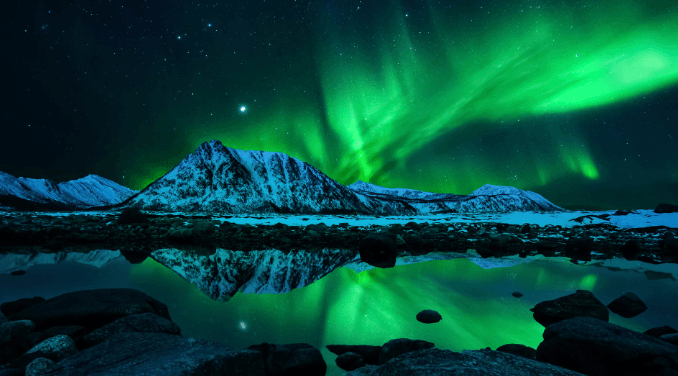
Northern Lights
Solar winds are streams of charged particles electrons and protons emitted from the Sun’s corona. These particles travel at high speeds approximately 400 kilometers per second and reach Earth. The magnetosphere directs them toward the polar regions where they collide with gases in the upper atmosphere, losing energy and producing bright emissions.
The Northern Lights can appear in various colors depending on the atmospheric layer where the collision occurs and the type of gas involved:
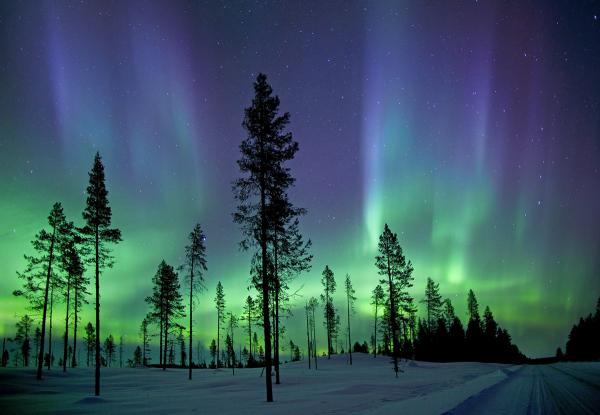
Green Northern Lights - bilimgenc
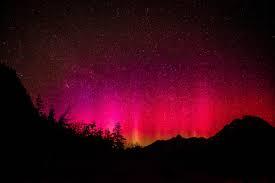
Red Northern Lights - bilimgenc
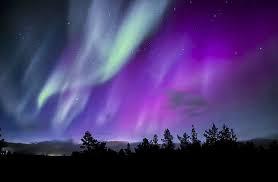
Blue and Purple Northern Lights - habertürk
Throughout history the Northern Lights have been associated with mystical and supernatural events in many cultures.
Scientific studies of the Northern Lights began in the 17th century when Galileo Galilei used the term Aurora Borealis. However the origin of the lights remained unknown for many years.
In the 20th century satellites launched into space confirmed that solar winds interacting with the magnetosphere trigger the auroral displays. Today scientists study the effects of this phenomenon on Earth’s magnetic field and its potential risks.
The Aurora Borealis is most commonly observed in polar regions. The best observation locations include:
The Northern Lights are directly linked to space weather. Major solar eruptions increase the number of charged particles reaching Earth intensifying auroral activity. Scientists use space weather forecasts to predict these events and protect technological systems such as GPS and satellite communications.
Intense solar winds and magnetic storms can disrupt radio waves interfere with GPS systems and cause electrical grid damage. Therefore scientists continuously monitor solar activity and develop measures to mitigate potential risks.
BBC Türkçe. "Kuzey Işıkları: Doğa’nın En Büyüleyici Gösterisi." BBC News Türkçe. November 30, 2011. Accessed February 9, 2025.https://www.bbc.com/turkce/haberler/2011/11/111130_arctic_lights
Evrim Ağacı. "Aurora (Kutup Işıkları) Nedir ve Nasıl Oluşur?" Evrim Ağacı. Accessed February 9, 2025.https://evrimagaci.org/aurora-kutup-isiklari-nedir-ve-nasil-olusur-8081.
TÜBİTAK. "Kutup Işıkları Nasıl Oluşur? Kuzey Işıkları Nedir?" *Bilim ve Teknik*. Accessed February 9, 2025.https://bilimteknik.tubitak.gov.tr/makale/kutup-isiklari-nasil-olusur-kuzey-isiklari-nedir.

Formation Mechanism
The Role of Solar Winds
Causes of Different Colors
History and Cultural Reflections
Beliefs of Ancient Civilizations About the Northern Lights
Scientific Research and Discoveries
First Scientific Observations
Modern Research
Best Observation Locations
Best Regions to View the Northern Lights
Best Time for Observation
Technology and the Northern Lights
Space Weather Forecasts and the Impact of Solar Winds
Effects on GPS and Communication Systems