


This article was automatically translated from the original Turkish version.
+1 More
Nayla (serender) is a traditional structure built on wooden pillars, commonly found in the Eastern Black Sea region, especially in Rize, Artvin, and Trabzon. These structures are typically roofed and adorned with wooden decorations. They are used to dry and store foodstuffs such as maize, legumes, potatoes, oil, and cheese, protecting them from pests.
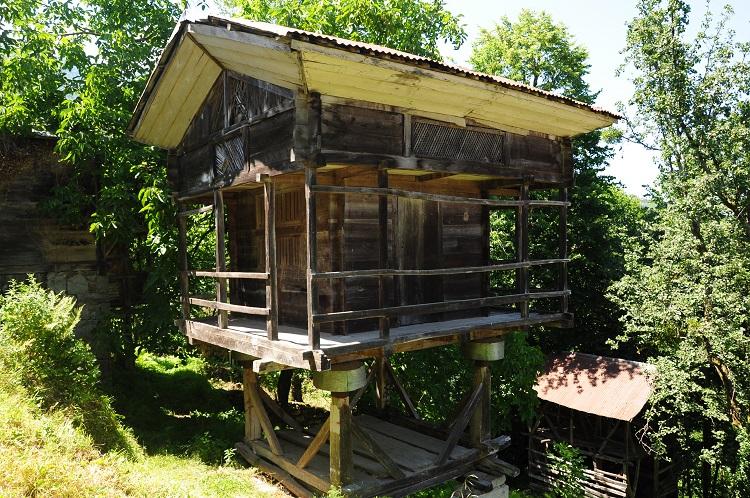
Nayla (Ministry of Culture and Tourism)
Serender is a traditional wooden structure that has been used for centuries to adapt to the unique geographical and climatic conditions of the Black Sea region. Given the region’s high humidity and heavy rainfall, serenders have provided ideal solutions for the long-term storage of agricultural products. Their historical origins are closely linked to the development of agricultural activities in the area. As production of maize, hazelnuts, and other cereals increased, the need arose to store and protect these crops. The elevated design of serenders maximized air circulation, facilitating drying and preventing moisture damage. Additionally, flat stones called “teker” placed beneath the pillars prevented rodents and other pests from accessing the stored goods. Ottoman land registry records from the rural settlements of the Black Sea region document the existence of structures similar to serenders, demonstrating that these buildings have played an important role in the agricultural life of the region for centuries.
Similar structures can be found across the world in different cultures. For example, the Norwegian “stabbur” and the Spanish “hórreo” share functional and structural similarities with serenders. These parallels reveal how communities in diverse geographical areas developed comparable solutions to meet similar needs. Until the mid-20th century, serenders were widely used, but with the advancement of modern storage methods and technologies, their practical function declined. Nevertheless, they are now recognized as an important part of the region’s cultural heritage, and various efforts are underway to preserve them.
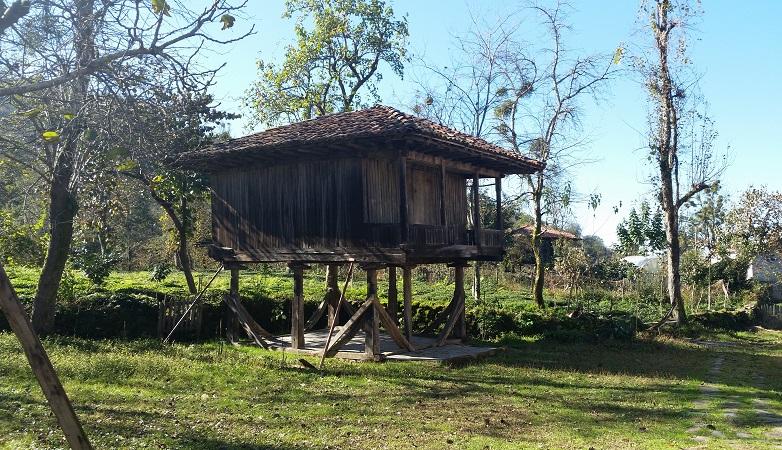
Nayla (Ministry of Culture and Tourism)
Naylas are typically raised on four, six, or eight wooden pillars, positioned at a certain height above the ground. Access is provided by a removable and easily movable ladder. The façades feature wooden ornamentation, and the roof is usually covered with sheet metal or flat planks to prevent water leakage.
Naylas are not only important for food storage but also as integral components of the region’s cultural heritage. These structures showcase fine examples of woodworking and contribute a distinctive character to the villages and towns of the Black Sea region through their aesthetic appearance. Moreover, their construction from natural materials helps preserve the natural environment of the stored products.
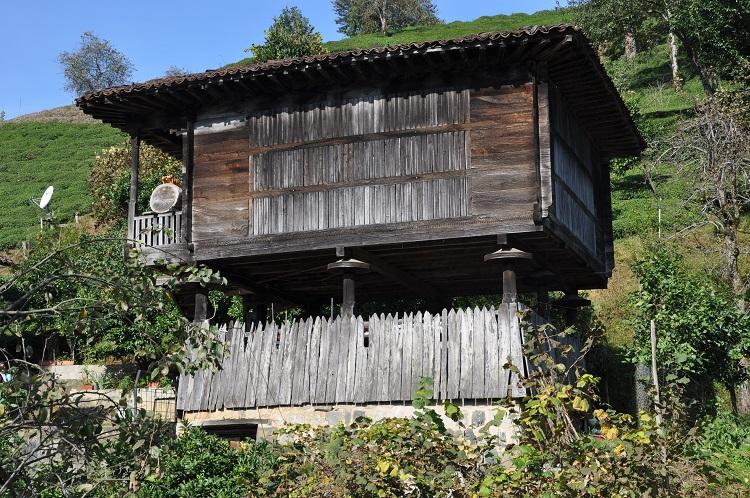
Nayla (Ministry of Culture and Tourism)
Today, some naylas are still in use, while others have been restored for tourism and converted into accommodation units. However, many nayla structures have been abandoned and are at risk of disappearing over time. As a result, various preservation and restoration initiatives are being carried out to protect naylas and ensure their transmission to future generations.
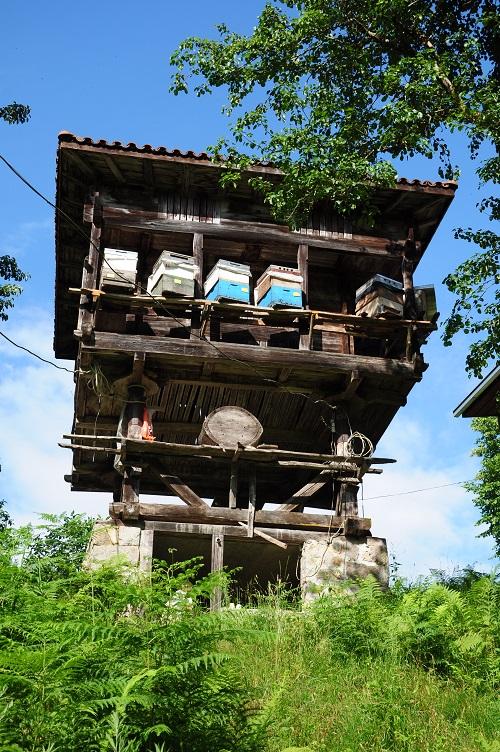
Nayla (Ministry of Culture and Tourism)
Al Şensoy, Selda and Sibel Kukoğlu. "Doğu Karadeniz Kırsal Mimari Örneği: Serenderlerin Ekoloji ve Sürdürülebilirlik Bağlamında İncelenmesi." Uluslararası Sosyal Bilimler Dergisi 4, no. 1 (2020): 25-44.
Kültür ve Yaşam. "Karadeniz’e Özgü Tarihi Serenderler." Accessed April 12, 2025.https://kulturveyasam.com/karadenize-ozgu-tarihi-serenderler/
Rize İl Directorate of Culture and Tourism. "Naylalar." Accessed April 12, 2025.https://rize.ktb.gov.tr/TR-127859/naylalar.html
Yeşilyurt Tunç, Zübeyde. "Trabzon’da Serender Yapılarının İncelenmesi ve Yeniden İşlevlendirme Önerileri." Master's thesis, T.C. Maltepe Üniversitesi Fen Bilimleri Enstitüsü, Mimarlık Anabilim Dalı, January 2019.

History
Architectural Features
Cultural and Functional Significance
Contemporary Preservation and Repurposing Efforts