


This article was automatically translated from the original Turkish version.
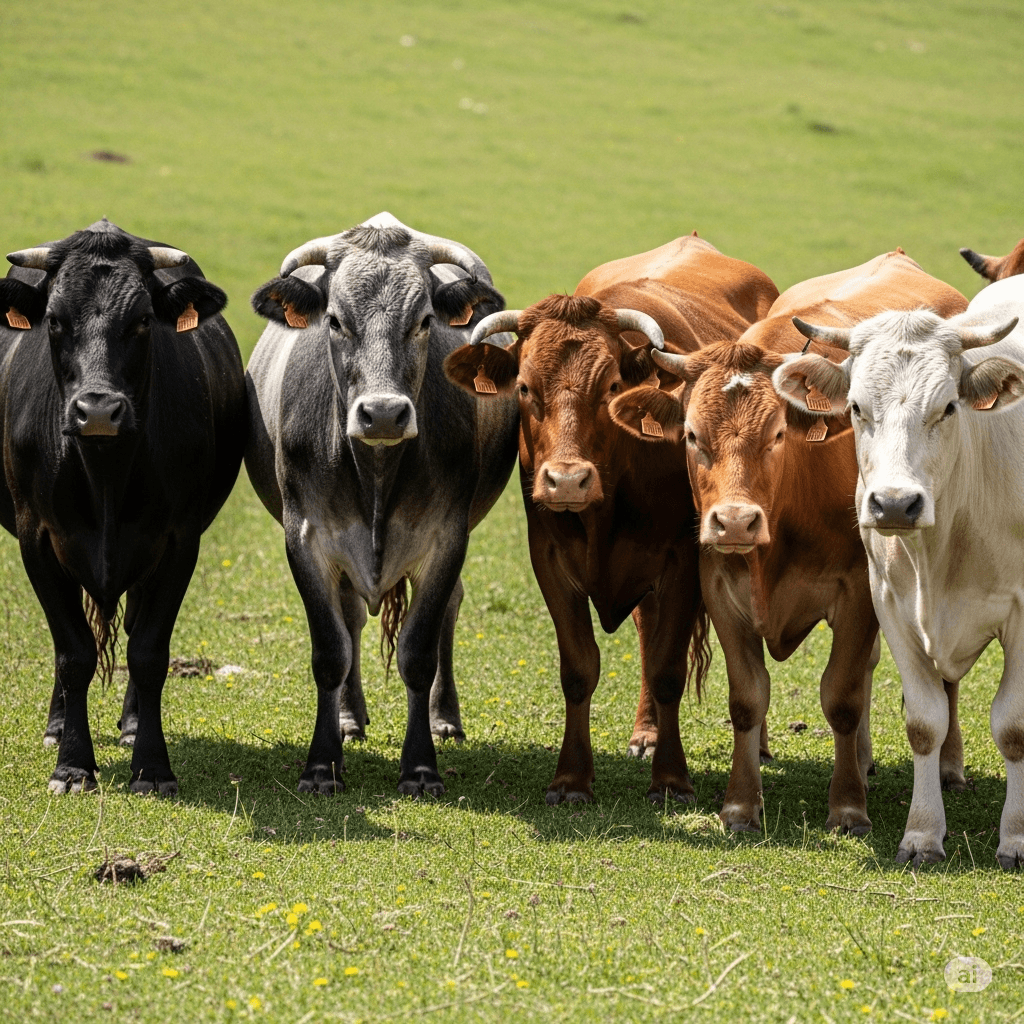
Main Native Cattle Breeds of Türkiye
Boz Irk (BOZ) | Step cattle are resistant to harsh conditions | ||||||||
|---|---|---|---|---|---|---|---|---|---|
Doğu Anadolu Kırmızısı (DAK) | High-quality meat, adapted to severe winters | ||||||||
Güney Anadolu Kırmızısı (GAK) | Largest in size, highest milk yield | ||||||||
Yerli Kara (YK) | Smallest in build, very docile | ||||||||
Yerli Güney Sarısı (YGS) | Adapted to mountainous regions | ||||||||
Zavot (ZAV) | Hybrid, resistant to cold climates | ||||||||
Anatolian geography is recognized as one of the regions where many domesticated livestock animals including cattle were first domesticated. The cattle populations that spread from here formed the genetic foundation of Türkiye's native breeds. These breeds are distinguished by their high adaptability to the harsh climatic and environmental conditions of their regions natural resistance to diseases and ability to utilize low-quality feed. However over time increased interest in higher-yielding exotic breeds has led to a significant decline in the numbers of native breeds. Therefore preserving these valuable genetic resources is of great importance.
The main native cattle breeds registered and raised in Türkiye are as follows:
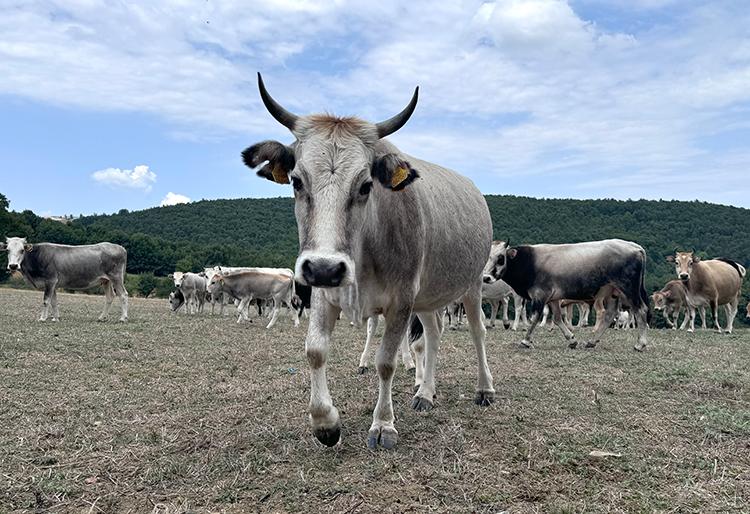
The Boz breed which is distributed in Thrace Marmara Aegean and Western Anatolia is a steppe cattle descended from Bos taurus primigenius. It is also considered to share a common origin with native cattle of the Balkans. This breed typically inhabits mountainous and forested areas with minimal human intervention. Although its numbers have declined it has become fully adapted to the harsh geographical conditions and limited feed resources of its habitat.
Its coat color ranges from silvery gray to dark gray; cows are generally lighter in color than bulls. The lower parts of the body such as the neck chest and legs tend to be darker. Distinctive features in bulls include a dark ring around the eyes and a black stripe on the tip of the nose. The inner ears are covered with black hairs. The long crescent-shaped horns are directed upward. They have a sturdy build and strong hooves. Mature females weigh between 300 and 350 kg while males weigh between 400 and 450 kg. Calves born with a light brown coat turn gray as they mature.
Milk yield is low and the udder structure is small. During a lactation period of 180 to 240 days they produce an average of 800 to 1000 kg of milk with a fat content of approximately 4%. Their nervous temperament can make milking difficult. In terms of meat production they can gain 700 to 900 grams of live weight per day under feeding conditions. Overall they show potential for increased both meat and milk yields when rearing conditions are improved.
Thanks to their advanced digestive systems they efficiently utilize low-quality feed. They are highly resilient to sudden changes in climate and feed as well as to adverse natural conditions hunger inadequate nutrition and diseases.
BOZ (AA)
The EAR breed which is believed to originate from Bos taurus brachyceros and Caucasian cattle is raised in the high-altitude regions of Eastern Anatolia as its name suggests. This breed spends approximately six months of the year on pastures and alpine meadows and is known for its resilience to harsh winters poor management conditions and diseases.
Its color varies from yellow-red to dark chestnut. White patches may be observed on areas such as the udder and underside of the abdomen. The front parts of the body such as the head neck and legs are darker in color. They have short horns that curve forward. The hind part of the body is higher than the front and the chest is narrow. Mature females weigh between 300 and 350 kg while males weigh around 400 kg.
The EAR breed provides high-quality and flavorful meat when fattened at an early age and is one of Türkiye's important meat sources. During the fattening period they gain 700 to 800 grams of live weight per day with a meat yield of approximately 53%. Milk production averages 900 to 1000 kg over a 205-day lactation period with a fat content of about 3.5%. They are not suitable for machine milking.
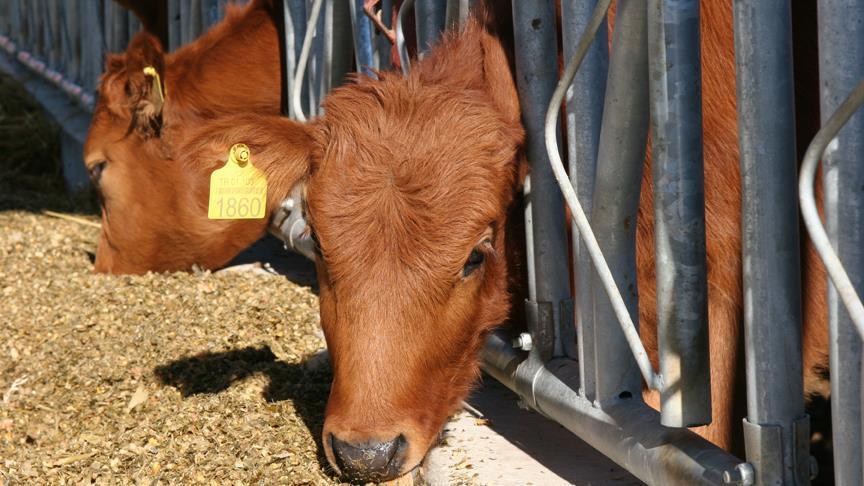
The SAR breed which is distributed in Southeastern Anatolia and the Mediterranean region south of the Taurus Mountains is described as Türkiye's largest and highest milk-yielding native breed. It is believed to have originated from Bos taurus brachyceros. It is highly resistant to hot climates parasitic diseases and primitive management conditions. Depending on the region it is divided into subgroups such as Aleppo Kilis Çukurova and Dörtyol cattle.
Its color varies from dirty yellow to cinnamon red. The front part of the body is darker than the rear. The face neck and shoulder areas may be noticeably darker than the rest of the body. A lighter ring is typically found around the nose. The horns and hooves are gray approaching black and the tail tuft is black.
The average lactation period is 238 days during which they produce between 402 and 4675 kg of milk. The average milk yield is 1875 kg with a fat content of approximately 3.2%.
GAK (AA)
The Native Black breed which is widely raised in Central Anatolia is Türkiye's leading native breed in terms of population and distribution. It is considered to descend from the Bos taurus brachyceros (short-horned) group. Among the Anatolian-adapted breeds it is the smallest in body size.
It is generally black in color although lighter areas may be observed around the udder. The head is slightly larger than the body and the crescent-shaped horns are short and weak. The skin is thin the legs are short and slender. The chest is narrow and the hindquarters are generally weak. The bone structure is fine.
Milk production potential is low; the udder is small and underdeveloped. During a 200-day lactation period they produce 700 to 900 kg of milk with a fat content of about 4%. However under improved management conditions milk yield can reach up to 1200 kg. Mature females weigh approximately 200 kg while males weigh around 300 kg. They can achieve daily live weight gains of nearly 900 grams under fattening conditions.
It is known as a relatively docile breed with a thrifty nature capable of thriving on limited feed resources.
Previously considered a subtype of the SAR breed it was officially registered as a distinct breed in 2004. It is raised along the Mediterranean belt from Mersin to Şanlıurfa primarily in the Toros and Amanos mountains.
It is a small-sized breed. The hair color varies from dirty yellow to reddish-cinnamon. Areas such as around the eyes the sides of the face and the neck are darker than the general body color. The hooves are black and the horns are dark gray approaching black.
The average lactation period is 189 days with an average milk yield of 633 kg and a fat content of approximately 3.64%.
It is a breed well adapted to mountainous regions and is typically raised under extensive conditions in small family farms and village herds.
The Zavot breed raised in and around Kars is a genetic resource that has not yet been officially registered. Its origin stems from the crossbreeding of the local EAR breed with exotic breeds such as the Ukrainian Steppe Simmental and Swiss Brown.
It is of medium size with a sturdy bone structure and elastic skin. The color is generally white but individuals with light yellow coats are also found. Both males and females are horned.
It is a dual-purpose breed. Milk yield during lactation ranges from 2300 to 3300 kg with a fat content between 3.5% and 4.5%.
It is resistant to the region's harsh climatic conditions and diseases. It is raised on rugged terrain in primitive shelters and under pasture-based feeding systems.
Native cattle breeds in Türkiye are at risk of extinction due to decades of crossbreeding with exotic breeds and declining demand for these native types. This situation poses a risk of losing valuable genetic diversity. Various projects have been implemented by institutions such as TAGEM and TÜBİTAK to conserve these breeds. These projects aim to preserve the breeds through in vitro (freezing and storing genetic material) and in situ (on-site conservation) methods.
Genetic characterization studies have revealed a high level of genetic diversity among Türkiye's native cattle populations. These studies employ modern techniques such as microsatellite DNA markers to understand genetic relationships origins and purity status among breeds. Research has clarified the genetic connections between these breeds and each other as well as with other global cattle breeds providing a scientific basis for their conservation.
Anadolu Ajansı. "Yerli Boz Irk Sığırları, Sanayi Kentinin Kırsal Mahallesinde Yetiştiriliyor." Accessed June 12, 2025.https://www.aa.com.tr/tr/yasam/yerli-boz-irk-sigirlari-sanayi-kentinin-kirsal-mahallesinde-yetistiriyor/3281461.
Anadolu Ajansı. "Yerli Sığır Irklarına Kapsamlı Koruma." Accessed June 12, 2025.https://www.aa.com.tr/tr/turkiye/yerli-sigir-irklarina-kapsamli-koruma-/1008880
Et ve Süt Kurumu. "Boz Irk." Et ve Süt Kurumu. Accessed June 12, 2025.https://www.esk.gov.tr/tr/11107/BOZ-IRK
Et ve Süt Kurumu. "Doğu Anadolu Kırmızısı (DAK)." Et ve Süt Kurumu. Accessed June 12, 2025.
Et ve Süt Kurumu. "Güney Anadolu Kırmızısı (GAK)." Et ve Süt Kurumu. Accessed June 12, 2025.
Et ve Süt Kurumu. "Yerli Kara." Et ve Süt Kurumu. Accessed June 12, 2025.
Özbeyaz, Ceyhan, Mehmet Ali Yıldız, and Handan Çamdeviren. “Genetic Relationships among Cattle Breeds in Turkey.” *Lalahan Hayvancılık Araştırma Enstitüsü Dergisi* 39, no. 1 (1999): 17–32. Accessed June 12, 2025.https://dergipark.org.tr/tr/download/article-file/544031
Özşensoy, Yusuf. Türkiye'de Bulunan Bazı Yerli Sığır Irklarının Genetik Yapılarının Karakterizasyonu. Master's thesis, Selçuk Üniversitesi, 2011. Accessed June 12, 2025.https://acikerisim.selcuk.edu.tr/items/89f3ad4f-e38d-4800-a3f7-965d95eebc2a

Main Native Cattle Breeds of Türkiye
Boz Irk (BOZ) | Step cattle are resistant to harsh conditions | ||||||||
|---|---|---|---|---|---|---|---|---|---|
Doğu Anadolu Kırmızısı (DAK) | High-quality meat, adapted to severe winters | ||||||||
Güney Anadolu Kırmızısı (GAK) | Largest in size, highest milk yield | ||||||||
Yerli Kara (YK) | Smallest in build, very docile | ||||||||
Yerli Güney Sarısı (YGS) | Adapted to mountainous regions | ||||||||
Zavot (ZAV) | Hybrid, resistant to cold climates | ||||||||
No Discussion Added Yet
Start discussion for "Native Cattle Breeds of Türkiye" article
Major Native Cattle Breeds
Boz Breed (BOZ)
Physical Characteristics
Production Traits
Adaptation and Resilience
Eastern Anatolian Red (EAR)
Physical Characteristics
Production Traits
Southern Anatolian Red (SAR)
Physical Characteristics
Production Traits
Native Black (NB)
Physical Characteristics
Production Traits
Adaptation and Resilience
Native Southern Yellow (NSY)
Physical Characteristics
Production Traits
Adaptation and Resilience
Zavot (ZAV)
Physical Characteristics
Production Traits
Adaptation and Resilience
Genetic Diversity and Conservation Efforts