
Profession | Politician Human Rights Defender | ||||||||
|---|---|---|---|---|---|---|---|---|---|
Birth | 13 November 1943, Bozköy / Crimea | ||||||||
Nationality | Crimean Tatar | ||||||||
Siblings | Hanefi, Hasan, Şevkiye, Vasfiye, Dilara | ||||||||
International recognition | Crimean Tatar National Leader | ||||||||
Political offices | Member of the Ukrainian Parliament since 1998, designated official of the President of Ukraine responsible for Crimea | ||||||||
City of residence | Kyiv, Ukraine | ||||||||
Spouse | Gülnar Appazova Safinar Cemileva | ||||||||
Father | Abdülcemil Bey | ||||||||
Mother | Mahfure Hanım | ||||||||
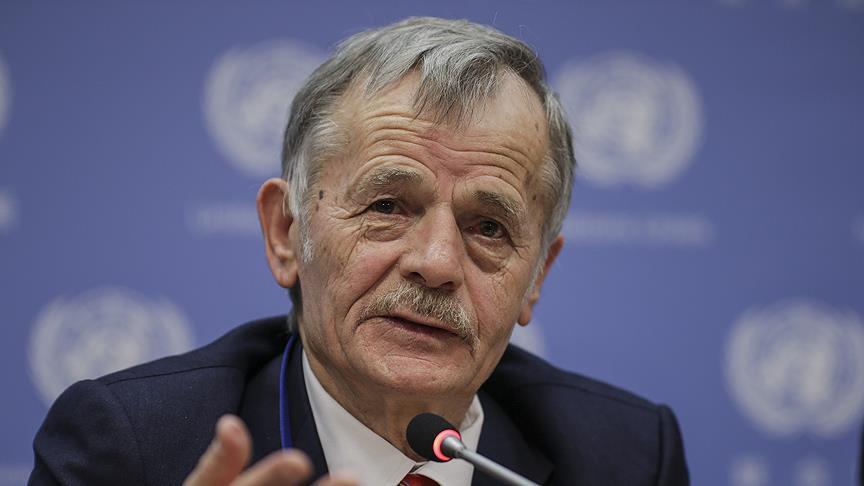
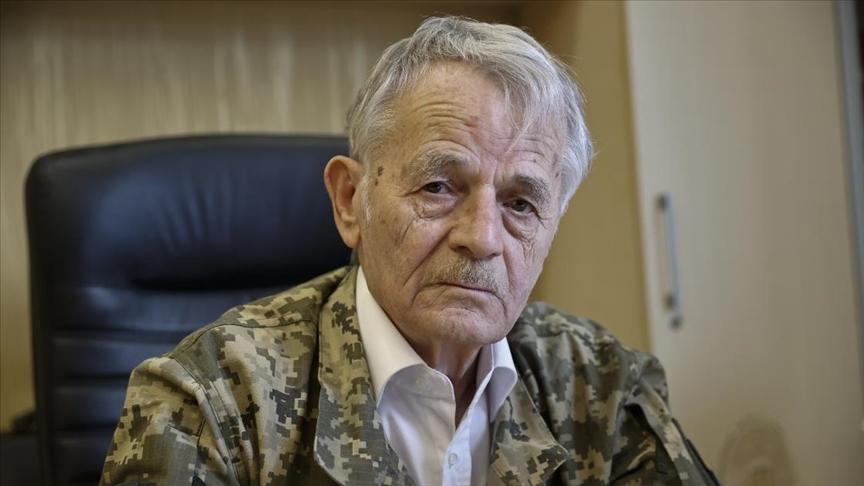
Mustafa Abdülcemil Kırımoğlu, born in 1943 in Crimea, was deported with his family to Uzbekistan as an infant during the deportation of 18 May 1944. Since his youth, he has fought for the rights of the Crimean Tatar people, leading to multiple arrests during the Soviet era and prolonged periods spent in prison, exile, and labor camps.
From the 1980s onward, he became a leader of the Crimean Tatar National Movement, guiding his people’s return to their homeland. He has been a prominent political figure in Ukraine, serving since March 1998 in the Ukrainian Parliament, a position he has continuously retained through re-elections.
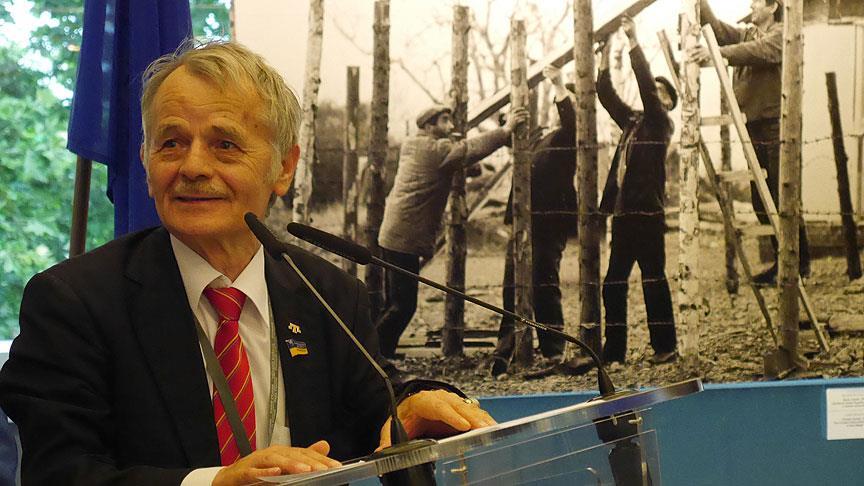
Kırımoğlu at the Crimean Tatar Exhibition at the Council of Europe (AA)
Mustafa Abdülcemil Kırımoğlu was born on 13 November 1943 in the village of Bozköy, Crimea. His father’s name was Abdülcemil and his mother’s name was Mahfure. His brothers were Hanefi and Hasan; his sisters were Şevkiye and Vasfiye; his younger sisters were Gülizar and Dilara. His family was exiled to the Ural region during Stalin’s era under the policy of class and ethnic purges, accused of being “kulaks” (wealthy peasants) from the village of Ayserez in Sudak.
At the outbreak of World War II, the family secretly returned to Crimea and settled in Bozköy, a desert (steppe) area north of the town of Gözleve. Mustafa Abdülcemil, born there, was only six months old when, on 18 May 1944, he was deported along with the entire Crimean Tatar population.
During the deportation, he was with his mother, Mahfure. His father, Abdülcemil, had been arrested two days earlier, along with other Crimean Tatar men, in an effort to prevent resistance. The family was sent to the Andican region of Uzbekistan. His sisters Gülizar and Dilara were born in Andican during their years of exile.
Mustafa Abdülcemil Kırımoğlu’s childhood was spent in the exile settlements of Uzbekistan, where his family was forced to live under the Soviet regime’s commandant system imposed on deported peoples. Under this system, the family was under constant surveillance; they were forbidden to leave their assigned location, travel to other regions, or move freely. These years were marked by extreme poverty, food shortages, and forced labor for Kırımoğlu’s family. Kırımoğlu, who spent his childhood in exile, later described this period as one in which it was nearly impossible to leave the table full, and where illness and hunger became daily realities. The family faced economic hardship and the social marginalization brought by exile.
After Stalin’s death in 1956, the commandant system was lifted, and the family moved to Angren near Tashkent, hoping for better living and employment opportunities, and later to the town of Gülistan. Although this relocation did not remove their exile status, it enabled Kırımoğlu to continue his education. During this time, he received instruction in Russian and completed secondary school in 1959.
After completing secondary school, Kırımoğlu applied to the Department of Arabic Language and Literature at Tashkent University. However, his application was rejected on the grounds that Soviet authorities regarded Crimean Tatars as a “disloyal nation.” This rejection marked one of the first clear instances in which Kırımoğlu’s ethnic identity blocked his access to higher education.
Unable to enroll in university, Kırımoğlu was forced to interrupt his education and began working as a factory laborer to support himself. This period exposed him directly to the conditions of exile and allowed him to recognize early the structural discrimination faced by Crimean Tatars within the Soviet system. The experiences of exile, poverty, and educational exclusion during these years laid the foundation for Kırımoğlu’s later commitment to the struggle for Crimean Tatar rights.
Mustafa Abdülcemil Kırımoğlu’s active participation in the Crimean Tatar National Movement began in 1961 when he co-founded the Crimean Tatar National Youth Organization with friends. The organization aimed to preserve the national identity, historical consciousness, and homeland sentiment among Crimean Tatar youth dispersed across Central Asia after the 1944 deportation. Its activities centered on meetings, discussions on history and identity, and efforts to expose the illegality of the deportation.
Shortly after its founding, Soviet security agencies closely monitored these activities. The organization’s leadership was arrested, and Kırımoğlu was dismissed from his job. Thus, even at a young age, Kırımoğlu was labeled by the Soviet regime as “a threat to the regime” and placed under constant surveillance by security authorities.
In 1962, Kırımoğlu enrolled at the Tashkent Institute of Agricultural Mechanization and Irrigation, where he maintained contact with Crimean Tatar students. He shared knowledge about Crimean Tatar history and spoke about periods omitted or distorted in official Soviet historiography. In this context, he wrote a work titledTurk Civilization in Crimea during the 13th–17th Centuries and circulated it among students.
These activities once again drew the attention of the KGB (Committee for State Security). In 1965, at the KGB’s request, the institute initiated proceedings against him. Kırımoğlu was accused of “promoting nationalism,” “conducting propaganda against the Communist Party and the Soviet state,” and “distributing his article among students.” As a result, while still a third-year student, he was expelled from the Tashkent Institute of Agricultural Mechanization and Irrigation. This period marked the first stage of Kırımoğlu’s open and irreversible confrontation with the Soviet regime. His exclusion from education and employment did not deter him from the national struggle; rather, it enabled him to study Soviet law, the constitution, and criminal statutes systematically, allowing him to reorganize his resistance in a more conscious and structured manner.
After his expulsion from the institute, Kırımoğlu was conscripted into the Red Army. He refused military service, declaring that he could not serve a state that did not recognize his nation. For this stance, he was arrested and sentenced in 1966 to one and a half years in prison. He served his first sentence in a labor camp, during which he intensely studied the Soviet legal system, penal codes, and the constitution.
After his release at the end of 1967, Kırımoğlu traveled to Moscow and met with Soviet human rights defenders through Dr. Zampira Asan, a member of the Crimean Tatar National Movement. In 1968, he joined other Moscow intellectuals protesting the Soviet Union’s invasion of Czechoslovakia. This action marked a turning point in his struggle, uniting it with the Soviet internal dissident and human rights movements. In May 1969, following the arrest of the renowned World War II general and human rights advocate Pyotr Grigorenko, Kırımoğlu became one of the founding members of the “Group for the Defense of Human Rights in the USSR.” As the only Turk and the only Muslim among the USSR’s 14 most prominent human rights defenders, he became the 15th member. In the years that followed, he became one of the USSR’s most recognized Turk-Muslim human rights advocates.
For these activities, he was arrested in September 1969. Grigorenko and the Jewish poet Ilya Gabay were brought to Tashkent. However, Grigorenko’s case was separated, and he was confined to a psychiatric hospital. Kırımoğlu, solely for defending the rights of Crimean Tatars, spent five years in a psychiatric hospital. Kırımoğlu and Gabay were tried in a six-day hearing and each sentenced to three years in prison.
In 1974, Kırımoğlu was arrested for the third time and sent to a harsh labor camp in Siberia for one year. Three days before the end of his sentence, a new case was opened against him on the grounds of letters he had written. In response, he began a hunger strike.
The hunger strike lasted 303 days. During this time, he was forcibly fed under violence and coercion. Andrei Sakharov, Pyotr Grigorenko, and other Soviet intellectuals and human rights defenders appealed to the United Nations and public opinion worldwide for his release. In Turkey, various events were organized in support of him, and the name Mustafa Abdülcemil Kırımoğlu became a symbol of the imprisoned Turks. During this period, the Crimean Tatar issue gained international recognition. In April 1976, he was sentenced to two and a half years in a harsh labor camp and sent to the Primoskiy Prison and Labor Camp near the Chinese border.
After completing his sentence, instead of being released, Kırımoğlu was brought back to Tashkent and placed under strict supervised release by Soviet security authorities. During this period, severe administrative restrictions were imposed on him: he was forbidden to leave the city, to be outside his home between 8:00 p.m. and 6:00 a.m., and to visit cafés, tea houses, markets, theaters, or other public gathering places. He was also required to report weekly to the police station to sign in. These measures aimed to isolate Kırımoğlu from public life and his connections within the national movement.
Approximately one year later, he was arrested for the fifth time on charges of violating the conditions of supervised release. A new trial was held, and as a result, he was exiled for four years to Zıryanka, a town in Yakutia—one of the most remote and harsh climate regions of the Soviet Union. This exile effectively constituted a renewed punishment and social isolation.
During his exile in Zıryanka, Kırımoğlu married Safinar, a Crimean Tatar woman, and their son Hayser was born in exile. His family life also unfolded under exile conditions. This period represented a phase in which his political activities were deliberately restricted by repression and his private life was brought under direct state control. Nevertheless, these exile and supervised release measures did not sever his commitment to the Crimean Tatar national struggle.
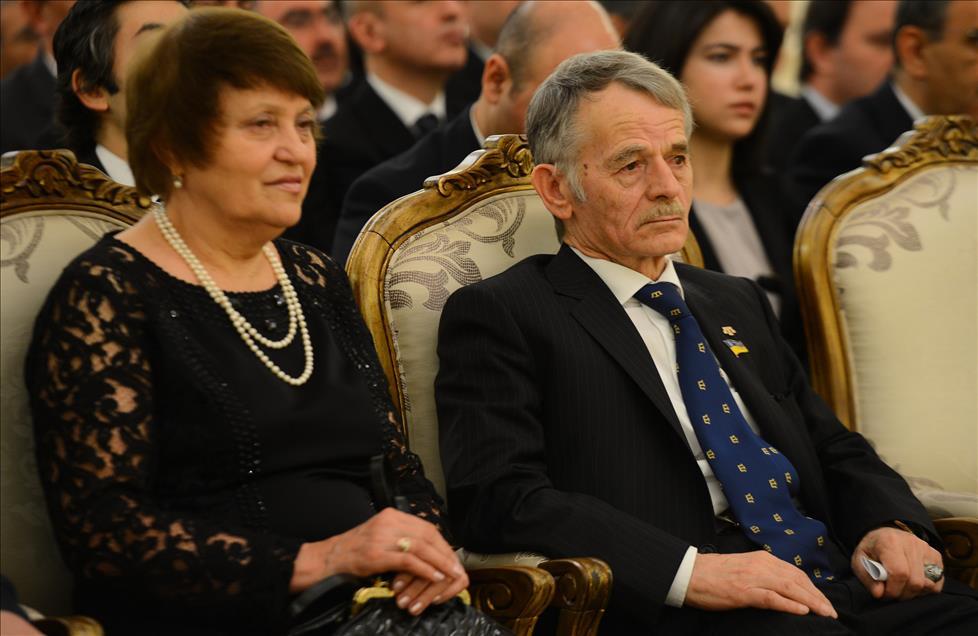
Mustafa Abdülcemil Kırımoğlu and His Wife Safinar Cemileva (AA)
In November 1983, Mustafa Abdülcemil Kırımoğlu was arrested for the sixth time. Following a trial in Tashkent, he faced charges similar to those in previous cases. Among the accusations were: slandering the internal and external policies of the Soviet state, engaging in anti-Soviet activities, and co-publishing a statement condemning the Red Army’s invasion of Afghanistan with Andrei Sakharov and other Soviet intellectuals. Additional charges included attempting, despite the ban, to bury his father’s body in Crimea after his death in Krasnodar in 1983, and leading confrontations with police and soldiers during this attempt.
As a result of these charges, Kırımoğlu was sentenced to three years in a harsh labor camp. He began serving his sentence in a camp near Magadan. However, shortly before the end of his sentence, Soviet authorities opened a new case against him—a systematic effort to delay his release indefinitely.
In late 1986, a new trial was held in Magadan. News of this trial quickly spread to the West, triggering widespread reactions in Turkey and the United States. International campaigns were launched demanding his release. These campaigns even reached the Gorbačev–Reagan Summit held in Reykjavik, Iceland, in 1986, which attracted close global attention. During the summit, U.S. President Ronald Reagan demanded, as a precondition, the release of five human rights defenders, including Kırımoğlu. At this time, Kırımoğlu’s case became one of the symbolic examples of human rights violations within the Soviet Union. As a result of the trial, he was sentenced to three years in prison. However, he was not sent back to prison; instead, he was conditionally released directly from the courtroom. He was informed that if he engaged in political activities, he would be rearrested to serve the remainder of his sentence. Nevertheless, Kırımoğlu continued his activities within the Crimean Tatar National Movement during the final phase of the Soviet era.
After being conditionally released by Soviet authorities in 1987, Mustafa Abdülcemil Kırımoğlu continued his activities within the Crimean Tatar National Movement without interruption. Despite ongoing threats and the risk of rearrest, he did not retreat from the national struggle. During this period, the central demand of the Crimean Tatars—the right to return to their homeland—became the core of the movement.
In 1987, he led an unprecedented action in Soviet history. He played an active role in organizing Crimean Tatar demonstrations in Moscow’s Red Square. These demonstrations were among the first large-scale public expressions of the Crimean Tatars’ post-deportation rights demands. The protests generated wide resonance within Soviet and international public opinion and significantly increased the visibility of the Crimean Tatar issue. These actions became one of the turning points that initiated the actual process of Crimean Tatar return to their homeland.
In 1989, at a general meeting convened by the Crimean Tatar National Movement’s Initiative Groups, Kırımoğlu was elected Chairman of the newly formally established Crimean Tatar National Movement Organization. In this role, he played a decisive part in unifying the previously fragmented national struggle under a centralized structure.
The organization operated to defend the post-deportation rights of Crimean Tatars, organize their return, and establish social representation mechanisms. As a result of this organized struggle, in 1991, during the dissolution of the Soviet Union, the Second Crimean Tatar National Kurultay was convened following democratic elections held in all regions where Crimean Tatars lived. Kurultay was held on 26 June 1991 in Akmescit. This Kurultay constituted the highest elected representative body of the Crimean Tatar people since their deportation.
The Kurultay established the Crimean Tatar National Mejlis as the supreme authority authorized to represent the Crimean Tatar people. Mustafa Abdülcemil Kırımoğlu was elected Chairman of the Crimean Tatar National Mejlis by the choice of the Kurultay delegates. This role symbolized his transition from underground resistance to open and institutional political leadership. He continued to hold the position of Mejlis Chairman through subsequent re-elections, reaffirmed by the continued trust of the Crimean Tatar people.
This period marked the stage in which Kırımoğlu elevated the Crimean Tatar struggle for return from exile onto mass, organized, and legitimate political grounds, and established himself as the internationally recognized leader of the national movement. In October 2013, he voluntarily stepped down from the Mejlis Chairmanship, and Refat Çubarov, who won the subsequent election, assumed the position.
Crimea was de facto occupied by Russia on 26–27 February 2014. On 16 March 2014, an illegal referendum held under the shadow of weapons declared Crimea’s annexation by Russia. Kırımoğlu, speaking on CNN International, declared that the referendum was fraudulent, that Crimean Turks had boycotted it, that participation was extremely low, and that the indigenous people of Crimea—the Crimean Tatars—had the right to determine their own destiny. He affirmed that Russia’s occupation was not accepted.
Subsequently, Kırımoğlu spoke by phone with Putin, who sought to persuade him to accept the occupation. Kırımoğlu demanded that Russian troops withdraw from Crimea. In response, Russian occupiers raided the Crimean Tatar National Mejlis, searched Kırımoğlu’s office, and imposed a five-year ban on his entry into Crimea and his home. Later, Russia opened a case against him for attempting to enter Crimea without permission and, through an illegal trial, sentenced him to three years in prison. Russia extended the ban on Kırımoğlu’s entry into Crimea by another 15 years, until 2034. Russia also banned the activities of the Crimean Tatar National Mejlis, which Kırımoğlu helped found and led for 22 years, and prohibited commemoration of the victims of the 18 May 1944 deportation. Intense pressure was thus applied against the Crimean Tatars. Kırımoğlu currently resides in Kyiv and continues to lead the Crimean Turks in their struggle against the Russian occupation.
Mustafa Abdülcemil Kırımoğlu has received numerous national and international awards and titles for his activities in defense of Crimean Tatar rights, human rights, and democratic values.
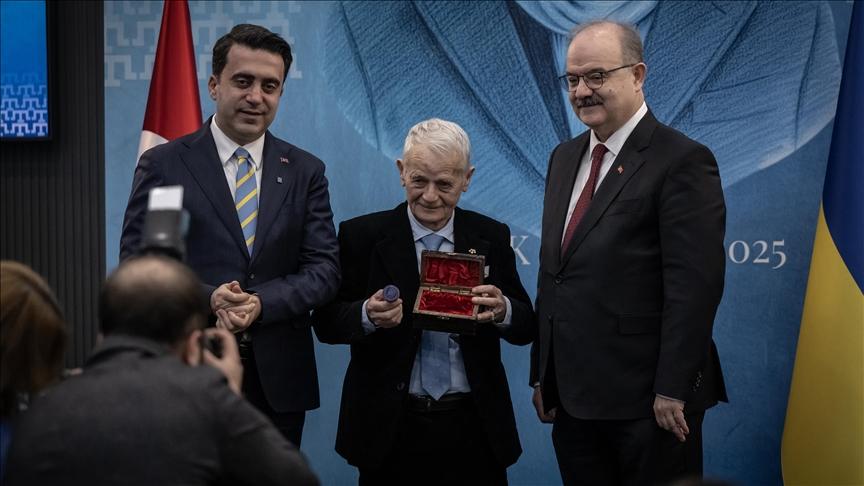
From the "A Life Devoted to the Homeland: Mustafa Kırımoğlu Tribute and Book Launch Program" organized by YTB(AA)
Despite his advanced age, Kırımoğlu continues to lead the Crimean Tatar people, adhering to nonviolent, peaceful, and law-based methods in his struggle. Despite being arrested numerous times, exiled, and spending many years in prisons and labor camps, he has never abandoned his national struggle.
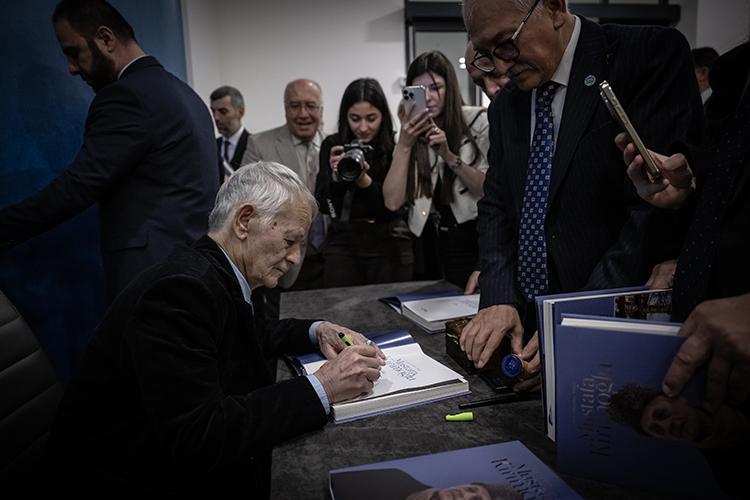
Kırımoğlu at the Book Launch Program(AA)
Mustafa Abdülcemil Kırımoğlu married Gülnar Appazova in the late 1960s. During this marriage, a daughter was born in 1969 while Kırımoğlu was imprisoned; he saw his daughter for the first time only after his release from prison, when she was two and a half years old.
Kırımoğlu married Safinar during his exile in Zıryanka, Yakutia. From this marriage, two sons were born: Eldar and Hayser.
His eldest son, Eldar Ebubekirov, died on 22 October 2025 at the age of 51 after a long illness. His funeral prayer, attended by Mustafa Abdülcemil Kırımoğlu, was held at the mosque of the Faculty of Theology at Marmara University, following the noon prayer.
Anadolu Ajansı. "Kırım Tatar Halkının Lideri Kırımoğlu’ndan Türkiye’ye Tebrik." Accessed January 20, 2026.https://www.aa.com.tr/tr/dunya/kirim-tatar-halkinin-lideri-kirimoglu-ndan-turkiye-ye-tebrik-/799105
Anadolu Ajansı. "Kırımoğlu'na Cumhuriyet Nişanı Tevcih Töreni." Accessed January 20, 2026.https://www.aa.com.tr/tr/pg/foto-galeri/abdulcemil-kirimogluna-cumhuriyet-nisani/0/74626
Anadolu Ajansı. "Mustafa Abdülcemil Kırımoğlu: Rusya Vahşi Türk Karşıtlığı Başlattı." Accessed January 20, 2026.https://www.aa.com.tr/tr/dunya/mustafa-abdulcemil-kirimoglu-rusya-vahsi-turk-karsitligi-baslatti/491606
Anadolu Ajansı. "YTB'de 'Vatana Adanmış Bir Ömür: Mustafa Kırımoğlu Vefa' Programı Yapıldı." Accessed January 20, 2026.https://www.aa.com.tr/tr/dunya/ytbde-vatana-adanmis-bir-omur-mustafa-kirimoglu-vefa-programi-yapildi/3774962
Emel. No. 93 (1976, "Mustafa Cemiloğlu Özel Sayısı"); no. 111 (1979); no. 151 (1985); no. 171–172 (1989); no. 184 and 186 (1991).
Karatay, Zafer. "Mustafa Abdülcemil Kırımoğlu." *Vatan Kırım*. Accessed January 20, 2026.https://www.vatankirim.net/mustafa-abdulcemil-kirimoglu-90/
Karatay, Zafer. Kırımoğlu, Bir Halkın Mücadelesi, İstanbul, 2019.
Kırımoğlu, Mustafa Abdülcemil. Otobiyografi. Unpublished manuscript, January 2026.

Profession | Politician Human Rights Defender | ||||||||
|---|---|---|---|---|---|---|---|---|---|
Birth | 13 November 1943, Bozköy / Crimea | ||||||||
Nationality | Crimean Tatar | ||||||||
Siblings | Hanefi, Hasan, Şevkiye, Vasfiye, Dilara | ||||||||
International recognition | Crimean Tatar National Leader | ||||||||
Political offices | Member of the Ukrainian Parliament since 1998, designated official of the President of Ukraine responsible for Crimea | ||||||||
City of residence | Kyiv, Ukraine | ||||||||
Spouse | Gülnar Appazova Safinar Cemileva | ||||||||
Father | Abdülcemil Bey | ||||||||
Mother | Mahfure Hanım | ||||||||
No Discussion Added Yet
Start discussion for "Mustafa Abdülcemil Kırımoğlu" article
Birth, Family, and a Life Beginning in Exile
Childhood and Education
Entry into the National Struggle and Early Repressions
Refusal of Military Service and First Imprisonment
Participation in the International Human Rights Struggle
Repeated Arrests and Hunger Strike
Supervised Release, Exile, and Family Life
Final Soviet Arrests and Release
Return to Crimea Struggle and Political Leadership
Russian Occupation, Re-Exile, and Continued Struggle
Honors
Personal Information