This article was automatically translated from the original Turkish version.
Location | Minsk, Belarus | ||||||||
|---|---|---|---|---|---|---|---|---|---|
Original Construction Year | 15th century (wooden structure) | ||||||||
Reconstruction Year | 1890 (brick-and-mortar structure) | ||||||||
Demolition Date | 1962 (during the Soviet Union era, replaced by a hotel) | ||||||||
Reconstruction Process | 2014–2016 | ||||||||
Organization That Reconstructed | Türkiye Diyanet Vakfı – KOMAŞ İnşaat | ||||||||
Opening Date(s) | 11 November 2016 | ||||||||
Capacity | 2,500 people | ||||||||
Total Construction Area | Approximately 2,800 m² | ||||||||
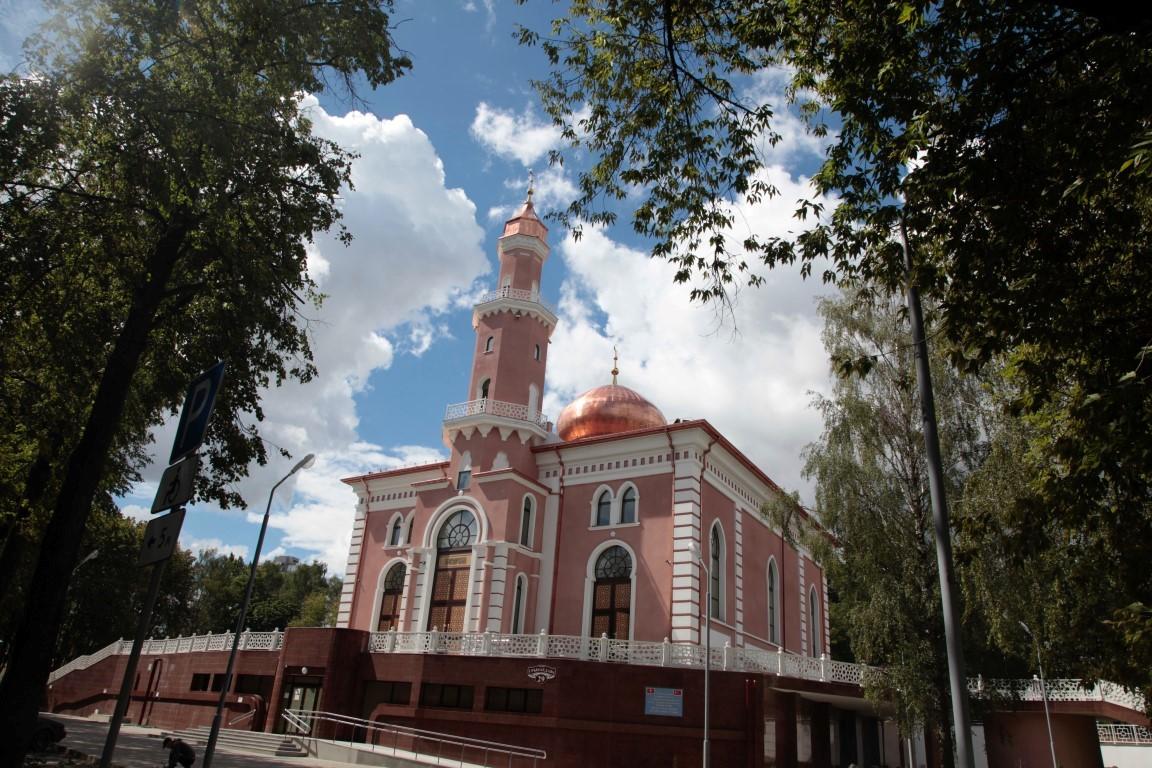
Minsk Mosque is a mosque located in Minsk, the capital of Belarus, with a historical origin dating back to the 15th century. The structure was initially built of wood and later reconstructed in 1890 using stone and brick materials, becoming one of the city’s prominent landmarks. During the Soviet Union era, it was demolished in 1962. Reconstruction efforts initiated by the Turkish Diyanet Foundation began in 2014 and were completed in 2016, after which the mosque was opened for worship.
Belarus Minsk Mosque (Turkish Diyanet Foundation)
The presence of Muslims in Minsk extends back to the 14th century. Tatar Muslims living in the region constructed the first mosque out of wood in the 15th century. In 1890, this structure was rebuilt using rubble brick techniques and became one of the city’s most significant symbols.
Under the communist regime of the Soviet Union, the mosque was completely demolished in 1962 and replaced with a hotel. Following its destruction, initiatives to rebuild the mosque were raised by the Muslim community, but for many years no tangible results were achieved.
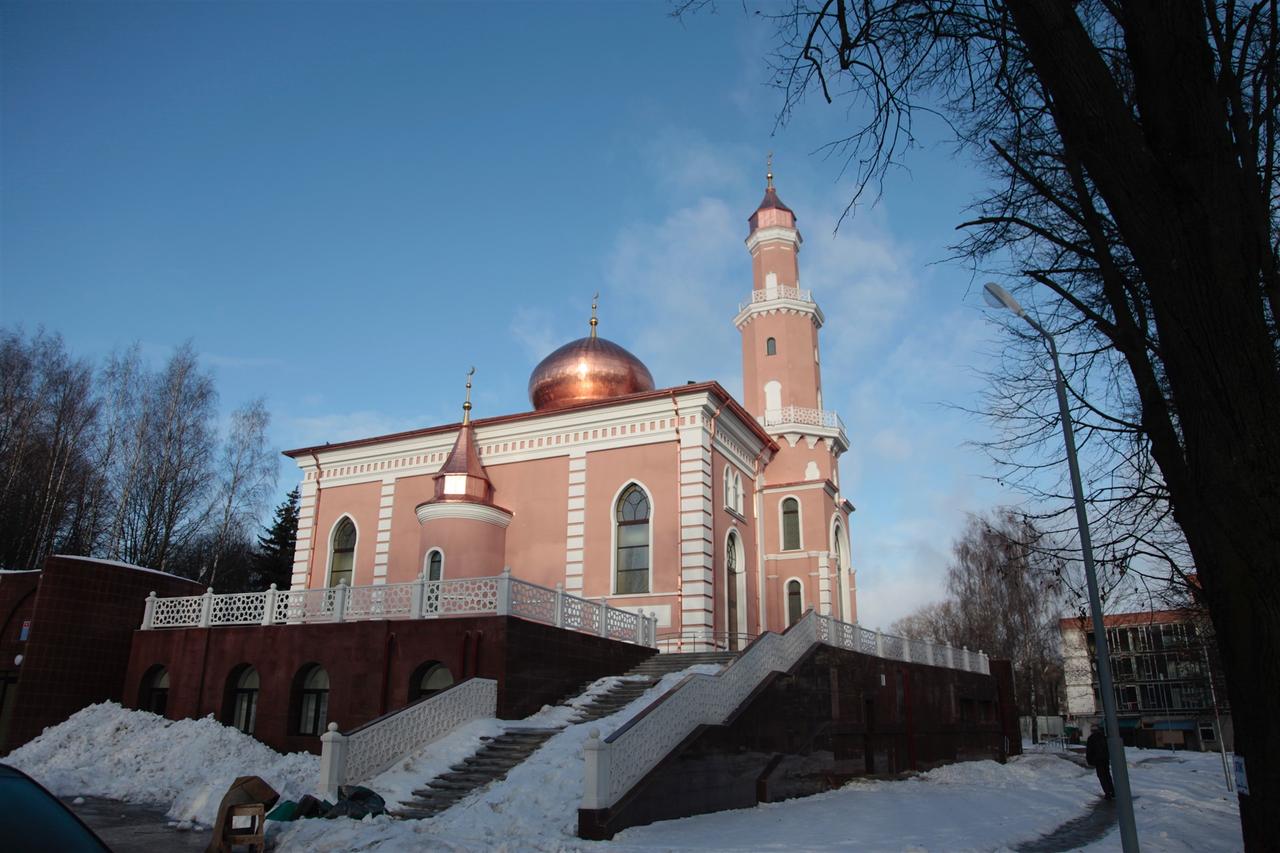
Exterior Facade and Minaret (KOMAŞ Construction)
Efforts to reconstruct the Minsk Mosque began in 2003, and construction was officially launched in 2014 by the Turkish Diyanet Foundation. The project was designed to faithfully replicate the original structure while incorporating additional sections to meet social and cultural needs. The total construction area of the mosque is approximately 2,800 square meters with a congregation capacity of 2,500 people.
KOMAŞ Construction undertook the building work, using regional brickwork and copper roofing for the exterior facade and roof restoration, while the interior was decorated in classical Ottoman architectural style.
The inauguration of the mosque took place on 11 November 2016, attended by Turkish President Recep Tayyip Erdoğan, Belarusian President Aleksandr Lukashenko, and the President of the Diyanet Affairs, Professor Dr. Mehmet Görmez. Religious representatives from the Eurasian region and Belarusian Muslims also participated in the ceremony.
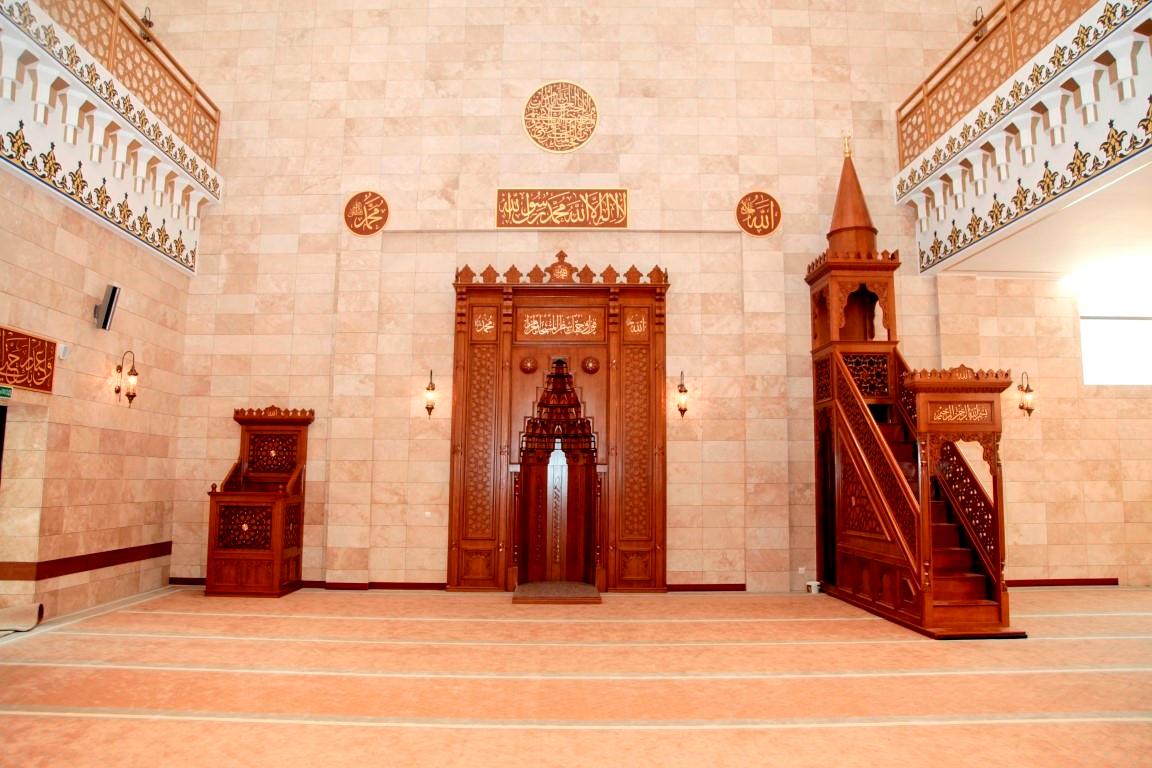
Wooden Mihrab and Minbar Details (TDV)
Although the mosque’s architecture incorporates Tatar elements, its mihrab, minbar, pulpit, carpets, and decorations reflect the classical Ottoman style. The interior furnishings were produced in Turkey, with the mihrab and minbar manufactured in Ankara. The mosque complex also includes a conference hall, exhibition area, computer rooms, and social service units.
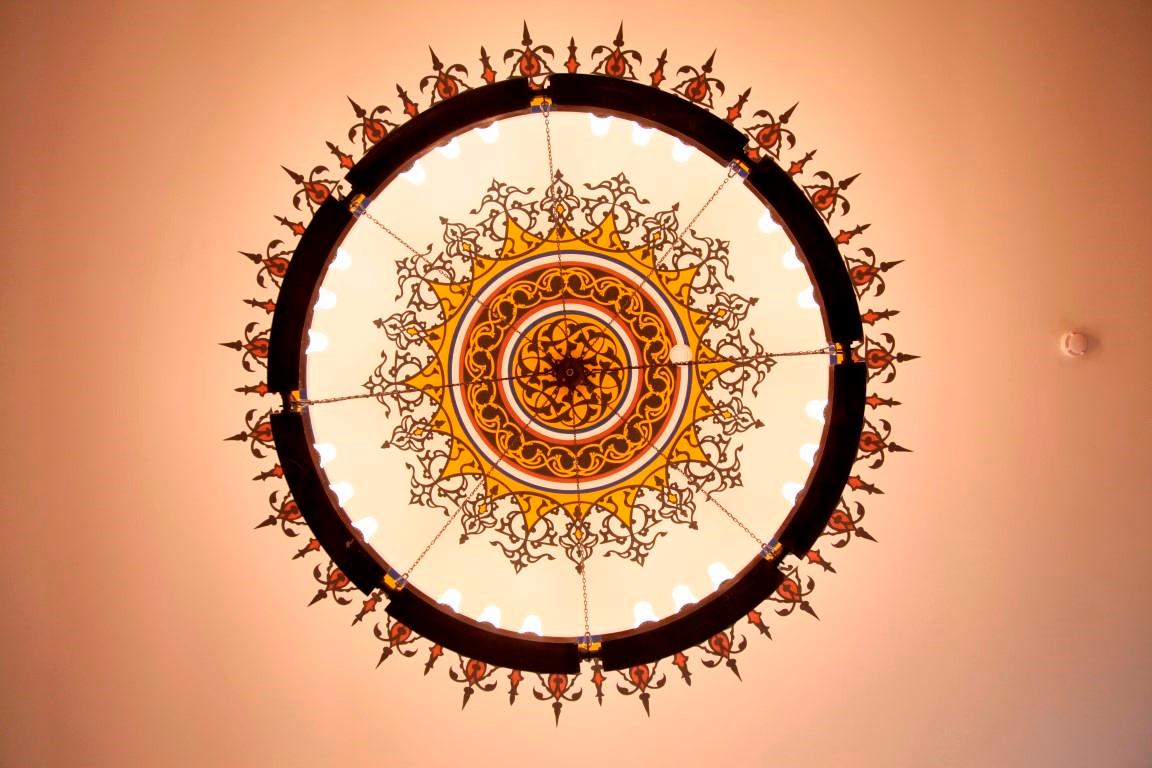
Ceiling Dome Lighting System (TDV)
The Minsk Mosque serves not only as a place of worship for over 100,000 Muslims living in Belarus but also as a cultural and educational center. During the inauguration ceremony, President Lukashenko emphasized that the mosque would introduce the true values of Islam and contribute to the development of Belarusian culture.
Diyanet Affairs President Mehmet Görmez described the mosque as a symbol of peace in Minsk. Furthermore, by bringing together Muslims from various countries, the mosque has become a symbol of religious diversity and tolerance in Belarus.
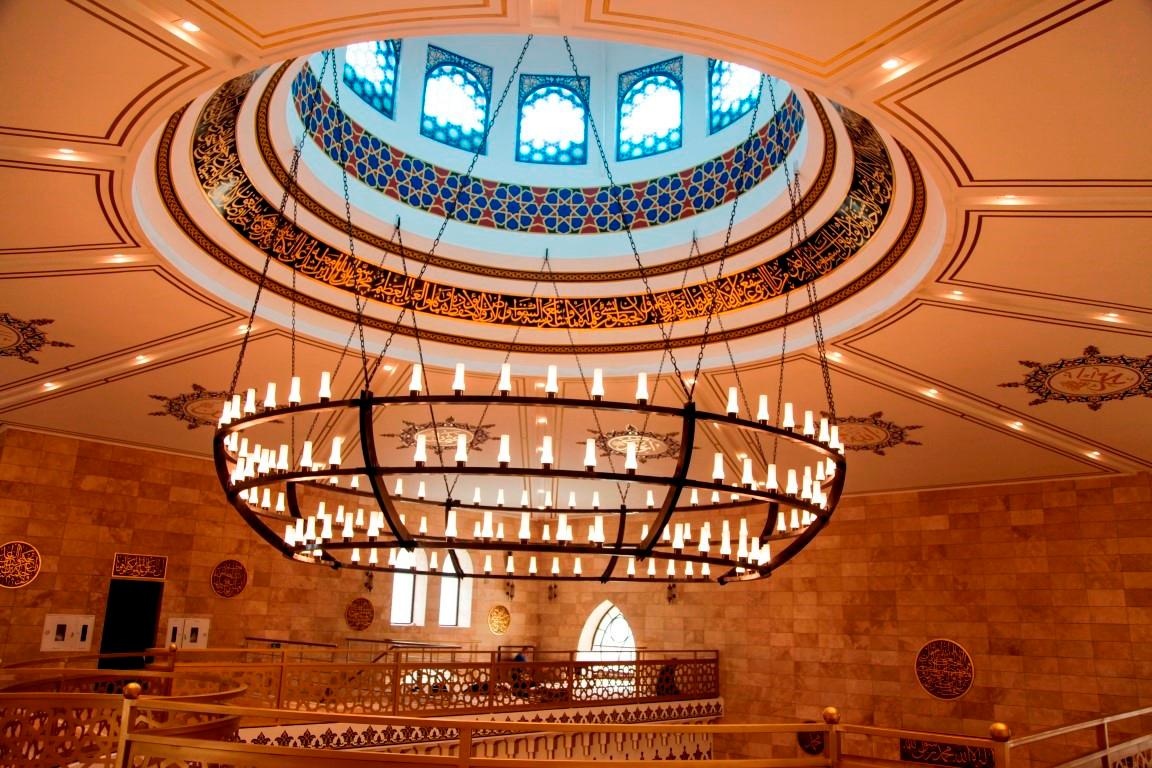
Dome Interior and Chandelier (TDV)
Today, the Minsk Mosque is used not only for Friday and holiday prayers but also for cultural activities. A 16th-century Qur’an, originally housed in Topkapı Palace and gifted to the mosque by President Erdoğan, is on display. The mosque serves as a center for worship and social integration for both Belarusian Muslims and Muslim immigrants from other countries.
AA (Anadolu Ajansı). "Belarus Cumhurbaşkanı Lukaşenko: Minsk Camisi İslam’ın Gerçek Değerlerini Tanıtacak." Anadolu Ajansı. Accessed September 30, 2025.https://www.aa.com.tr/tr/dunya/-belarus-cumhurbaskani-lukasenko-minsk-camisi-islam-in-gercek-degerlerini-tanitacak/683757
Anadolu Ajansı. "Minsk Camisi Açılışına Doğru." Accessed September 30, 2025.https://www.aa.com.tr/tr/pg/foto-galeri/minsk-camisi-acilisina-dogru---
Diyanet TV. “Belarusta 54 Yıl Önce Yıkılan Cami Yeniden İbadete Açılıyor.” Diyanet TV. Accessed September 30, 2025.https://diyanet.tv/belarusta-54-yil-once-yikilan-cami-yeniden-ibadete-acilyor
Diyanet İşleri Başkanlığı. "Minsk Mosque Rebuilt by Diyanet Inaugurated with Prayers." Diyanet Kurumsal. Accessed September 30, 2025.https://www.diyanet.gov.tr/en-US/Institutional/Detail/2217/minsk-mosque-rebuilt-by-diyanet-inaugurated-with-prayers
Kalaycıoğlu, Sema. “Minsk Camii: Doğu Avrupa’daki Kültürel ve Ekonomik Havza.” TASAM. Accessed September 30, 2025.https://tasam.org/Files/Icerik/File/Minsk_Camii_2_pdf_57022f53-8f7d-4876-aaf5-240561cf0567.pdf
Koma İnşaat. "Belarus Minsk Camii." Koma İnşaat Portföy. Accessed September 30, 2025.https://komasinsaat.com.tr/portfolio/belarus-minsk-camii/
TRT Haber. "Minsk Camii Her Ülkeden Müslümanı Bir Araya Getiriyor." Accessed September 30, 2025.https://www.trthaber.com/haber/yasam/minsk-camii-her-ulkeden-muslumani-bir-araya-getiriyor-394242.html
Türkiye Diyanet Vakfı. "Belarus Minsk Camii." YouTube video. Accessed September 30, 2025.https://www.youtube.com/watch?v=XfGFnK-6mGs
Türkiye Diyanet Vakfı. "Belarus Minsk Camii." tdv.org. Accessed September 30, 2025.https://tdv.org/tr-TR/proje/belarus-minsk-camii/

Location | Minsk, Belarus | ||||||||
|---|---|---|---|---|---|---|---|---|---|
Original Construction Year | 15th century (wooden structure) | ||||||||
Reconstruction Year | 1890 (brick-and-mortar structure) | ||||||||
Demolition Date | 1962 (during the Soviet Union era, replaced by a hotel) | ||||||||
Reconstruction Process | 2014–2016 | ||||||||
Organization That Reconstructed | Türkiye Diyanet Vakfı – KOMAŞ İnşaat | ||||||||
Opening Date(s) | 11 November 2016 | ||||||||
Capacity | 2,500 people | ||||||||
Total Construction Area | Approximately 2,800 m² | ||||||||
History
Initial Construction and Tatar Influence
Demolition Process
Reconstruction Efforts
Initiation and Construction
Inauguration Ceremony
Architectural Features
Cultural and Religious Significance
Current Usage