


This article was automatically translated from the original Turkish version.
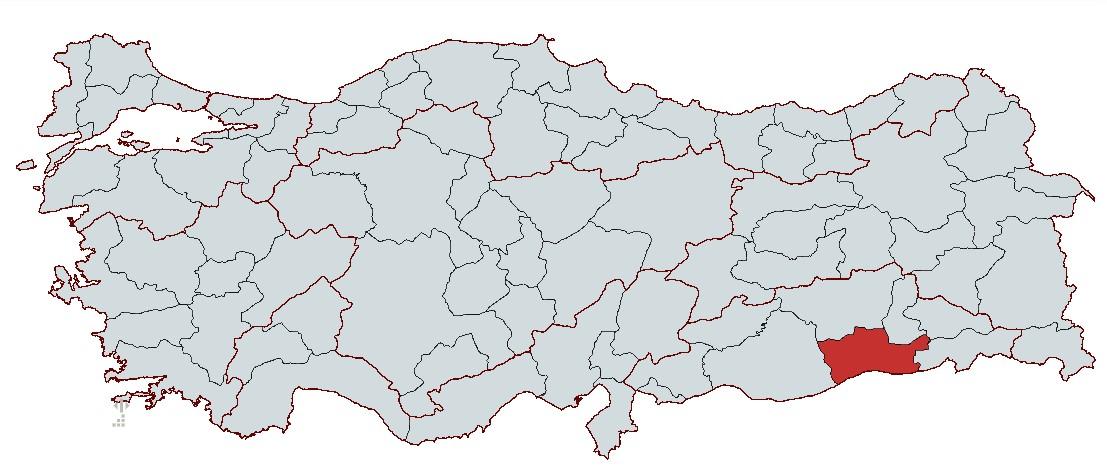
Mardin
Country | Türkiye | ||||||||
|---|---|---|---|---|---|---|---|---|---|
Region | Southeastern Anatolia Region | ||||||||
Population | 888.874 (2023) | ||||||||
Area | 8.891 km² | ||||||||
Climate | Continental Climate | ||||||||
Important Structure | Dara Ancient City Mor Behnam Kırklar Kilisesi Deyrulzafaran Monastery Kasımiye Medresesi | ||||||||
Area Code(s) | 482 | ||||||||
License Plate Code | 47 | ||||||||
Governor | Tuncay Akkoyun | ||||||||
Metropolitan Municipality | Tuncay Akkoyun | ||||||||
Mardin, located at the intersection of Mesopotamia and Anatolia, is an ancient city that has served as a home to various civilizations throughout history. Its architecture, distinguished by stonework, and its social structure, where diverse cultures and beliefs coexist, attract attention. The city’s history extends back to 50,000 BCE, and it bears traces of many civilizations from the Sumerians to the Romans, from the Artuqids to the Ottomans. With its historical structures, traditional handicrafts, and rich cuisine culture, Mardin possesses a multi-layered cultural heritage.
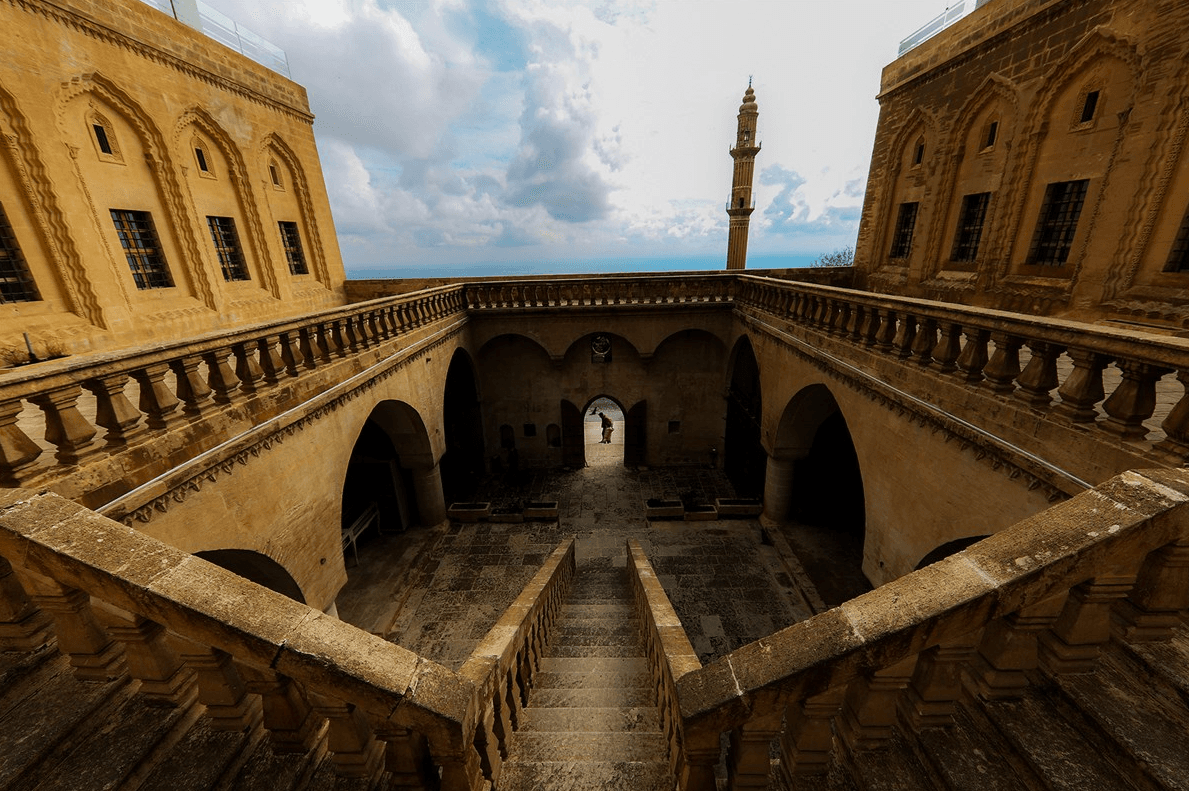
Mardin Houses
Mardin has hosted numerous civilizations from prehistoric times to the present day and has maintained its status as an important cultural and commercial center on the northern frontier of Mesopotamia. Due to its geographical location, the city has passed under the control of many states over different periods and is noted for its stonework, multicultural structure, and architectural fabric.
The earliest traces of civilization in Mardin extend back to the Musterian period (c. 50,000 BCE). In the mountainous margins of Mesopotamia, particularly at the Neolithic settlement of Jericho, evidence of this historical transition can be observed. It is known that agricultural and pastoral settlements began in the region around 6750 BCE. During the Halaf culture period (c. 4500 BCE), metalworking began, and wheeled vehicles, paved roads, and advanced kilns came into use. The earliest settlers of Mardin were the Subarians, although definitive information about their influence in Mesopotamia remains lacking. With the advent of writing around 3000 BCE alongside the Sumerians, the civilizations of the region were systematically recorded.
The Akkadians, alongside the Sumerians, established the first centralized empire in Mesopotamia, transforming the region’s political structure. Rulers such as Sargon, Rimush, Manishtushu, Naram-Sin, and Shar-kali-sharri unified Mesopotamian territories under a single center, bringing the Mardin region under their rule.
During the reign of Hammurabi (c. 1792–1750 BCE), when the Babylonian Kingdom reached its peak, Mardin came under Babylonian dominance. The city became a major commercial center and experienced development in the fields of science, law, and architecture during this period.
The Hurrians settled in the region at the end of the third millennium BCE, but their most powerful period was the Mitanni Kingdom (c. 1500–1300 BCE). The Hurrians left a significant cultural legacy in Mesopotamia and were in political competition with the Hittites.
Mardin remained under the control of the Assyrian Kingdom (c. 1300–612 BCE) for a long period, after which it passed under the control of the Neo-Babylonian Empire (c. 612–539 BCE). During these periods, the region was fortified with military garrisons and became a key station along trade routes.
Mardin and its surroundings were governed under the satrapy system during the Persian Empire (Achaemenids) (c. 539–331 BCE). The region came under Hellenistic rule following Alexander the Great’s conquest (336–323 BCE), after which the Seleucid Kingdom (c. 312–63 BCE) held power.
In 63 BCE, the Roman Empire took control of the region from the Parthians, and it later came under Byzantine rule. During the wars between the Byzantine and Sassanian Empires (224–651 CE), Mardin frequently changed hands. During this period, the ancient city of Dara was used by the Byzantines as a major military center.
With the Arab conquest of the region in 641 CE, Mardin became part of the Islamic world and flourished as a major cultural and commercial center during the Umayyad (661–750 CE) and Abbasid (750–1258 CE) periods. During the Abbasid era, Arab tribes such as the Banu Taghlib, Bekir, and Tamim played important roles in Mardin.
Under the Hamdanids, Mardin was administered as part of the Mosul Emirate, after which the Marwanids (990–1085 CE) gained control of the region. During this period, Mardin was strengthened defensively and its commercial ties expanded.
In 1089 CE, the Seljuks conquered Mardin by defeating the Marwanids. However, the Artuqids (1101–1409 CE), shortly thereafter, seized control of the region and transformed Mardin into one of the most important centers of Turk–Islamic architecture. The Artuqids enriched Mardin intellectually and culturally through the construction of madrasas, mosques, and caravanserais.
The Mongols (Ilkhanids) took control of the region in the 1250s, after which it suffered extensive destruction under Timur (1400–1401 CE).
The Kara Koyunlu captured Mardin in 1409, after which the Ak Koyunlu (1469–1508 CE) assumed control of the region.
The Safavids captured Mardin in 1508, but Yavuz Sultan Selim (1516) incorporated the region into Ottoman territory. During the Ottoman period, Mardin developed administratively, commercially, and culturally, becoming an important center of trade and art.
With the foundation of the Republic of Türkiye, Mardin was integrated into the modern administrative system and has continued to exist as a city where diverse cultural and ethnic groups live together. Today, Mardin maintains its significance as a center noted for its historical structures, handicrafts, and culinary culture.
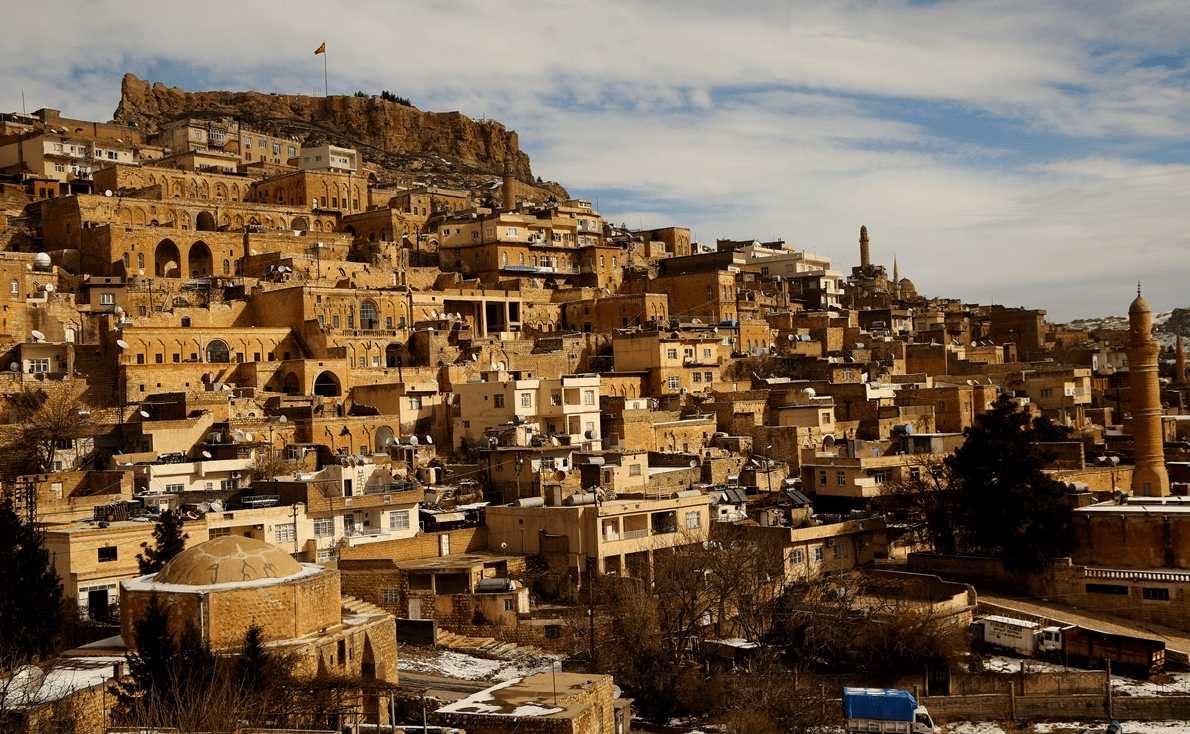
Mardin Old City
Mardin is an important city in southeastern Türkiye, situated on the northern edge of the Mesopotamian Plain. Due to its strategic location, the city has hosted numerous civilizations throughout history and is notable for its diverse geographical features and climatic conditions.
Mardin lies between 37°11' and 38°45' north latitudes and 39°56' and 42°54' east longitudes. The province, located in Türkiye’s Southeastern Anatolia Region, borders Şanlıurfa to the west, Diyarbakır and Batman to the north, Siirt and Şırnak to the east, and Syria to the south. With a 180-kilometer border with Syria, Mardin serves as a vital trade gateway to the Middle East.
Mardin’s climate varies due to its geographical structure. The mountainous areas in the north intensify the effects of cold air, while hot air masses from the Mesopotamian Plain to the south influence the region.
Generally, a continental climate prevails, though some areas exhibit Mediterranean climate influences. Summers are very hot and dry, while winters are cold and rainy. In winter months, the northern mountainous areas receive snow, whereas the southern lowland areas typically experience rain.
The cultivation of cotton, hazelnuts, and olives in the districts of Derik, Nusaybin, and Savur indicates that these areas possess microclimatic characteristics. In these districts, a combination of Mediterranean and continental climate features dominates.
Mardin’s topography consists of mountains, plateaus, and plains.
Mardin’s elevation above sea level is approximately 1,083 meters. However, while the city center is situated at a high elevation, the elevation in the southern lowland areas drops to 400–500 meters.
Mardin contains various mineral deposits and natural resources.
Mardin’s major rivers and water sources are as follows:
Several important dams in Mardin serve agricultural and energy production purposes:
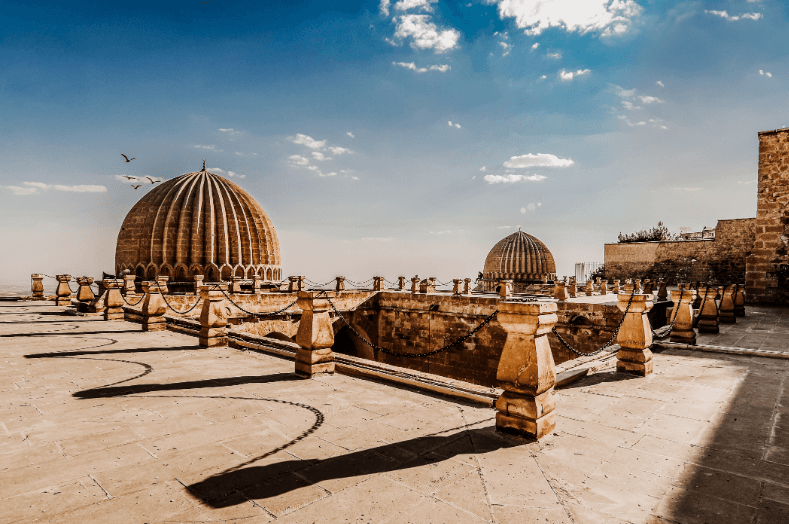
Zinciriye Medrese
Mardin’s economic structure has historically been based on agriculture, trade, and handicrafts. Due to its location on the fertile lands of the Mesopotamian Plain and along major trade routes, the city has held a strategic economic position from antiquity to the present. Today, agriculture, animal husbandry, industry, and the service sector are the main economic activities.
Industry in Mardin has developed significantly in recent years. Key sectors include agricultural processing, food production, textiles, and mining.
Mardin has developed a strong trade and service sector due to its historical position along major trade routes.
Agriculture is one of the most important sectors of Mardin’s economy. Thanks to the fertile soils of the Mesopotamian Plain, a wide variety of agricultural products are cultivated.
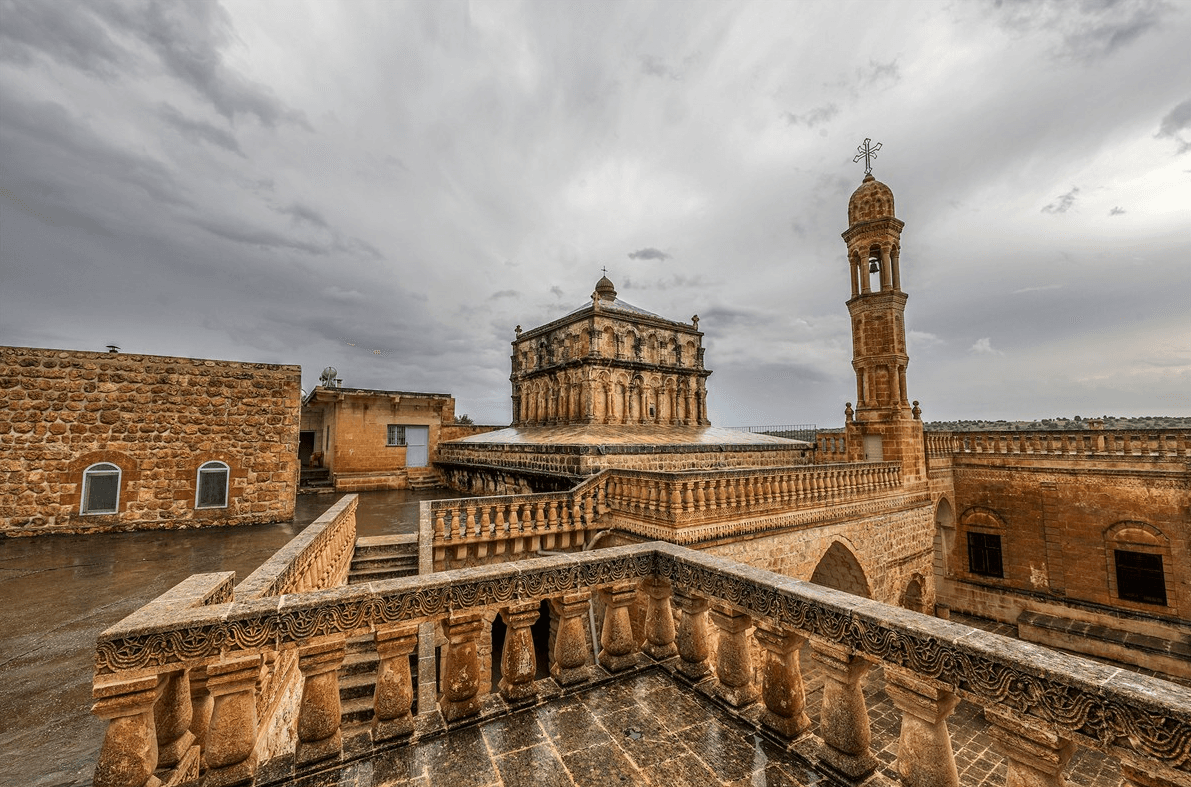
Mardin Churches
Mardin’s infrastructure reflects an effort to balance the preservation of its historical fabric with modern development. The city’s infrastructure in transportation, education, health, and energy has advanced, though certain areas require special regulations due to their historical character.
Mardin’s urban transportation system exhibits a distinct structure due to narrow, historic streets. A clear distinction exists between Old Mardin and New Mardin. In Old Mardin, vehicle traffic is restricted to preserve the historical fabric, and narrow streets are suited for pedestrian access. In New Mardin, wide roads, modern intersections, and public transportation services are available.
Mardin’s educational infrastructure is supported by universities, vocational colleges, and research centers.
One of the most famous dishes of Mardin cuisine. The Geographical Indication-registered kaburga dolması is prepared by stuffing the right rib of a lamb with almonds, rice, and cubed meat, then sewing it shut and cooking it for hours. This dish, frequently prepared during holidays and special occasions, is an indispensable part of Mardin tables.
In Mardin, stuffed tripe is known as “Kibe.” It is prepared by stuffing lamb or goat tripe with rice, minced meat, and spices, then boiling it for a long time. This dish is noted for its flavor.
The Geographical Indication-registered Sembusek, known in Mardin cuisine as a closed lahmacun, is made by filling thin dough with minced meat, onion, and spices, sealing it, and baking it in a stone oven.
Known as Mardin’s version of stuffed meatballs, İkbebet is made with bulgur, minced meat, and spices. The filling consists of a highly spiced meat mixture and can be boiled or fried.
Another variety of stuffed meatball in Mardin. Its filling is rich in onion and is typically shaped into meatballs and fried. The filling and spices differ from those of other stuffed meatballs.
Fruit is commonly used in Mardin meat dishes. Alluciye is prepared by cooking bone-in lamb with green plums. Sugar is sometimes added to achieve a sweet-sour balance.
Firkiye, made with lamb meat, almonds, and bitter almonds, is a special dish prepared particularly in spring. It reflects influences from both Syriac and Arab cuisines.
One of Mardin’s most beloved kebabs. The meat mixture, prepared like a stuffed meatball, is placed between layers of onion and baked in an oven.
A distinctive oven dish from Mardin. Lamb leg meat is mixed with garlic and spices and slow-cooked in a stone oven.
One of Mardin’s traditional desserts. Leavened dough is dipped in syrup. Similar to lokma but with a thinner dough.
Harire, made with flour, grape molasses, and spices, is a traditional dessert consumed especially during cold winter days.
The Geographical Indication-registered Mardin almond candy is made by coating almonds with spices using a special method.
Mardin’s famous strong coffee. Much stronger than Turkish coffee, it is served in small cups.
A hard bread made for long journeys. It held great importance in the past, especially during Hajj pilgrimages.
Roasted chickpeas flavored with different aromas, including cinnamon, vanilla, and chili.
The Geographical Indication-registered Mardin bulgur is made from specially cultivated durum wheat.
The Geographical Indication-registered Mardin Kiliçe Çöreği is a spiced pastry containing cinnamon, mahlep, and sesame.
The grapes and figs cultivated in Mardin are highly valued and hold Geographical Indication status.
Mardin and Midyat are renowned for Syriac winemaking. The grape harvest tradition still continues, and Syriac wines are famous worldwide.
Located on the Mardin–Diyarbakır highway, this ancient press dates to the Roman period and was a site of traditional wine production.
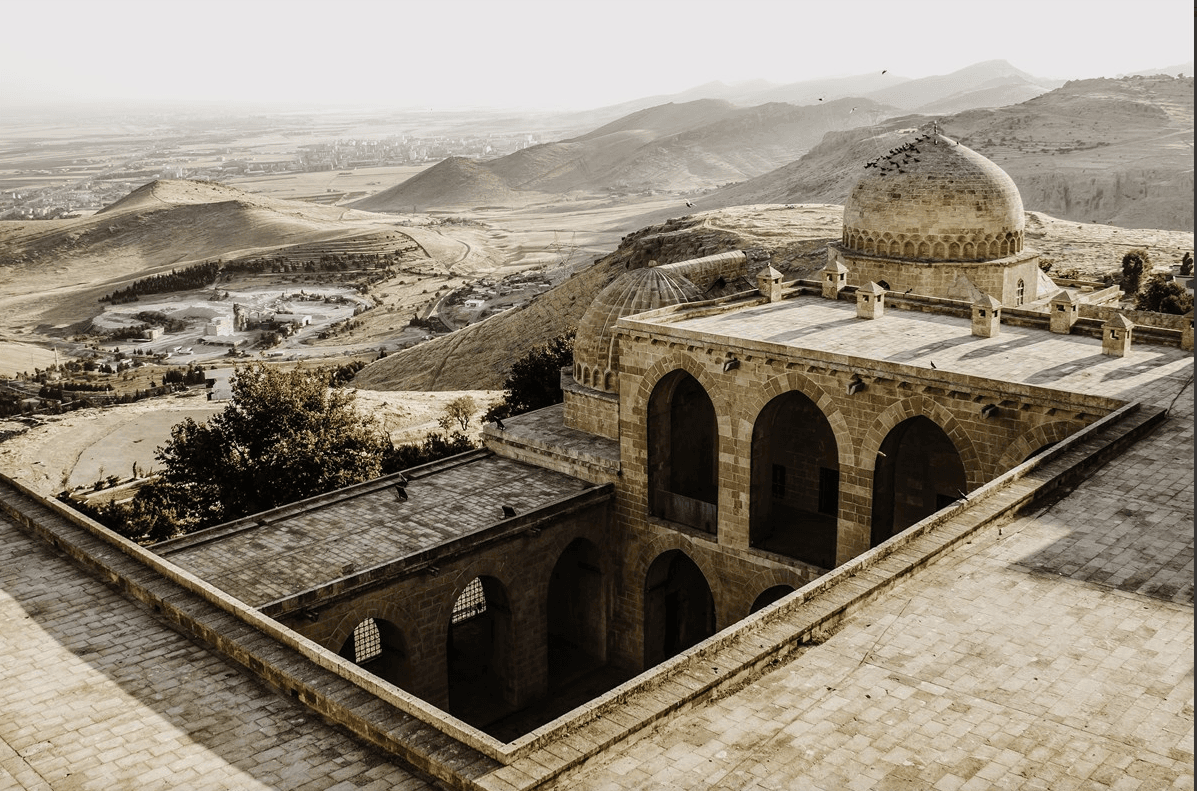
Kasımiye Medrese
Mardin, a city that has preserved traces of numerous civilizations throughout history, is home to some of the most important manifestations of this rich heritage: its historical structures. Having hosted civilizations from antiquity to the Ottoman period, the city bears the legacy of Roman, Byzantine, Artuqid, Ak Koyunlu, Ottoman, and Syriac architecture. Mardin contains numerous structures—mosques, madrasas, monasteries, churches, castles, bazaars, and caravanserais—that have survived to the present day, showcasing the most original examples of stonework.
Mardin draws attention through mosques built since the advent of Islam in Anatolia. Noted for their stonework and ornamentation, these mosques hold significant status both as places of worship and as architectural masterpieces.
One of Mardin’s most important and oldest places of worship, the Ulu Mosque was constructed in 1176 during the reign of Artuqid Sultan Kutbettin İlgazi. It is among the earliest examples of a mosque with a mihrap-fronted dome and is notable for its segmented dome and ornate minaret. Additions made to the minaret in the 19th century are considered among the finest examples of Artuqid stonework.
Built in 1371 during the Artuqid period, this mosque is renowned for its decorated entrance and minbar. The crown-shaped entrance on the eastern side is one of the best-preserved portals in Mardin.
Constructed between 1312 and 1362 by Artuqid ruler Melik Salih, this mosque is notable for its selsebil-equipped courtyard and also houses the tombs of Artuqid sultans.
Mardin became an important center of Islamic civilization and hosted numerous madrasas. These structures hold great significance as both educational institutions and as religious and architectural heritage.
Construction of this madrasa was begun by the Artuqids and completed in the 15th century by Ak Koyunlu ruler Sultan Kasım. It is a two-story, single-courtyard structure notable for its mosque, tomb, and water channels within. It is especially striking for its stonework and ornamentation.
Built in 1385 by the last Artuqid Sultan, Melik Necmeddin İsa. According to historical sources, Melik İsa, who fought against Timur’s army, was imprisoned in this madrasa for a time. A two-story, spacious courtyard madrasa with a large dome, it was also used as an observatory. It once served as the Mardin Museum.
Built in the 12th century by Sitti Raziye, wife of Artuqid ruler Necmettin Alpi. This structure, notable for its iwan plan and stone decorations, is currently used as a mosque.
Mardin hosts Syriac Orthodox, Armenian, and Catholic churches. As one of the earliest regions of Christian expansion, Mardin is a major religious center deeply associated with Syriac culture.
Built in the 6th century and belonging to the Syriac Orthodox Church of Mardin, the church gained great importance in 1293 when Mardin became the seat of the Syriac Orthodox Patriarchate. It is notable for its fine stonework, handcrafted wooden mihrap doors, and historical icons.
Built in 1860, this church is now used as a museum. It is famous for its acoustic properties, elaborately decorated patriarchal throne, and religious icons.
Founded in 397, this monastery is considered one of the world’s oldest continuously active monasteries. It contains three churches dedicated to the Virgin Mary, the Forty Martyrs, and Mor Simeon. The mosaics in the main church are among the finest examples of Byzantine art.
As one of the key centers of the Syriac Orthodox Church, Mardin hosts numerous monasteries.
Located 5 km from Mardin, the Deyrulzafaran Monastery is a major religious center dating from the 4th century to the present. Built on a site previously used as a Sun Temple and a Roman fortress, it served as the residence of Syriac Orthodox Patriarchs for 640 years.
Located on the slope of Tur Abdin Mountain, this monastery is dated to the 4th century. It is traditionally believed to have been founded by the saint Mor Evgin, who came from Egypt.
Due to its strategic location, numerous castles have been built in Mardin throughout history.
Known as the “Eagle’s Nest,” Mardin Castle was built in the 3rd century and used by the Romans, Byzantines, Arabs, Artuqids, and Ottomans. It is notable for its commanding position over the Mesopotamian Plain and its fortifications.
Mardin has long served as a commercial hub and held a key position along the Silk Road.
Built during the Artuqid period near the Ulu Mosque, this bazaar is notable for its historic shops and stonework. It remains an active commercial center today.
The bazaar where Mardin’s renowned coppersmithing art is preserved. Here, handcrafted copper plates, coffee pots, and decorative items are sold.
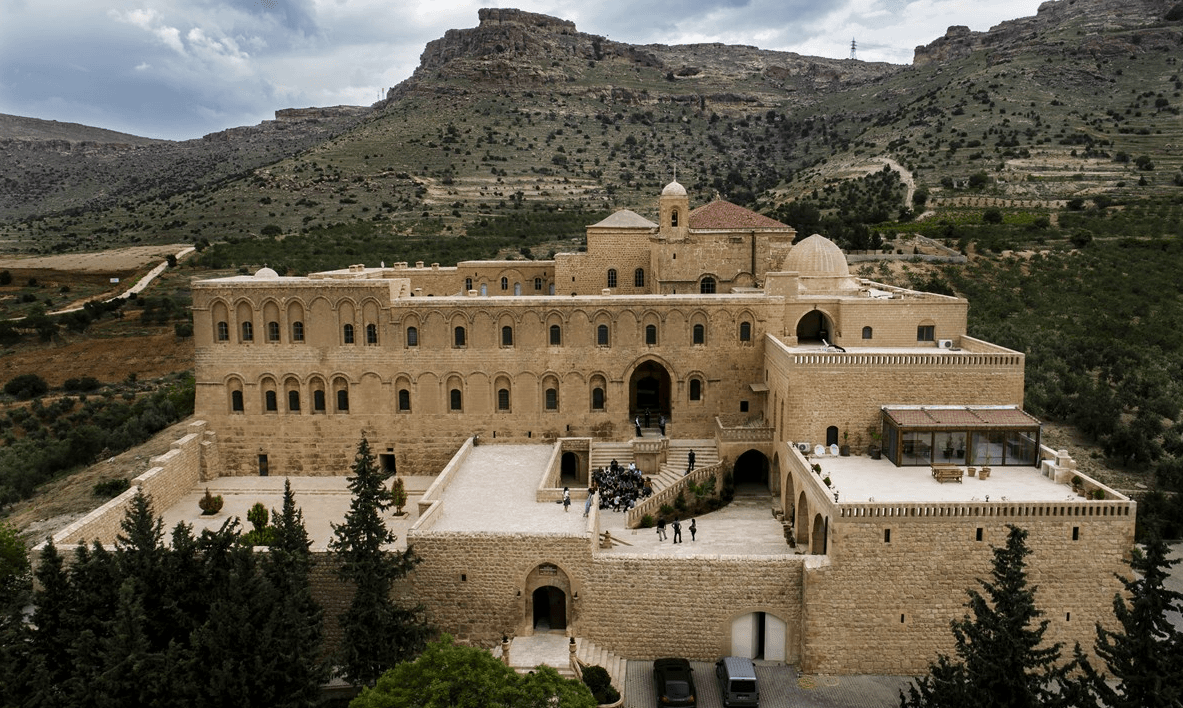
Deyrulzafaran Monastery
Mardin’s administration has been carried out since the Ottoman period through governors appointed by the central authority and mayors elected by local governance.
During the Republican period, Mardin has been governed by governors appointed by the Ministry of Interior, with periods of martial law also occurring.
Mardin gained metropolitan status in 2014, and since then, mayors have been elected at the metropolitan municipality level.
Mardin consists of ten districts.
Mardin Büyükşehir Municipality. "Resmi Web Sitesi." Accessed February 12, 2025.https://www.mardin.bel.tr/.
Mardin Valiliği. "Resmi Web Sitesi." Accessed February 12, 2025.http://www.mardin.gov.tr/.
Türkiye Diyanet Vakfı İslam Ansiklopedisi. "Mardin." Accessed February 12, 2025.https://islamansiklopedisi.org.tr/mardin.
Türkiye Kültür Portalı. "Mardin Genel Bilgiler." Accessed February 12, 2025.https://www.kulturportali.gov.tr/turkiye/mardin/genelbilgiler.

Mardin
Country | Türkiye | ||||||||
|---|---|---|---|---|---|---|---|---|---|
Region | Southeastern Anatolia Region | ||||||||
Population | 888.874 (2023) | ||||||||
Area | 8.891 km² | ||||||||
Climate | Continental Climate | ||||||||
Important Structure | Dara Ancient City Mor Behnam Kırklar Kilisesi Deyrulzafaran Monastery Kasımiye Medresesi | ||||||||
Area Code(s) | 482 | ||||||||
License Plate Code | 47 | ||||||||
Governor | Tuncay Akkoyun | ||||||||
Metropolitan Municipality | Tuncay Akkoyun | ||||||||
History
Prehistoric Cultures
Akkadians (c. 2350–2000 BCE)
Babylonian Period (c. 2000–1500 BCE)
Hurrians and the Mitanni Kingdom (c. 1600–1300 BCE)
Assyrians and the Neo-Babylonian Empire (c. 1300–539 BCE)
Persians and the Hellenistic Period (c. 539–63 BCE)
Roman and Byzantine Period (63 BCE–641 CE)
Arab Conquest and Abbasid Period (641–1250 CE)
Hamdanids and Marwanids (895–1089 CE)
Seljuks and Artuqids (1089–1409 CE)
Mongols and Timurid Period (1250–1409 CE)
Kara Koyunlu and Ak Koyunlu (1409–1508 CE)
Safavids and Ottoman Period (1508–1923 CE)
Republican Era (1923–Present)
Geographical Structure
Location and Boundaries
Climate
Microclimate Zones:
Topography
Natural Resources and Minerals
Rivers and Dams
Economic Structure
Industry and Production
Trade and Service Sector
Agriculture and Animal Husbandry
Main Agricultural Products:
Animal Husbandry:
Infrastructure
Urban Transportation
Public Transportation:
Road Network:
Airport:
Railway:
Universities and Educational Infrastructure
Mardin Artuklu University (MAU):
Vocational High Schools and Technical Education:
Research Centers and Libraries:
Cuisine
Main Dishes
Kaburga Dolması (Stuffed Ribs)
Mardin Kibe (Stuffed Tripe)
Sembusek
İkbebet (Mardin Stuffed Meatballs)
İrok
Alluciye (Plum Stew)
Firkiye
Onion Kebab
Dobo
Zingil
Harire
Mardin Almond Candy
Mırra Coffee
Peksimet
Mardin Roasted Chickpeas
Mardin Bulgur
Kiliçe Çöreği
Ömerli Karfoki Grape and Midyat Mountain Fig
Wine Production and Grape Harvest in Mardin
Çılbira Ancient Wine Press
Historical Structures
Mosques
Mardin Ulu Mosque
Latifiye Mosque
Melik Mahmut Mosque
Madrasas
Kasımiye Madrasa
Zinciriye Madrasa (Sultan İsa Madrasa)
Hatuniye Madrasa (Sitti Raziye Madrasa)
Churches
Mor Behnam (Kırklar) Church
Church of the Virgin Mary and Patriarchate
Mor Gabriel Monastery (Deyrulumur Monastery)
Monasteries
Deyrulzafaran Monastery
Mor Evgin Monastery
Castles
Mardin Castle
Bazaars and Caravanserais
Kayseriye Passage (Bedesten)
Coppersmiths’ Bazaar
Administration
Governors
List of Governors
Mayors
Ottoman Period Mayors
Republican Period Mayors
Metropolitan Mayors (2014–Present)
Districts