This article was automatically translated from the original Turkish version.
+2 More
Location | Karaman, Central | ||||||||
|---|---|---|---|---|---|---|---|---|---|
Ancient Name | Barata | ||||||||
Period | Roman and Byzantine Period | ||||||||
Type | Archaeological site | ||||||||
Protection | First-Degree Protection | ||||||||
Registration Decision | Decision No. 2676 of the Konya Regional Board for the Protection of Cultural and Natural Heritage, dated 20.10.2008 | ||||||||
Structure | Early Christian architectural features | ||||||||
Period | 4th–9th centuries AD (Eastern Roman/Byzantine Period) | ||||||||
Madenşehir Örenyeri is located approximately 37 km north of the city center of Karaman, on the slopes of Karadağ, within and around the village of Madenşehir. The site is one of the historical settlements developed on the volcanic terrain of Karadağ. The settlement consists of clusters of historical structures concentrated around the village of Madenşehir, Yukarı Ören, and Değle. Karadağ, with its highest point at Mahalaç Tepe standing at 2,288 meters, dominates the region’s topography. The settlement’s dispersed layout across varying elevations and valleys reflects a planning approach that integrates seamlessly with the natural landscape. The volcanic rocks of Karadağ served as the primary building material for structures in the area and played a decisive role in shaping the architectural character of the settlement.【1】
Madenşehir was one of the significant settlement centers of the Eastern Roman (Byzantine) period. The structures at the site are generally dated between the 4th and 9th centuries AD. The region became one of the major centers of religious and social life during the Early Christian period and evolved into one of the most important settlements of what is now known as the “Binbirkilise” complex.
The coexistence of churches, basilicas, monasteries, and other structures built in different periods demonstrates that the area was continuously inhabited over many centuries. Particularly, the religious buildings constructed during the Early Christian period serve as important architectural documents illustrating the development of religious life around Karadağ.
Madenşehir Örenyeri houses some of the most distinguished examples of Early Christian architecture in Anatolia. The settlement includes basilicas, churches, chapels, monasteries, burial structures, cisterns, dwellings, and military installations. This architectural diversity reveals that the settlement was not merely a religious center but a comprehensive community where daily life was actively sustained.
Structures were built in various plans: basilical, cloverleaf (trikonkhos), free-cross, Latin-cross, polygonal, and composite forms. The architectural design reflects a synthesis of Early Christian planning principles with local stonemasonry and regional artistic styles. Built using Karadağ’s volcanic stone, the structures harmonized with the natural environment and helped define the region’s architectural identity.
The largest and most monumental structure in the settlement is the Basilica No. 1, located at the entrance to the village. Constructed around 500 AD, the building suffered extensive damage during Arab raids but was repaired and put back into use in the 9th century. This structure holds particular significance as the largest basilica within the Binbirkilise complex.
A significant portion of the churches in Madenşehir follow a basilical plan. Although largely in ruins today, the foundations of Churches No. 4, 5, 6, 12, 16, 17, 21, and 22 remain visible. These structures demonstrate the settlement’s extensive ecclesiastical architectural program.【2】
On either side of the road extending north from Basilica No. 1 lies an extensive necropolis. This area features surface-level sarcophagi and sarcophagus lids that attract attention. Some sarcophagi are decorated with reliefs depicting human figures and various motifs, while others bear only cross designs. These findings provide valuable insights into burial customs and stonework traditions in the region.
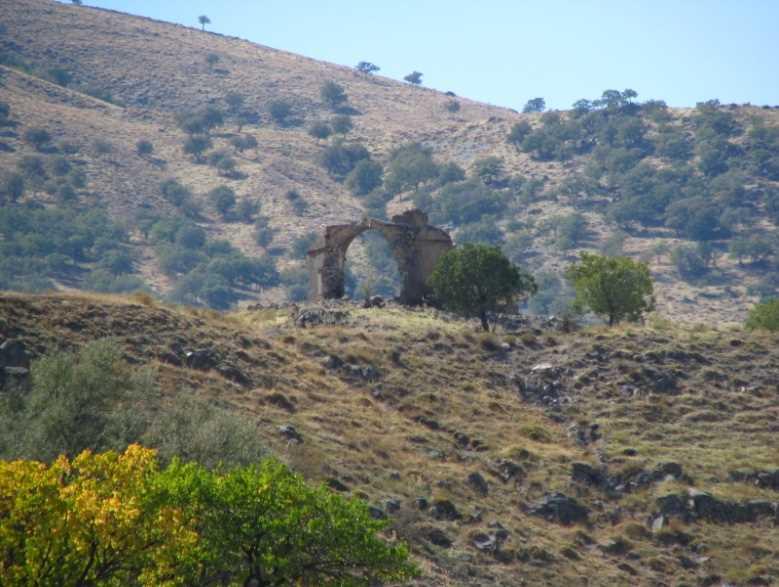
Beyond the necropolis, along the path leading into the village, is an exedra—a semicircular architectural recess locally known as “Ağzı Açık.” To the west of the exedra stands a basilica largely in ruins. It is evident that the lower level contained two arches, while the upper level featured a gallery with four arches. Near these two structures is a large cistern, which formed one of the key infrastructure elements supplying water to the settlement.
On the left side of the path leading from the exedra into the village, the remains of Church No. 13 can be found, upon which a modern house has since been built. Additionally, Church No. 10 in Yukarı Ören is considered one of the representative examples of Binbirkilise architecture due to its circular plan.【3】
Due to its location within the historic settlement area of Madenşehir village, numerous structures have been damaged or completely lost over time. Modern land use within the settlement has led to the construction of new buildings atop some archaeological remains. Nevertheless, the surviving basilicas, churches, necropolis areas, cisterns, and other architectural remnants remain among the most important cultural heritage assets of Karaman.
Madenşehir Örenyeri continues to be one of the region’s leading cultural tourism destinations as a significant archaeological site that collectively reflects Early Christian architecture, Byzantine settlement patterns, and the historical-cultural heritage of Karadağ.
Culture Portal. "Madenşehir Ören Yeri." Accessed July 9, 2026.https://www.kulturportali.gov.tr/turkiye/karaman/gezilecekyer/madensehir-orenyeri
Kültür Portalı. "Madenşehir Öreni." Kültür Envanteri. Accessed July 9, 2026.https://www.kulturportali.gov.tr/turkiye/karaman/kulturenvanteri/madensehir-oreni
[1]
Kültür Portalı. “Madenşehir Öreni.” Kültür Envanteri. Erişim Tarihi 9 Temmuz 2026. https://www.kulturportali.gov.tr/turkiye/karaman/kulturenvanteri/madensehir-oreni
[2]
Kültür Portalı. “Madenşehir Öreni.” Kültür Envanteri. Erişim Tarihi 9 Temmuz 2026. https://www.kulturportali.gov.tr/turkiye/karaman/kulturenvanteri/madensehir-oreni
[3]
Kültür Portalı. “Madenşehir Öreni.” Kültür Envanteri. Erişim Tarihi 9 Temmuz 2026. https://www.kulturportali.gov.tr/turkiye/karaman/kulturenvanteri/madensehir-oreni

Location | Karaman, Central | ||||||||
|---|---|---|---|---|---|---|---|---|---|
Ancient Name | Barata | ||||||||
Period | Roman and Byzantine Period | ||||||||
Type | Archaeological site | ||||||||
Protection | First-Degree Protection | ||||||||
Registration Decision | Decision No. 2676 of the Konya Regional Board for the Protection of Cultural and Natural Heritage, dated 20.10.2008 | ||||||||
Structure | Early Christian architectural features | ||||||||
Period | 4th–9th centuries AD (Eastern Roman/Byzantine Period) | ||||||||
No Discussion Added Yet
Start discussion for "Madenşehir Archaeological Site" article
History
Architectural Features
Important Structures
Current Condition