This article was automatically translated from the original Turkish version.
Province | Düzce | ||||||||
|---|---|---|---|---|---|---|---|---|---|
Geographical Indication Type | Place of Origin | ||||||||
File Number | C2017/056 | ||||||||
Application Date | 03 July 2017 | ||||||||
Registration Date | 25 June 2019 | ||||||||
Registration Number | 438 | ||||||||
Product / Product Group | Other products | ||||||||
Applicant / Registrant | Düzce Provincial Directorate of Agriculture and Forestry | ||||||||
Status | Registered | ||||||||
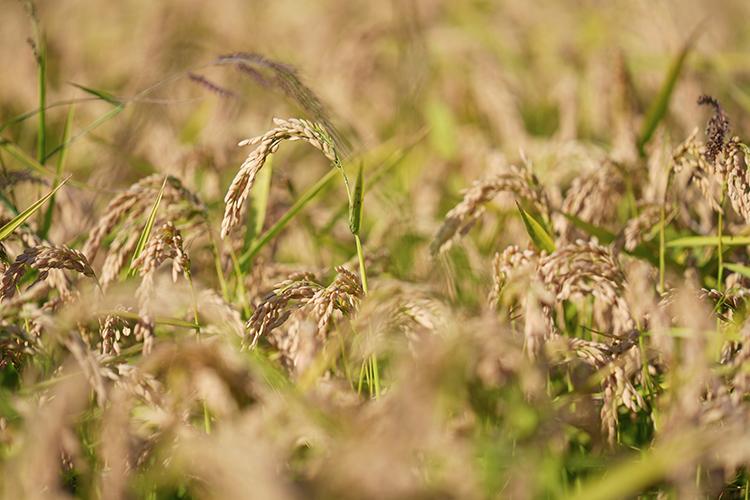
Konuralp rice is a rice variety registered on June 25, 2019, by the Düzce Provincial Directorate of Agriculture and Forestry. Konuralp rice is cultivated in the villages of Taşköprü, Kaymakçı, and Kadıoğlu in the central district of Düzce, as well as in the villages of Esenli and Dikmeli under the Çilimli district. The history of this product extends back to the 1800s and it is known locally as “kasaba rice.” It is also referred to as “The Rice of the Ottoman Imperial Kitchen.”【1】
The Konuralp region was one of sixteen nahiyas under Bolu and featured valley floors suitable for rice cultivation. The paddy grown in this area is influenced by the Black Sea climate. Düzce’s average annual temperature is 13.3°C and the average annual rainfall is 826 kg/m². Irrigation water from the Hasanlar Dam supports rice cultivation, and the water temperature, which ranges between 25 and 30°C, contributes to product quality.
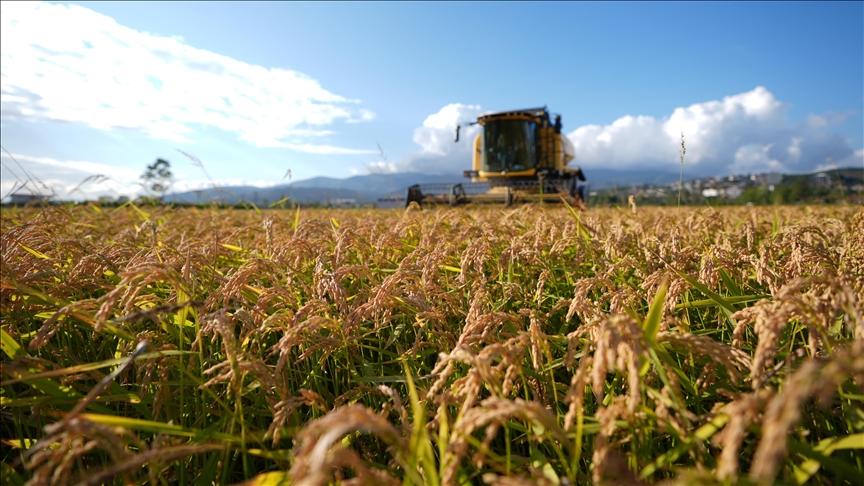
Growing Environment of Konuralp Rice (Anadolu Ajansı)
The physical and chemical properties of Konuralp rice have been determined through analysis. The maximum moisture content is 14.5%. The total ash content ranges between 3.17% and 3.52%, while the protein content is between 5.8% and 6.5%. The fat content of the product lies between 1.58% and 2.29%. Starch content ranges from 43.9% to 57.8%, and the crude cellulose content is between 8.09% and 9.01%.【2】
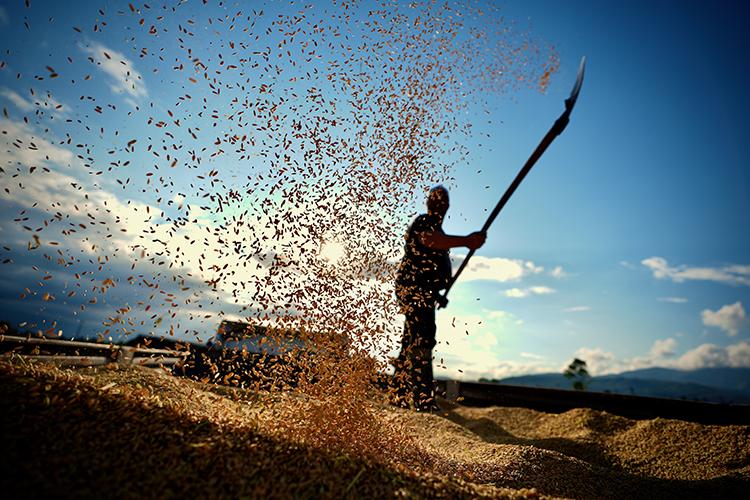
Drying Process of Konuralp Rice After Harvest (Anadolu Ajansı)
Monitoring is conducted to ensure the quality and geographical indication compliance of Konuralp rice. These inspections are carried out by a designated authority composed of experts from the Düzce Provincial Directorate of Agriculture and Forestry, the Düzce University Faculty of Agriculture, and the Düzce Chamber of Agriculture. Inspections are conducted annually on a regular basis and may be carried out at any time in response to complaints. During these inspections, key parameters such as the maturity period of the paddy, harvest timing, drying methods, and packaging materials are prioritized. Inspection reports are submitted to the Turkish Patent and Trademark Office.
Anadolu Ajansı. "Düzce'de yetiştirilen Konuralp pirincinin ekimi alanı devlet desteğiyle arttı." Accessed September 14, 2025.https://www.aa.com.tr/tr/ekonomi/duzcede-yetistirilen-konuralp-pirincinin-ekimi-alani-devlet-destegiyle-artti/3580730
Anadolu Ajansı. "Düzcede yetiştirilen tescilli konuralp pirinci hasat ediliyor." Accessed September 14, 2025.https://www.aa.com.tr/tr/yasam/duzcede-yetistirilen-tescilli-konuralp-pirinci-hasat-ediliyor/3335624
Turk Patent and Trademark Office. "Konuralp Pirinci Coğrafi İşaret Belgesi." Coğrafi İşaretliler Portalı. Accessed September 14, 2025.https://ci.turkpatent.gov.tr/Files/GeographicalSigns/ee597eb3-dd22-4b75-b0cf-4d680b46e7da.pdf
Türk Patent ve Marka Kurumu. "Konuralp Pirinci." Coğrafi İşaretliler Portalı. Accessed September 14, 2025.https://ci.turkpatent.gov.tr/cografi-isaretler/detay/38291
[1]
Türk Patent ve Marka Kurumu, ''Konuralp Pirinci Coğrafi İşaret Belgesi '', Coğrafi İşaretler Portalı, syf 2, erişim: 16 Eylül 2025, https://ci.turkpatent.gov.tr/Files/GeographicalSigns/ee597eb3-dd22-4b75-b0cf-4d680b46e7da.pdf
[2]
Türk Patent ve Marka Kurumu, ''Konuralp Pirinci Coğrafi İşaret Belgesi '', Coğrafi İşaretler Portalı, syf 2, erişim: 16 Eylül 2025, https://ci.turkpatent.gov.tr/Files/GeographicalSigns/ee597eb3-dd22-4b75-b0cf-4d680b46e7da.pdf

Province | Düzce | ||||||||
|---|---|---|---|---|---|---|---|---|---|
Geographical Indication Type | Place of Origin | ||||||||
File Number | C2017/056 | ||||||||
Application Date | 03 July 2017 | ||||||||
Registration Date | 25 June 2019 | ||||||||
Registration Number | 438 | ||||||||
Product / Product Group | Other products | ||||||||
Applicant / Registrant | Düzce Provincial Directorate of Agriculture and Forestry | ||||||||
Status | Registered | ||||||||
Production Area and Climate Characteristics
Physical and Chemical Properties
Production Method
Monitoring