


This article was automatically translated from the original Turkish version.
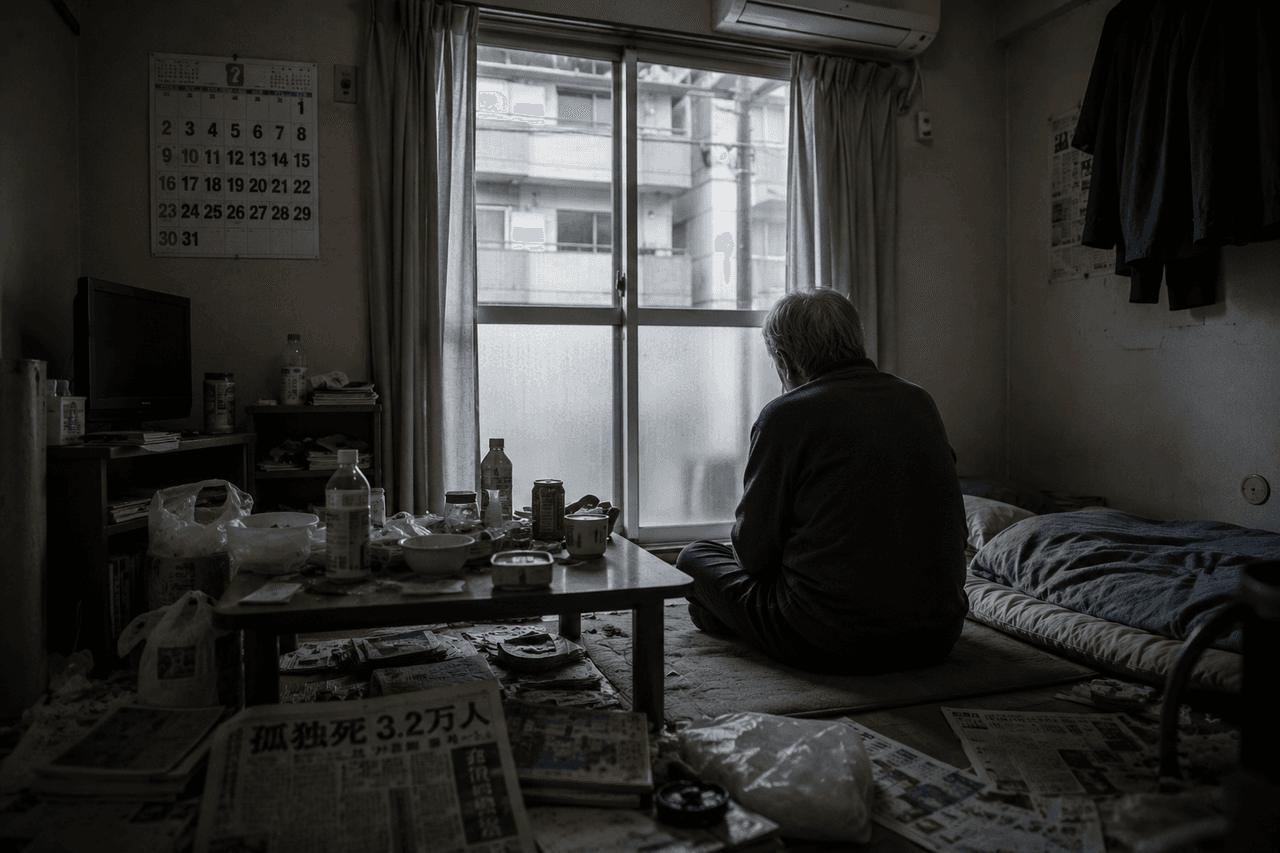
Kodokushi (Generated with Artificial Intelligence.)
Meaning | Only death | ||||||||
|---|---|---|---|---|---|---|---|---|---|
Country | Japan | ||||||||
Initial Spread | 1980s | ||||||||
Affected Group | Individuals aged 65 and over living alone | ||||||||
Other Risk Group | Young adults experiencing social isolation (particularly aged 20–39) | ||||||||
Main Causes | Loneliness Breakdown of family ties Old age | ||||||||
Gender Distribution | 3.8 to 4 times more common in men | ||||||||
Social Impacts | Social isolation Financial burden on municipalities Real estate value loss | ||||||||
Measures Taken | Neighborhood monitoring networks Loneliness policies Social support programs | ||||||||
Kodokushi is a Japanese term referring to the phenomenon in which individuals die alone at home, severed from all social ties, and remain undiscovered for extended periods. In such cases, the person’s death typically goes unnoticed by family, friends, or neighbors for days, weeks, or even months, with the body only being discovered much later by chance or due to logistical reasons. Kodokushi is also commonly understood to encompass situations where isolated individuals die at home due to unnatural or unexplained causes such as suicide.
Kodokushi is a structural phenomenon describing the death of individuals who, as a result of complete disintegration of familial, kinship, or social bonds, perish alone and without assistance in their own living spaces. The defining feature of this form of death is that the individual’s passing remains undetected by close associates or the wider public for days, weeks, or months, leading to the body being discovered only after a prolonged period, often by accident or due to administrative necessity.
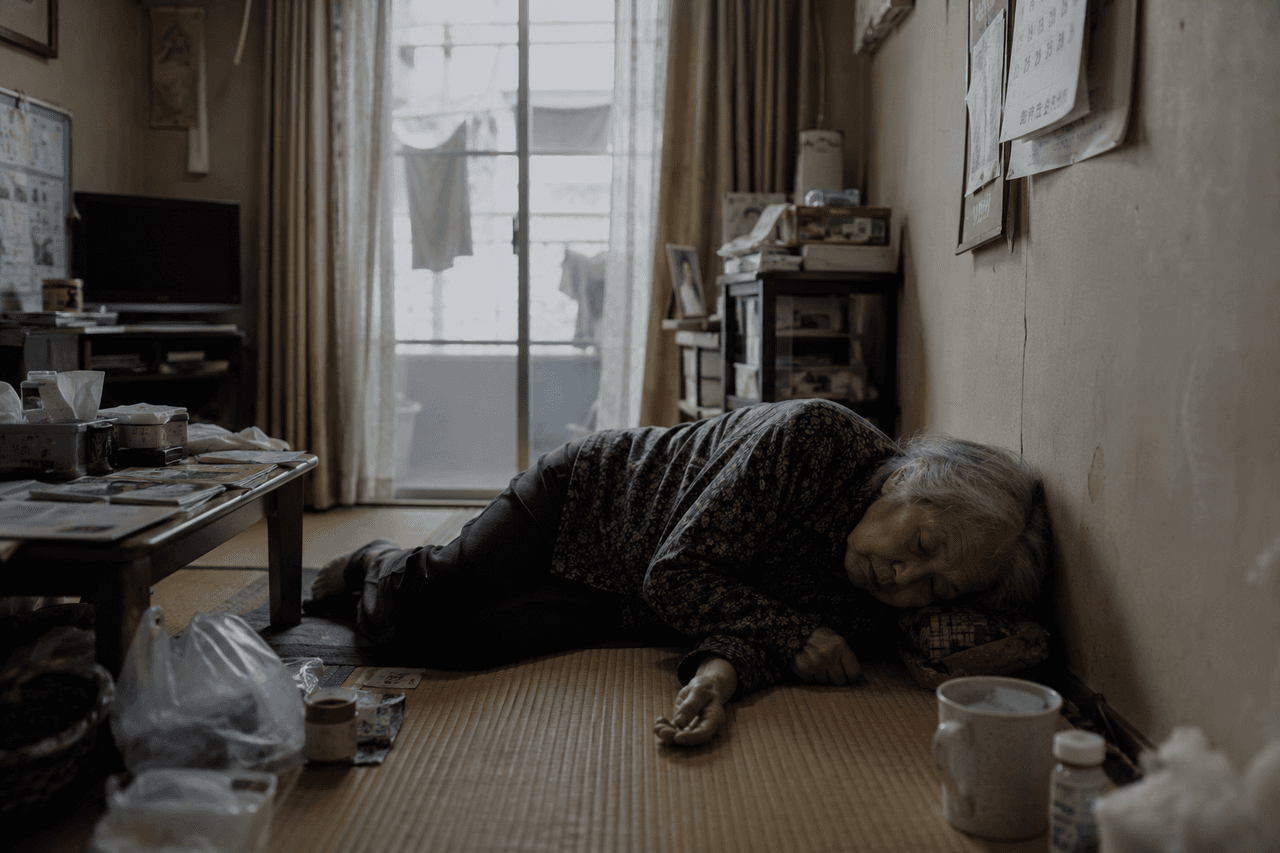
Kodokushi Örneği (Yapay Zeka ile Oluşturulmuştur.)
In contemporary Japan, there is no unified legal or bureaucratic definition of kodokushi agreed upon by central government institutions, ministries, or local municipalities.【1】 Due to this lack of a standardized definition, the phenomenon is generally interpreted as the solitary death of individuals living alone, resulting from sudden chronic illnesses, unnatural causes such as suicide, or various medically unexplained factors.【2】
In the social sphere, there is a prevailing belief that such solitary deaths can lead to social stigma and tarnishing of the deceased person’s family, relatives, and even the residents of the neighborhood or apartment building where the incident occurred.【3】
This fear of social exclusion and loss of reputation creates societal pressure, prompting both surviving family members and some local communities to conceal, suppress, or prevent the reporting of such incidents to official authorities or the public.【4】
In Japan, kodokushi cases have become a widespread social phenomenon driven by factors such as an aging population, the increasing number of people living alone, and the weakening of family ties.
The phenomenon of kodokushi is rooted in psychological, socio-economic, and cultural dynamics that completely sever individuals from society. One key factor is the total breakdown of bonds with family, relatives, and close social circles, leading to profound loneliness and communication deprivation. Over time, individuals gradually sever all external ties due to economic hardship, psychological pressure at work, difficulties adapting to social life, or chronic health conditions such as dementia in old age.
Isolation from the outside world erodes an individual’s motivation to sustain life, giving rise to a condition known in medicine and sociology as self-neglect. Those entering this process, even when suffering from health problems, refuse necessary medical treatment, abandon regular nutrition and personal hygiene, and expose themselves to unhealthy living conditions.
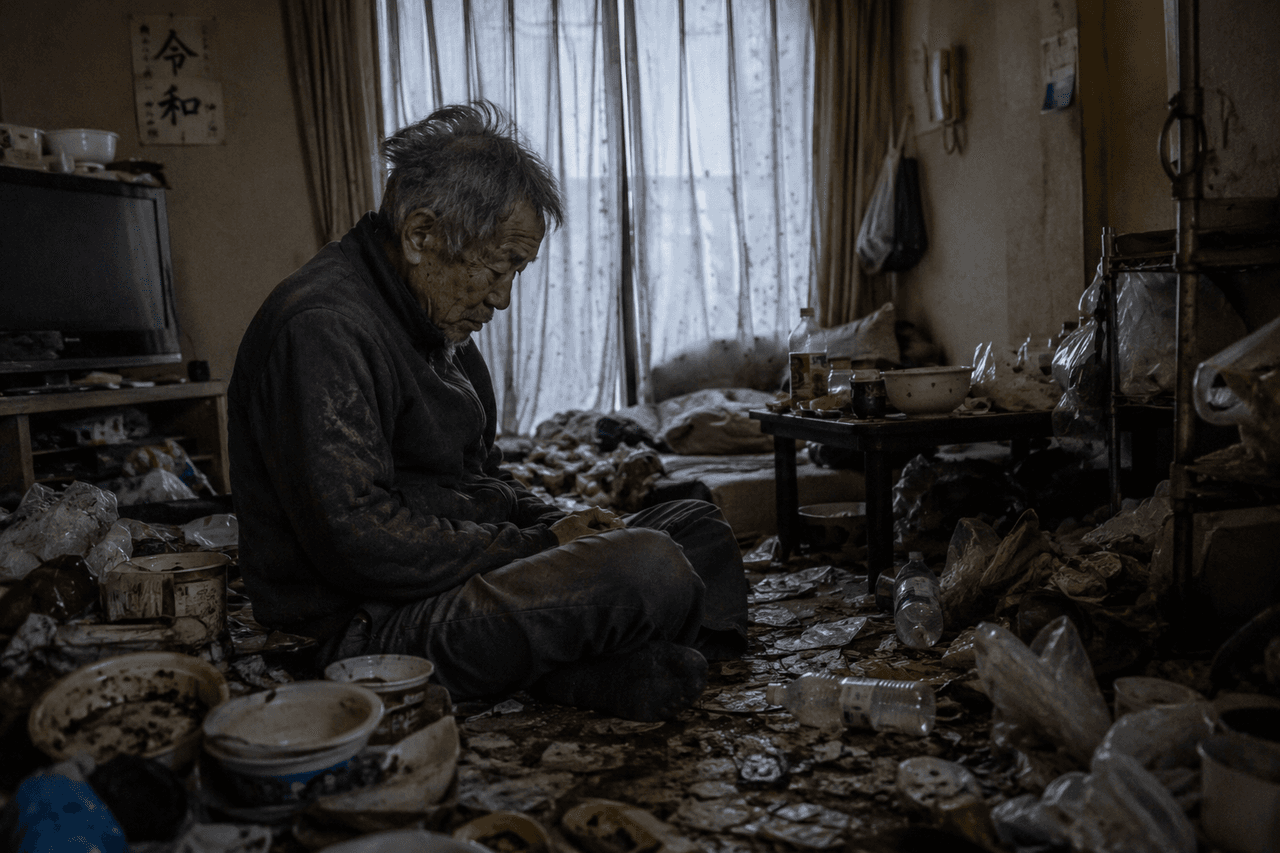
Kişisel Hijyenini Bırakıp Sosyal İzolasyona Geçen Japon Bir Birey (Yapay Zeka ile Oluşturulmuştur.)
Research indicates that the risk of self-neglect is higher among young adults than commonly assumed, and that these individuals are less likely to seek support from their surroundings during times of crisis.【9】
In addition to these factors, the Japanese cultural principle of avoiding burdening others and refraining from causing discomfort, combined with the determination to resolve personal problems independently without external help, further distances individuals from institutional or social assistance.【10】
Kodokushi cases generate socio-economic and institutional impacts within Japanese society. The delayed discovery of bodies following solitary deaths, and the subsequent decomposition processes, often make it impossible for forensic experts to determine the exact cause of death. This situation causes damage and financial loss to the properties involved, leading to declines in property values.
In cases where no surviving, reachable, or willing relative can be found to assume responsibility, all logistical and financial procedures—including removal and burial of the unclaimed body and disposal of the deceased’s belongings—are left to local authorities. In response to this situation, the Japanese government and local administrations now recognize loneliness and social isolation as structural societal problems requiring urgent intervention.【11】
To better understand the true scale of solitary deaths, collect accurate data, and develop effective policies, official working groups have been established. Alongside these macro-level administrative measures, civil and official initiatives have also been undertaken at the community level, including creating social opportunities to connect individuals living alone who are at risk.【12】
In apartments, buildings, or homes where solitary deaths occur, a specialized cleaning and decluttering process is carried out after the body is removed by forensic authorities. This process aims to eliminate biological contaminants, disinfect the premises, and dispose of remaining belongings. In response to this need, professional companies across Japan specialize in what is known as “tokushu seiso” (specialized cleaning), offering expert services to restore properties to habitable or rentable conditions. Trained personnel employed by these firms use industrial methods to remove odors and contamination caused by prolonged undetected deaths, returning the property to its original state.
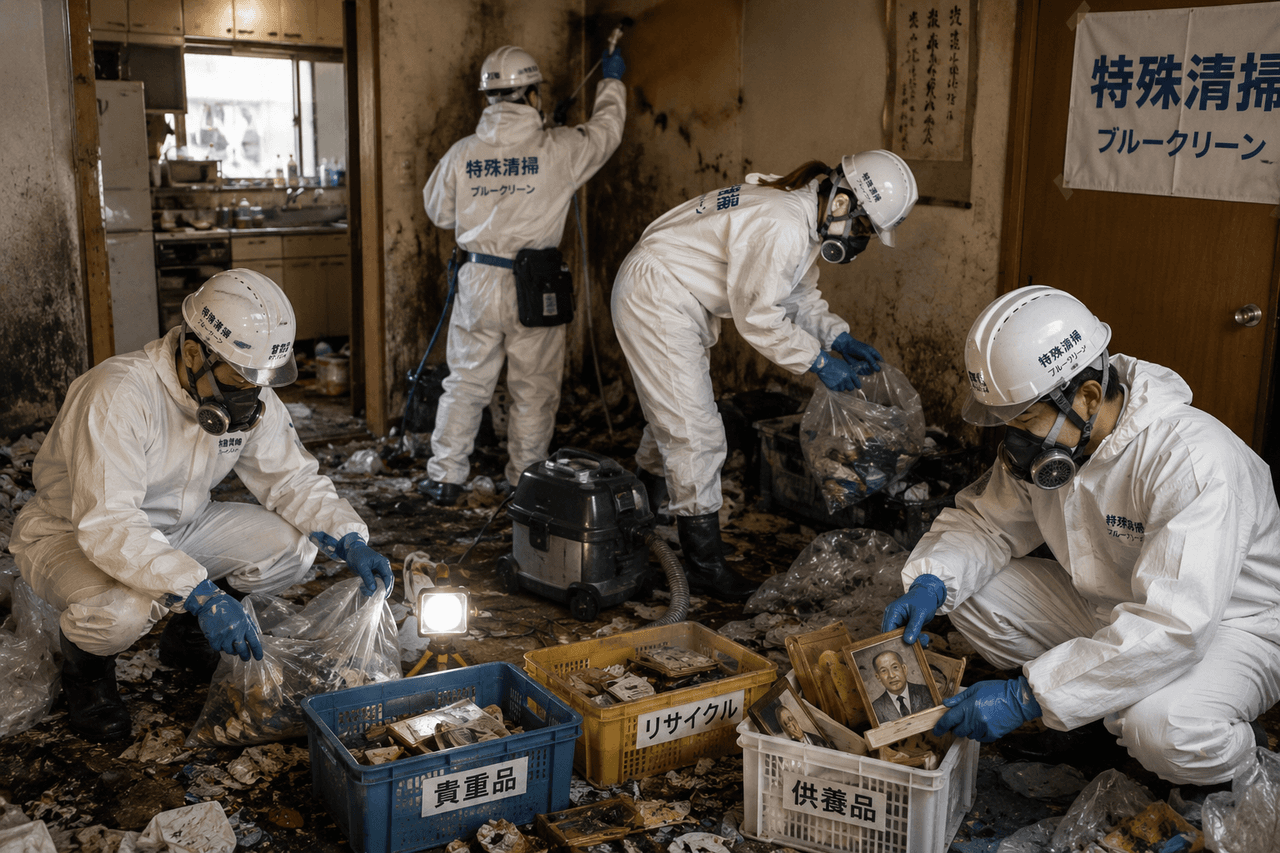
Vaka Sonrası Süreci İfade Eden Bir Görsel (Yapay Zeka ile Oluşturulmuştur.)
At the same time, these specialists conduct thorough searches among accumulated belongings to identify and recover personal items of sentimental or material value left behind by the deceased, such as letters, photographs, official documents, coins, or coupons.
However, in many cases, the deceased’s family relationships had been severed, weakened, or deteriorated years earlier, leading surviving legal heirs or relatives to refuse to accept these personal belongings or mementos.【13】
In such instances, out of respect for the memory of the deceased, these unclaimed possessions are taken to temples, where they are ritually purified and burned with prayers.【14】
Aljazeera. "The woman who cleans up after ‘lonely deaths’ in Japan". Accessed July 18, 2026.https://www.aljazeera.com/features/2017/10/14/the-woman-who-cleans-up-after-lonely-deaths-in-japan.
Asia News. "Deaths undiscovered for eight days highlight the ‘kodokushi’ emergency among lonely Japanese seniors". Accessed July 18, 2026.
Japan Forward. "Kodokushi: Are More Young People Dying Alone at Home?". Accessed July 18, 2026.https://japan-forward.com/kodokushi-are-more-young-people-dying-alone-at-home/.
[1]
Japan Forward, "Kodokushi: Are More Young People Dying Alone at Home?", erişim 18 Temmuz 2026, https://japan-forward.com/kodokushi-are-more-young-people-dying-alone-at-home/.
[2]
Japan Forward, "Kodokushi: Are More Young People Dying Alone at Home?".
[3]
Aljazeera, "The woman who cleans up after ‘lonely deaths’ in Japan", erişim 18 Temmuz 2026, https://www.aljazeera.com/features/2017/10/14/the-woman-who-cleans-up-after-lonely-deaths-in-japan.
[4]
Aljazeera, "The woman who cleans up after ‘lonely deaths’ in Japan".
[5]
Japan Forward, "Kodokushi: Are More Young People Dying Alone at Home?".
[6]
Japan Forward, "Kodokushi: Are More Young People Dying Alone at Home?".
[7]
Japan Forward, "Kodokushi: Are More Young People Dying Alone at Home?".
[8]
Japan Forward, "Kodokushi: Are More Young People Dying Alone at Home?".
[9]
Japan Forward, "Kodokushi: Are More Young People Dying Alone at Home?".
[10]
Japan Forward, "Kodokushi: Are More Young People Dying Alone at Home?".
[11]
Japan Forward, "Kodokushi: Are More Young People Dying Alone at Home?".
[12]
Japan Forward, "Kodokushi: Are More Young People Dying Alone at Home?".
[13]
Aljazeera, "The woman who cleans up after ‘lonely deaths’ in Japan".
[14]
Aljazeera, "The woman who cleans up after ‘lonely deaths’ in Japan".


Kodokushi (Generated with Artificial Intelligence.)
Meaning | Only death | ||||||||
|---|---|---|---|---|---|---|---|---|---|
Country | Japan | ||||||||
Initial Spread | 1980s | ||||||||
Affected Group | Individuals aged 65 and over living alone | ||||||||
Other Risk Group | Young adults experiencing social isolation (particularly aged 20–39) | ||||||||
Main Causes | Loneliness Breakdown of family ties Old age | ||||||||
Gender Distribution | 3.8 to 4 times more common in men | ||||||||
Social Impacts | Social isolation Financial burden on municipalities Real estate value loss | ||||||||
Measures Taken | Neighborhood monitoring networks Loneliness policies Social support programs | ||||||||
Origin and General Framework
Demographic Structure and Prevalence
General Prevalence and Concentration Among the Elderly
Rising Threat Among the Younger Population
Underlying Causes
Socio-Economic and Social Consequences
Post-Mortem Procedures