


This article was automatically translated from the original Turkish version.
Kıspetçilik is a traditional craft involving the production of the Turk oil wrestling garment known as the kıspet. The kıspet is a durable and flexible wrestling attire extending from the waist to below the knee, made from buffalo, cattle, or male goat leather. As one of the fundamental elements of Turkish wrestling culture, the kıspet has a unique design that preserves the wrestler’s mobility while preventing opponents from easily gripping it.
The craft of kıspetçilik has been passed down from generation to generation since the Ottoman period through the master-apprentice relationship and has been practiced using traditional methods. Today, the number of kıspet masters is steadily declining, yet they continue to produce custom-made kıspets by hand. Traditional kıspet production involves leatherworking, hand stitching, and the use of specialized patterns. The most important criteria for a kıspet are that it fits the wrestler’s body perfectly, provides flexibility during wrestling, and remains durable. The quality of the leather, craftsmanship, and techniques used directly affect the kıspet’s performance during competition.
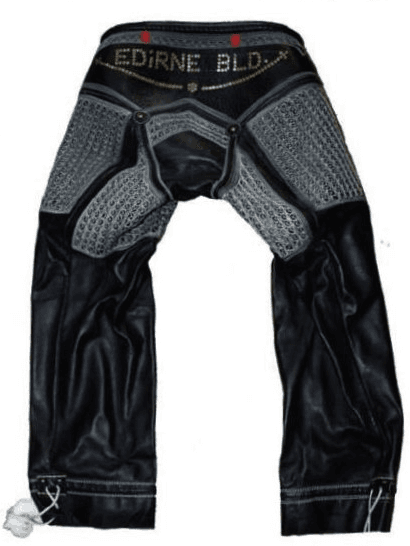
Kıspet (Source: Edirne City Culture and Awareness)
The making of kıspet has evolved in line with the importance Turks have placed on wrestling throughout history. Numerous sources attest to the Turks’ longstanding interest in wrestling since their time in Central Asia. With the establishment of oil wrestling as a tradition during the Ottoman period, kıspetçilik became institutionalized and was transmitted from master to apprentice across generations.
Evliya Çelebi’s Seyahatname mentions the kıspets used in wrestling matches held in Edirne’s Sarayiçi and the artisans who produced them. The production of kıspets for the Kırkpınar Oil Wrestling Tournaments, one of the most important wrestling events in the Ottoman Empire, required great care. Kıspet production continued for generations in cities such as Edirne, Balıkesir, Bursa and Istanbul, which were centers of traditional kıspet craftsmanship.
During the Ottoman period, sultans and grand viziers placed great importance on oil wrestling and supported kıspet production. From the 17th century onward, kıspet makers in Edirne and Istanbul organized themselves into guilds to sustain their craft. In the Republican era, kıspetçilik was recognized as one of the traditional handicrafts and continued to be practiced through custom orders.
Making a kıspet is a process requiring great skill and patience. Traditional kıspets typically consist of 40 to 45 parts and are produced entirely by hand. The main stages of kıspet production are as follows:
Kıspetçilik is a craft passed down for centuries through the master-apprentice relationship. Kıspet masters can only practice their trade after years of rigorous training. Today, only a few kıspet masters remain in Türkiye, most of whom are active in cities such as Edirne, Balıkesir and Bursa.
Notable kıspet masters include İrfan Şahin, Hidayet Başsaraç, Mustafa Turabi and Mehmet Derse. İrfan Şahin, recognized by UNESCO as a Living Human Treasure, is one of the most important masters preserving traditional kıspet production.
The kıspet is not merely a wrestling garment but also an integral part of Turkish sports tradition and cultural heritage. The historical prominence of oil wrestling has elevated kıspet production to the status of a unique craft.
The kıspet also holds spiritual significance. Some wrestlers who retire from the sport publicly declare their retirement by hanging their kıspets on the Kaaba. Additionally, some veteran wrestlers pass their kıspets on to the next generation of wrestlers to preserve this legacy.
In 2010, UNESCO included Turkish oil wrestling and kıspet production in its list of Intangible Cultural Heritage of Humanity.
Although the craft of kıspetçilik has declined with the advancement of modern technology, it is still preserved by masters who continue to produce kıspets using traditional methods. The Turkish Wrestling Federation has mandated that kıspet production meet specific standards.
Although traditional kıspetçilik is among the dwindling crafts, it is kept alive by a handful of masters. One such master is İrfan Şahin. Having begun his apprenticeship at age 13, Şahin has spent 66 years in the trade and continues his work in his workshop in Biga, Çanakkale. For many years, Şahin worked alone and, even during periods when he was the only kıspet master in Türkiye, he met the needs of wrestlers.
Throughout his career, Şahin has produced thousands of kıspets and trained numerous apprentices. In 2010, he was recognized by UNESCO as a Living Human Treasure. His handcrafted kıspets are renowned for their quality and durability. Although modern machines now accelerate kıspet production, handcrafted production continues to hold its value. In the past, kıspets were sewn entirely by hand; today, machines enable faster production. However, hand stitching and specialized leather treatments remain the defining elements of traditional kıspet quality.
Dervişoğlu, Mehmet. "Türk Güreşinde Kısbet, Kısbet Ustalığı ve Kısbet Üzerine İnançlar."
T.C. Ticaret Bakanlığı. Geleneksel Meslekler Ansiklopedisi, Volume 2, pp. 27. "Kıspetçilik."

History
Kıspet Production and Techniques
Leather Selection and Preparation
Cutting and Pattern Making
Stitching and Assembly
Final Processing and Oiling
Master-Apprentice Relationship in Kıspetçilik
Kıspet and Its Cultural Significance
Kıspetçilik Today