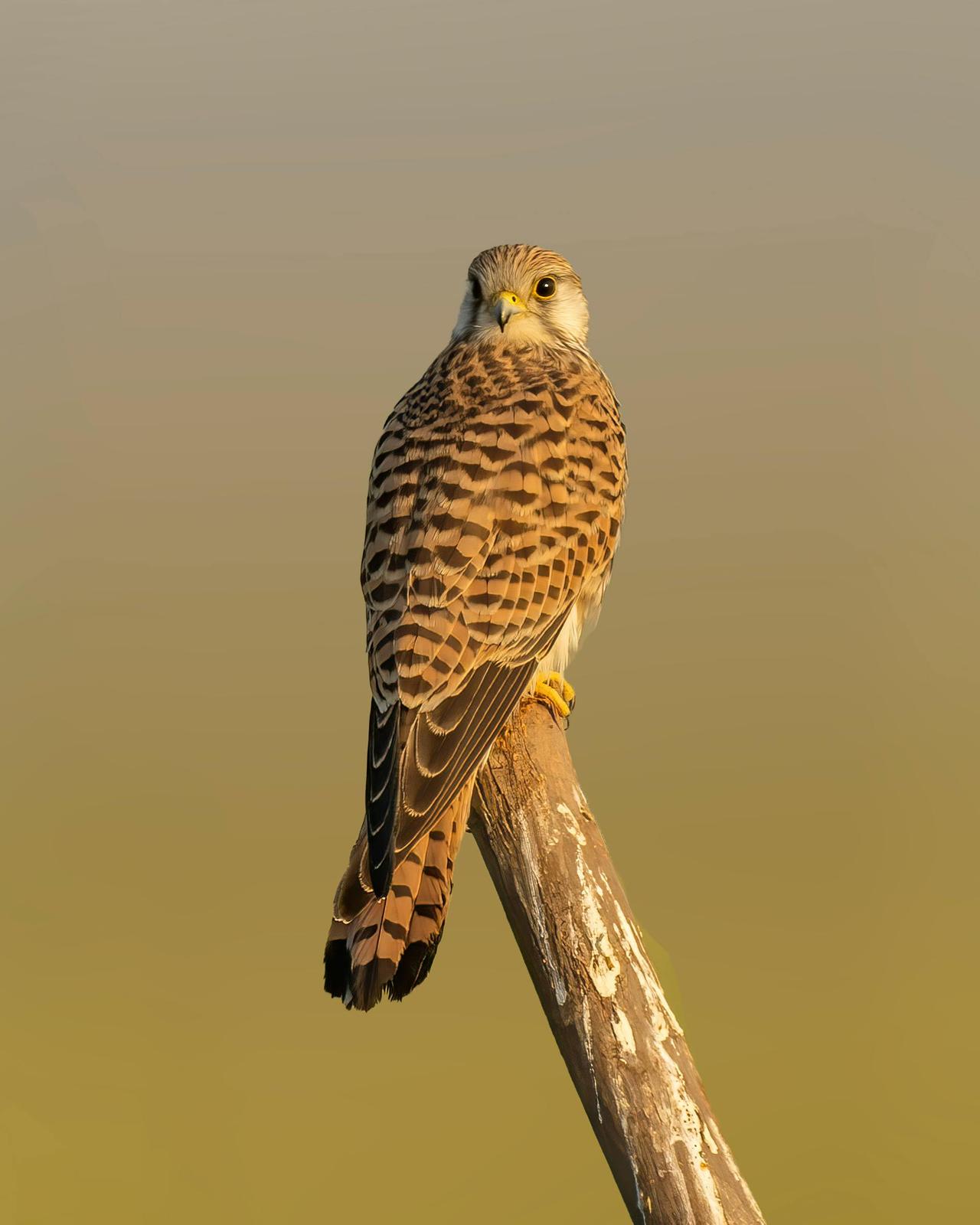
This article was automatically translated from the original Turkish version.
Habitat | Steppes Mountains and city centers Agricultural areas | ||||||||
|---|---|---|---|---|---|---|---|---|---|
Body Structure | Long pointed wings and long rounded tail | ||||||||
Male Appearance | Blue-grey head and upper tail with black-spotted reddish back | ||||||||
Female Appearance | Brown head and transversely striped reddish-brown tail | ||||||||
Diet | Small mammals such as field mice insects and lizards | ||||||||
Hunting Technique | Hovering in flight by flapping wings to remain suspended at a specific point | ||||||||
Nesting Area | Rock crevices abandoned crow nests and high building balconies | ||||||||
Reproduction Information | 3-6 eggs white with brown spots | ||||||||
Lifespan | Approximately 18 years in the wild | ||||||||
Distribution in Türkiye | Resident population observed year-round throughout the country | ||||||||
Migration Status | Northern populations are migratory while local individuals exhibit regional movements | ||||||||
Size | 33-39 cm in length and 70-80 cm wingspan | ||||||||
Distinguishing Feature | Black claws and a prominent moustache stripe | ||||||||
Weight | Approximately 200 g in males and 230 g in females | ||||||||
Scientific Name | Falco tinnunculus | ||||||||
Kestrel (Falco tinnunculus) is a small falcon species belonging to the falcon family (Falconidae) within the order Falconiformes, characterized by a wide distribution across Europe, Asia, and Africa. This species typically measures 33–39 cm in length, has a wingspan of 70–80 cm, and weighs between 120 and 260 grams. It possesses slender, pointed wings and a long tail. In central Europe, the kestrel is the second most commonly observed raptor after the hobby and is a highly adaptable species.
There are distinct physical differences between male and female kestrels. Males have a bluish-gray crown and nape, with reddish-brown backs and shoulders marked with black spots. The male’s tail appears bluish from above and ends in a thick black band. Females have a reddish-brown crown and nape, with more pronounced black spots and streaks on their backs compared to males. Both sexes exhibit a prominent moustache stripe, and their wings and underparts are covered with brown spots or streaks on a pale cream background. Kestrels can be distinguished from the closely related lesser kestrel (Falco naumanni) by their more prominent moustache stripes, darker black spotting on the back, and black claws instead of dirty white ones.
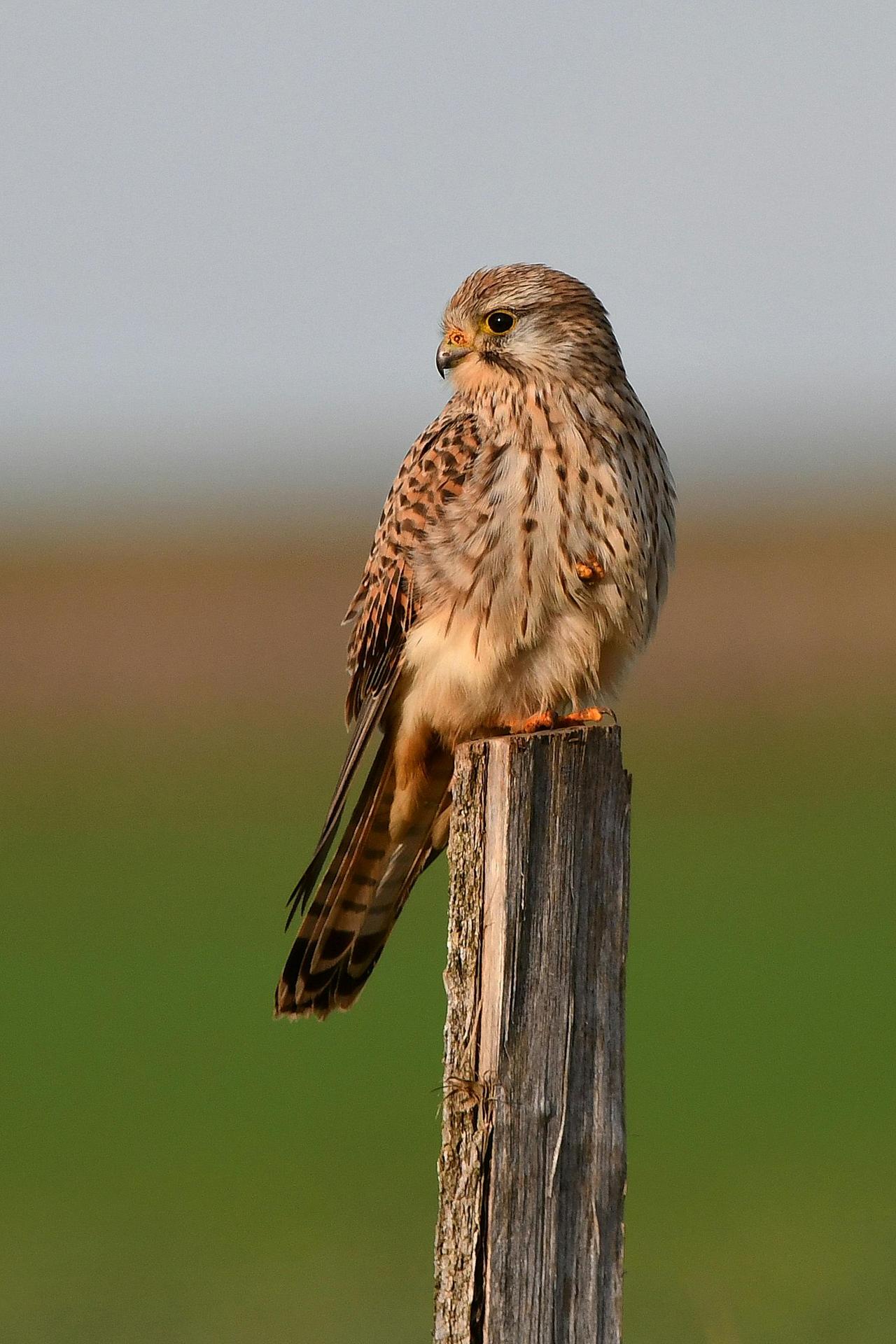
Kestrel (Falco tinnunculus) (Pexels)
Kestrels do not exhibit strict habitat dependency due to their high adaptability to environmental conditions. They are commonly found in mountains, valleys, forest edges, steppes, agricultural lands, seacoasts, and urban centers. They avoid dense forests and treeless arid regions. This species, which has relatives on all continents, has large populations across Europe, most of Asia, and North Africa. Several subspecies exist, isolated in different geographic regions and distinguished by variations in coloration and wing size, including Falco tinnunculus alexandri, Falco tinnunculus canariensis, and Falco tinnunculus rufescens. In Türkiye, kestrels are resident year-round throughout all regions, while populations in northern Europe and Siberia tend to migrate south during winter months. They can live at elevations up to 5,500 meters above sea level in Tibet, depending on food availability.
The primary diet of the kestrel consists of small mammals such as field voles and moles. Individuals adapted to urban environments may feed on small passerine birds, sparrows, bats, and insects. During the breeding season, when small mammals are scarce, lizards, earthworms, and large insects are also consumed. The kestrel’s most characteristic hunting behavior is “hovering,” in which it flaps its wings while remaining stationary in midair at a height of 10–20 meters. In this position, it faces into the wind to conserve energy and uses its ultraviolet vision to track the urine trails of rodents. Once prey is detected, it dives rapidly, captures it with its talons, and kills it with a bite to the neck. The daily food requirement of a free-flying kestrel is approximately 25 percent of its body weight.
Kestrels reach sexual maturity at approximately two years of age and do not build their own nests. Instead, they use natural crevices in rocks, tree hollows, utility poles, window ledges of tall buildings, or abandoned nests of larger birds such as crows. During the breeding season, from late March to mid-April, the female lays three to six eggs with white and brown speckles. While the female incubates the eggs for about 27–29 days, the male provides food. Starting from the second week, both parents feed the chicks. The young reach adult weight by the third week and begin to fly at around four weeks of age. After learning to fly, they continue to be fed by their parents for another four weeks before leaving the nest to find a new territory. Although their natural lifespan can reach up to 18 years, mortality rates in the first year are around 50 percent due to harsh weather, food shortages, and predation by raptors such as the hobby, owls, or other predators.
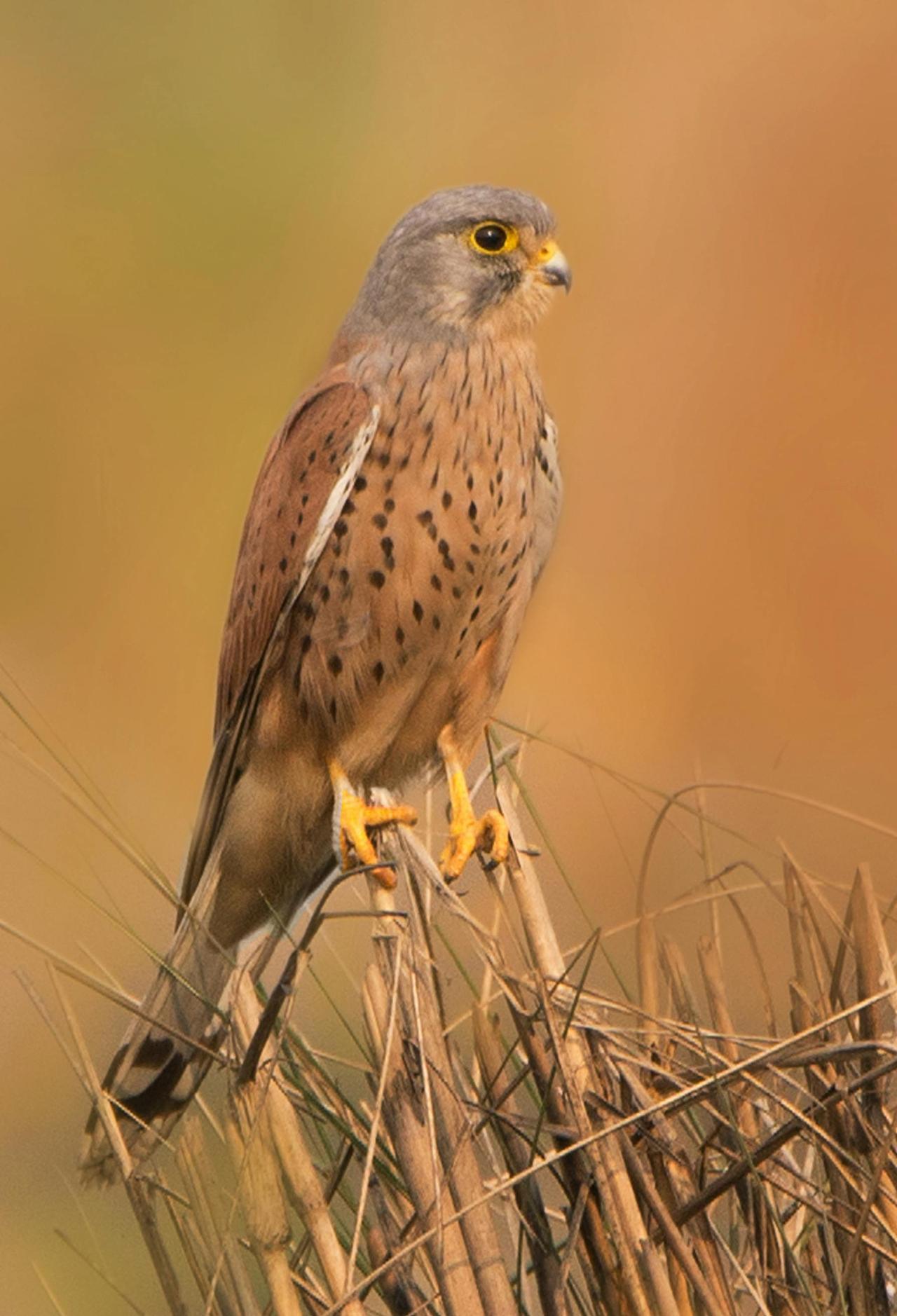
Kestrel (Falco tinnunculus) (Pexels)
Diurnal kestrels are highly active and defensive near their nests, especially during the breeding season. When threatened, they may perform dive-bombing attacks on much larger raptors such as the red kite or the golden eagle. This species has a wide vocal repertoire, with females using 11 distinct calls and males using 9. In states of excitement or when disturbed at the nest, they emit high-pitched alarm calls such as “ki-ki-ki” or “ti-ti-ti.”
According to the International Union for Conservation of Nature (IUCN), the kestrel is classified as “Least Concern.” Although it has an estimated population of approximately 400,000 individuals in Europe alone, localized declines have been observed in countries such as Italy, France, Spain, and Russia due to intensive and industrial agricultural practices. Major threats to the species include destruction of nesting sites by humans, collisions with vehicles, electrocution on power lines, and disturbance of nests due to misconceptions in urban areas. Additionally, sudden spring rains that flood nests can lead to embryo and chick mortality.
ORNİTO. "Kerkenez (Falco tinnunculus)." Accessed May 10, 2026. https://ornito.org/Bird/Detail/261
Pexels. "Ahşap Tahta Üzerinde Kahverengi Kuş." Photograph by Sachin Nihcas. Accessed May 10, 2026. https://www.pexels.com/tr-tr/fotograf/ahsap-tahta-kus-kahverengi-5814484/
Pexels. "Kahverengi Ağaç Dalı Üzerinde Kahverengi ve Beyaz Kuş." Photograph: Sheikh Nafis. Accessed May 10, 2026. https://www.pexels.com/tr-tr/fotograf/kahverengi-agac-dali-uzerinde-kahverengi-ve-beyaz-kus-6319562/
Pexels. "Kerkenez Kuşu Portresi." Photograph: Geraldine Geraldine. Accessed May 10, 2026. https://www.pexels.com/tr-tr/fotograf/35131034/
TÜBİTAK Bilim Çocuk. "Her Yerde Görebileceğimiz Yırtıcı Bir Kuş: Kerkenez." Prepared by: Bahtiyar Kurt. Accessed May 10, 2026. https://bilimcocuk.tubitak.gov.tr/wp-content/uploads/sites/157/2025/09/27f2b306-5674-41ef-bede-d5968db68118.pdf
eBird. "Kerkenez (Falco tinnunculus)." Accessed May 10, 2026. https://ebird.org/species/eurkes?siteLanguage=tr
İZKUŞ (İzmir Kuş Paradise Protection and Development Association). "Kerkenez." Accessed May 10, 2026. https://izmirkuscenneti.gov.tr/2022/12/03/kerkenez/

Habitat | Steppes Mountains and city centers Agricultural areas | ||||||||
|---|---|---|---|---|---|---|---|---|---|
Body Structure | Long pointed wings and long rounded tail | ||||||||
Male Appearance | Blue-grey head and upper tail with black-spotted reddish back | ||||||||
Female Appearance | Brown head and transversely striped reddish-brown tail | ||||||||
Diet | Small mammals such as field mice insects and lizards | ||||||||
Hunting Technique | Hovering in flight by flapping wings to remain suspended at a specific point | ||||||||
Nesting Area | Rock crevices abandoned crow nests and high building balconies | ||||||||
Reproduction Information | 3-6 eggs white with brown spots | ||||||||
Lifespan | Approximately 18 years in the wild | ||||||||
Distribution in Türkiye | Resident population observed year-round throughout the country | ||||||||
Migration Status | Northern populations are migratory while local individuals exhibit regional movements | ||||||||
Size | 33-39 cm in length and 70-80 cm wingspan | ||||||||
Distinguishing Feature | Black claws and a prominent moustache stripe | ||||||||
Weight | Approximately 200 g in males and 230 g in females | ||||||||
Scientific Name | Falco tinnunculus | ||||||||
No Discussion Added Yet
Start discussion for "Kerkenez (Falco tinnunculus)" article
Physical Characteristics
Habitat and Distribution
Feeding and Hunting Behavior
Reproduction and Life Cycle
Behavior and Communication
Conservation Status