This article was automatically translated from the original Turkish version.
+1 More
Republic of Kazakhstan
Capital | Astana | ||||||||
|---|---|---|---|---|---|---|---|---|---|
Official Language | Kazakh | ||||||||
Form of Government | Presidential System | ||||||||
President | Kassym-Jomart Tokayev | ||||||||
Prime Minister | Askar Mamin | ||||||||
Independence | 16 December 1991 | ||||||||
Area | 2,724,900 km2 | ||||||||
Population | 20 Million | ||||||||
Currency | Kazakh Tenge | ||||||||
Time Zone | GMT+5 | ||||||||
Telephone Code | +997 | ||||||||
Internet Extension | .kz | ||||||||
Climate | Cold Semi-Arid Climate | ||||||||
Ethnic Structure | Kazakh (%63), Russian (%24), Ukrainian (%2.1), Uyghur (%1.4), Tatar (%1.3), German (%1.1), Other (%7.1) | ||||||||
GDP | 96.1 billion Dollars (2019) | ||||||||
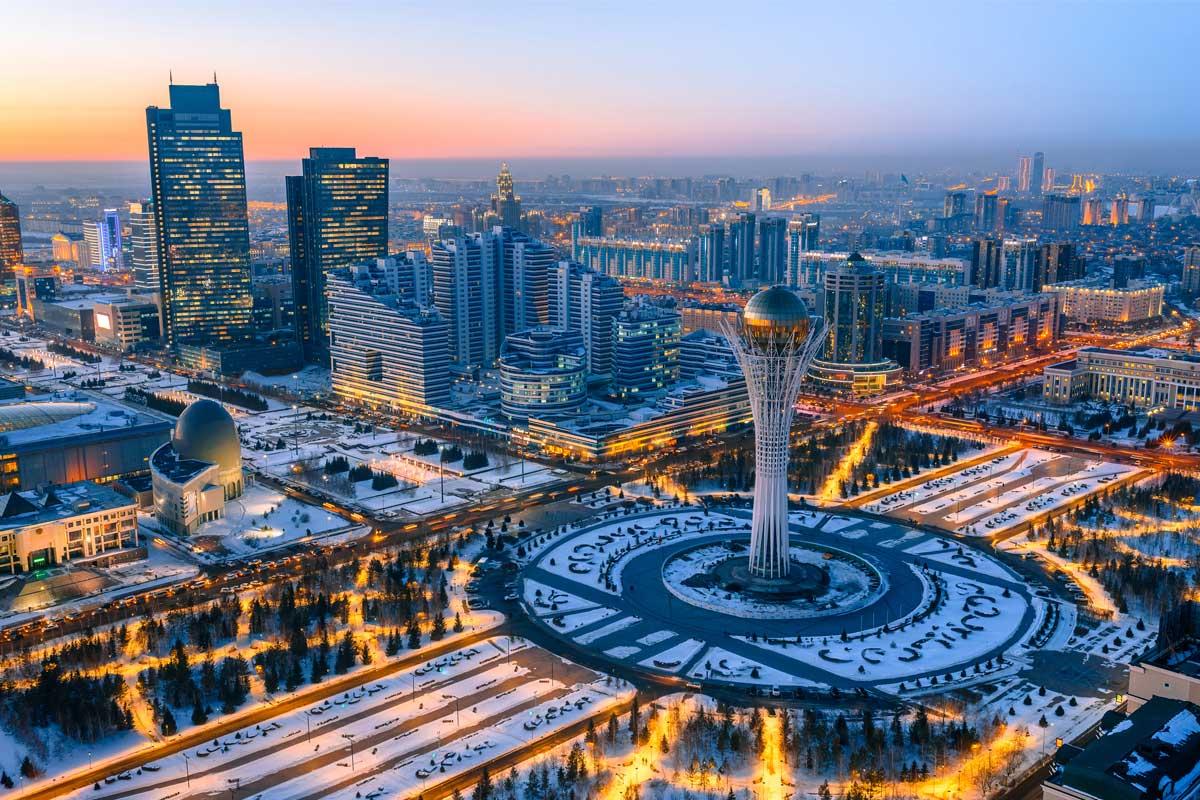
Kazakhstan is the largest country in Central Asia by area, with a territory of 2,724,900 square kilometers and a population of approximately 20 million, making it one of the region’s most important actors. Bordered by the People’s Republic of China to the east, the Russian Federation to the north, Kyrgyzstan and Uzbekistan to the south, and the Caspian Sea to the west, the country has historically been a crossroads of major trade and cultural routes due to its geopolitical position. Kazakhstan declared its independence on 16 December 1991, establishing a presidential system of government and evolving into a rapidly developing state in economic and cultural terms. The capital, Astana, represents the country’s modern face, while cities such as Almaty and Shymkent are among its dynamic cultural and economic centers.
Kazakhstan is a country notable for its natural wealth, deep historical roots, and multicultural structure. Characterized by vast steppes, high mountains, large lakes, and deserts, the country has a harsh continental climate. Winter temperatures can drop as low as -45°C, while summer temperatures can exceed 40°C. This geographical and climatic diversity has made Kazakhstan an important habitat for various cultures and communities throughout history. Although Kazakh is the official language, Russian is also widely spoken due to the legacy of the Soviet Union.
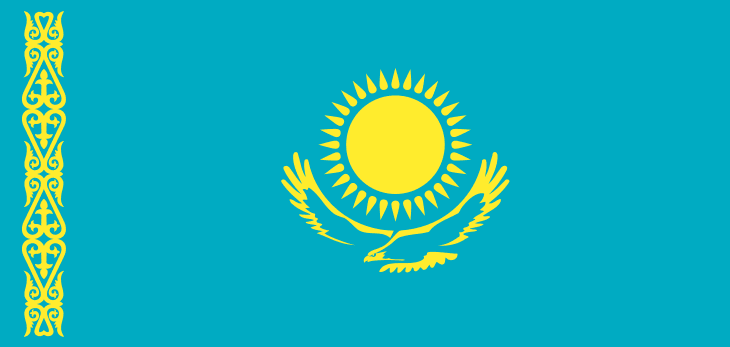
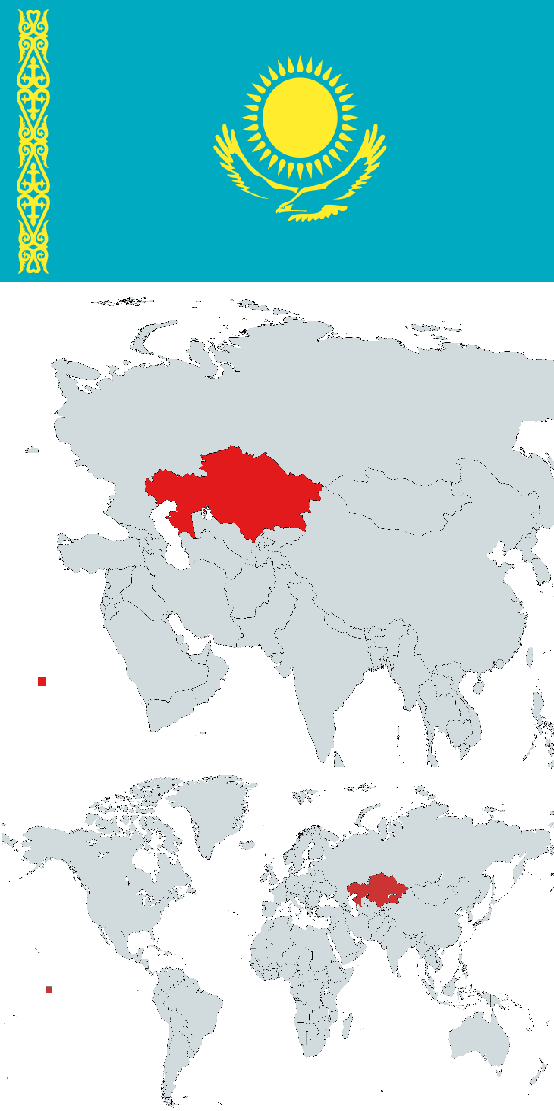
Flag of the Republic of Kazakhstan (https://www.turkicstates.org/tr/uye-ulkeler-detay/uye-ulkeler-kz)
Economically, Kazakhstan possesses vast underground resources and has built a strong economic structure primarily through exports of oil, natural gas, uranium, and minerals. In recent years, the country has sought to diversify its economy by developing its industrial and agricultural sectors. Economic relations between Turkey and Kazakhstan are growing steadily, with Turkish construction firms making significant investments in the country. Kazakhstan’s steps toward becoming an active player on the international stage are supported by its membership in organizations such as the Shanghai Cooperation Organization, the United Nations, and the Organization for Economic Cooperation.
Kazakhstan stands out as one of the most important countries in the region due to its historical legacy, strategic location, and natural wealth. Rapidly advancing its modernization process, the country preserves its traditional Kazakh culture while enhancing its global influence in economic and political spheres.
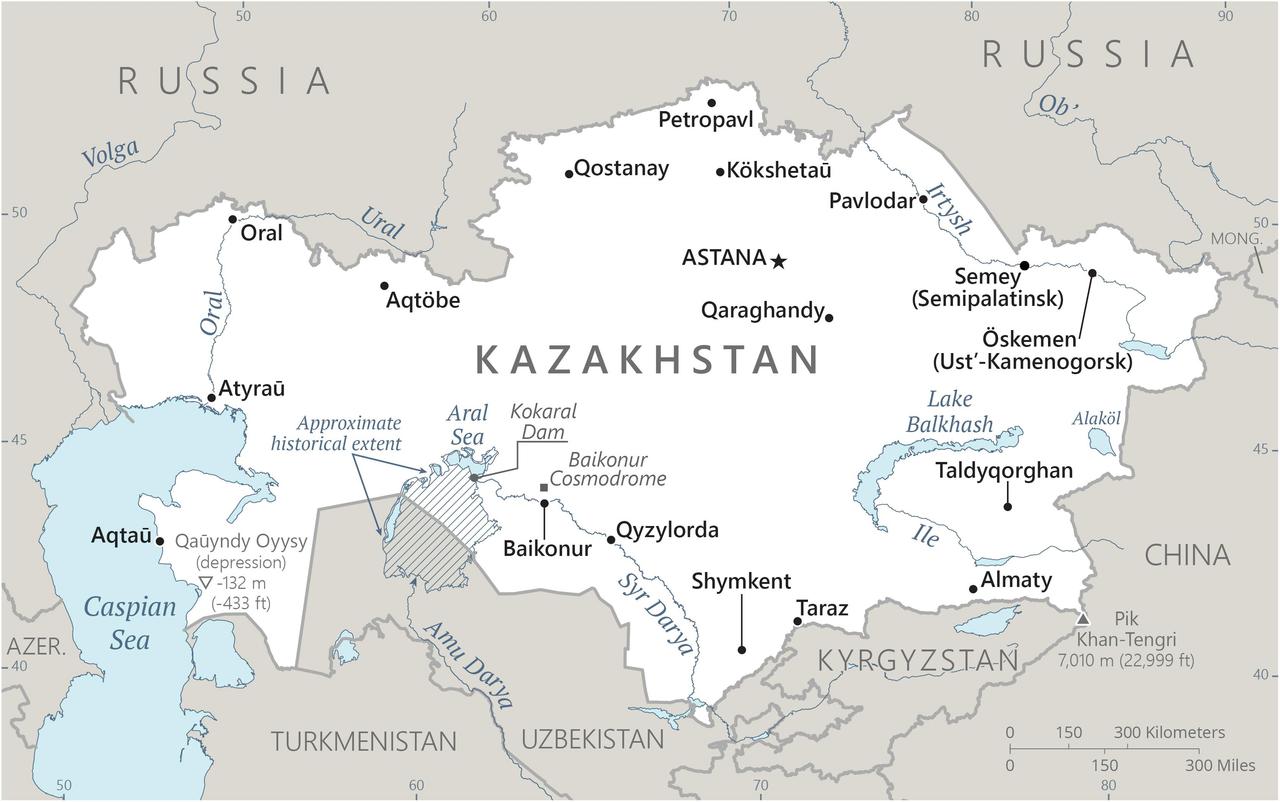
Map of the Republic of Kazakhstan (https://www.cia.gov/the-world-factbook/countries/kazakhstan/map/)
The territory of Kazakhstan has served as a transit point for numerous civilizations and peoples throughout history and has been under the rule of various states. This region, encompassing the vast steppes, high mountains, and rich river valleys of Central Asia, has long been a homeland for nomadic Turkic communities. Kazakhstan’s historical roots trace back to great steppe empires such as the Scythians, Huns, and Göktürks. Particularly from the 11th century onward, the Kazakh identity began to take shape.
The emergence of the name “Kazakh” on the historical stage is closely linked to developments following the decline of Seljuk rule. After the 11th century, Turkic migrations westward left Turkic communities in Central Asia unable to maintain their independence for long. The region came under Mongol control. With the rise of the Timurid Empire, various Turkic-Mongol groups reunited, but political instability followed Timur’s death. During this period, Turkic groups known as Kazakhs continued their nomadic lifestyle across the vast steppes, gradually developing their own systems of governance.
In the 15th century, the Kazakhs were united under Abu'l-Khayr Khan, laying the foundations of the Kazakh Khanate. However, the Khanate remained under constant threat from Oirat Mongols and the Russians. In the 16th century, the Kazakh Khanate reached one of its strongest periods, gaining control over important cities such as Tashkent and Samarkand. Yet, in the 17th and 18th centuries, the Kazakhs suffered major losses due to attacks by the Jungar Mongols and internal conflicts. Khan Abulhayr of the Lesser Jüz sought support from Russia, marking the beginning of Kazakhstan’s incorporation into Russian rule.
In 1731, Russia began exerting influence over Kazakh territories, particularly controlling the Lesser Jüz region. By the early 19th century, the Russians had seized a large portion of Kazakhstan, altered local governance systems, and initiated direct administration. The Kazakh people launched numerous uprisings against Russian rule, but most of these rebellions were unsuccessful.
In the early 20th century, Kazakh intellectuals initiated national awakening movements to preserve Kazakh identity. However, after the 1917 Bolshevik Revolution, Kazakhstan joined the Soviet Union and became the Kazakh Soviet Socialist Republic in 1920. During the Soviet period, a large-scale assimilation policy was implemented: the Kazakh language and culture were suppressed, and mosques and religious structures were closed. Simultaneously, in the 1930s, Soviet collectivization policies led to widespread famine, resulting in the deaths of millions of Kazakhs.
Following the collapse of the Soviet Union, Kazakhstan declared its independence on 16 December 1991 and became an independent state governed by a presidential system. The 1993 constitution established Kazakh as the official state language, although Russian continued to be used in state administration. A constitutional amendment in 1995 strengthened the presidential system and reorganized the country’s administrative structure.
After independence, Kazakhstan took significant steps toward economic development and political stability, strengthening its regional and global relations through membership in international organizations. Today, Kazakhstan continues to assert itself as a major economic and political actor in Eurasia, rapidly advancing its modernization process.
National Anthem of Kazakhstan
Kazakhstan is the largest country in Central Asia and, with an area of 2,724,900 square kilometers, one of the world’s largest landlocked countries. It is bordered by the Russian Federation to the north, the People’s Republic of China to the east, Kyrgyzstan and Uzbekistan to the south, Turkmenistan to the southwest, and the Caspian Sea to the west.
The majority of Kazakhstan consists of plains, steppes, and gently rolling plateaus. In the east and southeast, the Tian Shan (Tian Mountains) and Altai Mountains extend, while the central and western regions are dominated by vast plains, deserts, and semi-desert areas.
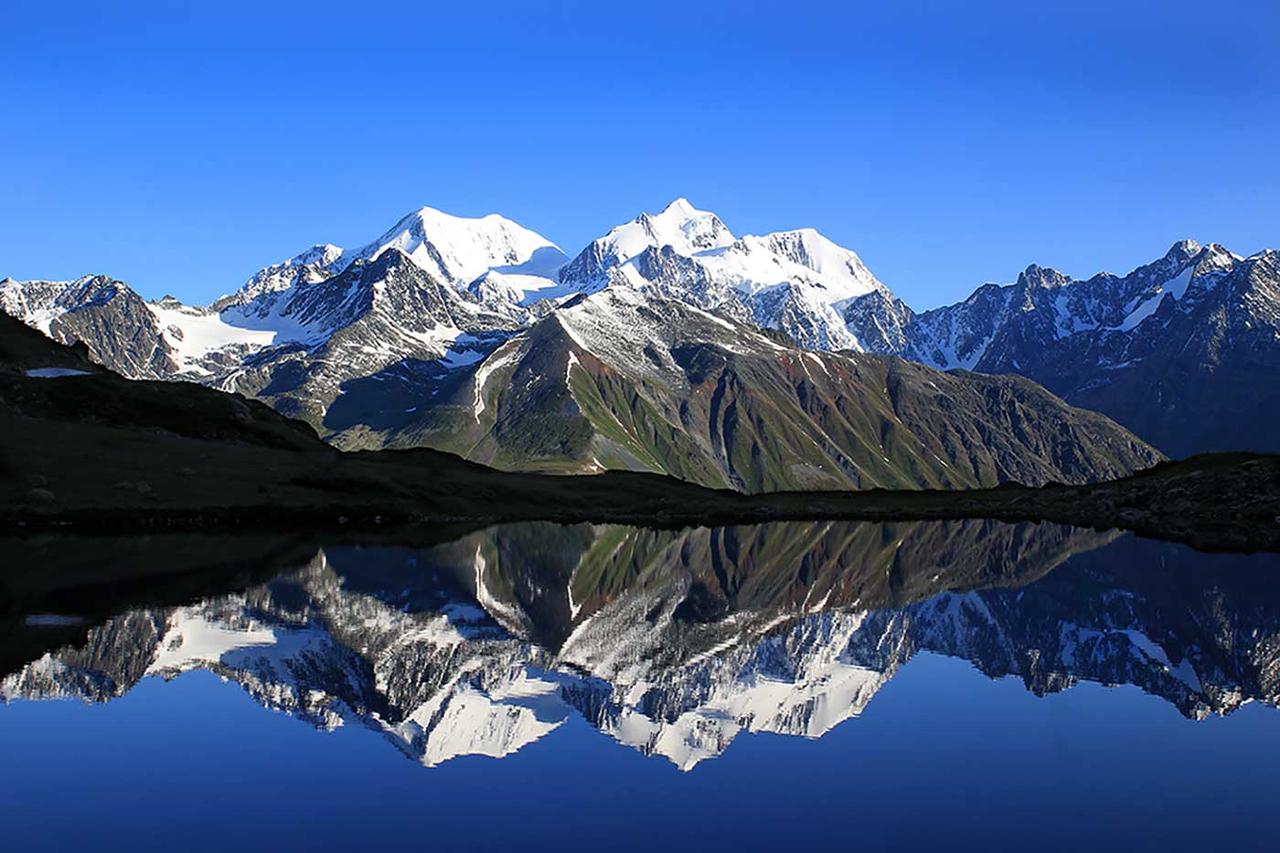
Eastern Kazakhstan (
The Altai Mountains in the east include some of Kazakhstan’s highest peaks, extending into Russia and Mongolia. The Tian Shan Mountains in the southeast stretch to the borders of Kyrgyzstan and China, where high mountain lakes and glaciers are found.
The interior regions are largely covered by vast steppes and semi-desert areas. The southern parts of Kazakhstan form part of the typical Central Asian desert ecosystem. The western region extends to the Caspian Sea coast, while the northern areas feature extensive steppe lands that connect with the Siberian plains.
Kazakhstan has numerous major rivers and lakes. Its most important rivers include the Irtysh, Ishim, Tobol, Ural, and Emba. The Irtysh, Ishim, and Tobol flow northward into the Arctic Ocean, while the Ural and Emba rivers empty into the Caspian Sea. One of the most important rivers in the south, the Syr Darya, flows into the Aral Sea.
Kazakhstan is also rich in lakes and hosts some of the largest lakes in Central Asia. Lake Balkhash in the east is one of the rare lakes containing both freshwater and saltwater. The Aral Sea is one of the region’s largest water sources but has largely dried up due to environmental changes during the Soviet era.
Kazakhstan’s vast geography features diverse vegetation and ecosystems. The northern regions are covered by fertile steppes, while the central and western areas consist of semi-desert and desert ecosystems. Along river valleys, dense shrublands and wooded areas are found, and broad coniferous forests cover mountain slopes.
The southern regions form part of Central Asia’s arid desert zones. The Syr Darya valley and other river basins have relatively denser vegetation. Forested areas in Kazakhstan are generally located at high altitudes and are predominantly covered by pine trees.
Kazakhstan is a country rich in underground resources. It possesses significant reserves of oil, natural gas, coal, uranium, copper, lead, zinc, iron, nickel, and manganese. The Karaganda region is known for its coal deposits, while the Ural-Emba basin is rich in oil reserves. Other minerals such as bauxite, tungsten, molybdenum, and gold found in various parts of the country also play an important role in Kazakhstan’s economy.
Kazakhstan has a diverse geography characterized by vast plains, mountainous areas, rivers, lakes, and rich natural resources. This geographical structure shapes economic and social dynamics across numerous sectors, from agriculture and mining to transportation networks and urban planning.
Due to its vast area and distance from seas, Kazakhstan has a harsh continental climate. Seasons are distinct, with very cold winters and hot, dry summers. Annual temperature variations are wide, and significant climatic differences exist between regions.
In winter, temperatures in Kazakhstan can drop as low as -45°C in the north. Particularly under the influence of arctic air masses, freezing conditions prevail in northern regions, while temperatures in the south are somewhat higher. Astana is known as one of the world’s coldest capitals and is notable for its severe winter conditions.
Spring is generally short and variable. From mid-April to late May, temperatures rise rapidly, but weather remains highly unstable; a warm day can be followed by a sudden cold front. Summer is hot and dry, beginning in late May and lasting until mid-September. In southern regions, temperatures can exceed 40°C, reaching up to +49°C in some areas. Autumn begins in late September and lasts until early November, during which temperatures drop sharply and night frosts become common.
All four seasons are clearly experienced across Kazakhstan, with significant temperature differences. The highest recorded temperature is +49°C in Turkistan, and the lowest is -57°C in Atbasar. Climate conditions vary according to the country’s geographical structure, resulting in different weather patterns across regions.
With a population of approximately 20 million, Kazakhstan is one of the largest countries in Central Asia. Its population structure has been shaped by various migration movements and Soviet Union policies throughout history. According to the 1997 census, the ethnic composition was as follows: 40% Russian, 38% Kazakh, 6.1% Ukrainian, 2.1% Tatar, 1.3% German, and 7.1% other ethnic groups. However, after independence, demographic changes occurred due to emigration of Russians to Russia and other former Soviet countries, raising the Kazakh population share to 56.6%.
Today, Kazakhstan’s ethnic composition consists of 63% Kazakh, 24% Russian, 2.1% Ukrainian, 1.4% Uyghur, 1.3% Tatar, 1.1% German, and 7.1% other groups. This diversity makes Kazakhstan a multi-ethnic society and forms its cultural mosaic.
In terms of religion, 47% of Kazakhstan’s population is Muslim, 44% is Russian Orthodox, 2% is Protestant, and 7% belong to other faiths. Although the country is secular, Islam and Orthodoxy are the most widespread religious beliefs.
In Kazakhstan, the population is unevenly distributed between urban and rural areas. The majority of the Kazakh population lives in rural areas, while a significant portion of the Russian population is concentrated in cities. The capital, Astana (formerly Nur-Sultan), is the country’s political and administrative center and has a rapidly growing population. Other major cities include the former capital Almaty (1.1 million), Shymkent (360,000), Taraz (330,000), Karaganda (437,000), and Öskemen (311,000).
Kazakhstan has a very high literacy rate. The country’s reading and writing rate reaches nearly 98%. The education system retains a strong infrastructure inherited from the Soviet era, and Kazakhstan has a population well-developed in science and technology.
After declaring its independence on 16 December 1991, Kazakhstan quickly assumed an active role on the international stage and became a member of numerous regional and global organizations. Turkey recognized Kazakhstan’s independence on the same day, and Kazakhstan joined the United Nations (UN) on 2 March 1992. Kazakhstan is a member of the UN, the Organization of Islamic Cooperation, the Organization for Security and Co-operation in Europe (OSCE), the Shanghai Cooperation Organization (SCO), the Commonwealth of Independent States (CIS), the Eurasian Economic Union (EEU), the Collective Security Treaty Organization (CSTO), the Conference on Interaction and Confidence-Building Measures in Asia (CICA), the Economic Cooperation Organization (ECO), the Organization of Turkic States (OTS), and the World Trade Organization (WTO).
Turkey was the first country to recognize Kazakhstan’s independence, and relations between the two countries have reached the level of strategic partnership. The Strategic Partnership Agreement signed in 2009 further strengthened ties, and the High-Level Strategic Cooperation Council was established in 2012. The two countries jointly advanced the institutionalization of the Summit of Turkic-Speaking Countries and played a leading role in the formation of the Organization of Turkic States and TÜRKPA (Parliamentary Assembly of Turkic-Speaking Countries). Kazakhstan also hosts the International Turkic Academy.
Political and economic relations between Kazakhstan and Turkey are maintained within an institutional framework through regular meetings of the High-Level Strategic Cooperation Council, the Joint Strategic Planning Group, and the Joint Economic Commission.
Kazakhstan initiated formal relations with NATO in 1992 by joining the North Atlantic Cooperation Council (NACC). In 1995, Kazakhstan joined NATO’s Partnership for Peace (PfP) program and implemented numerous military reforms under this framework. Since 2002, Kazakhstan has participated in the PfP Planning and Review Process (PARP), strengthening military cooperation with NATO. Kazakhstan conducts joint military exercises with NATO and has hosted the annual “Steppe Eagle” military exercises since 2006.
Since 2007, Kazakhstan has cooperated with NATO under the Defense Education Enhancement Program (DEEP). The Kazakhstan Defense University, the Kazakhstan PfP Education Center (KAZCENT), the Astana Officer Training Center, and the Army Defense Institute are included in this program. NATO also cooperates with Kazakhstan under the Euro-Atlantic Disaster Response Coordination Centre (EADRCC) to enhance its civil preparedness and disaster management capacity.
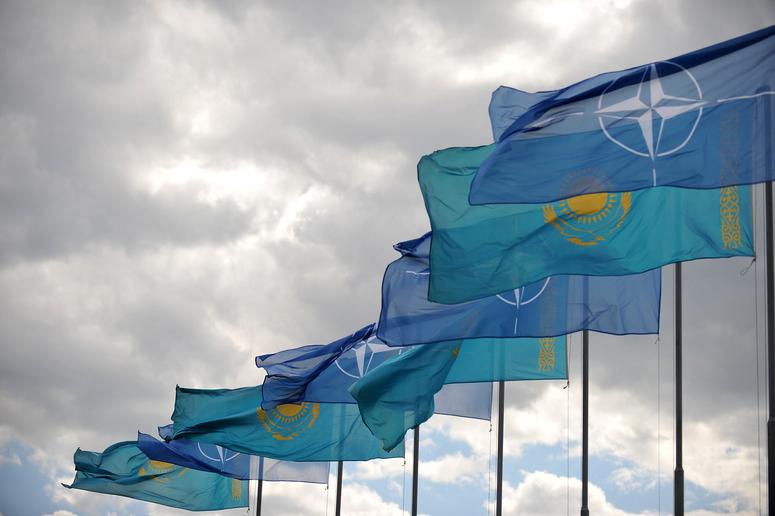
Flags of NATO and the Republic of Kazakhstan together. (https://www.nato.int/cps/bu/natohq/topics_49598.htm)
Kazakhstan places great importance on regional cooperation aimed at ensuring peace and stability, particularly in Eurasia. In this context, the country actively participates in regional integration processes such as the Commonwealth of Independent States (CIS) and the Eurasian Economic Union (EEU). Kazakhstan also plays a significant role within the Shanghai Cooperation Organization (SCO) and maintains economic and security cooperation with China.
Kazakhstan is active within the framework of the Economic Cooperation Organization (ECO), supporting initiatives to develop trade and infrastructure projects in Central Asia. It leads initiatives such as the Conference on Interaction and Confidence-Building Measures in Asia (CICA) to promote regional security cooperation. Additionally, Kazakhstan has provided international assistance in response to natural disasters and humanitarian crises, responding to eight requests for aid under the EADRCC framework.
Kazakhstan has joined numerous global and regional organizations. As a country maintaining close relations with actors such as Turkey, NATO, the SCO, the CIS, and the EEU, it deepens economic and political cooperation to contribute to regional peace and stability. Moreover, Kazakhstan has become a key actor in trade, energy, and security in the Eurasian region.
After gaining independence, Kazakhstan implemented various reforms to strengthen its military structure. According to the 1993 Constitution, the country is defined as an independent and sovereign state governed by a full presidential system, with the armed forces directly under the command of the president. The two-chamber Parliament of Kazakhstan, consisting of the Senate and the Mazhilis, approves national security policies and military budgets.
The Kazakh armed forces consist of three main branches: ground forces, air and air defense forces, and naval forces. Due to its strategic location, military organization is largely focused on border security with Russia, China, and Central Asian countries.
Following administrative reforms in 1997, the structure of the Kazakh armed forces was reorganized, and the number of military districts was reduced. Military units within the country are managed by generals appointed by the Commander-in-Chief.
After the dissolution of the Soviet Union, Kazakhstan inherited significant quantities of Soviet-made weapons and equipment but has since initiated modernization efforts. New systems, both Western and Russian-made, have been acquired for the air and ground forces.
Kazakhstan joined NATO’s Partnership for Peace (PfP) program in 1995, strengthening international military cooperation. Since 2002, Kazakhstan has participated in the PfP Planning and Review Process (PARP), working to enhance its military compatibility with NATO allies.
The country regularly conducts military training and exercises with NATO, particularly hosting the annual “Steppe Eagle” military exercises since 2006. Kazakhstan’s Partnership for Peace Education Center (KAZCENT) was officially recognized by NATO in 2010 as a training center, providing military education for NATO allies and partner countries.
Under NATO’s Defense Education Enhancement Program (DEEP), Kazakhstan is working to bring its military educational institutions, including the Kazakhstan Defense University and the Officer Training Center, into alignment with international standards.
Kazakhstan maintains military cooperation not only with NATO but also with regional organizations such as the Commonwealth of Independent States (CIS) and the Shanghai Cooperation Organization (SCO). The country participates in military exercises with Russia and other former Soviet states under the Collective Security Treaty Organization (CSTO).
Kazakhstan’s national defense strategy is based on protecting its land, air, and maritime borders and enhancing regional security cooperation. Military cooperation continues with China and Russia, including joint exercises and technical support agreements. Kazakhstan also contributes to international humanitarian assistance operations under the Euro-Atlantic Disaster Response Coordination Centre (EADRCC) and provides international support in combating natural disasters.
Since gaining independence, Kazakhstan has taken significant steps to modernize its military and enhance international cooperation. The country, which has developed strong relations with organizations such as NATO, the CIS, the SCO, and the CSTO, aims to contribute to regional and global security. By emphasizing international cooperation in peacekeeping operations, disaster response, and military exercises, Kazakhstan strengthens its role in both Central Asian and global security policies, as dictated by its strategic position.
The Kazakh economy is based on agriculture, livestock, industry, and energy sectors. After the dissolution of the Soviet Union, Kazakhstan entered an economic transformation process, rebuilding its economic structure through privatization policies and foreign investment.
In recent years, the Kazakh economy has shown steady growth. As of 2019, the Gross Domestic Product (GDP) was recorded at $96.1 billion. There is a noticeable imbalance between exports and imports in the country’s foreign trade.
Kazakhstan aims to reach a trade volume of $10 billion and is implementing various reforms to increase export diversification.
Exports: Kazakhstan’s main export products include prefabricated structures, jewelry and components, seeds, cereals, and dried legumes.
Imports: The country’s most imported products include refined copper, unprocessed zinc, petroleum gases, and other gaseous hydrocarbons.
During the Soviet era, Kazakhstan served as a raw material supplier for Russia, and its industrial production remained underdeveloped. As a result of privatization policies implemented in 1993 and 1994, state-owned economic facilities were transferred to the private sector, leading to the formation of monopolistic structures in various industries.
Kazakhstan is a country rich in underground resources. Oil, natural gas, and mineral resources hold a significant place in the national economy. Exports of oil, gold, and gas have increased in recent years. Coal is extracted in the Karaganda region, and oil is produced in the Ural-Emba basin. In addition, the country is rich in copper, lead, zinc, iron, manganese, tin, nickel, tungsten, molybdenum, antimony, arsenic, and bauxite. Salt is also produced from lakes in Kazakhstan.
Major industrial centers include Karaganda (machinery and textile industry), Balkhash (copper smelting and iron and steel industry), and various food processing facilities across the country.
Kazakhstan is known as an agricultural and livestock country. The steppes in the north and the pastures in the south are considered the most suitable areas for livestock farming. Additionally, irrigated agriculture is developing, and cotton and rice production are increasing. Fruit cultivation also holds an important place in the national economy.
Turkish investments in Kazakhstan are concentrated in the food, pharmaceutical and chemical industries, construction, hospitality, and manufacturing sectors. Turkish construction firms play a significant role in Kazakhstan’s economic activities. To date, approximately 500 projects worth a total of $24.4 billion have been implemented by Turkish companies in Kazakhstan.
The Kazakh economy is structured around oil and natural gas exports. At the same time, agriculture and livestock sectors form the foundational pillars of the national economy. The industrial sector is developing, particularly in mining and energy, which are of major investment importance. The Kazakh government aims to sustain economic growth by increasing trade volume and strengthening the industrial sector.
Kazakhstan has great potential for tourism due to its vast territory, natural beauty, and cultural diversity. The country, which encompasses a wide range of geographical areas from mountains to deserts and from lakes to valleys, is an important destination for nature and ecotourism. In addition, its historical structures, Soviet-era heritage, and modern cities make it attractive for cultural and urban tourism.
In an era when natural beauty is increasingly disappearing worldwide, Kazakhstan stands out with its vast and undisturbed natural areas. Its main nature tourism attractions include:
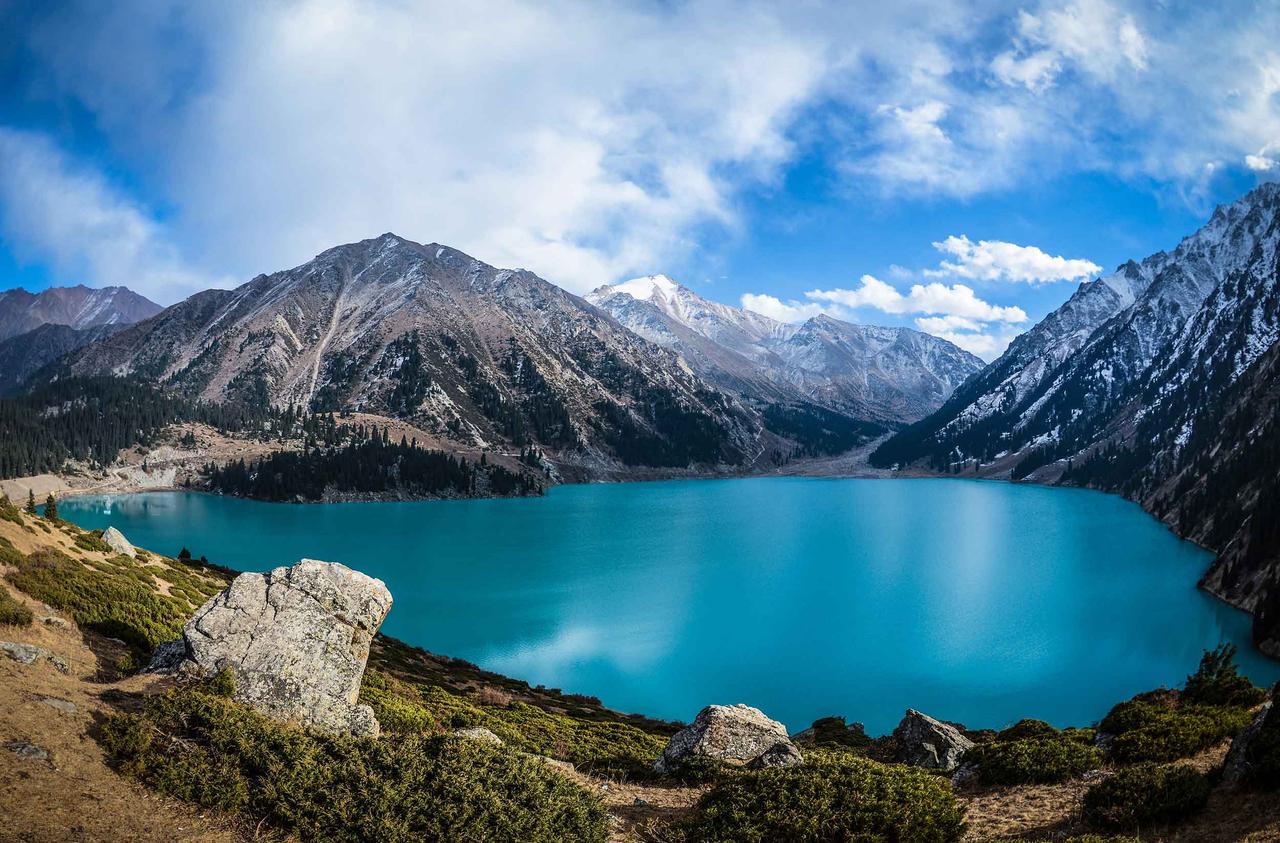
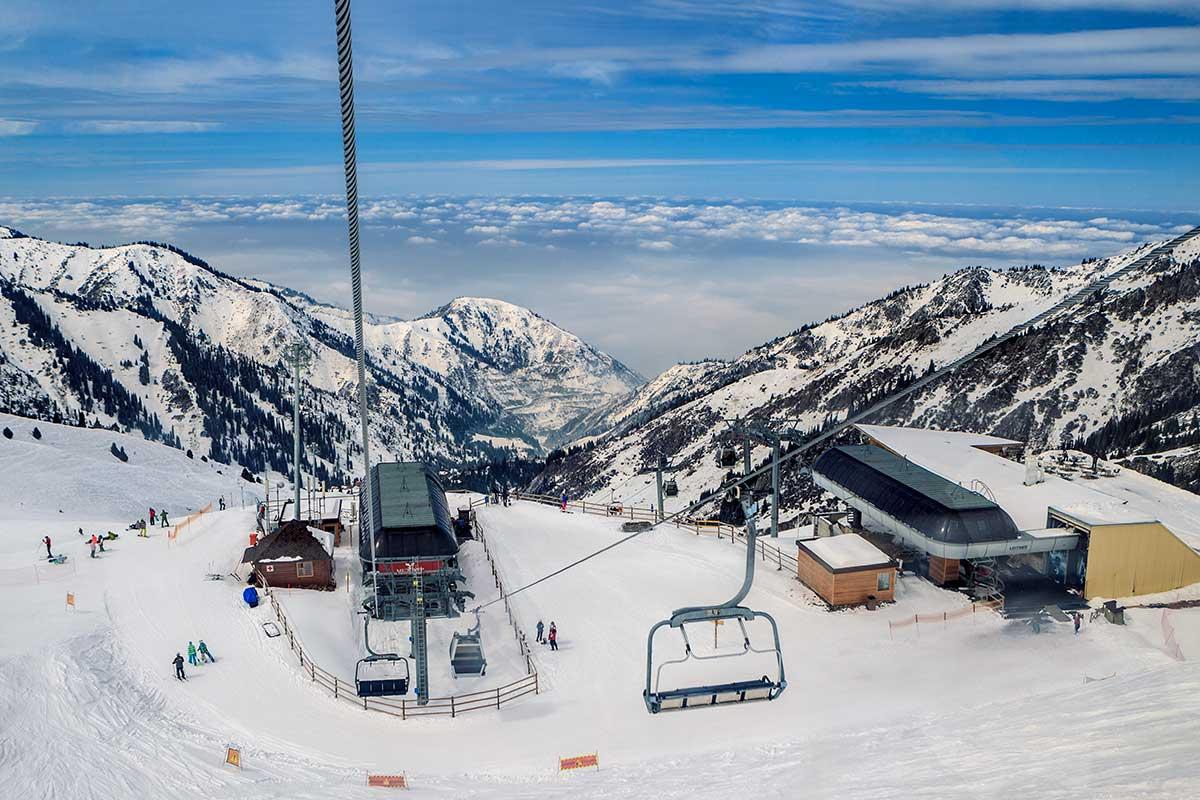
Big Almaty Lake (https://kazakhstan.travel/en/where-to-go/region/6/almaty-province)
The traditional Kazakh way of life, respectful of nature passed down from ancestors, is an essential part of ecotourism. Traditions inherited from the nomadic past reflect a philosophy of living in harmony with the natural environment.
Kazakhstan possesses a rich heritage for visitors interested in cultural tourism, including its nomadic culture, ancient settlements, and Soviet-era architecture.
The nomadic heritage plays a significant role in Kazakhstan’s cultural tourism. Traditional Kazakh culture is kept alive through yurts, equestrian sports, traditional music, and folk dances. These cultural elements are presented to tourists through festivals and events.
Kazakhstan’s cities are attractions that combine historical and modern architecture.
Astana (Nur-Sultan):
Almaty:
Kazakhstan offers tourists a comfortable experience with its developed transportation infrastructure and accommodation facilities.
Kazakhstan possesses a rich cultural heritage shaped by its nomadic past, multicultural structure, and traditional values. Throughout history, the country has hosted various ethnic groups and integrated their cultural elements. At the same time, the Kazakhs have preserved the influences of their nomadic lifestyle and continue to maintain their traditions to this day.
Hospitality is one of the foundational pillars of Kazakh culture. Kazakhs welcome guests with great respect and offer them traditional dishes. Due to their nomadic heritage, horse breeding and equestrian sports are among the important cultural elements of Kazakhstan.
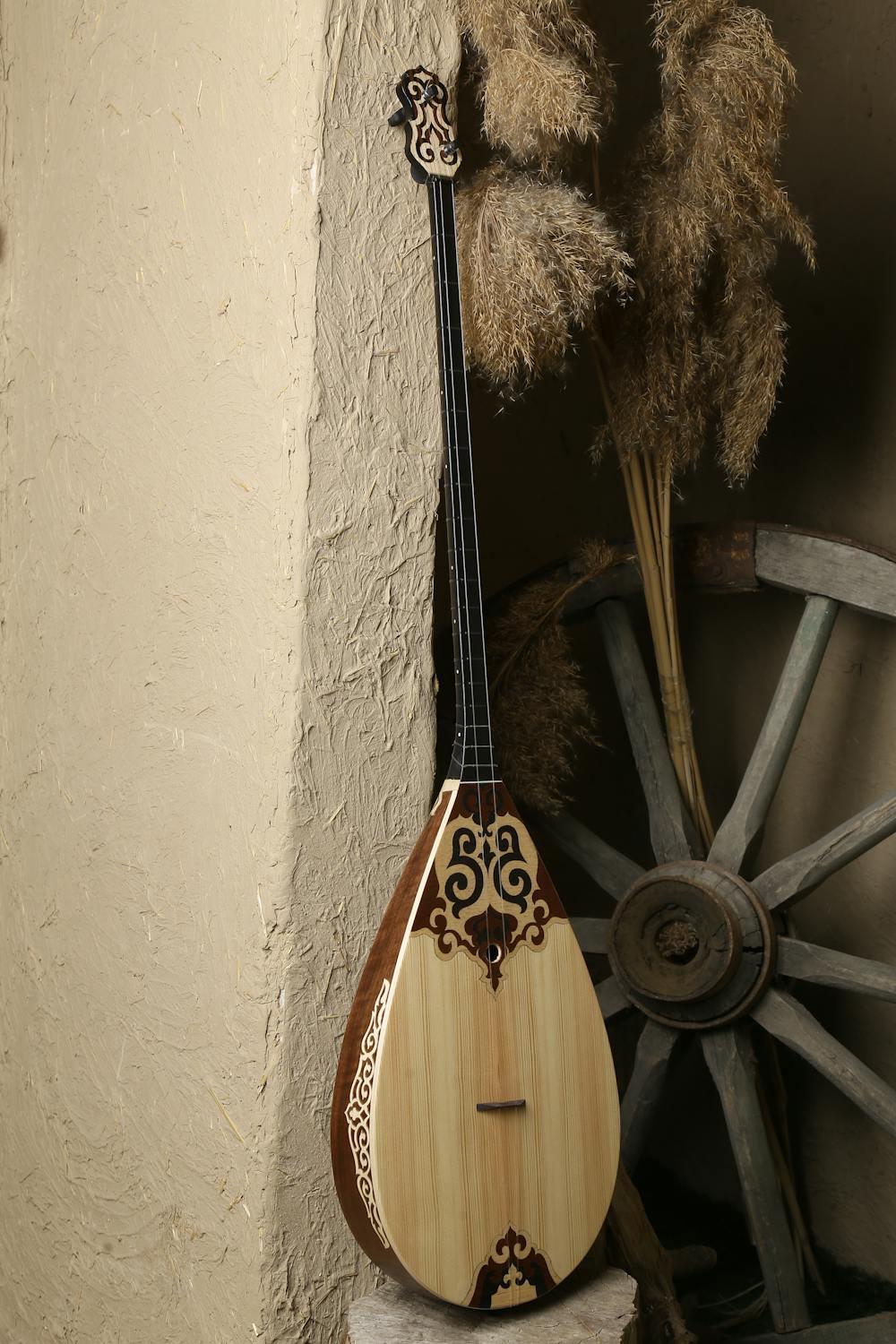
Kazakhs place great importance on preserving their traditional music, handicrafts, and folk dances. The dombra holds a significant place in Kazakh music. This traditional instrument, often accompanying poetic recitations by Kazakh poets and folk bards (jirau and aqyn), is central to the musical tradition. Traditional festivals and holidays are important events through which the population sustains its cultural values. Nowruz, celebrating the arrival of spring, is one of the most important festivals and is celebrated with great enthusiasm as nature awakens.
Although Kazakh culture was subjected to assimilation policies during the Soviet era, it was revitalized after independence, with national identity emphasized. Today, traditional yurts, equestrian sports, folk dances, and traditional clothing form the core elements of Kazakh culture.
New Year: 1–2 January
Women’s Day: 8 March
Nowruz: 21–23 March
Unity Day: 1 May
Astana Day: 6 July
Constitution Day: 30 August
Republic Day: 25 October
Independence Day: 16 December
Kazakh cuisine is characterized by its nomadic lifestyle influences and meat-based dishes. Traditional Kazakh meals are primarily based on animal products such as horse, lamb, and beef meat, as well as dairy products. Additionally, grain and flour-based foods hold an important place in the cuisine.
Dairy products hold an important place in Kazakh cuisine. In line with the nomadic lifestyle, fermented dairy products are commonly consumed.
"About Kazakhstan". Accessed February 25, 2025.https://kazakhstan.travel/en/tourist-help/about_kazakhstan
Kazakhstan.travel. Accessed February 25, 2025.
Küçük, Cevdet. "Kazakistan (3/4)." *Türkiye Diyanet Vakfı İslâm Ansiklopedisi*, Volume 25, Ankara, 2022, pp. 130–131.https://islamansiklopedisi.org.tr/kazakistan#3-mimari
Nogayeva, Ainur. "Geçmişten Günümüze Kazakistan" (From Past to Present Kazakhstan). Asya Araştırmaları Dergisi 3, no. 2: pp. 347-353.
North Atlantic Treaty Organization. Accessed February 25, 2025.https://www.nato.int/cps/bu/natohq/topics_49598.htm
Official website of the President of the Republic of Kazakhstan. Accessed February 25, 2025.
Ramazanoğlu, M. Gözde. "Kazakistan (3/4)." *Türkiye Diyanet Vakfı İslâm Ansiklopedisi*, Volume 25, Ankara, 2022, pp. 127–130.https://islamansiklopedisi.org.tr/kazakistan#3-mimari
Ruh, Batyr. "Fotoğraf." Accessed May 25, 2025.https://www.pexels.com/tr-tr/fotograf/rustik-dekorlu-geleneksel-kazak-dombyra-30472395/
Saray, Mehmet. "Kazakistan (1/4)." *Türkiye Diyanet Vakfı İslâm Ansiklopedisi*, Volume 25, Ankara, 2022, pp. 121-125.https://islamansiklopedisi.org.tr/kazakistan#3-mimari
Söylemez, Orhan. "Kazakistan (2/4)." Türkiye Diyanet Vakfı İslâm Ansiklopedisi, Volume 25, Ankara, 2022, pp. 125-127.https://islamansiklopedisi.org.tr/kazakistan#3-mimari
The World Factbook. "Kazakhstan." Accessed February 25, 2025.https://www.cia.gov/the-world-factbook/countries/kazakhstan/map/
Turkic States Organization. "Kazakhstan." Accessed February 25, 2025.https://www.turkicstates.org/tr/uye-ulkeler-detay/uye-ulkeler-kz
Türkiye Cumhuriyeti Dışişleri Bakanlığı. "Kazakistan'ın Ekonomisi." Accessed February 25, 2025.https://www.mfa.gov.tr/kazakistan-cumhuriyeti-ekonomisi.tr.mfa
Türkiye Cumhuriyeti Dışişleri Bakanlığı. "Kazakistan'ın Siyasi Görünümü." Accessed February 25, 2025.https://www.mfa.gov.tr/kazakistan-siyasi-gorunumu.tr.mfa
Türkiye Cumhuriyeti Dışişleri Bakanlığı. "Türkiye-Kazakistan Siyasi İlişkileri." Accessed February 25, 2025.https://www.mfa.gov.tr/turkiye-kazakistan-siyasi-iliskileri_.tr.mfa
Türkiye Cumhuriyeti Dışişleri Bakanlığı. "Ülke Künyesi." Accessed February 25, 2025.https://www.mfa.gov.tr/kazakistan-kunyesi.tr.mfa

Republic of Kazakhstan
Capital | Astana | ||||||||
|---|---|---|---|---|---|---|---|---|---|
Official Language | Kazakh | ||||||||
Form of Government | Presidential System | ||||||||
President | Kassym-Jomart Tokayev | ||||||||
Prime Minister | Askar Mamin | ||||||||
Independence | 16 December 1991 | ||||||||
Area | 2,724,900 km2 | ||||||||
Population | 20 Million | ||||||||
Currency | Kazakh Tenge | ||||||||
Time Zone | GMT+5 | ||||||||
Telephone Code | +997 | ||||||||
Internet Extension | .kz | ||||||||
Climate | Cold Semi-Arid Climate | ||||||||
Ethnic Structure | Kazakh (%63), Russian (%24), Ukrainian (%2.1), Uyghur (%1.4), Tatar (%1.3), German (%1.1), Other (%7.1) | ||||||||
GDP | 96.1 billion Dollars (2019) | ||||||||
History
Russian Rule and the Soviet Era
Independence Era
National Anthem
Geography
Topography and Land Structure
Water Resources and Lakes
Vegetation and Natural Areas
Natural Resources and Economic Importance
Climate
Demographics
Urbanization and Population Distribution
International Relations
Relations with Turkey
Relations with NATO
Regional and Global Cooperation
Kazakhstan Armed Forces
Military Structure and Organization
Cooperation with NATO and Peacekeeping Operations
Regional Military Cooperation and Defense Policies
Economy
Economic Data and Trade
Major Export and Import Products
Industry and Energy Sector
Agriculture and Livestock
Turkish Investments and Construction Sector
Tourism
Nature and Ecotourism
Cultural and Historical Tourism
Historical and Architectural Structures
Nomadic Culture and Traditional Lifestyle
Urban Tourism: Astana and Almaty
Transportation and Tourism Infrastructure
Air Transport
Rail Transport
Urban Transportation
Culture
National and Religious Holidays
Kazakh Cuisine
Major Kazakh Dishes
Dairy Products and Beverages