Geographical Indication Type(s) | Mahreç Indication | ||||||||
|---|---|---|---|---|---|---|---|---|---|
Registration Number | 870 | ||||||||
Registration Date | 20.08.2021 | ||||||||
Product / Product Group(s) | Bakery and Confectionery Products Sweets Pastries | ||||||||
Province(s) | Kayseri | ||||||||
Applicant/Registrant(s) | Kayseri Chamber of Commerce | ||||||||
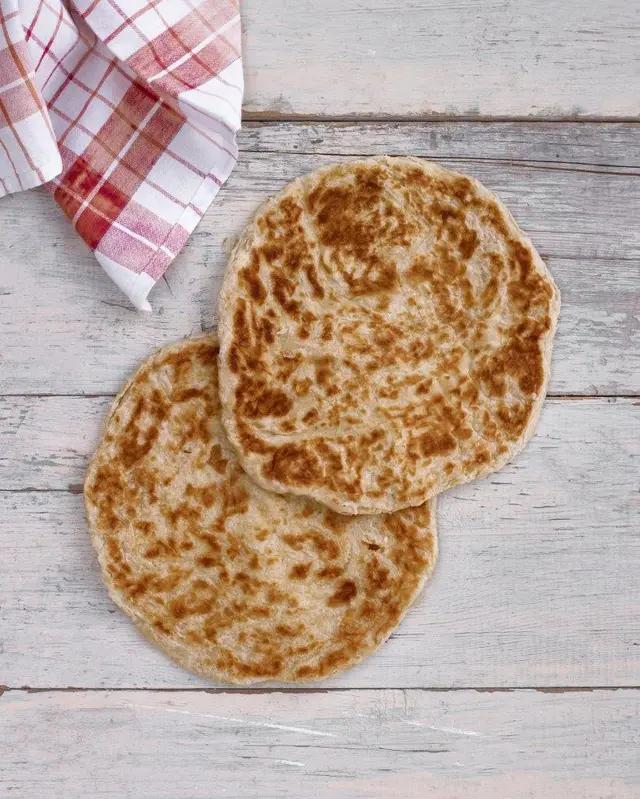
Kayseri katmeri is a traditional pastry prepared with a tahini filling, distinguished by its layered structure and strands of separated dough. Protected under the “mahreç indication” according to Industrial Property Law No. 6769, it was registered on August 20, 2021, effective from February 26, 2021. The registrant is the Kayseri Chamber of Commerce, and the geographical boundary of the product is limited to Kayseri province.
Kayseri katmeri is made by incorporating a tahini filling into dough prepared with wheat flour, water and salt. The dough is folded and rolled several times to create layers. Its characteristic features are the dominant taste of tahini and the strands of separated dough layers. Produced and consumed daily, the product requires skilled techniques for rolling and folding. Achieving the layered structure is the most distinctive feature of the production process.
For the production of 15 Kayseri katmeri:
For the Dough:
Mix the flour, salt, and water to obtain a soft dough. Divide the dough into three equal portions and rest for 20 minutes. Roll each portion into a 55–60 cm diameter sheet using a rolling pin.
For the Katmer Filling:
Mix margarine, butter and tahini into a homogeneous mixture and spread evenly over the dough sheets. Fold the edges toward the center to integrate the mixture. Fold the edges inward, make a central hole and roll outward to form a circular shape. Tear the dough at one point and roll into a rose shape. Rest at 2–5 °C for 20 minutes to prevent the tahini filling from spilling.
Divide the rested dough into 5 equal parts to obtain 15 katmeri dough pieces. Roll each into a round shape, 20–25 cm in diameter and 0.5–1 cm thick, without using additional flour. Cook on a griddle over medium heat until both sides develop brown spots.
The production of Kayseri katmeri requires skill, especially in rolling and folding the dough to create the layered structure. This artisanal expertise and the product’s reputation with the region mean that all production stages are carried out exclusively within Kayseri province.
The “Kayseri Katmeri” designation, along with the registered logo and mahreç indication, appears on the product itself or its packaging. If it cannot be used on the packaging, the designation and emblem are displayed visibly within the establishment.
The product is inspected under the coordination of the Kayseri Chamber of Commerce by a three-member committee composed of experts from the Kayseri Provincial Representation of the Chamber of Food Engineers (TMMOB), Kayseri Restaurateurs and Pastry Chefs Chamber and the Kayseri Commodity Exchange. Inspections are conducted at least once a year and additionally if required or upon complaint.
Inspections cover the following:
During inspections, experts from public or private institutions may provide support. The registrant manages legal procedures to protect the rights associated with the product.
Türk Patent ve Marka Kurumu. "Kayseri Katmeri." Geographical Indications Portal. Accessed October 24, 2025. https://ci.turkpatent.gov.tr/cografi-isaretler/detay/3542
Türk Patent ve Marka Kurumu. "Kayseri Katmeri" Geographical Indication Registration Certificate. Accessed October 24, 2025. https://ci.turkpatent.gov.tr/Files/GeographicalSigns/b9d2c923-d5fc-4810-9f0c-3197a5cea078.pdf
Geographical Indication Type(s) | Mahreç Indication | ||||||||
|---|---|---|---|---|---|---|---|---|---|
Registration Number | 870 | ||||||||
Registration Date | 20.08.2021 | ||||||||
Product / Product Group(s) | Bakery and Confectionery Products Sweets Pastries | ||||||||
Province(s) | Kayseri | ||||||||
Applicant/Registrant(s) | Kayseri Chamber of Commerce | ||||||||
Description and Distinctive Features
Production Method
Geographical Link and Production Conditions
Usage
Inspection
This article was created with the support of artificial intelligence.