

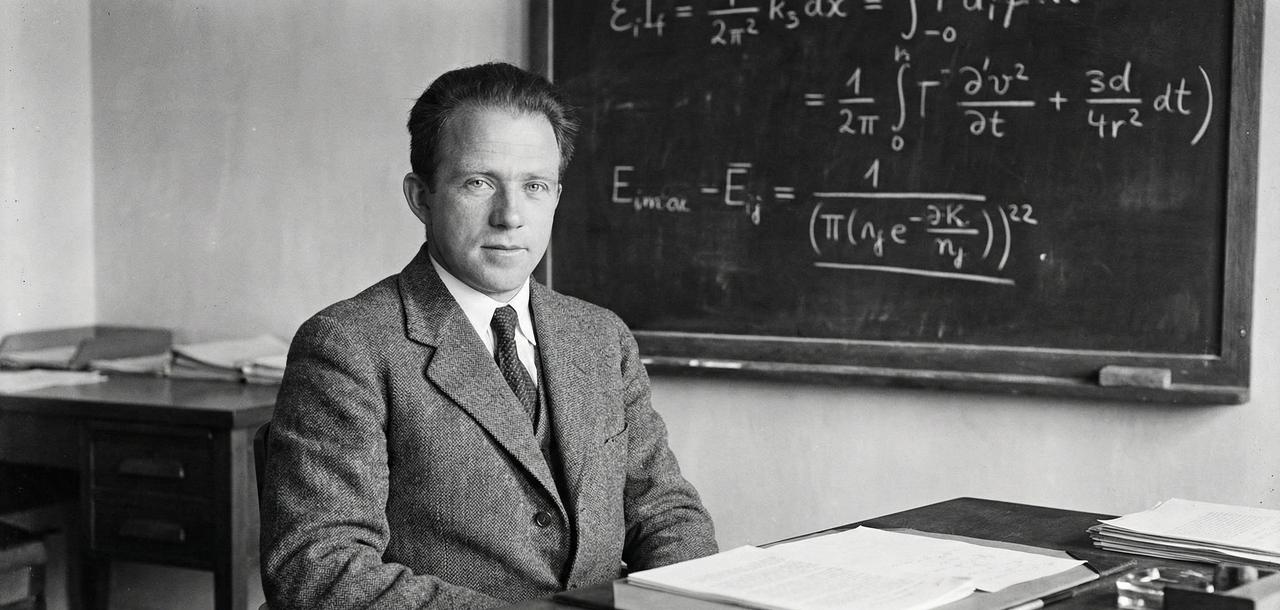

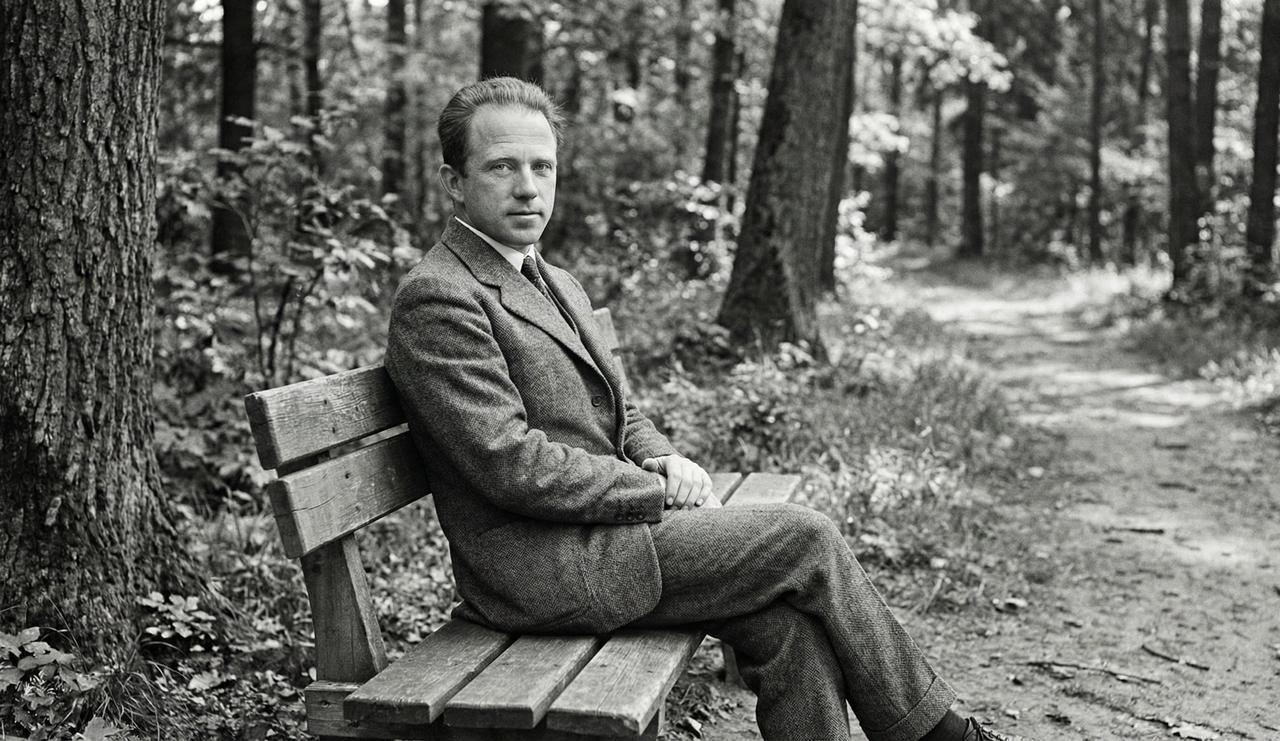
Generated Using Artificial Intelligence
Karl Werner Heisenberg
Birth | 05 December 1901 Würzburg, Germany | ||||||||
|---|---|---|---|---|---|---|---|---|---|
Spouse | Elisabeth Schumacher (marriage: 1937) | ||||||||
Death | 01 February 1976 Munich, Germany | ||||||||
Child | Christine Mann Jochen Heisenberg Verena Heisenberg Anna Maria Hirsch-Heisenberg Barbara Heisenberg Wolfgang Heisenberg Martin Heisenberg | ||||||||
Mother | Annie Wecklein | ||||||||
Father | August Heisenberg (classical philologist, professor at Munich University) | ||||||||
Education | University of Göttingen University of Munich | ||||||||
Areas of Work | Atomic physics Quantum mechanics Theoretical physics | ||||||||
Scientific Contributions | Development of matrix mechanics Heisenberg Uncertainty Principle (1927) Establishment of the mathematical foundations of quantum mechanics | ||||||||
Awards and Honors | Numerous honorary doctorates Nobel Prize in Physics (1932) Bavarian Order of Merit Grand Cross of the Federal Service of Germany (with Star) Fellowship of the Royal Society of London | ||||||||
Karl Werner Heisenberg (1901–1976) was a German physicist and one of the founding figures of quantum mechanics. He fundamentally transformed the way nature at the atomic and subatomic levels is described through his development of matrix mechanics and the Uncertainty Principle named after him. For these contributions, he was awarded the Nobel Prize in Physics in 1932.
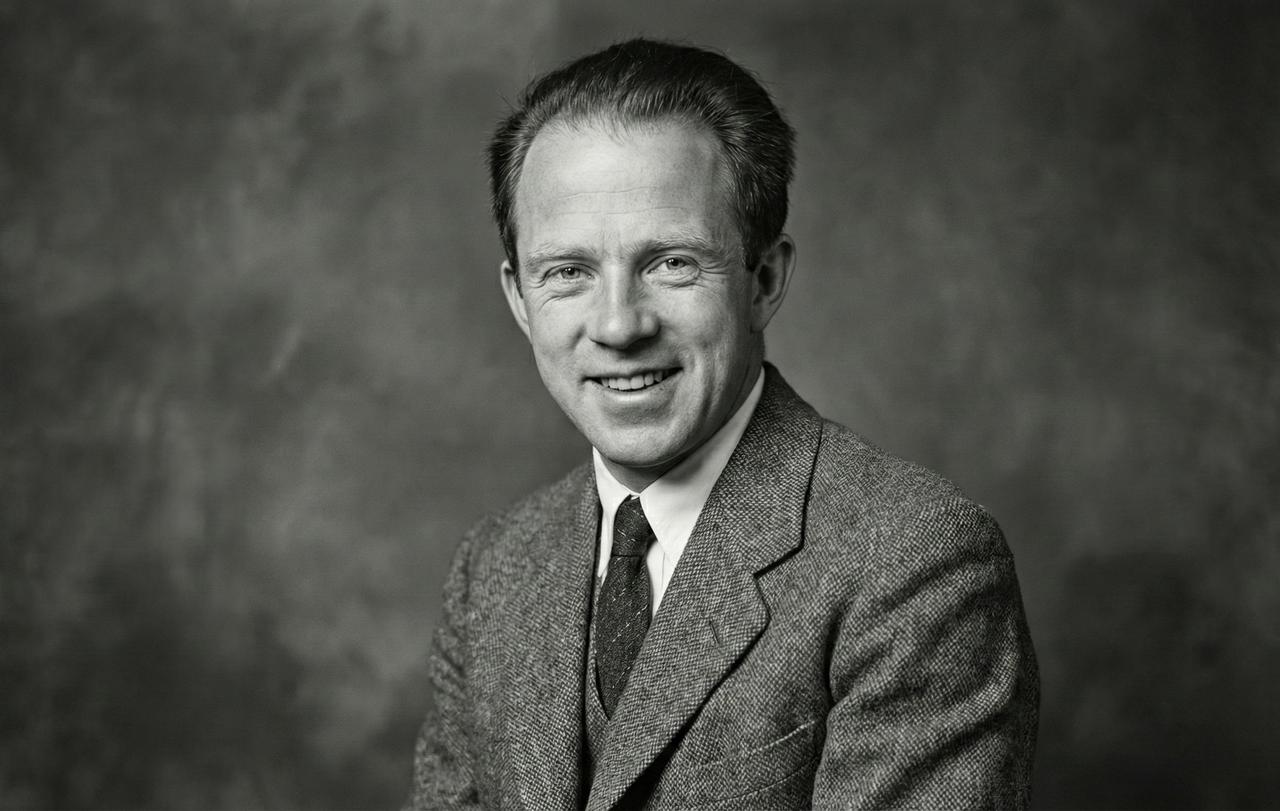
Werner Heisenberg - Generated Using Artificial Intelligence
Heisenberg was born on 5 December 1901 in Würzburg. He grew up during the first quarter of the 20th century, one of the most turbulent and productive periods in the history of science. This era witnessed revolutionary developments such as Planck’s quantum hypothesis, Einstein’s theory of relativity, and Rutherford’s atomic model. Heisenberg’s scientific identity was shaped within this atmosphere of theoretical transformation.
Werner Heisenberg married Elisabeth Schumacher in 1937. They had seven children together and lived with their family in Munich.
One of Heisenberg’s notable hobbies was classical music. He was an accomplished pianist with a deep interest in classical music. Music formed an essential part of his intellectual life alongside his scientific work.
Heisenberg spent the final years of his life in Munich, where he died on 1 February 1976.
During his university studies, Heisenberg developed a critical stance toward visual atomic models and intuitive descriptions. He found even the Bohr atomic model insufficiently convincing, demonstrating his early skepticism of classical physics assumptions. This intellectual attitude led him from Munich to Göttingen and subsequently, at the invitation of Niels Bohr, to the Institute for Theoretical Physics in Copenhagen. There, he engaged in discussions with the most brilliant young physicists of the time on the foundations of quantum theory.
Heisenberg’s primary field of research was atomic physics and quantum mechanics. Arguing that classical mechanics was inadequate at the subatomic level, he sought to develop a new physical language based solely on experimentally accessible quantities.
Heisenberg’s career developed through intense interaction with figures such as Bohr, Pauli, Born, Schrödinger, and Dirac. In particular, the mathematical contributions of Max Born enabled Heisenberg’s theoretical insights to take on a formal structure.
Heisenberg was also distinguished not only by his theoretical work but also by his leadership roles in scientific institutions.
He was also a member of the scientific academies of Göttingen, Bavaria, Saxony, Prussia, Sweden, Romania, Norway, Spain, the Netherlands, and Rome (the Vatican); the German National Academy of Sciences Leopoldina; the Accademia dei Lincei; and the American Academy of Sciences.
Heisenberg aimed to describe atomic processes not through visual models but through relationships between directly measurable quantities. This approach inadvertently led to the application of matrix algebra to physical problems, resulting in one of the first consistent mathematical frameworks for quantum mechanics.
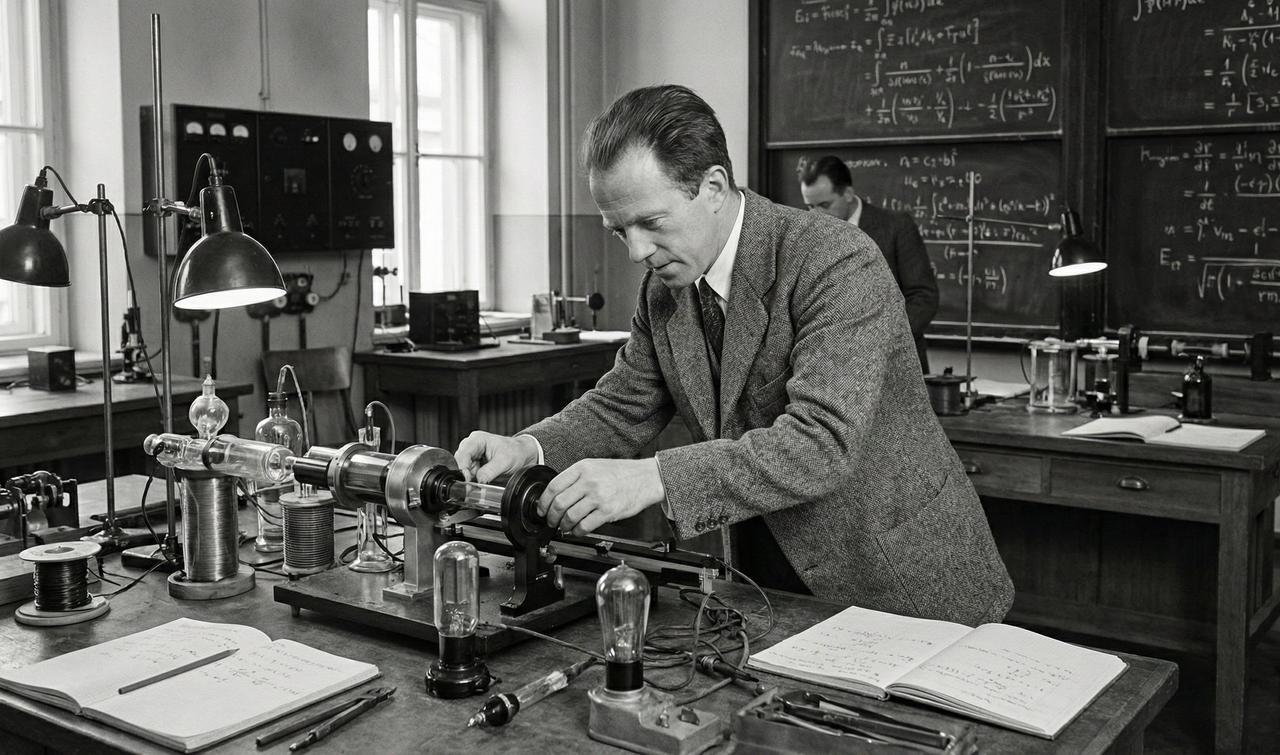
Werner Heisenberg - Generated Using Artificial Intelligence
Formulated in 1927, the Uncertainty Principle states that the position and momentum of a particle, or its energy and time, cannot both be determined with absolute precision simultaneously. This principle represented a radical departure from classical physics by demonstrating that measurement is not a passive observation but an active process that disturbs the system being measured.
Heisenberg’s approach constituted a systematic critique of the classical physics view that nature could be measured with complete precision and determinism in all its details. In this context, an epistemological distinction emerged between the experimental and deterministic scientific outlook of the 19th century — epitomized by approaches such as Edison’s ideal of technological precision and measurement certainty — and the emerging quantum mechanics. According to Heisenberg, uncertainty does not arise from limitations of measuring instruments but from the fundamental structure of nature at the subatomic level.
As one of the founding figures of quantum mechanics, Heisenberg helped define the conceptual framework of modern physics. The Uncertainty Principle is widely regarded as one of the fundamental boundaries distinguishing classical and quantum physics.
Heisenberg’s work has had a broad impact extending from atomic physics to semiconductor technology, from quantum information theory to modern experimental physics. The Uncertainty Principle is today not only a physical law but also a foundational reference point in the philosophy of science regarding the limits of knowledge.
Bilim ve Teknik Dergisi. Werner Heisenberg (1901–1976). Hacettepe Üniversitesi, October 1994. Accessed January 9, 2026.https://yunus.hacettepe.edu.tr/~ttugsuz/heisenberg.html
Nobel Prize Outreach. *Werner Heisenberg – Biographical.* NobelPrize.org, 2026. Accessed January 9, 2026.https://www.nobelprize.org/prizes/physics/1932/heisenberg/biographical/
Uçar, Semra. “Heisenberg Belirsizlik İlkesindeki ‘Belirsizlik’.” *Temaşa Felsefe Dergisi* 14 (2020): 72–82. Accessed January 9, 2026.https://dergipark.org.tr/tr/download/article-file/1247589

Generated Using Artificial Intelligence
Karl Werner Heisenberg
Birth | 05 December 1901 Würzburg, Germany | ||||||||
|---|---|---|---|---|---|---|---|---|---|
Spouse | Elisabeth Schumacher (marriage: 1937) | ||||||||
Death | 01 February 1976 Munich, Germany | ||||||||
Child | Christine Mann Jochen Heisenberg Verena Heisenberg Anna Maria Hirsch-Heisenberg Barbara Heisenberg Wolfgang Heisenberg Martin Heisenberg | ||||||||
Mother | Annie Wecklein | ||||||||
Father | August Heisenberg (classical philologist, professor at Munich University) | ||||||||
Education | University of Göttingen University of Munich | ||||||||
Areas of Work | Atomic physics Quantum mechanics Theoretical physics | ||||||||
Scientific Contributions | Development of matrix mechanics Heisenberg Uncertainty Principle (1927) Establishment of the mathematical foundations of quantum mechanics | ||||||||
Awards and Honors | Numerous honorary doctorates Nobel Prize in Physics (1932) Bavarian Order of Merit Grand Cross of the Federal Service of Germany (with Star) Fellowship of the Royal Society of London | ||||||||
No Discussion Added Yet
Start discussion for "Karl Werner Heisenberg" article
Life
Education
Research Field and Career
Key Scientific Contributions
Matrix Mechanics
Heisenberg’s Uncertainty Principle
Critique of Classical Physics
Place and Influence in the History of Science
Awards, Honors, and Academic Distinctions