


This article was automatically translated from the original Turkish version.
+2 More
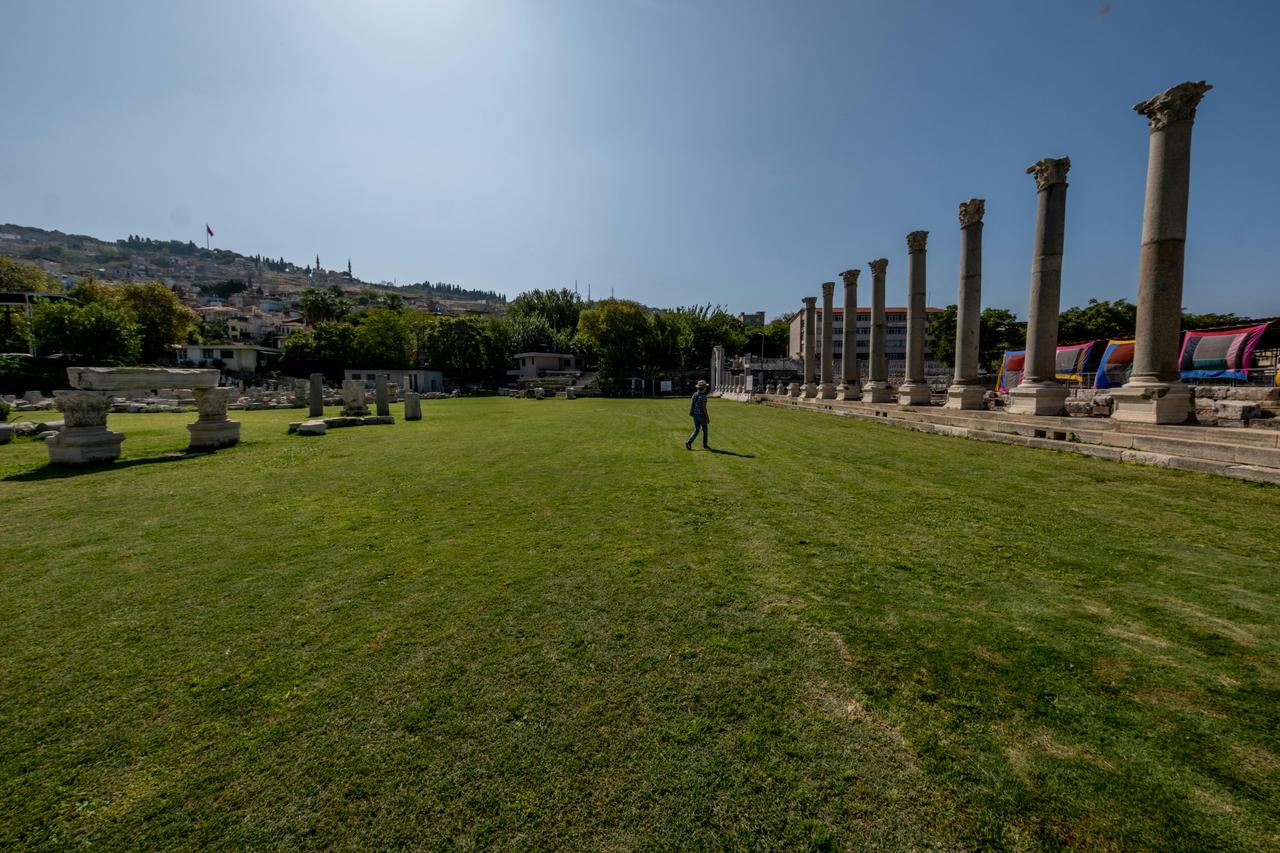
Izmir (Smyrna) Agora (Photo: Doğan Alpaslan Demir)
Architectural Structures | Basilica (North Gallery), West Gallery, Mosaic Structure, Columned Courtyard | ||||||||
|---|---|---|---|---|---|---|---|---|---|
Establishment | 4th century BC | ||||||||
Location | İzmir/Konak | ||||||||
The İzmir (Smyrna) Agora is located in the Namazgâh neighborhood of İzmir. Situated at the heart of ancient Smyrna, it functioned as a civic agora where commercial, political and social activities took place. The rectangular structure consists of a large central courtyard surrounded by colonnaded galleries and a basilica.
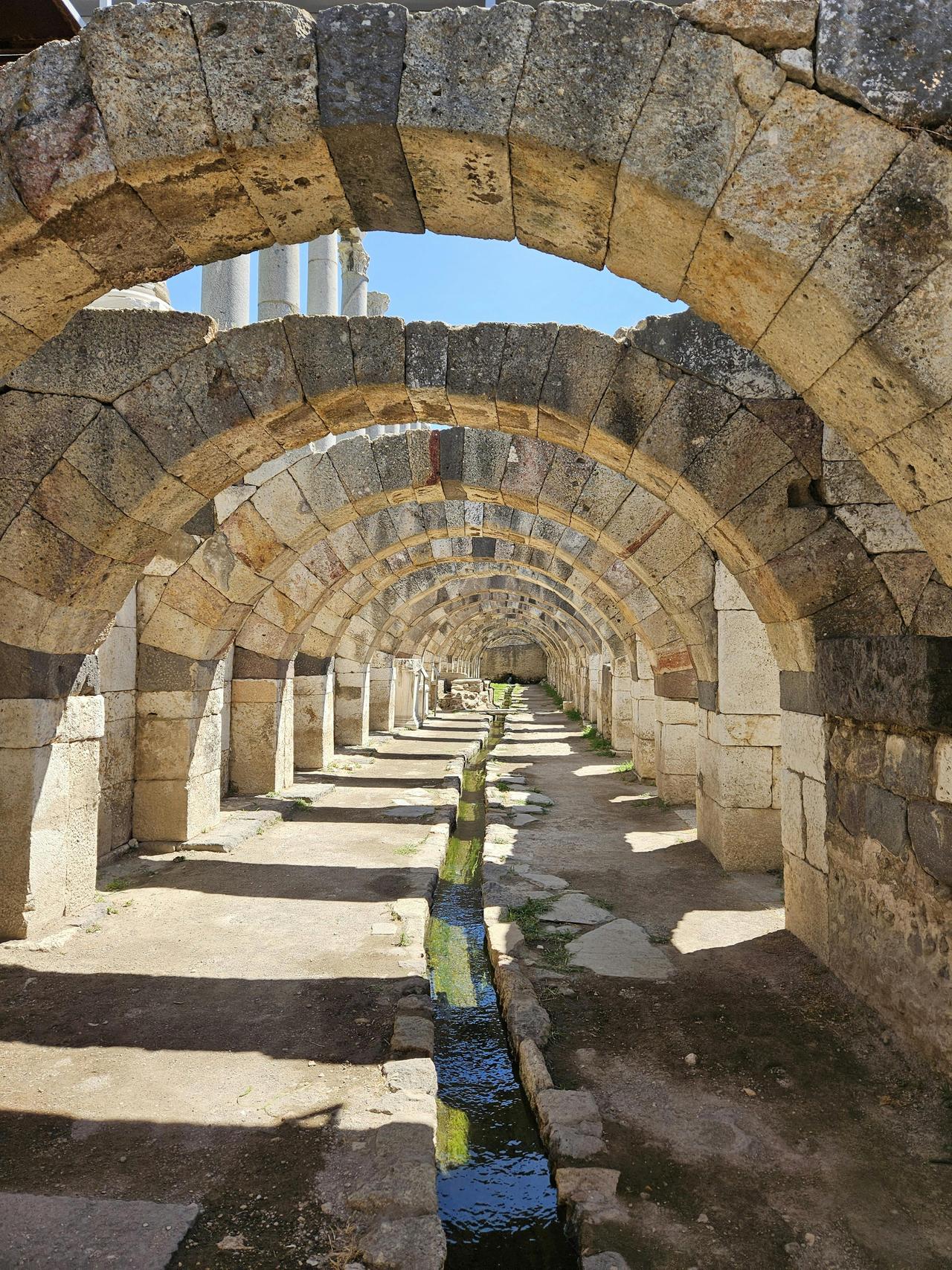
Agora (Photo: Meryem Şentürk Çoban)
The initial construction of the İzmir Agora took place at the end of the 4th century BCE, shortly after the time of Alexander the Great. Throughout the Hellenistic Period, the structure underwent several modifications, but its major transformations occurred during the Roman Imperial Period. It acquired its present form primarily at the end of the 2nd century CE and the beginning of the 3rd century CE, and retained its general layout until at least the 7th century CE.
During the Roman period, the agora was significantly renovated and continued to serve as an important public space, featuring colonnaded galleries and a basilica built under Emperor Hadrian.
Although Smyrna lost much of its significance during the Byzantine Period, the agora and its surroundings remained in use for some time. In the Ottoman Period, various structures were built atop the agora, but these were largely uncovered during modern-era excavations.
The agora consists of four main galleries and a central courtyard. The primary structures revealed through excavations are as follows:
The first excavations at the agora were initiated in 1932 by Selahattin Kantar and Rudolf Naumann but were halted in 1941. Short-term excavations were conducted by the İzmir Museum between 1996 and 1998, while continuous excavations resumed in 2002. Since 2007, excavations have been carried out under the leadership of Akın Ersoy on behalf of Dokuz Eylül University.
During the 2002–2003 excavations, a total of 913 coins were recovered. These include 13 coins from the Hellenistic Period (330–30 BCE), 52 from the Roman Imperial Period (27 BCE–284 CE), 699 from the Late Roman Imperial Period (284–498 CE), 9 from the Byzantine Period (491–1453 CE), 27 from the Ottoman Period (1299–1923 CE), and 1 coin from the Austrian Empire (1816 CE).
During excavations of the Mosaic Building, two distinct mosaic layers were uncovered. The first layer dates to the 2nd–3rd centuries CE, and the second to the 4th century CE. The designs of the mosaics include geometric patterns and vegetal ornamentation.
Additionally, Ottoman and European ceramics were found within the agora area, providing important clues about how the site was used in daily life during the Ottoman Period. The ceramic finds include Ottoman kitchen utensils, imported European porcelain, and everyday vessels.
During excavations at the İzmir (Smyrna) Agora, Ottoman-era tombstones were also brought to light. These tombstones date to the 18th and 19th centuries and are notable for their inscriptions and decorative motifs.
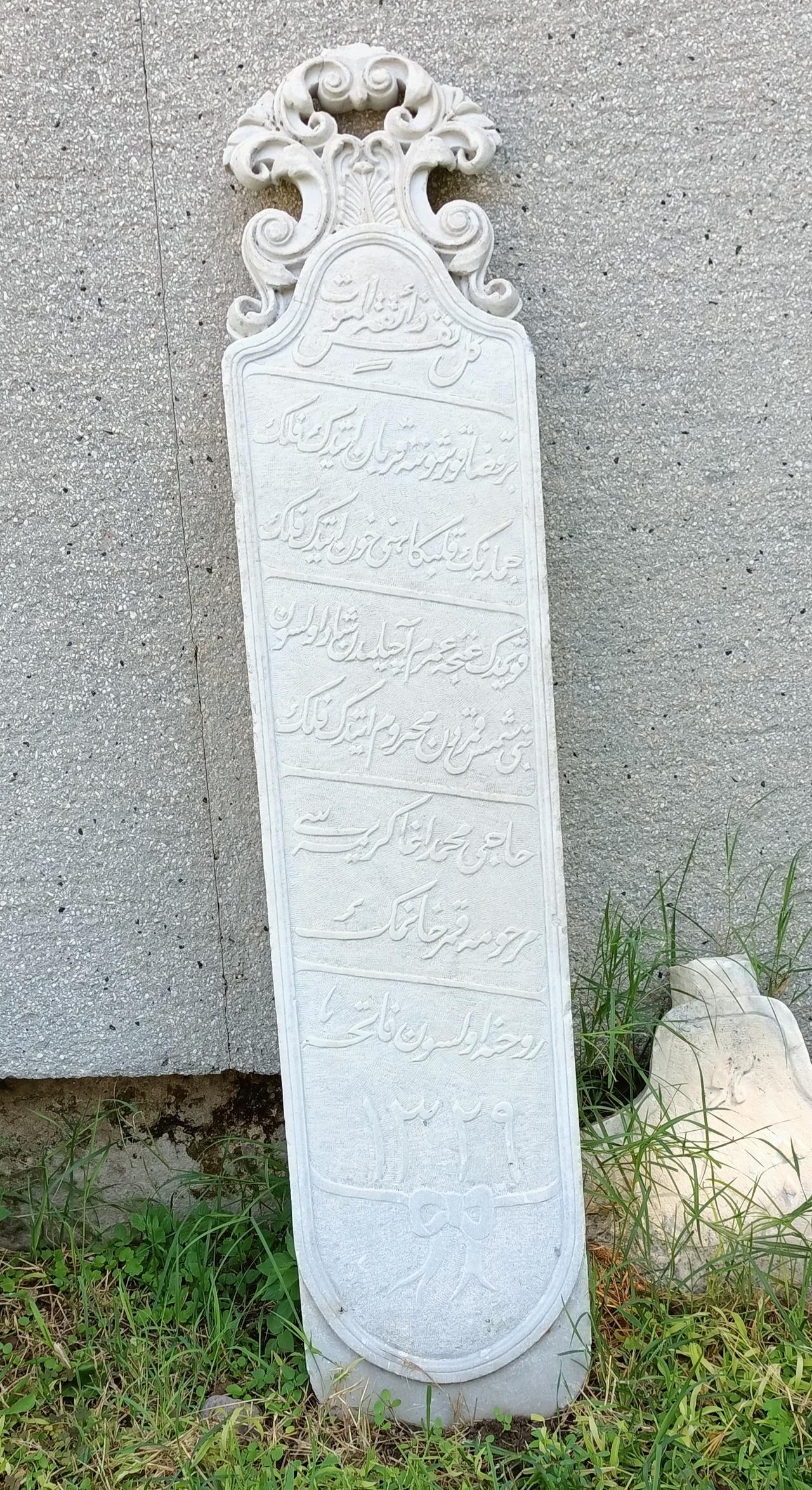
A Tombstone Found at the Agora (Photo: Meryem Şentürk Çoban)
Among these tombstones are inscriptions executed in Ottoman calligraphy, some featuring motifs of mosques and cityscapes. Made of marble, some of these tombstones are in excellent condition, with their inscriptions largely legible.
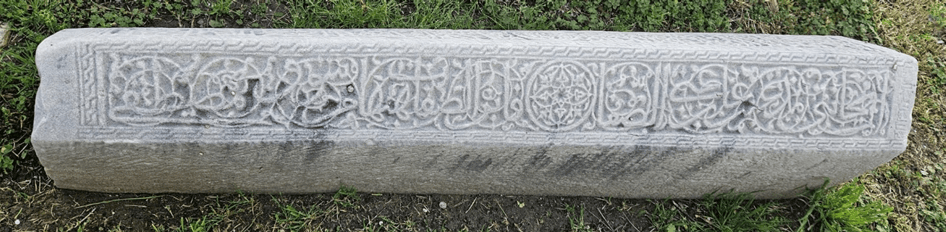
A Tombstone Found at the Agora (Photo: Meryem Şentürk Çoban)
The majority of the Ottoman-period finds uncovered during excavations indicate that the agora was also used as a burial ground during the Ottoman era. Furthermore, Ottoman-era ceramics have been found in the vicinity of some tombstones, suggesting that the burial areas were located close to areas of daily activity.
The Ottoman tombstones from the Smyrna Agora are among the significant archaeological finds reflecting the aesthetic and epigraphic characteristics of the period. These stones provide insights into the social structure, cultural fabric, and burial traditions of İzmir during the Ottoman era.
The İzmir (Smyrna) Agora was an important center both politically and economically in antiquity. Constructed in the 4th century BCE, the structure experienced major development during the Roman period and served as a site of changing uses during the Byzantine and Ottoman periods. Ongoing excavations continue to uncover new information about its history and architecture.
Demirtaş, Nurgül. İzmir (Smyrna) Agora Kazısı 2002-2003 Yılları Sikke Buluntuları. Trakya Üniversitesi Edebiyat Fakültesi Dergisi, Volume 4, Issue 8, July 2014, pp. 111-138.
Doğan, Alpaslan Demir. "İzmir (Smyrna) Agorası." (Photograph.)https://www.pexels.com/tr-tr/fotograf/peyzaj-manzara-kent-simgesi-gorulecek-yer-18646387/
Ersoy, Akın, and Sarp Alatepeli. Smyrna Agorası Mozaikli Yapı Mozaikleri. Journal of Mosaic Research 4 (2011): pp. 17-26.
Gök, Sevinç. "Osmanlı ve Avrupa Seramikleri Üzerinden Bir Okuma: Smyrna (İzmir) Agorası’ndaki Osmanlı Yerleşiminden Mutfak Kapları ile Günlük Yaşam Objeleri." Smyrna/İzmir Kazı ve Araştırmaları II, ed. Burak Yolaçan, Gözde Şakar ve Akın Ersoy, pp. 119-152. İzmir: Ege Yayınları, 2017.
Photographs
Research Works
Şentürk Çoban, Meryem. "Agora'da Bulunan Bir Mezar Taşı." (Photograph.)
Şentürk Çoban, Meryem. "Agora'da Bulunan Hat Sanatı ile Süslenmiş Bir Mezar Taşı." (Photograph.)
Şentürk Çoban, Meryem. "Agora." (Photograph.)

Izmir (Smyrna) Agora (Photo: Doğan Alpaslan Demir)
Architectural Structures | Basilica (North Gallery), West Gallery, Mosaic Structure, Columned Courtyard | ||||||||
|---|---|---|---|---|---|---|---|---|---|
Establishment | 4th century BC | ||||||||
Location | İzmir/Konak | ||||||||
No Discussion Added Yet
Start discussion for "Izmir (Smyrna) Agora" article
History and Development by Period
Architectural Features
Excavations and Archaeological Finds
Ottoman Tombstones