


This article was automatically translated from the original Turkish version.
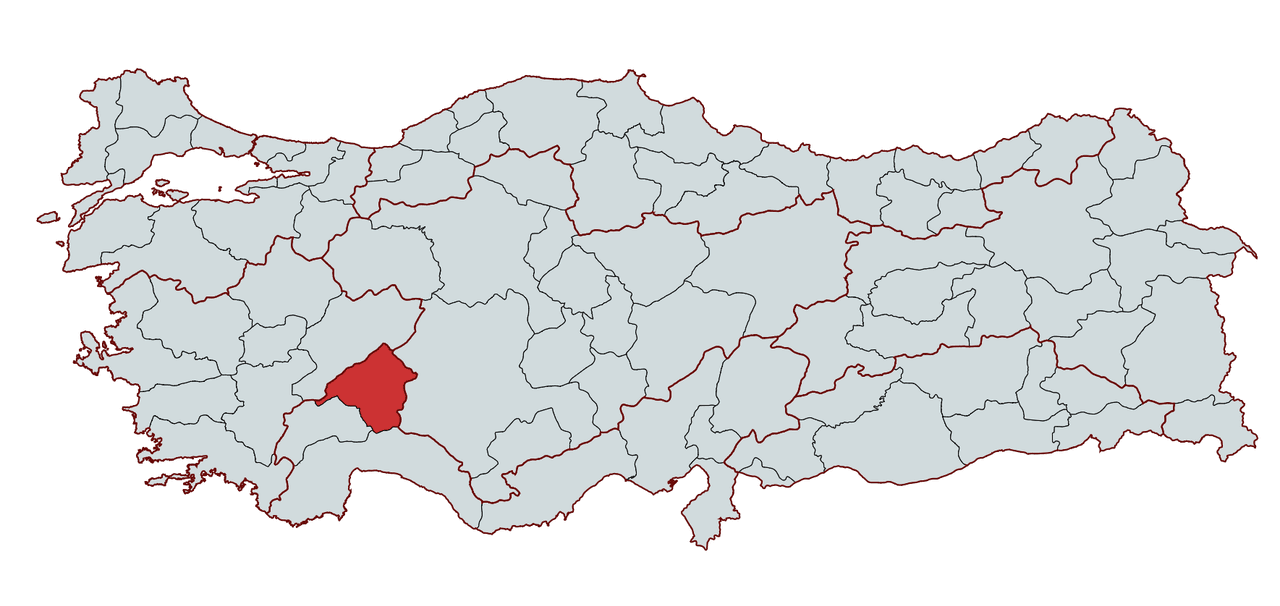
Isparta
Country | Türkiye | ||||||||
|---|---|---|---|---|---|---|---|---|---|
Region | Mediterranean Region | ||||||||
Population | 450,000 (2023) | ||||||||
Area | 8,933 km² | ||||||||
Climate | Transition zone between continental and Mediterranean climate | ||||||||
Important Structure | Eğirdir Lake Firdevs Bey Mosque Aya Payana Church Eğirdir Castle Pisidia Antioch Ancient City Davraz Ski Center | ||||||||
Area Code | 246 | ||||||||
License Plate Code | 32 | ||||||||
Governor | Aydın Baruş | ||||||||
Metropolitan Mayor | Şükrü Başdeğirmen | ||||||||
Isparta is a city in Türkiye's Mediterranean Region, known for its rose production and clean air. With an area of approximately 8,946 square kilometers, it is classified as a medium-sized province. Isparta, recognized for its educational institutions and natural beauty, hosts Süleyman Demirel University, an important educational institution. Due to its location as a transit point between the Mediterranean and inland regions, Isparta holds a strategic geographical and economic position.
Isparta and its surroundings are among the oldest settlement areas in Anatolia, with a history extending back to the Upper Paleolithic (35,000–10,000 BCE) and Mesolithic (10,000–8,000 BCE) periods. During the Neolithic Period (8,000–5,500 BCE), the region became one of Anatolia’s major cultural centers. In the Chalcolithic Age (5,500–3,000 BCE), it retained its significance, with archaeological finds from this era identified at 12 mounds within the province’s boundaries. During the Bronze Age (3,000–1,200 BCE), a total of 56 mounds have been identified. In the Hittite Period (1,800–1,200 BCE), the region was known as “Pitaşşa,” though the Pisidian territories did not fully come under Hittite control. In 334 BCE, the region came under the rule of Alexander the Great and subsequently passed under Seleucid control. During this period, cities such as Seleukeia Sidera (Atabey-Bayat), Apollonia (Uluborlu), and Antiokheia (Yalvaç) were established.
Isparta is located in the southwestern part of Türkiye, within the northern section of the Mediterranean Region, known as the “Lake Region.” The province lies between 30°20′ and 31°33′ east longitude and 37°18′ and 38°30′ north latitude. Isparta has an area of 8,933 square kilometers and an average elevation of 1,050 meters. Its terrain consists of 68.4 percent mountainous areas, 16.8 percent plains, and 14.8 percent plateaus.
To the north and northwest, Isparta borders Afyonkarahisar; to the west and southwest, Burdur; to the south, Antalya; and to the east and southeast, Konya.
Among the province’s most important mountains are Dedegöl Dağı (2,992 m), Barla Dağı, Davraz Dağı, and Akdağ, all extensions of the Western Taurus Mountains. As part of the Lake Region, Isparta is home to significant lakes including Eğirdir Gölü, Beyşehir Gölü, Kovada Gölü, and Gölcük Krater Gölü.
Isparta lies in a transitional zone between Mediterranean and continental climates. Summers are hot and dry, while winters are mild and rainy. Temperature differences between summer and winter and between day and night are more pronounced than in the Mediterranean Region but less so than in Central Anatolia.
Geologically, the region where Isparta is located is an active seismic zone formed as a result of the transformation of the Anatolian Plate from the early Paleocene to the early Pliocene, known as the “Isparta Angle.”
Isparta’s geographical structure offers rich diversity through the convergence of mountains, lakes, and plains. This diversity positively influences the province’s potential in agriculture, animal husbandry, and tourism.

View of Eğirdir Lake, formed by tectonic and karstic effects within the boundaries of Isparta province.
According to the Turkish Statistical Institute’s (TÜİK) 2024 Address-Based Population Registration System (ADNKS) results, the total population of Isparta province is recorded as 446,409. Of this, 335,771 reside in provincial and district centers, while 110,638 live in towns and villages. The province’s annual population growth rate is recorded at -7.5.
According to 2023 data, the number of foreign nationals living in Isparta is 8,738, of whom 4,317 are male and 4,421 are female.
Isparta’s demographic structure presents a balanced distribution between urban and rural populations. Approximately 75.2 percent of the total population resides in provincial and district centers, while 24.8 percent live in towns and villages. This distribution can be seen as an indicator of the province’s socio-economic structure and living conditions.
The negative population growth rate indicates a trend of emigration from the province. This phenomenon can be explained by the migration of the young population to larger cities in search of education and employment opportunities. On the other hand, the presence of foreign nationals reflects Isparta’s international interactions and migration patterns.
In conclusion, when considering factors such as the balance between urban and rural populations, population growth rate, and the presence of foreign nationals, Isparta’s demographic structure provides important insights into its socio-economic dynamics and migration trends.
Isparta’s economy is primarily based on agriculture, handicrafts, and tourism. Rose cultivation has become a symbol of the province, and rose oil production has gained significant recognition in national and international markets. In addition, carpet weaving holds an important place among Isparta’s traditional handicrafts.
Isparta’s handwoven carpets are in demand both domestically and internationally. Furthermore, the province’s geographical location and climate are favorable for the cultivation of various agricultural products, making agriculture a vital sector of the local economy.
Isparta attracts attention in tourism due to its rich natural beauty and historical heritage. Davraz Dağı, with its peak elevation of 2,635 meters, is an ideal center for winter sports and nature activities. Davraz offers skiing between December and March and hosts mountain climbing, paragliding, and hiking during the summer months. Accommodation options include facilities at the ski center as well as hotels in Eğirdir and Isparta.
Highland tourism is also one of Isparta’s major tourism activities. Over 24 highland areas have been identified in the region, attracting visitors during the summer months with their cool climate and natural beauty. Notable highland destinations include Kurucaoluk, Camili, Belova, and Beşkuyu in the district of Eğirdir; Tota, Söğüt, and Zengi in the district of Sütçüler; Sorgun Yaylası in the district of Aksu; and Melikler Yaylası in the district of Yenişarbademli.
For nature enthusiasts, Yazılı Kanyon Nature Park is a significant destination. Located in the district of Sütçüler, this canyon attracts attention with its natural beauty and ancient inscriptions. Yazılı Kanyon provides a suitable environment for hiking and photography.
Isparta’s natural and cultural richness enhances its tourism potential and makes significant contributions to its economy.
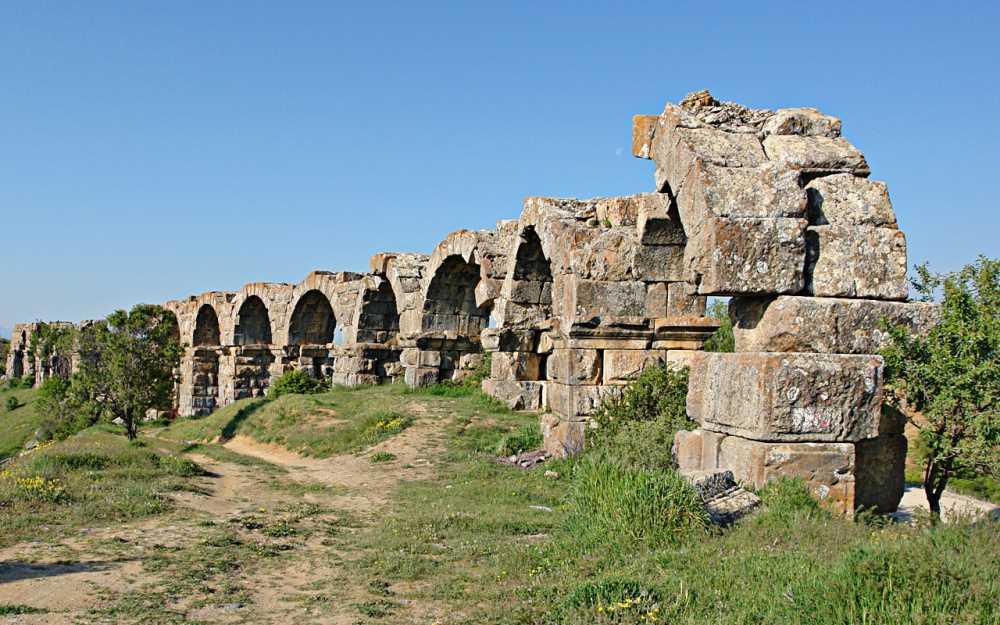
Yalvaç Water Arches
Isparta is home to several important ancient cities with rich historical heritage. One such site is the ancient city of Adada, mentioned in a treaty between Termessos and the region in the 2nd century BCE and known for minting its own coins in the 1st century BCE.
The ancient city of Pisidia Antiocheia is located in the northeast of the district of Yalvaç and is notable for its ruins from the Roman and Byzantine periods.
One of the most significant structures from the Seljuk period is the Eğirdir Hanı, built in 1237 by II. Gıyaseddin Keyhüsrev. However, it lost its function shortly after construction due to a fire.
The Firdevs Bey Bedesteni, from the Ottoman period, was constructed in 1561 in the architectural style of Mimar Sinan and continues to exist today.
Isparta is also known for its traditional handicrafts. Carpet weaving, which developed under the influence of Turkmen populations since the 12th century, turned the region into a renowned center for Turkmen carpets. By the late 19th century, changes occurred in traditional weaving styles due to the introduction of European patterns and colors.
In addition, Isparta’s reputation as the “Land of Roses” is rooted in rose cultivation. This tradition began in 1888 with rose saplings brought from the Kızanlık region of Bulgaria and transformed Isparta into Türkiye’s center for rose oil production.
One of the key institutions showcasing Isparta’s cultural heritage is the Isparta Museum. Initial museum activities began in 1933 with the opening of the Halkevi, and the current museum building was inaugurated in 1985. The museum features four main exhibition halls: archaeology, ethnography, treasury, and carpets. The archaeology hall displays statues, icons, and stelae; the treasury hall exhibits coins and medals from the Hellenistic, Roman, Byzantine, Seljuk, and Ottoman periods; the ethnography hall showcases lighting tools, clothing, accessories, weapons, and objects related to coffee culture; and the carpet hall displays carpets from Isparta as well as from Uşak, Gördes, Çanakkale, Bergama, Antalya, Nevşehir, Kırşehir, Kayseri, Eastern Anatolia, and Konya, along with distillation equipment used in rose oil production. In the museum garden, funerary stelae and architectural fragments from the Pisidia region are exhibited.
Isparta is a strategically located province in southwestern Türkiye with a well-developed transportation infrastructure. The province’s transportation network consists of three main components: road, rail, and air.
Road Transportation
Isparta maintains effective road connections with surrounding provinces and regions. Its position along major arteries linking the Mediterranean Region to Central Anatolia and the Aegean Region enhances its commercial and tourist activity. Road transport also strengthens interactions between Isparta’s internal regions and neighboring provinces.
Rail Transportation
Isparta is situated on an important rail corridor. The province is connected by rail to major cities such as İzmir and İstanbul via Afyonkarahisar. This line plays a vital role in both freight and passenger transport. Rail transport offers an economic and reliable option, particularly for the movement of industrial goods.
Air Transportation
Isparta Süleyman Demirel Airport provides air transportation services for the province. Located approximately 30 kilometers from the city center, the airport offers domestic flights to various destinations, primarily İstanbul and Ankara. Air transport is a key factor supporting the province’s tourism potential.
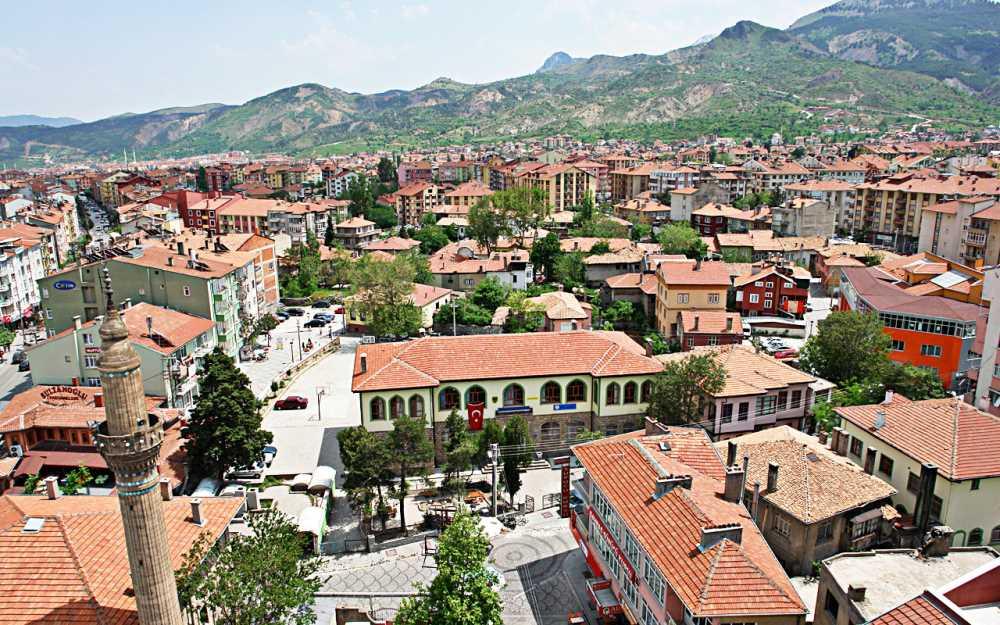
Isparta Center
Isparta province has a well-developed healthcare infrastructure. According to TÜİK’s 2016–2017 data, 1,479 specialist physicians are practicing in the province, providing healthcare services across various specialties to meet local needs. Additionally, the number of healthcare personnel and the distribution of medical facilities contribute to the effectiveness of healthcare services in Isparta.
In education, Isparta province holds significant indicators. According to TÜİK’s 2015 “Index of Life in Provinces” data, Isparta ranked first with a score of 0.6745 in the overall life index. This index includes various components such as education, health, security, civil participation, and infrastructure, reflecting Isparta’s achievements in education.
Regarding educational status, according to data from TÜİK’s Population Statistics Portal, the number of people in Türkiye who can read and write but have not completed any school is 7,641,467. The number of primary school graduates is 17,187,494, and the number of middle school or equivalent vocational school graduates is 11,665,911. These figures reflect the national education level, and Isparta province is assessed within this broader context.
In conclusion, Isparta province holds an important position in its region due to its infrastructure and services in health and education. The number of specialist physicians and educational performance indicators make positive contributions to the province’s socio-economic development.
Isparta welcomes numerous visitors each year due to its rich natural beauty and tourist attractions. Accordingly, the province offers various accommodation options. There are three accommodation facilities at the Davraz Ski Center. Additionally, pensions operate in Çobanisa Village, located 8 kilometers from the center. Hotels in Eğirdir and Isparta city center also provide alternative accommodation for visitors.
For those seeking an immersive nature experience, camping and caravan accommodation are available at Kızıldağ Milli Park. The park also features open-air bungalows and food and beverage facilities.
Isparta’s social life features a dynamic structure where traditional cultural değerler and modern lifestyles coexist. Various festivals, celebrations, and cultural events held in the province enhance social interaction among residents and contribute to the preservation of cultural heritage. Moreover, the province’s natural beauty encourages public participation in recreational activities.
In conclusion, Isparta offers diverse opportunities to visitors and residents through its accommodation options and rich social life. This city, where natural and cultural richness are harmoniously combined, stands out for its hospitality and quality of life.
Isparta province is administered under Türkiye’s local governance structure through governorship and local administrative units operating under central authority. The provincial governor, as the highest-ranking civil official, serves as the representative of the central government and coordinates public services across the province.
Local administrative units include municipalities, the provincial special administration, and village muhtarliks. Municipalities are local administrative bodies located in provincial and district centers, managed by mayors and conducting decision-making processes through municipal councils. The provincial special administration is governed by the provincial general council and provincial executive board, both chaired by the governor, and is responsible for providing public services such as infrastructure, education, health, and social services in rural areas within the province’s boundaries. In villages, village muhtars and elder councils carry out local administrative services.
Isparta’s local governance structure aims to contribute to the province’s socio-economic development through the harmonious cooperation of central and local administrative units.
Ministry of Culture and Tourism. *Isparta Kültür Portalı*. Accessed February 19, 2025.https://www.kulturportali.gov.tr/
Türkiye İstatistik Institute (TÜİK). *Adrese Dayalı Nüfus Kayıt Sistemi Sonuçları, 2024*. Accessed February 19, 2025.https://data.tuik.gov.tr/Bulten/Index?p=Adrese-Dayali-Nufus-Kayit-Sistemi-Sonuclari-2024-53783
Türkiye İstatistik Kurumu (TÜİK). *Coğrafi Bilgi Sistemi ve Mekânsal Veri Hizmetleri*. Accessed February 19, 2025.https://cip.tuik.gov.tr

Isparta
Country | Türkiye | ||||||||
|---|---|---|---|---|---|---|---|---|---|
Region | Mediterranean Region | ||||||||
Population | 450,000 (2023) | ||||||||
Area | 8,933 km² | ||||||||
Climate | Transition zone between continental and Mediterranean climate | ||||||||
Important Structure | Eğirdir Lake Firdevs Bey Mosque Aya Payana Church Eğirdir Castle Pisidia Antioch Ancient City Davraz Ski Center | ||||||||
Area Code | 246 | ||||||||
License Plate Code | 32 | ||||||||
Governor | Aydın Baruş | ||||||||
Metropolitan Mayor | Şükrü Başdeğirmen | ||||||||
History
Geography
Demographics
Economy
Tourism
Cultural Heritage
Traditional Handicrafts and Economy
Museums
Infrastructure and Transportation
Health and Education
Accommodation and Social Life
Local Governance