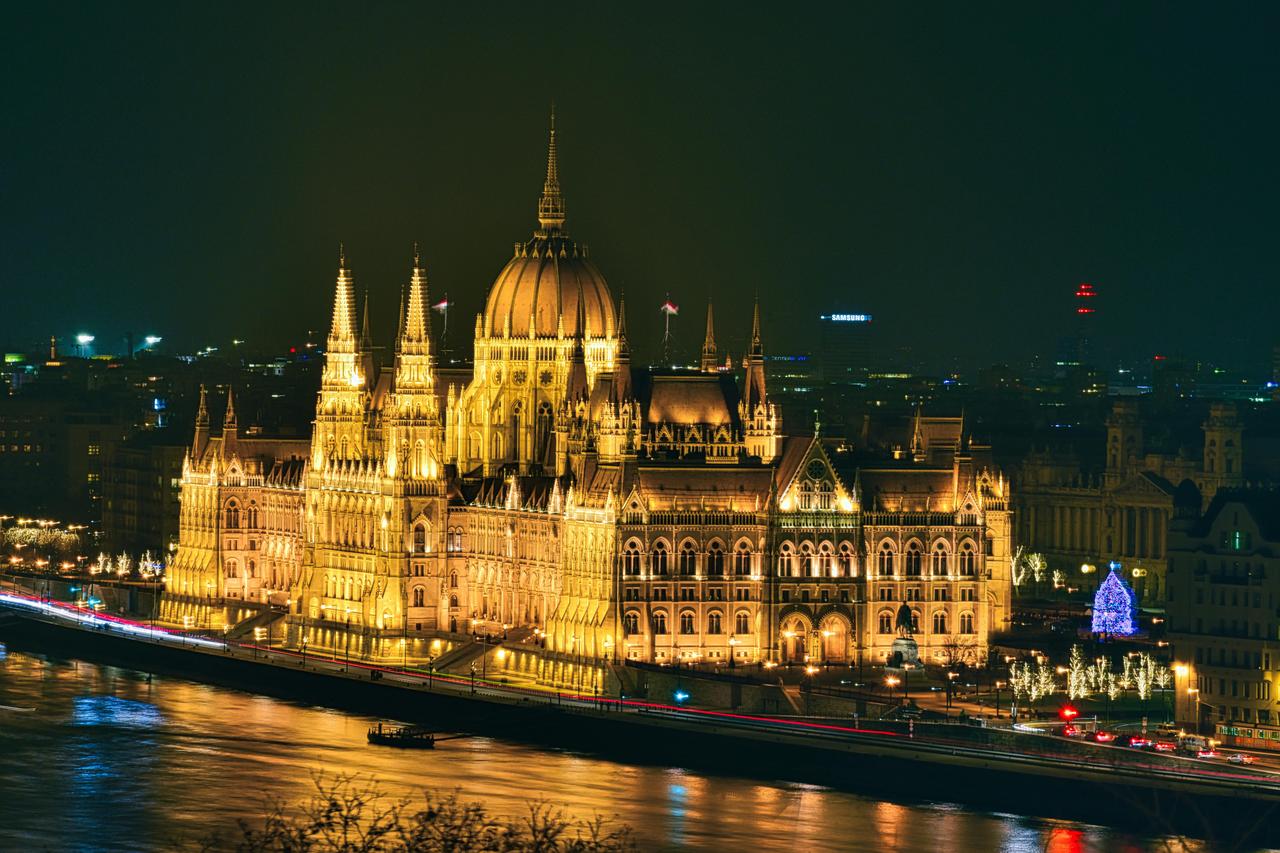
This article was automatically translated from the original Turkish version.
+1 More
Location | Budapest Kossuth Lajos Square | ||||||||
|---|---|---|---|---|---|---|---|---|---|
Architect | Imre Steindl | ||||||||
Architectural Style | Eclectic | ||||||||
Construction Start | 1885 | ||||||||
Completion Date | 1902 | ||||||||
Height | 96 metres | ||||||||
Length | 271 metres | ||||||||
Width | 123 metres | ||||||||
Base Area | Approximately 18,000 m² | ||||||||
Number of Floors | 4 | ||||||||
Materials Used | 40 million bricks, 30,000 m³ carved stone, 40 kg of 22–23 karat gold | ||||||||
The Parliament Building of Hungary (Országház), located on the Pest side of the Danube River in the capital city of Budapest, is the center of the country’s political life and one of Europe’s most significant architectural landmarks.
Construction of the Hungarian Parliament Building (Országház) began in 1885 and lasted exactly 17 years, with the structure completed and opened for use in 1902. The late 19th century was a period during which Hungary strengthened its autonomy within the Austria-Hungary Empire and made significant advances in industry and trade. Budapest quickly came to be regarded among Europe’s modern cities; Heroes’ Square, Andrássy Avenue, Nyugati Railway Station, and the bridges over the Danube are examples of this era’s urban development initiatives.【1】
Budapes't Golden Assembly (Youtube-Great Big Story)
The building’s architect, Imre Steindl, was one of Hungary’s leading architects of the time and adopted the Neo-Gothic style in his design. However, Steindl did not merely imitate Western European influences; he blended Gothic elements with symbols unique to Hungarian art to create an architectural language that emphasized national identity. While the building’s plan was inspired by the Palace of Westminster in England, it was reinterpreted with elements characteristic of Central Europe’s history and natural landscape.
The use of local materials was a fundamental principle in the construction of the Parliament Building. Nearly all building materials—including stone, brick, iron, and wood—were sourced from Hungarian soil. Similarly, the craftsmen, artisans, and artists involved in the construction were Hungarian laborers from all corners of the country.
The interior spaces were decorated according to the artistic sensibilities of the era. Vegetal motifs inspired by the flora of the Carpathian Basin adorn ceilings and walls, while stained-glass windows depict scenes from Hungarian history and its monarchs. Approximately 40 kilograms of pure 22–23 karat gold were used in the interior decoration, and stone and wood carvings were meticulously executed.【2】
The Hungarian Parliament (Országház) is a structure measuring 123 meters in width, 271 meters in length, and 96 meters in height. The central dome, standing at 96 meters, symbolizes the year 896, the founding year of the Kingdom of Hungary.
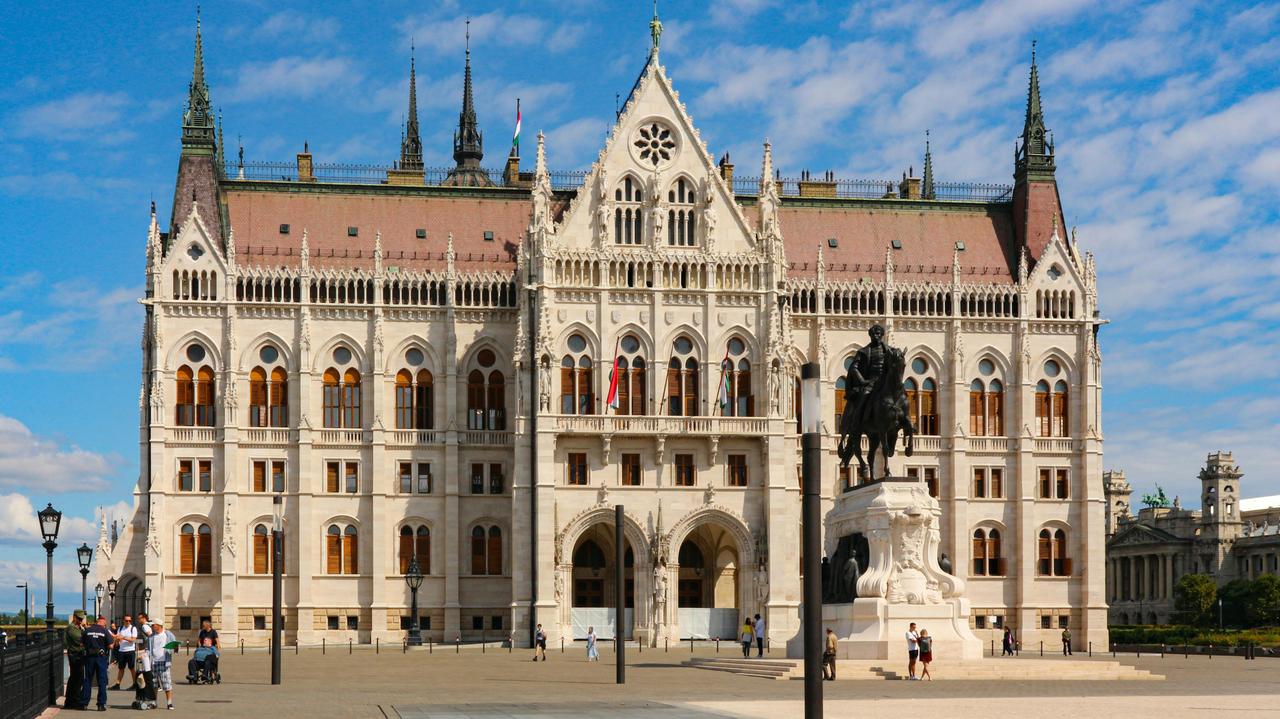
The overall plan of the Parliament follows the symmetrical and orderly composition of Baroque architecture, while the façade decorations are dominated by Gothic elements: vertical lines, slender spires, and pointed arches. Renaissance art takes center stage in the ceiling decorations of the interior spaces. The main façade facing the river is a masterpiece of stonework, featuring statues, reliefs, and arched windows.
Along the façade, 90 stone statues represent important figures from Hungarian history, such as kings, princes, commanders, statesmen, and wise personalities. An additional 152 statues are located elsewhere on the building. These are allegorical figures reflecting the labor, faith, and heroism of the Hungarian people. Some symbolize concepts such as freedom, justice, and courage, while others represent social values like agriculture, craftsmanship, art, and science. The stone used on the building’s exterior is white limestone quarried from the Carpathian Basin. The pointed spires, buttresses, carved arches, and stained-glass window embellishments characteristic of the Gothic style impart both vertical movement and rhythmic harmony to the structure. Above the main entrance, the coat of arms of the Kingdom of Hungary is displayed.【3】
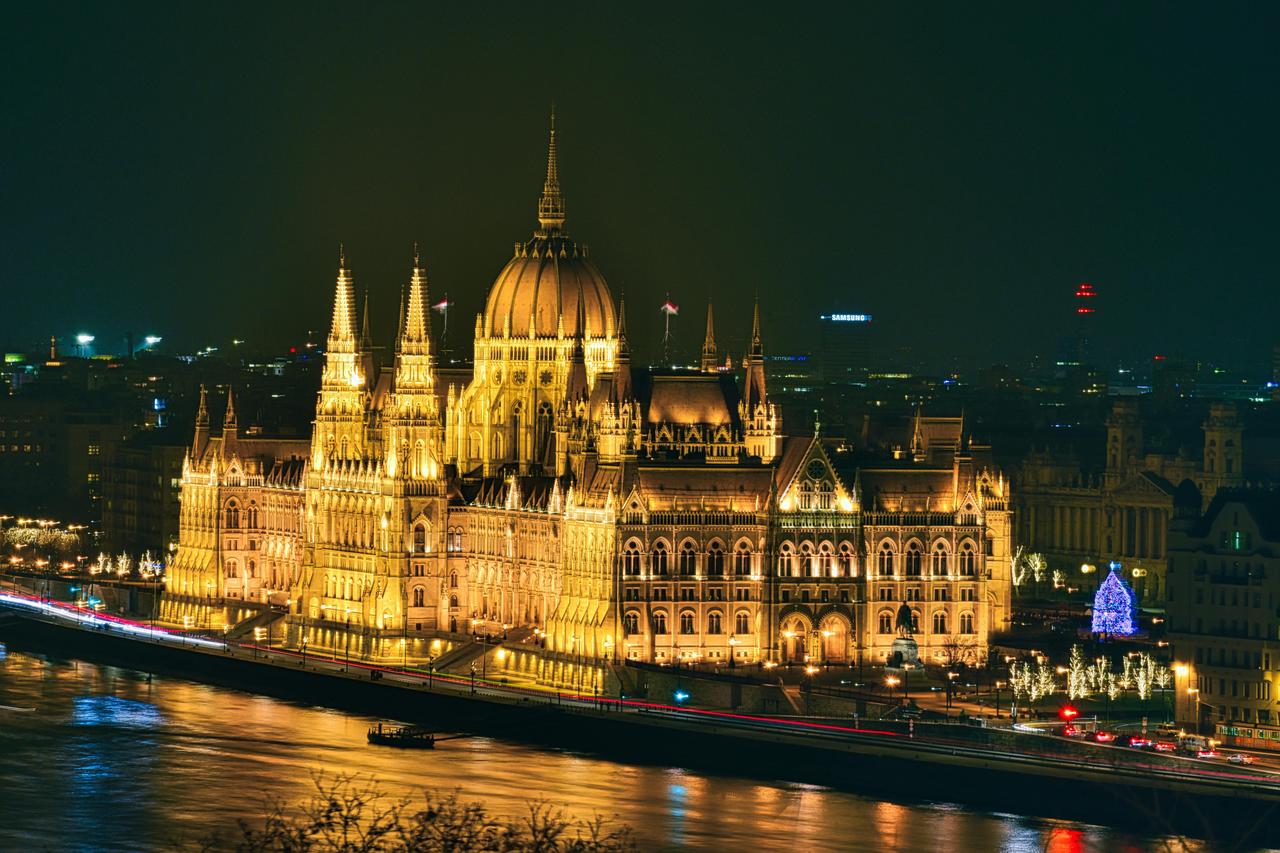
Hungarian Parliament Building (Pexels)
The building’s spatial layout reflects the symmetry of Hungary’s bicameral legislative system (the Lower House and the Upper House). The two legislative chambers are positioned on either side of the central Dome Hall. Both chambers are nearly identical in size, form, and decoration.
The Dome Hall, located in the central section, serves as the architectural heart of the building. It is designed with a dome rising upward. The Dome Hall is also the location where the Crown of the Kingdom of Hungary is displayed. This hall hosts important state ceremonies, national holiday celebrations, and receptions for foreign heads of state.
Behind the Parliament Building’s imposing exterior lies an innovative engineering system. The building consists of four levels and is constructed on a base area of approximately 18,000 square meters. Its total volume is 473,000 cubic meters—enough to fill 50 five-story apartment buildings.
Approximately 40 million bricks were used during construction. The exterior façade features 30,000 cubic meters of carved stone, each piece individually shaped and decorated with ornamental details and figures. Each stone block was placed according to a principle of symmetry, ensuring overall order and rhythm throughout the entire structure.
The building has a total of 29 entrances, 14 elevators, 10 light wells, and hundreds of offices, meeting rooms, and committee chambers, all interconnected by a corridor system. The total length of the corridors reaches several kilometers, making this system one of the earliest examples of internal building navigation design. The red carpets used in the interior spaces were carefully planned for both wayfinding and aesthetic unity. Their total length is approximately three kilometers. Advanced technologies of the era were employed for interior lighting; the system, initially based on gas lamps, was adapted for electricity at the beginning of the 20th century.【4】
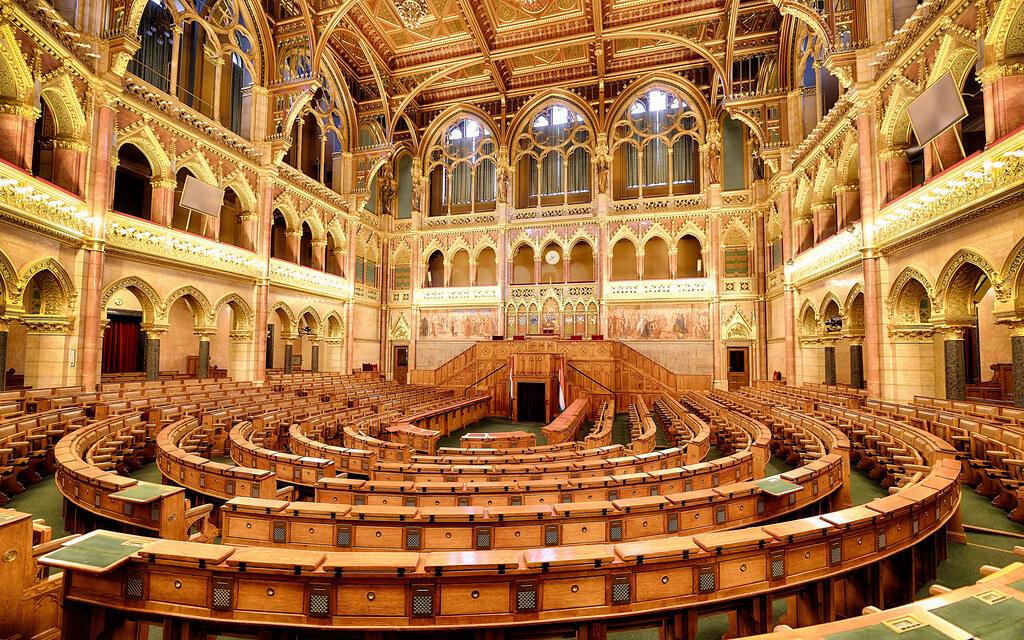
Hungarian Parliament Building (Flickr)
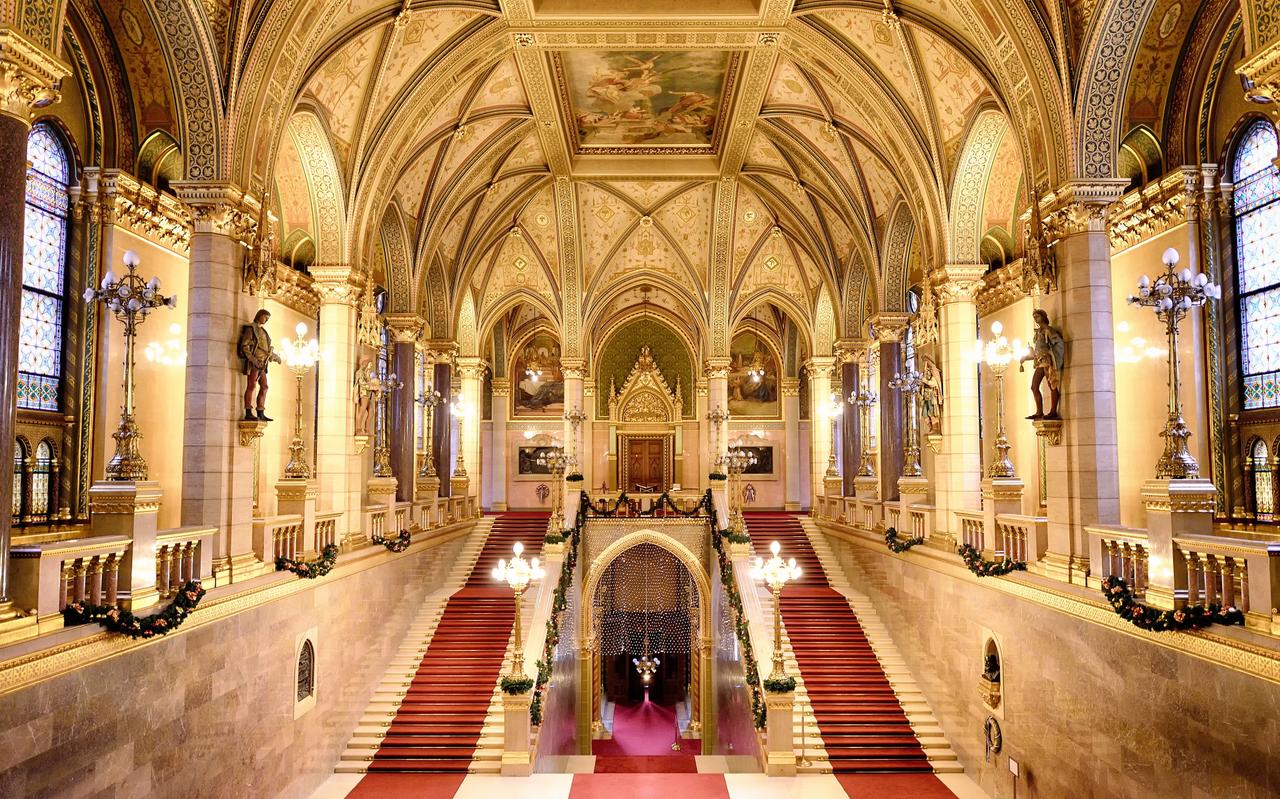
Visitors’ tours typically begin at the City Staircase XVII (Városi lépcső XVII). This staircase is adorned with gold-leaf decorations, column capitals, stained-glass windows, and wall frescoes. Every surface is embellished with patterns reflecting the artistic sensibilities of the era.
This section leads to the Grand Staircase (Díszlépcsőház). This monumental staircase consists of 96 steps, referencing the year 896—the founding year of the Hungarian nation—mirroring the building’s height. The entire floor is covered in red carpets. The columns on either side of the stairs embody Gothic forms, while the ceiling frescoes signed by Károly Lotz form the artistic core of the building.【5】
The stained-glass windows surrounding the Grand Staircase were created by the artist Miksa Róth, one of the pioneers of European stained-glass art. The color palette he employed, when illuminated by sunlight, infuses the interior spaces with a unique atmosphere. As the light filters through the windows at different times of day, the tones of the halls shift accordingly.
The Dome Hall (Kupolacsarnok) features a design with a 27-meter-high vault supported by 16 ribs. Around the dome, statues of Hungarian kings are arranged; these figures represent the 16 monarchs who shaped the nation’s history. Above each statue are golden canopies.
The Dome Hall is also the location where national symbols—the Holy Crown of Hungary (Szent Korona), the Coronation Cross, and the Royal Sword—are displayed. These sacred relics have been guarded since 2000 by the Royal Guard of the Hungarian Armed Forces.
The next stop on the tour is the Hall of the Upper House (Főrendházi társalgó). Its decorations feature pirogranite statues and column claddings specially produced by the Zsolnay Porcelain Factory. The handwoven carpet covering the floor of this hall is among the largest in Europe.
Another space is the Hall of the Upper House (Főrendiház), currently used for conferences and ceremonies. This room is lined with ash wood panels, adorned with gilded carvings. The seating arrangement is shaped like a horseshoe. Its acoustics were designed using the engineering calculations of the period.
Additionally, the wall paintings depicting Hungarian royal coats of arms, noble family emblems, and historical scenes continue the narrative of the nation’s history.
In 2011, the Hungarian National Assembly made a significant decision to renovate Kossuth Square, the area where the Parliament Building stands. This decision aimed to redefine the historical, cultural, and aesthetic value of a space that had become a symbol of national identity. The project, carried out under the name of the Steindl Imre Program (SIP), was completed between 2012 and 2014.【6】
As part of this initiative, traffic congestion on the square was first reduced and vehicle access minimized. Relocating tram lines and completely renewing the infrastructure transformed the square into a more orderly and environmentally friendly space. Additionally, extensive green areas were created, replacing concrete surfaces with a landscape design integrated with nature.
During the renovation, statues honoring important figures from Hungarian history were meticulously restored. The statues of Count Gyula Andrássy, Count István Tisza, and Lajos Kossuth were preserved in their original forms and reinstalled in their original locations. At the same time, the equestrian statue of II. Rákóczi Ferenc underwent restoration and was returned to its position on the square. The National Memorial of the Martyrs was also rebuilt as a monument dedicated to the nation’s struggle for freedom. Finally, as part of the renewal, a 33-meter-tall flagpole was erected at the center of the square, surrounded by a reflective pool.【7】
Kossuth Square (Pexels)
Visits are typically conducted as guided tours. Tours are offered in Hungarian, English, French, German, Italian, and Spanish. In addition, audio guide systems are available in many other languages, including Turkish, Arabic, Chinese, Russian, Japanese, and Korean. Visitors listen to narrations through headphones as they walk through the building, gaining historical knowledge and understanding the symbolic meaning of the architecture.
Tours generally begin on the ground floor of the Parliament and extend to the Dome Hall. Guides provide information on the building’s construction process, architectural style, historical phases of Hungarian politics, and the significance of the Holy Crown. The highlight of these tours is the Dome Hall, where the Holy Crown and the Coronation Cross—the symbols of Hungary—are displayed. However, photography is strictly prohibited in this area due to both security concerns and the sacred nature of the objects, which are under special protection. Photography is permitted in other parts of the Parliament, such as the Grand Staircase, the Hall of the Upper House, or exhibition halls. Flash photography is discouraged, however, as sensitive surfaces like frescoes and stained-glass windows are light-sensitive.
Visits are conducted under strict security measures. All visitors undergo airport-style security screening at the entrance. Large bags are not permitted inside and must be left at security checkpoints upon entry.
The Parliament is designed to accommodate visitors of all ages and backgrounds and serves as a model for accessibility. Thanks to entrance ramps, elevators, and wide corridors, wheelchair users experience comfortable access. Additionally, some sections of the guided tours are offered with subtitles or text support for visitors with hearing impairments.
Opening hours vary seasonally. Tours typically begin around 08:00 and run until 18:00 during summer months and until 16:00 during winter. The visitation schedule may be temporarily altered during official holidays, state ceremonies, or special events. Therefore, tourists are advised to make online reservations prior to their visit.【8】
Anadolu Ajansı. "Türkçe, Macaristan Parlamentosunda sesli rehber hizmetine eklenecek." Accessed November 12, 2025.https://www.aa.com.tr/tr/dunya/turkce-macaristan-parlamentosunda-sesli-rehber-hizmetine-eklenecek/2715816
Farhan Al-Gifari. "Hungarian Parliament Building." Pexels. Accessed November 12, 2025.https://www.pexels.com/photo/the-frontage-of-the-hungarian-parliament-building-9657087/
Great Big Story. "Budapest’s Golden Assembly." YouTube. Accessed November 12, 2025.https://www.youtube.com/watch?v=LEQJpzKqd9I&t=18s
Hungarian National Assembly (Országgyűlés). "House of Parliament." *Parliament of Hungary*. Accessed November 12, 2025.https://www.parlament.hu/web/visitors/house-of-parliament
Hungarian National Assembly (Országgyűlés). "Important Information." Parliament of Hungary. Accessed November 12, 2025.https://www.parlament.hu/web/visitors/important-information
Hungarian National Assembly (Országgyűlés). "Kossuth Square." Parliament of Hungary. Accessed November 12, 2025.https://www.parlament.hu/web/visitors/kossuth-square
Hungarian National Assembly (Országgyűlés). "Visitor Route." Parliament of Hungary. Accessed November 12, 2025.https://www.parlament.hu/web/visitors/visitor-route
Hungarian National Assembly. "Opening Hours." Parliament of Hungary. Accessed November 12, 2025.https://www.parlament.hu/web/visitors/opening-hours
Nikolett Emmert. "Hungarian Parliament Building." Pexels. Accessed November 12, 2025.https://www.pexels.com/tr-tr/fotograf/macaristan-parlamento-binasi-3605968/
Yuan. "Hungarian Parliament Building." Flickr. Accessed November 12, 2025.https://www.flickr.com/photos/js755332/25953545877/
Yuan. "Hungarian Parliament Building." Flickr. Accessed November 12, 2025.https://www.flickr.com/photos/js755332/40825122041/in/photostream/
[1]
Hungarian National Assembly (Országgyűlés),"House of Parliament." Parliament of Hungary, erişim tarihi 12 Kasım 2025, https://www.parlament.hu/web/visitors/house-of-parliament
[2]
Hungarian National Assembly (Országgyűlés),"House of Parliament." Parliament of Hungary, erişim tarihi 12 Kasım 2025, https://www.parlament.hu/web/visitors/house-of-parliament
[3]
Hungarian National Assembly (Országgyűlés),"House of Parliament." Parliament of Hungary, erişim tarihi 12 Kasım 2025, https://www.parlament.hu/web/visitors/house-of-parliament
[4]
Hungarian National Assembly (Országgyűlés),"House of Parliament." Parliament of Hungary, erişim tarihi 12 Kasım 2025, https://www.parlament.hu/web/visitors/house-of-parliament
[5]
Hungarian National Assembly (Országgyűlés), "Visitor Route", Parliament of Hungary, erişim tarihi 12 Kasım 2025, https://www.parlament.hu/web/visitors/visitor-route
[6]
Hungarian National Assembly (Országgyűlés), "Kossuth Square," Parliament of Hungary, erişim tarihi 12 Kasım 2025, https://www.parlament.hu/web/visitors/kossuth-square
[7]
Hungarian National Assembly (Országgyűlés), "Kossuth Square," Parliament of Hungary, erişim tarihi 12 Kasım 2025, https://www.parlament.hu/web/visitors/kossuth-square
[8]
Hungarian National Assembly, "Opening Hours." Parliament of Hungary, erişim tarihi 12 Kasım 2025, https://www.parlament.hu/web/visitors/opening-hours

Location | Budapest Kossuth Lajos Square | ||||||||
|---|---|---|---|---|---|---|---|---|---|
Architect | Imre Steindl | ||||||||
Architectural Style | Eclectic | ||||||||
Construction Start | 1885 | ||||||||
Completion Date | 1902 | ||||||||
Height | 96 metres | ||||||||
Length | 271 metres | ||||||||
Width | 123 metres | ||||||||
Base Area | Approximately 18,000 m² | ||||||||
Number of Floors | 4 | ||||||||
Materials Used | 40 million bricks, 30,000 m³ carved stone, 40 kg of 22–23 karat gold | ||||||||
No Discussion Added Yet
Start discussion for "Hungarian Parliament Building (Országház)" article
History and Construction Process
Architectural Features
Architectural Symbolism and Layout
Dimensions and Structural Engineering
Interior Spaces and Artworks
Renovation and Kossuth Square
Visitation and Tourist Experience