This article was automatically translated from the original Turkish version.
+1 More
History | 1932–1933 | ||||||||
|---|---|---|---|---|---|---|---|---|---|
Place | Poltava Odesa Especially Kyiv Ukrainian Soviet Socialist Republic Kuban regions Kharkiv | ||||||||
Outcome | Millions of people dying from famine, disease, and deprivation | ||||||||
Estimated Death Toll | Between 4.5 and 10 million | ||||||||
Policies Applied | Internal travel bans Blacklisting practices Grain seizures Dekulakization Collectivization | ||||||||
Social Impacts | Disruption of rural culture Collapse of the rural population Major decline in agricultural production | ||||||||
Commemoration Day | The last Saturday of November each year | ||||||||
Holodomor, is the great famine disaster that occurred in Ukraine under the administration of the Soviet Union between 1932 and 1933. This term, which means “death by hunger” in Ukrainian, refers to a period during which a significant portion of the country’s population died from starvation, disease, and forced collectivization policies. The term Holodomor became established in diaspora literature from the 1960s and in official and academic literature in Ukraine after 1991.
Holodomor was not merely an economic crisis but a historical, political and social event resulting from the Soviet totalitarian system’s agricultural policies and mechanisms of political repression.
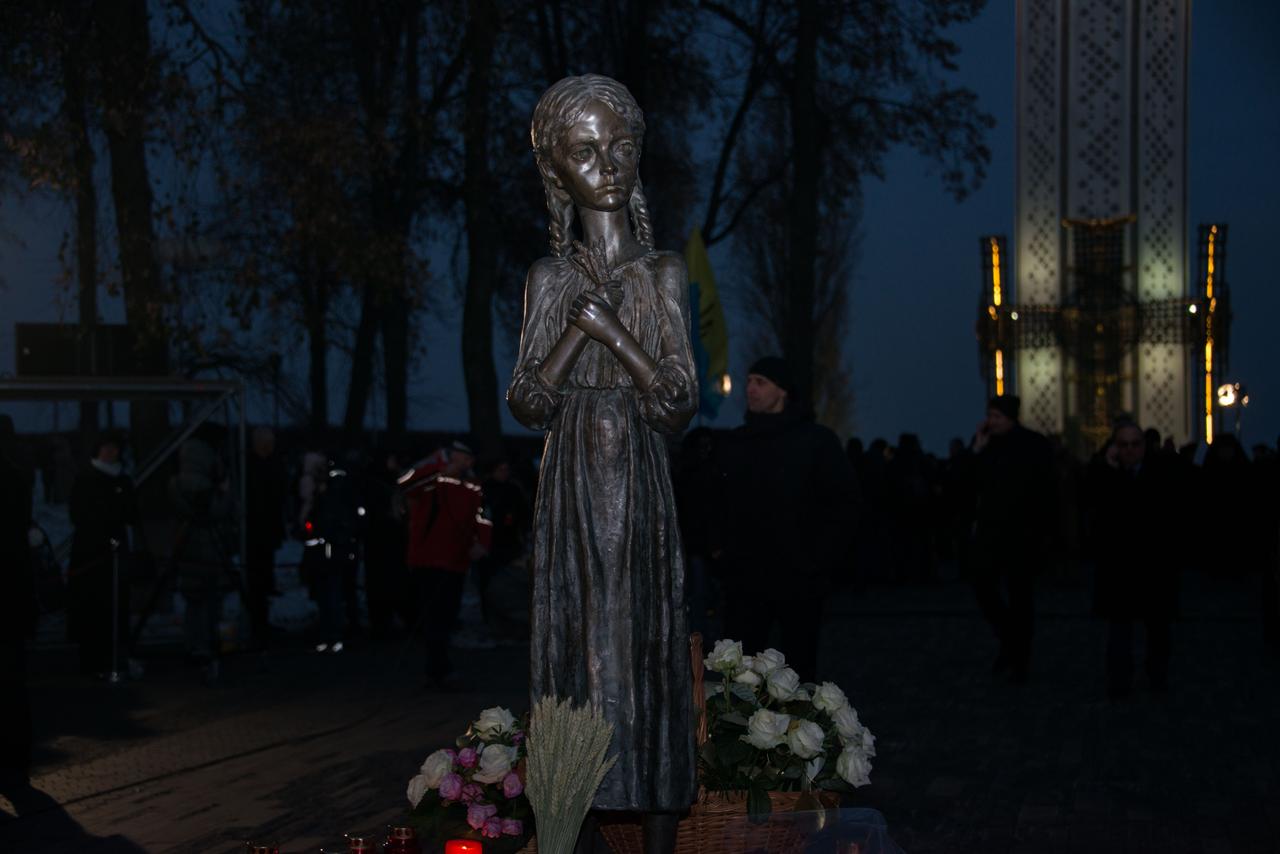
Holodomor Memorial (Estonian Foreign Ministry)
Following the October Revolution of 1917, the Bolsheviks who seized power in Russia aimed to eliminate private property and establish an economic system based on central planning. Ukraine, due to its fertile black soil, became one of the key components of this new economic structure. However, the civil war that followed the revolution severely disrupted rural production. The drought of 1921–1922 and the destruction caused by war led to massive loss of life, particularly in southern Russia and southeastern Ukraine. This experience shaped the Soviet government’s future agricultural policies and contributed to the development of strategies to suppress peasant resistance.
In the mid-1920s, the New Economic Policy (NEP) was introduced to revive agricultural production by permitting limited private enterprise and free markets. Although this policy temporarily increased output, it was abandoned after Stalin consolidated power beginning in 1928. The Soviet government implemented the First Five-Year Plan (1928–1932), prioritizing heavy industry and requiring the seizure of grain from peasants to fund urbanization and industrialization. Ukraine was viewed both as a strategic center of grain production and as a region with high potential for opposition.
1929 marked the beginning of a fundamental transformation in Soviet agricultural policy. The Stalinist regime abolished individual peasant farming and consolidated all agricultural land into collective farms (kolkhozes) and state farms (sovkhozes). Although collectivization was officially described as “voluntary,” it was implemented through coercive and punitive methods. Peasants were forced to surrender their land to the state; those who resisted were labeled as “kulaks” (wealthy peasants) and subjected to a policy of “class extermination.”
This practice, known as dekulakization, resulted in the deportation of thousands of peasant families, confiscation of their property, and the deaths of many from starvation or disease. Archival documents indicate that alone in 1930 approximately 90,000 Ukrainian families were forcibly removed from their homes. This process largely eliminated the knowledge base, production tools, and livestock that formed the foundation of village economies. The Soviet regime aimed to transform peasants into state workers under absolute control of agricultural production. These measures quickly reduced productivity and increased the risk of famine.
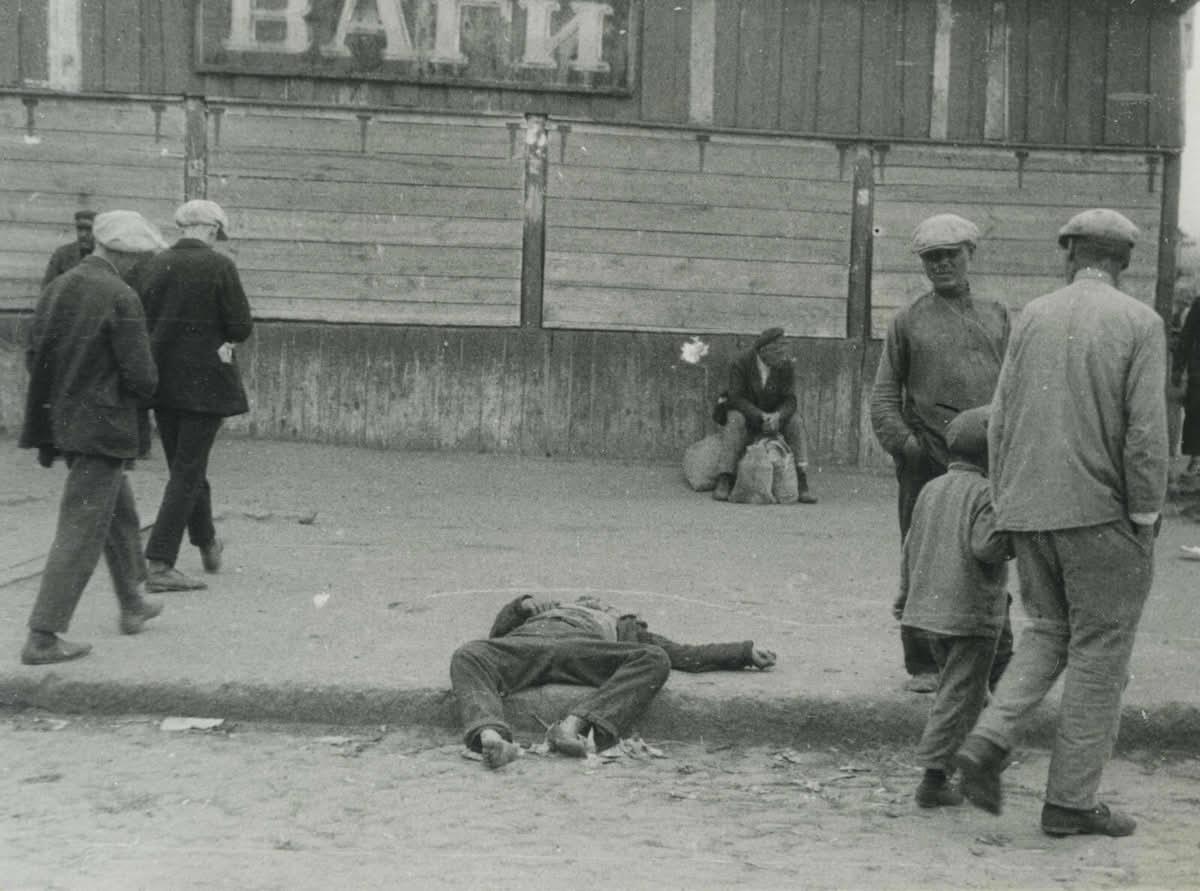
A Victim of the Holodomor, Kharkiv - 1933 (Store Norske Leksikon)
By 1932, the Soviet government had imposed impossible grain procurement quotas on Ukraine. Local officials seized all grain—even livestock—from peasants in order to meet targets. In many areas, 80 percent of grain production was confiscated by the state. Peasants were left with no grain even for their own consumption. In addition to grain, potatoes, vegetables, and animal products were also seized; homes were searched and personal food stores confiscated. The “Law of the Five Ears of Grain” (7 August 1932) criminalized the collection of even a few stalks of grain from fields as “theft of state property.” Under this law, those convicted faced ten years in prison or execution. This regulation rendered the peasants’ struggle for survival nearly impossible.
Many regions of Ukraine quickly lost access to food supplies. Due to famine, people were forced to eat grass, tree bark, bone meal, and even animal carcasses. Testimonies reveal that many families consumed their domestic animals and, in some places, that fundamental human values had collapsed. By 1933, the situation had completely spiraled out of control. Estimates using modern methods suggest daily death tolls exceeded 30,000, with dozens of people dying every minute. Nevertheless, the Soviet government officially denied the existence of the famine. Stalin refused to accept foreign aid and denied entry to international organizations, particularly the International Red Cross. Death certificates were ordered to list causes such as “disease” or “old age” instead of “starvation,” concealing the true scale of the catastrophe.
Holodomor shattered Ukraine’s social fabric. The village economy collapsed, and a large portion of the population lost its productive capacity. Many households were broken apart, and the number of orphans increased dramatically. The continuation of collectivization permanently established a system in which peasants received no share of their own production. Although the Soviet government resumed limited grain aid after 1933 to address production shortfalls, the demographic void created by the famine remained uncorrected for decades.
According to data from the National Memory Institute of Ukraine, approximately 4.5 million people, equivalent to about 13 percent of the country’s population, died during the Holodomor. Other estimates suggest the death toll ranged between 7 and 10 million. Demographic studies show a sharp decline in birth rates and a permanent increase in death rates throughout the 1930s. This indicates that the famine’s effects extended far beyond a few years, creating long-term population imbalances.
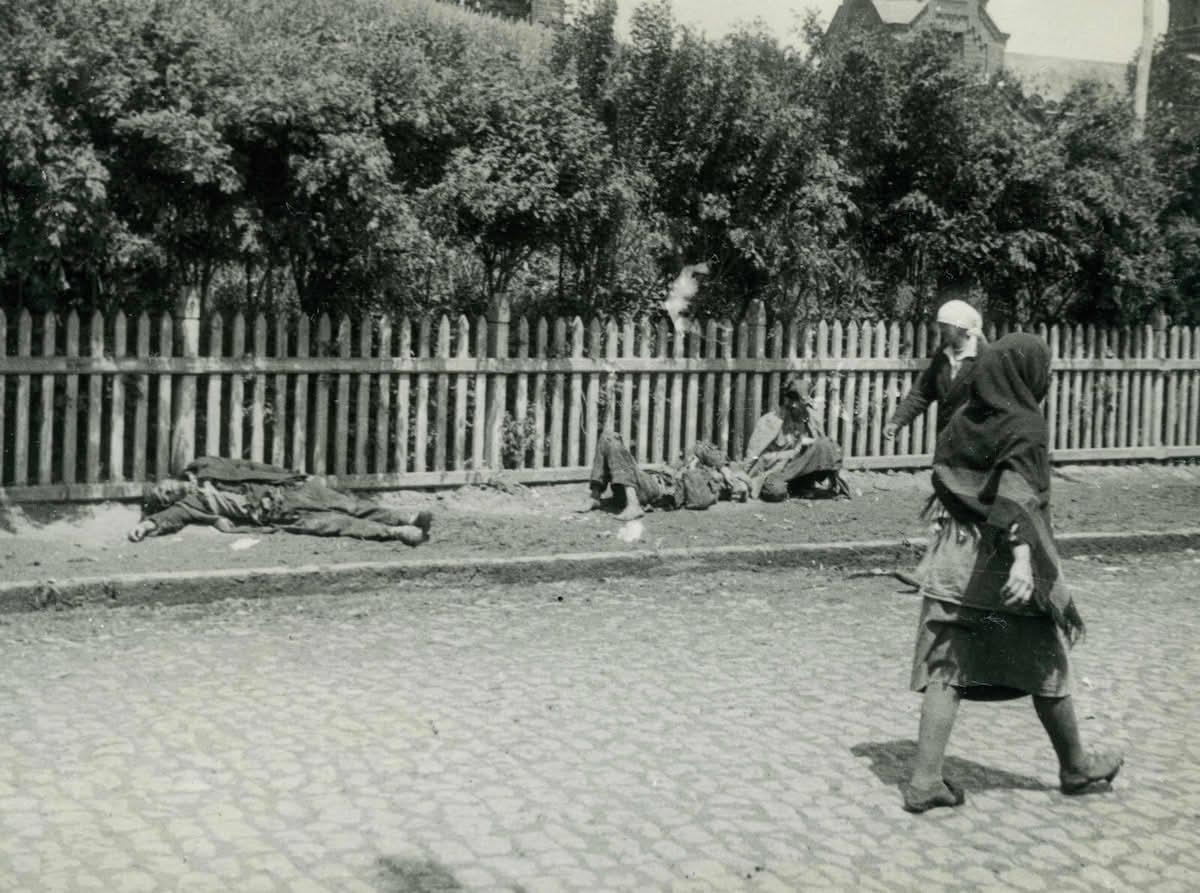
Victims of the Holodomor, Kharkiv - 1933 (Store Norske Leksikon)
Holodomor was not merely an economic crisis but a direct consequence of Soviet ideology’s policies toward national identity. The Stalinist regime viewed Ukrainian national consciousness and independence aspirations as a threat to its vision of “Soviet unity.” The “Ukrainization” process initiated in the late 1920s had fostered cultural vitality and linguistic autonomy. However, with the onset of the 1930s, this policy was completely reversed. The Ukrainian language was removed from public life, and education, media, and cultural institutions were brought under strict control. Religious institutions were closed; hundreds of priests and monks were arrested or executed. Most churches were destroyed or converted into storage facilities. These developments demonstrate that Holodomor was not only an agricultural but also a cultural and social process of destruction.
The Soviet regime exploited the social collapse caused by the famine as a political instrument. The weakened peasantry, deprived of organized resistance, fell entirely under regime control. The Ukrainian peasant was seen as the carrier of national consciousness; thus, the concentration of famine on this class constituted a repressive policy aimed at eradicating the roots of national identity. Stalin eliminated Ukraine’s economic independence by placing agriculture entirely under state control and simultaneously dismantled the social foundations of the idea of national independence.
Due to the Soviet government’s strict censorship policy, the international public remained largely unaware of Holodomor throughout the 1930s. Only a few foreign journalists were able to report on the scale of the events; one such journalist was Gareth Jones, who traveled through rural Ukraine in 1933 and observed the extent of the famine. However, the Soviet government dismissed these reports as “anti-Soviet propaganda” and denied them internationally.
The true scale of Holodomor came to light only after the collapse of the Soviet Union, when archives were opened. Ukraine, which declared its independence in 1991, identified the event as the greatest tragedy in its national history. In 2005, under President Viktor Yushchenko, the last Saturday of November was officially designated as the “Day of Remembrance of the Holodomor Victims.” In 2006, the Ukrainian Parliament formally recognized the 1932–1933 events as a “genocide.” Subsequently, more than twenty countries, including the United States, Canada, Poland, and the Baltic states, adopted resolutions recognizing Holodomor as a genocide. In 2022, the European Parliament declared Holodomor a crime against humanity.
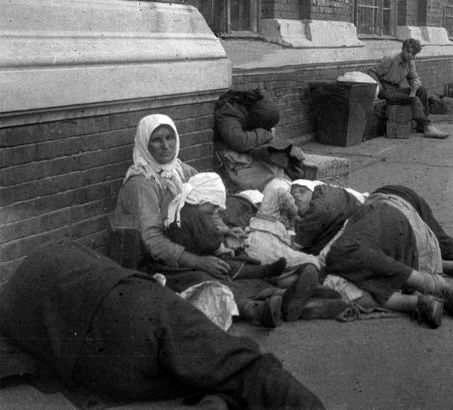
Photograph Taken During the Famine (Store Norske Leksikon)
Holodomor shaped not only Ukraine’s economic structure but also its social memory. The event was not openly discussed for decades under Soviet rule, and archival documents were kept secret. However, beginning in the 1980s, research by the Ukrainian diaspora brought the issue back into public discourse, testimonies were collected, and international awareness grew. This process established Holodomor as a central symbol in the formation of post-independence Ukrainian identity. Today, the National Museum of the Holodomor Genocide in Kyiv is regarded not only as an institution documenting the past but also as a symbol of collective historical consciousness.
Economically, the famine long-term reduced Ukraine’s agricultural productivity. Population decline, livestock losses, and destruction of production tools delayed the recovery of agriculture. This situation increased the Soviet Union’s dependence on food imports in subsequent years. Socially, Holodomor fundamentally altered the traditional way of life of the Ukrainian peasantry; community networks weakened and individual production habits disappeared. This process nearly eliminated the peasantry’s independence from the state.
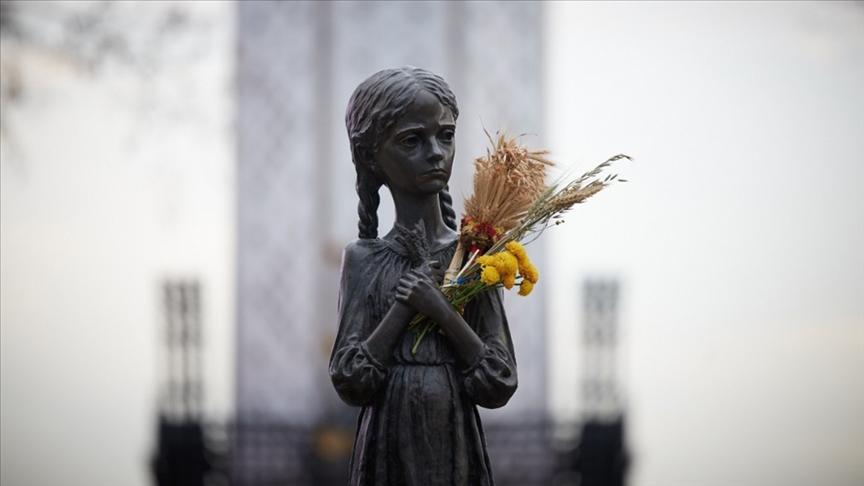
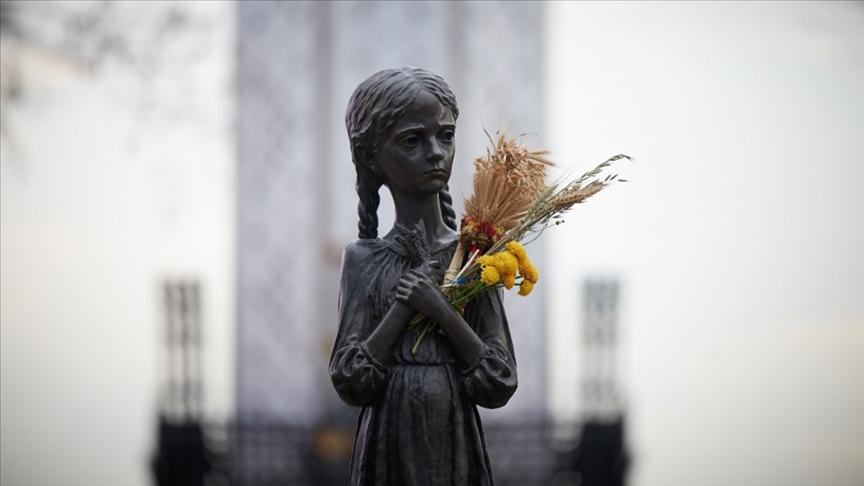
Holodomor Memorial (Anadolu Ajansı)
Ultimately, the famine of 1932–1933 stemmed from causes far more complex than natural disasters. Forced collectivization, grain procurement pressures, punitive measures such as the “Law of the Five Ears of Grain,” “blackboard” policies, and travel restrictions led to the deaths of millions. The event was not merely the result of economic failure but of ideological engineering.
The Soviet government’s policy of denial caused the true scale of Holodomor to remain hidden for decades. However, archival documents, eyewitness accounts, and demographic data have demonstrated that the famine was not spontaneous but the result of deliberate policies. Today, Holodomor occupies a central place in Ukrainian national consciousness and is regarded as a symbol of the quest for historical justice and independence.
Anadolu Ajansı. “Ukrayna’da Holodomor Kurbanları Anılıyor.” Accessed October 10, 2025.https://www.aa.com.tr/tr/dunya/ukrayna-da-holodomor-kurbanlari-aniliyor/2748732.
BBC News. “Holodomor: Memories Of Ukraine's Silent Massacre.” BBC News. Accessed October 10, 2025.https://www.bbc.com/news/world-europe-25058256.
Brader, Claire. “Ukrainian Holodomor.” House of Lords Library, UK Parliament. Accessed October 10, 2025.https://lordslibrary.parliament.uk/ukrainian-holodomor/.
Center for Holocaust and Genocide Studies. “Holodomor Resource Guide.” University of Minnesota. Accessed October 10, 2025.https://cla.umn.edu/chgs/holocaust-genocide-education/resource-guides/holodomor.
Dönmez, Devran. “The Role of Holodomor in the Politics of Nation Building in Ukraine: Ukrayna’daki Ulus İnşası Siyasetinde Holodomor’un Yeri.” Master's thesis, Middle East Technical University, Institute of Social Sciences, Eurasian Studies Program, Ankara, 2015. Accessedhttps://tez.yok.gov.tr/UlusalTezMerkezi/TezGoster?key=cbOXH84ZayrLjc0tI-QXKkmtYp2PQcXQVWW5FDyE5R7sXC-a2AblohxNs1KuoNcq.
Estonian Foreign Ministry. “Kiiev-16.” Flickr. Accessed October 10, 2025.https://www.flickr.com/photos/estonian-foreign-ministry/
European Parliament. “Holodomor: Parliament Recognises Soviet Starvation of Ukrainians as Genocide.” European Parliament. Accessed October 10, 2025.https://www.europarl.europa.eu/news/en/press-room/20221209IPR64427/holodomor-parliament-recognises-soviet-starvation-of-ukrainians-as-genocide.
Gdh TV. “Ukrayna'da İnsanlar Birbirlerini Yedi | Holodomor.” YouTube. Accessed October 10, 2025.https://www.youtube.com/watch?v=84BRmmn-4JE&rco=1.
History Extra. “Stalin’s Famine: A Brief History Of TheHolodomor İn Soviet Ukraine.” History Extra. Accessed October 10, 2025.https://www.historyextra.com/period/20th-century/holodomor-soviet-ukraine-history-facts-deaths-genocide-cause/.
Holodomor Museum. "Holodomor History." Holodomor Museum. Accessed October 10, 2025.https://holodomormuseum.org.ua/en/the-history-of-the-holodomor/.
Holodomor Museum. *Holodomor: Ana Gerçekler.* Accessed October 10, 2025.https://holodomormuseum.org.ua/wp-content/uploads/2025/04/Holodomor-osnovni-fakty-turetskoiu-movoiu.pdf.
Holodomor Research and Education Consortium (HREC). “Holodomor: Basic Facts.” HREC. Accessed October 10, 2025.https://holodomor.ca/resource/holodomor-basic-facts/.
Karadağ, Cüneyt. “Almanya, Holodomor Trajedisini Soykırım Olarak Tanımaya Hazırlanıyor.” *Anadolu Ajansı*. Accessed October 10, 2025.https://www.aa.com.tr/tr/dunya/almanya-holodomor-trajedisini-soykirim-olarak-tanimaya-hazirlaniyor/2748363.
Paulsen, Martin, Jan Thorsnaes, and Jan Richard Bærug. “Holodomor.” *Store Norske Leksikon.* Accessed October 10, 2025.https://snl.no/Holodomor
Saçaralp, Çağrı. “Ukraynalıların Tarihteki En Büyük Acısı: Holodomor.” GZT Jurnalist. Accessed October 10, 2025.https://www.gzt.com/jurnalist/ukraynalilarin-tarihteki-en-buyuk-acisi-holodomor-2973917.
TRT Haber. “Ukrayna’da Unutulmayan Acı: Holodomor.” Accessed October 10, 2025.https://www.trthaber.com/haber/dunya/ukraynada-unutulmayan-aci-holodomor-535902.html.
U.S. National Park Service. “Holodomor Memorial.” National Mall and Memorial Parks. Accessed October 10, 2025.https://www.nps.gov/nama/planyourvisit/holodomor.htm.
Ukrayna Cumhuriyeti Ankara Büyükelçiliği. “1932–33 Yıllarında Ukrayna’da Holodomor.” Ukrayna Cumhuriyeti Ankara Büyükelçiliği. Accessed October 10, 2025.https://turkiye.mfa.gov.ua/tr/ukrayna/1932-33-yillarinda-ukraynada-holodomor.

History | 1932–1933 | ||||||||
|---|---|---|---|---|---|---|---|---|---|
Place | Poltava Odesa Especially Kyiv Ukrainian Soviet Socialist Republic Kuban regions Kharkiv | ||||||||
Outcome | Millions of people dying from famine, disease, and deprivation | ||||||||
Estimated Death Toll | Between 4.5 and 10 million | ||||||||
Policies Applied | Internal travel bans Blacklisting practices Grain seizures Dekulakization Collectivization | ||||||||
Social Impacts | Disruption of rural culture Collapse of the rural population Major decline in agricultural production | ||||||||
Commemoration Day | The last Saturday of November each year | ||||||||
Historical Background
Collectivization and Dekulakization under Stalin
Emergence of the Famine
Social and Human Consequences
Political and Ideological Context
International Reactions and Recognition
Long-Term Effects