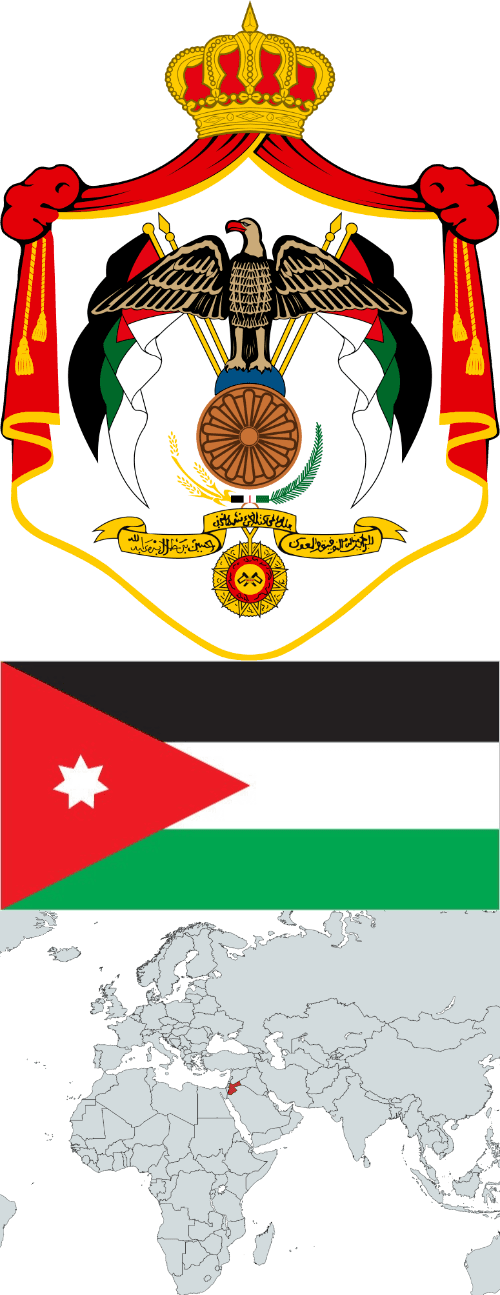
This article was automatically translated from the original Turkish version.
+1 More
Official Name | Hashemite Kingdom of Jordan | ||||||||
|---|---|---|---|---|---|---|---|---|---|
Governing System | Constitutional Monarchy | ||||||||
Capital | Amman | ||||||||
Head of State | King Abdullah II ibn Al-Hussein | ||||||||
Independence Date | 25 Mayıs 1946 | ||||||||
Total Population | 11.4 million (2025) | ||||||||
Area | 89,342 km² | ||||||||
Official Language | Arabic | ||||||||
Climate | Mediterranean Climate and Desert Climate | ||||||||
GDP (Nominal) | 39.696 billion dollars (January – June 2025) | ||||||||
GDP per Capita | 4.917 dollars (2025) | ||||||||
Ethnic Groups | Arab (Jordanians and Palestinians majority) | ||||||||
National Day | 25 May | ||||||||
Religious Structure | 92% Sunni Muslim, 6% Christian, 2% other | ||||||||
Neighbors | Saudi Arabia, Syria, Iraq, Palestine, Israel | ||||||||
Unemployment | 22.3% (2024) | ||||||||
Poverty Rate | 24.2% (2025) | ||||||||
Total Foreign Exchange Reserves | 17.3993 billion dollars (January – June 2023) | ||||||||
Total Exports | 6.940756 billion dollars (January – July 2023) | ||||||||
Total Imports | 14.970033 billion dollars (January – July 2023) | ||||||||
Telephone Code | +962 | ||||||||
Currency | Jordanian dinar (under a fixed exchange rate regime, 1 Jordanian dinar equals 1.41 US dollars) | ||||||||
Hashemite Kingdom of Jordan is a strategically significant country located in the Middle East at the heart of the historical Fertile Crescent. Its official name is the Hashemite Kingdom of Jordan and its system of government is a constitutional monarchy. The country is governed by the Hashemite family, and the current monarch is King Abdullah II (Abdullah bin Hussein). The King holds decisive authority over both executive and legislative functions.
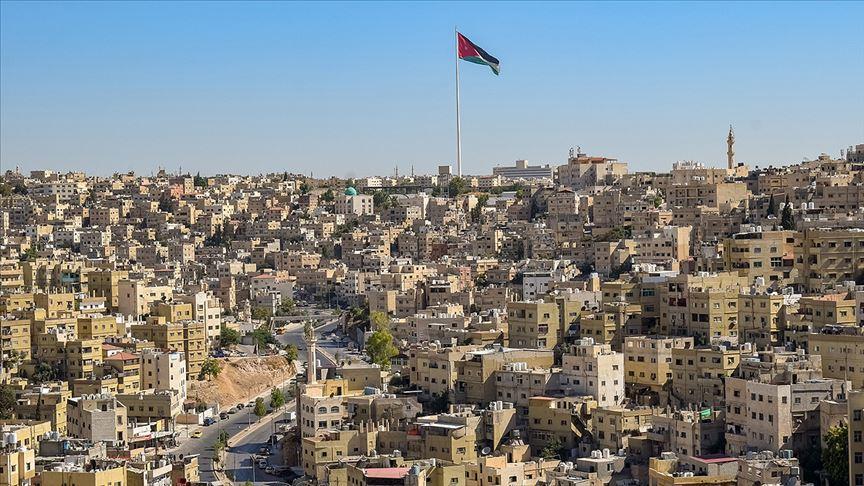
Jordan - Amman City View (Anadolu Ajansı)
Geographically, it borders Syria and Iraq to the north, Saudi Arabia to the south, and Israel and the West Bank to the west. The country consists largely of desert plateaus, the fertile Jordan Valley, and highland regions. Its only maritime access is via the Gulf of Aqaba on the Red Sea in the south.
As of 2023, its population, including regional migrants and refugees, is approximately 11.5 million. The vast majority of the population is of Arab origin, and Arabic is the official language.
The national anthem of the Hashemite Kingdom of Jordan is titled "As-Salam Al-Malaki" (The Royal Salute). It was officially adopted after the country gained independence in 1946 and stands as one of the most important symbols of the monarchy and national loyalty to the Hashemite dynasty. The lyrics were written by the renowned poet Abdulmunim al-Rifai and the music was composed by Abdul Kader al-Temimi. The anthem exhibits a ceremonial musical structure and, in content, glorifies the unity, independence, and stability of the nation embodied in the person of the King. Additionally, Jordan’s historical role as part of the Arab nation and its involvement in the Arab cause are central themes of the anthem. The national anthem is performed at all official state and military ceremonies as a representation of national identity and sovereignty.
Jordan National Anthem (Urumaxi Anthems)
Human presence in Jordanian territory extends back to the Paleolithic era, and the region hosts some of the earliest known evidence of human settlement. One of the most critical archaeological discoveries is the ‘Ain Ghazal Statues, dated to approximately 9,000 years ago. By the end of the 2nd millennium BCE, the region hosted organized kingdoms such as the Ammonites (centered in Amman), Moabites, and Edomites, which sought dominance along the trade routes of the Levant.
The region’s commercial and cultural peak occurred during the Nabataean Civilization, which ruled from the 4th century BCE until 106 CE. The Nabataeans amassed significant economic power by controlling the incense and spice trade between Arabia and the Mediterranean. Their capital, Petra, is renowned for its monumental rock-cut architecture and sophisticated water collection and storage systems, making it a landmark in the history of engineering and architecture. Petra has been on the UNESCO World Heritage List since 1985 and was designated one of the New Seven Wonders of the World in 2007.
In 106 CE, during the reign of the Roman Emperor Trajan, the Nabataean Kingdom was dismantled and its territories annexed as the Roman province of Arabia Petraea. Roman rule enabled the construction of major cities such as Gerasa (Jerash) and facilitated the early spread of Christianity. The region later came under the control of the Byzantine Empire.
In the early 7th century, with the spread of Islam, Jordan became a key area in the struggle against the Byzantines. Although the Bay'at of Aqaba occurred in the Hejaz, it laid the foundation for Islam’s arrival in Medina and the emergence of the region as a political force.
Subsequently, following the Battle of Mu'tah in 629 and the decisive victory at the Battle of Yarmouk in 636, Jordanian territories came entirely under the control of the Islamic State. During the Umayyad period (661–750), Jordan rose to strategic prominence due to its proximity to Damascus; Umayyad rulers commissioned the construction of desert castles such as Qasr Amra and Qasr Kharana.
During the Abbasid era, the region’s political significance declined, but it regained importance during the Crusades, when Crusaders built strategic fortresses such as Krak des Moabites. In the 13th century, Jordan came under the control of the Mamluk Sultanate based in Egypt, serving as a vital link for securing the safety of pilgrimage and trade routes.
Following the campaigns of Sultan Selim I in 1516, Jordanian territories became part of the Ottoman Empire for four centuries. For the Ottomans, the primary priority was ensuring the security of the Hajj route and caravans. A fortress (Aqaba Castle) was constructed to protect these routes. Pilgrims traveling along these routes were always under protection, and their safety was guaranteed. The Ottoman-built fortress is described in detail by Evliya Çelebi, who mentions its towers, ramparts, mosque, bathhouse, gates, and mill.
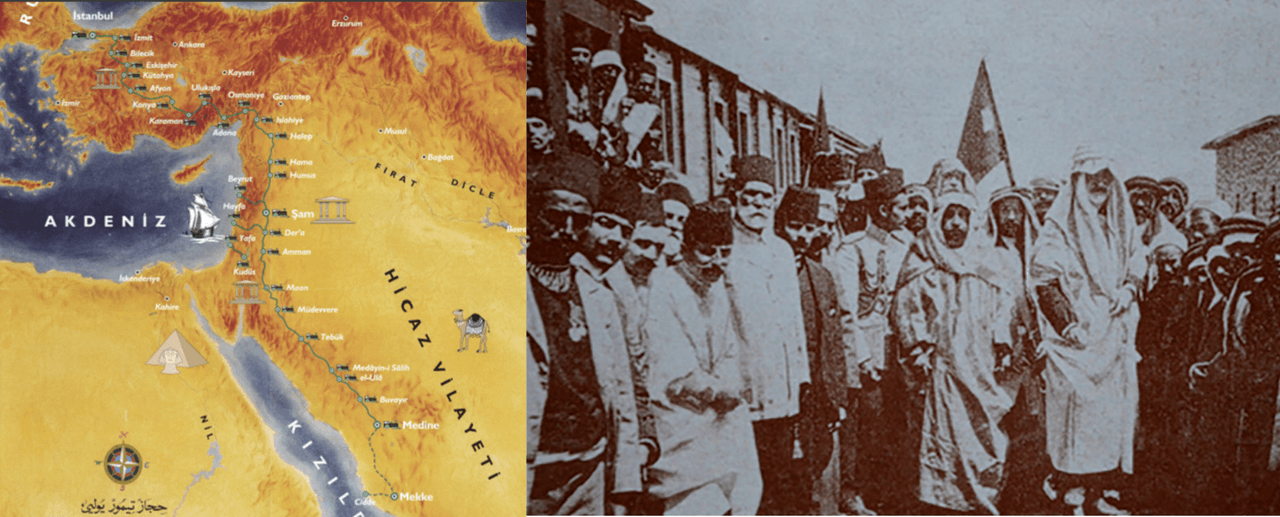
One of the most important projects of Sultan Abdulhamid II’s reign, the Hejaz Railway is a strategic 1,464-kilometer railway line whose construction began in 1900 by the Ottoman State and reached Medina on 31 August 1908.
Starting from Damascus, the line extended through Daraa, Amman (1903), Ma'an (1904), Qatrana, Tabuk, and Madain Saleh (1906) to Medina. Its primary purpose was to secure the Hajj route, reduce the perilous 40-day pilgrimage journey to four or five days, facilitate religious service, and strengthen administrative and military ties with the Hejaz region to reinforce Ottoman unity.
The project was also intended to symbolize solidarity within the Islamic world and was largely funded by donations from Islamic countries. The railway facilitated the transport of troops and supplies to the Hejaz and Yemen during both peacetime and wartime, reducing reliance on the Suez Canal and enhancing the logistical importance of settlements such as Amman, Ma'an, and Medina. However, due to attacks during the Arab Revolt in World War I, the railway was largely destroyed, and its operation effectively ceased after the war. Today, some sections of the line are preserved as historical heritage in Jordan and Saudi Arabia.
During World War I, the region became the site of the Arab Revolt against the Ottoman Empire. After the Ottoman defeat, the region’s structure was shaped according to the 1916 Sykes-Picot Agreement, which outlined a division of Ottoman territories between Britain and France.
This secret agreement foresaw the partition of Ottoman lands into spheres of influence; modern-day Jordan and Palestine were designated as British zones of influence. Under this framework, the region came under British mandate following the 1920 San Remo Conference decisions. In 1921, one year later, Britain established the Emirate of Transjordan under the leadership of Abdullah bin Hussein, son of the Sharif of Mecca, thereby instituting Hashemite rule and laying the foundations of modern Jordan.
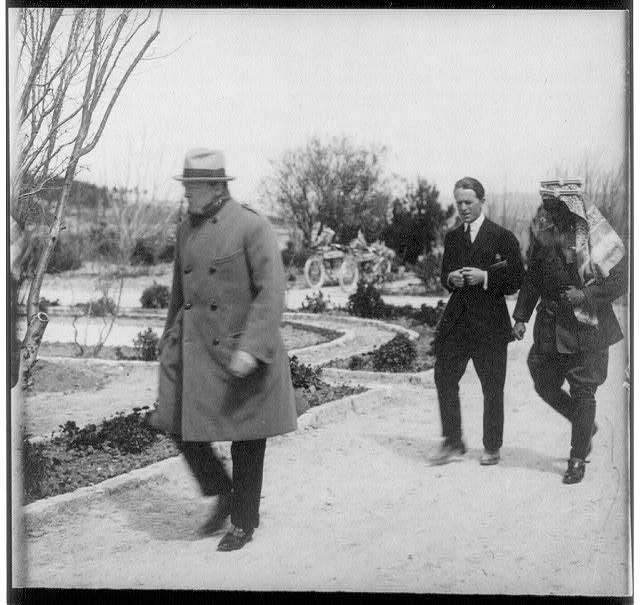
Winston Churchill, Arab Lawrence, and Emir Abdullah Walking During the San Remo Conference (Library of Congress)
The emirate remained under British mandate until 1946. On 25 May 1946, with the end of the mandate, the country declared its independence and officially established the Hashemite Kingdom of Jordan under King Abdullah bin Hussein. In 1949, the state’s name was formally confirmed as the Hashemite Kingdom of Jordan.
Shortly after independence, Jordan participated in the 1948 Arab-Israeli War and annexed the West Bank and East Jerusalem following the conflict. However, these territories were lost to Israeli occupation after the Six-Day War of 1967. These wars significantly affected Jordan’s demographic and political structure, particularly due to waves of Palestinian refugees.
In 1970, clashes between Palestinian guerrilla groups and the Jordanian Army, known as "Black September", strengthened King Hussein’s central authority and consolidated the country’s internal stability and sovereignty.
Following prolonged regional tensions, King Hussein signed a formal peace agreement with Israel in 1994, becoming the second Arab country after Egypt to take this step. Upon King Hussein’s death in 1999, his son King Abdullah II ascended the throne, continuing his father’s balancing policy and prioritizing national goals of modernization, economic reform, and technological advancement.
Jordan has maintained internal stability through its constitutional monarchy and the legitimacy of the Hashemite dynasty, despite major regional instability waves such as the Arab Spring and the civil war in neighboring Syria. Today, the country continues to play a pivotal role in resolving the Palestinian issue and regional security matters.
Jordan is a largely terrestrial and arid country located in Western Asia, covered by the eastern extensions of the Syrian Desert.
Jordan covers an area of approximately 89,342 km² and occupies a geostrategically critical position in the Middle East. It shares borders with Syria to the north, Iraq to the northeast, Saudi Arabia to the east and south, and Israel and the West Bank to the west. The country’s only maritime access is via the Gulf of Aqaba on the Red Sea. This access is vital for its foreign trade.
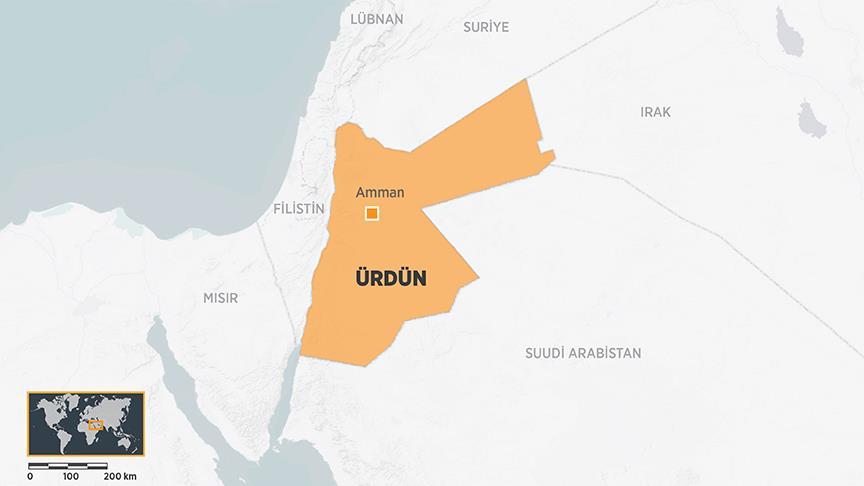
Current Map of Jordan (AA)
Jordan’s western regions are mountainous and rugged. The country’s highest point is Jabal Umm al-Dami, reaching 1,854 meters. The high plateaus around Amman play a decisive role in the country’s climate and agricultural productivity. These mountainous areas block moist air masses from the west, contributing to arid conditions in the eastern regions.
The most fertile part of Jordan’s geography is the Jordan Valley, which stretches from north to south along the Jordan River and is the primary region for agricultural activity. Wadi Rum in the south is a valley known for its sandstone and granite rock formations and is considered geologically and touristically valuable. The region was added to the UNESCO World Heritage List in 2011.
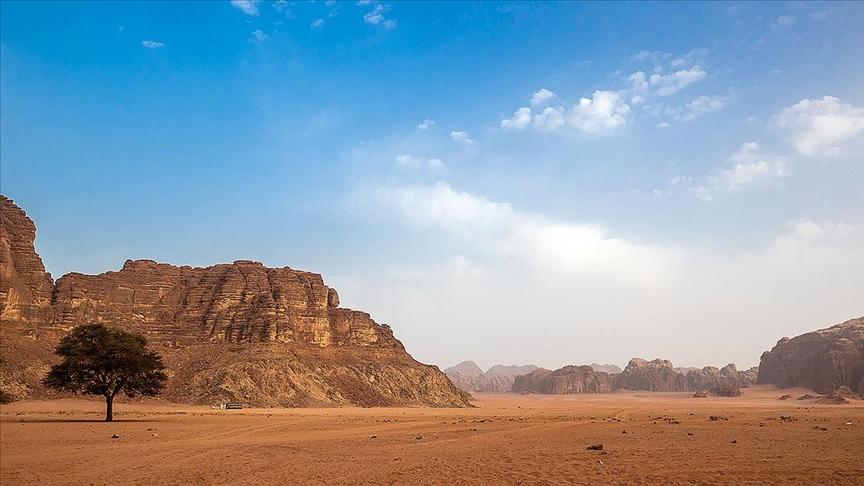
Wadi Rum (Anadolu Ajansı)
Jordan’s main water source is the Jordan River, which originates from the slopes of Mount Hermon in the north and flows into the Dead Sea. The Dead Sea lies approximately 430 meters below sea level, making it the lowest point on Earth. Jordan is extremely deficient in water resources; this situation has become a strategic issue for the country.
Jordan exhibits transitional characteristics between Mediterranean and arid desert climates. In western regions, winters are cool and rainy, while summers are hot and dry. In the east and south, annual rainfall is extremely low. The eastern and southern plateaus, which constitute the majority of the country’s territory, are dominated by an arid desert climate with very low annual precipitation.
The Jordan Valley and the Dead Sea region experience a dry tropical climate, with temperatures reaching up to 49°C in summer months. Rainfall is concentrated primarily between November and April. Climatic variations directly affect the country’s agricultural production capacity and settlement distribution.
Jordan’s main natural resources include phosphate, potash, and oil shale. These resources create potential for utilizing domestic and non-renewable energy sources in the country’s energy strategy, but they remain insufficient to meet its energy needs directly.
Jordan is a country with limited natural energy resources and therefore exhibits a high degree of dependence on imports for its energy supply. The country follows an energy consumption model heavily reliant on imports, particularly of oil and natural gas. This dependence is one of the primary factors affecting energy security and economic stability.
Electricity access is widespread in Jordan, with the majority of the population having access to electricity services. As of 2023, the country’s total installed electricity generation capacity stood at 6,890 MW, with the highest recorded electricity load (maximum demand) reported at 4,240 MW. Total electricity generation in 2023 was approximately 24.182 billion kWh (GWh), while consumption reached about 19.113 billion kWh (GWh). Due to generation exceeding consumption, Jordan exports a small amount of electricity, although imports continue.
Generation Mix (2023): Approximately 78.0% of electricity generation comes from fossil fuels (natural gas, oil, and coal), with natural gas alone accounting for 61.7% of total production. Approximately 22.0% of total electricity generation is derived from renewable sources: Solar PV contributes 15.0% and wind energy contributes 6.9%. Hydropower generation is limited to 0.1%. The total installed renewable energy capacity as of 2023 is 2,620 MW.
Jordan exhibits an import-dependent energy structure. There is no domestic coal production; all 120,610 short tons of coal consumed in 2023 were imported. Crude oil production is negligible; total crude oil production in 2023 was reported at only 43,988 barrels (approximately 120 barrels per day). Proven crude oil reserves as of 2021 stood at 1 million barrels. Oil product consumption is high; according to 2023 data, diesel and heating oil consumption alone reached 33,520 barrels per day. Total crude oil imports in 2023 were recorded at 1,776,000 tons.
Natural gas is Jordan’s primary fuel for electricity generation. Domestic natural gas production is limited; in 2023, it increased compared to the previous year and reached 6.13 billion cubic feet (bcf). However, the majority of natural gas consumption is met through imports; in 2023, natural gas imports amounted to approximately 4.037 billion cubic meters. Proven natural gas reserves are estimated at around 200 billion cubic feet (bcf).
Per capita primary energy consumption in 2023 was recorded at 32.91 million Btu. Per capita electricity consumption reached 1,664 kWh in the same year. These figures confirm Jordan’s high energy demand and energy-intensive economic structure despite limited domestic fossil fuel resources.
Jordan’s transportation infrastructure has been shaped around its vision of becoming a regional logistics hub and ensuring uninterrupted foreign trade flows.
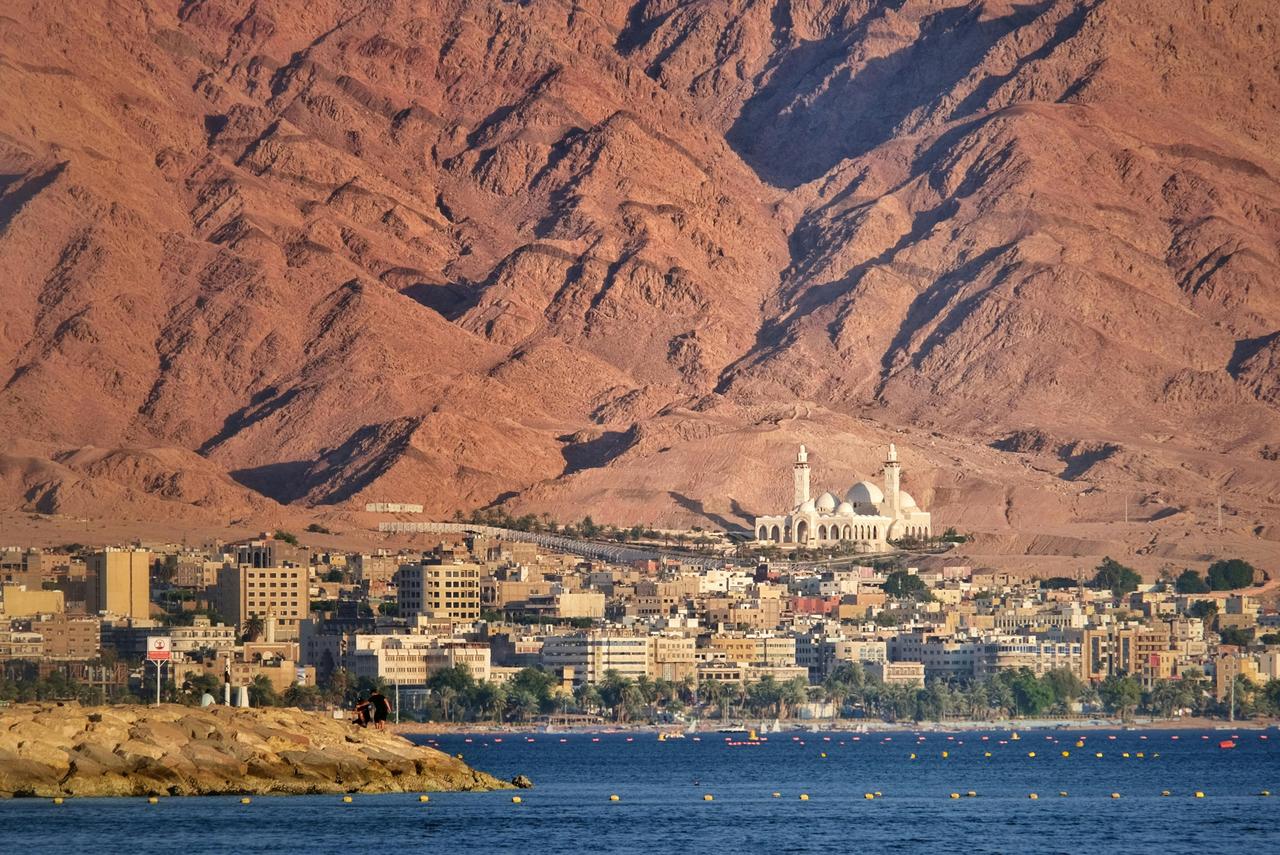
View of Aqaba Port (Pexels)
Jordan’s economy exhibits a middle-income structure based on limited natural resources, dependence on energy imports, and significant reliance on foreign aid. Economic growth is projected at approximately 2.6% for 2025. In the first half of 2025, Foreign Direct Investment (FDI) inflows to the country were recorded at approximately $1.05 billion, representing a significant 36.4% increase compared to the same period in 2024.
Total exports in 2024 were recorded at $9.433 billion. The largest export partners are the United States (25.7%), Saudi Arabia, and Iraq. The United States alone accounts for one-quarter of Jordan’s total national exports.
The most prominent export category in 2024 was clothing and accessories, which accounted for 19.4% of total exports. Significant growth has been recorded in sectors such as clothing and pharmaceuticals, while traditional export items such as chemical fertilizers, phosphates, and raw potash have shown declining trends.
Jordan’s largest import partners in 2024 include China and Saudi Arabia, as well as the United States and the United Arab Emirates (UAE). Major imported products include mineral fuels and oils, which constitute 21.9% of total imports, along with automobiles, machinery, and electrical equipment.
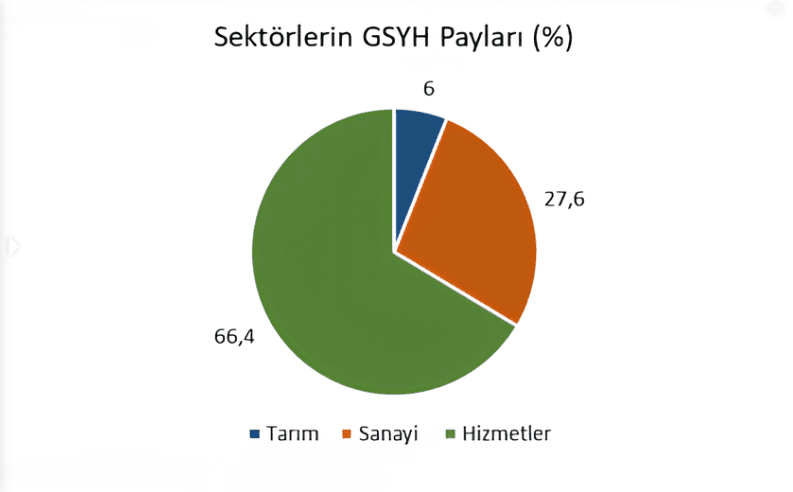
Sectoral Distribution of Jordan’s GDP (DEİK)
Due to its dependence on energy and basic raw material imports, Jordan runs a chronic trade deficit. Major export items include textiles/clothing, fertilizers, inorganic chemicals, and potash. Trade flows are oriented toward Western countries and the United States through free trade agreements, as well as neighboring Arab countries.
Foreign Direct Investment (FDI) inflows to Jordan in 2023 were recorded at $843 million. A significant portion of investments is concentrated in industry, construction, and real estate. The government actively encourages investments in green energy and technology.
Jordan’s population is approximately 11.5 million as of 2025. The population growth rate exceeds regional averages, and the country’s demographic structure is highly dynamic, primarily due to large influxes of refugees from neighboring countries.
Jordan is among the world’s leading countries in terms of refugees per capita. This dynamic exerts continuous pressure on public services and economic resources. A high proportion of the population, approximately 84%, lives in urban areas. The capital, Amman, is the country’s largest and most densely populated metropolitan center.
Population distribution is directly linked to geographic conditions. The mountainous plateau in the west and the eastern edge of the Jordan Valley constitute the country’s most densely populated and economically developed region. Cities such as Amman, Irbid, and Zarqa attract population through their roles as centers of industry, education, and services. Eastern and southern regions (the Desert Plateau), however, are largely desert due to harsh climatic conditions and insufficient water resources, resulting in extremely sparse settlement.
Approximately 97% of Jordan’s population is of Arab origin. The remainder consists of small and historic minority groups such as Circassians, Chechens, and Armenians. The most defining factor in the social structure is the Palestinian-origin Jordanians. This population, which arrived after the 1948 and 1967 wars, has become integrated into the country’s social life, economy, and politics, with a significant portion acquiring full citizenship rights.
Islam is the official religion of Jordan, and approximately 93% of the population are Sunni Muslims. Christians constitute about 6% of the population, primarily belonging to the Greek Orthodox, Roman Catholic, and Protestant denominations. The Christian community has a long and established history in the region. The Jordanian Constitution guarantees constitutional respect for religious freedom. The state is obligated to protect the rights of religious minorities, and the Christian minority is represented in parliament through a quota system.
Jordan is one of the countries in the Middle East hosting the highest number of refugees due to regional crises. As of 2025, approximately 660,000 Syrian refugees are officially registered in Jordan; when including unregistered individuals, the number is estimated at 1.3 million. According to United Nations Relief and Works Agency for Palestine Refugees in the Near East (UNRWA) data, approximately 2.3 million registered Palestinian refugees live in Jordan. This creates a very high refugee density relative to the population, placing significant pressure on Jordan’s infrastructure, employment, housing, health, and education systems.
According to the United Nations High Commissioner for Refugees (UNHCR) and UNESCO, the majority of Syrian refugees do not live in camps but within local communities. This increases demand on public services and strains municipal infrastructure, particularly in energy, water, and waste management. In education, while the Jordanian government collaborates with international organizations to ensure access to education for Syrian and Palestinian children, high class sizes and insufficient resources remain major challenges.
UNESCO country reports emphasize that refugee inflows have created a “continuous and structural pressure” on Jordan’s limited resources, increased competition in the labor market, and led to the proliferation of informal employment in low-wage sectors. Nevertheless, Jordan is regarded by the international community as a significant partner in “burden-sharing.” Overall, the size and long-term presence of the refugee population have become a defining factor in Jordan’s social policies, economic planning, and public service management.
Jordan stands out in the Middle East for its high literacy rate, mandatory basic education system, and advanced higher education infrastructure. The national literacy rate exceeds 95%; the proportion of the population aged 15 and above who are illiterate was approximately 4.8% as of 2025. The education system consists of ten years of mandatory basic education followed by two years of secondary education.
Higher education is central to Jordan’s human capital strategy. Numerous public and private universities operate across the country, with major institutions including University of Jordan, Yarmouk University, and Hashemite University.
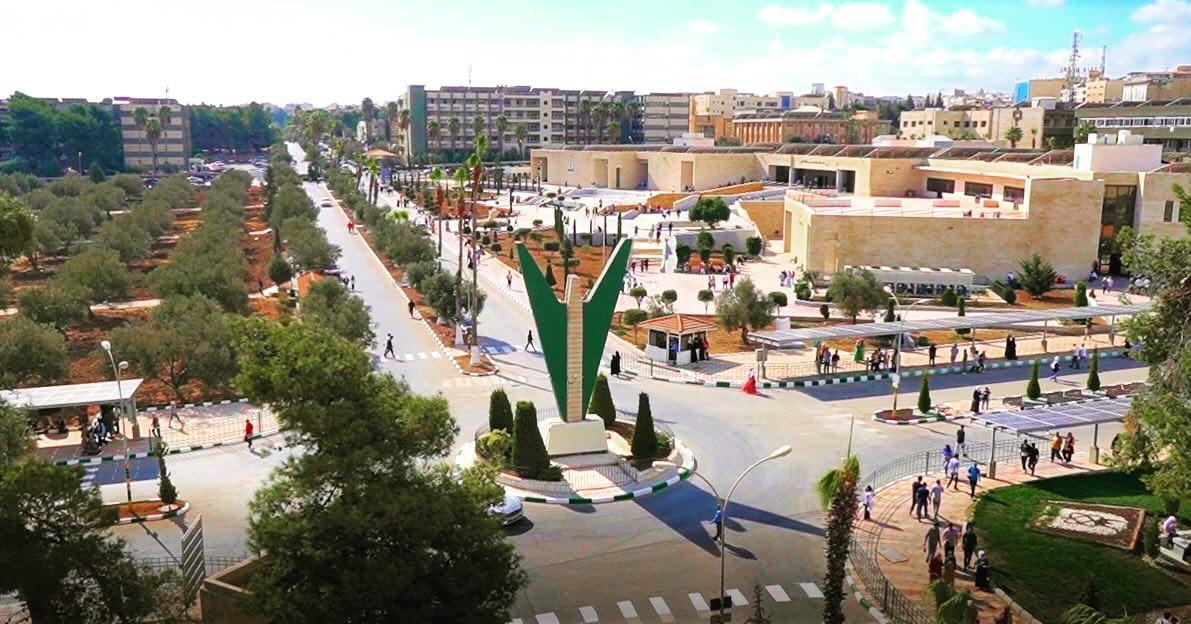
Yarmouk University (Yarmouk University)
According to Jordan’s Ministry of Higher Education, as of the 2024–2025 academic year, 51,647 international students from 113 countries are studying in Jordanian universities. This demonstrates Jordan’s emergence as a regional higher education hub. The education infrastructure has particularly developed in engineering, information technology, and medicine.
The quality of education in these fields plays a vital role in meeting the country’s demand for skilled labor. Quality assurance and accreditation processes in higher education are managed by the Jordanian Higher Education Accreditation and Quality Assurance Commission (HEAC).
Jordan maintains its identity as a crossroads of the Levant, blending cultural diversity with historical processes.
Jordanian society is generally built on conservative and collective values. Extended family ties and tribal structures form the foundation of social order and individual identity. Arab cultural norms of hospitality (karam) are a prominent social norm in interpersonal interactions.
Cultural diversity has been enriched by historical waves of migration. A large portion of the population is of Palestinian origin, while minority groups such as Circassians, Chechens, and Christian Arabs contribute to the country’s social fabric.
The official language is Modern Standard Arabic, but local dialects and English are widely used in daily life and commercial settings. Jordanian cuisine reflects typical Levantine characteristics; the most famous national dish is Mansaf, a traditional meal made from dried yogurt (jameed), rice, and meat.
Jordan possesses a vast archaeological heritage due to its historical control by the Roman Empire, Byzantines, and various Islamic Caliphates.
The country’s global cultural significance is recognized through three main UNESCO listings:
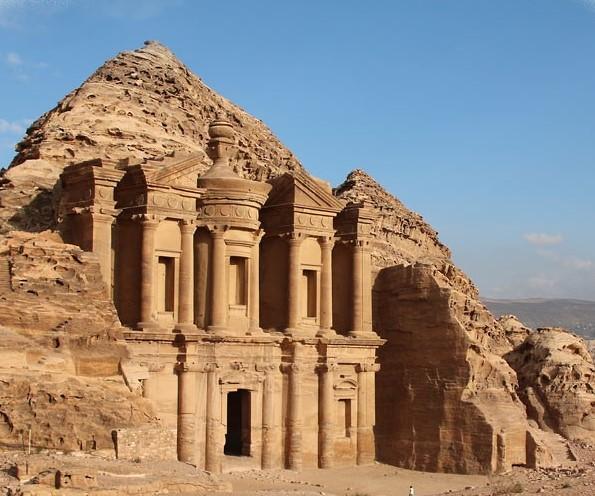
Rock Tombs in the Ancient City of Petra, Jordan ()
Jordan also hosts numerous ancient cities outside the UNESCO framework:
Jordan maintains national institutions dedicated to preserving and showcasing its heritage. These institutions play a central role in documenting the country’s thousands of years of history and strengthening national identity.
Jordan’s tourism sector, built upon the country’s cultural, historical, and natural wealth, is a critical economic pillar for employment and foreign exchange earnings.
Jordan caters to a diverse range of visitors centered on historical, cultural, and health tourism. Its most important attractions are historical and cultural heritage sites such as the Ancient City of Petra and Roman ruins.
At the same time, Jordan has emerged as a global leader in medical tourism, welcoming over 300,000 visitors annually for treatment purposes and creating a significant market. Additionally, visitors drawn to nature and adventure tourism are attracted by Wadi Rum’s desert landscapes and Aqaba’s Red Sea coastlines, while regional tourists from neighboring countries also constitute a significant segment due to geographic proximity.
Tourism is a vital source of foreign exchange and employment for Jordan’s economy and holds a significant position in GDP. For example, before the COVID-19 pandemic, tourism accounted for approximately 16.3% of Jordan’s GDP according to 2019 data.
Although this share declined during the pandemic, recovery has led to increased tourism revenues, reaching $7.239 billion in 2024.
The employment generated by the sector is also critical; in 2024, it provided jobs for a large number of people. Medical tourism, generating over a billion dollars annually, is a strong sub-sector supporting this share.
The Jordanian government implements clear policies under the Economic Modernization Vision to support tourism and enhance global competitiveness. The primary goal is to promote sustainable tourism by preserving cultural heritage and natural resources.
Legal infrastructure is being strengthened; a recent example is the new Tourism Law enacted in 2024, which simplified licensing procedures and established a special fund to support sector development. Additionally, subsidized travel programs such as “Jordan is Paradise” are being implemented to revive domestic tourism, while infrastructure and product development investments continue in key areas such as Aqaba and Wadi Rum.
The tourism sector is one of the main drivers of Jordan’s economy and a crucial source of foreign exchange. It makes a significant contribution to the country’s GDP and is supported by the government as a key sector for national development. Jordan has also emerged as a regional center for medical tourism, particularly due to the unique opportunities offered by the Dead Sea.
Jordan is defined as a tourist destination with various historical structures.
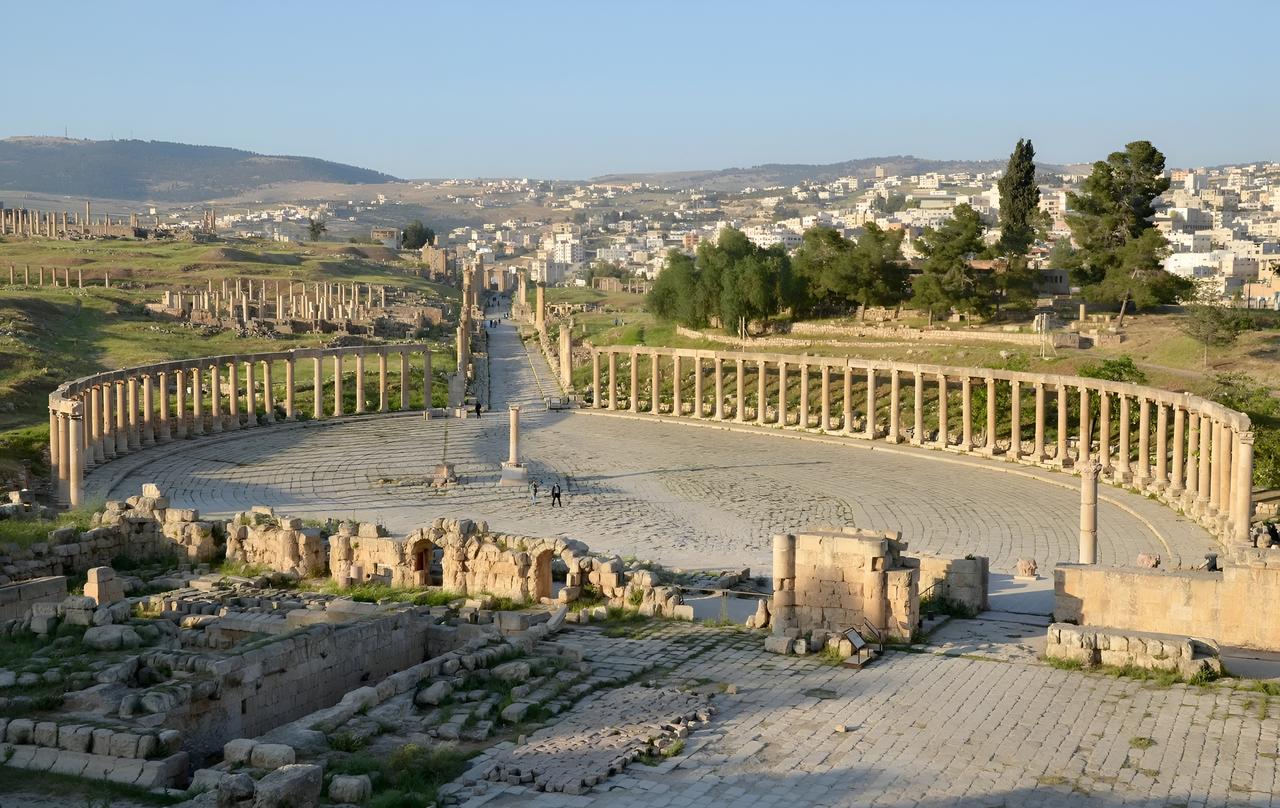
Jerash (Gerasa) (World History Encyclopedia)
Jordan’s foreign policy is based on preserving regime stability, territorial integrity, and regional balance. The Hashemite Kingdom, due to its geographic position, assumes a moderate, mediating, and balancing role amid the Middle East’s unstable power dynamics.
Jordan’s foreign policy axis is built on strategic alliances with the United States and Gulf countries, diplomatic sensitivity regarding the Palestinian issue, and pragmatic relations with neighbors. Amman maintains close cooperation with the Western world in security, economic, and intelligence domains. Jordan also holds a special status as the custodian of Islamic holy sites in Jerusalem, strengthening its diplomatic position on the Palestinian issue.
Jordan is regarded as one of the United States’ most essential and reliable strategic partners in the Middle East. This privileged relationship has deepened based on mutual security interests, the preservation of regional stability, and shared objectives in combating terrorism.
The United States allocates substantial annual economic and military aid to Jordan. This support contributes to Jordan’s economic stability and modernizes the Jordanian Armed Forces. Military assistance includes acquisition of weapons systems, intelligence sharing, and military training programs.
Joint Military Exercises: The two countries conduct comprehensive military exercises such as “Eager Lion” to prepare for regional threats. These exercises aim to enhance the Jordanian military’s interoperability capabilities.
Economic and Trade Relations: The United States and Jordan have strong economic ties. Jordan was the first Arab country to sign a Free Trade Agreement (FTA) with the United States in 2000, which entered into force in 2001 and has increased bilateral trade volume.

King Abdullah II of Jordan with U.S. President Donald Trump (Anadolu Ajansı
Turkish-Jordanian relations are characterized by a friendly framework based on historical, cultural, and economic ties. The two countries maintain close diplomatic relations grounded in shared Ottoman heritage and a vision of regional peace. Turkey was among the first states to recognize Jordan’s independence in 1946.
Relations gained momentum economically with the signing of the Free Trade Agreement in 2009; trade volume has recently approached $1 billion. Turkish construction firms play an active role in Jordan’s infrastructure, energy, and housing projects.
In defense, joint projects are underway between Jordan Design and Development Bureau (JODDB) and Turkish defense industry companies, with technical cooperation on armored vehicles and modernization systems.
Politically, regular high-level consultation mechanisms operate between the two countries, with similar positions on the Palestinian issue, the status of Jerusalem, and regional security. Turkey views Jordan’s stability as strategically important for regional peace; Jordan supports Turkey’s regional diplomatic initiatives.
Jordan became the second Arab state to sign a peace agreement with Israel. The Wadi Araba Peace Treaty, signed on 26 October 1994, defined the borders between the two countries, established diplomatic relations, and regulated water resource sharing.
Although relations between the two countries have experienced tensions at times due to the Palestinian issue and developments in Jerusalem, security and intelligence cooperation continues. Mutual dependence has increased in water and energy supply. Under agreements signed in 2021, Jordan supplies energy to Israel, while Israel provides drinking water to Jordan.
The Amman administration supports the establishment of a Palestinian state and maintains its relations with Israel under a policy of “cooperation in peace but principled distance.” This balance enables Jordan to preserve its alignment with Western allies while maintaining legitimacy in the eyes of the Arab public.
Jordan holds an “Advanced Status Partnership” with the European Union (European Neighbourhood Policy / ENP Advanced Status). The EU provides development aid and humanitarian support to Jordan in managing the refugee crisis. European countries (e.g., Germany, France, United Kingdom) also provide financial and humanitarian assistance to Jordan.
The Jordanian Armed Forces (JAF) consist of land, air, and naval components and are considered among the most professional militaries in the region. The country regularly conducts joint exercises with NATO members, particularly the United States, emphasizing modernization and training programs. The Jordan Design and Development Bureau (JODDB), active in the defense industry, aims to increase domestic production capacity and reduce dependence on imports. Defense projects conducted with Turkey, the United States, and European countries strengthen the technical dimension of Jordan’s security strategy.
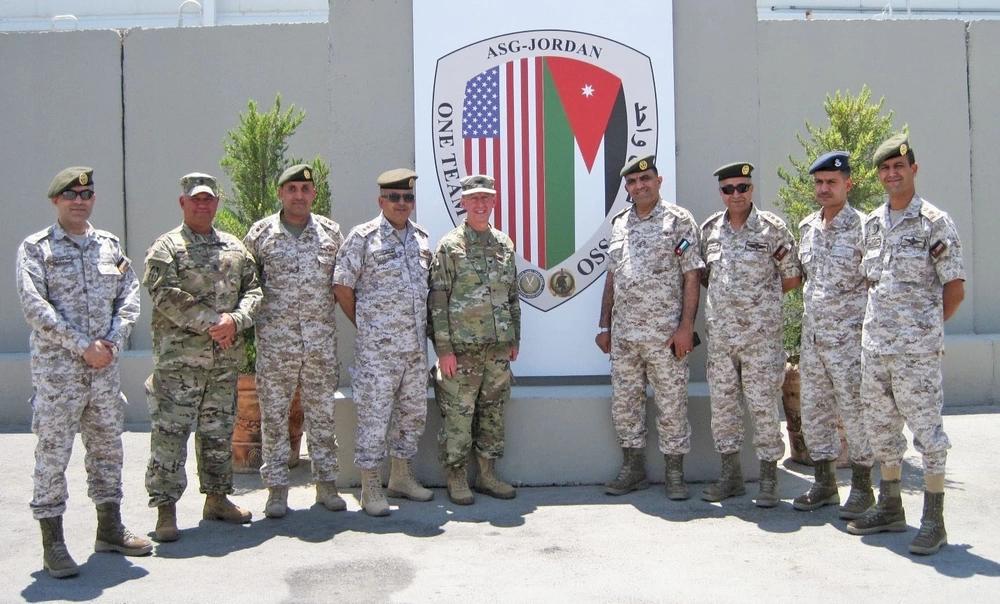
(Jordan Armed Forces and U.S. Officials During Military Cooperation Talks (Defence Visual Information Distribution Service)
In the 2025 military power index, Jordan ranks 75th among 145 countries with a PwrIndx value of 1.6139. The country’s defense budget is set at $2.5 billion, with $25.6 billion in external debt, $15.7 billion in foreign exchange and gold reserves, and $106.8 billion in purchasing power.
Human Resources: Jordan’s total population is 11.17 million, providing a significant potential for military personnel. Active military personnel number 100,500, with reserve personnel at 65,000. Additionally, with 35,000 paramilitary personnel, total military personnel are estimated at 200,500. The country annually mobilizes approximately 145,262 individuals into military service.
The operational history of the Jordanian Armed Forces can be characterized by participation in regional conflicts, internal security operations, and active roles in international peacekeeping missions.
The Jordanian army played a central role in the Arab-Israeli conflicts that began with the establishment of the State of Israel.
The army has conducted critical operations to address regional threats and ensure internal order.
The Jordanian Armed Forces have consistently contributed to international stability efforts. Since 1961, Jordan has been one of the key countries actively sending troops to United Nations (UN) peacekeeping missions. It has served in various global conflict zones, including former Yugoslavia, Haiti, Congo, Liberia, and East Timor.
African Development Bank (AfDB). "African Economic Outlook 2025—Africa’s Short-term Outlook Resilient Despite Global Economic and Political Headwinds." Accessed November 18, 2025.https://afdb.africa-newsroom.com/press/african-economic-outlook-2025africas-shortterm-outlook-resilient-despite-global-economic-and-political-headwinds?lang=en
Anadolu Ajansı. "Ürdün Ülke Profili." Accessed November 18, 2025.https://www.aa.com.tr/tr/ulke-profilleri/urdun/903484.
Anadolu Ajansı. "Ürdün'deki Rum Vadisi Eşsiz Manzarasıyla Dünyanın Dört Bir Yanından Turisti Ağırlıyor." Accessed November 18, 2025.https://www.aa.com.tr/tr/kultur/urdundeki-rum-vadisi-essiz-manzarasiyla-dunyanin-dort-bir-yanindan-turisti-agirliyor/2894771.
Association for Diplomatic Studies & Training (ADST). "Jordan's Black September, 1970." Accessed November 18, 2025.https://adst.org/2015/07/jordans-black-september-1970/
Big Norwegian Encyclopedia (SNL). "Jordan." Accessed November 18, 2025.https://snl.no/Jordan.
Country Reports. "Jordan Country Report." Accessed November 18, 2025.https://www.countryreports.org/country/Jordan.htm.
Department of Statistics (Jordan). "External Trade in Jordan: Full Year 2024 Report (Exports, Imports, and Trade Balance)." Accessed November 18, 2025.https://dosweb.dos.gov.jo/category/news/export/.
Dış Ekonomik İlişkiler Kurulu (DEİK). "Ürdün Bilgi Notu." Accessed November 18, 2025.https://deik.org.tr/uploads/urdun-bilgi-notu-eylul-2022.pdf.
Dış Ekonomik İlişkiler Kurulu (DEİK). "Ürdün Ülke Bülteni 2014." Accessed November 18, 2025.https://www.deik.org.tr/uploads/urdun-ulke-bulteni-2014.doc.
Dış Ekonomik İlişkiler Kurulu (DEİK). "Ürdün Ülke Bülteni." Accessed November 18, 2025.https://www.deik.org.tr/uploads/urdun.pdf.
Global Firepower. "Jordan Military Strength (2025)." Global Firepower Index. Accessed November 18, 2025.https://www.globalfirepower.com/country-military-strength-detail.php?country_id=jordan#google_vignette.
International Monetary Fund (IMF). "Jordan Country Data and World Economic Outlook Reports." Accessed November 18, 2025.https://www.imf.org/en/countries/jor.
International Renewable Energy Agency (IRENA). "Jordan Renewable Energy Outlook." Accessed November 18, 2025.https://www.irena.org/country/jordan.
Jordan Ministry of Energy andMineral Kaynakları. "Official Website." Accessed November 18, 2025.https://memr.gov.jo/
Jordan Ministry of Higher Education and Scientific Research. "51,647 International Students Enrolled in Jordanian Higher Education Institutions." 2024. Accessed November 18, 2025.https://www.mohe.gov.jo/En/NewsDetails/51647_International_Students_Enrolled_in_Jordanian_Higher_Education_Institutions
Jordan Ministry of Tourism and Antiquities. "Tourism Quarterly Review H1 2024." Accessed November 18, 2025.https://www.mota.gov.jo/ebv4.0/root_storage/en/eb_list_page/quarterly_review_-h1_2024(en)_v3-0.pdf.
Jordan Ministry of Transportation. "Official Website." Accessed November 18, 2025.https://mot.gov.jo/
Jordan Times. "Energy Ministry announces 2023 energy sector results." Accessed November 18, 2025.https://jordantimes.com/news/local/energy-ministry-announces-2023-energy-sector-results.
Jordan Times. "Jordan's tourism revenue declines by 2.3% in 2024." Accessed November 18, 2025.https://jordantimes.com/news/business/jordans-tourism-revenue-declines-23-2024.
Library of Congress. "The World of 1898: The Spanish-American War: José Martí and Cuban Independence." Accessed November 12, 2025.https://www.loc.gov/rr/hispanic/1898/marti.html.
Matson, G. Eric. "[Winston Churchill, 'Lawrence of Arabia,' and Emir Abdullah walking in the gardens of the Government House, Jerusalem, during secret conference]." [1921]. Library of Congress Prints and Photographs Division. Accessed November 18, 2025.https://www.loc.gov/pictures/item/2003680166/
National Anthems Info. "Cuba." Accessed November 12, 2025.https://nationalanthems.info/cu.htm.
Naval History and Heritage Command. "Sinking of USS Maine." Accessed November 11, 2025.https://www.history.navy.mil/our-collections/photography/wars-and-events/spanish-american-war/sinking-of-uss-maine.html.
Office of the Historian, U.S. Department of State. "The Cuban Missile Crisis, October 1962." Accessed November 11, 2025.https://history.state.gov/milestones/1961-1968/cuban-missile-crisis
Roya News. "Jordan's trade deficit widens despite export growth in 2024." Accessed November 18, 2025.https://en.royanews.tv/news/58023/Jordan%E2%80%99s-trade-deficit-widens-despite-export-growth-in-2024
The General Command of the Jordanian Armed Forces the Arab Army. "News." Accessed November 18, 2025.https://www.jaf.mil.jo/newsen.aspx.
TradeImeX. "Jordan Exports Explained: Top Products List and Exports of Jordan by Country." Accessed November 18, 2025.https://www.tradeimex.in/blogs/jordan-exports-top-products-by-country.
Trần, Thắng-Nhật. "Akabe'den Şehir ve Deniz Manzarası." Pexels. Accessed November 18, 2025.https://www.pexels.com/tr-tr/fotograf/deniz-kent-sehir-kentsel-17619968/.
Türkiye Cumhuriyeti Dışişleri Bakanlığı. "Ürdün Ülke Profili." Accessed November 18, 2025.https://www.mfa.gov.tr/sub.tr.mfa?3f4db158-99ee-4395-9c4f-70c74fd90068.
TİKA. "Ürdün." Accessed November 18, 2025.https://tika.gov.tr/wp-content/uploads/2016/Prestij%20Eserler/Urdun_Kitapcik_SonHali.pdf.
U.S. Department of State. "U.S. Department of State: Jordan Bilateral Relations Fact Sheet." Accessed November 18, 2025.https://2021-2025.state.gov/u-s-relations-with-jordan/.
U.S. Energy Information Administration (EIA). "Jordan: Analysis, Data, and Statistics." Accessed November 18, 2025.https://www.eia.gov/international/analysis/countries_long/Jordan/.
UN Jordan. "UN Observes International Day of United Nations Peacekeepers on 29 May." Accessed November 18, 2025.https://jordan.un.org/en/295157-un-observes-international-day-united-nations-peacekeepers-29-may.
United Nations Educational, Scientific and Cultural Organization (UNESCO). "Public Policy and Inclusive Education Country Profile: Jordan." Accessed November 18, 2025.https://www.unesco.org/sites/default/files/medias/fichiers/2023/12/PPI-Country-Profiles-Jordan.pdf.
United Nations High Commissioner for Refugees (UNHCR). "External Statistical Report on UNHCR Registered Refugees and Asylum-Seekers Jordan as of 30 June 2024." Geneva: UNHCR, 2025. Accessed November 18, 2025.https://data.unhcr.org/en/documents/details/109690
United Nations Relief and Works Agency for Palestine Refugees in the Near East (UNRWA). "Where We Work: Jordan Field." Accessed November 18, 2025.https://www.unrwa.org/where-we-work/jordan
Urumaxi Anthems. "Jordan Overview." YouTube. Accessed November 18, 2025.https://youtu.be/UdTqWZ2uTYg
World Bank. "Jordan Country Overview." Accessed November 18, 2025.https://www.worldbank.org/en/country/jordan/overview.
World History Encyclopedia. "The Oval Forum and Cardo Maximus of Gerasa." Accessed November 18, 2025.https://www.worldhistory.org/image/8250/the-oval-forum-and-cardo-maximus-of-gerasa/
World Population Review (WPR). "Jordan Demographics Data." Accessed November 18, 2025.https://worldpopulationreview.com/countries/jordan.
Şahin, Cemalettin, and Cengiz Tomar. "Ürdün." *İslâm Ansiklopedisi*. Accessed November 18, 2025.https://islamansiklopedisi.org.tr/urdun.

Official Name | Hashemite Kingdom of Jordan | ||||||||
|---|---|---|---|---|---|---|---|---|---|
Governing System | Constitutional Monarchy | ||||||||
Capital | Amman | ||||||||
Head of State | King Abdullah II ibn Al-Hussein | ||||||||
Independence Date | 25 Mayıs 1946 | ||||||||
Total Population | 11.4 million (2025) | ||||||||
Area | 89,342 km² | ||||||||
Official Language | Arabic | ||||||||
Climate | Mediterranean Climate and Desert Climate | ||||||||
GDP (Nominal) | 39.696 billion dollars (January – June 2025) | ||||||||
GDP per Capita | 4.917 dollars (2025) | ||||||||
Ethnic Groups | Arab (Jordanians and Palestinians majority) | ||||||||
National Day | 25 May | ||||||||
Religious Structure | 92% Sunni Muslim, 6% Christian, 2% other | ||||||||
Neighbors | Saudi Arabia, Syria, Iraq, Palestine, Israel | ||||||||
Unemployment | 22.3% (2024) | ||||||||
Poverty Rate | 24.2% (2025) | ||||||||
Total Foreign Exchange Reserves | 17.3993 billion dollars (January – June 2023) | ||||||||
Total Exports | 6.940756 billion dollars (January – July 2023) | ||||||||
Total Imports | 14.970033 billion dollars (January – July 2023) | ||||||||
Telephone Code | +962 | ||||||||
Currency | Jordanian dinar (under a fixed exchange rate regime, 1 Jordanian dinar equals 1.41 US dollars) | ||||||||
No Discussion Added Yet
Start discussion for "Hashemite Kingdom of Jordan" article
National Anthem
History
Ancient Era and Early Communities (9000 BCE – 106 CE)
Early Settlements and Bronze Age Kingdoms
Nabataean Civilization and Roman Rule
Islamic Conquests and Medieval Dominations (629 – 1516 CE)
Spread of Islam and the Umayyad Period
Crusaders and Mamluk Period
Ottoman Rule and the Path to Independence (1516 – 1946)
Hejaz Railway
Arab Revolt and Establishment of the Emirate
Establishment of the Kingdom
Hashemite Kingdom and Contemporary Era (1946 – Present)
Arab-Israeli Conflicts and Black September
Peace Agreement and Modernization
Geography
Location
Topography
Mountains
Plains and Valleys
Rivers and Lakes
Climate and Vegetation
Natural Resources
Energy and Infrastructure
Electricity Generation and Consumption
Fossil Fuel Production and Consumption
Natural Gas Production and Imports
Per Capita Energy Consumption
Transportation Infrastructure
Economy
Key Economic Indicators
Sectoral Distribution
Foreign Trade
Foreign Investment and Business Environment
Demography and Education
Key Demographic Indicators (2023)
Population Distribution and Urbanization
Ethnic Composition
Religious Distribution
Migration and Population Mobility
Education
Culture and Tourism
Cultural Structure
Cultural Heritage and Preservation
UNESCO World Heritage Sites
Historical Structures and Archaeological Sites
Museums and Cultural Institutions
Tourism
Tourist Profile
Tourism’s Share in the Economy
Tourism Policies
Tourist Regions
Historical and Cultural Tourism
Nature and Health Tourism
Maritime Tourism
Foreign Policy and Security
Relations with the United States of America
Comprehensive Financial and Military Support
Relations with Turkey
Relations with Israel
Relations with the European Union and Other Western Countries
Military and Defense Capacity
Land, Air, and Naval Components
Defense Industry
Operational History
Arab-Israeli Wars
Internal Security and Cross-Border Operations
International Peacekeeping Participation