This article was automatically translated from the original Turkish version.
In 2007, as a result of a global voting campaign launched by the Switzerland-based New7Wonders Foundation, the “New Seven Wonders of the World” emerged as structures representing the architectural and cultural values of the modern era. In contrast to the lost wonders of antiquity, these structures still stand today and are works built during different periods of human history, reflecting cultural diversity.
Chichen Itza is a major urban settlement belonging to the Maya civilization, one of the most influential and advanced ancient cultures of Mesoamerica. Located on the Yucatán Peninsula in Mexico, this archaeological site served as a major political, economic, religious and cultural center between 600 and 1200 CE. Its name means “City at the Mouth of the Well of the Itza” in the Yucatec Maya language.
The most famous structure at Chichen Itza is the Pyramid of Kukulkan, also known as El Castillo. This pyramid was designed in deep connection with astronomy. During the equinoxes, the play of light and shadow on the pyramid’s staircases creates an image symbolizing the feathered serpent god Kukulkan. The structure has 365 steps, corresponding to the Maya calendar. Other significant structures on the site include:
Chichen Itza is not only a religious center but also regarded as a scientific site constructed for astronomical observations. The Maya people used an extremely advanced calendar system based on the cycles of planets and stars. Consequently, many architectural elements were built with geometric precision referencing celestial events.
In the 10th century CE, Chichen Itza evolved into a complex cultural structure influenced by the Toltecs. This led to the emergence of a new aesthetic combining Maya and Toltec architectural elements. The city began to be abandoned from the 13th century onward and gradually disappeared into the jungle.
Chichen Itza was inscribed on the UNESCO World Heritage List in 1988 and is today one of Mexico’s most visited tourist and historical sites. In 2007, it was selected as one of the “New Seven Wonders of the World” through a global public vote.
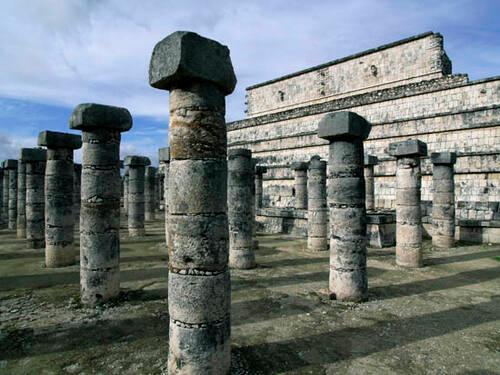
Chichen Itza - Mexico (Image: UNESCO Official Website)
The Great Wall of China is a massive structure recognized as the longest man-made defensive construction in history, surviving from ancient times to the present. Construction began as early as the 7th century BCE and was significantly expanded during the Qin, Han and Ming dynasties. The primary purpose of the Great Wall was to defend against invasions by nomadic tribes from the north, particularly the Huns and Mongols.
The Chinese government has officially documented the total length of the Great Wall at 21,196 kilometers. The wall is not a single continuous structure but a complex system comprising numerous walls, defense towers, passes and fortresses. The ramparts were constructed using various materials including earth, stone, brick and wood, with construction techniques varying according to period and geography. Notable sections include:
The wall served not only as a physical barrier but also as a communication and surveillance system. Messages were transmitted using smoke, fire and flags from observation towers. Over time, for the Chinese people, the wall also became a symbol of resistance, resilience and unity.
Inscribed on the UNESCO World Heritage List in 1987, the Great Wall of China is regarded not only as a national treasure but also as a symbol of engineering and construction genius in world history, attracting millions of tourists annually.
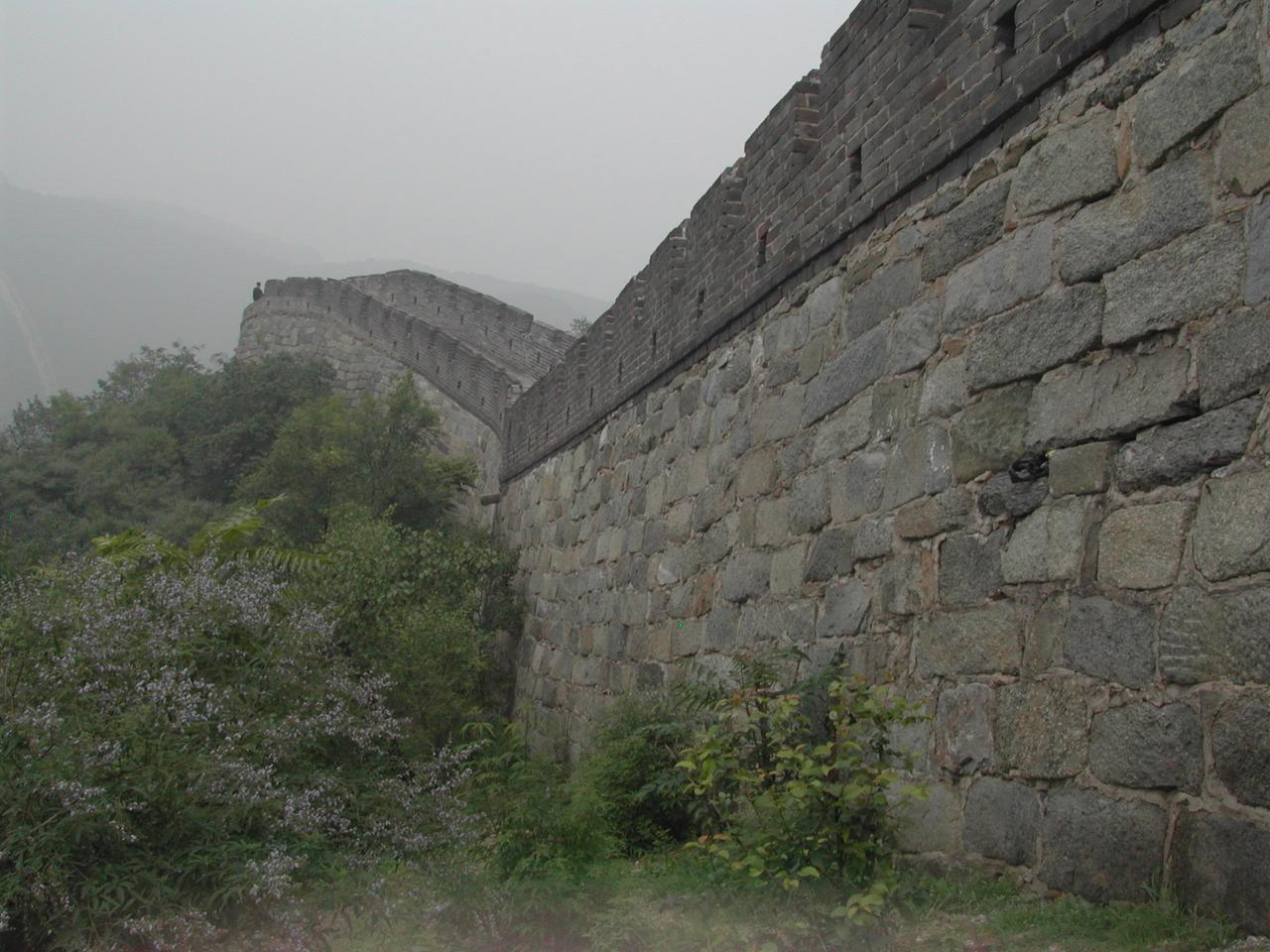
Great Wall of China – China (Image: UNESCO Official Website)
The Colosseum (Colosseum) is one of the most iconic symbols of ancient Roman architecture. Construction began in 72–80 CE under Emperor Vespasian and was completed during the reign of his son Titus. Originally named the Flavian Amphitheatre, the structure derived its current name from the nearby Colossus of Nero statue.
The Colosseum is elliptical in plan and had a capacity of approximately 50,000 to 80,000 spectators. It measures 189 by 156 meters and stands about 48 meters high. The first three levels consist of arched openings, while the top level is enclosed by a solid wall supported by columns. The structure was built using concrete, travertine stone, brick and tufa.
Beneath the arena lies the hypogeum, a complex network of underground tunnels and animal lifts. These mechanical systems allowed gladiators, wild animals and stage props to be raised into the arena.
The Colosseum was used for events such as gladiatorial contests, wild animal hunts, reenactments of naval battles (naumachiae), historical dramas and executions. These events also served to entertain the populace and demonstrate the power of the ruling elite.
For the Roman people, the Colosseum was not merely a venue for entertainment but also perceived as a symbol of imperial power. The “bread and circuses” (panem et circenses) policy was an integral part of this ideology.
During the Middle Ages, its function changed: it was used for a time as housing, workshops, a church and a fortress. Although damaged by earthquakes and stone looting over the centuries, it has survived to the present day.
Inscribed on the UNESCO World Heritage List in 1980, the Colosseum is today one of Rome’s most visited landmarks. It is also used as a cultural center for symbolic commemorations against war and capital punishment.
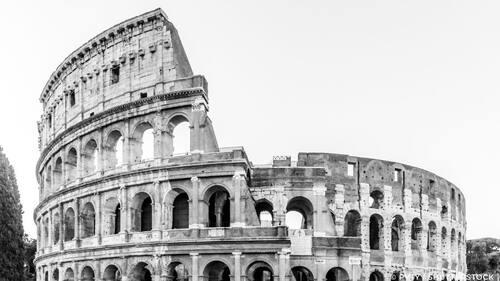
Colosseum – Italy (Image: UNESCO Official Website)
Christ the Redeemer is a statue located in Rio de Janeiro, Brazil, and one of the world’s most recognizable monuments. Positioned atop Corcovado Mountain at an elevation of approximately 710 meters above sea level, the statue stands 30 meters tall on an 8-meter pedestal. The span of its outstretched arms is about 28 meters.
The statue depicts Jesus Christ with arms outstretched, symbolizing compassion, peace, inclusiveness and universal love. It also represents Brazil’s Catholic identity. The monument is regarded as both a sacred and national symbol by both locals and tourists.
Construction began in 1926 and was completed in 1931. The project involved French sculptor Paul Landowski, Brazilian engineer Heitor da Silva Costa and French architect Albert Caquot. The face of the statue was designed by Romanian sculptor Gheorghe Leonida. The internal framework is made of reinforced concrete and steel, while the outer surface is clad in soapstone. Soapstone was chosen for its soft texture and white color.
Over time, Christ the Redeemer has transcended its religious function to become Brazil’s cultural and tourist ambassador on the international stage. Millions visit the statue annually, and special light shows are held during Easter, Christmas and national holidays.
Declared a cultural heritage site by the Brazilian government in 2006, the statue was inscribed on the UNESCO World Heritage List in 2012. It was also selected as one of the “New Seven Wonders of the World” in the 2007 public vote.
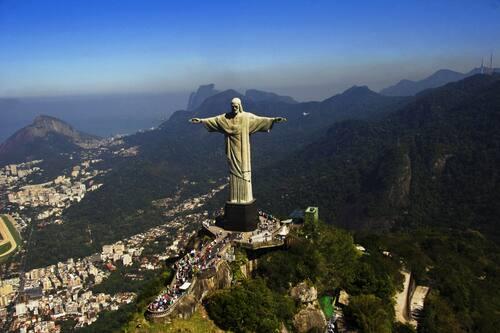
Christ the Redeemer – Brazil (Image: UNESCO Official Website)
Machu Picchu is one of the most important archaeological sites in South America, located in the Cusco region of Peru at an altitude of 2,430 meters in the Andes Mountains. This ancient city, built around the mid-15th century during the Inca Empire, is recognized as a heritage of humanity for its architecture and harmonious integration with nature.
The majority of Machu Picchu was constructed from granite stones using the dry-stone technique (ashlar), without mortar. It consists of approximately 200 structures divided into agricultural terraces, temples, observatories, residential areas and the royal residence. Notable structures include:
Machu Picchu exemplifies not only aesthetic harmony but also geological and ecological integration. Structures were built to withstand earthquakes. The terrace systems prevented erosion and enhanced agricultural productivity. Situated within high mountain forests and biologically rich ecosystems, Machu Picchu is one of the rare places where natural and cultural heritage are intricately intertwined.
Machu Picchu was introduced to the scientific world in 1911 by American historian Hiram Bingham. Since then, it has been studied as one of the most important evidences of the Inca civilization’s achievements in transportation, architecture and astronomy.
Inscribed on the UNESCO World Heritage List in 1983, Machu Picchu is one of the rare sites listed for both natural and cultural heritage. It was also selected in 2007 as one of the “New Seven Wonders of the World” through a global public vote.
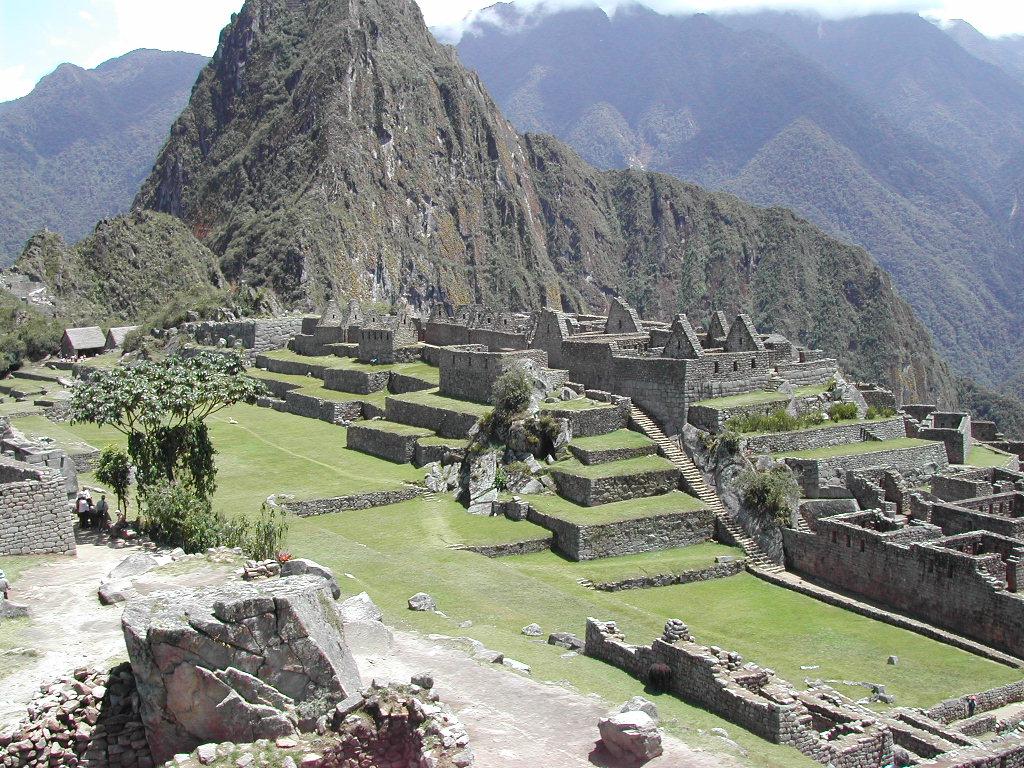
Machu Picchu – Peru (Image: UNESCO Official Website)
Petra is an ancient city carved into rock, located in the Wadi Musa region of southwestern Jordan, and served as the capital of the Nabataean Kingdom. Believed to have been founded in the 4th century BCE, Petra reached its peak politically, culturally and economically between the 1st century BCE and the 2nd century CE.
Petra is filled with tombs, temples, theaters and palaces carved directly into soft sandstone cliffs. The city reflects a unique fusion of Hellenistic, Roman, Eastern Mediterranean and Arab architectural elements. Notable structures include:
Petra was a crucial crossroads of the ancient world’s most important incense and spice routes, serving as the commercial heart between regions such as India, Arabia, Syria and Egypt. The city’s sophisticated water channels and dam systems represent advanced engineering solutions for sustainable life in a desert environment.
Petra became part of the Roman Empire in 106 CE and gradually lost its significance. A major earthquake in 363 CE caused the destruction of many buildings. In subsequent centuries, the city was abandoned and forgotten. It was rediscovered in the 19th century by Swiss explorer Johann Ludwig Burckhardt.
Inscribed on the UNESCO World Heritage List in 1985, Petra stands out for its architectural grandeur, historical role and sustainable construction within a desert landscape. Selected as one of the “New Seven Wonders of the World” in the 2007 public vote, Petra is today one of Jordan’s most important tourism assets, welcoming millions of visitors annually.
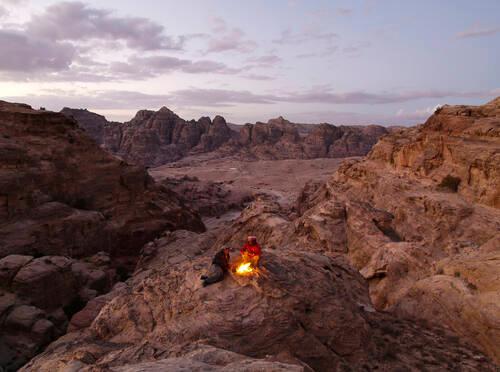
Petra – Jordan (Image: UNESCO Official Website)
The Taj Mahal is one of the world’s most renowned examples of monumental mausoleums, located in the northern Indian city of Agra. Commissioned by Mughal Emperor Shah Jahan in memory of his beloved wife Mumtaz Mahal, construction began in 1632 and was completed around 1653.
The Taj Mahal is a unique synthesis of Islamic, Persian, Indian and Ottoman architectural elements. Built of white marble, its central dome rises 35 meters high and is surrounded by four minarets. Surrounding the main structure are:
Inside the structure, symbolic cenotaphs of Shah Jahan and Mumtaz Mahal are located. The actual tombs lie beneath the ground floor.
Precious stones brought from India and Central Asia—including lapis lazuli, emerald, ruby, amethyst, mother-of-pearl and black onyx—were used in the construction. Walls are adorned with inlay work featuring Quranic verses and floral motifs, adding aesthetic and spiritual dimensions to the monument.
The Taj Mahal is not only an architectural masterpiece but also universally recognized as a symbol of love. Mumtaz Mahal died giving birth to Shah Jahan’s fourteenth child, and the monument stands as an expression of his profound grief and devotion.
Considered the pinnacle of Mughal architecture, the Taj Mahal has inspired both local and foreign artists over time. During British colonial rule, various restoration efforts were undertaken; in the 20th and 21st centuries, protective measures were developed against severe air pollution.
Inscribed on the UNESCO World Heritage List in 1983, the Taj Mahal was also added to the “New Seven Wonders of the World” list in 2007 due to its architectural elegance, cultural value and universal appeal. Today, it is visited by nearly seven million tourists annually.
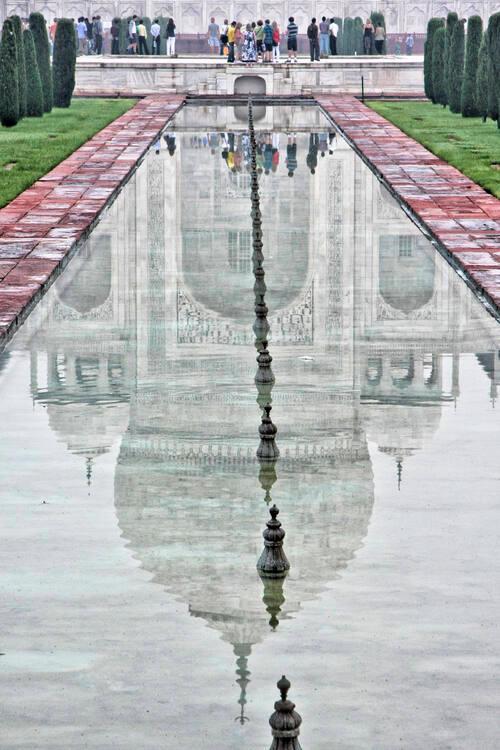
Taj Mahal – India (Image: UNESCO Official Website)
These structures are significant not only for their architectural or aesthetic value, but also for their contributions to universal human history, their representation of cultural diversity and their international recognition. Each provides insight into the religious, political and economic structures of the societies in which they were built and remains a focal point of modern tourism.
Clayton, Peter A., and Martin J. Price. The Seven Wonders of the Ancient World. London: Routledge, 1988.
National Geographic. “Petra.” *National Geographic History.* Accessed May 7, 2025.https://www.nationalgeographic.com/history/article/lost-city-petra.
New7Wonders Foundation. “The Official New 7 Wonders of the World.” world.new7wonders.com. Accessed May 7, 2025.https://world.new7wonders.com/.
UNESCO World Heritage Centre. “Historic Centre of Rome, the Properties of the Holy See.” Accessed May 9, 2025.https://whc.unesco.org/en/list/91/.
UNESCO World Heritage Centre. “Historic Sanctuary of Machu Picchu.” Accessed May 9, 2025.https://whc.unesco.org/en/list/274/.
UNESCO World Heritage Centre. “Petra.” Accessed May 9, 2025.https://whc.unesco.org/en/list/326/.
UNESCO World Heritage Centre. “Pre-Hispanic City of Chichen-Itza.” Accessed May 9, 2025.https://whc.unesco.org/en/list/483/.
UNESCO World Heritage Centre. “Rio de Janeiro: Carioca Landscapes Between the Mountain and the Sea.” Accessed May 9, 2025.https://whc.unesco.org/en/list/1100/.
UNESCO World Heritage Centre. “Taj Mahal.” Accessed May 9, 2025.https://whc.unesco.org/en/list/252/.
UNESCO World Heritage Centre. “The Great Wall.” Accessed May 9, 2025.https://whc.unesco.org/en/list/438/.
UNESCO. "Photo Document – Petra." Accessed May 9, 2025.https://whc.unesco.org/en/documents/125391.
UNESCO. "Photo Document – Taj Mahal." Accessed May 9, 2025.https://whc.unesco.org/en/documents/125942.
UNESCO. "World Heritage List." UNESCO World Heritage Centre. Accessed May 7, 2025.https://whc.unesco.org/en/list/.
UNESCO. “Photo Document – Chichen Itza.” Accessed May 9, 2025.https://whc.unesco.org/en/documents/110202.
UNESCO. “Photo Document – Christ the Redeemer.” Accessed May 9, 2025.https://whc.unesco.org/en/documents/117438.
UNESCO. “Photo Document – Colosseum.” Accessed May 9, 2025.https://whc.unesco.org/en/documents/184164.
UNESCO. “Photo Document – Machu Picchu.” Accessed May 9, 2025.https://whc.unesco.org/en/documents/109684.
Chichen Itza – Mexico
Architectural and Structural Features
Astronomy and Science
Historical Development
Conservation and UNESCO Heritage
Great Wall of China – China
Structural Features and Length
Military Function and Symbolism
Historical Development
Cultural Value and Conservation
Colosseum – Italy
Architectural Features
Purpose and Social Role
Historical Development
UNESCO Protection and Contemporary Role
Christ the Redeemer – Brazil
Religious and Cultural Significance
Construction Process and Architecture
Meaning and Modern Role
Conservation and UNESCO Status
Machu Picchu – Peru
Structural Features and Urban Layout
Harmony with Nature
Discovery and Conservation
UNESCO Status
Petra – Jordan
Architectural Features and Symbolic Structures
Role on the Trade Route
Historical Development and Abandonment
UNESCO Status and Cultural Significance
Taj Mahal – India
Architectural Features and Design
Materials and Decorations
Meaning and Legend
Historical Development and Conservation
UNESCO Status