This article was automatically translated from the original Turkish version.
Primary Reference Work | The great cat massacre and other episodes in French cultural history | ||||||||
|---|---|---|---|---|---|---|---|---|---|
Place | Jacques Vincent’in Matbaa atölyesi | ||||||||
Period | 1737–1740 | ||||||||
Event Name | The Great Cat Massacre Büyük Kedi Katliamı | ||||||||
Persons | Kalfalar Léveillé Jacques Vincent Jérôme Nicolas Contat | ||||||||
The Great Cat Massacre, was a mass killing carried out in the late 1730s around Rue Saint-Séverin in Paris by apprentices and journeymen at a printing workshop, targeting cats. The daily routine of workshop life sharply diverged between the master and the household on one side and the apprentices on the other. Apprentices worked under heavy burdens; the inequality in food and sleep arrangements intensified workshop tensions, as even the master’s cats lived in better conditions than the apprentices. This tension merged with the nocturnal noise of stray cats in the neighborhood, making rest difficult for the apprentices and ultimately focusing their resentment on the cats themselves.
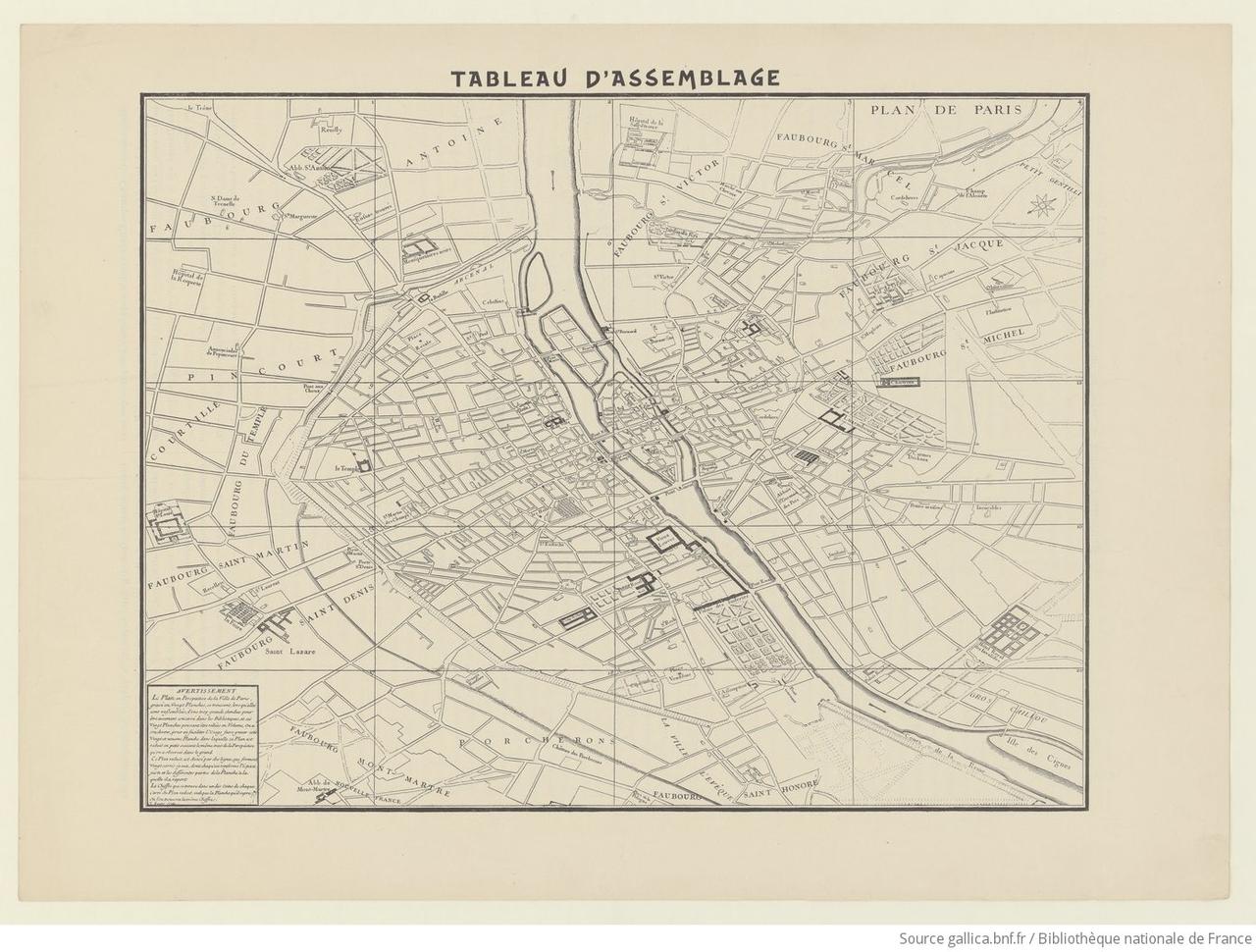
Map of Paris During the Time of the Event (Gallica)
During the act, the apprentices Jérôme and Léveillé gathered the cats in the courtyard at night; then a mock trial was organized within the workshop community. Guards were assigned; roles of accuser/priest and executioner were distributed; the cats were declared guilty. The improvised gallows were erected and the cats were hanged; the entire process unfolded amid observation and laughter from the workshop members. The master Jacques Vincent’s wife had shown particular favoritism toward a cat named “la grise” (the gray one); the possibility that this favored cat had been killed provoked anger within the household, making the conflict within the workshop more visible.【1】
The daily operations at Jacques Vincent’s printing workshop on Rue Saint-Séverin were structured around a clear hierarchy. The workshop’s daily functioning was not managed by the master alongside his team, but primarily by journeymen and apprentices; the master often remained outside the production process, leaving the workshop under the supervision of a foreman. Apprentices rose before dawn, performed menial tasks all day, and endured insults from journeymen as well as the master’s harsh and sometimes violent treatment. This system transformed the workplace into more than just a site of production—it became a space where daily life itself was disciplined.
The apprentices’ daily rhythm was determined not only by their workload but also by the workshop’s entry and exit schedule. It was their responsibility to open the workshop door early in the morning, requiring them to wake at four or five o’clock. In contrast, the master represented the “late riser” category; an asymmetry existed in sleep patterns just as it did in meal schedules. Thus, the workshop became a universe where different time regimes and social statuses coexisted under the same roof.
The apprentices’ living conditions painted a grim picture. Disruptions to sleep were not limited to the poor quality and cold of their dormitory; the nocturnal noise of stray cats on the roof further hindered rest. Yet they were still expected to rise extremely early; chronic sleep deprivation led to persistent daily fatigue. Under these conditions, workshop tension intensified not only through work but also through the body’s basic needs.
The food system reinforced the same inequality. Apprentices were not permitted to eat at the master’s table; they were expected to survive on leftovers from the master’s plate. These leftovers did not always reach the apprentices regularly; due to kitchen practices, they sometimes received food so poor it could be described as “cat food.”【2】 These conditions transformed the cats from mere animals wandering around the workshop into everyday symbols of its internal inequality.
The cats’ position in workshop life became even more evident through the household’s attitude toward them. It was noted that the master’s wife showed particular affection for a cat named “la grise”; the widespread fascination among masters with keeping cats—even one master who kept twenty-five cats, had their portraits painted, and fed them roasted poultry—illustrated the extent of this privilege. This picture revealed that status differences in the workshop extended not only to human relationships but also to the care and attention given to animals.
The event unfolded within the daily routine of a printing workshop on Rue Saint-Séverin in Paris. The workshop was not confined to a mere production space; areas such as the kitchen, dormitory, courtyard, and roof became integral parts of work life. Apprentices slept in an upper room described as “filthy” and “freezing”; the noise of stray cats roaming the roof prevented uninterrupted sleep.【3】 Opening the workshop door at the very early hours—around four or five in the morning—was the apprentices’ responsibility; the earliest arriving journeymen were let in, and the daily work routine began at this hour.
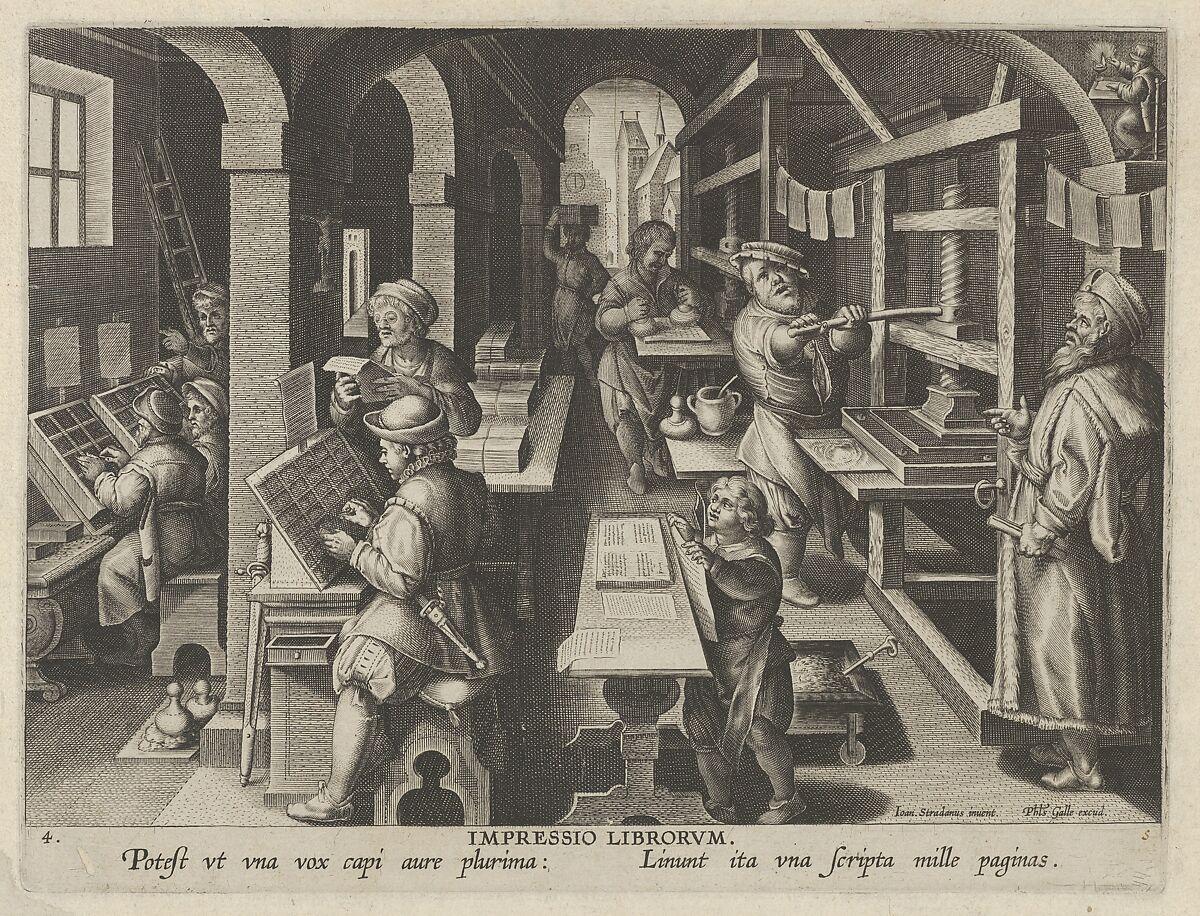
Illustration of a Printing Workshop’s Daily Organization (MET Museum)
Within the workshop, the kitchen became one of the most concrete expressions of hierarchy. Apprentices were barred from sitting at the master’s table and fed only on leftovers from his plate. The irregularity and poor quality of these leftovers led the apprentices to view their treatment as demeaning, deepening daily unrest. The courtyard, however, assumed a central role on the night of the event; wounded cats chased from the roof and stuffed into sacks were dumped into the courtyard, where the community gathered. Thus, the printing workshop’s courtyard quickly transformed from a place where work was done into a public stage.
There were two apprentices in the workshop: Jérôme and Léveillé. They spent their days performing menial labor under the insults of journeymen and the master’s harsh treatment. Léveillé stood out for his talent in imitation and performance; after the event night, he repeatedly reenacted the events, sustaining workshop amusement. The journeymen did not merely serve as carriers of the production process; they actively participated in the event, joining in the chase of cats on the roof and their gathering in the courtyard. The daily tension between journeymen and apprentices temporarily transformed into solidarity; the same community later established a collective entertainment routine marked by laughter and noise.
Jacques Vincent, as master, represented workshop authority; he rarely participated directly in production, leaving the workshop to a foreman and appearing only occasionally to display his anger. The household, especially the master’s wife, exerted indirect but clear influence over workshop order. The wife’s special affection for certain cats—particularly “la grise”—became a daily marker of inequality in the apprentices’ world. The cook, who worked in the kitchen, also became another focal point of conflict; the fate of leftovers and what the apprentices were fed sharpened daily hierarchies. When these individuals and roles came together, the printing workshop ceased to be merely a workplace; it became an environment where daily discipline, status differences, and conflicts were continuously reproduced.
At the workshop on Rue Saint-Séverin, the apprentices’ daily lives were shaped not only by their work rhythm but also by their living and feeding conditions. Jérôme and Léveillé were forced to rise before dawn, open the workshop door in the early hours, and carry a heavy burden ranging from menial chores to demanding tasks. At night, their chance to rest was limited by the “filthy” and “freezing” conditions of their dormitory; the noise of stray cats on the roof disrupted their sleep. This cycle stacked sleep deprivation on top of intense labor; discontent was rooted not only in the weight of work but in the body’s fundamental needs.
The food system deepened this discontent. Apprentices were excluded from the master’s table and forced to live on a system dependent on leftovers. The irregularity and poor quality of these scraps led the apprentices to view their treatment as humiliating; this daily contrast made visible the gap between the master’s household comfort and the apprentices’ lived experience. The master’s wife’s authority within the household and her particular affection for certain cats reinforced this sense of inequality not only among humans but also through the animals in the home. Thus, the cats ceased to be mere animals around the workshop and became targets onto which workshop tensions converged.
As discontent grew, the target became concrete: the stray cats disrupting sleep and the favored cats of the household. In the apprentices’ world, cats carried two distinct meanings: on one hand, they disturbed sleep with their nocturnal noise; on the other, the special care shown by the household toward its favorite animals stood in stark contrast to the apprentices’ deprivation. This contrast became sharper once the wife’s sensitivity toward the cats became widely known. The apprentices sought a way to disturb the household through the cats; this search led to a preparatory phase before direct violence, during which the workshop’s humor and imitation repertoire came into play.
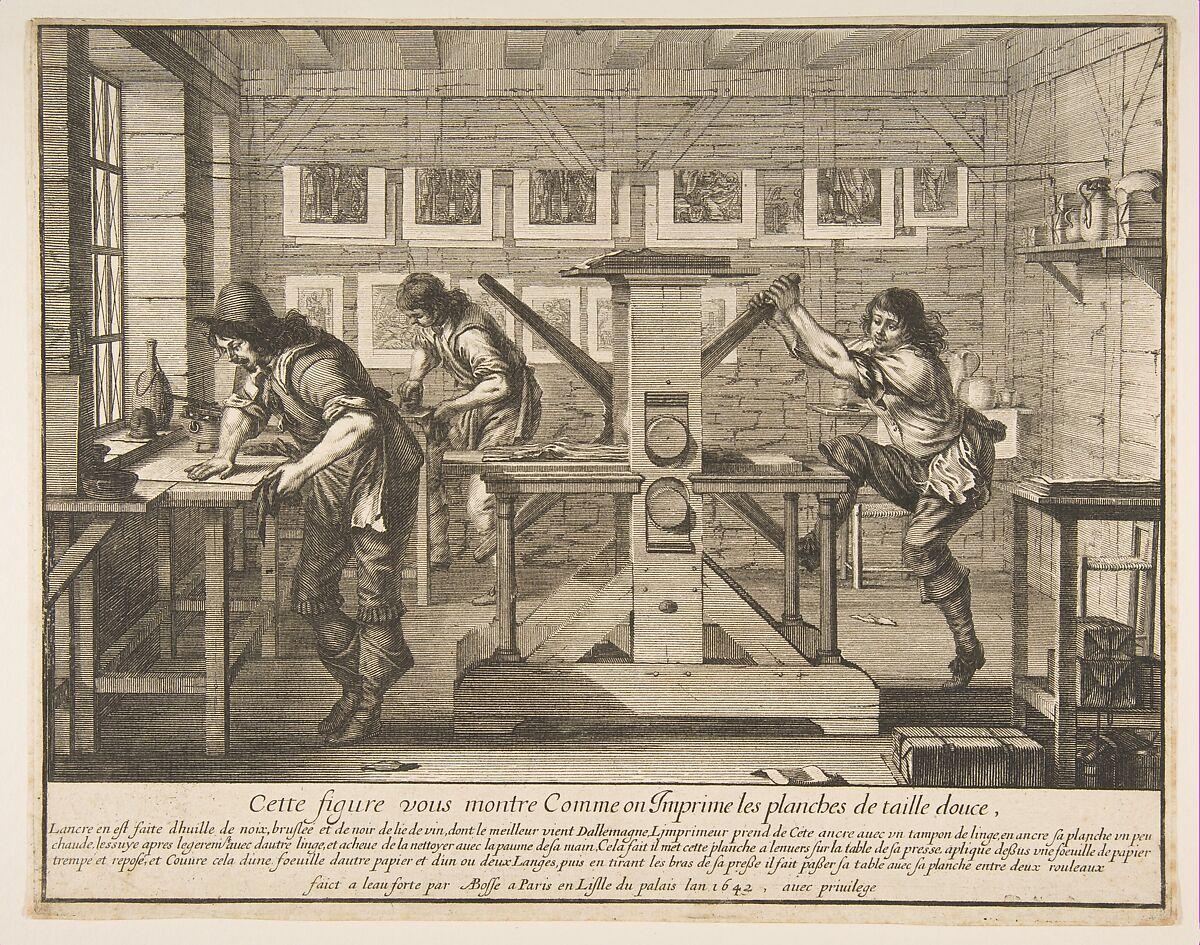
Representative Scene of the Workshop’s Organization at the Time (Met Museum)
During this preparatory phase, Léveillé’s talent for imitation became decisive; sounds mimicking the cats’ nocturnal noise were adopted as a method to disturb the household’s peace. This nighttime harassment, beginning at midnight, provoked stronger reactions from the household; the master and his family increasingly viewed the problem as one that could be solved by targeting the cats. At this point, the apprentices’ goal was not to launch a “cleaning” campaign against stray cats, but to escalate a tension directed at the household’s own daily order. Preparation was completed by identifying where the cats gathered, selecting the courtyard as a collection point, and establishing a framework in which the workshop community would witness the act as spectators. On this foundation, the next stage—gathering the cats and setting up the mock trial—became possible.
The act began at night. The apprentices Jérôme and Léveillé set out to capture the cats roaming around the workshop and on the roof. The cats were chased across the rooftops, stuffed into sacks, and some were injured in the process. The captured cats were brought to the workshop courtyard, which quickly became a space crowded with cat bodies, noise, and movement. The journeymen also joined this process; thus, the act was no longer confined to just two apprentices but became a shared execution within the workshop community.
At this stage, the target was no longer limited to stray cats. The master’s wife’s favored cat, “la grise,” held a special place in the household’s affections; the possibility that this favored cat had been caught heightened the tension of the act. The selection, capture, and transport of the cats to the courtyard created a buildup that prepared the ground for the next phase; the courtyard was transformed into a space for a “public spectacle.”
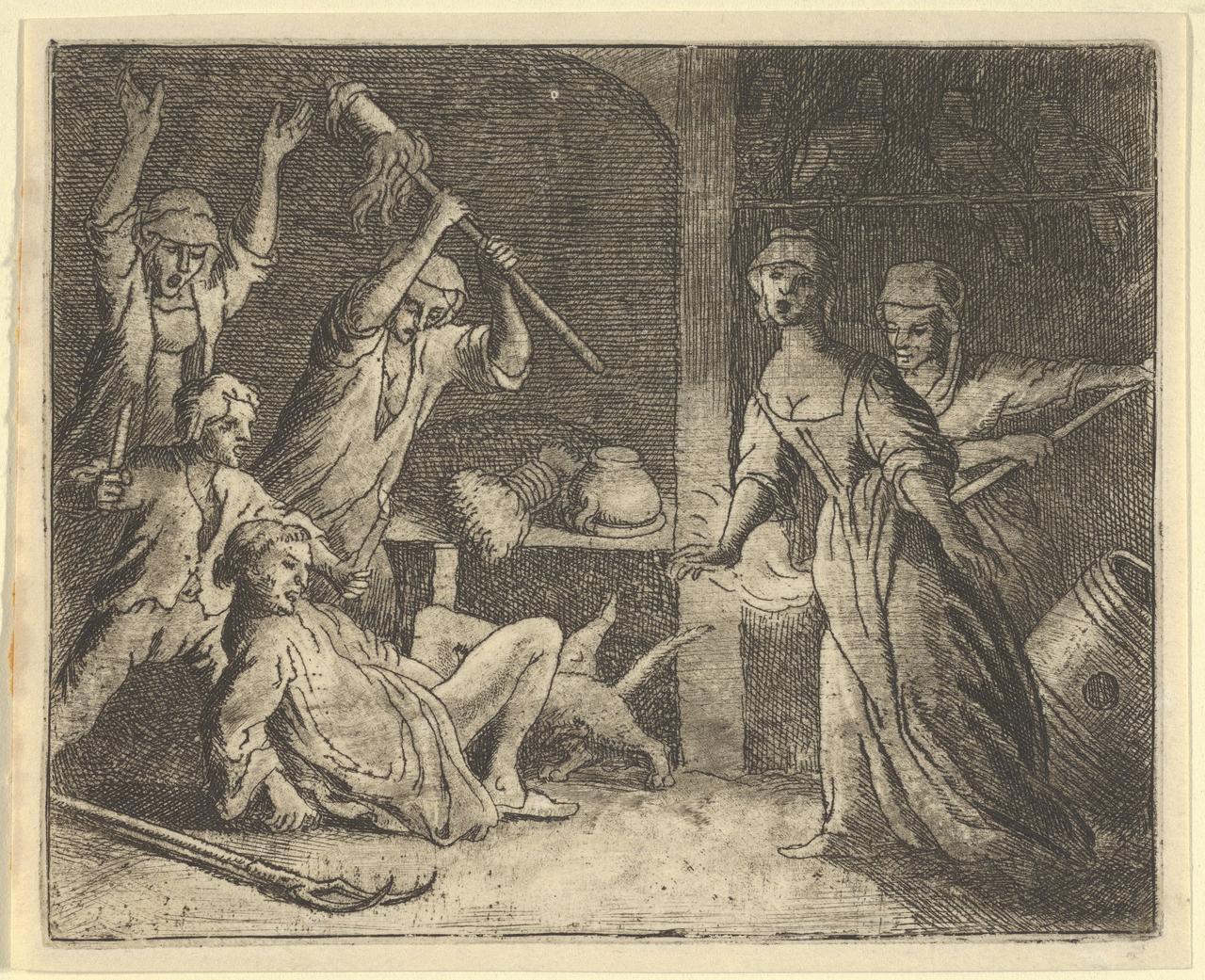
After the cats were gathered in the courtyard, a mock trial was organized within the workshop community. Roles were assigned: guards were appointed; the figures of accuser/priest and executioner were enacted. The cats were declared guilty; then an improvised gallows was constructed and most were hanged.【4】 The execution unfolded as a spectator event; laughter, noise, and collective participation revealed that the perpetrators viewed the act as a “joke.” The narrative suggests that this scene was not a one-time occurrence but was embraced by the workshop community as a shared memory of entertainment.
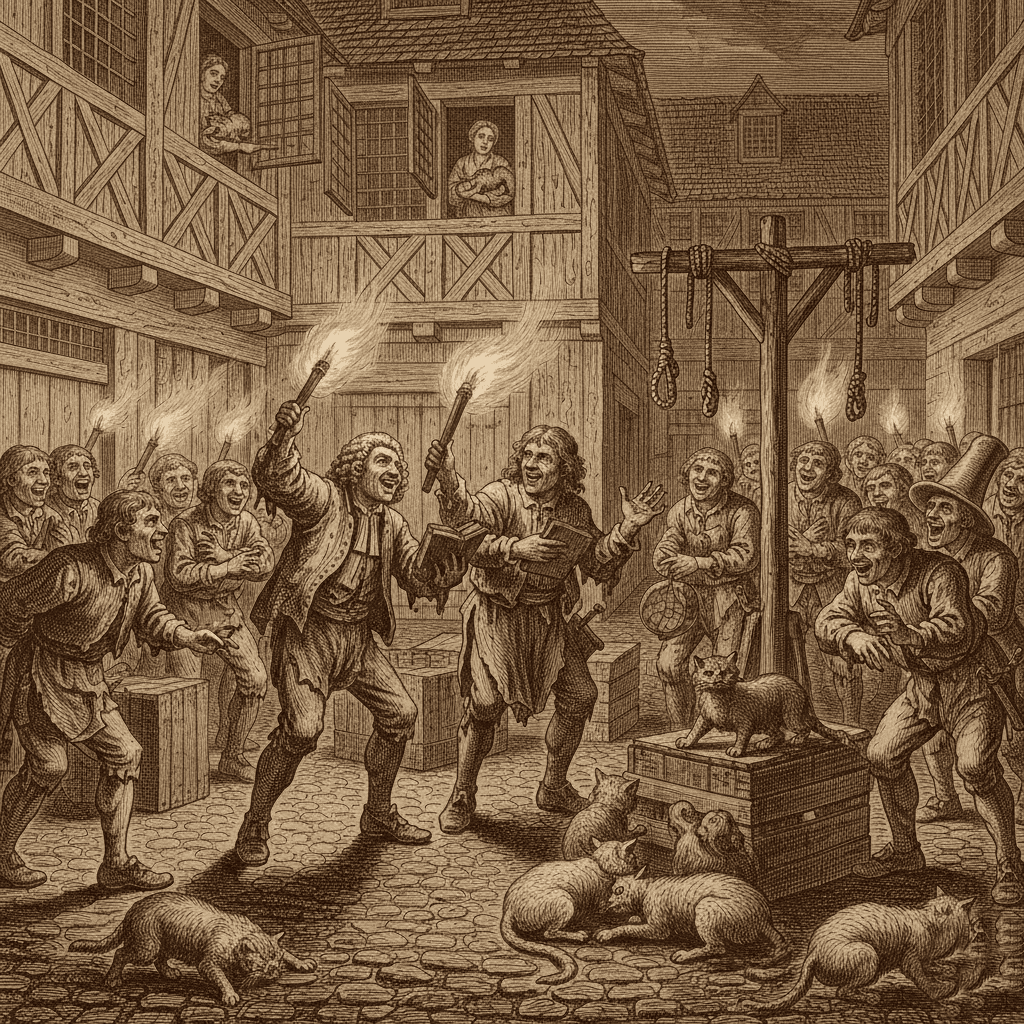
Illustration of The Great Cat Massacre (Generated with AI Assistance)
The household’s reaction intensified at this point. The master’s wife, suspecting that her favorite cat had been killed, became enraged; Jacques Vincent’s own unease also grew. The tension within the workshop thus became visible not only through the cats but also through the power relationship between the household and the workshop community. The spectacle-like nature of the act brought together, within the same scene, both the violence directed at the cats and the deliberate violation of what the household valued, as well as the mockery of authority.
After the cats were hanged, unrest within the household rapidly increased. The master’s wife, convinced that “la grise” had been killed, was consumed by rage; it became clear that the courtyard scene was a direct challenge to the household. Jacques Vincent’s response hardened at this point; an attempt was made to redraw the boundary between the workshop and the home. The possibility that “la grise” had not been killed or that the act appeared as a “joke” did not mitigate the household’s anger; instead, it reinforced the belief that the target had been deliberately chosen and that something the household valued had been violated. Thus, the long-simmering discontent within the workshop became a direct assault on the household’s daily order.
For the workshop community, the event was not confined to a single night; the events were repeatedly recalled and became part of the workshop’s internal narrative. Léveillé’s talent for imitation came to the fore; the mock trial, its roles, and its theatrical language were reenacted within the workshop. Laughter, noise, and collective participation revealed that the event was not merely perceived as an act of violence but as a “memory” that strengthened class solidarity and shared identity within the workshop. This demonstrated that the distance between master authority and the workshop community had not closed; rather, conflicts rooted in the small details of daily life had taken on a new form.
The first axis of debate surrounding this narrative centered on the question of how far the scenes presented in the text could be read as “direct historical reality.” The narrative was constructed in the language of an “anecdote,” offering an insider’s view of a professional environment; it employed a storytelling style that heightened curiosity, sharpened scenes, and emphasized certain details. Consequently, not only the event itself but also its narrative form—the selected details, constructed oppositions, and the role of exaggeration or humor—became subjects of evaluation.
Some critiques emphasized that such a text should not be treated as a “transparent window” onto the event but rather as a product shaped by its own intentions and fictional framework. According to this view, the narrative not only depicted the workshop world but also reflected how a professional community constructed its own story.
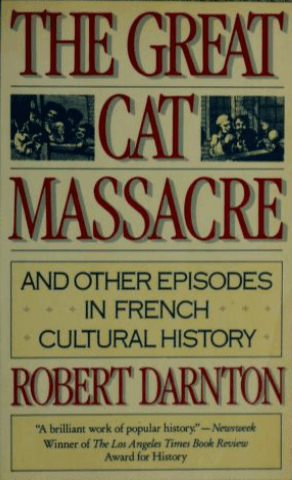
The Foundational Work on The Great Cat Massacre (Robert Darnton)
The second axis of debate focused on how the narrative has been interpreted in modern readings through a symbolic repertoire. Here, critiques became prominent in two areas. First, the question arose whether the signs and figures in the narrative (e.g., the cats, the “mock trial,” the priest/executioner roles, laughter, and spectatorship) could be assigned a single, fixed meaning. This approach argued that the same signs could generate different meanings in different contexts; thus, interpreting the “symbolic dictionary” with a single key (e.g., class struggle) risked weakening the text’s multivalence.
Second, the issue was the selective use of the narrative in modern interpretations: the centralization of certain parts of the narrative while relegating others to the background directly affected how the event was explained. This line of critique argued that reducing the narrative solely to the “cat massacre” scene risked overloading that single scene with meaning, obscuring the broader tensions and orientations within the text—such as workshop solidarity, collective attitudes toward masters, and professional identity and competition.【5】
When these two axes are combined, the central conclusion of the debate emerges: the same narrative simultaneously presented a powerful sequence of scenes that made visible the tensions within the printing workshop, and yet, due to its construction and subsequent modes of reading, it has continuously raised the question: “How much of this is the event, and how much is narrative technique?” For this reason, the text, especially alongside Robert Darnton’s The Great Cat Massacre and Other Episodes in French Cultural History, has become both a widely used example in historical writing and a frequently contested object of interpretation.
Bosse, Abraham. *The Intaglio Printers*. 1642. Etching. The Metropolitan Museum of Art, New York. Accessed January 26, 2026.https://www.metmuseum.org/art/collection/search/389891
Bourdieu, Pierre, Roger Chartier, and Robert Darnton. "Dialogue à propos de l'histoire culturelle." *Actes de la Recherche en Sciences Sociales* 59 (1985): 86–93. Accessed January 26, 2026.https://www.persee.fr/doc/arss_0335-5322_1985_num_59_1_2276
Bretez, Louis. *Tableau d'assemblage, Paris au XVIIIe siècle. Plan de Paris en 20 planches*. Commissioned by Michel-Etienne Turgot. 1734–1739. Gallica, Bibliothèque nationale de France. Accessed January 26, 2026.https://gallica.bnf.fr/ark:/12148/btv1b530111615/f4.item#
Chartier, Roger. "Text, Symbols, and Frenchness." *The Journal of Modern History* 57, no. 4 (December 1985): 682–695. Accessed January 26, 2026.https://www.jstor.org/stable/1879771
Collaert I, Jan. *New Inventions of Modern Times [Nova Reperta], The Invention of Book Printing, plate 4*. Adapted from Jan van der Straet (Stradanus). Published by Philips Galle. Ca. 1600. The Metropolitan Museum of Art, New York. Accessed January 26, 2026.https://www.metmuseum.org/art/collection/search/659683
Darnton, Robert. *The Great Cat Massacre and Other Episodes in French Cultural History*. New York: Vintage Books, 1985. Accessed January 26, 2026.https://archive.org/details/greatcatmassacr000darn
LaCapra, Dominick. "Chartier, Darnton, and the Great Symbol Massacre." *The Journal of Modern History* 60, no. 1 (March 1988): 95–112. Accessed January 26, 2026.https://www.jstor.org/stable/1880407
Labarre, Albert. "Anecdotes typographiques où l'on voit la description des coutumes, moeurs et usages singuliers des compagnons imprimeurs..." *Bulletin des bibliothèques de France (BBF)*, sy. 6 (1981): 367. Accessed January 26, 2026.https://bbf.enssib.fr/consulter/bbf-1981-06-0367-007
Mah, Harold. "Suppressing the Text: The Metaphysics of Ethnographic History in Darnton's Great Cat Massacre." *History Workshop*, no. 31 (Spring 1991): 1–20. Accessed January 26, 2026.https://academic.oup.com/hwj/article-abstract/31/1/1/626758
Maurer, Louis. *Letting the Cat Out of the Bag!!* Published by Currier & Ives. 1860. Lithograph. The Metropolitan Museum of Art, New York. Accessed January 26, 2026.
Maza, Sarah. "Stories in History: Cultural Narratives in Recent Works in European History." *The American Historical Review* 101, no. 5 (December 1996): 1493–1515. Accessed January 26, 2026.https://www.jstor.org/stable/2170180
Van Everdingen, Allart. *The Cat, Caught in a Snare, is Mistreated by the People from the House from Hendrick van Alcmar's Renard The Fox*. 1650–75. Gravür. The Metropolitan Museum of Art, New York. Accessed January 26, 2026.https://www.metmuseum.org/art/collection/search/429568
Çoban, Mehmet Salih. "Büyük Kedi Katliamı (Kitap)." Küre Ansiklopedi. February 25, 2025. Accessed January 26, 2026.https://kureansiklopedi.com/tr/detay/buyuk-kedi-katliami-kitap
[1]
Robert Darnton, The Great Cat Massacre and Other Episodes in French Cultural History (New York: Vintage Books, 1985), Erişim 26 Ocak 2026, s. 91, 92, 119.
[2]
Robert Darnton, (a.g.e), s. 91.
[3]
Robert Darnton, (a.g.e), s. 90.
[4]
Roger Chartier, "Text, Symbols, and Frenchness," The Journal of Modern History 57, sy. 4 (Aralık 1985): 682-695, Erişim 26 Ocak 2026, s. 4.
[5]
Harold Mah, "Suppressing the Text: The Metaphysics of Ethnographic History in Darnton's Great Cat Massacre," History Workshop, sy. 31 (Bahar 1991): 1-20, Erişim 26 Ocak 2026, s. 5-6.

Primary Reference Work | The great cat massacre and other episodes in French cultural history | ||||||||
|---|---|---|---|---|---|---|---|---|---|
Place | Jacques Vincent’in Matbaa atölyesi | ||||||||
Period | 1737–1740 | ||||||||
Event Name | The Great Cat Massacre Büyük Kedi Katliamı | ||||||||
Persons | Kalfalar Léveillé Jacques Vincent Jérôme Nicolas Contat | ||||||||
Historical Context
Hierarchy and Daily Routine in the Printing Workshop
Shelter, Sustenance, and the Place of Cats in Daily Life
Space and Parties Involved
Rue Saint-Séverin and the Workshop
Apprentices, Journeymen, Master, and Household
Before the Event
Accumulated Discontent Through Shelter, Sleep, and Sustenance
Cats as Targets and the Preparation Process
Course of the Event
Gathering the Cats and Filling the Courtyard
Mock Trial, Execution Scene, and Collective Laughter
Immediately After the Event
The Master’s and Household’s Reaction
Reenactment and Continuity of the Event
Critiques and Debates