


This article was automatically translated from the original Turkish version.
+2 More
Genetic Engineering
Techniques and Methods | Recombinant DNA Technology, Gene Cloning, Gene Therapy, CRISPR-Cas9 Technology, RNA Interference, Transgenic Technology | ||||||||
|---|---|---|---|---|---|---|---|---|---|
Application Area(s) | Industry and Environment Agriculture Medicine | ||||||||
Genetic engineering is a branch of biotechnology that aims to directly modify the genetic structure of organisms by altering, adding, or removing their DNA. This technology is applied in numerous fields such as increasing agricultural production, developing medical treatments, and improving industrial processes.
The foundations of genetic engineering were laid in the 19th century with the work of Gregor Mendel on pea plants. The discovery of the double helix structure of DNA in 1953 by James Watson and Francis Crick accelerated the development of genetic science.
In 1973, Herbert Boyer and Stanley Cohen developed the first recombinant DNA (rDNA) technology and transferred foreign genes into the bacterium Escherichia coli. In 1982, the first drug produced through genetic engineering, insulin, was introduced to the market. In 1994, the first commercially available genetically modified food, the Flavr Savr tomato, was sold in USA.
The development of CRISPR-Cas9 technology in 2012 by Jennifer Doudna and Emmanuelle Charpentier opened a new era in genetic engineering and made gene editing significantly more precise and accessible.
1. Recombinant DNA (rDNA) Technology: The process of inserting genes from one organism into the DNA of another.
2. Gene Cloning: Enables the copying and multiplication of a specific gene in different cells.
3. Gene Therapy: A method aimed at correcting faulty genes to treat genetic disorders.
4. CRISPR-Cas9 Technology: An innovative gene editing method capable of cutting and modifying DNA sequences with high specificity.
5. RNA Interference (RNAi): A technique used to suppress the expression of specific genes.
6. Transgenic Technology: The process of introducing genes from one species into another organism to confer new traits.

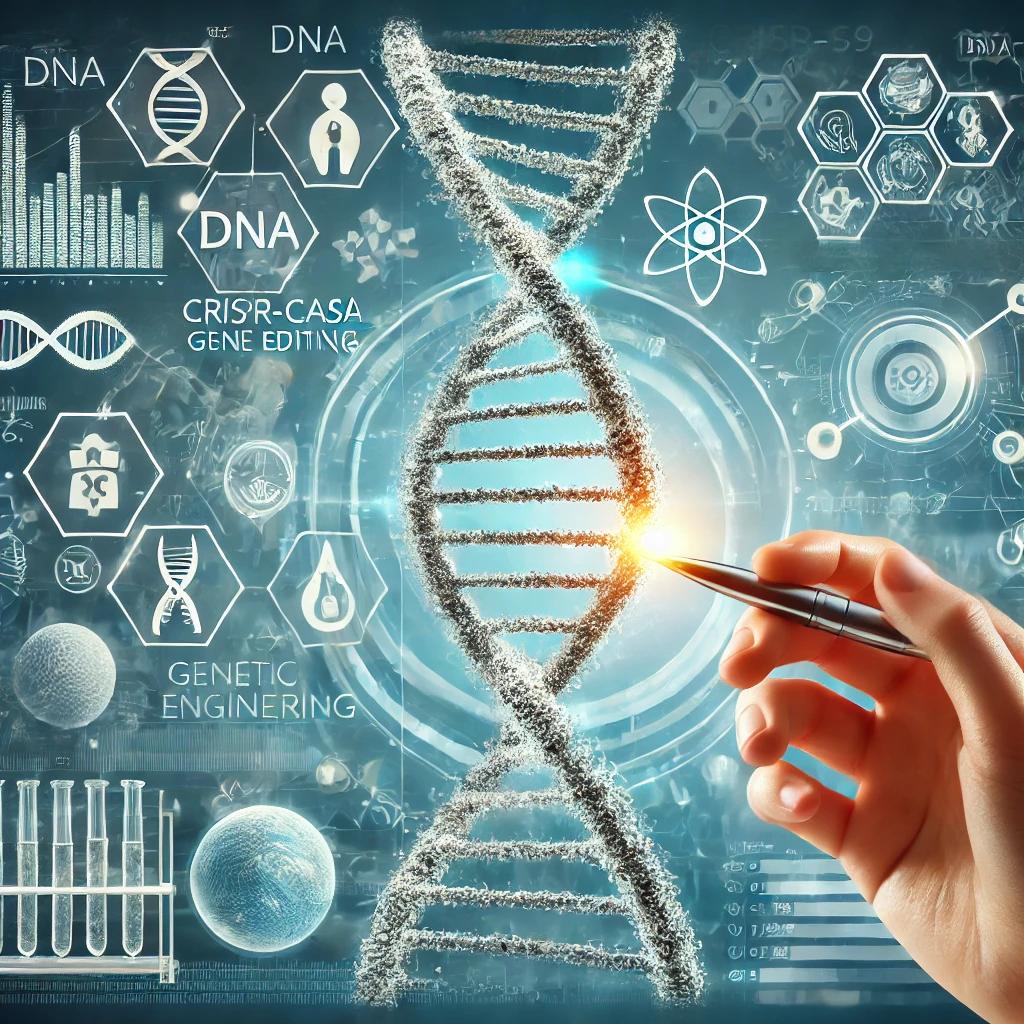
Representative genetic engineering laboratory. Image generated by artificial intelligence.
Gene therapy is a method in which defective or missing genes are directly delivered to cells for therapeutic purposes. Today, this method is used primarily to treat genetic disorders such as cystic fibrosis, sickle cell anemia, and certain cancer types. The goal is to restore normal bodily functions by inserting a healthy gene in place of the disease-causing gene or by regulating its function.
Genetic engineering techniques are now used in the production of many important drugs. Insulin, growth hormones, and monoclonal antibodies are among the most significant biotechnological drugs developed in this field. For example, insulin previously obtained from animals is now safely and effectively produced using genetically modified bacteria.
CRISPR-Cas9 technology enables precise and targeted modifications to DNA sequences. Thanks to this technology, it has become possible to permanently correct diseases caused by genetic mutations. Research on inherited disorders, blood disorders (such as beta thalassemia and sickle cell anemia), and some neurological conditions has demonstrated CRISPR’s therapeutic potential.
Genetically modified organisms are living beings whose genetic structure has been altered in a laboratory to confer desired traits. In agriculture, GMOs are designed to make crops more resistant to diseases, pests, herbicides (weed killers), and environmental stress factors such as drought. This allows for higher yields with reduced use of agricultural chemicals and improved food security. GMOs are also developed to extend shelf life or enhance nutritional content.
Golden Rice is a genetically engineered variety of rice developed to address the widespread vitamin A deficiency in developing countries. The substance beta-carotene (which the body converts into vitamin A), absent in normal rice, has been inserted into Golden Rice’s genetic structure. This aims to reduce problems such as vision impairment, immune deficiency, and child mortality associated with vitamin A deficiency in populations that rely on rice as a staple food.
Corn and soy are among the most widely grown genetically modified crops worldwide. Genes have been added to these plants to either kill harmful insects or confer resistance to weeds. As a result, both productivity increases and the need for agricultural chemicals decreases. Genetically modified corn and soy are used not only for direct consumption but also extensively in animal feed, oil production, and processed foods.
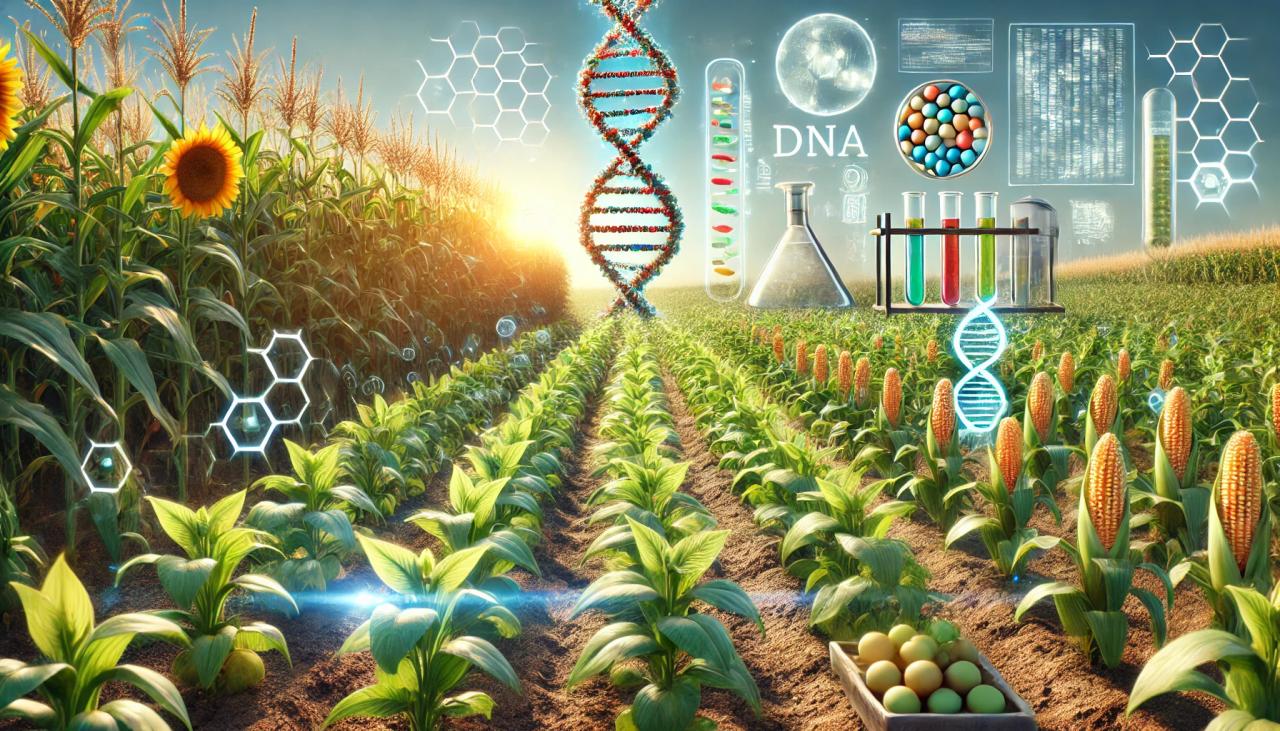
Representative agricultural products produced through genetic engineering. Image generated by artificial intelligence.
Through genetic engineering, certain microorganisms have been designed to break down plant waste and produce fuels such as ethanol or biodiesel. This reduces fossil fuel dependency and enables the development of more environmentally friendly energy sources.
Genetically modified microorganisms are used to clean contaminated soil and water environments. These organisms break down heavy metals, petroleum derivatives, or industrial waste, thereby reducing environmental damage.
Bioplastics, which are biodegradable and cause less harm to the environment than petroleum-based plastics, are produced by genetically engineered organisms. This significantly reduces the accumulation of plastic waste and environmental pollution.
The rapid advances in genetic engineering have raised numerous questions not only in scientific terms but also in ethical, legal, and social dimensions. Issues such as human genetic intervention and the alteration of natural systems are widely debated.
The use of gene editing technologies like CRISPR in human embryos has sparked debates over “designer babies.” Such interventions are ethically extremely sensitive due to concerns about tampering with human nature and their potential impact on future generations.
The long-term effects of genetically modified organisms on human health are still not fully understood. Additionally, the spread of these products into the environment may disrupt the ecosystem balance.
Some companies obtaining patents on gene sequences or genetic traits may hinder the free progress of scientific research. This situation raises concerns about the commercialization of genetic knowledge and the erosion of ethical boundaries.
Genetic engineering is expected to bring about revolutions in several future fields:
Thanks to genetic engineering, treatments tailored to a patient’s genetic makeup are being developed. These advances could enable more effective and targeted therapies for cancer and inherited diseases.
Using bioprinters and genetic engineering techniques, tissue and organ structures can be produced in laboratory settings. This could make it possible in the future to create personalized, non-rejectable organs for patients awaiting transplants.
Genetically modified plants can be engineered to have greater carbon dioxide absorption capacity. Additionally, new crop varieties resistant to drought, heat, and pests can be developed to ensure food security.
Alejandro Balazs and David Baltimore, "Helpless Viruses: Immunity, Vaccines, and Defeating HIV," Cell 157, no. 2 (2014): 263–65,https://pubmed.ncbi.nlm.nih.gov/25430774/.
Douglas Hanahan and Robert A. Weinberg, "The Hallmarks of Cancer," Cell 100, no. 1 (2000): 57–70,https://pmc.ncbi.nlm.nih.gov/articles/PMC427208/.
European Food Safety Authority, "Genetically Modified Organisms," Accessed March 23, 2025.https://www.efsa.europa.eu/en/topics/genetically-modified-organisms
International Service for the Acquisition of Agri-biotech Applications, "ISAAA," Accessed March 23, 2025.https://www.isaaa.org/
National Human Genome Research Institute. "National Human Genome Research Institute." Accessed March 23, 2025.https://www.genome.gov/
Nuffield Council on Bioethics. Genome Editing and Human Reproduction: Social and Ethical Issues. Accessed March 23, 2025.https://www.nuffieldbioethics.org/publication/genome-editing-and-human-reproduction-social-and-ethical-issues/

Genetic Engineering
Techniques and Methods | Recombinant DNA Technology, Gene Cloning, Gene Therapy, CRISPR-Cas9 Technology, RNA Interference, Transgenic Technology | ||||||||
|---|---|---|---|---|---|---|---|---|---|
Application Area(s) | Industry and Environment Agriculture Medicine | ||||||||
No Discussion Added Yet
Start discussion for "Genetic Engineering" article
History
Techniques and Methods
Applications
Medicine
Gene Therapy:
Biotechnological Drugs:
Editing Genetic Disorders with CRISPR
Agricultural Biotechnology
Genetically Modified Organisms (GMOs):
Golden Rice:
Genetically Modified Corn and Soy:
Industry and Environment
Biofuel Production:
Bioremediation:
Bioplastics:
Ethical and Legal Debates
Human Genome Editing:
Safety of GMOs:
Genetic Patents:
Future Perspectives
Treatment of Cancer and Genetic Disorders:
Artificial Organ and Tissue Production:
Combating Climate Change: