


This article was automatically translated from the original Turkish version.
+1 More
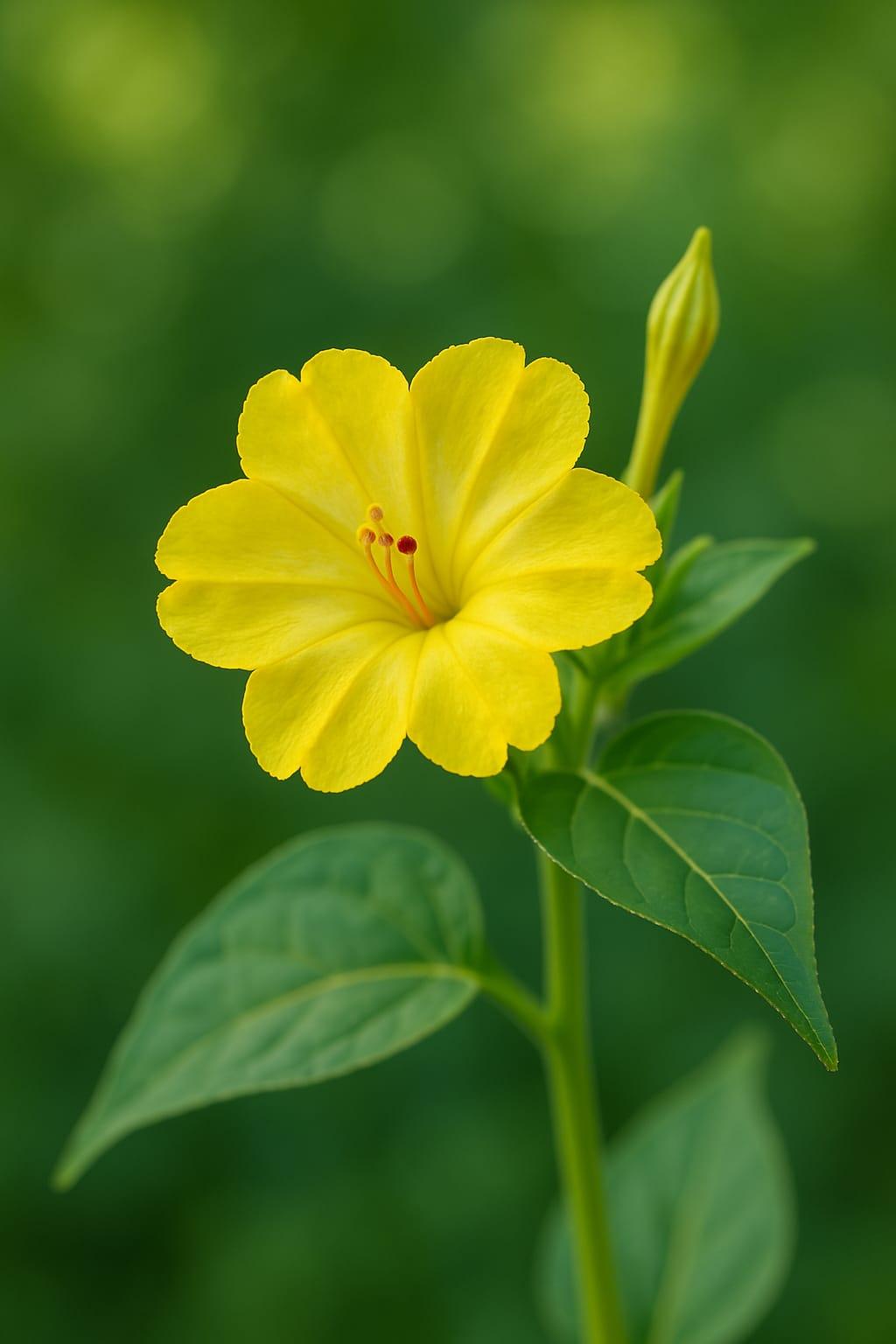
Mirabilis Jalapa (generated with YZ)
Section | Magnoliophyta | ||||||||
|---|---|---|---|---|---|---|---|---|---|
Class | Magnoliopsida | ||||||||
Team | Caryophyllales | ||||||||
Family | Nyctaginaceae | ||||||||
Mirabilis jalapa L. (Nyctaginaceae) is an important species that has attracted interest in both botany and pharmaceutical sciences due to its morphological diversity, biochemical composition, and traditional medicinal applications. Widely cultivated as an ornamental plant in tropical and subtropical regions, Mirabilis jalapa L. is known locally as “Evening Glory” (Four o’clock flower). The plant draws attention through its flowers that open in the late hours of the day, its ability to display multiple flower colors on the same plant, and its adaptive morphology. In addition, it has been traditionally used for a variety of purposes ranging from wound healing to diabetes management and has recently gained prominence in pharmacological studies.
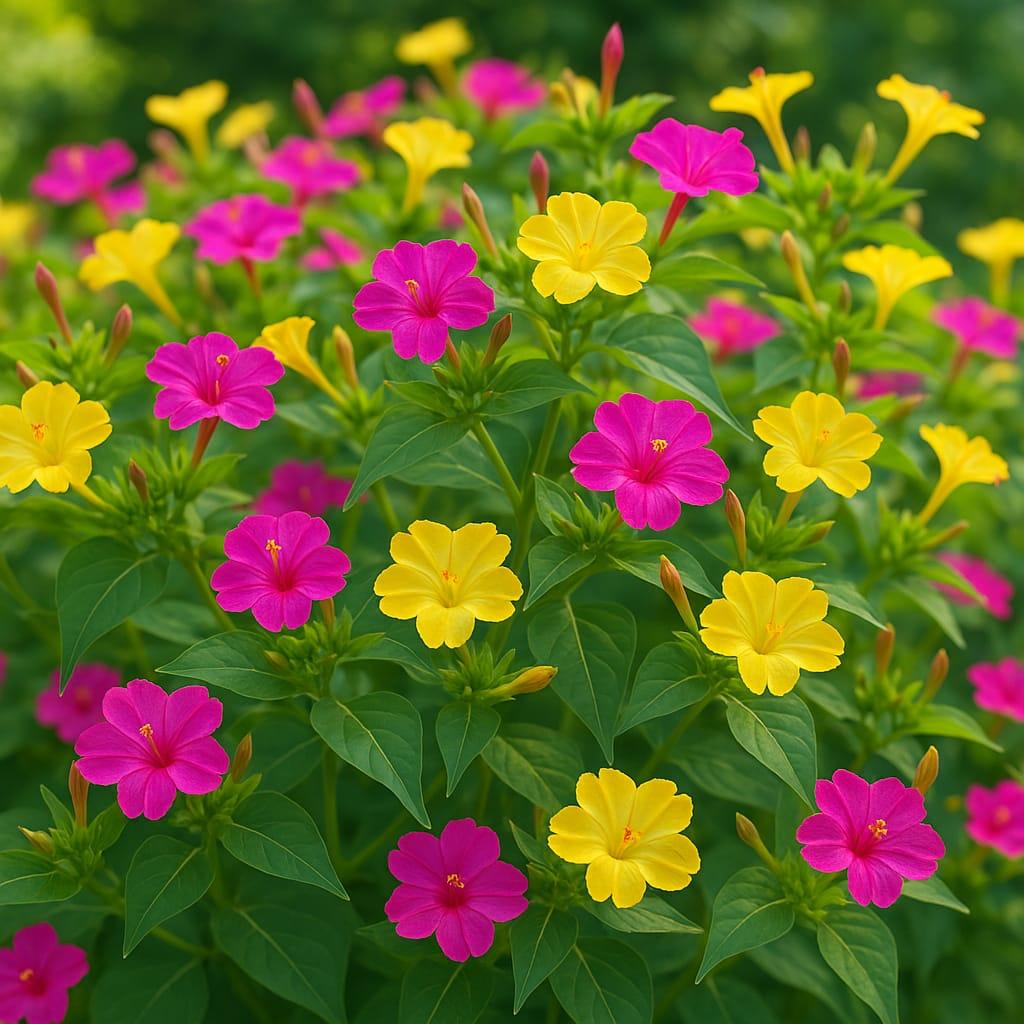
A Mirabilis Jalapa Community (Generated by artificial intelligence.)
Mirabilis jalapa occupies the following systematic structure:
Kingdom: Plantae
Phylum: Angiospermae
Class: Eudicots
Order: Caryophyllales
Family: Nyctaginaceae
Genus: Mirabilis
Species: Mirabilis jalapa L.
The Nyctaginaceae family comprises approximately 30 genera and 400 species, predominantly distributed in tropical regions. The genus Mirabilis is phylogenetically one of the basal groups within the order Caryophyllales and is characterized by the production of betalain pigments. This pigment production represents a significant phylogenetic marker reflecting the plant’s adaptive evolutionary processes.
M. jalapa is a herbaceous perennial plant that typically grows to a height of 1 to 1.5 meters. Its stem is glabrous and semi-woody. Leaves are simple, opposite, elliptic or ovate with an acute apex. The leaf petiole is distinct and the venation is reticulate.
Flowers are tubular, usually five-lobed, and color-variable: pink, yellow, white, red, and combinations of these colors may occur on the same plant. This phenomenon, known as “sectorial pigmentation,” arises from both genetic diversity and the influence of transposons involved in pigment synthesis.
Seeds are black colored, hard-shelled, and bean-shaped. This structure confers the ability to remain viable for long periods in dry environments.
M. jalapa is native to Mexico and Central America but has been introduced to many tropical and subtropical regions worldwide. According to USDA data, it is present as a non-native species in numerous areas of the USA. Similarly, it is widely cultivated in Southeast Asia, Africa, India, and regions with a Mediterranean climate.
Ecologically, it plays roles such as reducing soil erosion, contributing to biodiversity, and forming symbiotic relationships with pollinating insects. Its nocturnally opening flowers serve as an important nectar source for nocturnal insects such as certain sphingid species.
Additionally, its rapid growth has led to its classification as an invasive species. This situation increases its potential to dominate natural habitats and threaten native species.
Flavonoids: Quercetin, kaempferol derivatives
Phenolic acids: Caffeic acid, ferulic acid
Alkaloids: Trihydroxybenzene derivatives
Saponins: Hemolytic triterpenoid saponins
Betalain pigments: Betacyanin and betaxanthin derivatives
Tannins, sterols, fatty acids (linoleic acid, oleic acid)
Antioxidant Activity: High antioxidant capacity demonstrated in DPPH radical scavenging assays
Antimicrobial Activity: Inhibition against Staphylococcus aureus, E. coli, and Candida albicans
Anti-inflammatory Activity: Stabilization of lysosomal membranes and reduction of proinflammatory cytokine levels
Cytotoxic Activity: Antiproliferative effects on A549 and MCF-7 cell lines
Antidiabetic Potential: Reduction of glucose absorption through inhibition of α-glucosidase enzyme
These effects indicate the plant’s potential as a natural drug source in ethnopharmacology and phytotherapy.
Despite its widespread traditional use, some toxic effects of M. jalapa have been reported. In particular, the roots and seeds, due to their triterpenoid saponin content, should be used with caution. Oral ingestion at high doses may cause gastrointestinal disturbances (nausea, diarrhea), dizziness, and sedative effects.
Animal studies have shown hepatotoxicity and renal damage at doses of 2 g/kg and above. Furthermore, seeds are toxic to children and domestic animals; therefore, caution is advised in home environments.
Therefore, direct use without standardization and determination of toxicological dosage thresholds is not recommended for therapeutic applications.
Mirabilis jalapa is emerging not only as an ornamental plant but also as a significant phytopharmaceutical source. Its antimicrobial, antioxidant, anti-inflammatory, and potential anticancer effects make it noteworthy for biodiversity conservation, natural product research, and green pharmacy studies.
However, establishing safety limits from a toxicological perspective and elucidating its molecular mechanisms through preclinical studies are necessary. In particular, detailed characterization of its effects on cellular signaling pathways will shape the future pharmaceutical applications of this species.
Kaur, Amandeep, Asha Kumari, and Parveen Bansal. “Pharmacological and Biological Activities of *Mirabilis jalapa* L.” *ResearchGate*. April 2022.https://www.researchgate.net/publication/359722611_Pharmacological_and_biological_activities_of_Mirabilis_jalapa_L.
National Parks Board Singapore. “*Mirabilis jalapa*.” *FloraFaunaWeb*. Accessed April 8, 2025.https://www.nparks.gov.sg/florafaunaweb/flora/2/2/2227.
United States Department of Agriculture. “*Mirabilis jalapa*.” *USDA PLANTS Database*. Accessed April 8, 2025.https://plants.sc.egov.usda.gov/plant-profile/MIJA.

Mirabilis Jalapa (generated with YZ)
Section | Magnoliophyta | ||||||||
|---|---|---|---|---|---|---|---|---|---|
Class | Magnoliopsida | ||||||||
Team | Caryophyllales | ||||||||
Family | Nyctaginaceae | ||||||||
No Discussion Added Yet
Start discussion for "Evening Beauty (Mirabilis jalapa)" article
Systematic and Phylogenetic Position
Morphological Characteristics
Ecological Distribution and Role
Phytochemical Composition and Pharmacological Effects
Phytochemical Content
Pharmacological Effects:
Toxicological Evaluation