This article was automatically translated from the original Turkish version.
+1 More
Affiliated Unit | Ministry of Culture and Tourism of the Republic of Türkiye, Antalya Museum Directorate | ||||||||
|---|---|---|---|---|---|---|---|---|---|
Building History | Former Government Mansion, Later Used as a Girls' Vocational High School | ||||||||
Architectural Period | Late Ottoman - Early Republican Period Civil Architecture | ||||||||
Museum Type | Archaeology and Ethnography (Regional Museum) | ||||||||
Site Plan | Three-story Main Building (Basement - Ground Floor - First Floor) and Open-Air Exhibition (Garden) | ||||||||
Total Area | Approximately 4,000 m² (including garden) | ||||||||
Number of Exhibition Halls | 8 Items (3 on Ground Floor, 5 on First Floor) | ||||||||
Main Collections | Elmalı Treasure, Karataş-Semayük Excavation Finds, Hacımusalar Höyük Artifacts | ||||||||
Most Important Artifact | Elmalı Treasure (5th century BCE) and Athenian Decadrachm | ||||||||
Other Exhibited Groups | Lycian City Coins, Votive Stelae (Adak Tablets), Pithos (Jar) Graves, Sarcophagi | ||||||||
Related Excavation Directorates | Karataş-Semayük (Machteld Mellink), Hacımusalar, Bağbaşı | ||||||||
Location | Elmalı District Center Antalya Province | ||||||||
Official Name | Antalya Elmalı Museum | ||||||||
Opening Date(s) | 13 June 2011 | ||||||||
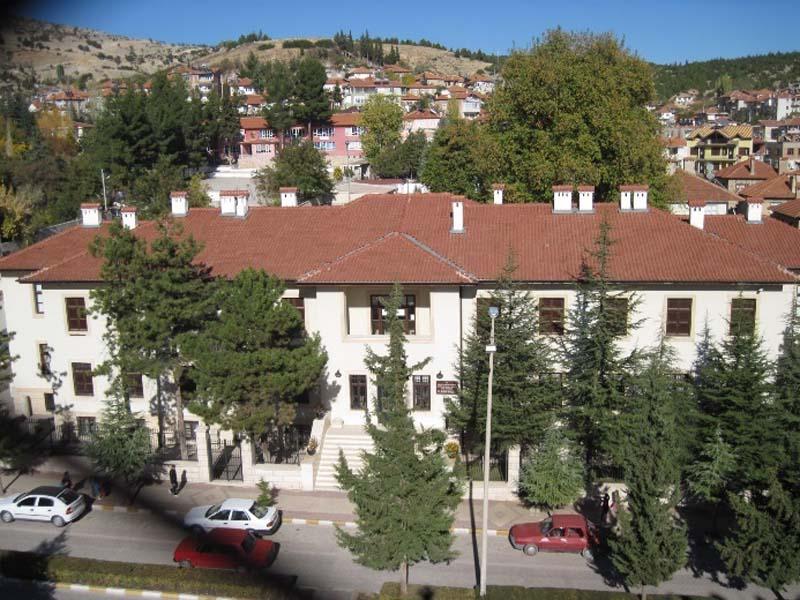
Elmalı Museum, is established to document preserve and display the historical continuity of western Antalya and the northern part of Lycia. Located in the town center of Elmalı the institution functions as an archaeology and ethnography museum displaying artifacts excavated from significant archaeological sites in the region such as Karataş-Semayük Bağbaşı and Hacımusalar Höyüks. The museum’s inventory encompasses a broad chronology spanning from the Late Chalcolithic period through the Early Bronze Age Iron Age Classical Hellenistic Roman Byzantine and Ottoman periods.【1】
The building housing the museum was not originally designed as a museum structure. The building exhibits characteristics of late Ottoman and early Republican civil architecture and was initially constructed as a "Government House" for administrative purposes. Over subsequent decades the building underwent functional changes and served for many years as a "Girls' Vocational High School."【2】
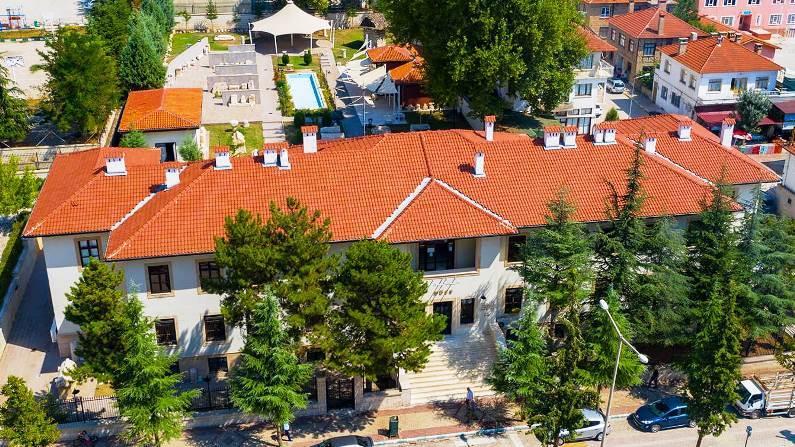
Elmalı Museum (Antalya Provincial Directorate of Culture and Tourism)
In response to the need to showcase the region’s archaeological potential the building was assigned to the Ministry of Culture and Tourism of the Republic of Türkiye. Following this assignment detailed surveys restoration and conservation plans were prepared and simultaneously exhibition and arrangement works were carried out. Upon completion of all these processes the Antalya Elmalı Museum was officially opened to the public on 13 June 2011.【3】
The museum complex consists of a registered historical building and an open-air exhibition area (garden) surrounding it. The entire site covers approximately 4000 square meters. The main exhibition building has a three-level layout comprising a basement floor a ground floor and a first floor. The spatial organization is as follows:
The exhibition layout of the Antalya Elmalı Museum is based on findings from scientific excavations and regional collections. The collections are classified under three main categories: archaeological excavation finds numismatic artifacts and stone objects.
The ground floor halls numbered 1 2 and 3 are dedicated to artifacts illuminating the prehistoric periods of the region. The majority of these objects were recovered from excavations conducted in the 1960s under the leadership of Machteld Mellink at Karataş-Semayük and from investigations at the Hacımusalar and Bağbaşı höyüks.
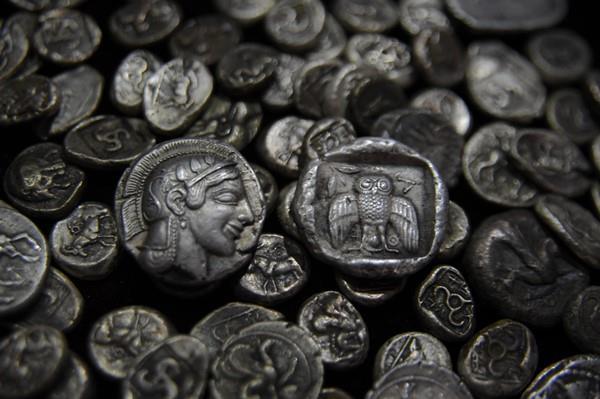
Elmalı Coins (KVMGM)
The most striking element of the collection consists of "pithos burials" dating to the Early Bronze Age that document the region’s burial customs. Three pithos burials identified in the Karataş-Semayük necropolis area are exhibited in-situ (preserved in their original context) within the museum. Inside and around these burials funerary offerings personal items and ceramic vessels reflecting the status of the deceased and the belief systems of the period are displayed.
Additionally these halls present handmade ceramics metal tools loom weights and seals produced from the Late Chalcolithic period onward offering a chronological perspective on the development of social life and production in the region.【5】
On the first floor of the museum (halls 4 to 8) a numismatic collection of critical importance to the political and economic history of the region is displayed. The centerpiece of this section is the Elmalı Treasure described in archaeological and historical literature as the "Treasure of the Century." This hoard was illegally excavated in 1984 and smuggled abroad but returned to Türkiye in 1999. It dates to the 5th century BCE (480–460 BCE).
Elmalı Coins (TRT 2)
Comprising approximately 1900 silver coins the treasure includes coins from the Delian League and Lycian city currencies. The rarest piece in the collection is the "Athens Dekadrachm" believed to have been minted in commemoration of Athens’ victory over the Persians and of which only a limited number of examples exist worldwide. In addition to the treasure the museum presents coins from Lycian city leagues the Roman and Byzantine empires arranged chronologically for visitors.【6】
A significant group within the museum’s collection consists of "Votive Stelae" (Votive Tablets) reflecting the folk beliefs of the rural areas of Lycia. These stone tablets displayed in vitrines on the first floor depict regional cults including the "Twelve Gods" Kakasbos and other local deities. These artifacts serve as primary sources for understanding religious rituals votive practices and iconography in antiquity.
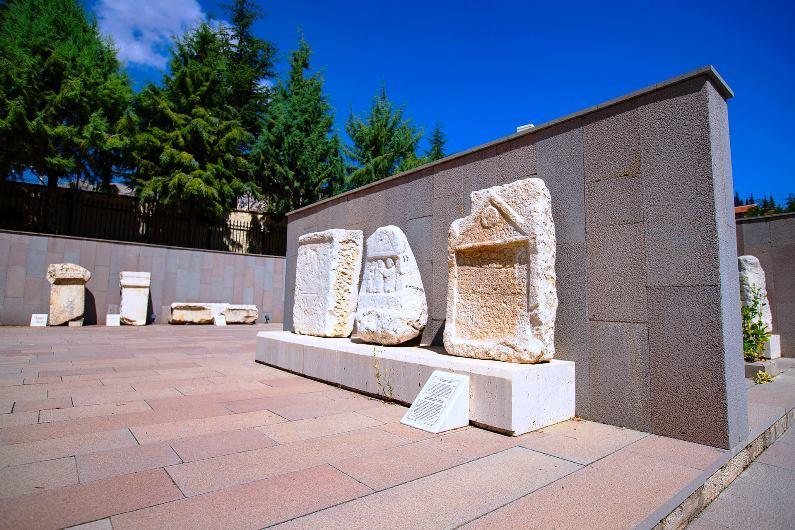
Votive Tablets (Antalya Provincial Directorate of Culture and Tourism)
Outside the main building in the open-air exhibition area of the museum garden immovable cultural heritage items too large for indoor display are exhibited. These include limestone sarcophagi inscribed funerary stelae column capitals and various architectural sculptures dating to the Roman and Byzantine periods documenting the evolution of architectural styles in Elmalı and its surroundings.【7】
The Antalya Elmalı Museum holds a distinctive position in regional museology due to its continuous presentation of the archaeological stratigraphy of northern Lycia and western Antalya. Its internationally recognized numismatic collection including the Elmalı Treasure and in-situ data on local burial traditions establish it as a fundamental reference center for understanding the region’s history. The museum fulfills the critical role of preserving documenting and exhibiting findings from scientific excavations in the region and plays a vital role in ensuring the sustainability of movable and immovable cultural heritage and the transmission of cultural memory to future generations.
Antalya Valiliği. "Elmalı Müzesi." Accessed January 28, 2026.https://www.antalya.gov.tr/elmali-muzesi
Antalya İl Kültür ve Turizm Müdürlüğü. "Elmalı Müzesi." Accessed January 28, 2026.https://antalya.ktb.gov.tr/TR-103724/elmali-muzesi.html
Culture and Museums General Directorate. "Antalya Elmalı Museum Directorate." Accessed January 28, 2026.https://kvmgm.ktb.gov.tr/TR-281296/antalya-elmali-muze-mudurlugu.html.
T.C. Ministry of Culture and Tourism. "Antalya Elmalı Museum." Turkish Museums. Accessed January 28, 2026.https://www.turkishmuseums.com/museum/detail/1957-antalya-elmali-muzesi/1957/1
T.C. Ministry of Culture and Tourism. "Elmalı Müzesi." Müze Kart. Accessed January 28, 2026.https://www.muze.gov.tr/muze-detay?sectionId=AEL01&distId=MRK
Türkiye Kültür Portalı. "Elmalı Müzesi - Antalya." Accessed January 28, 2026.https://www.kulturportali.gov.tr/turkiye/antalya/gezilecekyer/elmali-muzesi
Ünal, Caner, and Berna Yıldırım Ateş. "Elmalı Müzesi." *Türkiye Turizm Ansiklopedisi*. Accessed January 28, 2026.https://turkiyeturizmansiklopedisi.com/elmali-muzesi.
[1]
T.C. Kültür ve Turizm Bakanlığı (Turkish Museums), "Antalya Elmalı Müzesi," Erişim 28 Ocak 2026, https://www.turkishmuseums.com/museum/detail/1957-antalya-elmali-muzesi/1957/1.
[2]
Caner Ünal ve Berna Yıldırım Ateş, "Elmalı Müzesi," Türkiye Turizm Ansiklopedisi, Erişim 28 Ocak 2026, https://turkiyeturizmansiklopedisi.com/elmali-muzesi.
[3]
Kültür Varlıkları ve Müzeler Genel Müdürlüğü, "Antalya Elmalı Müze Müdürlüğü," Erişim 28 Ocak 2026, https://kvmgm.ktb.gov.tr/TR-281296/antalya-elmali-muze-mudurlugu.html.
[4]
Türkiye Kültür Portalı, "Elmalı Müzesi," Erişim 28 Ocak 2026, https://www.kulturportali.gov.tr/turkiye/antalya/gezilecekyer/elmali-muzesi.
[5]
Kültür Varlıkları ve Müzeler Genel Müdürlüğü, "Antalya Elmalı Müze Müdürlüğü," Erişim 28 Ocak 2026, https://kvmgm.ktb.gov.tr/TR-281296/antalya-elmali-muze-mudurlugu.html.
[6]
Caner Ünal ve Berna Yıldırım Ateş, "Elmalı Müzesi," Türkiye Turizm Ansiklopedisi, Erişim 28 Ocak 2026, https://turkiyeturizmansiklopedisi.com/elmali-muzesi.
[7]
Türkiye Kültür Portalı, "Elmalı Müzesi," Erişim 28 Ocak 2026, https://www.kulturportali.gov.tr/turkiye/antalya/gezilecekyer/elmali-muzesi.
Affiliated Unit | Ministry of Culture and Tourism of the Republic of Türkiye, Antalya Museum Directorate | ||||||||
|---|---|---|---|---|---|---|---|---|---|
Building History | Former Government Mansion, Later Used as a Girls' Vocational High School | ||||||||
Architectural Period | Late Ottoman - Early Republican Period Civil Architecture | ||||||||
Museum Type | Archaeology and Ethnography (Regional Museum) | ||||||||
Site Plan | Three-story Main Building (Basement - Ground Floor - First Floor) and Open-Air Exhibition (Garden) | ||||||||
Total Area | Approximately 4,000 m² (including garden) | ||||||||
Number of Exhibition Halls | 8 Items (3 on Ground Floor, 5 on First Floor) | ||||||||
Main Collections | Elmalı Treasure, Karataş-Semayük Excavation Finds, Hacımusalar Höyük Artifacts | ||||||||
Most Important Artifact | Elmalı Treasure (5th century BCE) and Athenian Decadrachm | ||||||||
Other Exhibited Groups | Lycian City Coins, Votive Stelae (Adak Tablets), Pithos (Jar) Graves, Sarcophagi | ||||||||
Related Excavation Directorates | Karataş-Semayük (Machteld Mellink), Hacımusalar, Bağbaşı | ||||||||
Location | Elmalı District Center Antalya Province | ||||||||
Official Name | Antalya Elmalı Museum | ||||||||
Opening Date(s) | 13 June 2011 | ||||||||
History and Establishment of the Museum Building
Architectural Structure and Spatial Organization
Collections and Artifact Groups
Archaeological Excavation Finds and Burial Traditions
The Elmalı Treasure and Numismatic Artifacts
Votive Stelae and Stone Artifacts
Significance in Historical Context