


This article was automatically translated from the original Turkish version.
An element is a pure chemical substance composed entirely of atoms of a single type. Each atom in an element is defined by its atomic number, which represents the number of protons in its nucleus. This atomic number distinguishes one element from another; in other words, each element has a unique atomic number. For example, all atoms with six protons are carbon (C), while those with eight protons are oxygen (O).
Elements are the fundamental building blocks of all matter in the universe. They are the simplest substances that retain their own distinct chemical and physical properties. Elements combine in various ways to form molecules and compounds, which in turn make up the more complex materials we encounter in everyday life.
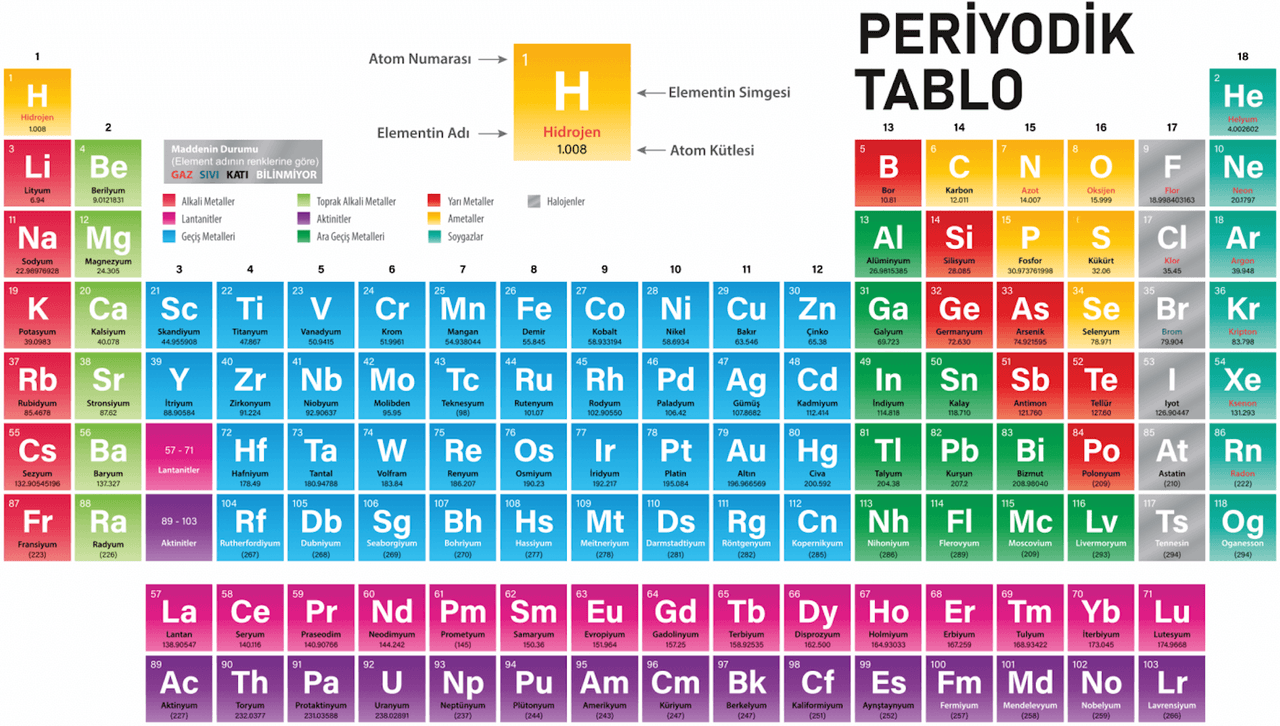
There are currently 118 known elements, which are organized in the periodic table according to their atomic structure and properties. Some of these occur naturally, such as hydrogen, iron, and gold, while others are synthetic and created in laboratories, such as technetium and einsteinium. Elements can exist in different states of matter under standard conditions. For instance, at room temperature, gold (Au) and carbon (C) are solids, mercury (Hg) and bromine (Br) are liquids, while oxygen (O₂) and helium (He) are gases.
class=\
The concept of elements dates back to antiquity; early philosophers proposed that everything in the universe was composed of a few fundamental substances. In ancient Greece, Empedocles asserted that four classical elements—earth, air, fire, and water—were the basic building blocks of matter. This idea dominated Western thought for centuries and influenced the development of alchemy, the precursor to modern chemistry. Alchemists sought to transform base metals into gold and discover the philosopher’s stone, often operating under the belief that elements could be transformed into one another.
A shift toward a more scientific understanding of elements occurred during the Scientific Revolution of the 17th and 18th centuries, when early chemists such as Robert Boyle began challenging classical views. In his work The Sceptical Chymist (1661), Boyle defined an element as a substance that cannot be broken down further by chemical reactions, laying the foundation for modern chemistry. This period also witnessed the identification of several new substances that helped transition the concept of elements from philosophical speculation to empirical science.
A pivotal moment in the history of elements came in 1869 with the work of Dmitri Mendeleev, who arranged the known elements in a periodic table according to atomic weight and observed periodic trends in their properties. Mendeleev’s table not only organized the known elements but also predicted the existence of undiscovered elements whose properties later confirmed the periodic law. By the 20th century, the understanding of elements evolved further with the development of atomic theory, which defined elements by the number of protons in their atomic nuclei.
Physical properties are characteristics of matter that can be observed or measured without altering its chemical identity. These properties are essential for identifying elements and predicting their behavior in different environments. The key physical properties of elements include:
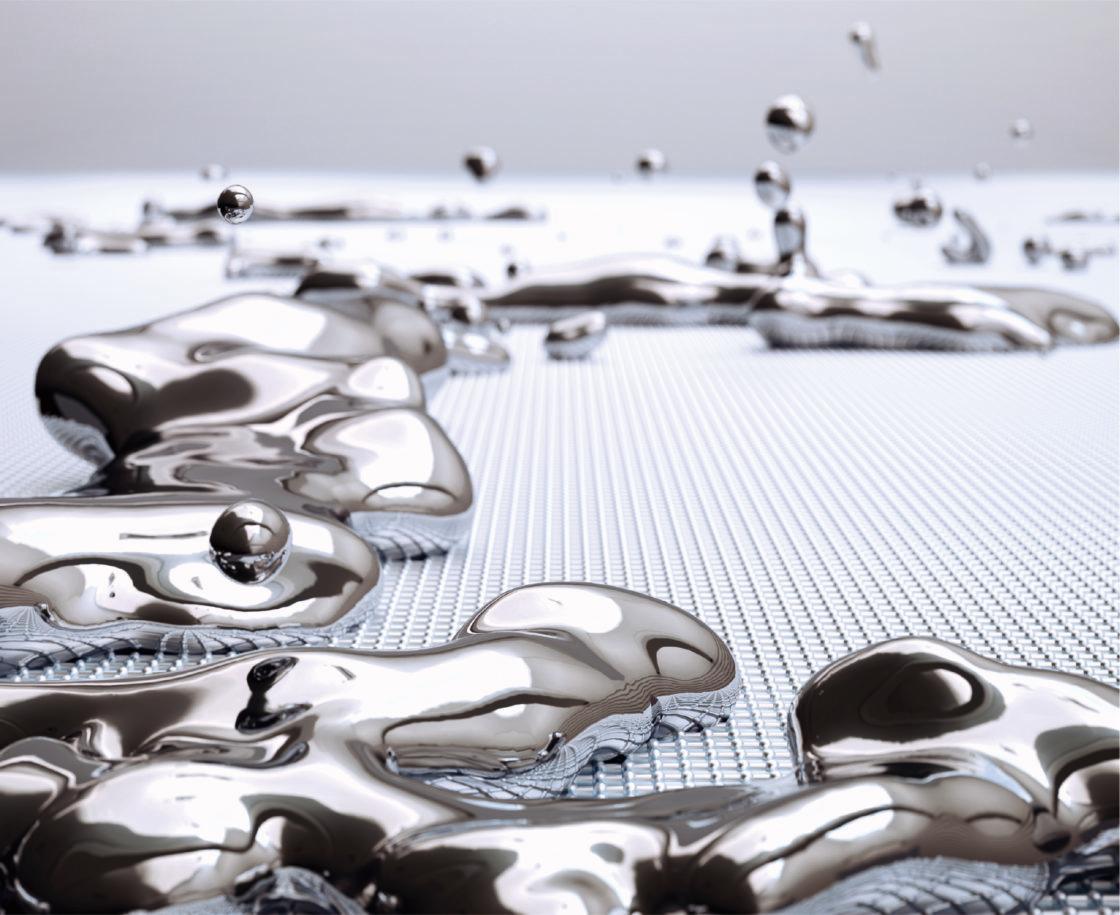
State of Matter: Under standard conditions (room temperature and pressure), elements exist in one of three main states: solid, liquid, or gas. Most elements, such as iron (Fe) and gold (Au), are solids. Mercury (Hg) is the only metal that is liquid at room temperature, while oxygen (O₂) and nitrogen (N₂) are gases.
Density: Elements with high density, such as gold and platinum, are more compact and heavier, while lighter elements like hydrogen and helium have lower density.
Melting and Boiling Points: These indicate the temperatures at which an element transitions between states of matter. For example, tungsten (W) has an extremely high melting point, making it suitable for high-temperature applications, while mercury has a relatively low melting point, allowing it to remain liquid at room temperature.
Electrical Conductivity: This describes how easily an element conducts electricity. Metals such as copper (Cu) and silver (Ag) are excellent conductors, making them ideal for electrical wiring, while nonmetals like sulfur (S) and phosphorus (P) are poor conductors and act as insulators.
class=\
Chemical properties describe how an element interacts with other substances to form new compounds or undergo chemical reactions. These properties are influenced by the element’s electron configuration and its tendency to form bonds with other elements. Key chemical properties of elements include:
Reactivity: This refers to how readily an element undergoes chemical reactions with other elements or compounds. For example, alkali metals such as sodium (Na) and potassium (K) react rapidly and vigorously with water. In contrast, noble gases like neon (Ne) and argon (Ar) are chemically inert due to their stable electron configurations and rarely form compounds.
Electronegativity: This property measures an element’s ability to attract electrons in a chemical bond. Elements such as fluorine (F) are highly electronegative and strongly attract electrons, while elements like cesium (Cs) have low electronegativity and tend to lose electrons easily. Electronegativity plays a crucial role in determining the type of bond formed between elements—ionic, covalent, or metallic.
Acidity and Basicity: Some elements, such as chlorine (Cl), form acidic compounds when combined with hydrogen—for example, hydrogen chloride (HCl). Others, like sodium (Na), form basic compounds—for example, sodium hydroxide (NaOH). An element’s ability to form acidic or basic solutions influences its chemical behavior and its role in biological and environmental processes.
https://pubchem.ncbi.nlm.nih.gov/periodic-table/
https://www.acs.org/education/whatischemistry/periodictable.html
https://www.techtarget.com/whatis/definition/element
https://www.thoughtco.com/definition-of-element-chemistry-604452

Historical Development of the Concept of Elements
Physical Properties of Elements
Chemical Properties of Elements