


This article was automatically translated from the original Turkish version.
+2 More
Cologne is a fragrant product made from a mixture of ethyl alcohol, water, and aromatic essences such as lemon, flower, or tobacco, known for its refreshing and antiseptic (germ-killing) properties. As a diluted version of perfume, cologne has assumed various functions over the centuries in both Europe and Türkiye. In particular in Türkiye, cologne has become more than just a hygiene and fragrance product; it has also come to symbolize hospitality and a cultural tradition.
The origin of cologne dates back to 1709, when Giovanni Maria Farina, an Italian who migrated to Germany, developed a product he named “Eau de Cologne” or “Water of Cologne.” Farina blended this unique mixture with essences such as orange blossom, bergamot, and lemon, and its distinctive fragrance and antiseptic properties quickly made it popular across Europe.
Initially used for medical purposes, cologne later became preferred for aiding digestion, relieving headaches, and protecting against germs. In 1727, cologne was officially recognized as a medicinal product by the Faculty of Medicine in Cologne and gradually became part of everyday life.
Cologne arrived in the Ottoman Empire in the late 19th century. The first local production of cologne was carried out in 1882 by Ahmet Faruki and marketed as “Faruki Cologne.” During the Ottoman period, as pharmacists began producing perfumes and cosmetics, cologne was rapidly adopted by the public.
After the proclamation of the Republic, cologne production increased. In Türkiye, cologne evolved from being merely a cosmetic product into a tradition. Pioneering figures such as Ethem Pertev, Süleyman Ferit Eczacıbaşı, and Eyüp Sabri Tuncer played key roles in its production.
In the 1930s, the start of alcohol production by sugar factories boosted cologne production and strengthened the cologne industry.

A holiday and cologne in Türkiye are representative visuals. (Generated by artificial intelligence.)
Offering cologne to guests has become an indispensable element of hospitality in Türkiye. Traditionally, presenting cologne to guests conveys messages of cleanliness, freshness, and welcome. Offering cologne during holidays, funerals, and special occasions is a meaningful practice in Turk culture.
Over time, cologne production in Türkiye diversified with the emergence of various brands. Brands expanded product variety by introducing aromas beyond the classic lemon cologne, such as lavender, jasmine, rose, and others.
Cologne packaging has evolved over time, shifting from glass bottles to plastic containers, and from small gift-sized bottles to large bulk containers. During the 20th century, cologne was also presented in special packaging as a gift.
During the pandemic caused by COVID-19, cologne re-emerged as a hygiene product. High-alcohol-content colognes played an important role in preventing the spread of viruses and germs due to their disinfectant properties. Cologne was included among the solutions recommended by the World Health Organization, which advised alcohol concentrations of 70–80 percent.
Alongside the surge in demand for cologne during the pandemic, production in Türkiye increased proportionally. During this period, cologne continued to be used across all segments of society as both a hygienic and cultural item.
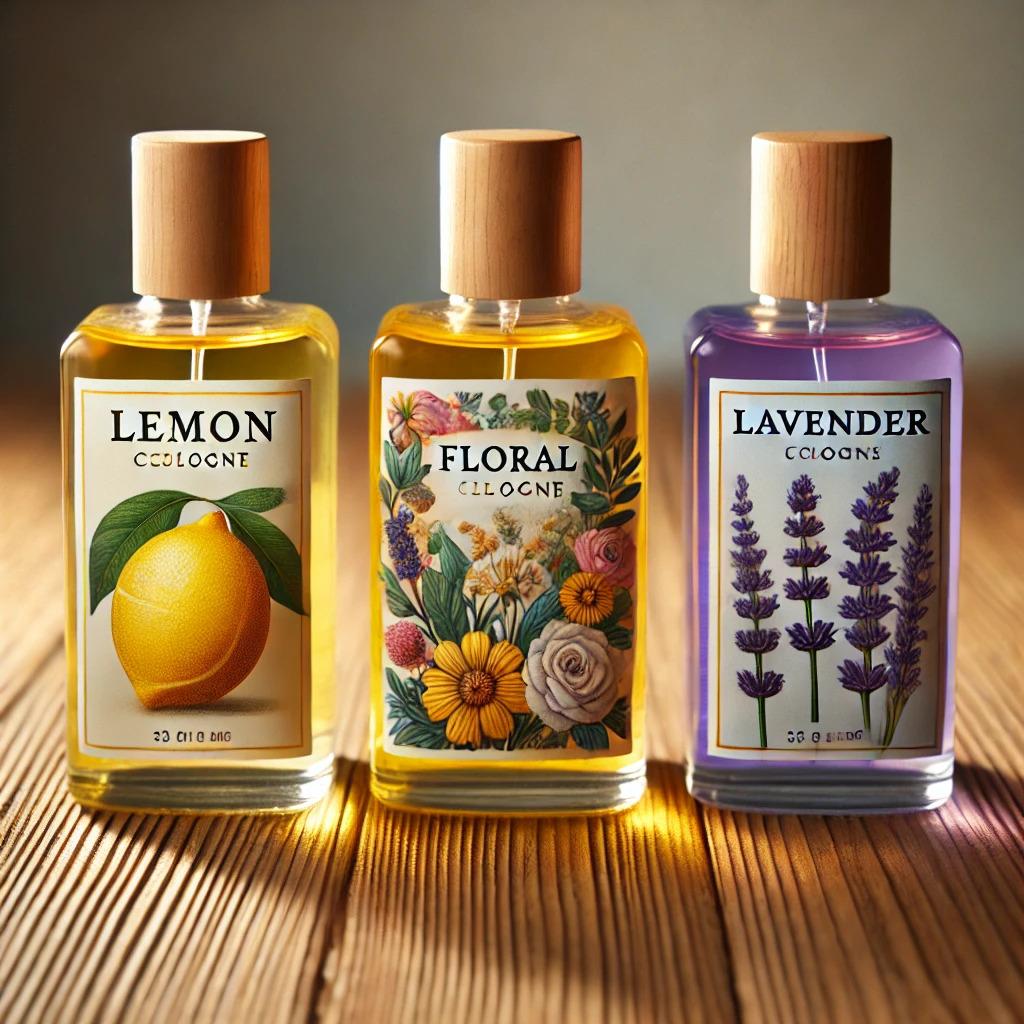
Kolonya çeşitleri, temsili görsel. (Yapay zeka ile üretilmiştir.)
Colognes are classified into different types based on the concentration of essence and the plant extracts used. Among the most well-known varieties are lemon, lavender, and flower-plant based colognes. Each type differs in effect and intended use according to its aroma.
Lemon cologne is the most common and widely preferred type in Türkiye. Its refreshing and invigorating qualities make it especially popular during summer months to provide coolness. Due to its high alcohol content, it has antiseptic properties and is frequently used for cleaning. In Turkish culture, lemon cologne is offered during holidays, condolence visits, and special occasions as part of guest reception. Traditionally, offering cologne to guests extends the rituals of cleanliness and pleasant fragrance.
Lavender cologne is known for its calming and soothing effects. Lavender essence, with its nerve-soothing and stress-reducing properties, is used before sleep or for relaxation. Lavender cologne is also preferred for personal care and to create a refreshing atmosphere in the home. In earlier times, it was commonly used in homes and bedrooms to establish a pleasant ambiance.
Flower and plant-based colognes have been favored by those seeking diverse scents. Enriched with aromas such as jasmine, rose, orange blossom, and amber, these colognes are known for their romantic and calming effects. Due to their longer-lasting fragrances and broader aromatic range, they are also chosen for personal care and as gifts on special occasions.
Colognes are not only used for personal hygiene but also to impart a pleasant scent and maintain cleanliness in environments.
Kılınç, Ramazan. "Koku Kullanım Kültürü ve Türkiye'de Kolonya." İstanbul Teknik Üniversitesi, Fen Bilimleri Enstitüsü. Accessed March 19, 2026.https://www.academia.edu/87189479/Koku_Kullanım_Kültürü_Ve_Türkiye_De_Kolonya_Ambalajı
Yeğenoğlu, Selen et al. "Kolonyanın İşlevi: Dünü ve Bugünü." Hacettepe Üniversitesi Eczacılık Fakültesi. Accessed March 19, 2026.

Origins and History of Cologne
History in the Ottoman Empire and Türkiye
Hospitality and Cologne in Türkiye
Production and Packaging Development
Cologne in the Modern Era and the Impact of COVID-19
Varieties and Uses