


This article was automatically translated from the original Turkish version.
+1 More
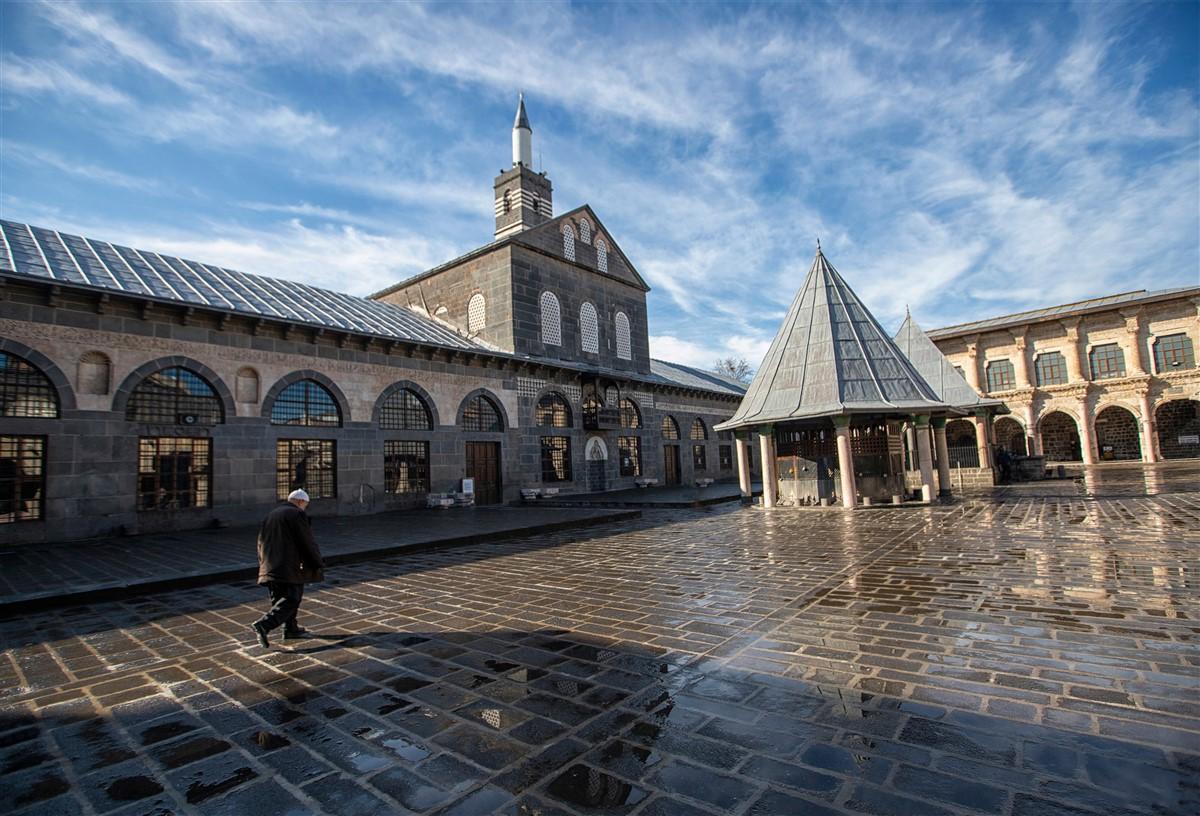
Diyarbakır Ulu Camii
Name | Diyarbakır Ulu Camii | ||||||||
|---|---|---|---|---|---|---|---|---|---|
Location | Diyarbakır / Türkiye | ||||||||
Construction Date(s) | It was established in 639 CE by converting the Church of Mar Toma into a mosque. | ||||||||
Historical Significance | One of the oldest mosques in Anatolia; regarded as the fifth Haram-i Şerif (Sacred Sanctuary) in the Islamic world. | ||||||||
Architectural Feature | Decorations Black basalt stone specific to Diyarbakır has been used. Rectangular plan courtyard mosque | ||||||||
Sections | Madrasas Shadirvan Western Maksura Eastern Maksura Sundial | ||||||||
Historical Contributions | Great Seljuk (Malik Shah), Anatolian Seljuk (Giyaseddin Keyhüsrev), Akkoyunlu (Uzun Hasan), Ottoman, İnaloğulları, Nisanoğulları, Artuklular | ||||||||
Current Status | Place of worship | ||||||||
Cultural Significance | It was included in the UNESCO World Heritage List in 2015 under the name 'Cultural Landscape of Diyarbakır Fortress and Hevsel Gardens'. | ||||||||
Diyarbakır Grand Mosque is one of the oldest mosques in Anatolia and the largest among the historic mosques in the city. Although its exact construction date is unknown, the mosque was established after the conquest of Diyarbakır in 639 CE during the caliphate of Hz. Ömer, by converting the city’s largest church, the Mar Toma Church, into a mosque. It is regarded as the fifth Harem-i Şerif (Holy Sanctuary) in the Islamic world, following the Kaaba, the Prophet’s Mosque, the Al-Aqsa Mosque, and the Umayyad Mosque of Damascus. This structure, interpreted as an Anatolian reflection of the Umayyad Mosque of Damascus, has served as a center of worship throughout history and forms the largest complex of buildings in Diyarbakır.
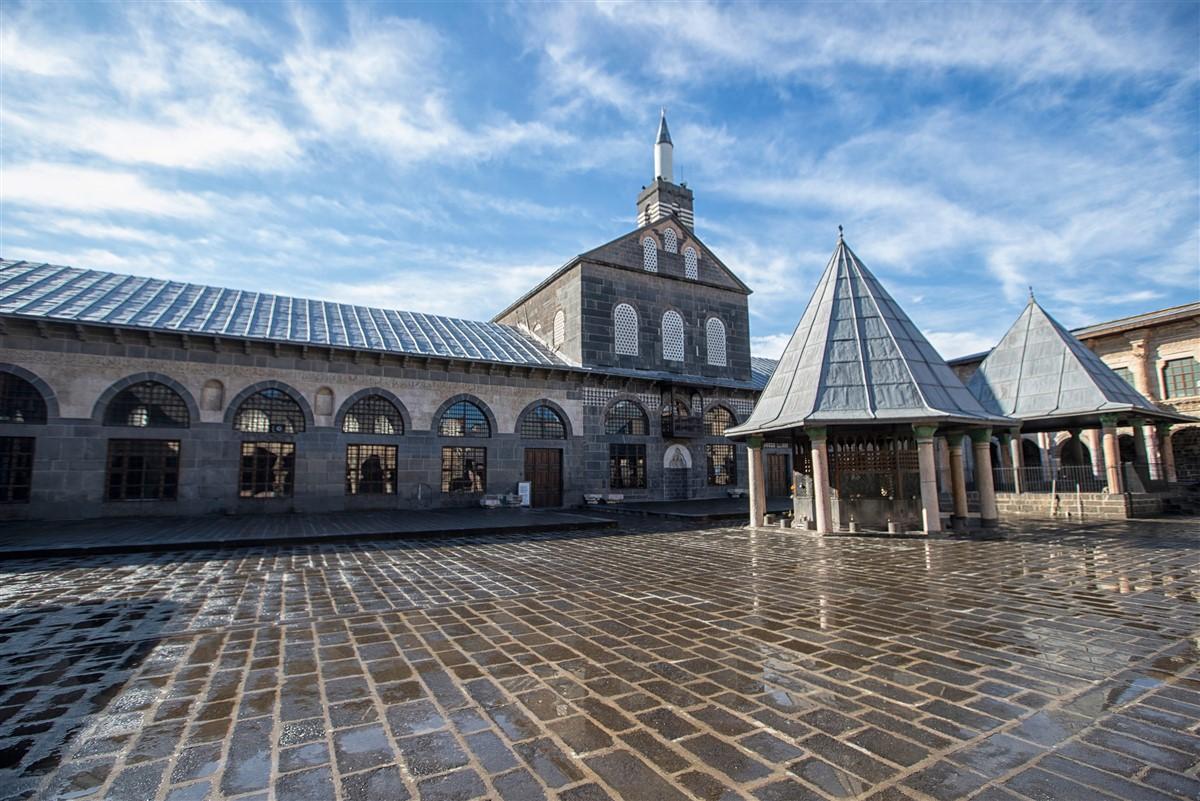
Diyarbakır Grand Mosque (Diyarbakır Governorship)
All states that ruled in Diyarbakır have placed great importance on the Grand Mosque. Inscriptions and decrees from the Great Seljuk ruler Melikşah, the Anatolian Seljuk ruler Gıyaseddin Keyhüsrev, the Akkoyunlu ruler Uzun Hasan, numerous Ottoman sultans, as well as the İnaloğulları, Nisanoğulları, and Artuqids, are found at various locations within the mosque. In 1091, under the order of Melikşah, the mosque underwent major restoration and acquired its present form through successive additions and repairs over different periods. Architectural decorations, reliefs, and inscriptions from various eras on the courtyard facades coexist harmoniously.
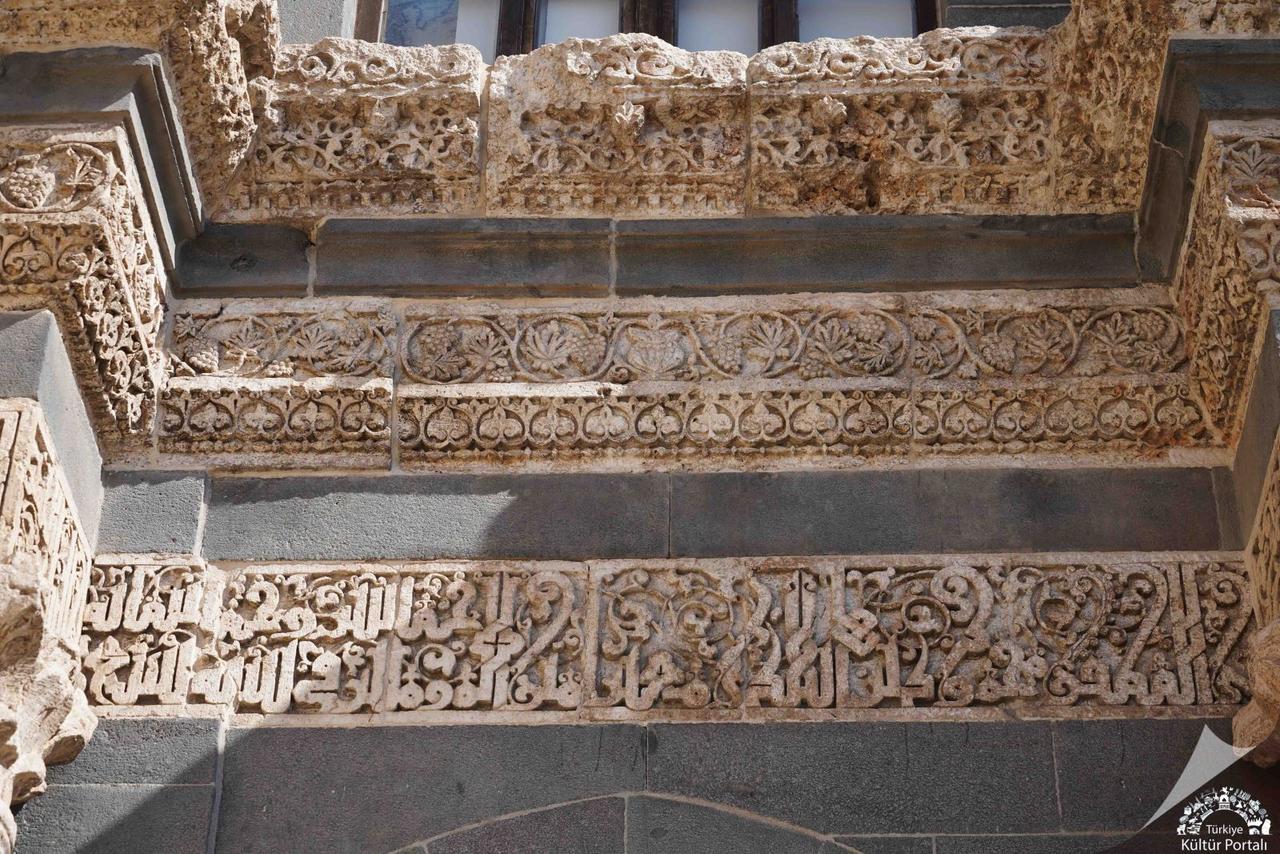
Reliefs on the courtyard facade (Turkey Culture Portal-Iskan Altın)
The Diyarbakır Grand Mosque has a rectangular plan and resembles a külliye with a large courtyard at its center. To the south of the courtyard is the Hanafi section, to the north the Shafi’i section and the Mesudiye Medrese, to the west the Zinciriye Medrese, and to the east the arcaded sections. Access to the mosque is provided through three separate gates; the eastern main (crown) gate is notable for its symmetrical relief figures depicting the struggle between lions and bulls. The interior features a plan supported by numerous columns, and the ceiling and surfaces of the central area are adorned with kalem decorations characteristic of the Ottoman period.
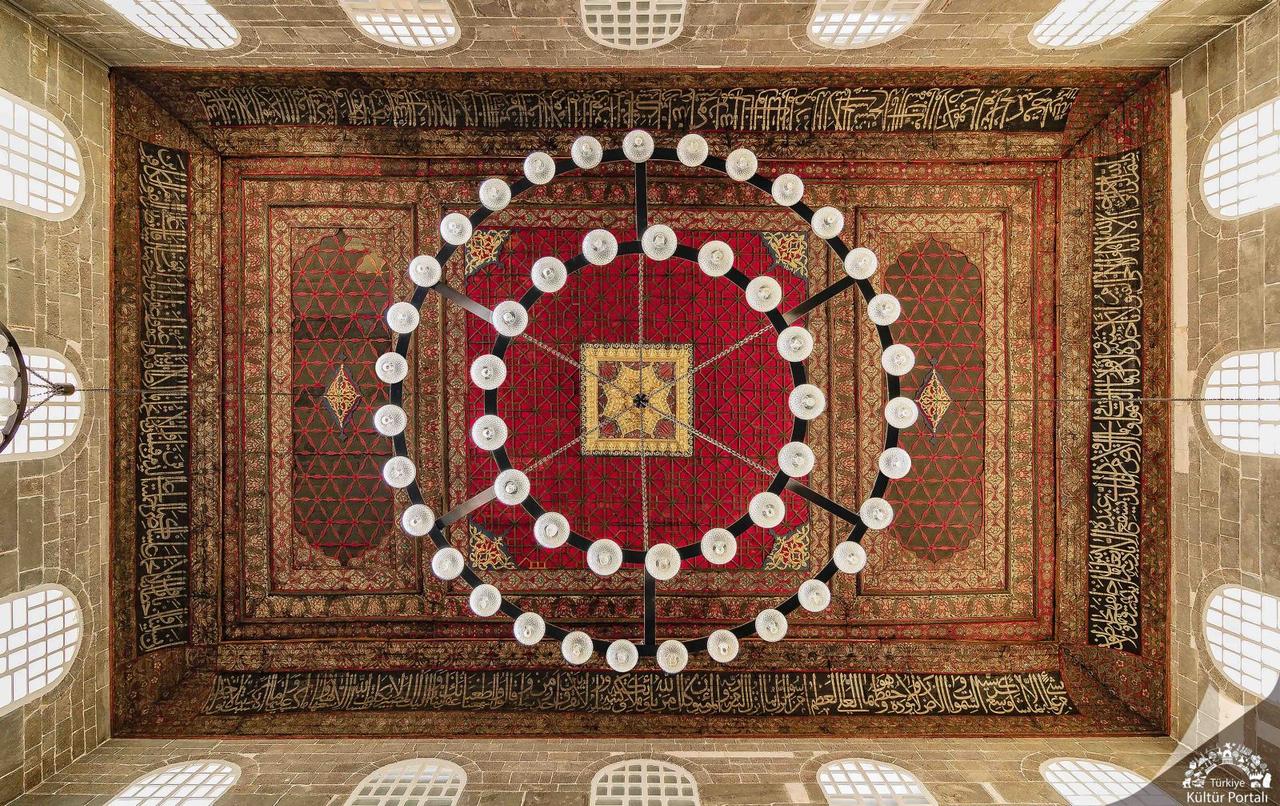
Central ceiling decorated in Ottoman-style kalem work (Turkey Culture Portal-Haluk Yurtörten)
The Diyarbakır Grand Mosque attracts both local and foreign tourists due to its architectural features and historical significance. With unique elements such as El Cezeri’s sundial and inscriptions bearing traces of diverse civilizations, it continues to stand as a symbol of Anatolia’s rich cultural heritage.
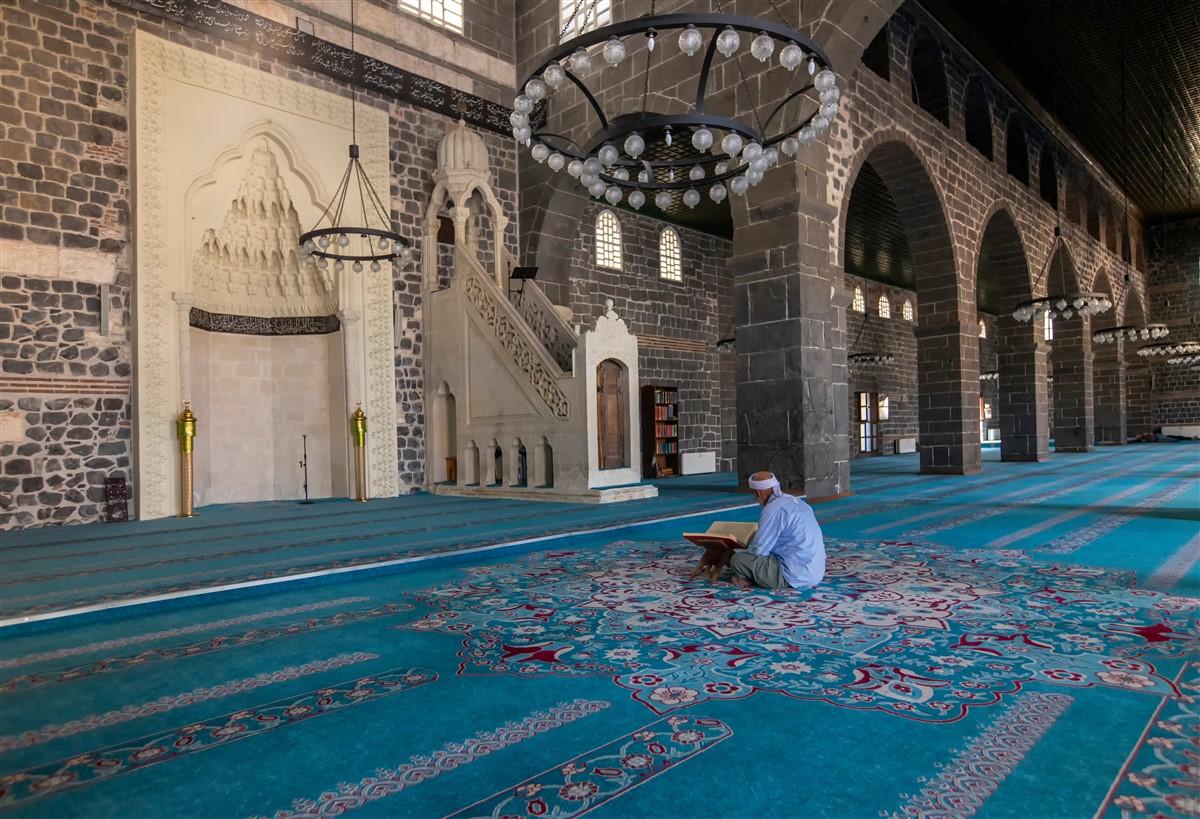
Interior of Diyarbakır Grand Mosque (Diyarbakır Governorship)
Diyarbakır Kültür Turizm. "Ulu Camii." Diyarbakır Kültür Turizm Web Sitesi. Accessed April 2, 2025.https://diyarbakirkulturturizm.org/Yapit/Details/CAMILER/16/Ulu-Camii/174
T.C. Diyarbakır Valiliği. "Ulu Cami." Diyarbakır Valiliği. Accessed April 2, 2025.http://www.diyarbakir.gov.tr/ulu-cami
T.C. Kültür ve Turizm Bakanlığı Diyarbakır İl Kültür ve Turizm Müdürlüğü. "Cami ve Kiliseler." T.C. Kültür ve Turizm Bakanlığı Diyarbakır İl Kültür ve Turizm Müdürlüğü Web Sitesi. Accessed April 2, 2025.https://diyarbakir.ktb.gov.tr/tr-56901/cami-ve-kiliseler.html
T.C.Sur Kaymakamlığı Governorship. "Ulu Camii." Sur District Governorship. Accessed April 2, 2025.http://www.sur.gov.tr/ulu-camii
Türk Kızılay Diyarbakır Şubesi. "Diyarbakır Ulu Cami." Türk Kızılay Diyarbakır Şubesi Web Sitesi. Accessed April 2, 2025.https://diyarbakir.kizilay.org.tr/gezi-rehberi/diyarbakir-ulu-cami
Türkiye Kültür Portalı. "Ulu Camii." Kültür Portalı. Accessed April 2, 2025.https://www.kulturportali.gov.tr/turkiye/diyarbakir/gezilecekyer/ulucam

Diyarbakır Ulu Camii
Name | Diyarbakır Ulu Camii | ||||||||
|---|---|---|---|---|---|---|---|---|---|
Location | Diyarbakır / Türkiye | ||||||||
Construction Date(s) | It was established in 639 CE by converting the Church of Mar Toma into a mosque. | ||||||||
Historical Significance | One of the oldest mosques in Anatolia; regarded as the fifth Haram-i Şerif (Sacred Sanctuary) in the Islamic world. | ||||||||
Architectural Feature | Decorations Black basalt stone specific to Diyarbakır has been used. Rectangular plan courtyard mosque | ||||||||
Sections | Madrasas Shadirvan Western Maksura Eastern Maksura Sundial | ||||||||
Historical Contributions | Great Seljuk (Malik Shah), Anatolian Seljuk (Giyaseddin Keyhüsrev), Akkoyunlu (Uzun Hasan), Ottoman, İnaloğulları, Nisanoğulları, Artuklular | ||||||||
Current Status | Place of worship | ||||||||
Cultural Significance | It was included in the UNESCO World Heritage List in 2015 under the name 'Cultural Landscape of Diyarbakır Fortress and Hevsel Gardens'. | ||||||||
No Discussion Added Yet
Start discussion for "Diyarbakır Ulu Camii" article
Architectural Features
Sections of the Mosque